Jury Duty Laws by State (2026): Exemptions, Pay, Job Protection
Independently fact-checked against primary sources (last audited September 28, 2026). · 200 primary sources cited on this page. How we verify our legal content
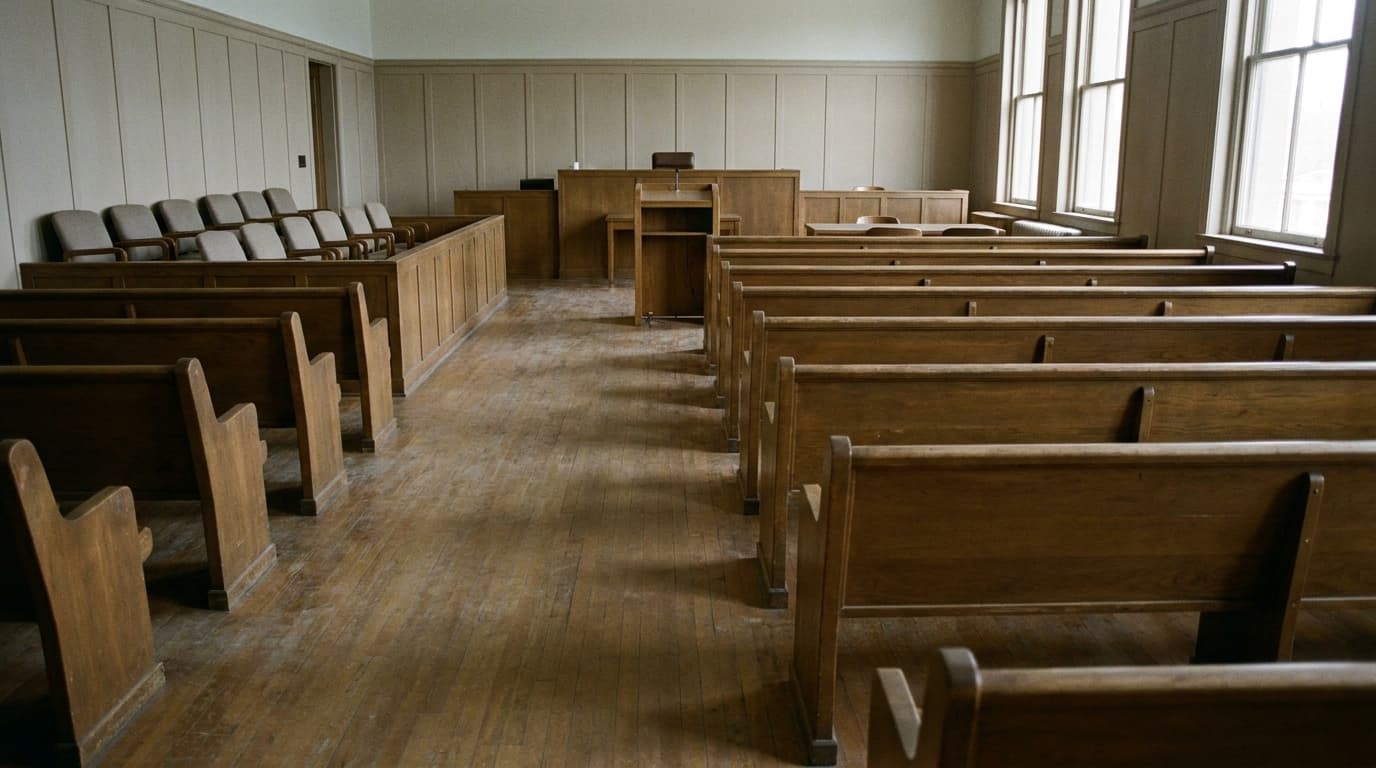
Jury duty in the United States runs on two systems at once. Federal courts summon jurors under the Jury Selection and Service Act, and each state (plus the District of Columbia) summons jurors for its own courts under its own statute.
The rules on who must serve, who can be excused, what jurors are paid, how employers must treat them, and what happens to someone who ignores a summons all come from whichever court sent the summons. This page compares those rules across the 50 states, D.C. and federal court, and explains the terms a summons uses.
To see which exemptions, excuses and postponements may apply to your own situation in your state, use our jury duty exemption checker.
Scope: This page covers jury service in all 50 states, the District of Columbia and federal court, using an audited dataset of state jury statutes and court rules (verified September 27, 2026) and the federal Jury Selection and Service Act. Georgia, Mississippi and Tennessee have not yet been assessed in that dataset, so their rows say so. This is general information: the court that summoned you decides every request, and your summons and your court's jury office are the authoritative source for your case.
How a jury summons works
Courts draw prospective jurors at random from lists of residents. In federal court, "All courts use the respective state voter lists as a source of prospective jurors," supplemented by other lists such as licensed drivers where needed, according to the U.S. Courts. People selected are "mailed a qualification questionnaire to complete and return to the court within 10 days or instructed to complete the questionnaire online on the court's eJuror page." State courts follow similar two-step processes, a qualification form followed by a summons to appear, with details set by each state.
Being summoned is not the same as sitting on a jury. As the U.S. Courts put it, "Being summoned for jury service does not mean that a person will end up serving on a jury." Qualified jurors who report are questioned by the judge and lawyers in a process called voir dire, and some are excused from a particular trial based on their answers.
The basic federal qualifications are in 28 U.S.C. § 1865(b). A person is qualified unless they are not a U.S. citizen aged 18 who has lived in the judicial district for one year, cannot read, write, understand or speak English well enough, are incapable of service because of mental or physical infirmity, or have a pending felony charge or an unrestored felony conviction. States set their own qualification lists.

Exemption, excuse, postponement and disqualification
Summonses and statutes use four terms that sound alike but work differently. The dataset behind our exemption checker sorts every rule into one of them:
- Disqualification. The law says the person is not qualified to serve for a stated reason. Connecticut, for example, lists as disqualified a person who "is seventy-five years of age or older and chooses not to perform juror service" (Conn. Gen. Stat. § 51-217(a)(8)).
- Exemption. A category of people the law exempts from service. In federal court, active-duty members of the armed forces, members of professional fire and police departments, and full-time public officers are exempt, and the U.S. Courts explain that people in those categories "are barred from serving on federal juries, even if they are otherwise qualified and would like to serve" (28 U.S.C. § 1863(b)(6)). Many state exemptions, by contrast, apply only if the person claims them.
- Excuse. Release from service for a reason the law recognizes, such as age, medical condition or undue hardship. Some excuses must be granted when requested; Florida says "A person 70 years of age or older shall be excused from jury service upon request" (Fla. Stat. § 40.013(8)). Others are left to the judge's discretion.
- Postponement or deferral. Moving service to a later date rather than being released. Several states give a right to one postponement: Colorado says "A trial juror shall have the right to one postponement of the term of juror service," up to six months (C.R.S. § 13-71-116(1)); Connecticut allows one postponement of up to ten months (Conn. Gen. Stat. § 51-232(b)); Arizona lets a summoned person postpone "two times only" (A.R.S. § 21-336).
How a rule is applied matters as much as what it says. Our dataset marks each rule as automatic (the law itself exempts or disqualifies), on request (the court must grant it if you ask and qualify), or court discretion (a judge or jury official decides). Every request goes through the court that summoned you, usually through the online juror portal, form or phone number printed on the summons. The jury duty exemption checker lists the matching rules for your state with the statute, the official source and what to submit.

Federal jury service
Federal district courts each adopt a jury plan within the limits of the Jury Selection and Service Act, so the details vary from district to district. The U.S. Courts note that "Each of the 94 federal district courts maintains its own jury procedures and policies regarding excuses from jury service."
- Exemptions. Active-duty armed forces, professional (not volunteer) fire and police department members, and public officers actively engaged full-time in official duties (28 U.S.C. § 1863(b)(6)).
- Group excuses. A district may excuse, on individual request, groups for whom service would be an undue hardship. The U.S. Courts say "Such groups may include persons over age 70; persons who have, within the past two years, served on a federal jury; and persons who serve as volunteer firefighters or members of a rescue squad or ambulance crew." Volunteer safety personnel must be excused on request (28 U.S.C. § 1863(b)(5)(B)).
- Temporary excuses and deferrals. Courts may defer or excuse a summoned juror for "undue hardship or extreme inconvenience" for as long as the court finds necessary.
- Pay. "Pay of $50 a day; eligible to receive up to $60 a day after serving 10 days if the presiding judge so orders" (U.S. Courts; 28 U.S.C. § 1871(b)).
- Penalty. A person who fails to appear may be ordered to show cause, and "Any person who fails to show good cause for noncompliance with a summons may be fined not more than $1,000, imprisoned not more than three days, ordered to perform community service, or any combination thereof" (28 U.S.C. § 1866(g)). The same penalties apply to a person who fails to appear under a show-cause order after not returning the qualification form, or who "willfully misrepresents a material fact on a juror qualification form for the purpose of avoiding or securing service as a juror" (28 U.S.C. § 1864(b)).
Jury duty rules by state
The table below summarizes juror pay, the penalty for failing to appear, and any age-based relief for each state's courts. Entries come from the audited dataset behind our checker, which records the statute, official source and verbatim text for every rule, with New Jersey's penalty added from N.J.S.A. 2B:20-14 after a later review. "Not verified" means that item was not researched for that state; "None found in sections reviewed" means the statutes and rules opened for that state contained no age-based rule, which is not a guarantee that none exists anywhere else in state law. Georgia, Mississippi and Tennessee are not yet assessed.
| State | Juror pay (state courts) | Penalty for not appearing | Age-based relief |
|---|---|---|---|
| Alabama | Not verified | Contempt: fine up to $300, jail up to 10 days | 80+ may ask to be permanently exempt (from Oct. 1, 2026) |
| Alaska | Rate set by administrative bulletin; mileage beyond 30 miles | Contempt; criminal contempt is a class A misdemeanor; civil penalty up to $5,000 | Over 70: permanently excused on request |
| Arizona | $12/day plus mileage; Fair Jury Improvement Fund may pay $40 to $300/day | Fine up to $500 | 75+: excused on written request |
| Arkansas | $50/day if seated; at least $15 if not seated | Fine of $5 to $500; contempt | 80+ may exempt themselves |
| California | $15/day from the second day, plus mileage | Contempt, or sanctions of up to $250, $750 and $1,500 | None found in sections reviewed |
| Colorado | Employer pays regular wages up to $50/day for 3 days; state pays $50/day from day 4 | Petty offense: up to $300, 10 days, or both | None found in sections reviewed |
| Connecticut | Employer pays full-time employees for 5 days; state pays $50/day from day 6 | Civil penalty set by the Chief Court Administrator | 75+ may choose not to serve |
| Delaware | $20/day expense reimbursement | Criminal contempt: up to $100, 3 days, or both | Over 70 may ask to be excused |
| District of Columbia | $57/day if your employer does not pay you; $7 travel stipend if it does | Up to $300, 7 days, or both | 70+ may be excused |
| Florida | $15/day for 3 days if not paid wages; $30/day from day 4 | Fine up to $100; contempt | 70+ excused on request |
| Georgia | Not assessed | Not assessed | Not assessed |
| Hawaii | $30/day plus mileage or bus fare | Arrest and contempt | 80+ may claim exemption |
| Idaho | County rate (at least $5 per half day or $10/day); $50/day after 5 days in one trial | Up to $500, 5 days, or both | 70+ permanently excused on request |
| Illinois | Not verified | Contempt: fine of $5 to $100 | None found in sections reviewed |
| Indiana | $30/day until impaneled, $80 through trial day 5, $90 from day 6 | Criminal contempt (no set amount) | 75+ exempted on notice |
| Iowa | $30/day plus mileage and parking | Contempt | None found in sections reviewed |
| Kansas | $10 to $50/day set by county, plus mileage | Fine up to $100 per day absent | None found in sections reviewed |
| Kentucky | $5/day plus $7.50/day expenses | Contempt | 70+ disqualified if requested on the qualification form |
| Louisiana | $25/day criminal cases, $50/day civil cases, plus mileage | Up to $50, 3 days, or both | 70+ exempt (La. Const.) |
| Maine | $15/day plus mileage | Up to $100, 3 days, or both | 80+ who do not wish to serve are excused |
| Maryland | $30/day state per diem plus any county supplement; $50/day after 5 days in one trial | Up to $1,000, 60 days, or both | 70+ exempt on written request |
| Massachusetts | $50/day from day 4, paid by the state | Fine up to $2,000; arrest warrant possible | 70+ may elect not to serve |
| Michigan | County rate of at least $25 first day and $40 after, plus mileage | Contempt: up to $7,500, 93 days, or both | Over 70: exempt on request |
| Minnesota | Rate set by the supreme court | Misdemeanor | 70+ excused on request |
| Mississippi | Not assessed | Not assessed | Not assessed |
| Missouri | Statewide minimum $6/day plus mileage; counties may pay more | Fine up to $500 and/or community service | 75+ excused on timely application |
| Montana | $12/day; $13/day more if seated | Fine up to $50 | 75+ excused on request |
| Nebraska | $35/day plus mileage | Contempt | 70+ exempt on request |
| Nevada | $65/day once sworn and after day 2 of selection | Contempt: fine up to $500 | 70+ excused if they wish |
| New Hampshire | $10 per half day plus mileage | Misdemeanor | 70+ may decline before court convenes |
| New Jersey | Not verified | Fine up to $500, or contempt | 75+ may ask to be excused |
| New Mexico | State minimum wage rate for time served, plus mileage over 40 miles | Petty misdemeanor: up to 6 months, $500, or both | 75+ permanently exempt on request |
| New York | $72/day, unless the employer must pay the first $72 | Civil penalty up to $250 | None found in sections reviewed |
| North Carolina | $12 first day, $20/day after; $40/day beyond 5 days in 24 months | Fine up to $50 | 72+ may ask; judge decides for good cause |
| North Dakota | $100/day ($50 for a first day of 4 hours or less) | No statutory penalty section; show-cause order under the jury plan | 72+ exempt on request |
| Ohio | Set by each county | Contempt | Over 75 excused on request |
| Oklahoma | $50/day plus mileage | Indirect contempt: fine up to $500 | Over 70 cannot be compelled |
| Oregon | $10/day for 2 days, then $25/day, plus mileage | Contempt | 70+ excused on request |
| Pennsylvania | $9/day for first 3 days, then $25/day | Contempt: up to $500, 10 days, or both | 75+ may ask to be excused |
| Rhode Island | Not verified | Contempt: fine of at least $20 | None found in sections reviewed |
| South Carolina | Not verified | Civil penalty up to $100 | 65+ exempt |
| South Dakota | $50/day; $10 if not impaneled | $50 to $500; up to 10 days after a second attachment | 80+ may ask; judge weighs the need for jurors |
| Tennessee | Not assessed | Not assessed | Not assessed |
| Texas | At least $20 first day, $58/day after | Contempt $100 to $1,000; failure to attend $100 to $500 | 75+ may claim exemption |
| Utah | $18.50 first day, $49/day after | Contempt | None found in sections reviewed |
| Vermont | $30/day on request, unless employer compensates | Civil penalty up to $200 | None found in sections reviewed |
| Virginia | $50/day | Fine of $50 to $200 | Over 73 may request exemption |
| Washington | $10 to $25/day set by county, plus mileage | Misdemeanor | 80+ unable to serve for health reasons are excused |
| West Virginia | $15 to $40/day set by the court, plus mileage | Civil contempt: fine up to $1,000 | 70+ excused on request |
| Wisconsin | At least $16/day set by county, plus mileage | Contempt: up to $500 | None found in sections reviewed |
| Wyoming | $30/day; court may add $20/day after 5 consecutive days | Contempt | 72+ may be excused on request |
| Federal courts | $50/day; up to $60/day after 10 days on one trial | Up to $1,000, 3 days, community service, or a combination | Set by each district; excused groups may include people over 70 |
Can your employer fire you for jury duty?
For federal jury service, no. Federal law says "No employer shall discharge, threaten to discharge, intimidate, or coerce any permanent employee by reason of such employee's jury service, or the attendance or scheduled attendance in connection with such service, in any court of the United States" (28 U.S.C. § 1875(a)). An employer who violates it is liable for lost wages and benefits, may be ordered to reinstate the employee, and faces "a civil penalty of not more than $5,000 for each violation as to each employee" (§ 1875(b)). An employee can apply to the district court, which will appoint counsel if it finds "probable merit" in the claim (§ 1875(d)(1)).
Federal law does not make employers keep paying you. The U.S. Courts say "Your employer may continue your salary during all or part of your jury service, but federal law does not require an employer to do so."
For state jury service, the protection comes from state law. Every state in the table below has a statute protecting jurors' jobs except Montana, where no jury-specific employer statute was found in the jury and employment chapters searched.
The details differ in ways that matter:
- Notice. Several states protect you only if you tell your employer about the summons. New York's statute applies to a juror "who notifies their employer to that effect prior to the commencement of a term of service"; Illinois, Ohio, Oklahoma, Nebraska, Nevada, Virginia, Arkansas, California, Tennessee, Mississippi and Louisiana have notice conditions too, and Georgia lets employers require "reasonable notification" of the absence. Tell your employer as soon as you receive the summons, and keep a copy.
- Who is covered. Federal law, Kansas, Ohio and Texas protect "permanent" employees. Pennsylvania's protection does not apply to retail or service employers with fewer than 15 employees or manufacturers with fewer than 40 (42 Pa.C.S. § 4563(d)).
- Pay. A handful of states require employers to keep paying wages for the first days of service; most do not. Several states bar employers from forcing you to use vacation or sick leave.
- Shift work. Some states stop employers from making jurors work a night shift after a day in court. Maryland and Virginia, for example, bar requiring a shift starting after 5 p.m. once the juror has spent four or more hours on jury duty that day.
Employer protections by state
"None found" in the pay column means the job-protection section we opened contains no wage-continuation requirement; it is not a guarantee that no other law or your employment contract requires pay. A dagger (†) marks states where the official code website blocked automated access, so the text was read from an archived copy of the official page or from a secondary copy; confirm those on the state's official code site.
| State | Job-protection statute | Must the employer keep paying you? | Remedy or penalty |
|---|---|---|---|
| Alabama | Ala. Code § 12-16-8.1 (report back to work at your next regular hour) | Yes: full-time employees are entitled to usual compensation (§ 12-16-8(c)); no forced use of leave | Civil action for actual and punitive damages |
| Alaska | Alaska Stat. § 09.20.037 | No; the statute says an employer need not pay | Civil action for lost wages, damages and reinstatement |
| Arizona | A.R.S. § 21-236 | No; the statute says an employer need not pay; no forced use of leave | Class 3 misdemeanor |
| Arkansas | Ark. Code § 16-31-106 (reasonable notice) | None found; no loss of sick or vacation leave | Class A misdemeanor |
| California | Cal. Gov. Code § 12945.8(a)(1) (reasonable notice) | None found; you may use available vacation or leave | Unlawful employment practice |
| Colorado | C.R.S. § 13-71-134 | Yes: regular wages up to $50/day for the first 3 days (§ 13-71-126) | Civil action (treble damages if willful); class 2 misdemeanor if willful |
| Connecticut | Conn. Gen. Stat. § 51-247a | Yes: full-time employees' regular wages for the first 5 days (§ 51-247) | Criminal contempt (up to $500, 30 days); civil action within 90 days (up to 10 weeks' wages) |
| Delaware | 10 Del. C. § 4515 | None found | Criminal contempt (up to $500, 6 months); civil action within 90 days |
| District of Columbia | D.C. Code § 11-1913 | Yes: full-time D.C. employees get usual pay less the juror fee for service of 5 days or less; employers of 10 or fewer exempt (§ 15-718(c)) | Criminal contempt (up to $300, 30 days for a first offense); civil action within 9 months |
| Florida | Fla. Stat. § 40.271 | None found | Threats may be contempt; civil action for compensatory and punitive damages |
| Georgia † | O.C.G.A. § 34-1-3 | None found | Actual damages and attorney's fees |
| Hawaii | Haw. Rev. Stat. § 612-25 | None found | Petty misdemeanor; civil action within 90 days (up to 6 weeks' wages) |
| Idaho | Idaho Code § 2-218 | None found | Criminal contempt (fine up to $300); civil action within 60 days |
| Illinois | 705 ILCS 310/10.1 (reasonable notice; night-shift workers get time off) | No; the statute says an employer need not pay | Contempt; lost wages and benefits; reinstatement |
| Indiana | IC 35-44.1-2-11 | None found | Class B misdemeanor; civil action within 90 days for lost wages, reinstatement and attorney's fees (IC 34-28-4-1) |
| Iowa | Iowa Code § 607A.45 | None found | Contempt; civil action within 60 days (up to 6 weeks' wages) |
| Kansas | K.S.A. § 43-173 (permanent employees) | None found | Lost wages and damages; reinstatement |
| Kentucky | KRS 29A.160 | None found | Civil action within 90 days; Class B misdemeanor (KRS 29A.990) |
| Louisiana | La. R.S. 23:965 (notice) | Yes, for one day: leave without loss of wages for up to one day | Reinstatement and a fine of $100 to $1,000 per employee discharged; for denying the paid day, that day's wages and a fine of $100 to $500 per offense |
| Maine | 14 M.R.S. § 1218 (also protects health insurance) | None found | Civil action within 90 days (up to 6 weeks' wages) |
| Maryland | Md. Code, Cts. & Jud. Proc. § 8-501 (shift limit) | None found | Fine up to $1,000 |
| Massachusetts | Mass. Gen. Laws c. 234A, § 61 | Yes: regular wages for the first 3 days (c. 234A, § 48) | Fine up to $5,000; civil action (treble damages if willful) |
| Michigan | MCL 600.1348 (limit on extra hours) | None found | Misdemeanor; contempt |
| Minnesota | Minn. Stat. § 593.50 (release from shifts) | None found | Criminal contempt (up to $700, 6 months); civil action within 30 days |
| Mississippi † | Miss. Code § 13-5-35 (notice) | None found; no forced use of leave | Contempt of court |
| Missouri | Mo. Rev. Stat. § 494.460 | None found; no forced use of leave | Civil action within 90 days |
| Montana | No jury-specific employer statute found in the chapters searched | Not applicable | Not applicable |
| Nebraska | Neb. Rev. Stat. § 25-1674 (reasonable notice) | Yes: no loss of pay, less court compensation other than expenses | Class IV misdemeanor |
| Nevada | NRS 6.190 (notice at least 3 days before) | None found; no forced use of leave; work-hour limits | Gross misdemeanor; civil action including punitive damages up to $50,000 |
| New Hampshire | RSA 500-A:14 | None found | Contempt; civil action within 1 year |
| New Jersey | N.J.S.A. 2B:20-17 (as described by the New Jersey Courts) | No statutory requirement for private employers (New Jersey Courts) | Disorderly persons offense; civil action (New Jersey Courts) |
| New Mexico | NMSA § 38-5-18 (as described by the New Mexico Courts) | No; "Employers are not required to pay jurors" (New Mexico Courts) | Petty misdemeanor (§ 38-5-19) |
| New York | N.Y. Judiciary Law § 519 (notify before service) | Yes: employers of more than 10 may not withhold the first $72/day for the first 3 days | Criminal contempt |
| North Carolina | N.C. Gen. Stat. § 9-32 | None found | Civil action for damages; reinstatement (1-year limit) |
| North Dakota | N.D. Cent. Code § 27-09.1-17 | None found | Class B misdemeanor; civil action within 90 days |
| Ohio | Ohio Rev. Code § 2313.19 (permanent employees; reasonable notice) | None found; no forced use of leave | Contempt |
| Oklahoma | 38 Okla. Stat. § 34 (notice) | No, unless you use paid leave; no forced use of leave | Misdemeanor, fine up to $5,000; civil action (§ 35) |
| Oregon | ORS 10.090 | None required; wage policies left to the employer | Civil action or complaint to the Bureau of Labor and Industries |
| Pennsylvania | 42 Pa.C.S. § 4563 (does not apply to retail or service employers with fewer than 15 employees or manufacturers with fewer than 40) | No; the statute says an employer need not pay | Summary offense; civil action for lost wages and benefits |
| Rhode Island | R.I. Gen. Laws § 9-9-28 | No, absent a contract or collective bargaining agreement | Misdemeanor |
| South Carolina | S.C. Code § 41-1-70 | None found | Civil action (damages up to one year's pay for dismissal) |
| South Dakota | SDCL § 16-13-41.1 | Leave may be with or without pay at the employer's discretion (§ 16-13-41.2) | Class 2 misdemeanor |
| Tennessee | Tenn. Code § 22-4-106 (notice) | Yes: usual pay less the juror fee; employers of fewer than 5 and temporary employees under 6 months excepted | Reinstatement and lost wages; Class A misdemeanor |
| Texas † | Tex. Civ. Prac. & Rem. Code §§ 122.001, 122.002, 122.0021 (permanent employees) | None found | Reinstatement and 1 to 5 years' compensation; Class B misdemeanor |
| Utah | Utah Code § 78B-1-116 | None found; no forced use of leave | Criminal contempt (up to $500, 6 months); civil action within 30 days |
| Vermont | 21 V.S.A. § 499 | None found | Fine up to $200 |
| Virginia | Va. Code § 18.2-465.1 (reasonable notice; shift limit) | None found; no forced use of sick leave or vacation | Class 3 misdemeanor |
| Washington | RCW 2.36.165 | Leave of absence required; no pay requirement found | Misdemeanor; civil action |
| West Virginia | W. Va. Code § 52-3-1 | No; the statute says an employer need not pay | Reinstatement with or without back pay; fine of $100 to $500 |
| Wisconsin | Wis. Stat. § 756.255 | None found | Fine up to $200; restitution including reinstatement and back pay |
| Wyoming | Wyo. Stat. § 1-11-401 | None found | Injunction or reinstatement; exemplary damages up to $1,000 per violation |
| Federal courts | 28 U.S.C. § 1875 (permanent employees) | No; federal law does not require it | Lost wages and benefits, reinstatement, civil penalty up to $5,000 |
If you believe you were fired or punished for jury service, write down what happened and when, keep your summons and any messages from your employer, and note the filing deadlines above: several states give only 30 to 90 days to sue. For broader protections against firing, see our guide to at-will employment and its exceptions.
What happens if you ignore a jury summons
Most courts do not jump straight to a fine. In many of the statutes reviewed, the sequence is a second notice or an order to appear and show cause, followed by a penalty only if the person has no good reason. Federal law follows that pattern: a person who fails to appear "may be ordered by the district court to appear forthwith and show cause for failure to comply with the summons," and the penalty applies to a person "who fails to show good cause" (28 U.S.C. § 1866(g)).
The penalties themselves vary widely, as the table shows. Michigan's general contempt statute allows up to $7,500, 93 days in jail, or both, unless another law provides otherwise (MCL 600.1715(1)); Maryland allows up to $1,000 and 60 days; Massachusetts allows a fine of up to $2,000; and New Mexico treats a willful failure to appear as a petty misdemeanor punishable by up to six months in jail. At the other end, Montana, North Carolina and Louisiana cap the fine at $50 (Louisiana also allows up to 3 days in jail).
Several states also make it an offense to lie on the qualification form to avoid service; Texas, for example, applies contempt to a person who "knowingly provides false information in a request for an exemption or to be excused from jury service" (Tex. Gov't Code § 62.0141).
A penalty may not end the obligation to serve. New York's noncompliance procedure sets a new service date, and Arizona's statute says the person "may be compelled to attend for jury service on another date" (A.R.S. § 21-223).
If you missed a date by mistake, contact the jury office named on the summons as soon as you can. Asking the court for a postponement or excuse before the date is the lawful route.
Jury duty scams
Scammers impersonate courts because a missed-jury-duty threat is frightening and plausible. The jury call is one version of a wider government impersonation scam, in which callers also pose as the IRS, Social Security or the police. The federal judiciary warns: "People are being targeted by phone call, email, and messaging scams threatening them with prosecution for failing to comply with jury service. In the communications, recipients are pressured to provide confidential data, potentially leading to identity theft and fraud."
Signs that a jury call or message is a scam:
- It asks for sensitive information or money by phone, text or email. "Federal courts do not require anyone to provide any sensitive information in a telephone call or email. Most contact between a federal court and a prospective juror will be through the U.S. mail," according to the U.S. Courts.
- It demands payment by wire, gift card, cryptocurrency or a payment app. The FTC's general warning about government impersonators applies: "Don't wire money or use gift cards, cryptocurrency, or a payment app to pay someone who says they're with the government."
- The caller ID looks official. The FTC cautions that "caller ID can be faked."
- It threatens immediate arrest unless you pay now. Real courts follow the show-cause process described above.
If you receive one, do not give the requested information. The U.S. Courts say recipients "should immediately notify the Clerk of Court's office of the U.S. District Court in their area," and scams can be reported to the FTC at ReportFraud.ftc.gov. For a state summons, call the jury office using the number on your court's official website, not a number supplied by the caller. The federal judiciary also notes that "it is a crime for anyone to falsely represent themself as a federal court official." If you shared personal information, see our guide to identity theft laws and next steps. If you already paid, the chance of getting money back after a scam depends on whether you used a card, a wire, a gift card or cryptocurrency.
Disclaimer: This page provides general legal information about jury service in the United States as of September 2026, based on federal law and state statutes and court rules verified in September 2026. It is not legal advice. Jury rules change, and the court that summoned you decides every request for an exemption, excuse or postponement. Follow the instructions on your summons, contact the court's jury office with questions, and consult a lawyer licensed in your state about an employment dispute.
Frequently Asked Questions
Can I be excused from jury duty because of my age?
In many states, yes, but usually only if you ask. The age and the method vary: South Carolina exempts people 65 and older, many states set 70 or 75, and some set 80 (for example Alabama, Arkansas, Hawaii and Maine). A few states, such as California and New York, have no age-based rule in the statutes reviewed. Check your state's row above or use the jury duty exemption checker.
Does my employer have to pay me while I am on jury duty?
Federal law does not require it. A minority of states do for the first days of service, including Alabama (full-time employees), Colorado (up to $50 a day for three days), Connecticut (five days), Massachusetts (three days), New York (the first $72 a day for three days at employers with more than ten employees), Louisiana (one day), Nebraska, Tennessee and the District of Columbia, each with conditions. In most other states the statutes reviewed contain no pay requirement, though your employer's policy or contract may provide pay.
Can I be fired for going to jury duty?
Federal law bars firing, threatening, intimidating or coercing a permanent employee because of federal jury service (28 U.S.C. § 1875), and nearly every state reviewed has a similar law for state jury service (no jury-specific statute was found for Montana). Many state protections apply only if you give your employer notice of the summons, so tell your employer promptly.
What happens if I miss jury duty?
In many states the court first sends another notice or orders you to appear and explain. If you cannot show good cause, penalties range from small fines to contempt; in federal court the maximum is a $1,000 fine, three days in jail, community service, or a combination (28 U.S.C. § 1866(g)), and in New Jersey a fine of up to $500 or contempt (N.J.S.A. 2B:20-14). Contact the jury office on your summons right away.
How do I postpone jury duty?
Follow the instructions on your summons, which usually point to an online juror portal, a form or a phone number. Several states give a right to at least one postponement, for example Colorado (up to six months), Connecticut (up to ten months) and Arizona (two postponements). Ask before your service date.
Is a call saying I missed jury duty and must pay a fine real?
Treat it as a scam. The U.S. Courts say federal courts do not ask for sensitive information by phone or email and contact prospective jurors mostly by mail. Do not pay or share information; call the court's jury office using a number from the court's official website, and report the call to the FTC at ReportFraud.ftc.gov.
How much does jury duty pay?
Federal jurors receive $50 a day, and up to $60 a day after ten days on one trial if the judge orders it. State pay ranges widely: for example $15 a day from the second day in California, $50 a day in Virginia, $72 a day in New York and $100 a day in North Dakota. See the state table above.
Updates
Independently fact-checked against the cited primary sources
The Law Behind This Article
This article rests on the statutory provisions below, held in our own legal record and retrieved from the official source. Tap a section to read the operative text.
Arkansas Code of 1987 Annotated
§ 16-31-106Penalty for employees' service prohibited.In force
(a)(1) Any person who is summoned to serve on jury duty shall not be subject to discharge from employment, loss of sick leave, loss of vacation time, or any other form of penalty as a result of his or her absence from employment due to jury duty, upon giving reasonable notice to his or her employer…
Official text (excerpt) · last checked 2020-11-06 · Read the full text in our law library
Cited in 1 court opinions in our collectionLatest citing opinion in our collection: 2010
Opinions citing this section in our collection:
- Opinion No. (Arkansas Attorney General Reports 2010)“…on that the answer to this question likely turns on whether A.C.A. § 16-31-106 (Repl. 1999) applies to school distric…”
Identified automatically from the court opinions citing this section — not a ranking of which case controls.
Arizona Revised Statutes, Title 21 (Juries), Chapter 2 (JURORS), Article 1 (Qualifications and Excuses)
§ 21-202Persons entitled to be excused from jury serviceIn force
A. It is the policy of this state that all qualified citizens have an obligation to serve on juries when summoned by the courts of this state, unless excused. B. On timely application to the court, the following persons shall be excused temporarily from service as a juror if the judge or jury commissioner finds that any of the following applies: 1. The prospective juror has a mental or physical condition that causes the juror to be incapable of performing jury service. The juror or the juror's personal representative shall provide to the court or jury commissioner a medical statement from a physician who is licensed pursuant to title 32, a physician assistant who is licensed pursuant to title 32, chapter 25 or a registered nurse practitioner who is licensed pursuant to title 32, chapter 15 that explains an existing mental or physical condition that renders the person unfit for jury service. If a prospective juror does not have a physician, a physician assistant or a registered nurse practitioner, the prospective juror or the juror's personal representative shall provide a sworn statement from a professional caregiver for the prospective juror that is deemed acceptable by the…
Official text (excerpt) · last checked 2026-08-04 · Read the full text in our law library · Verify at azleg.gov
Cited in 19 court opinions in our collectionLatest citing opinion in our collection: 2026
Opinions citing this section in our collection:
- State v. Eddington (Court of Appeals of Arizona 2010, 244 P.3d 76)“…t's refusal to strike police officer for cause); see also A.R.S. § 21-202(B)(5) (giving peace officers option to…”
- Stewart v. Carroll (Court of Appeals of Arizona 2007, 214 Ariz. 480)“…ature revised the juror-exemption statute. See A.R.S. § 21-202; 2005 Ariz. Sess. Laws, ch. 74. The rev…”
- State of Arizona v. Douglas Lee Eddington (Court of Appeals of Arizona 2010)“…rt‟s refusal to strike police officer for cause); see also A.R.S. § 21-202(B)(5) (giving peace officers option to…”
Identified automatically from the court opinions citing this section — not a ranking of which case controls.
Arizona Revised Statutes, Title 21 (Juries), Chapter 2 (JURORS), Article 3 (Fees and Mileage)
§ 21-221Fees and mileageIn force
A. Each juror shall be paid by the county: 1. For each day's attendance upon the superior court or justice court, twelve dollars. 2. For each mile necessarily traveled from his residence to the court and back to his residence, an amount equal to the amount paid to state officers and employees pursuant to section 38-623, subsection A. Reimbursement shall be at the computed mileage rate regardless of whether the travel is accomplished by private, rented or chartered motor vehicle. When a juror necessarily returns to his residence and travels back to court during the period of service because of a recess ordered by the court, he shall be paid on the same basis for such travel. B. Attendance on the court shall include the first day a juror is required to attend and shall continue each day of actual attendance on the court thereafter, until the juror is either temporarily or permanently excused from jury service. Any juror who is excused from further attendance upon the first day of this appearance in obedience to a summons shall receive a mileage allowance only.
Official text (excerpt) · last checked 2026-08-04 · Read the full text in our law library · Verify at azleg.gov
Cited in 4 court opinions in our collectionLatest citing opinion in our collection: 2023
Opinions citing this section in our collection:
- State v. Atwood (Arizona Supreme Court 1992, 171 Ariz. 576)“…y. He argues that the $12.00 per diem granted jurors, see A.R.S. § 21-221, was insufficient to compensate adequat…”
- Copper State Bank v. Saggio (Court of Appeals of Arizona 1983, 138 Ariz. 438)“…daily fee of $12.00 and statutory mileage by Pinal County. A.R.S. § 21-221(A), (B). It was within the discretion…”
- State v. Rivas (Court of Appeals of Arizona 2023)“…awfully receive nominal compensation for their service, see A.R.S. § 21-221, they are not paid based on their verdi…”
Identified automatically from the court opinions citing this section — not a ranking of which case controls.
§ 21-223Failure of juror to attend; fineIn force
It is unlawful for a juror who is summoned and who fails to obtain a postponement or who is not excused from jury service to wilfully and without reasonable excuse fail to attend on the date scheduled for jury service. If the person fails to respond to a second summons the court may issue a body attachment as for a direct contempt of the court. The person may be fined an amount not to exceed five hundred dollars and may be compelled to attend for jury service on another date.
Official text (excerpt) · last checked 2026-08-04 · Read the full text in our law library · Verify at azleg.gov
Arizona Revised Statutes, Title 21 (Juries), Chapter 3 (FORMATION OF JURIES), Article 3 (Summoning Jurors)
§ 21-336Postponement of jury serviceIn force
A. Persons who are scheduled to appear for jury service may postpone the date of their initial appearance for jury service two times only. On request, postponement shall be granted if all of the following apply: 1. The prospective juror has not been granted two prior postponements. 2. The prospective juror appears in person or contacts the jury commissioner by telephone or electronic mail or in writing to request a postponement. 3. A postponement shall be within a time period determined by the jury commissioner and shall be a date when the court will be in session. B. A jury commissioner may approve a subsequent request for postponement of jury service only in the event of an extreme emergency that could not have been anticipated at the time the initial postponement was granted. The prospective juror is subject to being resummoned at the discretion of the jury commissioner.
Official text (excerpt) · last checked 2026-08-04 · Read the full text in our law library · Verify at azleg.gov
California Code of Civil Procedure
§ 209In force
(a) Any prospective trial juror who has been summoned for service, and who fails to attend as directed or to respond to the court or jury commissioner and to be excused from attendance, may be attached and compelled to attend. Following an order to show cause hearing, the court may find the prospective juror in contempt of court, punishable by fine, incarceration, or both, as otherwise provided by law. (b) In lieu of imposing sanctions for contempt as set forth in subdivision (a), the court may impose reasonable monetary sanctions, as provided in this subdivision, on a prospective juror who has not been excused pursuant to Section 204 after first providing the prospective juror with notice and an opportunity to be heard. If a juror fails to respond to the initial summons the court may issue a second summons indicating that the person failed to appear in response to a previous summons and ordering the person to appear for jury duty. The second summons may be issued no earlier than 90 days after the initial failure to appear.
Official text (excerpt) · last checked 2026-07-28 · Read the full text in our law library · Verify at leginfo.legislature.ca.gov
§ 215In force
(a) Except as provided in subdivision (b), on and after July 1, 2000, the fee for jurors in the superior court, in civil and criminal cases, is fifteen dollars ($15) a day for each day’s attendance as a juror after the first day. (b) A juror who is employed by a federal, state, or local government entity, or by any other public entity as defined in Section 481.200, and who receives regular compensation and benefits while performing jury service, shall not be paid the fee described in subdivision (a). (c) All jurors in the superior court, in civil and criminal cases, shall be reimbursed for mileage at the rate of thirty-four cents ($0.34) per mile for each mile actually traveled in attending and returning from court as a juror after the first day. (d) All jurors and prospective jurors who have been summoned shall be provided with access to existing public transit services at no cost utilizing one of the following options: (1) Courts may partner with public transit operators in their county to create new programs or continue existing public transit programs that provide no-cost service for jurors and prospective jurors who have been summoned.
Official text (excerpt) · last checked 2026-07-28 · Read the full text in our law library · Verify at leginfo.legislature.ca.gov
Cited in 5 court opinions in our collectionLatest citing opinion in our collection: 2008
Opinions citing this section in our collection:
- People v. Kraft (California Supreme Court 2000, 99 Cal. Rptr. 2d 1)“…repealed by Stats. 1988, ch. 1245, § 44, p. 4155; see now Code Civ. Proc., § 215) denied him due process of law and a fa…”
- Cassim v. Allstate Insurance (California Supreme Court 2004, 16 Cal. Rptr. 3d 374)“…persons, with or without compensation: ... in jury duty"]; Code Civ. Proc., § 215 [jurors compensated $15 per day plus mi…”
- People v. Carpenter (California Supreme Court 1997, 15 Cal. 4th 312)“…rors be paid more than the statutory amount of $5 per day. (Code Civ. Proc., § 215.) This issue was litigated below. So un…”
Identified automatically from the court opinions citing this section — not a ranking of which case controls.
California Government Code
§ 12945.8In force
(a) An employer shall not do any of the following: (1) Discharge or in any manner discriminate against an employee for taking time off to serve as required by law on an inquest jury or trial jury. (2) Discharge or in any manner discriminate or retaliate against an employee, including, but not limited to, an employee who is a victim, for taking time off to appear in court to comply with a subpoena or other court order as a witness in any judicial proceeding. (3) Discharge or in any manner discriminate or retaliate against an employee who is a victim for taking time off from work to obtain or attempt to obtain any relief. Relief includes, but is not limited to, a temporary restraining order, restraining order, or other injunctive relief, to help ensure the health, safety, or welfare of the victim or their child.
Official text (excerpt) · last checked 2026-07-28 · Read the full text in our law library · Verify at leginfo.legislature.ca.gov
Connecticut General Statutes, Title 51 (Courts), Chapter 884
§ 51-247aEmployer not to discharge employee or require additional hours work for jury service. Eight hours jury duty deemed a legal day's work. Penalty. Action for recovery of wages and reinstatement. Liability of employer for failure to compensate juror-employee.In force
(a) An employer shall not deprive an employee of his or her employment, or threaten or otherwise coerce the employee with respect to his or her employment, because the employee receives a summons in accordance with the provisions of section 51-232, responds to the summons, or serves as a juror. (b) Any juror-employee who has served eight hours of jury duty in any one day shall be deemed to have worked a legal day's work as that term is used in section 31-21 and an employer shall not require the juror-employee to work in excess of said eight hours. (c) Any employer who violates this section shall be guilty of criminal contempt, and, upon conviction thereof, may be fined not more than five hundred dollars or imprisoned not more than thirty days, or both. (d) If an employer discharges an employee in violation of this section, the employee, within ninety days of such discharge, may bring a civil action for recovery of wages lost as a result of the violation and for an order requiring reinstatement of the employee. Damages recoverable shall not exceed lost wages for ten weeks. If the employee prevails, the employee shall be allowed a reasonable attorney's fee fixed by the court.
Official text (excerpt) · last checked 2026-07-29 · Read the full text in our law library · Verify at cga.ct.gov
Cited in 11 court opinions in our collectionLatest citing opinion in our collection: 2022
Opinions citing this section in our collection:
- Magnan v. Anaconda Industries, Inc. (Supreme Court of Connecticut 1984, 193 Conn. 558)“…ons of race, sex, religion, physical or mental disability); General Statutes § 51-247a (prohibiting dismissal for serving jury…”
- Cotto v. United Technologies Corp. (Supreme Court of Connecticut 1999, 251 Conn. 1)“…regarding violation of Occupational Safety and Health Act); General Statutes § 51-247a (where employee serves as juror); Gener…”
- Pickering v. Aspen Dental Management, Inc. (Connecticut Appellate Court 2007, 100 Conn. App. 793)“…t, 1 which alleged that the defendant violated General Statutes § 51-247a 2 when it terminated the p…”
Identified automatically from the court opinions citing this section — not a ranking of which case controls.
Code of the District of Columbia, Title 11: Organization and Jurisdiction of the Courts. - Chapter 19: Juries and Jurors.
§ 11-1907Summoning of prospective jurors.In force
(a) At such times as are determined under the jury system plan, the Court shall summon or cause to be summoned from among qualified individuals under section 11-1906 sufficient prospective jurors to fulfill requirements for petit and grand jurors for the Court. A summons shall require a prospective juror to report for possible jury service at a specified time and place unless advised otherwise by the Court. Service of prospective jurors may be made personally or by first-class, registered, or certified mail as determined under the plan. (b) A prospective juror who fails to appear for jury duty may be ordered by the Court to appear and show cause why he or she should not be held in contempt for such failure to appear. A prospective juror who fails to show good cause for such failure, or who without good cause fails to appear pursuant to a Court order, may be punished by a fine of not more than $300, by imprisonment for not more than seven days, or both.
Official text (excerpt) · last checked 2026-07-30 · Read the full text in our law library · Verify at github.com
§ 11-1913Protection of employment of jurors.In force
(a) An employer shall not deprive an employee of employment, threaten, or otherwise coerce an employee with respect to employment because the employee receives a summons, responds to a summons, serves as a juror, or attends Court for prospective jury service. (b) An employer who violates subsection (a) is guilty of criminal contempt. Upon a finding of criminal contempt an employer may be fined not more than $300, imprisoned for not more than 30 days, or both, for a first offense, and may be fined not more than $5,000, imprisoned for not more than 180 days, or both, for any subsequent offense. (c) If an employer discharges an employee in violation of subsection (a), the employee within 9 months of such discharge may bring a civil action for recovery of wages lost as a result of the violation, for an order of reinstatement of employment, and for damages. If an employee prevails in an action under this subsection, that employee shall be entitled to reasonable attorney fees fixed by the court.
Official text (excerpt) · last checked 2026-07-30 · Read the full text in our law library · Verify at github.com
Code of the District of Columbia, Title 15: Judgments and Executions; Fees and Costs. - Chapter 7: Fees and Costs.
§ 15-718Juror fees.In force
(a) A juror serving in the Superior Court of the District of Columbia shall be paid an attendance fee of $30 for each day of actual attendance at the place of trial or hearing, except that jurors employed by a federal, state, or local government or by a private employer who pays regular compensation during the period of jury service shall not be paid an attendance fee. A person summoned for petit jury service in the Superior Court of the District of Columbia who does not serve on the petit jury shall not be paid an attendance fee. (b) A travel allowance not to exceed $2 per day shall be paid to all jurors serving in the Superior Court of the District of Columbia. (c) For jury service of 5 days or less, petit or grand jurors employed full-time in the District of Columbia shall be entitled to their usual compensation less the fee received for jury service.
Official text (excerpt) · last checked 2026-07-30 · Read the full text in our law library · Verify at github.com
Delaware Code, Title 10 (Courts and Judicial Procedure), Chapter 045 (JURY SELECTION AND SERVICE)
§ 4515Protection of jurors’ employment.In force
(a) An employer shall not deprive an employee of employment, or threaten or otherwise coerce the employee with respect thereto, because the employee receives a summons, responds thereto, serves as a juror or attends Court for prospective jury service. (b) Any employer who violates subsection (a) of this section is guilty of criminal contempt and upon conviction may be fined not more than $500 or imprisoned not more than 6 months, or both. (c) If an employer discharges an employee in violation of subsection (a) of this section, the employee may file a civil action in Superior Court within 90 days for recovery of wages lost as a result of the violation and for an order requiring the reinstatement of the employee. An employee who prevails shall be allowed a reasonable attorney’s fee fixed by the Court.
Official text (excerpt) · last checked 2026-07-29 · Read the full text in our law library · Verify at delcode.delaware.gov
Idaho Code
§ 2-212Excusing or postponing jury service — Inquiry by court — Grounds for excusing or postponing — VOLUNTEER ELECTION SERVICE IN LIEU OF JURY SERVICEIn force
2-212. Excusing or postponing jury service — Inquiry by court — Grounds for excusing or postponing — VOLUNTEER ELECTION SERVICE IN LIEU OF JURY SERVICE.
Official text (excerpt) · last checked 2026-08-01 · Read the full text in our law library · Verify at legislature.idaho.gov
§ 2-215Mileage and per diem of jurors. A juror shall be paid mileage for his travel expenses from his residence to the place of holding court and return at the same rate per mile as established by resolution of the county commissioners for county employees in the county where the juror resides and shall be compensated at the following rate, to be paid from the county treasury:In force
2-215. Mileage and per diem of jurors. A juror shall be paid mileage for his travel expenses from his residence to the place of holding court and return at the same rate per mile as established by resolution of the county commissioners for county employees in the county where the juror resides and…
Official text (excerpt) · last checked 2026-08-01 · Read the full text in our law library · Verify at legislature.idaho.gov
§ 2-218Employer prohibited from penalizing employee for jury service — Penalty — Action by discharged employee for lost wagesIn force
2-218. Employer prohibited from penalizing employee for jury service — Penalty — Action by discharged employee for lost wages.
Official text (excerpt) · last checked 2026-08-01 · Read the full text in our law library · Verify at legislature.idaho.gov
§ 7-610Judgment — Penalty. Upon the answer and evidence taken, the court or judge must determine whether the person proceeded against is guilty of the contempt charged, and if it be adjudged that he is guilty of the contempt, a fine may be imposed on him not exceeding five thousand dollars ($5,000), or he may be imprisoned not exceeding fiveIn force
7-610. Judgment — Penalty. Upon the answer and evidence taken, the court or judge must determine whether the person proceeded against is guilty of the contempt charged, and if it be adjudged that he is guilty of the contempt, a fine may be imposed on him not exceeding five thousand dollars…
Official text (excerpt) · last checked 2026-08-01 · Read the full text in our law library · Verify at legislature.idaho.gov
Cited in 17 court opinions in our collectionLatest citing opinion in our collection: 2026
Opinions citing this section in our collection:
- Camp v. East Fork Ditch Co., Ltd. (Idaho Supreme Court 2002, 137 Idaho 850)“…86 S.Ct. 1531 , 16 L.Ed.2d 622 (1966). Under Idaho Code § 7-610 , contempt can be punished by a fine of…”
- Amy Slane v. Stephen Adams (Idaho Supreme Court 2013, 155 Idaho 274)“…The possible criminal contempt sanctions are set forth in Idaho Code section 7-610. Id. They are a determinate fine and/or…”
- Judy Charney v. Dennis Charney (Idaho Supreme Court 2015, 159 Idaho 62)“…and costs. She sought an award of attorney fees pursuant to Idaho Code sections 7-610, 12-121, and 12-123. Dennis timely obje…”
Identified automatically from the court opinions citing this section — not a ranking of which case controls.
Kansas Statutes Annotated, Chapter 43: JURORS
§ 43-165Same; rules governing jury service, enforcement; unexcused nonattendance of juror, penalty.In force
Each judicial district of the district court may direct from time to time, the number of jurors to be summoned for said court, and how long they shall be summoned before their attendance shall be required, and may make such rules and orders as it may deem proper, touching the jury service of the court, not inconsistent with the provisions hereof, and may enforce the same by attachment and fine not exceeding one hundred dollars ($100). Unexcused, nonattendance of a person summoned unless reasonable cause for such nonattendance be shown to the satisfaction of the court shall be punished by the imposition of a fine not exceeding one hundred dollars ($100) for each day of unexcused absence.
Official text (excerpt) · last checked 2026-07-29 · Read the full text in our law library · Verify at ksrevisor.gov
Cited in 2 court opinions in our collectionLatest citing opinion in our collection: 2017
Opinions citing this section in our collection:
- State v. Lewis (Court of Appeals of Kansas 2007, 38 Kan. App. 2d 91)“…individuals who inexcusably failed to report for jury duty. K.S.A. 43-165 provides, in part, “Unexcused, nonatten…”
- In re McDaniel (Court of Appeals of Kansas 2017)“…a prospective juror to appear for jury duty is governed by K.S.A. 43-165, which states that…”
Identified automatically from the court opinions citing this section — not a ranking of which case controls.
§ 43-171Same; jurors' fees.In force
Jurors shall be paid the following fees from the county general fund: (a) An amount, not less than $10 nor more than $50, as determined by the county commission, for each day of attendance, to attend court pursuant to this act; and (b) mileage, at the rate authorized by law, for necessary travel in going to and returning from court pursuant to this act.
Official text (excerpt) · last checked 2026-07-29 · Read the full text in our law library · Verify at ksrevisor.gov
§ 43-173Jury service; right to serve; liability; costs.In force
(a) No employer shall discharge or threaten to discharge any permanent employee by reason of such employee's jury service, or the attendance or scheduled attendance in connection with such service, in any court of Kansas. (b) Any employer who violates the provisions of this section: (1) Shall be liable for damages for any loss of wages, actual damages and other benefits suffered by an employee by reason of such violation; (2) shall be ordered to reinstate any employee discharged by reason of such employee's jury service; and (3) may be enjoined from further violations of this section and ordered to provide other appropriate relief.
Official text (excerpt) · last checked 2026-07-29 · Read the full text in our law library · Verify at ksrevisor.gov
Cited in 3 court opinions in our collectionLatest citing opinion in our collection: 2025
Opinions citing this section in our collection:
- State Ex Rel. Stovall v. Meneley (Supreme Court of Kansas 2001, 271 Kan. 355)“…or forfeiture. “(d) An action brought pursuant to K.S.A. 43-173. Such action shall be brought within on…”
- Hallam v. Mercy Health Center of Manhattan, Inc. (Supreme Court of Kansas 2004, 278 Kan. 339)“…lty or forfeiture. (d) An action brought pursuant to K.S.A. 43-173. Such action shall be brought within on…”
- Crump (District Court, D. Kansas 2025)“…isonment; statutory penalty or forfeiture; and pursuant to K.S.A. 43-173); see also Smith v. Williams, 2022 WL 4…”
Identified automatically from the court opinions citing this section — not a ranking of which case controls.
Kentucky Revised Statutes, Chapter 29A: JURIES
§ 29A.080Disqualifications for jury service -- Permanent exemptionIn force
(1) The Chief Circuit Judge or one (1) or more judges of the court, the court's clerk, a deputy clerk, the court's administrator, or a deputy court administrator so designated by the Chief Circuit Judge shall determine on the basis of the information provided on the juror qualification form whether the prospective juror is disqualified for jury service for any of the reasons listed in subsection (2) of this section. This determination shall be entered in the space provided on the juror qualification form. The Chief Circuit Judge shall cause each disqualified juror to be immediately notified of the juror's disqualification.
Official text (excerpt) · last checked 2026-07-29 · Read the full text in our law library · Verify at apps.legislature.ky.gov
Cited in 26 court opinions in our collectionLatest citing opinion in our collection: 2020
Opinions citing this section in our collection:
- Woodard v. Commonwealth (Kentucky Supreme Court 2004, 147 S.W.3d 63)“…ton Co., Inc., Ky., 929 S.W.2d 734, 738 (1996). .KRS 29A.080. . KRS 29A.080(4). . Ky.,…”
- Woodall v. Commonwealth (Kentucky Supreme Court 2002, 63 S.W.3d 104)“…uror No. 185 should have been excused for cause pursuant to KRS 29A.080(2)(d) because he had an insufficient kn…”
- Smith v. Commonwealth (Kentucky Supreme Court 1987, 734 S.W.2d 437)“…also II Ad.Proc., Jury Selection and Management, §§ 9-11. KRS 29A.080(1) requires the judge to “enter” on the…”
Identified automatically from the court opinions citing this section — not a ranking of which case controls.
§ 29A.100Postponement of service or excusing of juror -- Breastfeeding mothers to be excusedIn force
(1) Upon the request of a prospective juror prior to assignment to a trial court, the Chief Circuit Judge, or after the juror's assignment to a trial court, the trial judge may excuse such juror upon a showing of undue hardship, extreme inconvenience, or public necessity. On the day on which the prospective jurors are summonsed to appear, any person not previously excused who desires to be excused shall be heard. (2) The Chief Circuit Judge may designate and authorize one (1) or more judges of the court, the court's clerk, a deputy clerk, the court's administrator, or a deputy court administrator to excuse a juror from service for a period not to exceed ten (10) days or to postpone jury service for a period not to exceed twelve (12) months. The reasons for excuse or postponement shall be entered in the space provided on the juror qualification form. (3) In his or her discretion the judge may excuse a juror from service entirely, reduce the number of days of service, or may postpone the juror's service temporarily for a period of time not to exceed, however, twenty-four (24) months.
Official text (excerpt) · last checked 2026-07-29 · Read the full text in our law library · Verify at apps.legislature.ky.gov
Cited in 9 court opinions in our collectionLatest citing opinion in our collection: 2004
Opinions citing this section in our collection:
- Caudill v. Commonwealth (Kentucky Supreme Court 2003, 120 S.W.3d 635)“…of the trial judge, Admin. *652 Proc., Part II, § 12(1), KRS 29A.100(1), who is not required to make those d…”
- Grundy v. Commonwealth (Kentucky Supreme Court 2000, 25 S.W.3d 76)“…e trial court failed to abide by the procedures outlined at KRS 29A.100 and KRS 29A.150: KRS 29A.100. Po…”
- Bratcher v. Commonwealth (Kentucky Supreme Court 2004, 151 S.W.3d 332)“…ues that this is evidence of the trial court’s violation of KRS 29A.100, which states that a “trial judge may e…”
Identified automatically from the court opinions citing this section — not a ranking of which case controls.
§ 29A.150Contempt -- Failure to perform jury serviceIn force
(1) A person summoned for jury service who fails to appear as directed shall be ordered by the court to appear forthwith and show cause for his failure to comply with the summons. If he fails to show good cause for noncompliance with the summons, he may be punished for contempt. (2) A juror who fails to give attention at court, or who leaves the courthouse while the court is in session, or who otherwise fails to complete jury service, without leave of the court, may be punished for contempt.
Official text (excerpt) · last checked 2026-07-29 · Read the full text in our law library · Verify at apps.legislature.ky.gov
Cited in 2 court opinions in our collectionLatest citing opinion in our collection: 2005
Opinions citing this section in our collection:
- Grundy v. Commonwealth (Kentucky Supreme Court 2000, 25 S.W.3d 76)“…iled to abide by the procedures outlined at KRS 29A.100 and KRS 29A.150: KRS 29A.100. Postponement of se…”
- Peterson v. Commonwealth (Kentucky Supreme Court 2005, 160 S.W.3d 730)“…ers to the missing jurors, also lacks substantiation. While KRS 29A.150(1) states that missing jurors "shall be…”
Identified automatically from the court opinions citing this section — not a ranking of which case controls.
§ 29A.160Employer's dutiesIn force
(1) An employer shall not deprive an employee of his employment, or threaten or otherwise coerce him with respect thereto, because the employee receives a summons, responds thereto, serves as a juror, or attends court for prospective jury service. (2) If an employer discharges an employee in violation of subsection (1) of this section, the employee may within ninety (90) days of such discharge bring a civil action for recovery of wages lost as a result of the violation and for an order requiring the reinstatement of the employee with full seniority and benefits. Damages recoverable shall not exceed lost wages. If he prevails, the employee shall be allowed a reasonable attorney's fee fixed by the court.
Official text (excerpt) · last checked 2026-07-29 · Read the full text in our law library · Verify at apps.legislature.ky.gov
Cited in 1 court opinions in our collectionLatest citing opinion in our collection: 2022
Opinions citing this section in our collection:
- Crider v. Lute Supply, Inc. (District Court, E.D. Kentucky 2022)“…g three causes of action: (1) violation of KRS § 29A.160; (2) violation of the Emergency…”
Identified automatically from the court opinions citing this section — not a ranking of which case controls.
§ 29A.170Compensation of jurorsIn force
(1) All jurors in Circuit and District Court shall be paid five dollars ($5) per day for jury service. In addition thereto, they shall be paid seven dollars and fifty cents ($7.50) per day as reimbursement of expenses incurred, which sum is hereby determined to be the equivalent of the minimum daily expenses reasonably to be incurred by such juror. (2) Persons who appear in court in response to a summons for jury duty and who are not relieved from jury service shall receive full compensation for each day they are required to be and are in attendance, even though they are not sworn or accepted for jury service.
Official text (excerpt) · last checked 2026-07-29 · Read the full text in our law library · Verify at apps.legislature.ky.gov
Louisiana Revised Statutes
§ 13:3042.1Postponements of petit jury participationIn force
A. Individuals scheduled to appear for petit jury service have the right to postpone the date of their initial appearance for jury service one time only. When requested, postponements shall be granted, provided that: (1) The juror has not previously been granted a postponement; (2) The prospective juror appears in person or contacts the clerk of the court by telephone, electronic mail, or in writing to request a postponement; and (3) Prior to the grant of a postponement with the concurrence of the clerk of the court, the prospective juror fixes a date certain on which he or she will appear for petit jury service that is not more than six months after the date on which the prospective juror originally was called to serve and on which date the court will be in session. B. A subsequent request to postpone petit jury service may be approved by a judicial officer only in the event of an extreme emergency, such as a death in the family, sudden grave illness, or a natural disaster or a national emergency in which the prospective juror is personally involved, that could not have been anticipated at the time the initial postponement was granted.
Official text (excerpt) · last checked 2026-07-29 · Read the full text in our law library · Verify at legis.la.gov
§ 13:3049Cash deposit; bond; duty to attend; compensation; procedure; filing feesIn force
A. Every person selected and summoned shall attend as a juror or talesman punctually and for the time for which he is selected. The district judge may enforce the attendance of any juror by imposing a fine of not more than fifty dollars or by imprisonment in the parish jail for not more than three days, or both, in his discretion, for each violation. B.(1)(a) The jurors in criminal cases who attend may demand and receive from the parish treasury compensation and an allowance for mileage necessarily traveled going to and from the courthouse to be fixed by the district judges of each judicial district, sitting en banc, subject to approval by the parish governing authority. (b) The compensation shall be twenty-five dollars for each day of attendance in court, and the mileage allowance shall be not less than sixteen cents per mile nor more than the rate in effect for state officials. (c) Only one charge shall be made for mileage each way. (d) Notice of any intention to change juror compensation by the court shall be given to the district attorney, the parish treasurer, and the clerk of court. No such change shall be effective unless approved by the parish governing authority.
Official text (excerpt) · last checked 2026-07-29 · Read the full text in our law library · Verify at legis.la.gov
Cited in 3 court opinions in our collectionLatest citing opinion in our collection: 2020
Opinions citing this section in our collection:
- Middlebrooks v. International Indemnity (Louisiana Court of Appeal 1996, 95 La.App. 3 Cir. 1364)“…nst that litigant. Johnson, 475 So.2d at 107 . *743 La.R.S. 13:3049(B)(2)(d) states, in pertinent part: (…”
- Richard A. Rodrigue v. the Travelers Insurance Company; Puget Sound Commerce Center, Inc. (f/K/A Todd Shipyards Corporation, F/K/A Todd-Johnson Dry Docks, Inc.); Eagle, Inc. (f/K/A Eagle Asbestos & Packing Company, Inc.); Louisiana Insurance Guaranty Association (Louisiana Court of Appeal 2020)“…ayment of all accrued costs and expenses of said jury. . .” La. R.S. 13:3049(B)(2)(d), the state statue in effect re…”
- Babin v. Ivy (Louisiana Court of Appeal 1983, 432 So. 2d 281)“…costs in advance. The trial judge denied the request. I La.R.S. 13:3049B 1 provides that: “Jurors who attend […”
Identified automatically from the court opinions citing this section — not a ranking of which case controls.
§ 23:965Jury duty; dismissal forbidden; uninterrupted compensation; penaltiesIn force
A.(1) No employer shall discharge or otherwise subject to any adverse employment action, without cause, any employee called to serve or presently serving any jury duty and no employer shall make, adopt, or enforce any rule, regulation, or policy providing for the discharge of any employee who has been called to serve, or who is presently serving on, any grand jury or on any jury at any criminal or civil trial, provided the employee notifies his or her employer of such summons within a reasonable period of time after receipt of a summons and prior to his or her appearance for jury duty. (2) Any employer violating the provisions of this Subsection shall be required to reinstate all discharged employees at the same employment, wages, salary, benefits, and other conditions of employment enjoyed by said employees before their discharge. The employer shall additionally be fined not less than one hundred nor more than one thousand dollars for each employee discharged.
Official text (excerpt) · last checked 2026-07-29 · Read the full text in our law library · Verify at legis.la.gov
Cited in 2 court opinions in our collectionLatest citing opinion in our collection: 2023
Opinions citing this section in our collection:
- Dr. Christian Victor Fugar v. Dillard University (Louisiana Court of Appeal 2023)“…filed suit against Dillard, alleging that it had violated La. R.S. 23:965 and 28 U.S.C. § 1875 by terminating his…”
- Nicholas v. Allstate Ins. Co. (Louisiana Court of Appeal 1999, 739 So. 2d 830)“…La. R.S. 23:961, et seq. for exercising political rights; La. R.S. 23:965 for serving as a juror; and La. R.S. 23…”
Identified automatically from the court opinions citing this section — not a ranking of which case controls.
Maryland Code, Courts and Judicial Proceedings Article
§ 8-306In force
§8–306. An individual is exempt from jury service only if the individual: (1) Is at least 70 years old and asks the jury commissioner, in writing, for an exemption; (2) Is an elected official of the federal Legislative Branch, as defined in 2 U.S.C. § 30a; (3) Is an active duty member of the armed forces exempted in accordance with 10 U.S.C. § 982; or (4) Is a member of the organized militia exempted in accordance with § 13-218 of the Public Safety Article.
Official text (excerpt) · last checked 2026-07-29 · Read the full text in our law library · Verify at mgaleg.maryland.gov
§ 8-402In force
§8–402. (a) Subject to the requirements of this section, a jury judge or, if a county’s jury plan allows, its jury commissioner may disqualify, excuse, or exempt an individual who is summoned for jury service or reschedule jury service. (b) An individual may be disqualified only on the basis of information provided on a juror questionnaire or during an interview or other competent evidence. (c) (1) To be excused, an individual shall show, on a juror questionnaire, during an interview, or by other competent evidence, that: (i) Extreme inconvenience, public necessity, or undue hardship requires excusal; (ii) The individual is a breast–feeding mother; or (iii) The individual has legal custody of and is personally responsible for a child under the age of 3 years requiring continuous care by the individual during normal court hours. (2) A jury judge or jury commissioner may, but is not required to, excuse an individual under paragraph (1)(ii) or (iii) of this subsection.
Official text (excerpt) · last checked 2026-07-29 · Read the full text in our law library · Verify at mgaleg.maryland.gov
§ 8-426In force
§8–426. (a) Subject to subsection (b) of this section, an individual is entitled, for each day that an individual is required to be in attendance at or proximity to a circuit court for a county for jury service, to: (1) A State per diem of $30; and (2) The supplement, if any, authorized by the county. (b) A trial juror is entitled: (1) For the first 5 days of jury service in one trial, to a State per diem of $30; and (2) For each day of jury service in one trial in excess of 5 days, a State per diem of $50.
Official text (excerpt) · last checked 2026-07-29 · Read the full text in our law library · Verify at mgaleg.maryland.gov
§ 8-501In force
§8–501. (a) An employer may not deprive an individual of employment or coerce, intimidate, or threaten to discharge an individual because the individual: (1) Loses employment time in responding to a summons under this title or attending, or being in proximity to, a circuit court for jury service under this title; or (2) Exercises a right to refrain from work under subsection (b) of this section. (b) An employer may not require an individual who is summoned and appears for jury service for 4 or more hours, including traveling time, to work an employment shift that begins: (1) On or after 5 p.m. on the day of the individual’s appearance for jury service; or (2) Before 3 a.m. on the day following the individual’s appearance for jury service. (c) A person who violates any provision of this section is subject to a fine not exceeding $1,000.
Official text (excerpt) · last checked 2026-07-29 · Read the full text in our law library · Verify at mgaleg.maryland.gov
§ 8-504In force
§8–504. (a) A person may not fail to appear for jury service as summoned under this title. (b) A jury judge may order a person who violates any provision of this section to appear and show cause for each violation. (c) A person who fails to show good cause for a violation of this section is subject to a fine not exceeding $1,000 or imprisonment not exceeding 60 days or both.
Official text (excerpt) · last checked 2026-07-29 · Read the full text in our law library · Verify at mgaleg.maryland.gov
Maine Revised Statutes, Title 14: COURT PROCEDURE -- CIVIL, Part 3: TRIAL AND JUDGMENT, Chapter 305: JURIES
§ 1213Excuses from jury serviceIn force
1. Determination. Upon request of a prospective juror, the presiding justice or the clerk of court acting under the supervision of the presiding justice shall determine whether the prospective juror is excused from jury service. The determination must be made on the basis of information provided on the juror qualification form, supplemented by other competent evidence when considered necessary to the determination. 2. Basis for excuse. A qualified prospective juror may be excused from jury service only upon a showing of undue hardship, extreme inconvenience, public necessity or inability to render satisfactory jury service because of physical or mental disability. A. A person claiming to be excused on the grounds of disability may be required to submit a physician's certificate or accredited Christian Science practitioner's certificate. The certifying physician or Christian Science practitioner is subject to inquiry by the court at its discretion. [PL 1999, c. 87, §1 (NEW).] B. Municipal election officials, as defined in Title 21‑A, section 1, subsection 14, are excused from serving on a jury on the day of an election.
Official text (excerpt) · last checked 2026-07-30 · Read the full text in our law library · Verify at legislature.maine.gov
Cited in 2 court opinions in our collectionLatest citing opinion in our collection: 2009
Opinions citing this section in our collection:
- State v. Holland (Supreme Judicial Court of Maine 2009, 976 A.2d 227)“…or inability to serve due to mental or physical disability. 14 M.R.S. § 1213 (2008). [¶ 37] Holland stated th…”
- State v. Franzen (Supreme Judicial Court of Maine 1983, 461 A.2d 1068)“…is, of course, was not in compliance with the provisions of 14 M.R.S.A. §§ 1213 and 1214. 1 Indeed,…”
Identified automatically from the court opinions citing this section — not a ranking of which case controls.
§ 1215Mileage and compensation of jurorsIn force
A juror is entitled to paid mileage at the rate of 15¢ per mile for travel expenses from the juror's residence to the place of holding court and return, except that, beginning July 1, 2016, a juror is entitled to paid mileage at the rate established in Title 5, section 8. A juror is entitled to compensation at the rate of $15 for each day of required attendance at sessions of the court. [PL 2015, c. 267, Pt. PPP, §1 (AMD).]
Official text (excerpt) · last checked 2026-07-30 · Read the full text in our law library · Verify at legislature.maine.gov
§ 1217Penalties for failure to perform jury serviceIn force
A person summoned for jury service who fails to appear or to complete jury service as directed shall be ordered by the court to appear forthwith and show cause for his failure to comply with the summons. Notwithstanding Title 17-A, section 4-A, a prospective juror who fails to show good cause for noncompliance with the summons is guilty of contempt and upon conviction may be punished by a fine of not more than $100 and by imprisonment for not more than 3 days, or by both. [PL 1981, c. 705, Pt. G, §8 (AMD).]
Official text (excerpt) · last checked 2026-07-30 · Read the full text in our law library · Verify at legislature.maine.gov
§ 1218Protection of jurors' employment and health insuranceIn force
An employer may not deprive an employee of employment or health insurance coverage, or threaten or otherwise coerce the employee with respect to loss of employment or health insurance coverage, because the employee receives a summons for jury service, responds to a summons for jury service, serves as a juror or attends court for prospective jury service. [PL 1989, c. 801, §1 (RPR); PL 1989, c. 801, §4 (AFF).] Any employer who violates this section is guilty of a Class E crime. [PL 1989, c. 801, §1 (RPR); PL 1989, c. 801, §4 (AFF).] If an employer discharges an employee or terminates the health insurance coverage of an employee in violation of this section, the employee may bring a civil action within 90 days for recovery of wages or health insurance benefits lost as a result of the violation and for an order requiring the reinstatement of the employee. Damages recoverable for wages may not exceed lost wages for 6 weeks. If the employee prevails, the employee must be allowed a reasonable attorney's fee fixed by the court. [PL 1989, c. 801, §1 (RPR); PL 1989, c. 801, §4 (AFF).]
Official text (excerpt) · last checked 2026-07-30 · Read the full text in our law library · Verify at legislature.maine.gov
Michigan Compiled Laws
§ 600.1320Preliminary screening of prospective jurors; excused persons; removal of deceased person's name from list; hardshipIn force
(1) The board shall make a preliminary screening of the qualifications and exemptions of prospective jurors and shall not include in the second jury list the names of persons it finds not qualified or exempt; but the court may decide upon the qualifications and exemptions of prospective jurors upon a written application and satisfactory legal proof at any time after the jurors attend court. (2) If a prospective juror without legal disqualification or exemption applies to the board to be excused from jury service, the jury board may, with the written approval of the chief circuit judge, exclude his or her name from the second jury list when it appears that the interests of the public or of the prospective juror will be materially injured by his or her attendance or the health of the juror or that of a member of his or her family requires his or her absence from court. (3) If the name of a person who is deceased is selected for jury service, the name shall be removed from the second jury list and that fact may be forwarded to the local clerk.
Official text (excerpt) · last checked 2026-07-30 · Read the full text in our law library · Verify at legislature.mi.gov
§ 600.1344Juror; mileage and compensation; payment of jury fee where action removed from circuit court to lower court; fraudulent issuance of certificate of attendance as misdemeanor; penalty; "sufficient funds" definedIn force
(1) A juror must be reimbursed for his or her traveling expenses at a rate, determined by the county board of commissioners, that is not less than 10 cents per mile or, beginning April 1, 2018, not less than 20 cents per mile for traveling from the juror's residence to the place of holding court and returning for each day or 1/2 day of actual attendance at sessions of the court. (2) A juror also must be compensated at a rate, determined by the county board of commissioners, as follows: (a) Except as provided in subdivision (b), a rate determined as follows: (i) For the first day or 1/2 day of actual attendance at the court, not less than $25.00 per day and $12.50 per 1/2 day. (ii) For each subsequent day or 1/2 day of actual attendance at the court, not less than $40.00 per day and $20.00 per 1/2 day.
Official text (excerpt) · last checked 2026-07-30 · Read the full text in our law library · Verify at legislature.mi.gov
Cited in 1 court opinions in our collectionLatest citing opinion in our collection: 2018
Opinions citing this section in our collection:
- People of Michigan v. Keith Eric Wood (Michigan Court of Appeals 2018, 326 Mich. App. 561)“…ctions which recommend the following 4 MCL 600.1334 and MCL 600.1344, which govern juror excusal from attend…”
Identified automatically from the court opinions citing this section — not a ranking of which case controls.
§ 600.1346Acts punishable as contemptsIn force
The following acts are punishable by the circuit court as contempts of court: (a) Failing to answer the questionnaire provided for in section 1313. (b) Failing to appear before the board or a member of the board, without being excused at the time and place notified to appear. (c) Refusing to take an oath or affirmation. (d) Refusing to answer questions pertaining to his or her qualifications as a juror, when asked by a member of the board. (e) Failing to attend court, without being excused, at the time specified in the notice, or from day to day, when summoned as a juror. (f) Giving a false certificate, making a false representation, or refusing to give information that he or she can give affecting the liability or qualification of a person other than himself or herself to serve as a juror. (g) Offering, promising, paying, or giving money or anything of value to, or taking money or anything of value from, a person, firm, or corporation for the purpose of enabling himself or herself or another person to evade service or to be wrongfully discharged, exempted, or excused from service as a juror. (h) Tampering unlawfully in any manner with a jury list or the jury selection process.
Official text (excerpt) · last checked 2026-07-30 · Read the full text in our law library · Verify at legislature.mi.gov
Cited in 3 court opinions in our collectionLatest citing opinion in our collection: 2025
Opinions citing this section in our collection:
- Algarawi v. Auto Club Insurance (Michigan Court of Appeals 2000, 243 Mich. App. 697)“…413 NW2d 392 (1987) (Dougherty II). See, e.g., MCL 600.1346; MSA 27A.1346 (jurors); MCL 600.2164; M…”
- People of Michigan v. Michael David Mier (Michigan Court of Appeals 2025)“…en summoned as a juror” is punishable as contempt of court. MCL 600.1346(e). Moreover, [a] juror calle…”
- People of Michigan v. Jimmie Walker Jr (Michigan Court of Appeals 2019)“…out being excused may be punishable as a contempt of court. MCL 600.1346(e). If a juror absents herself from the…”
Identified automatically from the court opinions citing this section — not a ranking of which case controls.
§ 600.1348Jurors; threats, discharge, or discipline by employer; requiring additional hours of work; misdemeanor; penaltyIn force
(1) An employer or the employer's agent, who threatens to discharge or discipline or who discharges, disciplines, or causes to be discharged from employment or to be disciplined a person because that person is summoned for jury duty, serves on a jury, or has served on a jury, is guilty of a misdemeanor, and may also be punished for contempt of court. (2) An employer or the employer's agent who requires a person having jury duty to work any number of hours during a day which, if added to the number of hours which the person spends on jury duty during that day, exceeds the number of hours normally and customarily worked by the person during a day, or the number of hours normally and customarily worked by the person during a day which extends beyond the normal and customary quitting time of that person unless voluntarily agreed to by that person, or as provided in a collective bargaining agreement is guilty of a misdemeanor, and may also be punished for contempt of court.
Official text (excerpt) · last checked 2026-07-30 · Read the full text in our law library · Verify at legislature.mi.gov
Minnesota Statutes, Chapter 593: JURIES, JURORS
§ 593.42JURORS; FAILURE TO APPEARIn force
Subdivision 1. [Repealed, 1990 c 553 s 15] Subd. 2. [Repealed, 1990 c 553 s 15] Subd. 3. [Repealed, 1990 c 553 s 15] Subd. 4. Failure to appear. Any person summoned for jury service who fails to appear as directed shall be ordered by the court to appear and show cause for failure to comply with the summons. Absent a showing of good cause for noncompliance with the summons, the juror is guilty of a misdemeanor. Subd. 5. [Repealed, 1990 c 553 s 15]
Official text (excerpt) · last checked 2026-07-29 · Read the full text in our law library · Verify at revisor.mn.gov
Cited in 1 court opinions in our collectionLatest citing opinion in our collection: 2013
Opinions citing this section in our collection:
- State v. Klug (Court of Appeals of Minnesota 2013, 839 N.W.2d 723)“…ury-service requirement may face misdemeanor charges. See Minn.Stat. § 593.42 (2012). For their jury service, jurors…”
Identified automatically from the court opinions citing this section — not a ranking of which case controls.
§ 593.48COMPENSATION OF JURORS AND TRAVEL REIMBURSEMENTIn force
A juror shall be reimbursed for round-trip travel between the juror's residence and the place of holding court and compensated for required attendance at sessions of court and may be reimbursed for additional day care expenses incurred as a result of jury duty at rates determined by the supreme court. A juror may request reimbursement for additional parking expenses incurred as a result of jury duty, in which case the reimbursement shall be paid and the juror's compensation for required attendance at sessions of court shall be reduced by the amount of the parking reimbursement. Except in the Eighth Judicial District where the state shall pay directly, the compensation and reimbursement shall be paid out of the county treasury upon receipt of authorization to pay from the jury commissioner. These jury costs shall be reimbursed monthly by the supreme court upon submission of an invoice by the county treasurer. A monthly report of payments to jurors shall be sent to the jury commissioner within two weeks of the end of the month in the form required by the jury commissioner.
Official text (excerpt) · last checked 2026-07-29 · Read the full text in our law library · Verify at revisor.mn.gov
Cited in 2 court opinions in our collectionLatest citing opinion in our collection: 2013
Opinions citing this section in our collection:
- State v. McKenzie (Supreme Court of Minnesota 1995, 532 N.W.2d 210)“…t for round-trip travel, day care and parking expenses. See Minn.Stat. § 593.48 (1994). Nonetheless, the financial hard…”
- State v. Klug (Court of Appeals of Minnesota 2013, 839 N.W.2d 723)“…y for expenses of $10 per day (taxable) plus mileage. See Minn.Stat. § 593.48 (2012). The burdens on jurors are worth…”
Identified automatically from the court opinions citing this section — not a ranking of which case controls.
§ 593.50PROTECTION OF JURORS' EMPLOYMENTIn force
Subdivision 1. Juror protection. An employer shall not deprive an employee of employment, or threaten or otherwise coerce the employee with respect to employment status, because the employee receives a summons, responds thereto, serves as a juror, or attends court for prospective jury service. An employer must release an employee from the employee's regular work schedule, including any shift work, to permit the employee to attend court for prospective jury service. An employer must not require an employee to work an alternative shift on any day the juror is required to report to the courthouse for jury service. Nothing in this section shall prevent an employee from voluntarily requesting to work an alternative work schedule on any day the juror is required to report to the courthouse for jury service, as long as the employer does not encourage, prompt, or ask for the employee to make such a request. Subd. 2. Criminal contempt. An employer who violates subdivision 1 is guilty of criminal contempt and upon conviction may be fined not more than $700 or imprisoned not more than six months, or both. Subd. 3. Civil action.
Official text (excerpt) · last checked 2026-07-29 · Read the full text in our law library · Verify at revisor.mn.gov
Cited in 3 court opinions in our collectionLatest citing opinion in our collection: 2019
Opinions citing this section in our collection:
- Nelson v. Productive Alternatives, Inc. (Supreme Court of Minnesota 2006, 715 N.W.2d 452)“…liation for refusing to take a lie-detector test); Minn.Stat. § 593.50 (2004) (forbidding discharges in retali…”
- Burt v. Rackner, Inc. (Supreme Court of Minnesota 2017, 902 N.W.2d 448)“…earnings garnishment” and providing for “a civil action”); Minn. Stat. § 593.50 (2016) (providing that an employee who…”
- Rosenwinkel v. Entrust Datacard Corporation (District Court, D. Minnesota 2019)“…8 U.S.C. § 1875, and its Minnesota counterpart, Minn. Stat. § 593.50. Datacard now moves for summary…”
Identified automatically from the court opinions citing this section — not a ranking of which case controls.
Revised Statutes of Missouri, Title XXXIV (JURIES), Chapter 494
§ 494.430Persons entitled to be excused from jury service — determinations made by judge — undue or extreme physical or financial hardship defined — documentation required, when.In force
1. Upon timely application to the court, the following persons shall be excused from service as a petit or grand juror: (1) Any person who has served on a state or federal petit or grand jury within the preceding two years; (2) Any nursing mother, upon her request, and with a completed written statement from her physician to the court certifying she is a nursing mother; (3) Any person whose absence from his or her regular place of employment would, in the judgment of the court, tend materially and adversely to affect the public safety, health, welfare or interest; (4) Any person upon whom service as a juror would in the judgment of the court impose an undue or extreme physical or financial hardship; (5) Any person licensed as a health care provider as such term is defined in section 538.205, but only if such person provides a written statement to the court certifying that he or she is actually providing health care services to patients, and that the person's service as a juror would be detrimental to the health of the person's patients; (6) Any employee of a religious institution whose religious obligations or constraints prohibit their serving on a jury. The…
Official text (excerpt) · last checked 2026-07-31 · Read the full text in our law library · Verify at revisor.mo.gov
Cited in 2 court opinions in our collectionLatest citing opinion in our collection: 2010
Opinions citing this section in our collection:
- State v. Anderson (Supreme Court of Missouri 2010, 306 S.W.3d 529)“…39 (Mo. banc 1982)). Additionally, Anderson argues that section 494.430, RSMo Supp.2008, which allows a judge, ex pa…”
- State v. Eighinger (Missouri Court of Appeals 1996, 931 S.W.2d 835)“…a sequestered jury. Exeusal on this basis is authorized by Section 494.430 RSMo 1994, which states in relevant part:…”
Identified automatically from the court opinions citing this section — not a ranking of which case controls.
§ 494.432Postponement of jury duty, when.In force
1. Individuals scheduled to appear for jury service have the right to postpone the date of their initial appearance for jury service one time only for reasons other than undue influence or extreme physical or financial hardship. When requested, postponements shall be granted, provided that: (1) The prospective juror has not previously been granted a postponement; (2) The prospective juror appears in person or contacts the board of jury commissioners by telephone, electronic mail, or in writing to request a postponement; and (3) Prior to the grant of a postponement the court shall set the date on which the prospective juror will appear for jury service that is not more than six months after the date on which the prospective juror originally was called to serve and on which date the court will be in session. If a prospective juror is a full-time student of any accredited institution, the court shall set the date on which the prospective juror will appear for jury service that is not more than twelve months after the date on which the prospective juror originally was called to serve and on which the court will be in session.
Official text (excerpt) · last checked 2026-07-31 · Read the full text in our law library · Verify at revisor.mo.gov
§ 494.450Juror nonattendance, criminal contempt, fine.In force
A person who is summoned for jury service and who willfully fails to appear and who has failed to obtain a postponement in compliance with section 494.432 or as an excuse pursuant to section 494.430, or to respond to the juror qualification form shall be in civil contempt of court, enforceable by an order directing him or her to show cause for his or her failure to comply with the summons and the juror qualification form. Following an order to show cause hearing, the court may impose a fine not to exceed five hundred dollars. The prospective juror may be excused from paying sanctions for good cause shown or in the interests of justice. In addition to, or in lieu of, the fine, the court may order that the prospective juror complete a period of community service for a period of no less than if the prospective juror would have completed jury service, and require that he or she provide proof of completion of such community service to the court.
Official text (excerpt) · last checked 2026-07-31 · Read the full text in our law library · Verify at revisor.mo.gov
§ 494.455Compensation of jurors, mileage — additional compensation may be authorized, when — system of juror compensation, when.In force
1. Each grand and petit juror shall receive a minimum of six dollars per day, for every day the juror may actually serve as a juror, and the mileage rate as provided by section 33.095 for state employees for every mile the juror may necessarily travel going from the juror's place of residence to the courthouse and returning, to be paid from funds of the county or a city not within a county. Each county or city not within a county may elect to compensate its jurors pursuant to subsection 2 of this section, except as otherwise provided in subsection 3 of this section.
Official text (excerpt) · last checked 2026-07-31 · Read the full text in our law library · Verify at revisor.mo.gov
§ 494.460Employers prohibited from disciplining employees because of jury duty, action for damages, attorney fees — employees not required to use leave for jury duty — automatic postponement of jury duty, when.In force
1. An employer shall not terminate, discipline, threaten or take adverse actions against an employee on account of that employee's receipt of or response to a jury summons. 2. An employee discharged in violation of this section may bring civil action against his or her employer within ninety days of discharge for recovery of lost wages and other damages caused by the violation and for an order directing reinstatement of the employee. If the employee prevails, the employee shall be entitled to receive a reasonable attorney's fee. 3. An employee may not be required or requested to use annual, vacation, personal, or sick leave for time spent responding to a summons for jury duty, time spent participating in the jury selection process, or time spent actually serving on a jury. Nothing in this provision shall be construed to require an employer to provide annual, vacation, personal, or sick leave to employees under the provisions of this statute who otherwise are not entitled to such benefits under company policies.
Official text (excerpt) · last checked 2026-07-31 · Read the full text in our law library · Verify at revisor.mo.gov
Cited in 1 court opinions in our collectionLatest citing opinion in our collection: 2019
Opinions citing this section in our collection:
- King v. Southwest Foodservice Excellence, LLC (District Court, E.D. Missouri 2019)“…1) the availability of a statutory cause of action under Mo. Rev. Stat. § 494.460(2) extinguished King’s ability to bri…”
Identified automatically from the court opinions citing this section — not a ranking of which case controls.
Montana Code Annotated, Title 3
§ 3-15-201Fees In Courts Of RecordIn force
3-15-201. Fees in courts of record. (1) A grand or trial jury panel member must receive $12 per day for attendance before any court of record and a mileage allowance, as provided in 2-18-503, for traveling each way between the member's residence and the court. Those jurors selected from the panel for a case must receive an additional $13 a day while serving. (2) A juror who is excused from attendance upon the juror's own motion on the first day of appearance in obedience to a notice or who has been summoned as a special juror and not sworn in the trial of the case forfeits per diem and mileage.
Official text (excerpt) · last checked 2026-07-29 · Read the full text in our law library · Verify at mca.legmt.gov
§ 3-15-313Who May Be Excused -- Affidavit To Claim Excuse -- Permanent Exclusion For Chronically IncapacitatedIn force
3-15-313. Who may be excused -- affidavit to claim excuse -- permanent exclusion for chronically incapacitated. (1) The court or the jury commissioner with the approval of the court shall excuse a person from jury service on finding that jury service would entail undue hardship for the person, a dependent of the person, or the public served by the person. An excuse may be granted if the prospective juror is a breastfeeding mother or otherwise has a personal obligation to provide actual and necessary care to another, including a sick, aged, or special needs dependent who requires the prospective juror's personal care and attention, and comparable substitute care is either unavailable or impractical without imposing an undue economic hardship on the prospective juror or dependent person. (2) If a person believes jury service would entail undue hardship for the person, a dependent of the person, or the public served by the person, the person may make and transmit an affidavit to the jury commissioner for which the person is summoned, stating the person's occupation or other facts that the person believes will excuse the person from jury service.
Official text (excerpt) · last checked 2026-07-29 · Read the full text in our law library · Verify at mca.legmt.gov
Cited in 5 court opinions in our collectionLatest citing opinion in our collection: 2022
Opinions citing this section in our collection:
- Tribby v. Northwestern Bank of Great Falls (Montana Supreme Court 1985, 217 Mont. 196)“…d they occurred prior to the calling of an initial panel. Section 3-15-313, MCA, allows the court, or jury commissioner…”
- State v. Robbins (Montana Supreme Court 1998, 292 Mont. 23)“…e “approval of the court.” It is impermissible, pursuant to § 3-15-313, MCA, for a clerk to excuse jurors without c…”
- State v. Henry (Montana Supreme Court 1990, 241 Mont. 524)“…particular trial. Defendant therefore argues that under 3 3-15-313, MCA, the jury panel was selected contrary t…”
Identified automatically from the court opinions citing this section — not a ranking of which case controls.
§ 3-15-321Attachment And Fine For Failure To AttendIn force
3-15-321. Attachment and fine for failure to attend. Any juror summoned who willfully and without reasonable excuse fails to attend may be attached and compelled to attend. The court may impose a fine not exceeding $50, upon which execution may issue. If the juror was not personally served, the fine must not be imposed until, upon an order to show cause, an opportunity has been offered the juror to be heard. The court may for good cause remit, modify, or cause any fine collected to be refunded.
Official text (excerpt) · last checked 2026-07-29 · Read the full text in our law library · Verify at mca.legmt.gov
Montana Code Annotated, Title 39
§ 39-2-905RemediesIn forcecited in 5 of our articles
39-2-905. Remedies. (1) If an employer has committed a wrongful discharge, the employee may be awarded lost wages and fringe benefits for a period not to exceed 4 years from the date of discharge, together with interest on the lost wages and fringe benefits. The employee's interim earnings, derived from any new kind, nature, or type of work, hire, contractor status, or employment that did not exist at the time of discharge, including amounts the employee could have earned with reasonable diligence from the work, hire, contractor status, or employment, must be deducted from the amount awarded for lost wages. Before interim earnings are deducted from lost wages, there must be deducted from the interim earnings any reasonable amounts expended by the employee in searching for, obtaining, or relocating to new employment.
Official text (excerpt) · last checked 2026-07-29 · Read the full text in our law library · Verify at mca.legmt.gov
Cited in 19 court opinions in our collectionLatest citing opinion in our collection: 2020
Opinions citing this section in our collection:
- Meech v. Hillhaven West, Inc. (Montana Supreme Court 1989, 238 Mont. 21)“…ges, except as provided for in subsections (1) and (2) [of 8 39-2-905, MCA] ." Subsections (1) and (2) of S 3…”
- Nelson v. Livingston Rebuild Center, Inc. (Montana Supreme Court 1999, 294 Mont. 408)“…e in and commute from Chicago, were recoverable pursuant to § 39-2-905, MCA, as amounts necessary to obtain and rel…”
- Weber v. State (Montana Supreme Court 1992, 253 Mont. 148)“…trict Court regarding damages. The instruction was based on § 39-2-905, MCA, which provides in part that: (1) If…”
Identified automatically from the court opinions citing this section — not a ranking of which case controls.
Also relied on in: Montana At-Will Employment Laws: The WDEA Good-Cause Standard, Montana Whistleblower Laws: Protections and How to Report, At-Will Employment by State: Exceptions and Your Rights (2026)
Nebraska Revised Statutes, Chapter 25: COURTS; CIVIL PROCEDURE
§ 25-1650Jurors; qualifications; disqualifications; excused or exempt, whenIn force
(1) All citizens of the United States residing in any of the counties of this state who are over the age of nineteen years, able to read, speak, and understand the English language, and free from all disqualifications set forth under this section and from all other legal exceptions are qualified to serve on all grand and petit juries in their respective counties. Persons disqualified to serve as either grand or petit jurors are: (a) Judges of any court, (b) clerks of the Supreme or district courts, (c) sheriffs, (d) jailers, (e) persons, or the spouse of any such persons, who are parties to suits pending in the county of his, her, or their residence for trial to that jury panel, (f) persons who have been convicted of a felony when such conviction has not been set aside or a pardon issued, and (g) persons who are subject to liability for the commission of any offense which by special provision of law disqualifies them. Spouses shall not serve as jurors on the same panel.
Official text (excerpt) · last checked 2026-07-29 · Read the full text in our law library · Verify at nebraskalegislature.gov
§ 25-1661Jurors; appearance; failure to appear or serve without good cause; contempt of courtIn force
(1) Each grand juror and petit juror summoned shall appear before the court on the day and at the hour specified in the summons or as further directed by the court. (2) Any person summoned for jury service who fails to appear or to complete jury service as directed may be ordered by the court to appear forthwith and show cause for such failure to comply with the summons. If such person fails to show good cause for noncompliance with the summons, he or she shall be guilty of contempt of court. (3) No person shall be guilty of contempt of court under this section for failing to respond to a summons sent: (a) By first-class mail, if sent pursuant to a one-step qualifying and summoning system, and if the person has (i) returned a juror qualification form and the jury commissioner has determined that such person is not qualified; (ii) been excused from jury service; or (iii) had his or her jury service postponed; or (b) Through a jury management system.
Official text (excerpt) · last checked 2026-07-29 · Read the full text in our law library · Verify at nebraskalegislature.gov
§ 25-1667Petit jury; postponement of serviceIn force
The court may postpone service of a petit juror from one jury panel to a specific future jury panel. A written form may be completed for each such juror, giving the juror's name and address and the reason for the postponement and bearing the signature of the district judge. Such form shall be entered upon the record of the court. The names of jurors transferred from one jury panel to another shall be added to the names drawn for a particular jury panel as drawn under section 25-1662.
Official text (excerpt) · last checked 2026-07-29 · Read the full text in our law library · Verify at nebraskalegislature.gov
§ 25-1674Employee; penalized due to jury service; prohibited; penaltyIn force
Any person who is summoned to serve on jury duty shall not be subject to discharge from employment, loss of pay, loss of sick leave, loss of vacation time, or any other form of penalty as a result of his or her absence from employment due to such jury duty upon giving reasonable notice to his or her employer of such summons. Any person who is summoned to serve on jury duty shall be excused upon request from any shift work for those days required to serve as a juror without loss of pay. No employer shall subject an employee to discharge, loss of pay, loss of sick leave, loss of vacation time, or any other form of penalty on account of his or her absence from employment by reason of jury duty, except that an employer may reduce the pay of an employee by an amount equal to any compensation, other than expenses, paid by the court for jury duty. Any person violating this section shall be guilty of a Class IV misdemeanor.
Official text (excerpt) · last checked 2026-07-29 · Read the full text in our law library · Verify at nebraskalegislature.gov
Nebraska Revised Statutes, Chapter 33: FEES AND SALARIES
§ 33-138Juror; compensation; mileageIn force
(1) Each member of a grand or petit jury in a district court or county court shall receive for his or her services thirty-five dollars for each day employed in the discharge of his or her duties and mileage at the rate provided in section 81-1176 for each mile necessarily traveled. No juror is entitled to pay for the days he or she is voluntarily absent or excused from service by order of the court. No juror is entitled to pay for nonjudicial days unless actually employed in the discharge of his or her duties as a juror on such days. (2) In the event that any temporary release from service, other than that obtained by the request of a juror, occasions an extra trip or trips to and from the residence of any juror or jurors the court may, by special order, allow mileage for such extra trip or trips. (3) Payment of jurors for service in the district and county courts shall be made by the county. (4) A juror may voluntarily waive payment under this section for his or her service as a juror.
Official text (excerpt) · last checked 2026-07-29 · Read the full text in our law library · Verify at nebraskalegislature.gov
Cited in 2 court opinions in our collectionLatest citing opinion in our collection: 2018
Opinions citing this section in our collection:
- Millard Gutter Co. v. American Family Ins. Co. (Nebraska Supreme Court 2018, 300 Neb. 466)“…dence is not a taxable cost. 13. Juries: Costs. Under Neb. Rev. Stat. § 33-138(3) (Reissue 2016), the payment of…”
- Opinion No. (1980) (Nebraska Attorney General Reports 1980)“…25-1631.03 , § 25-1634.01 (Reissue 1979). Pursuant to Neb.Rev.Stat. § 33-138 (Reissue 1978), no person is entitled…”
Identified automatically from the court opinions citing this section — not a ranking of which case controls.
New Hampshire Revised Statutes Annotated, TITLE LI COURTS, CHAPTER 500-A JURORS
§ 500-A:14Protection of Juror's Employment; Action Brought by Employee.In force
I. An employer shall not deprive an employee of his employment, or threaten or coerce him regarding his employment because the employee receives and responds to a summons, serves as a juror, or attends court for prospective jury service. II. Any employer who violates paragraph I may be found in contempt of court. III. If an employer discharges an employee in violation of paragraph I, the employee may, within one year of the discharge, bring a civil action for: (a) Recovery of wages lost as a result of the violation; and (b) An order requiring his reinstatement. IV. Damages recovered shall not exceed lost wages. If an employee prevails in an action under paragraph III, the employee shall be allowed a reasonable attorney's fee fixed by the court.
Official text (excerpt) · last checked 2026-07-29 · Read the full text in our law library · Verify at gc.nh.gov
§ 500-A:15Compensation of Jurors.In force
I. Grand and petit jurors' fees and mileage shall be paid by the state. The jurors' fees shall be $10 for each half day's attendance before a superior court; for each mile's travel to and from the place where the juror serves, mileage shall be paid at the rate of $.20 per mile, mileage to be allowed for each day's attendance when the juror is required to leave the town or city in which he resides. II. For the purposes of this section "attendance for a half day" means attendance either at the forenoon session or at the afternoon session. III. The clerk of the court attended shall determine whether a juror has attended for a half day. Said clerk may count travel time to reach the place where the juror serves in determining attendance of the juror, if the juror is required to travel more than 50 miles one way by the most direct route to reach the court.
Official text (excerpt) · last checked 2026-07-29 · Read the full text in our law library · Verify at gc.nh.gov
§ 500-A:20Penalties.In force
I. Any person shall be guilty of a misdemeanor who: (a) Is notified as a prospective juror and does not appear as directed by the clerk in accordance with RSA 500-A:7 and does not show cause for his failure to appear when ordered to do so by the court; or (b) Willfully misrepresents a material fact on a juror qualification form with the purpose of avoiding or securing service as a juror. II. [Repealed.]
Official text (excerpt) · last checked 2026-07-29 · Read the full text in our law library · Verify at gc.nh.gov
Cited in 1 court opinions in our collectionLatest citing opinion in our collection: 1997
Opinions citing this section in our collection:
- State v. Martel (Supreme Court of New Hampshire 1997, 141 N.H. 599)“…mplete the forms. RSA 500-A:7, I. The penalty provisions of RSA 500-A:20 for potential jurors who neglect to ret…”
Identified automatically from the court opinions citing this section — not a ranking of which case controls.
§ 500-A:9Exemption From Jury Service.In force
No qualified prospective juror is exempt from jury service, except under the following circumstances: I. [Repealed.] II. If any person at the age of 70 years or more is selected as a juror he or she may, at his or her discretion, inform the court prior to the convening of court that he or she does not wish to act as a juror. He or she shall then be discharged, and another juror may be drawn in his or her place. III. If any member of the general court or delegate to a constitutional convention is selected as a juror when the general court or a constitutional convention is in session, he or she may inform the court that he or she does not wish to act as a juror. IV. No person shall serve as a petit juror at a term of court at which he or she has a case pending which may be tried by the jury at that time. V, VI. [Repealed.]
Official text (excerpt) · last checked 2026-07-29 · Read the full text in our law library · Verify at gc.nh.gov
Cited in 1 court opinions in our collectionLatest citing opinion in our collection: 1997
Opinions citing this section in our collection:
- State v. Martel (Supreme Court of New Hampshire 1997, 141 N.H. 599)“…ather than by the clerk or subordinate jury officers. See RSA 500-A:9, :11. We conclude that excusal of seven…”
Identified automatically from the court opinions citing this section — not a ranking of which case controls.
New York Judiciary Law
§ 517Excuses and postponementsIn force
Excuses and postponements. (a) * (1) Except as otherwise provided in paragraph two of this subdivision, the commissioner of jurors may, in his or her discretion, on the application of a prospective juror who has been summoned to attend, excuse such prospective juror from a part or the whole of the time of jury service or may postpone the time of jury service to a later day during the same or any subsequent term of the court, provided that if the prospective juror is a breastfeeding mother and submits with her application a note from a physician indicating that the prospective juror is breastfeeding, the commissioner shall excuse the prospective juror or postpone the time of jury service. The application shall be presented to the commissioner at such time and in such manner as he or she shall require, except that an application for postponement of the initial date for jury service may be made by telephone.
Official text (excerpt) · last checked 2026-07-29 · Read the full text in our law library · Verify at legislation.nysenate.gov
Cited in 9 court opinions in our collectionLatest citing opinion in our collection: 2016
Opinions citing this section in our collection:
- The People v. Urselina King (New York Court of Appeals 2016, 27 N.Y.3d 147)“…ardship or extreme inconvenience” to the prospective juror (Judiciary Law § 517 [c]; see 22 NYCRR 128.6-a [granting t…”
- People v. Casanova (Appellate Division of the Supreme Court of the State of New York 2009, 62 A.D.3d 88)“…al court discretion on the matter of excusing jurors (see Judiciary Law § 517 [b]; 22 NYCRR 128.6-a; People v Boozer…”
- People v. Morrow (Appellate Division of the Supreme Court of the State of New York 2016, 143 A.D.3d 919)“…1018 [2007]). In any event, the court fully complied with Judiciary Law § 517 (c) in exercising its discretion to exc…”
Identified automatically from the court opinions citing this section — not a ranking of which case controls.
§ 519Right of juror to be absent from employmentIn force
Right of juror to be absent from employment. Any person who is summoned to serve as a juror under the provisions of this article and who notifies their employer to that effect prior to the commencement of a term of service shall not, on account of absence from employment by reason of such jury service, be subject to discharge or penalty. An employer may, however, withhold wages of any such employee serving as a juror during the period of such service; provided that an employer who employs more than ten employees shall not withhold the first seventy-two dollars of such juror's daily wages during the first three days of jury service. Withholding of wages in accordance with this section shall not be deemed a penalty. Violation of this section shall constitute a criminal contempt of court punishable pursuant to section seven hundred fifty of this chapter.
Official text (excerpt) · last checked 2026-07-29 · Read the full text in our law library · Verify at legislation.nysenate.gov
Cited in 17 court opinions in our collectionLatest citing opinion in our collection: 2023
Opinions citing this section in our collection:
- Di Blasi v. Traffax Traffic Network (Appellate Division of the Supreme Court of the State of New York 1998, 256 A.D.2d 684)“…with plaintiff asserting causes of action for violation of Judiciary Law § 519, and wrongful/ retaliatory discharge in…”
- Buchwalter v. Dayton Management Corp. (New York Supreme Court 1988, 139 Misc. 2d 297)“…r serving as a juror. The last-mentioned reason is found in Judiciary Law § 519. It is this court’s belief that when…”
- Murphy v. American Home Products Corp. (New York Court of Appeals 1983, 58 N.Y.2d 293)“…firing for engaging in certain protected activities (e.g., Judiciary Law, § 519 [prohibiting discharge of employee due…”
Identified automatically from the court opinions citing this section — not a ranking of which case controls.
§ 521Fees and travel expenses of jurorsIn force
Fees and travel expenses of jurors. (a) Except as provided in subdivision (b) of this section, trial and grand jurors in each court of the unified court system shall be entitled to an allowance equal to the sum of seventy-two dollars per day for each and every day of physical attendance wherein the court convenes, except that no person who is employed shall be entitled to receive such allowance if, pursuant to section five hundred nineteen of this article, their employer is prohibited from withholding the first seventy-two dollars of wages of such person during such period and such person's daily wages equal or exceed seventy-two dollars. If such person's daily wages are less than seventy-two dollars, such person shall be entitled to receive an allowance hereunder equal to the difference between seventy-two dollars and the amount of their daily wages. Such fees and those expenses actually and necessarily incurred in providing food and lodging for jurors shall be a state charge payable out of funds appropriated to the office of court administration for that purpose.
Official text (excerpt) · last checked 2026-07-29 · Read the full text in our law library · Verify at legislation.nysenate.gov
Cited in 1 court opinions in our collectionLatest citing opinion in our collection: 2000
Opinions citing this section in our collection:
- People v. Owens (New York Supreme Court 2000, 187 Misc. 2d 641)“…ury composed from a fair cross section of the community. Judiciary Law § 521 mandates jury compensation rates. Effec…”
Identified automatically from the court opinions citing this section — not a ranking of which case controls.
§ 527Procedure for noncomplianceIn force
Procedure for noncompliance. 1. The commissioner of jurors may bring a proceeding for noncompliance against any person who fails to respond to a juror qualification questionnaire pursuant to section five hundred nine of this article; or who fails to attend after having been summoned pursuant to section five hundred sixteen of this article. Such person shall be subject to a civil penalty not to exceed two hundred fifty dollars for failing to respond or attend in violation of the provisions of this article. Imposition of such penalty shall be in accordance with the provisions of this section and all penalties paid shall be the property of the state. 2. No penalty hereunder may be imposed upon any person unless it is established that he or she received the juror's qualification questionnaire or summons and unless such person is served, either personally or by first-class mail, with a notice of noncompliance.
Official text (excerpt) · last checked 2026-07-29 · Read the full text in our law library · Verify at legislation.nysenate.gov
Cited in 3 court opinions in our collectionLatest citing opinion in our collection: 2014
Opinions citing this section in our collection:
- People v. Kern (Appellate Division of the Supreme Court of the State of New York 1989, 149 A.D.2d 187)“…ary sanctions in the event that they fail to appear (see, Judiciary Law § 527). The jurors report to a public courtho…”
- In re Diane D. (New York Supreme Court 1994, 161 Misc. 2d 861)“…re or initially to appear in the jury assembly room (see, Judiciary Law § 527). These acts of noncompliance are cover…”
- In re Sanctioning of Richard N. (New York Supreme Court 2014, 45 Misc. 3d 632)“…all be subject to a civil penalty not to exceed $250 (see Judiciary Law § 527). The commissioner of jurors may instit…”
Identified automatically from the court opinions citing this section — not a ranking of which case controls.
Ohio Revised Code
§ 2313.14Juror may be excusedIn force
(A) Except as provided by section 2313.15 of the Revised Code, the court of common pleas or the commissioners of jurors shall not excuse a person who is liable to serve as a juror and who is drawn and notified, unless it is shown to the satisfaction of the judge or commissioners by either the juror…
Official text (excerpt) · last checked 2026-07-31 · Read the full text in our law library · Verify at codes.ohio.gov
Cited in 3 court opinions in our collectionLatest citing opinion in our collection: 2022
Opinions citing this section in our collection:
- State v. Chapman (Ohio Court of Appeals 2022, 2022 Ohio 2853)“…18 ROSS, 21CA3742 {¶34} R.C. 2313.14 applies when a court excuses a person…”
- State v. Snowden (Ohio Court of Appeals 2014, 2014 Ohio 2299)“…e juror to be incapable of performing jury service.” R.C. 2313.14(A)(4)(formerly cited as R.C. 2313.16).…”
- Casares v. Mercy St. Vincent Med. Ctr. (Ohio Court of Appeals 2020, 2020 Ohio 1651)“…sed by the trial court, with no objections, but pursuant to R.C. 2313.14(A)(4) after further examination. The se…”
Identified automatically from the court opinions citing this section — not a ranking of which case controls.
§ 2313.15Juror may be discharged or have service postponed or excusedIn force
(A) A juror may request at least two business days before the juror's initial appearance by telephone, in writing, or by electronic mail, and the judge of the court of common pleas of a county, the commissioners of jurors, or the appropriate court employee shall grant, a postponement of the juror's…
Official text (excerpt) · last checked 2026-07-31 · Read the full text in our law library · Verify at codes.ohio.gov
§ 2313.19Employer may not penalize employee for being called to jury dutyIn force
(A) No employer shall discharge, threaten to discharge, or take any disciplinary action that could lead to the discharge of any permanent employee who is summoned to serve as a juror pursuant to Chapter 2313.
Official text (excerpt) · last checked 2026-07-31 · Read the full text in our law library · Verify at codes.ohio.gov
Cited in 2 court opinions in our collectionLatest citing opinion in our collection: 2017
Opinions citing this section in our collection:
- Cordova v. Emergency Professional Servs., Inc. (Ohio Court of Appeals 2017, 96 N.E.3d 906)“…e Cordovas’ challenge to remove juror No. 3 for cause under R.C. 2313.19(B)(9) and 2313.19(D), this argument is…”
- State v. Fitzgerald (Ohio Court of Appeals 2014, 2014 Ohio 5024)“…the law as given to the person by the court.” Furthermore, R.C. 2313.19(C) provides: “Each challenge listed in…”
Identified automatically from the court opinions citing this section — not a ranking of which case controls.
§ 2313.22Compensation of jurorsIn force
(A) The board of county commissioners by resolution shall fix the compensation of each juror payable out of the county treasury.
Official text (excerpt) · last checked 2026-07-31 · Read the full text in our law library · Verify at codes.ohio.gov
Cited in 1 court opinions in our collectionLatest citing opinion in our collection: 2026
Opinions citing this section in our collection:
- State v. Jouett (Ohio Court of Appeals 2026, 2026 Ohio 1704)“…a mistrial. See Rones, 2023-Ohio-60, at ¶ 16 (9th Dist.). R.C. 2313.22(A) specifically provides for the compen…”
Identified automatically from the court opinions citing this section — not a ranking of which case controls.
§ 2313.99PenaltyIn force
(A) Whoever violates section 2313.18, 2313.19, or 2313.20 of the Revised Code may be punished as for contempt of court pursuant to Chapter 2705. of the Revised Code.
Official text (excerpt) · last checked 2026-07-31 · Read the full text in our law library · Verify at codes.ohio.gov
South Dakota Codified Laws, Chapter 16-13: JURY LISTS AND PANELS
§ 16-13-41.1Discharge or suspension from employment for jury service as misdemeanor.In force
No person shall discharge any employee or suspend any employee from his employment for serving as a juror in any court in the State of South Dakota. Any person violating this section is guilty of a Class 2 misdemeanor.
Official text (excerpt) · last checked 2026-07-30 · Read the full text in our law library · Verify at sdlegislature.gov
§ 16-13-41.2Retention of employment status during jury status--Pay.In force
Any employee serving as provided in § 16-13-41.1 shall retain and be entitled to the same job status, pay, and seniority as he had prior to performing jury duty. Such temporary leave of absence while performing jury duty may be with or without pay within the discretion of the employer.
Official text (excerpt) · last checked 2026-07-30 · Read the full text in our law library · Verify at sdlegislature.gov
Tennessee Code Annotated
§ 22-4-106Absence from employment — Amount of compensation.In force
(a)(1) Upon receiving a summons to report for jury duty, any employee shall, on the next day the employee is engaged in the employee's employment, exhibit the summons to the employee's immediate superior, and the employer shall thereupon excuse the employee from employment for each day the…
Official text (excerpt) · last checked 2021-05-21 · Read the full text in our law library
Cited in 3 court opinions in our collectionLatest citing opinion in our collection: 2025
Opinions citing this section in our collection:
- Dr. William P. Harman v. University of Tennessee (Tennessee Supreme Court 2011, 353 S.W.3d 734)“…aint or given information or testimony under this part.”); Tenn. Code Ann. § 22-4-106 (d)(l)-(2) (2009) (emphasis added) (“No…”
- In Re: Jury Venire for the Week of July 24, 2017 (Court of Appeals of Tennessee 2018)“…lly spent serving and traveling to and from jury duty,” see Tenn. Code Ann. § 22-4-106(b), we take specific notice of the unus…”
- Hicks Hagan v. Funk (District Court, M.D. Tennessee 2025)“…n R. Funk for First Amendment retaliation and violation of Tenn. Code Ann. § 22-4-106. (Complaint, Doc. No. 1). Before the Co…”
Identified automatically from the court opinions citing this section — not a ranking of which case controls.
Texas Government Code
§ 61.001REIMBURSEMENT OF EXPENSES OF JURORS AND PROSPECTIVE JURORSIn force
(a) Except as provided by Subsection (c), a person who reports for jury service in response to the process of a court is entitled to receive as reimbursement for travel and other expenses an amount: (1) not less than $20 for the first day or fraction of the first day the person is in attendance in court in response to the process and discharges the person's duty for that day; and (2) not less than $58 for each day or fraction of each day the person is in attendance in court in response to the process after the first day and discharges the person's duty for that day. (b) In preparing and approving the annual budget for a county, the commissioners court of the county shall determine the daily amount of reimbursement for expenses for a person who reports for jury service and discharges the person's duty. The amount of reimbursement for each day must be within the minimum and maximum amounts prescribed by this section and paid out of the jury fund of the county.
Official text (excerpt) · last checked 2026-07-28 · Read the full text in our law library · Verify at statutes.capitol.texas.gov
Cited in 3 court opinions in our collectionLatest citing opinion in our collection: 2005
Opinions citing this section in our collection:
- Opinion No. (Texas Attorney General Reports 2002)“…50 for each day or fraction of each day served as a juror." Tex. Gov't Code Ann. § 61.001 (a) (Vernon Supp. 2002). Section 61.001…”
Identified automatically from the court opinions citing this section — not a ranking of which case controls.
Utah Code, Title 78B: Judicial Code
§ 78B-1-109Excuse from jury service -- Postponement.In force
(1) A court may excuse an individual from jury service: (a) upon a showing: (i) of undue hardship; (ii) of public necessity; (iii) that the individual is a mother who is breastfeeding a child; or (iv) that the individual is incapable of jury service; and (b) for any period for which the grounds described in Subsection (1)(a) exist. (2) An individual described in Subsection (1) shall make the showing described in Subsection (1)(a) by affidavit, sworn testimony, or other competent evidence. (3) The court may postpone jury service upon a showing of good cause.
Official text (excerpt) · last checked 2026-07-29 · Read the full text in our law library · Verify at le.utah.gov
§ 78B-1-115Jurors -- Penalties.In force
(1) A person who fails to respond timely to questions regarding qualification for jury service shall be in contempt of court and subject to penalties under Title 78B, Chapter 6, Part 3, Contempt. (2) A person summoned for jury service who fails to appear or to complete jury service as directed shall be in contempt of court and subject to penalties under Title 78B, Chapter 6, Part 3, Contempt. (3) Any person who willfully misrepresents a material fact regarding qualification for, excuse from, or postponement of jury service is guilty of an infraction.
Official text (excerpt) · last checked 2026-07-29 · Read the full text in our law library · Verify at le.utah.gov
§ 78B-1-116Jurors -- Employer not to discharge or threaten employee for jury service -- Criminal penalty -- Civil action by employee.In force
(1) An employer may not deprive an employee of employment, threaten or take any adverse employment action, or otherwise coerce the employee regarding employment because the employee receives a summons, responds to it, serves as a juror, or a grand juror, or attends court for prospective jury or grand jury service. (2) An employee may not be required or requested to use annual, vacation, or sick leave for time spent responding to a summons for jury duty, time spent participating in the jury selection process, or for time spent actually serving on a jury. Nothing in this provision shall be construed to require an employer to provide annual, vacation, or sick leave to employees under the provisions of this statute who otherwise are not entitled to those benefits under company policies. (3) Any employer who violates this section is guilty of criminal contempt and upon conviction may be fined not more than $500 or imprisoned not more than six months, or both.
Official text (excerpt) · last checked 2026-07-29 · Read the full text in our law library · Verify at le.utah.gov
§ 78B-1-119Jurors and witnesses -- Fees and mileage.In force
(1) Every juror and witness legally required or in good faith requested to attend a trial court of record or not of record or a grand jury is entitled to: (a) $18.50 for the first day of attendance and $49 per day for each subsequent day of attendance; and (b) if traveling more than 50 miles, $1 for each four miles in excess of 50 miles actually and necessarily traveled in going only, regardless of county lines. (2) Persons in the custody of a penal institution upon conviction of a criminal offense are not entitled to a witness fee. (3) A witness attending from outside the state in a civil case is allowed mileage at the rate of 25 cents per mile and is taxed for the distance actually and necessarily traveled inside the state in going only. (4) If the witness is attending from outside the state in a criminal case, the state shall reimburse the witness under Section 77-21-3. (5) A prosecution witness or a witness subpoenaed by an indigent defendant attending from outside the county but within the state may receive reimbursement for necessary lodging and meal expenses under rule of the Judicial Council.
Official text (excerpt) · last checked 2026-07-29 · Read the full text in our law library · Verify at le.utah.gov
Cited in 4 court opinions in our collectionLatest citing opinion in our collection: 2025
Opinions citing this section in our collection:
- State v. Richins (Utah Supreme Court 2025, 2025 UT 10)“…tion governs fees and mileage for jurors and witnesses. See UTAH CODE § 78B-1-119. It is not difficult to envision situat…”
- State v. Jamieson (Court of Appeals of Utah 2017, 414 P.3d 559)“…vel of reimbursement for a subpoenaed witness's time. See Utah Code Ann. § 78B-1-119(1)(a) (LexisNexis Supp. 2017) (mandatin…”
- Long v. Stutesman (Court of Appeals of Utah 2011, 698 Utah Adv. Rep. 29)“…ting Utah Code Ann. § 78-46-28 (2002) (current version at Utah Code Ann. § 78B-1-119 (2008))). Because the trial court appro…”
Identified automatically from the court opinions citing this section — not a ranking of which case controls.
Code of Virginia, Title 17.1: Courts of Record
§ 17.1-618Allowances for jurors; expenses of keeping jury together; fees of jury commissioners and commissioner in chancery for drawing of juriesIn force
Every person summoned as a juror in a civil or criminal case shall be entitled to $50 for each day of attendance upon the court for expenses of travel incident to jury service and other necessary and reasonable costs as the court may direct. Jurors summoned from another political subdivision pursuant to § 8.01-363 may be allowed by the court, in addition to the above allowance, their actual expenses. When kept together overnight under the supervision of the court, the jurors and the sheriff or his deputies keeping the jury shall be furnished suitable board and lodging. Reimbursement for board and lodging shall be set by the judge in an amount not to exceed the amount authorized by travel regulations promulgated pursuant to § 2.2-2823. Allowances and other costs will be allowed a juror in only one case the same day. Every person serving as a jury commissioner and every person serving as a commissioner in chancery for the drawing of juries for a circuit court of this Commonwealth may be allowed, by the court appointing him, a fee not exceeding $50 per day for the time actually engaged in such work and such other necessary and reasonable costs as the court may direct.
Official text (excerpt) · last checked 2026-07-29 · Read the full text in our law library · Verify at law.lis.virginia.gov
Code of Virginia, Title 18.2: Crimes and Offenses Generally
§ 18.2-465.1Penalizing employee for court appearance or service on jury panelIn force
Any person who is summoned to serve on jury duty or any person, except a defendant in a criminal case, who is summoned or subpoenaed to appear in any court of law or equity when a case is to be heard or who, having appeared, is required in writing by the court to appear at any future hearing, shall neither be discharged from employment, nor have any adverse personnel action taken against him, nor shall he be required to use sick leave or vacation time, as a result of his absence from employment due to such jury duty or court appearance, upon giving reasonable notice to his employer of such court appearance or summons. No person who is summoned and appears for jury duty for four or more hours, including travel time, in one day shall be required to start any work shift that begins on or after 5:00 p.m. on the day of his appearance for jury duty or begins before 3:00 a.m. on the day following the day of his appearance for jury duty. Any employer violating the provisions of this section is guilty of a Class 3 misdemeanor.
Official text (excerpt) · last checked 2026-07-29 · Read the full text in our law library · Verify at law.lis.virginia.gov
Cited in 3 court opinions in our collectionLatest citing opinion in our collection: 2004
Opinions citing this section in our collection:
- White v. Federal Express Corp. (District Court, E.D. Virginia 1990, 729 F. Supp. 1536)“…to the at-will employment doctrine. See, e.g., Va.Code Ann. § 18.2-465.1 (unlawful to discharge employee for abs…”
- Oakley v. May Department Stores Co. (District Court, E.D. Virginia 1998, 17 F. Supp. 2d 533)“…xpressly permitted by Virginia law, see, e.g., Va.Code Ann. § 18.2-465.1 (Michie 1996) (unlawful to discharge em…”
- Rowan v. Tractor Supply Co. (Court of Appeals for the Fourth Circuit 2004, 108 F. App'x 110)“…the administration of justice in any court." 2. Va. Code § 18.2-465.1, which prohibits employers from…”
Identified automatically from the court opinions citing this section — not a ranking of which case controls.
Code of Virginia, Title 8.01: Civil Remedies and Procedure
§ 8.01-341.1Exemptions from jury service upon requestIn force
Any of the following persons may serve on juries in civil and criminal cases but shall be exempt from jury service upon his request: 1. through 3. [Repealed.] 4. A mariner actually employed in maritime service; 5. through 7. [Repealed.] 8. A person who has legal custody of and is necessarily and personally responsible for (i) a child 16 years of age or younger who requires continuous care by him during normal court hours or (ii) a child under 18 years of age having a serious health condition, including illness, injury, or physical or mental impairment, or a condition requiring continuous care by him during normal court hours, or any mother who is breast-feeding a child; 9. A person, including a familial caretaker, who is necessarily and personally responsible for a person having a serious health condition, including illness, injury, or physical or mental impairment, or a condition requiring continuous care by him during normal court hours.
Official text (excerpt) · last checked 2026-07-29 · Read the full text in our law library · Verify at law.lis.virginia.gov
§ 8.01-341.2Deferral or limitation of jury service for particular occupational inconvenience or for persons who have legal custody and are responsible for a childIn force
The court, at the request of a person selected for jury service or on its own motion, may exempt any person from jury service for a particular term of court, or limit that person's service to particular dates of that term, if serving on a jury during that term or certain dates of that term of court would cause such person a particular occupational inconvenience. Any such person who is selected for jury service, and who is exempted under the provisions of this section, shall not be discharged from his obligation to serve on a jury, but such obligation shall only be deferred until the term of court next after such particular occupational inconvenience ends.
Official text (excerpt) · last checked 2026-07-29 · Read the full text in our law library · Verify at law.lis.virginia.gov
Cited in 1 court opinions in our collectionLatest citing opinion in our collection: 2005
Opinions citing this section in our collection:
- Washington v. Jarvis (Court of Appeals for the Fourth Circuit 2005, 137 F. App'x 543)“…rs is generally a matter of discretion with the court. See Va. Code Ann. § 8.01-341.2 (Michie 2000) (“The court, on its own…”
Identified automatically from the court opinions citing this section — not a ranking of which case controls.
§ 8.01-356Failure of juror to appearIn force
If any juror who has been given due notice to appear in court shall fail to do so without sufficient excuse, he shall be fined not less than $50 nor more than $200.
Official text (excerpt) · last checked 2026-07-29 · Read the full text in our law library · Verify at law.lis.virginia.gov
Vermont Statutes Annotated, Title 21: Labor, Chapter 5: Employment Practices, Subchapter: RIGHTS OF JURORS AND WITNESSES
§ 499Jurors and witnessesIn forcecited in 2 of our articles
(a)(1) An employer shall not discharge an employee because of the employee’s service as a juror, or penalize the employee or deprive the employee of any right, privilege, or benefit in a manner that discriminates between the employee and other employees not serving as jurors. (2) All employees shall be considered in the service of their employer during all times while serving as jurors in accordance with this section for purposes of determining seniority, fringe benefits, credit toward vacations, and other rights, privileges, and benefits of employment. (b)(1) An employer shall not discharge an employee by reason of the employee’s absence from work while in attendance as a witness pursuant to a summons duly issued and served in any proceeding, civil or criminal, in any court of competent jurisdiction within or outside the State, or in any other proceeding before a board, commission, attorney, or other person or tribunal in the State authorized by law to hear testimony under oath.
Official text (excerpt) · last checked 2026-08-01 · Read the full text in our law library · Verify at legislature.vermont.gov
Also relied on in: Vermont At-Will Employment Laws: Exceptions and Your Rights
Vermont Statutes Annotated, Title 32: Taxation and Finance, Chapter 17: Fees and Costs, Subchapter: JURORS' FEES
§ 1511Grand and petit jurors in Superior CourtIn force
There shall be allowed to grand and petit jurors in the Superior Court the following fees and expenses: (1) for attendance, $30.00 a day, on request, unless the jurors were otherwise compensated by their employer; (2) for each talesman, $30.00 a day, on request, unless the talesmen were otherwise compensated by their employer; and (3) upon request and upon a showing of hardship, reimbursement for expenses necessarily incurred for travel from home to court, and return, at the rate of reimbursement allowed State employees for travel under the terms of the prevailing collective bargaining agreement. (Amended 1969, No. 294 (Adj. Sess.), § 21, eff. April 9, 1970; 1973, No. 193 (Adj. Sess.), § 3, eff. April 9, 1974; 1977, No. 222 (Adj. Sess.), § 22, eff. July 2, 1978; 1987, No. 222 (Adj. Sess.), § 1; 1987, No. 222 (Adj. Sess.), § 1; 1993, No. 24, § 3, eff. May 19, 1993; 2009, No. 154 (Adj. Sess.), § 207.)
Official text (excerpt) · last checked 2026-08-01 · Read the full text in our law library · Verify at legislature.vermont.gov
Vermont Statutes Annotated, Title 4: Judiciary, Chapter 25: Jury Commission
§ 958Nonappearance; penaltyIn force
A juror who does not appear after being summoned, and does not submit an excuse satisfactory to the court in which the juror was summoned to appear, shall be assessed a civil penalty by the presiding judge of not more than $200.00. The prospective juror may be excused from paying the assessment for good cause shown or in the interests of justice. (Added 1967, No. 284 (Adj. Sess.), § 1; amended 2003, No. 146 (Adj. Sess.), § 3, eff. Jan. 1, 2005.)
Official text (excerpt) · last checked 2026-08-01 · Read the full text in our law library · Verify at legislature.vermont.gov
Revised Code of Washington
§ 2.36.100Excuse from service—Reasons—Assignment to another term—Summons for additional service—Certification of prior service. (Effective until January 1, 2027.)In force
(1) Except for a person who is not qualified for jury service under RCW 2.36.070 or who chooses to opt out of jury service under subsection (2) of this section, no person may be excused from jury service by the court except upon a showing of undue hardship, extreme inconvenience, public necessity, or any reason deemed sufficient by the court for a period of time the court deems necessary. (2) A person who is 80 years of age or older may request to be excused from jury service if the person attests that the person is unable to serve due to health reasons. An attestation form must be developed by the court and may not include a requirement that a doctor's note be provided. This request must be granted by the court. (3) At the discretion of the court's designee, after a request by a prospective juror to be excused, a prospective juror excused from juror service for a particular time may be assigned to another jury term within the twelve-month period. If the assignment to another jury term is made at the time a juror is excused from the jury term for which he or she was summoned, a second summons under RCW 2.36.095 need not be issued.
Official text (excerpt) · last checked 2026-07-29 · Read the full text in our law library · Verify at app.leg.wa.gov
Cited in 34 court opinions in our collectionLatest citing opinion in our collection: 2025
Opinions citing this section in our collection:
- State v. Irby (Washington Supreme Court 2011, 170 Wash. 2d 874)“…for excusal are within the trial court’s discretion. Under RCW 2.36.100(1), a person may be excused from jury s…”
- State v. Rice (Washington Supreme Court 1993, 120 Wash. 2d 549)“…not delegate the task of excusing jurors from serving under RCW 2.36.100 to the clerk of the court. Second, he a…”
- State v. Tingdale (Washington Supreme Court 1991, 117 Wash. 2d 595)“…n prospective jurors are to be removed. See, e.g., former RCW 2.36.100, .110; RCW 4.44.230-.250. Although the…”
Identified automatically from the court opinions citing this section — not a ranking of which case controls.
§ 2.36.150Juror expense payments—Reimbursement by state—Pilot projects.In force
Jurors shall receive for each day's attendance, besides mileage at the rate determined under RCW 43.03.060, the following expense payments: (1) Grand jurors may receive up to twenty-five dollars but in no case less than ten dollars; (2) Petit jurors may receive up to twenty-five dollars but in no case less than ten dollars; (3) Coroner's jurors may receive up to twenty-five dollars but in no case less than ten dollars; (4) District court jurors may receive up to twenty-five dollars but in no case less than ten dollars: PROVIDED, That a person excused from jury service at his or her own request shall be allowed not more than a per diem and such mileage, if any, as to the court shall seem just and equitable under all circumstances: PROVIDED FURTHER, That the state shall fully reimburse the county in which trial is held for all jury fees and witness fees related to criminal cases which result from incidents occurring within an adult or juvenile correctional institution: PROVIDED FURTHER, That the expense payments paid to jurors shall be determined by the county legislative authority and shall be uniformly applied within the county.
Official text (excerpt) · last checked 2026-07-29 · Read the full text in our law library · Verify at app.leg.wa.gov
Cited in 10 court opinions in our collectionLatest citing opinion in our collection: 2024
Opinions citing this section in our collection:
- Ryan Rocha v. King County (Court of Appeals of Washington 2019, 435 P.3d 325)“…that the amount jurors are paid under the jury pay statute (RCW 2.36.150)3 creates a disparate impact based on e…”
- Rocha v. King County (Washington Supreme Court 2020)“…1, before Washington became a state. CODE OF 1881, § 2086. RCW 2.36.150 sets the range for juror expense payme…”
- Bolin v. Kitsap County (Washington Supreme Court 1990, 114 Wash. 2d 70)“…l obligation. It did have a statutory obligation created by RCW 2.36.150, which establishes a custom of paying j…”
Identified automatically from the court opinions citing this section — not a ranking of which case controls.
§ 2.36.165Leave of absence from employment to be provided—Denial of promotional opportunities prohibited—Penalty—Civil action.In force
(1) An employer shall provide an employee with a sufficient leave of absence from employment to serve as a juror when that employee is summoned pursuant to chapter 2.36 RCW. (2) An employer shall not deprive an employee of employment or threaten, coerce, or harass an employee, or deny an employee promotional opportunities because the employee receives a summons, responds to the summons, serves as a juror, or attends court for prospective jury service. (3) An employer who intentionally violates subsection (1) or (2) of this section shall be guilty of a misdemeanor. (4) If an employer commits an act in violation of subsection (2) of this section the employee may bring a civil action for damages as a result of the violation and for an order requiring the reinstatement of the employee. If the employee prevails, the employee shall be allowed a reasonable attorney's fee as determined by the court. (5) For purposes of this section employer means any person, association, partnership, or private or public corporation who employs or exercises control over wages, hours, or working conditions of one or more employees.
Official text (excerpt) · last checked 2026-07-29 · Read the full text in our law library · Verify at app.leg.wa.gov
Cited in 1 court opinions in our collectionLatest citing opinion in our collection: 2018
Opinions citing this section in our collection:
- Cornwell v. Microsoft Corp. (Washington Supreme Court 2018, 430 P.3d 229)“…he spent two weeks serving on a jury trial—in violation of RCW 2.36.165(2). As yet another example, a male sup…”
Identified automatically from the court opinions citing this section — not a ranking of which case controls.
§ 2.36.170Failure of juror to appear—Penalty.In force
A person summoned for jury service who intentionally fails to appear as directed shall be guilty of a misdemeanor.
Official text (excerpt) · last checked 2026-07-29 · Read the full text in our law library · Verify at app.leg.wa.gov
Cited in 1 court opinions in our collectionLatest citing opinion in our collection: 2009
Opinions citing this section in our collection:
- State v. Wise (Court of Appeals of Washington 2009, 148 Wash. App. 425)“…the summons, they would have committed a criminal offense. RCW 2.36.170. Moreover, once they had responded to t…”
Identified automatically from the court opinions citing this section — not a ranking of which case controls.
Wisconsin Statutes, Chapter 756: Juries
§ 756.255Leave of absence.In force
An employer shall grant an employee a leave of absence without loss of time in service for the period of jury service. For the purpose of determining seniority or pay advancement, the status of the employee shall be considered uninterrupted by the jury service. No employer may use absence due to jury service as a basis for discharging an employee or for any disciplinary action against the employee. An employer who discharges or disciplines an employee in violation of this section may be fined not more than $200 and may be required to make full restitution to the aggrieved employee, including reinstatement and back pay. Except as otherwise provided in this section, restitution shall be in accordance with s. 973.20. Judicial Council Note, 1996: Based on prior s. 756.25(1), this section implements ABA Standard 15 (c). [Re SCO No. 96-08 eff. 7-1-96]
Official text (excerpt) · last checked 2026-07-29 · Read the full text in our law library · Verify at docs.legis.wisconsin.gov
West Virginia Code
§ 52-1-11Excuses from jury service.In force
(a) The court, upon request of a prospective juror or on its own initiative, shall determine on the basis of information provided on the juror qualification form or interview with the prospective juror or other competent evidence whether the prospective juror should be excused from jury service. The clerk shall enter this determination in the space provided on the juror qualification form. (b) A person who is not disqualified for jury service under section eight of this article may be excused from jury service by the court upon a showing of undue hardship, extreme inconvenience, or public necessity, for a period the court deems necessary, at the conclusion of which the person shall reappear for jury service in accordance with the court's direction. (c) A person who is not disqualified for jury service under section eight of this article may be excused from jury service by the court if the person is a current member of the National Guard or reserves.
Official text (excerpt) · last checked 2026-07-30 · Read the full text in our law library · Verify at code.wvlegislature.gov
§ 52-1-17Reimbursement of jurors.In force
(a) A juror shall be paid mileage, at the rate set by the Secretary of the Department of Administration, for travel expenses to and from the juror’s residence to the courthouse or other place where the court is convened and shall be reimbursed for other expenses incurred as a result of his or her required attendance at sessions of the court at a rate of not less than $15 nor more than $40, set at the discretion of the circuit court or the chief judge of the circuit court, for each day of required attendance. The reimbursement shall be based on vouchers submitted to the sheriff and shall be paid out of the State Treasury. (b) When a jury in any case is placed in the custody of the sheriff, he or she shall provide the jury with meals and lodging while they are in the sheriff’s custody at a reasonable cost to be determined by an order of the court. The costs of the meals and lodging shall be paid out of the State Treasury. (c) Any time a panel of prospective jurors has been required to report to court for the selection of a petit jury in any scheduled matter, the court shall, by specific provision in a court order, assess a jury cost.
Official text (excerpt) · last checked 2026-07-30 · Read the full text in our law library · Verify at code.wvlegislature.gov
§ 52-1-24Penalties for failure to perform jury service.In force
A person summoned for jury service who fails to appear or to complete jury service as directed shall be ordered by the court to appear forthwith and show cause for failure to comply with the summons. If the person fails to show good cause for noncompliance with the summons, the person is guilty of civil contempt and, shall be fined not more than $1,000.
Official text (excerpt) · last checked 2026-07-30 · Read the full text in our law library · Verify at code.wvlegislature.gov
§ 52-3-1Right of action for discrimination against employees summoned for jury duty; penalties.In force
(a) Any person who, as an employee, is discriminated against by his employer because such employee received, or was served with a summons for jury duty, or was absent from work to respond to a summons for jury duty or to serve on any jury in any court of this state, the United States or any state of the United States, may have an action against his employer in the circuit court of the county where the jury summons originated or where the discrimination occurred. If the circuit court finds that an employer terminated or threatened to terminate from employment, or decreased the regular compensation of employment of an employee for time the employee was not actually away from his employment because the employee served as a juror, the court may order the employer to cease and desist from this unlawful practice and order affirmative relief, including, but not limited to, reinstatement of the employee with or without back pay as will effectuate the purposes of this section.
Official text (excerpt) · last checked 2026-07-30 · Read the full text in our law library · Verify at code.wvlegislature.gov
United States Code Title 28
§ 1863Plan for random jury selectionIn force
Each United States district court shall devise and place into operation a written plan for random selection of grand and petit jurors that shall be designed to achieve the objectives of sections 1861 and 1862 of this title, and that shall otherwise comply with the provisions of this title. The plan shall be placed into operation after approval by a reviewing panel consisting of the members of the judicial council of the circuit and either the chief judge of the district whose plan is being reviewed or such other active district judge of that district as the chief judge of the district may designate. The panel shall examine the plan to ascertain that it complies with the provisions of this title. If the reviewing panel finds that the plan does not comply, the panel shall state the particulars in which the plan fails to comply and direct the district court to present within a reasonable time an alternative plan remedying the defect or defects. Separate plans may be adopted for each division or combination of divisions within a judicial district. The district court may modify a plan at any time and it shall modify the plan when so directed by the reviewing panel.
Official text (excerpt) · last checked 2026-07-28 · Read the full text in our law library · Verify at uscode.house.gov
Cited in 357 court opinions in our collectionLatest citing opinion in our collection: 2026
Opinions citing this section in our collection:
- Hamling v. United States (Supreme Court of the United States 1974, 418 U.S. 87)“…f the Southern District of California, adopted pursuant to 28 U. S. C. §§ 1863 (b) (2) and (4), 82 Stat. 55 , provid…”
- Edmonson v. Leesville Concrete Co. (Supreme Court of the United States 1991, 500 U.S. 614)“…ng and summoning to the court eligible prospective jurors. 28 U. S. C. § 1863 ; see, e. g., Jury Plan for the Unite…”
- United States v. John Javilo McCullah (Court of Appeals for the Tenth Circuit 1996, 76 F.3d 1087)“…874 F.2d 740, 743 (10th Cir.1989). Under 28 U.S.C. § 1863 (b)(6)(B), members of the fire or polic…”
Identified automatically from the court opinions citing this section — not a ranking of which case controls.
§ 1865Qualifications for jury serviceIn force
The chief judge of the district court, or such other district court judge as the plan may provide, on his initiative or upon recommendation of the clerk or jury commission, or the clerk under supervision of the court if the court’s jury selection plan so authorizes, shall determine solely on the basis of information provided on the juror qualification form and other competent evidence whether a person is unqualified for, or exempt, or to be excused from jury service. The clerk shall enter such determination in the space provided on the juror qualification form and in any alphabetical list of names drawn from the master jury wheel. If a person did not appear in response to a summons, such fact shall be noted on said list.
Official text (excerpt) · last checked 2026-07-28 · Read the full text in our law library · Verify at uscode.house.gov
Cited in 316 court opinions in our collectionLatest citing opinion in our collection: 2026
Opinions citing this section in our collection:
- Hernandez v. New York (Supreme Court of the United States 1991, 500 U.S. 352)“…t enough in English to participate in trial, see, e. g., 28 U. S. C. §§ 1865 (b)(2), (3) (English-language ability r…”
- McDonough Power Equipment, Inc. v. Greenwood (Supreme Court of the United States 1984, 464 U.S. 548)“…require only a minimal competency in the English language. 28 U. S. C. § 1865 (1976 ed. and Supp. Y). Thus, we canno…”
- Baldwin v. New York (Supreme Court of the United States 1970, 399 U.S. 66)“…ligibility for jury service of formerly convicted persons, 28 U. S. C. § 1865 (b) (5) (1964 ed., Supp. IV). Such sta…”
Identified automatically from the court opinions citing this section — not a ranking of which case controls.
§ 1866Selection and summoning of jury panelsIn force
The jury commission, or in the absence thereof the clerk, shall maintain a qualified jury wheel and shall place in such wheel names of all persons drawn from the master jury wheel who are determined to be qualified as jurors and not exempt or excused pursuant to the district court plan. From time to time, the jury commission or the clerk shall draw at random from the qualified jury wheel such number of names of persons as may be required for assignment to grand and petit jury panels. The clerk or jury commission shall post a general notice for public review in the clerk’s office and on the court’s website explaining the process by which names are periodically and randomly drawn. The jury commission or the clerk shall prepare a separate list of names of persons assigned to each grand and petit jury panel. When the court orders a grand or petit jury to be drawn, the clerk or jury commission or their duly designated deputies shall issue summonses for the required number of jurors.Each person drawn for jury service may be served personally, or by registered, certified, or first-class mail addressed to such person at his usual residence or business address.
Official text (excerpt) · last checked 2026-07-28 · Read the full text in our law library · Verify at uscode.house.gov
Cited in 127 court opinions in our collectionLatest citing opinion in our collection: 2026
Opinions citing this section in our collection:
- United States v. Jermaine Boney, United States of America v. Donald A. Holloman (Court of Appeals for the D.C. Circuit 1992, 977 F.2d 624)“…CRIMINAL 2D § 383 (1982). Another provision of the Act, 28 U.S.C. § 1866 (c)(4), expressly confirms the court's…”
- United States v. Z. T. Kennedy (Court of Appeals for the Fifth Circuit 1977, 548 F.2d 608)“…e required for assignment to grand and petit jury panels.” 28 U.S.C. § 1866 (a). 2 The names are place…”
- United States of America, and v. Doloras Contreras, and Cross-Appellee (Court of Appeals for the Tenth Circuit 1997, 108 F.3d 1255)“…versely affect the integrity of jury deliberations. 28 U.S.C. § 1866 (c). This section further provides that…”
Identified automatically from the court opinions citing this section — not a ranking of which case controls.
§ 1875Protection of jurors’ employmentIn force
No employer shall discharge, threaten to discharge, intimidate, or coerce any permanent employee by reason of such employee’s jury service, or the attendance or scheduled attendance in connection with such service, in any court of the United States. Any employer who violates the provisions of this section— shall be liable for damages for any loss of wages or other benefits suffered by an employee by reason of such violation; may be enjoined from further violations of this section and ordered to provide other appropriate relief, including but not limited to the reinstatement of any employee discharged by reason of his jury service; and shall be subject to a civil penalty of not more than $5,000 for each violation as to each employee, and may be ordered to perform community service.
Official text (excerpt) · last checked 2026-07-28 · Read the full text in our law library · Verify at uscode.house.gov
Cited in 77 court opinions in our collectionLatest citing opinion in our collection: 2025
Opinions citing this section in our collection:
- Paul S. Segal v. Gilbert Color Systems, Inc. (Court of Appeals for the First Circuit 1984, 746 F.2d 78)“…t in his service as a federal grand juror, in violation of 28 U.S.C. § 1875 (the Act). 1 While Segal…”
- Joanne W. Hill v. Winn-Dixie Stores, Inc. (Court of Appeals for the Eleventh Circuit 1991, 934 F.2d 1518)“…for violation of the Jury System Improvements Act of 1978, 28 U.S.C. Sec. 1875 (1986) (the "Jury Act").…”
- Patrick Shea v. County of Rockland, Rockland County Health Center (Court of Appeals for the Second Circuit 1987, 810 F.2d 27)“…Pub.L. No. 95-572, 92 Stat. 2456 (codified as amended at 28 U.S.C. § 1875 (1982)). That law provides, int…”
Identified automatically from the court opinions citing this section — not a ranking of which case controls.
Search our full record of US law — 2.1 million sections, every state + federal →
Sources and References
- 28 U.S.C. § 1875, Protection of jurors' employment(law.cornell.edu)
- 28 U.S.C. § 1866, Selection and summoning of jury panels (penalty, § 1866(g))(law.cornell.edu)
- 28 U.S.C. § 1865, Qualifications for jury service(law.cornell.edu)
- 28 U.S.C. § 1863, Plan for random jury selection (exemptions and excuses)(law.cornell.edu)
- U.S. Courts, Juror Pay(uscourts.gov).gov
- U.S. Courts, Juror Qualifications, Exemptions and Excuses(uscourts.gov).gov
- U.S. Courts, Juror Selection Process(uscourts.gov).gov
- U.S. Courts, Juror Scams(uscourts.gov).gov
- Federal Trade Commission, How To Avoid a Government Impersonation Scam(consumer.ftc.gov).gov
- D.C. Code § 15-718, Juror fees(code.dccouncil.gov).gov
- Cal. Gov. Code § 12945.8(leginfo.legislature.ca.gov).gov
- Haw. Rev. Stat. § 612-25, Protection of jurors' employment(capitol.hawaii.gov).gov
- Ala. Code § 12-16-8.1(a)(alison.legislature.state.al.us).gov
- Ala. Code § 12-16-8(b)-(c)(alison.legislature.state.al.us).gov
- A.R.S. § 21-236(B), (C)(azleg.gov).gov
- AS 09.20.037(a)(law.justia.com)
- Ark. Code Ann. § 16-31-106(a)(law.justia.com)
- C.R.S. § 13-71-134(1)(content.leg.colorado.gov).gov
- Conn. Gen. Stat. § 51-247a(a), (b)(cga.ct.gov).gov
- 10 Del. C. § 4515(a)(delcode.delaware.gov).gov
- D.C. Code § 11-1913(a)(code.dccouncil.gov).gov
- Fla. Stat. § 40.271(1)-(2)(leg.state.fl.us).gov
- O.C.G.A. § 34-1-3 (Georgia General Assembly)(legis.ga.gov).gov
- Idaho Code § 2-218(1)(legislature.idaho.gov).gov
- 705 ILCS 310/10.1(a)-(b) (from Ch. 78, par. 33.1)(ftp.ilga.gov).gov
- Iowa Code § 607A.45(1)(legis.iowa.gov).gov
- K.S.A. § 43-173(a)(ksrevisor.gov).gov
- Ky. Rev. Stat. § 29A.160(1)(apps.legislature.ky.gov).gov
- La. R.S. 23:965 (Louisiana State Legislature)(legis.la.gov).gov
- 14 M.R.S. § 1218(legislature.maine.gov).gov
- Md. Code, Cts. & Jud. Proc. § 8-501(a)-(b)(mgaleg.maryland.gov).gov
- Mass. Gen. Laws ch. 234A, § 61(malegislature.gov).gov
- Mass. Gen. Laws ch. 234A, § 48(malegislature.gov).gov
- Mich. Comp. Laws § 600.1348(1)(legislature.mi.gov).gov
- Minn. Stat. § 593.50, subd. 1(revisor.mn.gov).gov
- Miss. Code § 13-5-35 (Mississippi Legislature)(legislature.ms.gov).gov
- Mo. Rev. Stat. § 494.460.1(revisor.mo.gov).gov
- None found (negative finding)(mca.legmt.gov).gov
- No jury-specific remedy found; general backstop: Mont. Code Ann. § 39-2-905(mca.legmt.gov).gov
- Neb. Rev. Stat. § 25-1674(nebraskalegislature.gov).gov
- NRS chapter 6, Jurors (§ 6.190)(leg.state.nv.us).gov
- N.H. Rev. Stat. Ann. (RSA) 500-A:14, I(gc.nh.gov).gov
- N.H. RSA 500-A:14 (protection section, no wage clause) and RSA 500-A:15, I (state-paid juror fees)(gc.nh.gov).gov
- N.J.S.A. 2B:20-17(njcourts.gov).gov
- NMSA 1978, § 38-5-18(jury.nmcourts.gov).gov
- N.Y. Judiciary Law § 519(nysenate.gov).gov
- N.C. Gen. Stat. § 9-32(ncleg.gov).gov
- N.D. Cent. Code § 27-09.1-17(1)(ndlegis.gov).gov
- Ohio Rev. Code § 2313.19(A)(codes.ohio.gov).gov
- Ohio Rev. Code § 2313.99(A)(codes.ohio.gov).gov
- 38 Okla. Stat. § 34(A)(oscn.net).gov
- 38 Okla. Stat. §§ 34(C), 35(oscn.net).gov
- ORS 10.090(1)(oregonlegislature.gov).gov
- 42 Pa.C.S. § 4563(a) and (d)(legis.state.pa.us).gov
- R.I. Gen. Laws § 9-9-28(webserver.rilegislature.gov).gov
- S.C. Code § 41-1-70(scstatehouse.gov).gov
- SDCL § 16-13-41.1(sdlegislature.gov).gov
- SDCL § 16-13-41.2(sdlegislature.gov).gov
- Tenn. Code Ann. § 22-4-106(d)(1)(law.justia.com)
- Tex. Civ. Prac. & Rem. Code ch. 122(statutes.capitol.texas.gov).gov
- Utah Code § 78B-1-116(1)(le.utah.gov).gov
- Utah Code § 78B-1-116(2)(le.utah.gov).gov
- 21 V.S.A. § 499(a)(legislature.vermont.gov).gov
- Va. Code § 18.2-465.1(law.lis.virginia.gov).gov
- RCW 2.36.165(app.leg.wa.gov).gov
- W. Va. Code § 52-3-1(code.wvlegislature.gov).gov
- Wis. Stat. § 756.255(docs.legis.wisconsin.gov).gov
- Wyo. Stat. Ann. § 1-11-401(wyoleg.gov).gov
- Ala. Code § 12-16-82(alison.legislature.state.al.us).gov
- Ala. Code § 12-16-63.1(a), (b); § 12-16-63(f)(alison.legislature.state.al.us).gov
- Ala. Code § 12-16-62(b) (as amended by Act 2026-529, eff. Oct. 1, 2026)(alison.legislature.state.al.us).gov
- Alaska Admin. R. 14(a)-(d)(courts.alaska.gov).gov
- Alaska Stat. §§ 09.50.010(11), 09.50.020(a)(akleg.gov).gov
- Alaska Stat. § 09.20.035; Alaska Admin. R. 15(e)(1)-(2)(akleg.gov).gov
- A.R.S. §§ 21-221(A), 21-222(C)(azleg.gov).gov
- A.R.S. § 21-223; § 21-331(D)(azleg.gov).gov
- A.R.S. § 21-336(azleg.gov).gov
- A.R.S. § 21-202(C)(azleg.gov).gov
- Ark. Code Ann. § 16-34-103(b) (as amended by Act 1033 of 2007)(arkleg.state.ar.us).gov
- Ark. Code Ann. § 16-32-106(d) (as amended by Act 87 of 2005)(arkleg.state.ar.us).gov
- Ark. Code Ann. § 16-31-103(b)(arkleg.state.ar.us).gov
- Cal. Code Civ. Proc. § 215(a)-(c)(leginfo.legislature.ca.gov).gov
- Cal. Code Civ. Proc. § 209(a) (contempt); § 209(b), (c)(2) (monetary sanctions in lieu of contempt)(leginfo.legislature.ca.gov).gov
- Cal. Rules of Court, rule 2.1004(a)(courts.ca.gov).gov
- C.R.S. § 18-8-612; § 18-1.3-503(1.5)(content.leg.colorado.gov).gov
- Del. Super. Ct. Petit Jury Plan § 7; Delaware Superior Court, Excusal and Postponements for Jury Service(courts.delaware.gov).gov
- 10 Del. C. § 4511(b); Del. Super. Ct. Petit Jury Plan § 7(courts.delaware.gov).gov
- D.C. Code § 15-718(a), (c), (e); D.C. Courts, About Your Jury Duty(dccourts.gov).gov
- D.C. Code § 11-1907(b)(code.dccouncil.gov).gov
- D.C. Code § 11-1909; Jury Plan § 6 (eff. May 28, 2020); D.C. Courts, About Your Jury Duty(dccourts.gov).gov
- Fla. Stat. § 40.24(3), (4)(flsenate.gov).gov
- Fla. Stat. § 40.23(3)(flsenate.gov).gov
- Fla. Stat. § 40.013(8)(flsenate.gov).gov
- Haw. Rev. Stat. § 612-8(a)(data.capitol.hawaii.gov).gov
- Haw. Rev. Stat. § 612-19(b)-(c)(data.capitol.hawaii.gov).gov
- Hawaii State Judiciary, Jury Service FAQs; Haw. Rev. Stat. § 612-22(courts.state.hi.us).gov
- Haw. Rev. Stat. § 612-6(8)(data.capitol.hawaii.gov).gov
- Idaho Code § 2-215(legislature.idaho.gov).gov
- Idaho Code § 7-610(legislature.idaho.gov).gov
- Idaho Code § 2-212(3)(b)-(c); I.C.A.R. 63(b)-(c)(legislature.idaho.gov).gov
- 705 ILCS 305/15(ilga.gov).gov
- 705 ILCS 310/10(ilga.gov).gov
- IC 33-37-10-1(a)-(b)(iga.in.gov).gov
- Iowa Code § 607A.8(1)(legis.iowa.gov).gov
- Iowa Code § 607A.36(legis.iowa.gov).gov
- Iowa Code § 607A.6(legis.iowa.gov).gov
- K.S.A. 43-171(ksrevisor.gov).gov
- K.S.A. 43-165(ksrevisor.gov).gov
- Kansas Supreme Court, Standards Relating to Jury Use and Management, Standard 6(c)-(d)(kscourts.gov).gov
- KRS 29A.170(1)(apps.legislature.ky.gov).gov
- KRS 29A.150(1)(apps.legislature.ky.gov).gov
- KRS 29A.100(3)(apps.legislature.ky.gov).gov
- KRS 29A.080(2)(h)(apps.legislature.ky.gov).gov
- La. R.S. 13:3049(B)(1)(b), (B)(2)(a)(legis.la.gov).gov
- La. R.S. 13:3042.1(A), (B)(legis.la.gov).gov
- La. Const. art. V, § 33(B)(senate.la.gov).gov
- 14 M.R.S. § 1215(legislature.maine.gov).gov
- 14 M.R.S. § 1217(legislature.maine.gov).gov
- 14 M.R.S. § 1213(3)(legislature.maine.gov).gov
- Md. Code, Cts. & Jud. Proc. § 8-426(mgaleg.maryland.gov).gov
- Md. Code, Cts. & Jud. Proc. § 8-504(mgaleg.maryland.gov).gov
- Md. Code, Cts. & Jud. Proc. § 8-402(a), (c)(3), (c)(4)(mgaleg.maryland.gov).gov
- Md. Code, Cts. & Jud. Proc. § 8-306(1)(mgaleg.maryland.gov).gov
- Mass. Gen. Laws c. 234A, § 51(malegislature.gov).gov
- Mass. Gen. Laws c. 234A, § 42(malegislature.gov).gov
- Mass. Gen. Laws c. 234A, § 34(malegislature.gov).gov
- Mass. Gen. Laws c. 234A, § 4, cl. 2(malegislature.gov).gov
- MCL 600.1344(1), (2)(legislature.mi.gov).gov
- MCL 600.1346(e); MCL 600.1715(1)(legislature.mi.gov).gov
- MCL 600.1320(4); MCL 600.1334(1)(legislature.mi.gov).gov
- MCL 600.1307a(2)(legislature.mi.gov).gov
- Minn. Stat. § 593.48(revisor.mn.gov).gov
- Minn. Stat. § 593.42, subd. 4(revisor.mn.gov).gov
- Minnesota State Jury Administration Plan, Rule 804(b)(5), Deferrals(mncourts.gov).gov
- Minn. Gen. R. Prac. 808(e)(revisor.mn.gov).gov
- Mo. Rev. Stat. § 494.455(revisor.mo.gov).gov
- Mo. Rev. Stat. § 494.450(revisor.mo.gov).gov
- Mo. Rev. Stat. § 494.432(revisor.mo.gov).gov
- Mo. Rev. Stat. § 494.430.1(7)(revisor.mo.gov).gov
- Mont. Code Ann. § 3-15-201(1)(mca.legmt.gov).gov
- Mont. Code Ann. § 3-15-321(mca.legmt.gov).gov
- Mont. Code Ann. § 3-15-313(5)(mca.legmt.gov).gov
- Neb. Rev. Stat. § 33-138(1)(nebraskalegislature.gov).gov
- Neb. Rev. Stat. § 25-1661(2)(nebraskalegislature.gov).gov
- Neb. Rev. Stat. § 25-1667(nebraskalegislature.gov).gov
- Neb. Rev. Stat. § 25-1650(3)(nebraskalegislature.gov).gov
- NRS 6.150(1), (2), (4)(leg.state.nv.us).gov
- NRS 6.040(leg.state.nv.us).gov
- NRS 6.020(2)(leg.state.nv.us).gov
- RSA 500-A:20, I(a)(gc.nh.gov).gov
- New Hampshire Judicial Branch, Jurors page; RSA 500-A:11(courts.nh.gov).gov
- RSA 500-A:9, II(gc.nh.gov).gov
- New Jersey Courts, juror FAQ(njcourts.gov).gov
- New Jersey Courts, Rescheduling Requests(njcourts.gov).gov
- N.J.S.A. 2B:20-10a, as stated by the New Jersey Courts(njcourts.gov).gov
- NMSA 1978, § 38-5-15(nmonesource.com).gov
- N.Y. Judiciary Law § 521(a); § 519(nysenate.gov).gov
- N.Y. Judiciary Law § 527(1), (3)(b)(iv), (4)(nysenate.gov).gov
- N.Y. Judiciary Law § 517(a)(2), (b); 22 NYCRR 128.6-a(a)(nysenate.gov).gov
- N.C. Gen. Stat. § 7A-312(a)(ncleg.gov).gov
- N.C. Gen. Stat. § 9-13(ncleg.gov).gov
- AOC-G-400 (Rev. 5/24); N.C. Gen. Stat. § 9-6(a1)(nccourts.gov).gov
- N.C. Gen. Stat. §§ 9-10(b), 9-6.1(a), (c)(ncleg.gov).gov
- N.D.C.C. § 27-09.1-14(ndlegis.gov).gov
- N.D. Sup. Ct. Admin. R. 9, App. 2, Jury Selection Plan § 12(ndcourts.gov).gov
- Ohio Rev. Code § 2313.22(A), (B)(codes.ohio.gov).gov
- Ohio Rev. Code § 2313.15(A), (B)(codes.ohio.gov).gov
- Ohio Rev. Code § 2313.14(A)(6), (B)(2)(codes.ohio.gov).gov
- 28 O.S. § 86(A), (D)(oscn.net).gov
- 21 O.S. § 567B(oscn.net).gov
- 38 O.S. § 28.1(oscn.net).gov
- 38 O.S. § 28(B)(oscn.net).gov
- 42 Pa.C.S. § 4561(a)(palegis.us).gov
- 42 Pa.C.S. § 4584(palegis.us).gov
- 42 Pa.C.S. § 4503(a)(3)(palegis.us).gov
- R.I. Gen. Laws § 9-10-10(webserver.rilegislature.gov).gov
- R.I. Gen. Laws § 9-10-9(webserver.rilegislature.gov).gov
- S.C. Code §§ 14-7-1390, 14-7-860(E)(scstatehouse.gov).gov
- SDCL § 16-13-46(sdlegislature.gov).gov
- SDCL § 16-13-45(sdlegislature.gov).gov
- South Dakota Unified Judicial System, For Jurors (FAQ: doctors' appointments or travel plans)(ujs.sd.gov).gov
- SDCL § 16-13-10.3(sdlegislature.gov).gov
- Tex. Gov't Code § 61.001(a)(statutes.capitol.texas.gov).gov
- Tex. Gov't Code § 62.0141; § 62.111(statutes.capitol.texas.gov).gov
- Utah Code 78B-1-119(1)(le.utah.gov).gov
- Utah Code 78B-1-115(le.utah.gov).gov
- Utah Code 78B-1-109(3); Utah Code Jud. Admin. R. 4-404(5)(C)(le.utah.gov).gov
- 32 V.S.A. § 1511(1)(legislature.vermont.gov).gov
- 4 V.S.A. § 958(legislature.vermont.gov).gov
- Vermont Judiciary, Jury Services(vtcourts.gov).gov
- Va. Code § 17.1-618(law.lis.virginia.gov).gov
- Va. Code § 8.01-356(law.lis.virginia.gov).gov
- Va. Code § 8.01-341.2(law.lis.virginia.gov).gov
- Va. Code § 8.01-341.1(10)(law.lis.virginia.gov).gov
- RCW 2.36.150(app.leg.wa.gov).gov
- RCW 2.36.170(app.leg.wa.gov).gov
- RCW 2.36.100(3)(app.leg.wa.gov).gov
- W. Va. Code § 52-1-17(a)(code.wvlegislature.gov).gov
- W. Va. Code § 52-1-24(code.wvlegislature.gov).gov
- W. Va. Code § 52-1-11(b)(code.wvlegislature.gov).gov
- W. Va. Code § 52-1-8(c)(code.wvlegislature.gov).gov
- Wis. Stat. § 756.25(1)(docs.legis.wisconsin.gov).gov
- Wyoming Judicial Branch, Jury Duty (eJuror)(wyocourts.gov).gov
- 28 U.S.C. § 1871(b)(1)-(2), (c)(1)(uscode.house.gov).gov
- 28 U.S.C. § 1866(g)(uscode.house.gov).gov
- D. Md. Plan for the Random Selection of Grand and Petit Jurors (July 2026) § VIII.A, category E-1, implementing 28 U.S.C. § 1863(b)(5)(A)(mdd.uscourts.gov).gov
- N.J.S.A. 2B:20-14, Failure to respond or appear (Justia copy; official site unreachable when checked)(law.justia.com)
- IC 35-44.1-2-11, Interference with jury service (Justia copy)(law.justia.com)
- IC 34-28-4-1, Civil action for dismissal from employment (Justia copy)(law.justia.com)
- 28 U.S.C. § 1864, Drawing of names; qualification forms (penalty, § 1864(b))(law.cornell.edu)
- Tex. Civ. Prac. & Rem. Code § 122.002 (Justia copy)(law.justia.com)
- Tex. Civ. Prac. & Rem. Code § 122.0021 (Justia copy)(law.justia.com)
- A.R.S. § 21-222, Fair Jury Improvement Fund(azleg.gov).gov