
Tennessee
Tennessee Fireworks Laws (2026): Windows, Age, Penalties
Independently fact-checked against primary sources (last audited September 24, 2026). · 5 primary sources cited on this page. How we verify our legal content
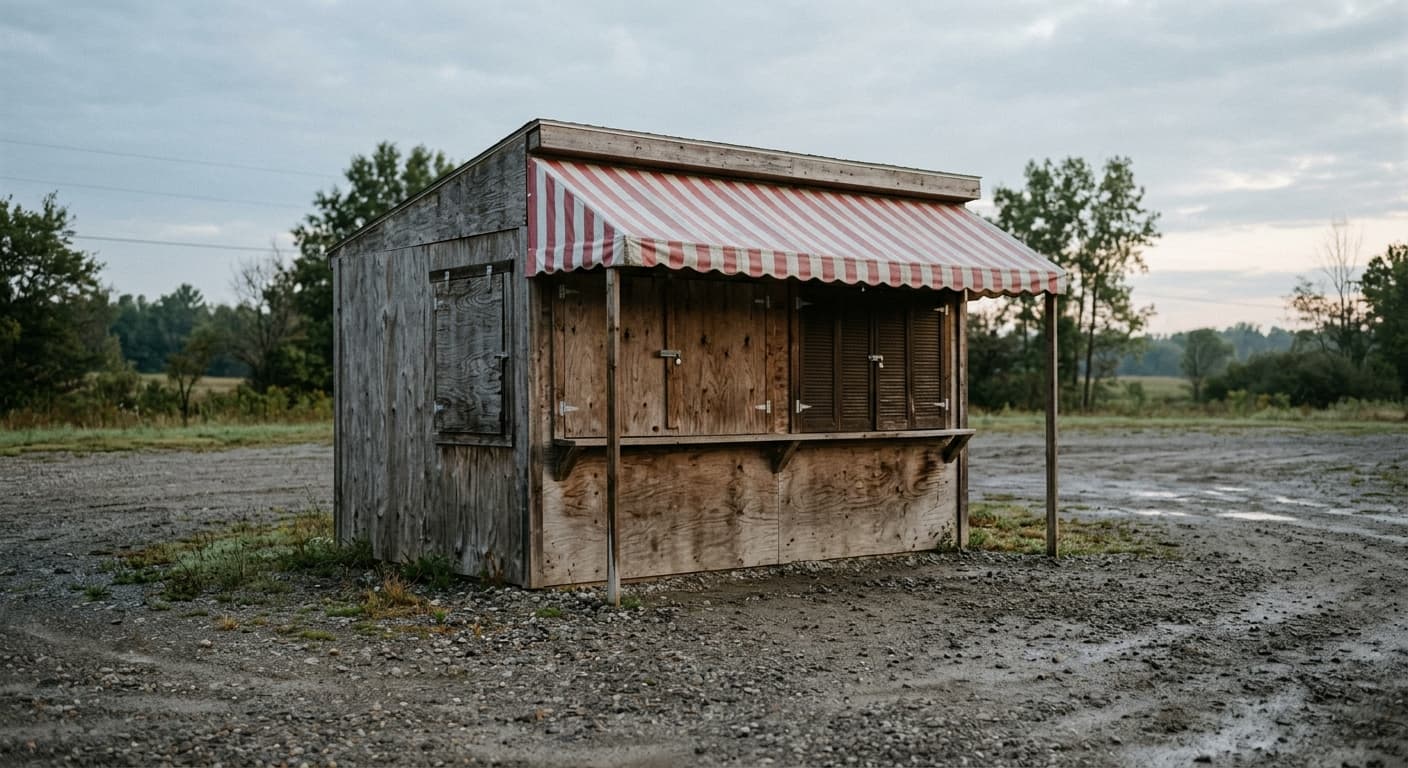
Tennessee permits D.O.T. Class C common fireworks statewide, sold by a licensed retailer year-round or a seasonal retailer during two fixed calendar windows, with an age-16 purchase floor, location-based use restrictions, and population-banded local carve-outs that block or specially allow sale in particular counties and cities, under Tenn. Code Ann. Title 68, Chapter 104.
Jurisdiction scope: This article addresses Tennessee's state fireworks law under Tenn. Code Ann. Title 68, Chapter 104, Part 1 (§§68-104-101 to 68-104-116, the retail/consumer track) and Part 2 (§§68-104-201 to 68-104-215, the display-fireworks and pyrotechnic exhibitor-licensing track), plus the general sentencing statute, §40-35-111. It does not address a specific county or municipal ordinance beyond the population-banded provisions the state statute itself sets out.
What's Legal: D.O.T. Class C Common Fireworks
Tennessee's baseline rule bans fireworks outright, then carves out two permissible categories:
"It is unlawful for any individual, firm, partnership or corporation to possess, sell or use within this state, or ship into this state, except as provided in this chapter, any pyrotechnics commonly known as fireworks, other than the following permissible items: (1) Those items classified as D.O.T. Class C common fireworks; or (2) Those items that comply with the construction, chemical composition and labeling regulations promulgated by the United States consumer product safety commission and permitted for use by the general public under its regulations."
Tenn. Code Ann. §68-104-108
A permissible item must be properly named to conform to that nomenclature and certified compliant before it may be sold, offered for sale, possessed, or used, under §68-104-109.
The Toy and Novelty Carve-Out
Separate from the Class C category above, a defined list of low-powered novelty items is sellable and usable at all times, unrestricted by the seasonal window described below. The statute frames this as an exclusion from the definition of "fireworks" itself, not a standalone permission:
"Permissible items of fireworks, as provided for in §68-104-108, may be sold by a retailer or a seasonal retailer, except that fireworks does not include toy pistols, toy canes, toy guns, or other devices in which paper caps containing twenty-five one-hundredths (0.25) grains or less of explosive compounds are used; provided, they are so constructed that the hand cannot come in contact with the cap when in place for exploding, and toy paper pistol caps which contain less than twenty-five one-hundredths (0.25) grains of explosive compounds, cone, bottle, tube, and other type serpentine pop-off novelties, model rockets, wire sparklers containing not over one hundred (100) grams of composition per item (sparklers containing any chlorate or perchlorate salts may not exceed five (5) grams of composition per item), emergency flares, matches, trick matches and cigarette loads, the sale and use of which shall be permitted at all times."
Tenn. Code Ann. §68-104-110
What's Not Allowed
Anything exceeding D.O.T. Class C composition limits, commonly called an "illegal ground salute" and designed for an audible effect, is banned outright, statewide, for any purpose, and this ban is separate from and does not affect properly licensed display fireworks under Part 2:
"All items of fireworks that exceed the limits of D.O.T. Class C common fireworks as to explosive composition, such items being commonly referred to as 'illegal ground salutes' designed to produce an audible effect, are expressly prohibited from shipment into, manufacture, possession, sale or use within this state for any purpose. This subdivision (b)(1) shall not affect display fireworks authorized by this chapter."
Tenn. Code Ann. §68-104-112(b)(1)
A second or subsequent violation of this specific ban is a Class E felony, under §68-104-112(b)(2), a materially harsher outcome than the ordinary Class C misdemeanor that covers most other chapter violations. "Special fireworks," meaning Class B/1.3G-equivalent devices, anything other than Class C, and unmanned free-floating open-flame devices such as sky lanterns, also fall outside the ordinary consumer category and require the Part 2 exhibitor-licensing track described below, under §68-104-101(9).
Sale Window: It Runs Through Who Is Licensed to Sell
Tennessee does not impose a single statewide sale-date ban. Instead, the calendar restriction is built into the definition of who counts as a "seasonal retailer":

"'Seasonal retailer' means any person engaged in the business of making retail sales of fireworks within this state from June 20 through July 5 and December 10 through January 2 of each year"
Tenn. Code Ann. §68-104-101(8)
A plain "retailer," by contrast, is defined as anyone engaged in retail fireworks sales "at any time during the year," under §68-104-101(6), a separate, unrestricted permit category. So the June 20-July 5 and December 10-January 2 dates control seasonal-retailer sales specifically; a year-round retailer permit exists alongside it.
Purchase Age and Location Restrictions on Use
A purchaser must be at least 16, and Tennessee requires identification for a borderline buyer:
"To purchase any Class C common fireworks, a person must be at least sixteen (16) years of age. Any person sixteen (16) or seventeen (17) years of age who wishes to purchase Class C common fireworks must provide proof of age to the retailer or seasonal retailer by presenting a state-issued photo identification or be accompanied by an adult. It is unlawful to offer for retail sale or to sell any Class C common fireworks to any person under sixteen (16) years of age or to any intoxicated or irresponsible person."
Tenn. Code Ann. §68-104-112(a)(1)
No calendar use-date restriction beyond the sale window applies; instead, use is restricted by location and conduct. No igniting fireworks within 600 feet of a church, hospital, asylum, or public school, or within 200 feet of a location where fireworks are stored, sold, or offered for sale, under §68-104-112(a)(2). No igniting or discharging fireworks within, or throwing them from, a motor vehicle, and no placing or throwing an ignited firework into or at a vehicle or at or near a person or group of people, under §68-104-112(a)(3). Chapter 104 sets no clock-hours limit on use; an hours restriction in Tennessee comes from a local ordinance or private act, not from the state statute.
Population-Banded Local Rules
Tennessee bans retail sale of Class C common fireworks by population class, and the band is not limited to one county. It reaches any county over 355,000 residents on the 2010 census or any later federal census, which currently means Shelby, Davidson, Knox, and, since the 2020 census, Hamilton County:
"It is unlawful for any individual, firm, partnership or corporation to sell at retail any Class C common fireworks within any county of this state having a population greater than three hundred fifty-five thousand (355,000), according to the 2010 federal census or any subsequent federal census, except in municipalities within such counties with a population of not less than six hundred (600) nor more than six hundred twenty (620), according to the 1980 federal census or any subsequent census, that permitted the sale of such fireworks before 1984; provided, that it is not unlawful for Class C common fireworks to continue to be sold by a person on a parcel of land that contains a fireworks stand, if: (A) The parcel of property upon which such fireworks are sold is either partially located in a county having a population in excess of three hundred fifty-five thousand (355,000), according to the 2010 federal census or any subsequent federal census, or there is disagreement concerning whether such property is wholly contained within a county having a population in excess of three hundred fifty-five thousand (355,000), according to the 2010 federal census or any subsequent federal census; and (B) Fireworks have been sold annually at such stand for a period of at least forty-five (45) years."
Tenn. Code Ann. §68-104-112(a)(4)
So the ban applies inside Shelby, Davidson, Knox, and Hamilton counties, with two carve-outs written into the same subsection: a small municipality inside one of those counties, with a population of 600 to 620 residents according to the 1980 federal census or any subsequent census, that permitted fireworks sale before 1984, is exempt from the ban entirely; and a fireworks stand keeps selling if both conditions (A) and (B) are met, not (B) alone, meaning the parcel must sit partially inside (or have a genuine boundary dispute over) one of the banned counties, and fireworks must have been sold there every year for at least 45 years. The statute does not limit that grandfather to a single stand statewide; any parcel meeting both conditions qualifies.
Two further named exceptions separately re-legalize retail sale that would otherwise be swept up by the population ban: the City of East Ridge, and a municipality with a population of roughly 10,170 to 10,179 residents, under §68-104-112(c). A different population band works the opposite direction, defaulting to legal rather than banned: in counties with roughly 58,075 to 58,175 residents on the 1980 federal census or any subsequent census, fireworks sale and possession is lawful unless the county's or a municipality's governing body votes, by majority, to prohibit it, a vote that body may reverse at any time, under §68-104-105(b).
Local Option
Beyond the population-banded provisions above, Chapter 104 leaves general local authority intact: a private act or city ordinance further prohibiting or restricting fireworks sale or use is unaffected by this chapter, under §68-104-116. Where a municipality or county has declared fireworks sale or possession illegal by ordinance, fireworks held for retail sale there are contraband subject to confiscation, and shipping fireworks into that jurisdiction for retail sale is itself illegal, under §68-104-105(b).
Permits
A state fire marshal permit is required to manufacture, distribute, wholesale, retail, or seasonally retail fireworks, under §68-104-101 through §68-104-104. A distributor may sell display fireworks, proximate pyrotechnics, or flame-effect materials only to a licensed exhibitor, and a wholesaler may sell only to a seasonal retailer, never directly to a retailer, under §68-104-101(1), (10). A new retail or seasonal-retail location's permit application must include a statement, signed by the county's or municipality's chief executive officer or a designee, that fireworks sale there is permissible, under §68-104-105(a). The fire marshal may inspect a location before issuing a permit and may revoke a permit, after notice and a contested-case hearing under the Uniform Administrative Procedures Act, for a chapter violation, and may bar a revoked holder from reapplying for up to three years, under §68-104-105(c)-(d). Display fireworks, proximate pyrotechnics, and flame-effect displays require a separate Part 2 exhibitor's license, which carries its own denial, suspension, and civil-penalty regime described below.
Penalties
The default penalty for a Chapter 104 violation is modest, but two carve-outs are far more severe. The general rule:
"Except as otherwise provided, a violation of this chapter is a Class C misdemeanor. Notwithstanding subsection (a), a violation of § 68-104-112(a)(1) is a Class C misdemeanor punishable by a fine to the retailer or seasonal retailer of up to one hundred dollars ($100) for the first offense, a fine of up to two hundred fifty dollars ($250) for the second offense, and a fine of up to five hundred dollars ($500) for subsequent offenses. Any municipality may adopt § 68-104-112(a)(1) by reference or substantial duplication as an ordinance violation."
Tenn. Code Ann. §68-104-114
A Class C misdemeanor generally carries up to 30 days and a fine set under Tennessee's general sentencing statute, §40-35-111. A second or subsequent violation of the illegal-ground-salutes ban is a Class E felony, carrying one to six years, a materially higher exposure than the ordinary misdemeanor track, under §68-104-112(b)(2). On the separate Part 2 exhibitor-licensing track, the fire marshal may assess a civil penalty, not a criminal one, up to $2,500 for a first violation and up to $10,000 for a second or subsequent violation, or up to $10,000 for a first violation the fire marshal finds willful and egregious, under §68-104-207(a).
Crossing State Lines
Federal law sets the floor: 16 CFR 1500.17 and Part 1507 define which consumer devices may be sold at all; 27 CFR 555.141(a)(7) exempts the importation, distribution and storage of consumer fireworks from ATF licensing (manufacture is not exempt); 18 U.S.C. 836 makes it a federal offense, punishable by up to one year, to transport fireworks into any state whose law specifically prohibits or regulates their use, in violation of that law, except in the course of continuous interstate transportation, with exceptions for common carriers, water carriers and federal agencies; and USPS Publication 52 § 341.22 bars fireworks from the mail entirely. Because Tennessee's own illegal-ground-salutes ban and its population-banded local prohibitions operate on top of the statewide Class C rule, a buyer moving fireworks from a broader-allow neighboring state into a Tennessee county or city that has banned them risks both the state and local penalties described above and the federal transport statute.
For a neighboring state with a narrower consumer category, see Kentucky's fireworks laws; for another state using the same D.O.T. Class C consumer framework, see Georgia's fireworks laws.
For how Tennessee's rule compares with every other state, see the fireworks laws by state comparison.
Disclaimer: This article provides general legal information about fireworks laws in the United States as of September 2026. It is not legal advice. Fireworks statutes, local ordinances, sale windows, and penalties change frequently and are often further restricted by county or city ordinance beyond what state law requires; verify the current rule for your specific county and city before buying, selling, or using fireworks, and consult a lawyer licensed in your state for advice about a specific situation.
Statute text on this page reflects the Tennessee Code as codified through the 2019 amendments; the official Tennessee Code Annotated is published by LexisNexis. Confirm a specific figure against the current code before relying on it. Last updated: 2026-09-17.
Frequently Asked Questions
Are fireworks legal in Tennessee?
Yes, D.O.T. Class C common fireworks are legal statewide, under Tenn. Code Ann. §68-104-108. Anything exceeding Class C composition limits, commonly called illegal ground salutes, is banned outright for any purpose, under §68-104-112(b)(1), and retail sale is separately banned in any county over 355,000 residents (Shelby, Davidson, Knox, and Hamilton counties currently), with narrow exceptions for one small municipality and for a fireworks stand meeting a two-part grandfather test.
When can you buy fireworks in Tennessee?
It depends on the seller's permit type. A seasonal retailer may sell only June 20 through July 5 and December 10 through January 2, while a year-round retailer permit allows sale at any time during the year, under §68-104-101(6), (8).
Is there an age minimum to buy fireworks in Tennessee?
16. A 16- or 17-year-old must show state-issued photo ID or be accompanied by an adult, under §68-104-112(a)(1). Selling to anyone under 16 or to an intoxicated or irresponsible person is unlawful.
Where can you legally set off fireworks in Tennessee?
Not within 600 feet of a church, hospital, asylum, or public school, and not within 200 feet of a fireworks storage or sale location, under §68-104-112(a)(2). Igniting or throwing fireworks from a vehicle, or at a person or vehicle, is also unlawful.
What is the penalty for illegal fireworks in Tennessee?
Most chapter violations are a Class C misdemeanor, under §68-104-114. A retailer's or seasonal retailer's under-16 sale violation carries an escalating fine ($100/$250/$500). A second or subsequent violation of the illegal-ground-salutes ban is a Class E felony, carrying one to six years, under §68-104-112(b)(2).
Can a city or county in Tennessee ban fireworks even though state law allows them?
Yes. A local ordinance or private act further prohibiting or restricting fireworks sale or use is unaffected by Chapter 104, under §68-104-116. Fireworks held for retail sale where sale is locally banned are contraband, and shipping fireworks into that jurisdiction for sale is itself illegal, under §68-104-105(b).
Updates
Independently fact-checked against the cited primary sources
Independently fact-checked against the cited primary sources
The Law Behind This Article
This article rests on the statutory provisions below, held in our own legal record and retrieved from the official source. Tap a section to read the operative text.
Tennessee Code Annotated
§ 68-104-108Permissible fireworks.In force
It is unlawful for any individual, firm, partnership or corporation to possess, sell or use within this state, or ship into this state, except as provided in this chapter, any pyrotechnics commonly known as fireworks, other than the following permissible items: (1) Those items classified as D.O.T.…
Official text (excerpt) · last checked 2021-05-21 · Read the full text in our law library
§ 68-104-112Unlawful acts in the sale and handling of fireworks.In force
(a)(1) To purchase any Class C common fireworks, a person must be at least sixteen (16) years of age. Any person sixteen (16) or seventeen (17) years of age who wishes to purchase Class C common fireworks must provide proof of age to the retailer or seasonal retailer by presenting a state-issued…
Official text (excerpt) · last checked 2021-05-21 · Read the full text in our law library
Cited in 1 court opinions in our collectionLatest citing opinion in our collection: 2012
Opinions citing this section in our collection:
- Dennis R. Massengale v. City of East Ridge (Court of Appeals of Tennessee 2012, 399 S.W.3d 118)“…of Chapter 475 of the Public Acts of 2011, now codified at Tenn. Code Ann. § 68-104-112(c). Chapter 475 states, verbatim, as fo…”
Identified automatically from the court opinions citing this section — not a ranking of which case controls.
§ 68-104-110Retail sale of permissible items — Exception to definition of “fireworks.”In force
Permissible items of fireworks, as provided for in § 68-104-108 , may be sold by a retailer or a seasonal retailer, except that fireworks does not include toy pistols, toy canes, toy guns, or other devices in which paper caps containing twenty-five one-hundredths (0.25) grains or less of explosive…
Official text (excerpt) · last checked 2021-05-21 · Read the full text in our law library
§ 68-104-109Conditions for sale and use of permissible articles.In force
No permissible articles of common fireworks defined in § 68-104-108 shall be sold, offered for sale, or possessed within this state, or used, in this state, except as provided in § 68-104-211 , unless it is properly named to conform to the nomenclature of § 68-104-108 , and unless it is certified…
Official text (excerpt) · last checked 2021-05-21 · Read the full text in our law library
§ 68-104-114Penalties.In force
(a) Except as otherwise provided, a violation of this chapter is a Class C misdemeanor. (b) Notwithstanding subsection (a), a violation of § 68-104-112(a)(1) is a Class C misdemeanor punishable by a fine to the retailer or seasonal retailer of up to one hundred dollars ($100) for the first…
Official text (excerpt) · last checked 2021-05-21 · Read the full text in our law library
§ 68-104-105Permit for new location — Illegal acts — Inspections — Revocation of permits.In force
(a) Any request for the issuance of a retailer's or seasonal retailer's fireworks permit for a new location shall be accompanied by a statement that the sale of fireworks in the county or municipality, respectively, is permissible.…
Official text (excerpt) · last checked 2021-05-21 · Read the full text in our law library
Cited in 1 court opinions in our collectionLatest citing opinion in our collection: 2012
Opinions citing this section in our collection:
- SNPCO, INC. v. City of Jefferson City (Tennessee Supreme Court 2012, 363 S.W.3d 467)“…ality certifying that the sale of fireworks is permissible. Tenn. Code Ann. § 68-104-105(a) (2011). In addition, all fireworks h…”
Identified automatically from the court opinions citing this section — not a ranking of which case controls.
§ 68-104-101Chapter definitions.In force
As used in this chapter, unless the context otherwise requires: (1) “Distributor” means any person engaged in the business of making sales of fireworks to any other person engaged in the business of reselling fireworks either as a retailer, wholesaler, or seasonal retailer, or any person who…
Official text (excerpt) · last checked 2021-05-21 · Read the full text in our law library
§ 68-104-116Private acts and municipal ordinances unaffected.In force
This chapter shall not affect the validity of any private act, nor any city ordinance further prohibiting or restricting the sale or use of fireworks; provided, that in counties with a population of not less than fifty-eight thousand seventy-five (58,075) nor more than fifty-eight thousand one…
Official text (excerpt) · last checked 2021-05-21 · Read the full text in our law library
Cited in 1 court opinions in our collectionLatest citing opinion in our collection: 2012
Opinions citing this section in our collection:
- SNPCO, INC. v. City of Jefferson City (Tennessee Supreme Court 2012, 363 S.W.3d 467)“…4.pdf (last visited Mar. 1, 2012). 2 See Tenn. Code Ann. § 68-104-116 (2011). Persons seeking a license to se…”
Identified automatically from the court opinions citing this section — not a ranking of which case controls.
§ 68-104-207Denial, suspension, revocation or refusal to renew license or certification.In force
(a) The fire marshal may refuse to grant, or may suspend, revoke or refuse to renew any license or certification held under this part, and may assess a civil penalty not exceeding two thousand five hundred dollars ($2,500) for a first violation of this part and not exceeding ten thousand dollars…
Official text (excerpt) · last checked 2021-05-21 · Read the full text in our law library
§ 68-104-104Consignee required to hold permit before shipping or delivering fireworks — Purchase only from seller holding permit — Record of sale.In force
No person shall deliver, sell or ship fireworks into or within this state, unless the consignee produces the required permit or evidence that the consignee holds such permit.…
Official text (excerpt) · last checked 2021-05-21 · Read the full text in our law library
Code of Federal Regulations Title 16
§ 1500.17Banned hazardous substances.In forcecited in 36 of our articles
(a) Under the authority of section 2(q)(1)(B) of the act, the Commission declares as banned hazardous substances the following articles because they possess such a degree or nature of hazard that adequate cautionary labeling cannot be written and the public health and safety can be served only by keeping such articles out of interstate commerce: (1) Mixtures that are intended primarily for application to interior masonry walls, floors, etc., as a water repellant treatment and that are “extremely flammable” within the meaning of section 2(1) of the act (repeated in § 1500.3(b)(10)). (2) Carbon tetrachloride and mixtures containing it (including carbon tetrachloride and mixtures containing it used in fire extinguishers), excluding unavoidable manufacturing residues of carbon tetrachloride in other chemicals that under reasonably foreseeable conditions of use do not result in an atmospheric concentration of carbon tetrachloride greater than 10 parts per million.
Official text (excerpt) · last checked 2026-09-23 · Read the full text in our law library · Verify at ecfr.gov
Cited in 16 court opinions in our collectionLatest citing opinion in our collection: 2024
Opinions citing this section in our collection:
- United States v. Midwest Fireworks Mfg. Co., Inc. Fireworks of America Ltd. Corp. Pacific Fin. Servs. Of America, Inc. Larry Lomaz David Bowman (Court of Appeals for the Sixth Circuit 2001, 248 F.3d 563)“…venty-nine types of fireworks and the constitutionality of 16 C.F.R. § 1500.17 (a)(3) (2001). We affirm. BACKGR…”
- United States v. Charles Focht, an Individual, and Mark Focht, an Individual, Doing Business Under the Name Liberty Industries (Court of Appeals for the Third Circuit 1989, 882 F.2d 55)“…al, the government asserts the district court misconstrued 16 C.F.R. § 1500.17 (a)(3), (8) when it held the regulation…”
- United States v. Shelton Wholesale, Inc. (District Court, W.D. Missouri 1999, 34 F. Supp. 2d 1147)“…ams) of pyrotechnic composition (the "amount test"). See 16 C.F.R. § 1500.17 (a)(3). 2. for all "[r]eloadable tube…”
Identified automatically from the court opinions citing this section — not a ranking of which case controls.
Also relied on in: Fireworks Laws by State (2026): What Is Legal, Sale Dates, Penalties, Delaware Fireworks Laws (2026): Sparklers, Novelties, Dates, DC Fireworks Laws: Permitted List, Licensing, Penalties
Code of Federal Regulations Title 27
§ 555.141Exemptions.In forcecited in 41 of our articles
(a) General. Except for the provisions of §§ 555.180 and 555.181, this part does not apply to: (1) Any aspect of the transportation of explosive materials via railroad, water, highway, or air which is regulated by the U.S. Department of Transportation and its agencies, and which pertains to safety. For example, regulations issued by the Department of Transportation addressing the security risk of aliens transporting explosives by commercial motor or railroad carrier from Canada preclude the enforcement of 18 U.S.C. 842(i)(5) against persons shipping, transporting, receiving, or possessing explosives incident to and in connection with the commercial transportation of explosives by truck or rail from Canada into the United States. Questions concerning this exception should be directed to ATF's Explosives Industry Program Branch in Washington, DC. (2) The use of explosive materials in medicines and medicinal agents in the forms prescribed by the official United States Pharmacopeia or the National Formulary.
Official text (excerpt) · last checked 2026-07-28 · Read the full text in our law library · Verify at ecfr.gov
Cited in 1 court opinions in our collectionLatest citing opinion in our collection: 2006
Opinions citing this section in our collection:
- Tripoli Rocketry Ass'n v. Bureau of Alcohol, Tobacco, Firearms, & Explosives (Court of Appeals for the D.C. Circuit 2006, 437 F.3d 75)“…imported, or distributed for their intended purposes.” See 27 C.F.R. § 555.141(a)(8) (2005) (current exemption); 26 C.…”
Identified automatically from the court opinions citing this section — not a ranking of which case controls.
Also relied on in: Florida Fireworks Laws (2026): Sparklers vs. Holiday Rules, Georgia Fireworks Laws (2026): Legal Statewide, No Local Ban, Hawaii Fireworks Laws (2026): Permits, Use Windows, and Penalties
United States Code Title 18
§ 836Transportation of fireworks into State prohibiting sale or useIn forcecited in 52 of our articles
Whoever, otherwise than in the course of continuous interstate transportation through any State, transports fireworks into any State, or delivers them for transportation into any State, or attempts so to do, knowing that such fireworks are to be delivered, possessed, stored, transshipped, distributed, sold, or otherwise dealt with in a manner or for a use prohibited by the laws of such State specifically prohibiting or regulating the use of fireworks, shall be fined under this title or imprisoned not more than one year, or both. This section shall not apply to a common or contract carrier or to international or domestic water carriers engaged in interstate commerce or to the transportation of fireworks into a State for the use of Federal agencies in the carrying out or the furtherance of their operations. In the enforcement of this section, the definitions of fireworks contained in the laws of the respective States shall be applied. As used in this section, the term “State” includes the several States, Territories, and possessions of the United States, and the District of Columbia. This section shall be effective from and after July 1, 1954.
Official text (excerpt) · last checked 2026-07-28 · Read the full text in our law library · Verify at uscode.house.gov
Cited in 15 court opinions in our collectionLatest citing opinion in our collection: 2024
Opinions citing this section in our collection:
- United States v. James A. Womack (Court of Appeals for the Fifth Circuit 1981, 654 F.2d 1034)“…eworks has been traditionally left to the states. He cites 18 U.S.C.A. § 836 , which prohibits the transportation of…”
- United States v. Bernard J. Semel (Court of Appeals for the Fourth Circuit 1965, 347 F.2d 228)“…y an information containing eighteen counts with violating 18 U.S.C.A. § 836 by having feloniously caused to be tra…”
- Cohen v. Bredehoeft (District Court, S.D. Texas 1968, 290 F. Supp. 1001)“…the states from legislating in this area. On the contrary, 18 U.S.C. Sec. 836 indicates an intent to encourage state…”
Identified automatically from the court opinions citing this section — not a ranking of which case controls.
Also relied on in: Alabama Fireworks Laws (2026): Legal Fireworks, Age Rules, Penalties, Alaska Fireworks Laws (2026): Age-18 Minimum, No Sale Window, Arizona Fireworks Laws (2026): Legal Devices, Local Rules, Penalties
Search our full record of US law — 2.1 million sections, every state + federal →
Sources and References
- Tenn. Code Ann. §68-104-101 - Chapter definitions (retailer, seasonal retailer, wholesaler, special fireworks)(law.justia.com)
- Tenn. Code Ann. §68-104-105 - Permit for new location; local option vote in population-banded counties(law.justia.com)
- Tenn. Code Ann. §68-104-108 - Permissible fireworks (Class C or CPSC-compliant)(law.justia.com)
- Tenn. Code Ann. §68-104-110 - Retail sale of permissible items; toy/novelty exception permitted at all times(law.justia.com)
- Tenn. Code Ann. §68-104-112 - Unlawful acts in the sale and handling of fireworks (age 16, location restrictions, illegal ground salutes, population bans)(law.justia.com)
- Tenn. Code Ann. §68-104-114 - Penalties(law.justia.com)
- Tenn. Code Ann. §68-104-116 - Private acts and municipal ordinances unaffected(law.justia.com)
- Tenn. Code Ann. §68-104-207 - Denial, suspension, revocation civil penalty (exhibitor licensing, Part 2)(law.justia.com)
- 16 C.F.R. § 1500.17 - CPSC banned-hazardous-substance device standards for fireworks(ecfr.gov).gov
- 16 C.F.R. Part 1507 - Fireworks devices consumer product safety standard(ecfr.gov).gov
- 27 C.F.R. § 555.141(a)(7) - ATF explosives-licensing exemption for importation, distribution, and storage of consumer fireworks(ecfr.gov).gov
- 18 U.S.C. § 836 - Transportation of fireworks into a state that specifically prohibits or regulates their use(uscode.house.gov).gov
- USPS Publication 52 § 341.22 - All fireworks are nonmailable explosives(pe.usps.com).gov