
Hawaii
Bankruptcy in Hawaii (2026): Exemptions & Means Test
Independently fact-checked against primary sources (last audited August 16, 2026). · Reviewed by the RecordingLaw editorial team. · Law checked current as of August 16, 2026. · 4 primary sources cited on this page. How we verify our legal content

Bankruptcy is a federal process, but in Hawaii the property you keep and the income test you must pass turn on state-specific rules. Unlike most states, Hawaii lets filers choose between the state exemptions and the federal bankruptcy exemptions, which makes the comparison an important early decision. This page explains Hawaii's exemptions, the Chapter 7 means test, and where cases are filed, as general legal information rather than legal advice.
Does Hawaii use state or federal bankruptcy exemptions?
Federal law lets each state decide whether residents may choose the federal exemption list in 11 U.S.C. 522(d). Hawaii has not opted out, so Hawaii filers may select either the state exemptions in HRS chapter 651 or the federal 522(d) list. You must choose one full set, not mix and match. Many filers compare the two, since the federal list includes a generous wildcard that can protect cash and other assets, while the Hawaii homestead exemption can protect more home equity for older filers or heads of family. If you recently moved to Hawaii, the federal domicile rules in 11 U.S.C. 522(b)(3) may require you to use a prior state's exemptions for a period, which can affect whether the federal option is available to you.
Hawaii homestead exemption
Under HRS 651-92, real property used as a residence is exempt from execution up to a fair market value of $30,000 if the owner is the head of a family or is 65 years of age or older, and up to $20,000 for any other person. HRS 651-91, the definitions section that governs this subpart, defines that real property as the dwelling house in which the owner resides and one parcel of land not to exceed one acre, together with other buildings on it, so the exemption reaches the dwelling plus no more than one acre rather than an unlimited parcel. The protected value is measured over and above all liens and encumbrances recorded before the lien being executed on. Only one exemption may be claimed per parcel. Under HRS 651-96, the proceeds from a sale remain protected for six months, allowing reinvestment in a new home. Because the federal homestead exemption may protect more equity for some filers, the homestead figure is a key part of the state-versus-federal comparison.

Motor-vehicle, personal-property, and wage exemptions
Hawaii's personal-property exemptions appear in HRS 651-121:
- Motor vehicle: one vehicle up to $2,575 of value over and above all liens and encumbrances.
- Household goods and clothing: all necessary household furnishings, appliances, books, and wearing apparel; plus jewelry, watches, and items of personal adornment up to $1,000 in aggregate.
- Tools of the trade: tools, implements, instruments, uniforms, equipment, one commercial fishing boat and nets, and one motor vehicle reasonably necessary to the debtor's trade or business.
- Wages: wages, salaries, commissions, and other compensation for personal services due for the 31 days before the proceeding. Hawaii and federal garnishment limits protect a portion of ongoing earnings.
- Burial plots and insurance proceeds of exempt property are also protected, the latter for six months.
These statutory figures are subject to amendment, so confirm current amounts before relying on them, and remember they apply only if you choose the Hawaii exemptions rather than the federal list.
The Chapter 7 means test in Hawaii
The means test decides whether your income is low enough to file Chapter 7 without a presumption of abuse. The first step compares your household's current monthly income, annualized, to the median family income for a Hawaii household of your size, as published by the U.S. Trustee Program (justice.gov/ust). At or below the median, you generally pass the first step; above it, a detailed calculation of allowed expenses and disposable income applies.
For cases filed on or after July 15, 2026, the U.S. Trustee Program lists Hawaii's median family income as:
- 1 earner: $85,254
- 2 people: $106,202
- 3 people: $123,454
- 4 people: $142,181
- Add $11,100 for each individual in excess of four.
These figures are updated periodically, typically about twice a year, so check the current table for your filing date.
Chapter 7 vs. Chapter 13
Chapter 7 is a liquidation. A trustee may sell non-exempt property to pay creditors, and most remaining unsecured debts are discharged, often within a few months. Because Hawaii filers can choose whichever exemption set protects more property, many keep all of what they own. Chapter 7 suits people with limited income and mostly unsecured debt.
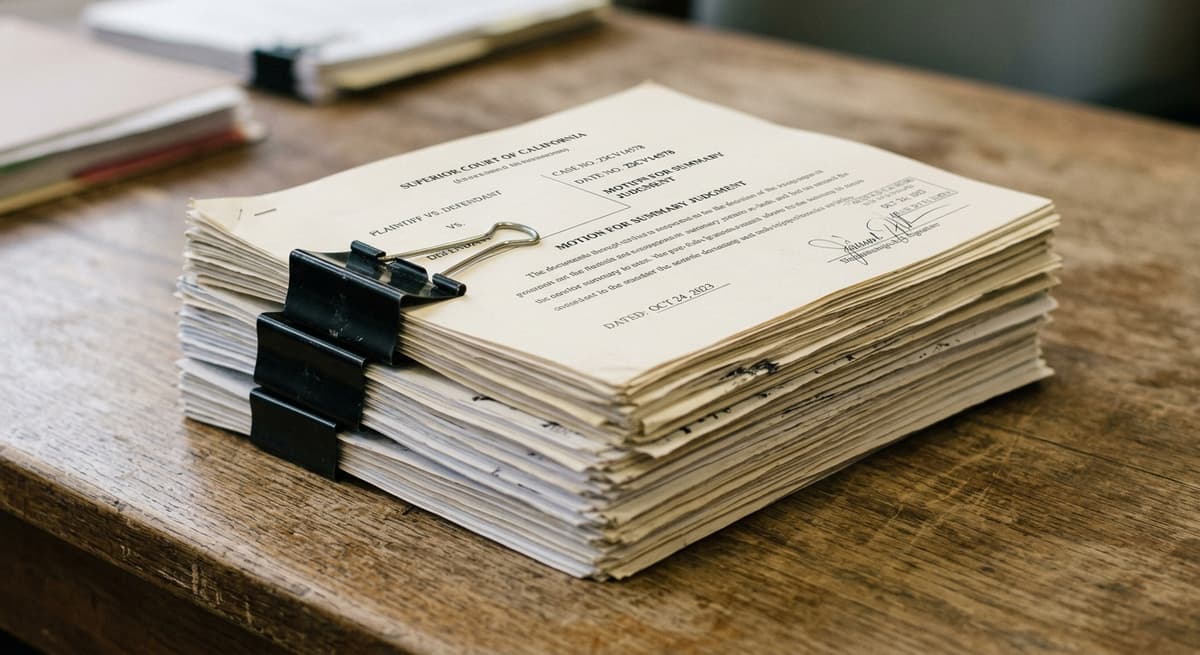
Chapter 13 is a reorganization for people with regular income who want to cure a mortgage or car-loan default, or who do not pass the Chapter 7 means test. You repay some or all of what you owe through a court-approved plan over three to five years, then receive a discharge of remaining eligible balances.
In both chapters, filing triggers the automatic stay under 11 U.S.C. 362, which immediately stops most collection actions, including foreclosure, repossession, lawsuits, and wage garnishment, while the case proceeds.
Where you file in Hawaii
Hawaii is a single federal district. All bankruptcy cases are filed in the U.S. Bankruptcy Court for the District of Hawaii, located in Honolulu, which serves the entire state.
What bankruptcy can and cannot do
Most unsecured debts, such as credit cards, medical bills, and personal loans, are dischargeable. Some obligations generally are not, including most student loans, recent income taxes, child support and alimony, and debts arising from fraud. Credit counseling from an approved agency is required before filing, and a debtor-education course is required before discharge. Bankruptcy has lasting effects on credit, so consider consulting a licensed Hawaii bankruptcy attorney, who can also advise whether the state or federal exemptions are better for your situation.

Frequently Asked Questions
Does Hawaii use state or federal bankruptcy exemptions?
Hawaii lets filers choose. You may use the Hawaii state exemptions in HRS chapter 651 or the federal exemptions in 11 U.S.C. 522(d), but you must pick one full set. The better choice depends on your assets, and recent movers may be limited by the federal domicile rules.
What is the homestead exemption in Hawaii?
Under HRS 651-92, up to $30,000 of equity in a residence for a head of family or a person 65 or older, and up to $20,000 for others, in one parcel of real property. HRS 651-91 limits that property to the dwelling house plus one parcel of land of not more than one acre. The federal homestead exemption may protect more for some filers, which is why the comparison matters.
What is the Hawaii median income for the means test?
For cases filed on or after July 15, 2026, the U.S. Trustee Program lists Hawaii's median family income as $85,254 for 1 person, $106,202 for 2, $123,454 for 3, and $142,181 for 4, adding $11,100 per additional person. These figures update periodically.
Will I lose my house or car in a Hawaii bankruptcy?
Often no. If your home equity fits within the homestead exemption you choose, and your car equity is within the $2,575 state vehicle exemption (or the higher federal vehicle exemption), and you stay current on secured payments, you can typically keep the property. The federal exemption set may protect more for some filers.
Should I use the Hawaii or federal exemptions?
It depends on what you own. The federal list has a large wildcard that helps protect cash and miscellaneous assets, while the Hawaii homestead can protect more home equity for older filers or heads of family. Compare both sets before filing.
Which bankruptcy court handles my Hawaii case?
All Hawaii bankruptcy cases are filed in the U.S. Bankruptcy Court for the District of Hawaii in Honolulu, which covers the entire state.
What is the automatic stay?
The automatic stay under 11 U.S.C. 362 takes effect when you file and immediately stops most collection actions, including foreclosure, repossession, lawsuits, and wage garnishment, while your case is pending.
Can bankruptcy erase all of my debts?
No. Most unsecured debts are dischargeable, but obligations such as most student loans, recent taxes, child support, alimony, and debts from fraud generally are not.
Overwhelmed by debt in Hawaii? Get a free bankruptcy consultation
Bankruptcy can stop foreclosure, wage garnishment, and creditor calls, and which debts you can clear and what property you keep depend on Hawaii's exemptions. Get a free, confidential consultation with a Hawaii bankruptcy attorney to understand your options. There is no obligation.
Updates
Corrected the Hawaii homestead exemption to reflect the one-acre limit in the definition at HRS 651-91, and updated the means-test figures to the U.S. Trustee Program table for cases filed on or after July 15, 2026.
Independently fact-checked against the cited primary sources; governing law re-checked for recent changes
Removed an invented acreage cap on the HRS 651-92 homestead exemption; the statute caps the exemption only by dollar value ($30,000 or $20,000), not by parcel size.
Governing law re-checked for recent changes
Governing law re-checked for recent changes
Reviewed and approved by an editor
The Law Behind This Article
This article rests on the statutory provisions below, held in our own legal record and retrieved from the official source. Tap a section to read the operative text.
Hawaii Revised Statutes, Chapter 651: 651 Attachment and Execution
§ 651-92Real property exemptIn force
(a) Real property shall be exempt from attachment or execution as follows: (1) An interest in one parcel of real property in the State of Hawaii, of a fair market value not exceeding $30,000, owned by the defendant who is either the head of a family or an individual sixty-five years of age or older. (2) An interest in one parcel of real property in the State of Hawaii, of a fair market value not exceeding $20,000, owned by the defendant who is a person. The fair market value of the interest exempted in paragraph (1) or (2) shall be determined by appraisal and shall be an interest which is over and above all liens and encumbrances on the real property recorded prior to the lien under which attachment or execution is to be made. Not more than one exemption shall be claimed on any one parcel of real property even though more than one person residing on such real property may otherwise be entitled to an exemption.
Official text (excerpt) · last checked 2026-09-06 · Read the full text in our law library · Verify at capitol.hawaii.gov
Cited in 6 court opinions in our collectionLatest citing opinion in our collection: 2023
Opinions citing this section in our collection:
- Schuler v. Wallace (Hawaii Supreme Court 1980, 61 Haw. 590)“…651-65 after the enactment of Act 136. Sess. L. 1976. is HRS § 651-92 (1979 Supp.). 2…”
- Castro v. Melchor (Hawaii Intermediate Court of Appeals 2016, 137 Haw. 179)“…nly natural persons), HRS § 651-91(1)(4) (1993) (as used in HRS §§ 651-92 to 651-96 (1993), a person means any in…”
- In Re Rasmussen (United States Bankruptcy Court, M.D. Florida 2006, 349 B.R. 747)“…ev.Stat. Ann. § 33-1101(B); Cal.Civ.Proc.Code § 703.110(a); Haw.Rev.Stat. § 651-92(a)(2); Ky.Rev.Stat. Ann. § 132.810(2)(e…”
Identified automatically from the court opinions citing this section — not a ranking of which case controls.
§ 651-121Certain personal property and insurance thereon, exemptIn forcecited in 2 of our articles
The following described personal property of an individual up to the value set forth shall be exempt from attachment and execution as follows: (1) All necessary household furnishings and appliances, books and wearing apparel, ordinarily and reasonably necessary to, and personally used by a debtor or the debtor's family residing with the debtor; and, in addition thereto, jewelry, watches, and items of personal adornment up to an aggregate cash value not exceeding $1,000; (2) One motor vehicle up to a value of $2,575 over and above all liens and encumbrances on the motor vehicle; provided that the value of the motor vehicle shall be measured by established wholesale used car prices customarily found in guides used by Hawaii motor vehicle dealers; or, if not listed in such guides, fair wholesale market value, with necessary adjustment for condition; (3) Any combination of the following: tools, implements, instruments, uniforms, furnishings, books, equipment, one commercial fishing boat and nets, one motor vehicle, and other personal property ordinarily and reasonably necessary to and personally owned and used by the debtor in the exercise of the debtor's trade, business, calling,…
Official text (excerpt) · last checked 2026-07-30 · Read the full text in our law library · Verify at capitol.hawaii.gov
Also relied on in: Hawaii Debt Collection Laws: The Bracket Garnishment Formula, 6-Year Debt Limit, and Repossession
United States Code Title 11
§ 522ExemptionsIn forcecited in 53 of our articles
In this section— “dependent” includes spouse, whether or not actually dependent; and “value” means fair market value as of the date of the filing of the petition or, with respect to property that becomes property of the estate after such date, as of the date such property becomes property of the estate. Notwithstanding section 541 of this title, an individual debtor may exempt from property of the estate the property listed in either paragraph (2) or, in the alternative, paragraph (3) of this subsection. In joint cases filed under section 302 of this title and individual cases filed under section 301 or 303 of this title by or against debtors who are husband and wife, and whose estates are ordered to be jointly administered under Rule 1015(b) of the Federal Rules of Bankruptcy Procedure, one debtor may not elect to exempt property listed in paragraph (2) and the other debtor elect to exempt property listed in paragraph (3) of this subsection. If the parties cannot agree on the alternative to be elected, they shall be deemed to elect paragraph (2), where such election is permitted under the law of the jurisdiction where the case is filed.
Official text (excerpt) · last checked 2026-07-28 · Read the full text in our law library · Verify at uscode.house.gov
Cited in 7,574 court opinions in our collectionLatest citing opinion in our collection: 2026
In the courts (editorial summary, independently checked):Taylor v. Freeland & Kronz (1992) held that a trustee who does not object within the 30-day period cannot later challenge an exemption claimed under 522(l), even one with no statutory basis. Owen v. Owen (1991) held that 522(f) lien avoidance is not defeated by a state exemption written to exclude lien-encumbered property.
Opinions citing this section in our collection:
- Taylor v. Freeland & Kronz (Supreme Court of the United States 1992, 503 U.S. 638)✓A Chapter 7 debtor listed the entire proceeds of her TWA discrimination suit as exempt and the trustee let the 30-day objection window lapse; the Court held that under § 522(l) the property is exempt once no one objects, even absent a colorable statutory basis.
- Patterson v. Shumate (Supreme Court of the United States 1992, 504 U.S. 753)✓A debtor's $250,000 ERISA pension interest was excluded from his estate under § 541(c)(2); answering a surplusage argument, the Court read § 522(d)(10)(E) as exempting a broader set of plans, and expressly declined to decide whether § 522(b)(2)(A) also applied.
- Owen v. Owen (Supreme Court of the United States 1991, 500 U.S. 305)✓An ex-wife's judgment lien attached to a Florida condo before state law made it a homestead; the Court held § 522(f) measures impairment against the exemption the debtor would have had but for the lien, so Florida's carve-out for prior liens did not defeat avoidance.
Identified automatically from the court opinions citing this section — not a ranking of which case controls.
Also relied on in: Bankruptcy Laws by State (2026): Exemptions & Means Test, Bankruptcy in Alaska (2026): Exemptions & Means Test, Bankruptcy in Arkansas (2026): Exemptions & Means Test
§ 362Automatic stayIn forcecited in 53 of our articles
Except as provided in subsection (b) of this section, a petition filed under section 301, 302, or 303 of this title, or an application filed under section 5(a)(3) of the Securities Investor Protection Act of 1970, operates as a stay, applicable to all entities, of— the commencement or continuation, including the issuance or employment of process, of a judicial, administrative, or other action or proceeding against the debtor that was or could have been commenced before the commencement of the case under this title, or to recover a claim against the debtor that arose before the commencement of the case under this title; the enforcement, against the debtor or against property of the estate, of a judgment obtained before the commencement of the case under this title; any act to obtain possession of property of the estate or of property from the estate or to exercise control over property of the estate; any act to create, perfect, or enforce any lien against property of the estate; any act to create, perfect, or enforce against property of the debtor any lien to the extent that such lien secures a claim that arose before the commencement of the case under this title; any act to…
Official text (excerpt) · last checked 2026-07-28 · Read the full text in our law library · Verify at uscode.house.gov
Cited in 19,606 court opinions in our collectionLatest citing opinion in our collection: 2026
In the courts (editorial summary, independently checked):United Sav. Assn. of Tex. v. Timbers of Inwood Forest Associates, Ltd. (1988) held that an undersecured creditor gets no interest as adequate protection under 362(d)(1) for delay caused by the stay. NLRB v. Bildisco & Bildisco (1984) applied 362(a) in requiring claims be pursued through bankruptcy administration, not suit.
Opinions citing this section in our collection:
- Clinton v. Jones (Supreme Court of the United States 1997, 520 U.S. 681)“…ublic interests. Brief for Petitioner 34-36. See, e. g., 11 U. S. C. § 362 (litigation against debtor stayed upon…”
- United Sav. Assn. of Tex. v. Timbers of Inwood Forest Associates, Ltd. (Supreme Court of the United States 1988, 484 U.S. 365)✓An undersecured lender on a Houston apartment project sought monthly payments as the price of continuing the § 362(a) automatic stay; the Court held that 'adequate protection' under § 362(d)(1) does not entitle it to interest for the delay in foreclosing on its collateral.
- Pennzoil Co. v. Texaco Inc. (Supreme Court of the United States 1987, 481 U.S. 1)“…if it were forced to file for bankruptcy under Chapter 11. 11 U. S. C. §362 . Texaco, or its successor in interest,…”
Identified automatically from the court opinions citing this section — not a ranking of which case controls.
Also relied on in: Bankruptcy in Arizona (2026): Exemptions & Means Test, Bankruptcy in Alabama (2026): Exemptions & Means Test, Bankruptcy in Georgia (2026): Exemptions & Means Test
Search our full record of US law — 2.1 million sections, every state + federal →
Sources and References
- U.S. Trustee Program, Census Bureau Median Family Income by Family Size (cases filed on or after April 1, 2026)(justice.gov).gov
- Hawaii Revised Statutes 651-92 (real property exempt / homestead)(capitol.hawaii.gov).gov
- Hawaii Revised Statutes 651-121 (personal property exemptions)(capitol.hawaii.gov).gov
- U.S. Bankruptcy Court for the District of Hawaii(hib.uscourts.gov).gov
- 11 U.S.C. 522 (exemptions; debtor's choice of state or federal where state has not opted out) via Cornell Legal Information Institute(law.cornell.edu)
- 11 U.S.C. 362 (automatic stay) via Cornell Legal Information Institute(law.cornell.edu)
- Hawaii Revised Statutes 651-91 (definitions; "real property" is the dwelling plus one parcel of land not to exceed one acre)(capitol.hawaii.gov)
- U.S. Trustee Program, Census Bureau Median Family Income by Family Size (cases filed on or after July 15, 2026)(justice.gov)