
South Dakota
South Dakota Background Check Laws (2026 Guide)
Independently fact-checked against primary sources (last audited August 16, 2026). · Reviewed by the RecordingLaw editorial team. · Law checked current as of August 16, 2026. · 13 primary sources cited on this page. How we verify our legal content

South Dakota has no statewide background check law for private employers, so federal FCRA rules govern screening statewide. Employers and landlords using consumer reporting agencies must follow FCRA's seven-year lookback for non-conviction records; criminal convictions report indefinitely. Minor offenses may qualify for automatic expungement under SDCL 23A-3-34.
South Dakota takes a relatively minimal approach to regulating background checks at the state level. The state does not have a comprehensive background check statute governing private employers, landlords, or licensing boards. Instead, South Dakota relies primarily on federal law, particularly the Fair Credit Reporting Act (FCRA) and Title VII of the Civil Rights Act, supplemented by a handful of state-specific provisions related to criminal record expungement and certain industry-mandated screenings.
Whether you are an employer screening job applicants, a landlord evaluating prospective tenants, or an individual trying to understand what will appear on your record, this guide covers every major aspect of South Dakota background check law currently in effect.
How Criminal Background Checks Work in South Dakota
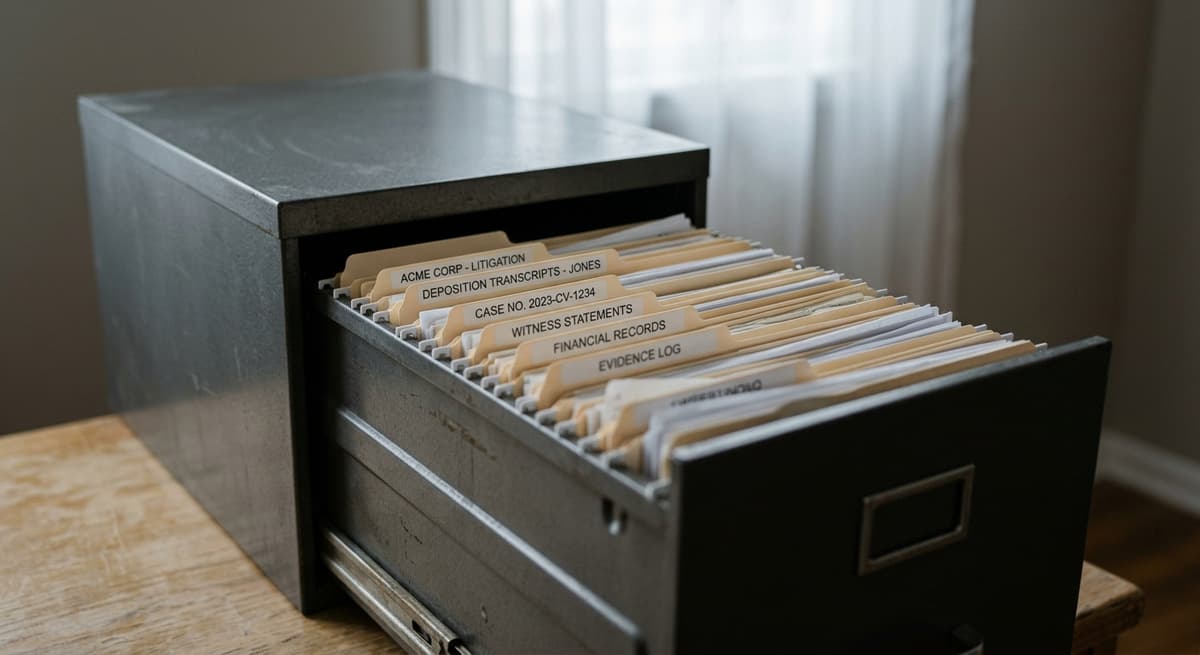
The South Dakota Division of Criminal Investigation (DCI), housed within the Office of the Attorney General, operates the state criminal background check system. The DCI Identification Section maintains the state's central repository of arrest and conviction records and processes all fingerprint-based background checks.
There are two primary types of criminal background checks available in South Dakota:
State-Only Background Check. This search covers criminal records maintained by the DCI within South Dakota. It is available to individuals requesting their own record and to employers conducting pre-employment screening. The fee for a state-only check is $26.75.
Combined State and FBI Background Check. This search includes both South Dakota records and federal records through the FBI database. It requires fingerprint submission and costs $43.25. Combined checks are available only to state-mandated agencies and employers who are required by law to conduct FBI-level screening before hiring.
The Fingerprint-Based Process
South Dakota requires fingerprint submission for official background checks. According to the DCI background check instructions, the process works as follows:
- Create an account on the DCI background check request form website
- Complete payment using a credit card or bank account
- Submit fingerprints through a LiveScan machine located in South Dakota (an appointment at the LiveScan location is typically necessary)
- Complete and submit electronic fingerprints within 10 days of account creation, or the request may be deleted and payment will need to be resubmitted
Processing times can take up to eight weeks after the DCI receives all necessary information, fingerprints, signed authorization, and fees. The DCI will either supply a copy of any criminal history found or provide a letter stating that no criminal history exists.
Public Court Records Access
South Dakota also provides public access to court records through the Unified Judicial System's Public Access Record Search (PARS) system. PARS allows searches by party name and date of birth or by case number. Criminal cases from 1989 to the present are available online unless sealed by court order. Each PARS search costs $20, regardless of whether the search returns any records.
For cases filed before 1989, records must be requested directly from the clerk of courts office in the county where the case was filed. Open court records referenced in a PARS summary can also be viewed at public access computer terminals located in all South Dakota courthouses.
Ban the Box Status in South Dakota
South Dakota does not have a statewide Ban the Box law. Private employers across the state may ask about criminal history on job applications, during interviews, and at any stage of the hiring process without restriction.
Public-sector hiring is not covered by a Ban the Box statute either. No provision of South Dakota Codified Law bars a state agency from asking about criminal history on an initial employment application, so any limit on that question in state government hiring would come from an individual agency's own hiring policy rather than from state law. Applicants should read the specific application they are completing.
Unlike states such as California, New York, or Illinois that have enacted comprehensive fair-chance hiring laws covering both public and private employers, South Dakota leaves private-sector hiring decisions regarding criminal history largely unregulated at the state level. No South Dakota municipality has adopted a local Ban the Box ordinance as of early 2026.
What This Means for Job Applicants
Because South Dakota lacks a private-sector Ban the Box law, applicants should expect that most private employers will ask about criminal history early in the hiring process. However, all employers remain subject to federal protections under Title VII of the Civil Rights Act of 1964 and the EEOC's Enforcement Guidance on the Consideration of Arrest and Conviction Records.
Under this guidance, employers should conduct an individualized assessment before rejecting an applicant based on criminal history, considering three factors (known as the "Green factors" from Green v. Missouri Pacific Railroad):
- The nature and gravity of the offense
- The time that has passed since the offense or completion of the sentence
- The nature of the job held or sought
A blanket policy of refusing to hire anyone with a criminal record may constitute disparate impact discrimination under Title VII if it disproportionately affects applicants of a particular race or national origin.
Expungement and Criminal Record Clearing
South Dakota's expungement laws are codified in SDCL Chapter 23A-3, starting at Section 23A-3-26. The state offers several pathways for clearing criminal records, though the options are more limited than in many other states, particularly for felony convictions.
Definition of Expungement
Under SDCL 23A-3-26, expungement means the sealing of all records held by any court, detention or correctional facility, law enforcement agency, criminal justice agency, or the Department of Public Safety concerning a person's detection, apprehension, arrest, detention, trial, or disposition of an offense. Expungement does not mean the physical destruction of records. The records continue to exist but become inaccessible to the general public.
Expungement of Arrest Records (Non-Convictions)
Under SDCL 23A-3-27, a person may petition the court for expungement of an arrest record under the following circumstances:
| Situation | Waiting Period |
|---|---|
| Arrest with no accusatory instrument filed | One year after the date of arrest |
| Case formally dismissed by the prosecutor | One year after the prosecuting attorney formally dismisses the entire criminal case on the record |
| Acquittal at trial | At any time after acquittal |
| Compelling necessity after dismissal | Within one year from the date of dismissal, on a showing of compelling necessity |
The petition must be filed with the Clerk of Court that had (or would have had) jurisdiction over the criminal case. Under SDCL 23A-3-28, the petitioner must serve the motion on the prosecuting attorney's office, typically at least 14 days before the hearing date.
South Dakota considers a motion to expunge as a civil filing, and the applicable filing fee is $70.
Expungement of Conviction Records
South Dakota provides limited options for expunging conviction records. Under the state's laws, the following pathways exist:
Automatic Expungement of Minor Offenses. Under SDCL 23A-3-34, any charge or conviction from a case where a petty offense, municipal ordinance violation, or Class 2 misdemeanor was the highest charged offense is automatically removed from a defendant's public record after five years, if all court-ordered conditions have been satisfied and the defendant has not been convicted of any further offense during those five years. This process occurs automatically without additional fees or hearings. The case record remains available to court personnel and may still be used to enhance the prosecution of a later offense.
Diversion Program Expungement. Under SDCL 23A-3-35, a person placed in a diversion program is eligible for expungement of the entire criminal record related to that arrest after successfully completing every term of the program and going one year and thirty days without any new charge other than a petty offense or minor traffic citation. Nothing in the statute requires a state's attorney to offer or operate a diversion program.
No General Petition Route for Convictions. South Dakota has no statute allowing a person to petition a court to expunge a conviction generally. The petition procedure in SDCL 23A-3-27 reaches only the record of an arrest, not a conviction, so outside the automatic removal and diversion routes above, conviction relief runs through the pardon and suspended-imposition paths described below.
Bureau Records Destruction (Not Court Expungement). Separately from the court process, SDCL 23-6-8.1 allows the director of the Bureau of Criminal Statistics to authorize destruction of the bureau's own information and records for four categories: persons who are dead; persons seventy-five years of age or older, unless a violation has occurred within the last ten years; incidents that are no longer considered crimes under South Dakota law; and misdemeanor offenses whose final date of disposition occurred at least ten years before the authorized destruction date. This is a discretionary agency housekeeping power over bureau records, not relief a person can request from a court, and it does not seal court files the way expungement under SDCL 23A-3-26 does.
No General Felony Expungement
Unlike many states that have expanded expungement eligibility in recent years, South Dakota does not have a general felony expungement statute. Felony convictions cannot be expunged by petition, and there is no age-based or decriminalization-based expungement route for them.
For felony convictions, the available pathways are:
- Gubernatorial pardon through the South Dakota Board of Pardons and Paroles
- Exceptional pardon under SDCL 24-14-8, which fully restores civil rights
- Suspended imposition of sentence under SDCL 23A-27-13, where the conviction is set aside upon successful completion of probation
Effect of Expungement
Once a record is expunged in South Dakota, the individual is treated as if the arrest or conviction never occurred. An expunged record should not appear on standard background checks conducted by consumer reporting agencies.
FCRA Requirements and Lookback Periods
When a South Dakota employer, landlord, or other entity uses a third-party consumer reporting agency (CRA) to conduct a background check, the federal Fair Credit Reporting Act (FCRA) applies. The FCRA establishes specific requirements that apply throughout the screening process.
Before Running a Background Check
Employers and other users of consumer reports must take two steps before requesting a background check through a CRA:
- Provide a standalone written disclosure to the individual stating that a background check will be conducted. This disclosure must be a separate document and cannot be embedded within a job application or lease agreement.
- Obtain signed written authorization from the individual granting permission to run the check.
The Seven-Year Lookback Period
Under 15 U.S.C. 1681c, consumer reporting agencies generally cannot report the following types of information if they are more than seven years old:
- Arrests that did not result in a conviction
- Civil suits and civil judgments
- Paid tax liens
- Accounts placed for collection
- Any other adverse item (except criminal convictions)
Criminal convictions have no federal time limit. A conviction can be reported by a CRA regardless of how old it is, unless the record has been expunged or sealed under state law.
There is one significant exception to the seven-year restriction: it does not apply to positions with an expected annual salary of $75,000 or more. For higher-paying positions, CRAs may report non-conviction records beyond the seven-year window.
South Dakota does not impose any additional state-level lookback restrictions beyond the federal FCRA standards. This means CRAs operating in South Dakota follow the federal rules without further limitation.
Adverse Action Process
If an employer or landlord decides to take an adverse action (such as not hiring or not renting to someone) based in whole or in part on information from a background check, the FCRA requires a two-step process:
Step 1: Pre-Adverse Action Notice. Before making a final decision, the employer or landlord must provide:
- A copy of the background check report
- A copy of the individual's rights under the FCRA (the "Summary of Rights" document)
- Written notice that an adverse decision is being considered
Step 2: Final Adverse Action Notice. After waiting a reasonable period (typically five business days) to allow the individual to dispute inaccurate information, the employer or landlord must provide:
- Written notice of the final decision
- The name, address, and phone number of the CRA that supplied the report
- A statement that the CRA did not make the hiring or rental decision
- Notice of the individual's right to obtain a free copy of the report and to dispute its accuracy
Failing to follow this process can result in lawsuits under the FCRA, including statutory damages of $100 to $1,000 per violation plus potential punitive damages and attorney's fees.
Employment Background Checks
South Dakota employers have broad discretion in conducting background checks, subject to federal FCRA and Title VII requirements.
At-Will Employment and Criminal History
South Dakota is an at-will employment state, meaning employers can generally hire and fire employees for any lawful reason. There is no state law prohibiting employers from considering criminal history in employment decisions, provided the consideration does not violate federal anti-discrimination protections.
However, employers should avoid asking about or considering the following during the hiring process:
- Arrest records without convictions. Using arrest-only records as a basis for employment decisions raises significant Title VII concerns, according to EEOC guidance.
- Expunged or sealed records. Records that have been expunged under SDCL Chapter 23A-3 should not be considered or used in employment decisions.
Industry-Specific Requirements
Several industries in South Dakota require background checks by state or federal law:
Education. South Dakota requires criminal background checks for school employees. In February 2026, Governor Larry Rhoden signed HB 1003, which amended provisions pertaining to required criminal background investigations for certain school employees. School districts must maintain a written policy identifying employment disqualifiers and establishing an appeal process for applicants who wish to challenge background check results.
Childcare. The South Dakota Department of Social Services requires background checks for individuals working in licensed childcare facilities.
Healthcare and Social Work. In February 2026, Governor Rhoden also signed HB 1028, establishing a criminal background check requirement for multistate licensure under the social work licensure compact, affecting social workers practicing across state lines.
Housing Background Checks
South Dakota does not have a state law specifically governing the use of criminal background checks in tenant screening. Landlords and property managers who use third-party screening services are subject to the federal FCRA requirements described above.
What Landlords Can Screen For
South Dakota landlords may screen prospective tenants for:
- Criminal history (convictions)
- Credit history and credit score
- Eviction history
- Rental history and references
- Income verification
Application Fees
South Dakota does not cap application fees for rental housing. Landlords may charge any amount for application processing, and these fees are non-refundable under state law.
FCRA Requirements for Landlords
When a landlord uses a CRA for tenant screening, the same FCRA rules apply as in employment screening:
- Written disclosure and signed consent are required before running the check
- The seven-year reporting limit applies to non-conviction records
- If the landlord denies a tenancy based on the screening report, they must provide an adverse action notice
Fair Housing Considerations
Under the Federal Fair Housing Act, landlords cannot discriminate based on race, color, national origin, religion, sex, familial status, or disability. The Department of Housing and Urban Development (HUD) has issued guidance stating that blanket criminal history bans in tenant screening may violate the Fair Housing Act if they produce a disparate impact on protected classes.
The South Dakota Division of Human Rights, housed within the Department of Labor and Regulation, also enforces state anti-discrimination protections. South Dakota law prohibits housing discrimination on the basis of race, color, creed, religion, sex, ancestry, disability, familial status, and national origin.
Landlords should apply consistent, documented screening criteria to all applicants and avoid policies that automatically disqualify anyone with any criminal record.
Professional Licensing Background Checks
South Dakota requires fingerprint-based background checks for many professional licenses, particularly in healthcare, education, childcare, law enforcement, and financial services.
How Licensing Background Checks Work
Professional licensing boards in South Dakota that are authorized by state legislation to conduct background checks must route their requests through the DCI. These checks typically require both a state-level search and an FBI national search, using fingerprints submitted through the LiveScan system.
South Dakota does not have a single generalized professional-licensing background-check statute. Instead, individual licensing statutes set their own requirements -- for example, SDCL 38-35-5 requires fingerprint-based state and federal background checks for industrial hemp license applicants, key participants, and landowner-lessees. Each licensing board otherwise establishes its own disqualifying offenses through its governing statutes and rules, based on the nature of the licensed profession and the potential risk to public safety.
Considerations for Applicants with Criminal Records
While South Dakota does not have a broad statutory provision similar to some states that prohibit automatic denial of professional licenses based solely on a criminal conviction, applicants with criminal records should be aware of the following:
- Each licensing board sets its own criteria for evaluating criminal history
- The relevance of the offense to the duties of the licensed profession is typically a key factor
- Expunged records under SDCL Chapter 23A-3 generally should not appear on background checks used for licensing purposes
- A gubernatorial pardon may help overcome licensing barriers related to a felony conviction
Firearm Background Checks in South Dakota
South Dakota follows federal law for firearm purchases from licensed dealers. All purchases through a Federal Firearms Licensee (FFL) require a National Instant Criminal Background Check System (NICS) check.
South Dakota is not a point of contact state for NICS, meaning the state does not conduct its own firearms background checks. Instead, FFLs contact the FBI directly to initiate the federal check.
Key points about South Dakota firearms background checks:
- Private sales do not require a background check. South Dakota does not require background checks for private firearm sales or transfers between individuals.
- Dealer identity verification. Under state law, a dealer may not sell a handgun unless the purchaser is personally known to the dealer or presents clear evidence of identity.
- Concealed carry permit exemption. Holders of a valid South Dakota concealed weapons permit issued within the previous five years are exempt from the NICS check when purchasing a handgun from an FFL.
- Mental health reporting. South Dakota law requires courts and mental health facilities to report information to the Attorney General identifying individuals who have become prohibited from possessing firearms due to mental health adjudications. The Attorney General then reports these records to NICS.
Recent Changes and Legislative Updates
South Dakota's background check landscape has seen several updates in recent legislative sessions:
2026 Legislative Session:
- HB 1003 (signed February 25, 2026): Amended provisions for required criminal background investigations of certain school employees, updating the screening process for education professionals.
- HB 1028 (signed February 13, 2026): Established criminal background check requirements for multistate licensure under the social work licensure compact.
Ongoing Considerations:
- South Dakota continues to rely on federal FCRA standards rather than enacting state-specific lookback restrictions.
- No Ban the Box legislation for private employers has advanced in recent legislative sessions.
- The state has not expanded felony expungement eligibility to match trends in other states.
How to Check Your Own Criminal Record in South Dakota
Individuals can request their own criminal history record from the DCI. This is useful for verifying accuracy before applying for jobs, housing, or professional licenses.
To request your record:
- Visit the South Dakota Attorney General background check page
- Create an account on the background check request form website
- Pay the $26.75 fee for a state-only check
- Schedule an appointment at a LiveScan location in South Dakota to submit fingerprints
- Complete fingerprint submission within 10 days of account creation
Under SDCL 23-5-12, any person may examine the criminal history information the attorney general keeps about them by submitting a written request together with fingerprint identification, and may authorize the attorney general to release that information to other individuals or organizations. The attorney general may require a signed liability waiver before releasing it. The statute itself does not create a procedure for challenging what the record says, so if you find an error, contact the DCI Identification Section and ask what its correction process requires.
Frequently Asked Questions
Does South Dakota have a Ban the Box law?
South Dakota does not have a statewide Ban the Box law for private employers. Private employers may ask about criminal history at any point during the hiring process, including on the initial job application. State government hiring is not covered by a Ban the Box statute either: no provision of South Dakota Codified Law bars a state agency from asking about criminal history on an initial application, so any limit would come from an individual agency's own hiring policy rather than state law. No South Dakota municipality has adopted a local Ban the Box ordinance.
How far back do background checks go in South Dakota?
Under the federal FCRA, most non-conviction records (arrests, civil suits, collections) are limited to a seven-year lookback period when reported by a consumer reporting agency. Criminal convictions have no time limit and can be reported indefinitely, unless the record has been expunged. The seven-year restriction does not apply to positions with an annual salary of $75,000 or more. South Dakota does not impose any additional state-level lookback restrictions beyond the federal FCRA standards.
Can a misdemeanor be expunged in South Dakota?
Sometimes. Under SDCL 23A-3-34, a charge or conviction from a case where a petty offense, municipal ordinance violation, or Class 2 misdemeanor was the highest charged offense is automatically removed from the public record after five years, if all court-ordered conditions were satisfied and there were no further convictions in that period. A person who completes a diversion program may also be eligible for expungement of that record under SDCL 23A-3-35. Beyond those two routes, South Dakota has no general petition procedure for expunging a conviction: the petition in SDCL 23A-3-27 covers arrest records only, and other misdemeanor and felony convictions can be addressed only through a gubernatorial pardon or a suspended imposition of sentence.
What do employers in South Dakota need to do before running a background check?
When using a third-party consumer reporting agency, employers must provide a standalone written disclosure informing the applicant that a background check will be conducted and obtain signed written authorization. These are federal FCRA requirements that apply in all states. The disclosure must be a separate document and cannot be included within the job application itself. If the employer decides not to hire based on the background check results, they must follow the FCRA two-step adverse action process: a pre-adverse action notice with a copy of the report, followed by a final adverse action notice after a reasonable waiting period.
Can a landlord in South Dakota deny a rental application based on criminal history?
South Dakota does not have a state law specifically restricting the use of criminal history in tenant screening. Landlords may consider criminal conviction records when evaluating applicants. However, landlords who use third-party screening services must comply with FCRA requirements, including obtaining written consent and following the adverse action process if they deny an application. Under the federal Fair Housing Act and South Dakota anti-discrimination law, a blanket criminal history ban that produces a disparate impact on protected classes may be considered discriminatory.
Updates
Corrected the South Dakota expungement section against the official statute text: removed a described petition route for expunging convictions that does not exist in SDCL 23A-3-27, corrected the dismissal row of the arrest-record table to the statutory one-year wait, restated SDCL 23-6-8.1 as the Bureau of Criminal Statistics director's discretionary records-destruction authority rather than court expungement, and limited the SDCL 23-5-12 description to the right it actually grants.
Fixed a corrupted internal link that wrapped two unrelated sentences and pointed to an off-topic recording-consent page instead of the state's background-check content.
Independently fact-checked against the cited primary sources; governing law re-checked for recent changes
Governing law re-checked for recent changes
Corrected the Professional Licensing Checks section: SDCL 38-35-5 is an industrial-hemp licensing statute, not a generic professional-licensing background-check authority, and was reworked to describe it accurately.
Governing law re-checked for recent changes
Reviewed and approved by an editor
The Law Behind This Article
This article rests on the statutory provisions below, held in our own legal record and retrieved from the official source. Tap a section to read the operative text.
South Dakota Codified Laws, Chapter 23-5: CRIMINAL IDENTIFICATION
§ 23-5-12Examination of own criminal history information--Written request--Authorization of release to others--Waiver of liability.In force
Any person may examine criminal history information filed with the attorney general that refers to that person. The person requesting such information shall supply the attorney general with a written request together with fingerprint identification. The person may also authorize the attorney general to release his criminal history information to other individuals or organizations. The attorney general may require the person to sign a waiver releasing the state, its employees or agents from any liability before releasing criminal history information.
Official text (excerpt) · last checked 2026-07-30 · Read the full text in our law library · Verify at sdlegislature.gov
South Dakota Codified Laws, Chapter 23A-3: (RULE 4.1) ARREST
§ 23A-3-26Definition of expungement.In force
Terms used in §§ 23A-3-27 to 23A-3-33, inclusive, mean: (1) "Expungement," the sealing of all records on file within any court, detention or correctional facility, law enforcement agency, criminal justice agency, or Department of Public Safety concerning a person's detection, apprehension, arrest, detention, trial or disposition of an offense within the criminal justice system. Expungement does not imply the physical destruction of records.
Official text (excerpt) · last checked 2026-07-30 · Read the full text in our law library · Verify at sdlegislature.gov
Cited in 3 court opinions in our collectionLatest citing opinion in our collection: 2025
Opinions citing this section in our collection:
- In Re the Expungement of Records Related to Oliver (South Dakota Supreme Court 2012, 810 N.W.2d 350)“…iver begins her statutory analysis by correctly noting that SDCL 23A-3-26 broadly defines expungement. Specifical…”
- Matter of Implicated Individual (South Dakota Supreme Court 2021, 2021 S.D. 61)“…urt’s statutory authority to expunge criminal records. See SDCL 23A-3-26 to -37. We are not convinced that the…”
- Record Expungement of Jones (South Dakota Supreme Court 2025, 2025 S.D. 54)“…osition of an offense within the criminal justice system.” SDCL 23A-3-26(1). To obtain an order of expungement,…”
Identified automatically from the court opinions citing this section — not a ranking of which case controls.
South Dakota Codified Laws, Chapter 38-35: INDUSTRIAL HEMP
§ 38-35-5Criminal background check--Denial of license for conviction--Licensure exemption.In force
Each applicant for any license under this chapter, key participant, and landowner, if the applicant is the lessee, shall submit to a state and federal criminal background investigation by means of fingerprint checks by the Division of Criminal Investigation and the Federal Bureau of Investigation. A licensed applicant must only submit to a background criminal investigation pursuant to this section once every three years, unless requested by the secretary. Upon application for a license, the department shall submit fingerprints to the division. Upon completion of the criminal background check, the division shall forward to the department all information obtained as a result of the criminal background check. This information must be obtained prior to the licensure of the applicant. All costs or fees associated with the criminal background checks are the responsibility of the applicant. Information provided to the department under this section is confidential, is not public record, and is exempt from the provisions of chapter 1-27. However, the department may share this information with law enforcement and the Department of Public Safety.
Official text (excerpt) · last checked 2026-07-30 · Read the full text in our law library · Verify at sdlegislature.gov
United States Code Title 15
§ 1681cRequirements relating to information contained in consumer reportsIn forcecited in 54 of our articles
Except as authorized under subsection (b), no consumer reporting agency may make any consumer report containing any of the following items of information: Cases under title 11 or under the Bankruptcy Act that, from the date of entry of the order for relief or the date of adjudication, as the case may be, antedate the report by more than 10 years. Civil suits, civil judgments, and records of arrest that, from date of entry, antedate the report by more than seven years or until the governing statute of limitations has expired, whichever is the longer period. Paid tax liens which, from date of payment, antedate the report by more than seven years. Accounts placed for collection or charged to profit and loss which antedate the report by more than seven years. Any other adverse item of information, other than records of convictions of crimes which antedates the report by more than seven years.
Official text (excerpt) · last checked 2026-07-28 · Read the full text in our law library · Verify at uscode.house.gov
Cited in 383 court opinions in our collectionLatest citing opinion in our collection: 2026
In the courts (editorial summary, independently checked):Katz v. Donna Karan Co. (2017) addressed the FACTA truncation rule in 1681c(g) and affirmed dismissal for lack of Article III standing, treating material risk of harm as a fact question. Edward Seamans v. Temple University (2014) held the seven-year window in 1681c(a)(4) is extended for an education loan only until that loan is repaid.
Opinions citing this section in our collection:
- Katz v. Donna Karan Co. (Court of Appeals for the Second Circuit 2017, 872 F.3d 114)✓A shopper sued two stores whose receipts printed the first six digits of his credit card number; the Second Circuit affirmed dismissal for lack of standing, seeing no clear error in the finding that those digits show only the card issuer, not a material risk of identity theft.
- Edward Seamans v. Temple University (Court of Appeals for the Third Circuit 2014, 744 F.3d 853)✓A defaulted university loan kept appearing on a borrower's credit reports after he repaid it because the school never reported the delinquency date; the Third Circuit held the Higher Education Act suspends section 1681c(a)(4)'s aging-off rule only until repayment.
- Gonzales v. Arrow Financial Services, LLC (Court of Appeals for the Ninth Circuit 2011, 660 F.3d 1055)✓A debt buyer offered to settle health club debts over seven years old, saying that if it was reporting the account the bureaus would be told it was settled; the Ninth Circuit, treating those debts as unreportable under section 1681c(a)(4), called that implication misleading.
Identified automatically from the court opinions citing this section — not a ranking of which case controls.
Also relied on in: How Long Does a Felony Stay on Your Record? (2026), Alabama Background Check Laws (2026 Guide), Louisiana Background Check Laws (2026 Guide)
Search our full record of US law — 2.1 million sections, every state + federal →
Sources and References
- South Dakota Attorney General - Background Check Requirements(atg.sd.gov).gov
- South Dakota DCI - State Only Background Check(atg.sd.gov).gov
- South Dakota UJS - Expungement Self-Help(ujs.sd.gov).gov
- South Dakota UJS - Public Access to Court Records(ujs.sd.gov).gov
- South Dakota UJS - Instructions for Obtaining Criminal Background Checks(ujs.sd.gov).gov
- South Dakota DSS - Childcare Background Checks(dss.sd.gov).gov
- South Dakota DLR - Human Rights and Federal Agencies(dlr.sd.gov).gov
- South Dakota Legislature - SDCL 38-35-5 Criminal Background Check (Industrial Hemp Licensing)(sdlegislature.gov).gov
- South Dakota DLR - Labor and Employment Laws July 2025-June 2026(dlr.sd.gov).gov
- SDCL 23A-3-26 - Definition of Expungement(law.justia.com)
- EEOC - Arrest and Conviction Records in Employment(eeoc.gov).gov
- FTC - Fair Credit Reporting Act(ftc.gov).gov
- HUD - Fair Housing Act Overview(hud.gov).gov
- Giffords - Background Check Procedures in South Dakota(giffords.org)
- South Dakota Public Access Record Search (PARS)(ujspars.sd.gov).gov
- SDCL 23-5-12 - Examination of Own Criminal History Information(sdlegislature.gov)
- SDCL 23A-3-27 - Motion for Expungement of Arrest Record(sdlegislature.gov)
- SDCL 23A-3-34 - Automatic Removal of Petty Offense and Class 2 Misdemeanor Records(sdlegislature.gov)
- SDCL 23A-3-35 - Eligibility of Person Placed in Diversion Program for Expungement(sdlegislature.gov)
- SDCL 23-6-8.1 - Destruction of Records of Certain Persons, Incidents, and Offenses(sdlegislature.gov)