
South Dakota
South Dakota AI Meeting Recording Laws (2026)
Independently fact-checked against primary sources (last audited August 16, 2026). · Reviewed by the RecordingLaw editorial team. · Law checked current as of August 16, 2026. · 4 primary sources cited on this page. How we verify our legal content

South Dakota's eavesdropping statute, S.D. Codified Laws Section 23A-35A-20, takes an unusual structural approach to recording consent. South Dakota's statute directly targets non-parties who use eavesdropping devices without consent, and its felony provision opens with an explicit cross-reference to a separate exceptions section, S.D. Codified Laws Section 23A-35A-21. The practical result is a one-party consent framework: a person who participates in a conversation can record it without informing others. For AI meeting recording tools, the statute's focus on non-party interception raises pointed questions about whether autonomous AI bots qualify as the type of third-party eavesdropper the law was written to address.
South Dakota's Recording Consent Framework
South Dakota's eavesdropping law is codified at S.D. Codified Laws Section 23A-35A-20. The statute identifies three categories of prohibited conduct, each targeting a specific type of unauthorized eavesdropping.
The operative clause is oddly built, and the wording matters, so it is worth reading as enacted: "Except as provided in § 23A-35A-21, a person is guilty of a Class 5 felony who is not: (1) A sender or receiver of a communication who intentionally and by means of an eavesdropping device overhears or records a communication ... without the consent of either a sender or receiver of the communication; (2) A person present during a conversation or discussion who intentionally and by means of an eavesdropping device overhears or records the conversation or discussion ... without the consent of a party to the conversation or discussion; or (3) A member of a jury who intentionally records or listens to by means of an eavesdropping device the deliberations of the jury."
The opening negation ("who is not") grammatically governs all three subdivisions, and that is where the text becomes genuinely ambiguous. Read with subdivision (1), it describes an outsider: someone who is not a sender or receiver and who uses an eavesdropping device on the communication. Read the same way into subdivision (2), the prefix would reach a person who is not present during the conversation, which is close to the opposite of how the subdivision reads on its own. South Dakota courts have not construed the provision, so the exact reach of subdivision (2) is unsettled. The third subdivision addresses jury members who record deliberations.
One-Party Consent Through Statutory Structure
South Dakota's felony provision at Section 23A-35A-20 begins with an explicit cross-reference to a separate exceptions section, stating "Except as provided in § 23A-35A-21." Independent of that cross-reference, the way the statute defines prohibited conduct also produces a one-party consent result. Because the statute only prohibits non-party interception (and present-party recording without consent), a party to a conversation who records it is simply outside the scope of the prohibited categories. This structural approach means that consent from one party (even the recording party themselves) generally satisfies the statute.
What the Statute Covers
The statute applies to two broad categories. "Communications" includes wire and electronic transmissions such as phone calls, VoIP calls, and digital communications. "Conversations or discussions" covers oral, in-person exchanges. The use of an "eavesdropping device" is a required element; the statute does not apply to overhearing a conversation without a recording device.
The "Present During" Distinction
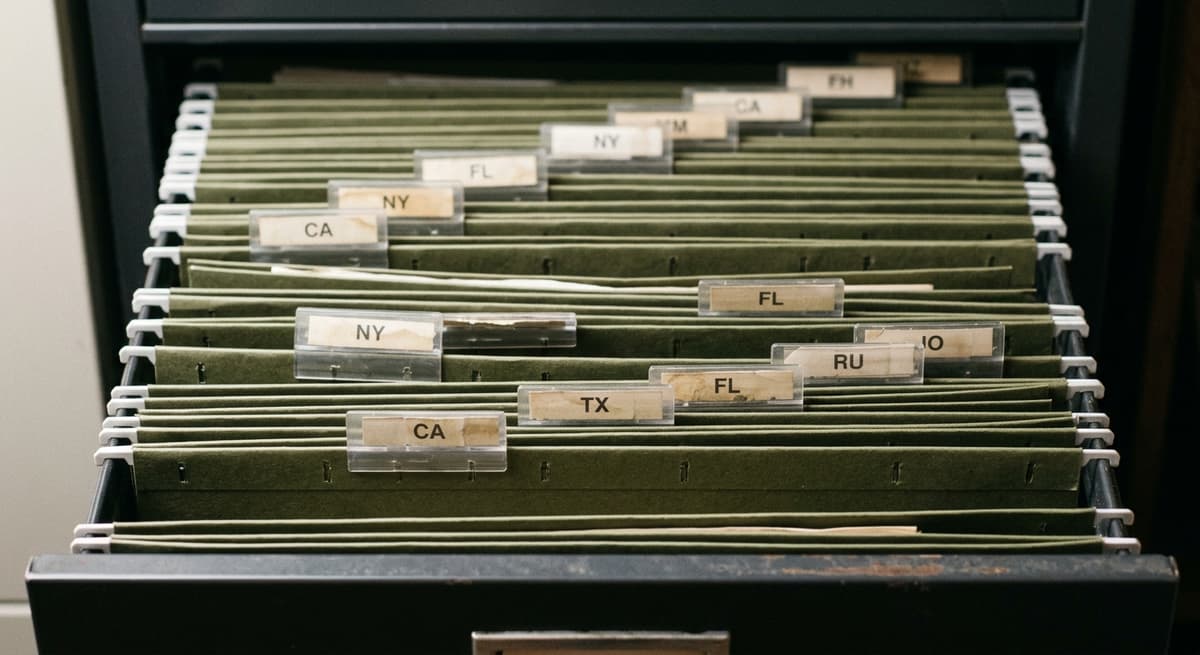
A non-party who intercepts a communication remotely (such as tapping a phone line) is the clearest target of the statute. Subdivision (2), which speaks of a person "present during a conversation or discussion" who uses an eavesdropping device without the consent of a party, is harder to pin down because of the "who is not" prefix discussed above. On one reading it adds in-person eavesdropping by someone in the room; on the literal reading of the prefix it reaches a person who is not present. Either way, the question is relevant to AI meeting bots that are "present" in virtual meetings as named attendees, and no South Dakota court has answered it.
Federal Law Alignment
South Dakota's one-party consent framework aligns with the federal standard under 18 U.S.C. Section 2511. Recordings that satisfy South Dakota law generally comply with federal requirements. When a South Dakota participant records a call with someone in a two-party consent state like California or Illinois, the stricter state's law typically governs.
How South Dakota Law Applies to AI Meeting Recorders
South Dakota's statute is particularly direct in its relevance to AI meeting bots. The law targets "a person who is not a sender or receiver" of a communication who uses a device to record without consent. This language maps closely onto the operational model of third-party AI recording services.
AI Bots as Non-Party Eavesdroppers
Under Section 23A-35A-20, the first prohibited category covers a person who is not a sender or receiver of a communication and who uses an eavesdropping device to record without consent. When a participant activates a third-party AI service that joins a meeting independently, the AI vendor receives and records communication content through its own infrastructure. The vendor is not a sender or receiver of the communication in any substantive sense; it is a third party capturing the exchange.
The second subdivision speaks of a person "present during a conversation or discussion" who uses an eavesdropping device without the consent of a party. AI bots that join virtual meetings as named attendees are arguably "present during" the conversation. Whether that places them inside or outside subdivision (2) depends on how the statute's "who is not" prefix is read, and no South Dakota court has decided the point. The first subdivision, which turns on not being a sender or receiver, is the more predictable source of exposure for a third-party bot.
The Otter.ai Class Action
The In re Otter.AI Privacy Litigation proceeding (N.D. Cal., No. 5:25-cv-06911, filed August 15, 2025) alleges that Otter.ai's notetaker bot autonomously joins meetings, records conversations, and transmits audio to Otter's servers without meaningful consent from non-user participants. The complaint describes conduct that, under South Dakota's statute, would closely resemble non-party eavesdropping: a third-party entity using a device to record communications without consent from either a sender or receiver.
The Ambriz "Capability Test"
The Ambriz v. Google LLC decision (N.D. Cal. 2025) held that an AI system's technical capability to use recorded data for its own benefit (model training, product improvement) is sufficient to classify it as a third-party interceptor, regardless of whether the data was actually used that way. Under South Dakota's framework, this reasoning reinforces the argument that AI vendors with data-use capabilities are non-party eavesdroppers under Section 23A-35A-20.
Popular AI Meeting Tools and South Dakota Compliance
South Dakota's statute, with its focus on non-party eavesdropping, creates a straightforward compliance analysis for AI recording tools.
Otter.ai OtterPilot
Otter.ai's OtterPilot joins calls as a named bot, records audio, generates transcripts, and produces meeting summaries. Under South Dakota law, OtterPilot is not a sender or receiver of the communication. It is a third-party service that captures communication content through its own infrastructure. If no party to the communication has consented to Otter's recording, the conduct falls within the first prohibition of Section 23A-35A-20.
Fireflies.ai Fred
Fireflies.ai's "Fred" bot follows the same operational model: joining meetings as a visible attendee, recording audio, and processing it on external servers. The Cruz v. Fireflies.AI Corp. lawsuit (C.D. Ill., Dec. 2025) raised biometric data concerns, alleging that Fireflies captured voiceprint data without consent; the plaintiff voluntarily dismissed the case without prejudice in March 2026. South Dakota does not have a biometric privacy statute, but voiceprint collection could still implicate common law privacy protections.
Zoom AI Companion and Platform-Integrated Tools
Zoom's AI Companion operates within the Zoom platform rather than as a separate third-party service. Under South Dakota law, this integration matters because the AI processing occurs within the same platform participants are already using. Microsoft Teams Copilot and Google Gemini function similarly within their respective host platforms, reducing the non-party eavesdropper argument.
Penalties for Violations in South Dakota
South Dakota classifies eavesdropping violations as felonies, though the state's penalty scale is moderate compared to some jurisdictions.
Criminal Penalties
Under S.D. Codified Laws Section 23A-35A-20, violating the eavesdropping prohibition is a Class 5 felony. South Dakota's sentencing framework under Section 22-6-1 sets the maximum penalty for a Class 5 felony at 5 years imprisonment in a state correctional facility. A fine of up to $10,000 may also be imposed.
The felony classification applies to anyone who intentionally uses an eavesdropping device to overhear or record a communication or conversation without the required consent, and to anyone who aids, authorizes, employs, procures, or permits another to do so.
Federal Criminal and Civil Exposure
Violations that also implicate 18 U.S.C. Section 2511 carry federal penalties of up to 5 years in prison. Under 18 U.S.C. Section 2520, victims can recover the greater of actual damages (plus any profits the violator made) or statutory damages, whichever is greater between $100 per day of violation and $10,000, plus attorney fees and costs.

Employer and Workplace Considerations
South Dakota employers deploying AI meeting recording tools face compliance obligations under both state and federal law.
Employer Recording Authority
Under South Dakota's one-party consent framework, an employer who participates in a meeting can record it without informing other participants. A manager on a team call could lawfully use a personal recording device. Activating a third-party AI service that independently processes the recording raises the non-party eavesdropper concerns discussed above.
No State Privacy Statute
South Dakota has not enacted a comprehensive consumer data privacy law as of April 2026. This distinguishes the state from a growing number of jurisdictions that impose additional data processing requirements on businesses. The absence of a state privacy statute means that AI meeting recording vendors operating in South Dakota face fewer state-level regulatory obligations beyond the wiretapping statute itself.
Workplace Policy Requirements
Effective South Dakota workplace AI recording policies should specify approved AI tools, require advance notice to meeting participants, define data retention and access controls, establish opt-out procedures, and address multi-state compliance for calls involving participants in two-party consent states.
South Dakota's AI Legislative Activity
South Dakota's legislature has addressed AI through targeted measures, though none directly regulate AI meeting recording as of April 2026.
Deepfake Election Protections
SB 164, signed by the Governor on March 25, 2025, prohibits the use of deepfakes to influence elections. The law demonstrates South Dakota's willingness to apply criminal penalties to specific AI-generated content, though it does not address AI meeting recording.
State Government AI Guidance
The South Dakota Bureau of Information and Telecommunications has published AI guidance standards for state government agencies. These standards address responsible AI use within government operations but do not impose requirements on private-sector AI meeting recording.
Practical Compliance Steps for South Dakota Users
Before the meeting: Notify all participants in writing (via calendar invitation or email) that AI recording and transcription will be used. Identify the specific AI tool by name.
At the meeting start: Announce that AI recording is active and provide a brief opportunity for objections. Most platforms display a visual recording indicator; supplement this with a verbal statement.
During the meeting: Honor opt-out requests promptly. Pause or disable the AI recorder for participants who object. Document the opt-out for compliance records.
After the meeting: Store recordings securely with appropriate access controls. Follow your data retention policy for deletion timelines. Restrict transcript access to authorized personnel.
For multi-state calls: Default to all-party consent when participants are in different states. South Dakota's one-party consent standard does not protect recordings involving participants in stricter jurisdictions like Illinois, California, or Washington.
Related South Dakota Recording Guides
- South Dakota Recording Laws: Complete guide to South Dakota's recording consent framework
- South Dakota Phone Call Recording Laws: Rules for recording phone calls in South Dakota
Consult an attorney for advice specific to your situation. This article provides general legal information about South Dakota's recording laws as they apply to AI meeting tools, not legal advice. Laws and their interpretations evolve; the information here is current as of April 2026.
More South Dakota Laws
Frequently Asked Questions
Is South Dakota a one-party or two-party consent state for recording?
South Dakota is a one-party consent state. S.D. Codified Laws Section 23A-35A-20 prohibits non-party eavesdropping without consent but does not restrict a party to a conversation from recording it. This means one participant can record a conversation without informing other participants.
Can AI meeting bots legally record my South Dakota meetings without everyone's consent?
This is legally uncertain as of April 2026. South Dakota's statute targets persons who are not senders or receivers of a communication and who use eavesdropping devices without consent. AI bots like Otter.ai operate as non-party third-party services that capture communications through independent infrastructure. This operational model closely resembles the conduct Section 23A-35A-20 prohibits. No South Dakota court has ruled on this specific issue.
What are the penalties for illegal eavesdropping in South Dakota?
Under S.D. Codified Laws Section 23A-35A-20, illegal eavesdropping is a Class 5 felony carrying up to 5 years imprisonment and a fine of up to $10,000. Federal violations under 18 U.S.C. Section 2511 add up to 5 years imprisonment, and civil liability under 18 U.S.C. Section 2520 includes statutory damages of whichever is greater -- $100 per day of violation or $10,000 -- plus attorney fees.
Does my employer in South Dakota need to tell me about AI meeting recording?
Under South Dakota's one-party consent framework, an employer participating in a meeting can technically record without notice. However, activating a third-party AI service raises questions about whether the bot constitutes a non-party eavesdropper under Section 23A-35A-20. Best practices call for clear workplace policies that disclose AI recording tools, and the national trend favors transparency and advance notice.
How does South Dakota law handle recordings when participants are in different states?
When call participants are in different states, the stricter state's recording law typically applies. South Dakota's one-party consent standard is relatively permissive, but calls involving participants in two-party consent states like California, Illinois, or Washington require all-party consent. South Dakota's rural geography and growing remote workforce make cross-state calls increasingly common.
Updates
Quoted the eavesdropping statute's operative text and flagged that the reach of its "present during a conversation" subdivision is unsettled, updated the Otter.ai case to its current caption, and repaired a broken related-links block.
Corrected the signing date of SB 164 (2025).
Independently fact-checked against the cited primary sources; governing law re-checked for recent changes
Corrected a claim that South Dakota's eavesdropping statute contains no explicit consent exception; the statute's felony provision actually opens with an express cross-reference to a separate exceptions section (Section 23A-35A-21).
Corrected the federal 18 U.S.C. Section 2520 civil-damages figure in the Federal Criminal and Civil Exposure section, the matching FAQ answer, and a KeyTakeaways bullet: the statute's statutory-damages prong is the greater of $100 per day of violation or $10,000, not a flat $10,000 per violation, matching the same correction already applied on the North Carolina twin page.
Governing law re-checked for recent changes
Reviewed and approved by an editor
The Law Behind This Article
This article rests on the statutory provisions below, held in our own legal record and retrieved from the official source. Tap a section to read the operative text.
South Dakota Codified Laws, Chapter 23A-35A: INTERCEPTION OF WIRE, ELECTRONIC, OR ORAL COMMUNICATIONS
§ 23A-35A-20Overhearing or recording communications, conversations, or jury deliberations by means of eavesdropping device as felony.In forcecited in 17 of our articles
Except as provided in § 23A-35A-21, a person is guilty of a Class 5 felony who is not: (1) A sender or receiver of a communication who intentionally and by means of an eavesdropping device overhears or records a communication, or aids, authorizes, employs, procures, or permits another to overhear or record, without the consent of either a sender or receiver of the communication; (2) A person present during a conversation or discussion who intentionally and by means of an eavesdropping device overhears or records the conversation or discussion, or aids, authorizes, employs, procures, or permits another to overhear or record, without the consent of a party to the conversation or discussion; or (3) A member of a jury who intentionally records or listens to by means of an eavesdropping device the deliberations of the jury or aids, authorizes, employs, procures, or permits another to record or listen.
Official text (excerpt) · last checked 2026-08-31 · Read the full text in our law library · Verify at sdlegislature.gov
Cited in 3 court opinions in our collectionLatest citing opinion in our collection: 2022
Opinions citing this section in our collection:
- State v. Woods (South Dakota Supreme Court 1985, 361 N.W.2d 620)“…ent fails. We next address the State’s argument that SDCL 23A-35A-20(2) exempts one party consent recordings…”
- State v. Braddock (South Dakota Supreme Court 1990, 452 N.W.2d 785)“…nsent recordings without prior court authorization” because SDCL 23A-35A-20 exempts from criminal liability a perso…”
- Gantvoort v. Ranschau (South Dakota Supreme Court 2022, 2022 S.D. 22)“…ff when no noise was detected in the room. 3. SDCL 23A-35A-20(1)–(2), which criminalizes recordings m…”
Identified automatically from the court opinions citing this section — not a ranking of which case controls.
Also relied on in: South Dakota Recording Laws (2026): One-Party Consent Rules, South Dakota Security Camera Laws, South Dakota Audio Recording Laws
South Dakota Codified Laws, Chapter 22-6: AUTHORIZED PUNISHMENTS
§ 22-6-1Felony classes and penalties--Restitution--Habitual criminal sentences.In forcecited in 8 of our articles
Except as otherwise provided by law, felonies are divided into the following nine classes which are distinguished from each other by the following maximum penalties which are authorized upon conviction: (1) Class A felony: death or life imprisonment in a state correctional facility. A lesser sentence than death or life imprisonment may not be given for a Class A felony. In addition, a fine of fifty thousand dollars may be imposed; (2) Class B felony: life imprisonment in a state correctional facility. A lesser sentence may not be given for a Class B felony. In addition, a fine of fifty thousand dollars may be imposed; (3) Class C felony: life imprisonment in a state correctional facility. In addition, a fine of fifty thousand dollars may be imposed; (4) Class 1 felony: fifty years imprisonment in a state correctional facility. In addition, a fine of fifty thousand dollars may be imposed; (5) Class 2 felony: twenty-five years imprisonment in a state correctional facility. In addition, a fine of fifty thousand dollars may be imposed; (6) Class 3 felony: fifteen years imprisonment in a state correctional facility.
Official text (excerpt) · last checked 2026-07-30 · Read the full text in our law library · Verify at sdlegislature.gov
Cited in 145 court opinions in our collectionLatest citing opinion in our collection: 2026
In the courts (editorial summary, independently checked):State v. Weiker (1983) read SDCL 22-6-1 Class 1 felony penalty, then life imprisonment, as a maximum rather than a mandatory term, and struck the resulting life sentences as disproportionate under the state constitution. State v. Chipps (2016) applied the section class maximums as the yardstick in gross disproportionality review.
Opinions citing this section in our collection:
- State v. Moeller (South Dakota Supreme Court 1996, 548 N.W.2d 465)“…do so, the conviction for murder in the first degree under SDCL 22-6-1 would be life imprisonment in the state…”
- State v. Weiker (South Dakota Supreme Court 1983, 342 N.W.2d 7)✓A man with three prior burglary convictions drew life without parole on three drug distribution counts as a habitual offender; the court read SDCL 22-6-1(2) as fixing life as the maximum, not a mandatory, Class 1 felony penalty and struck the sentences as disproportionate.
- State v. Rice (South Dakota Supreme Court 2016, 2016 S.D. 18)✓Rice organized a robbery that ended in a fatal shooting and received 80 years with 20 suspended for first-degree manslaughter; the court used the life maximum SDCL 22-6-1 sets for a Class C felony as its yardstick and found the term not grossly disproportionate.
Identified automatically from the court opinions citing this section — not a ranking of which case controls.
Also relied on in: South Dakota Expungement Laws: Arrest Records, Suspended Imposition, and What You Can Clear, How Many Years for Second Degree Murder? Sentences by State (2026), South Dakota Ring Doorbell Laws: What You Need to Know in 2026
United States Code Title 18
§ 2511Interception and disclosure of wire, oral, or electronic communications prohibitedIn forcecited in 422 of our articles
Except as otherwise specifically provided in this chapter any person who— intentionally intercepts, endeavors to intercept, or procures any other person to intercept or endeavor to intercept, any wire, oral, or electronic communication; intentionally uses, endeavors to use, or procures any other person to use or endeavor to use any electronic, mechanical, or other device to intercept any oral communication when— such device is affixed to, or otherwise transmits a signal through, a wire, cable, or other like connection used in wire communication; or such device transmits communications by radio, or interferes with the transmission of such communication; or such person knows, or has reason to know, that such device or any component thereof has been sent through the mail or transported in interstate or foreign commerce; or such use or endeavor to use (A) takes place on the premises of any business or other commercial establishment the operations of which affect interstate or foreign commerce; or (B) obtains or is for the purpose of obtaining information relating to the operations of any business or other commercial establishment the operations of which affect interstate or foreign…
Official text (excerpt) · last checked 2026-08-28 · Read the full text in our law library · Verify at uscode.house.gov
Cited in 2,045 court opinions in our collectionLatest citing opinion in our collection: 2026
In the courts (editorial summary, independently checked):Griggs-Ryan v. Smith (1990) applied the Section 2511(2)(d) prior-consent exception, treating a tenant repeatedly told that all incoming calls were taped as having impliedly consented. United States v. United States District Court (1972) read the then-current Section 2511(3) as conferring no presidential surveillance power.
Opinions citing this section in our collection:
- Mitchell v. Forsyth (Supreme Court of the United States 1985, 472 U.S. 511)✓The Attorney General authorized a warrantless 1970 national security wiretap that caught the plaintiff's calls; the Court held the since-repealed Section 2511(3) disclaimer left the tap lawful under Title III, and that Mitchell had qualified immunity.
- United States v. United States District Court for the Eastern District of Michigan (Supreme Court of the United States 1972, 407 U.S. 297)✓The Attorney General approved warrantless wiretaps on members of a domestic group accused of bombing a CIA office; the Court read Section 2511(3) as a congressional disclaimer conferring no surveillance power, then held the Fourth Amendment required prior judicial approval.
- Forsyth v. Barr (Court of Appeals for the Fifth Circuit 1994, 19 F.3d 1527)✓Dallas police used, in an internal affairs probe of an officer, calls private parties allegedly intercepted illegally; assuming that was unlawful, the Fifth Circuit held Section 2517(1) and (2) allowed the disclosure and use, defeating the Section 2511(1)(c) and (d) claims.
Identified automatically from the court opinions citing this section — not a ranking of which case controls.
Also relied on in: Connecticut Recording Laws (2026): Hybrid Consent Rules Explained, Oregon Recording Laws (2026): Hybrid One-Party and All-Party Rules, US Recording Laws by State (2026): All 50 States Explained
§ 2520Recovery of civil damages authorizedIn forcecited in 115 of our articles
Except as provided in section 2511(2)(a)(ii), any person whose wire, oral, or electronic communication is intercepted, disclosed, or intentionally used in violation of this chapter may in a civil action recover from the person or entity, other than the United States, which engaged in that violation such relief as may be appropriate. In an action under this section, appropriate relief includes— such preliminary and other equitable or declaratory relief as may be appropriate; damages under subsection (c) and punitive damages in appropriate cases; and a reasonable attorney’s fee and other litigation costs reasonably incurred.
Official text (excerpt) · last checked 2026-07-28 · Read the full text in our law library · Verify at uscode.house.gov
Cited in 860 court opinions in our collectionLatest citing opinion in our collection: 2026
In the courts (editorial summary, independently checked):Walker v. Darby (1990) held a 2520 plaintiff need not prove the contents of intercepted conversations, only interception and a justified expectation against it. Bartnicki v. Vopper (2001) barred 2520 damages against defendants who took no part in the interception, obtained the tape lawfully, and disclosed a matter of public concern.
Opinions citing this section in our collection:
- Jessie Walker v. Thomas E. Darby, Hugh L. Robinson, Jr., and Kenneth Day (Court of Appeals for the Eleventh Circuit 1990, 911 F.2d 1573)✓A postal letter carrier said three supervisors wired an intercom near his workstation to listen in. Reversing summary judgment, the Eleventh Circuit held a section 2520 plaintiff can show interception without proving the contents of specific conversations.
- Gelbard v. United States (Supreme Court of the United States 1972, 408 U.S. 41)“…disclosure, or use is entitled to recover civil damages, 18 U. S. C. § 2520 . Title III also bars the use as eviden…”
- DirecTV, Inc. v. Hoa Huynh (Court of Appeals for the Ninth Circuit 2007, 503 F.3d 847)“…7 U.S.C. § 605 (e)(4), or alternatively, for violations of 18 U.S.C. § 2520 (a), or alternatively, for violations o…”
Identified automatically from the court opinions citing this section — not a ranking of which case controls.
Also relied on in: Alabama Audio Recording Laws: Consent Rules and Penalties, Alabama Phone Call Recording Laws: What You Need to Know, Alaska Phone Call Recording Laws: Rules for Landline, Cell, and VoIP (2026)
Search our full record of US law — 2.1 million sections, every state + federal →
Sources and References
- S.D. Codified Laws Section 23A-35A-20(sdlegislature.gov).gov
- S.D. Codified Laws Section 22-6-1 (Felony Penalties)(sdlegislature.gov).gov
- 18 U.S.C. Section 2511(law.cornell.edu)
- 18 U.S.C. Section 2520(law.cornell.edu)
- S.D. SB 164 (Deepfake Election Protections)(sdlegislature.gov).gov
- South Dakota BIT AI Guidance(sd.gov).gov
- Brewer v. Otter.ai (N.D. Cal.)(courtlistener.com)
- Ambriz v. Google LLC(goodwinlaw.com)
- In re Otter.AI Privacy Litigation, No. 5:25-cv-06911 (N.D. Cal.)(courtlistener.com)