Nevada
Nevada AI Laws and Regulation (2026)
Independently fact-checked against primary sources (last audited August 20, 2026). · Reviewed by the RecordingLaw editorial team. · Law checked current as of August 20, 2026. · 4 primary sources cited on this page. How we verify our legal content

Nevada regulates AI through a set of targeted laws enacted during its 2025 legislative session rather than comprehensive legislation. AB 406 bans AI from providing mental or behavioral health care services, SB 263 criminalizes AI-generated child pornography, SB 213 covers nonconsensual deepfake intimate images, AB 73 requires disclosure of AI-generated content in paid political communications, and NRS 414.099 and NRS 704.1833 keep final emergency-response and utility-shutoff decisions in human hands.
Nevada addressed artificial intelligence through multiple targeted laws during its 2025 legislative session, covering mental health AI, deepfake crimes, nonconsensual intimate imagery, election transparency, and emergency and utility decision-making. Governor Joe Lombardo signed the session's AI-related bills into law while vetoing one that would have restricted AI use in health insurance decisions. The state has not enacted comprehensive AI regulation, but its targeted approach addresses several high-priority concerns.
This guide covers Nevada's enacted AI laws, the AI bills that failed in 2025, how federal AI policy affects the state, and what businesses and residents need to know. This article is for informational purposes only. Consult an attorney for advice specific to your situation.

AI in Mental and Behavioral Health Care (AB 406)
Governor Lombardo signed Assembly Bill 406 on June 5, 2025, making Nevada one of the first states to explicitly ban AI from providing mental and behavioral health care services. The law took effect on July 1, 2025.
What AB 406 Prohibits
The law contains several distinct prohibitions targeting different actors in the mental health care system:
| Prohibition | Details |
|---|---|
| AI therapy services | No person or entity may offer AI systems designed to provide services that constitute the practice of professional mental or behavioral health care |
| False representations | No one may represent that an AI system can provide mental or behavioral health care |
| Credential requirements | Anyone representing themselves as a mental health professional must possess valid credentials issued by a governmental entity |
| School restrictions | Public schools may not use AI to perform mental health-related functions of school counselors, psychologists, or social workers |
What Is Allowed
Licensed mental health professionals may still use AI for limited administrative purposes. These include scheduling appointments, managing records, and handling other non-clinical tasks. However, the law strictly prohibits using AI directly in patient care. Providers must independently review any AI-generated reports and ensure compliance with patient privacy laws.
Penalties
Violations of AB 406 carry civil penalties of up to $15,000 per incident for AI providers. Licensed health care professionals who violate the law face potential disciplinary action, including suspension or revocation of their professional license. The Nevada Division responsible for overseeing mental health care has authority to investigate potential violations and enforce these penalties.
AI-Generated Child Pornography (SB 263)
Governor Lombardo signed Senate Bill 263 on June 6, 2025, updating Nevada's child pornography statutes to explicitly cover AI-generated and computer-generated content. The law took effect on October 1, 2025.
Expanded Definitions
SB 263 defines "computer-generated child pornography" broadly to cover two scenarios. The first covers a child who has been "created, adapted, or modified" by computer technology or artificial intelligence to depict a child in a sexual manner. The second covers any person over 18 years of age who is modified by computer technology or AI to appear as a minor and is then depicted in a sexual manner.
Criminal Penalties
The law establishes significant criminal penalties based on the offender's history:
| Offense Level | Classification | Prison Sentence | Fine |
|---|---|---|---|
| First offense | Category B felony | 1 to 15 years | Up to $15,000 |
| Repeat offense | Category A felony | 10 years to life with the possibility of parole | Up to $15,000 |
These penalties apply under NRS 200.725, Nevada's existing statute governing the advertising and distribution of child pornography. NRS 200.725(2)(b) sets the repeat-offense term at a minimum of not less than 10 years and a maximum term of life with the possibility of parole, and allows an additional fine of not more than $15,000. Senator Nicole Cannizzaro introduced the bill.
Nonconsensual Deepfake Intimate Images (SB 213)
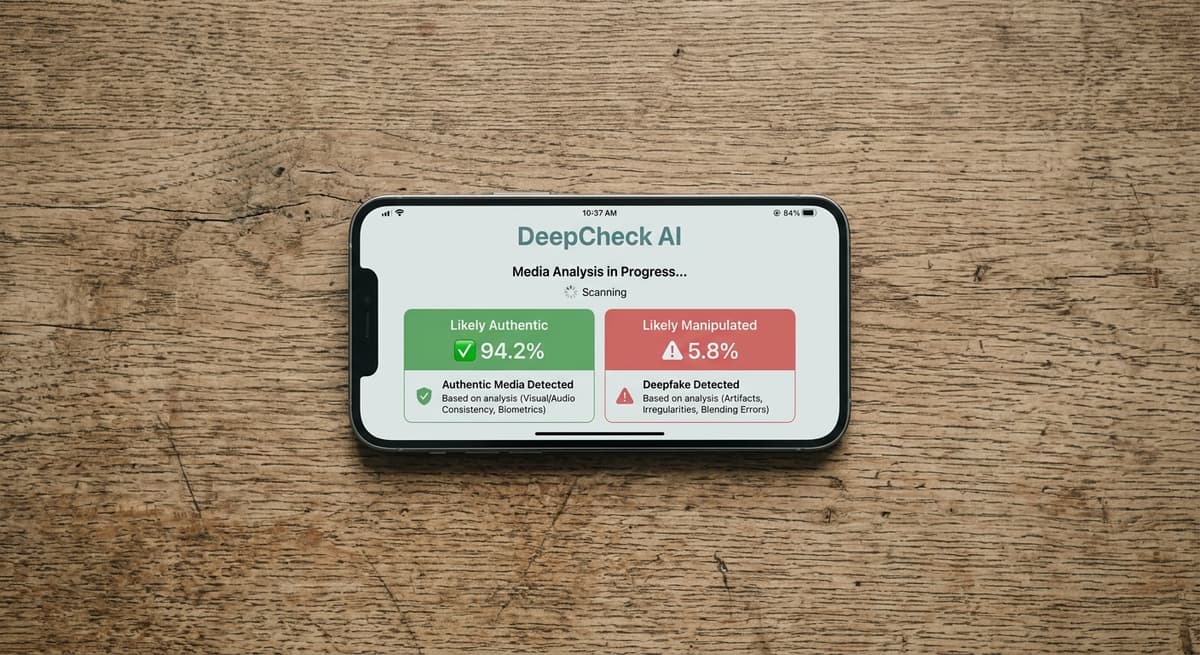
Governor Lombardo signed Senate Bill 213 on June 5, 2025, expanding Nevada's existing "revenge porn" statute to cover AI-generated and digitally manipulated intimate images.
Criminal Classification
SB 213 makes it a category D felony to knowingly distribute or cause to be distributed an intimate image of another person without their prior consent, but only where the person acts with the intent to harass, harm or terrorize another person. That intent requirement in NRS 200.780(1) is an element of the offense rather than an aggravating factor, so distribution without that intent is not a crime under this statute. The offense reaches images created in a way that would lead a reasonable person to believe they are actual depictions of the individual, which covers content made using artificial intelligence, deepfake technology, or other digital manipulation tools.
Penalties
A category D felony in Nevada carries 1 to 4 years in Nevada State Prison and a fine of up to $5,000. Convicted defendants are not required to register as sex offenders under this statute.
Exceptions
The law includes exceptions for legitimate public interest reporting, law enforcement activities, and legal proceedings. These carve-outs ensure the law does not interfere with journalism, criminal investigations, or court cases where such images may be relevant evidence.
AI Disclosure in Election Materials (AB 73)
Governor Lombardo signed Assembly Bill 73 into law, with an effective date of January 1, 2026. Nevada Secretary of State Cisco Aguilar introduced the bill, which passed with unanimous bipartisan support.
Disclosure Requirements
AB 73 requires that any paid communications relating to candidates, groups of candidates, or political parties must disclose the use of AI-generated content in a "clear and conspicuous manner." The law applies to communications made or paid for by individuals, organizations, candidate campaign committees, political action committees, or political party committees.
The bill specifically targets any image, audio, or video that has been intentionally manipulated by AI or generative AI to create a realistic but fake depiction of a real person.
Format Requirements
The law specifies detailed disclosure formats depending on the type of media:
| Media Type | Disclosure Requirement |
|---|---|
| Image | Must state: "This image has been manipulated" |
| Video | Disclosure must appear for the entire duration of the video |
| Audio only | Disclosure must be clearly spoken at the beginning, the end, and every 2 minutes for longer recordings |
Enforcement
Candidates who are depicted in AI materials that lack the legally required disclosures may seek a legal injunction to stop people or groups from distributing the altered content. This private enforcement mechanism gives candidates a direct tool to address unauthorized AI-generated campaign materials.
Who Is Not Liable
The disclosure duty does not reach everyone who touches the content. NRS 294A.3493(4) provides that nothing in the section imposes liability for a violation on a streaming service, interactive computer service provider, cloud service provider or internet service provider; on a radio broadcasting station, television broadcasting station, telecommunications network, or cable or satellite television operator; on any programmer or producer of radio or television broadcasting content; or on any person who publishes synthetic media as part of entertainment as a satire or parody. The satire and parody carve-out matters for anyone judging how far this disclosure rule reaches into political speech.
AI in Emergency Management and Utility Shutoffs
Nevada also wrote a human-decision requirement into its emergency management and public utility statutes. Both provisions run on a definition of "artificial intelligence" added at NRS 414.0305: a machine-based system that can, for a given set of human-defined objectives, make predictions, recommendations or decisions influencing real or virtual environments.
Emergency Response Planning
NRS 414.099 requires that any state emergency management plan prepared under NRS 414.060, and each plan for emergency operations adopted by a state or local governmental agency, include provisions ensuring that final decisions regarding emergency response planning and the allocation of resources in response to an emergency are not made by artificial intelligence but rather by a natural person.
Utility Service During a Disaster
NRS 704.1833 prohibits a public utility from making a final decision on whether to reduce or shut down utility service in response to a disaster or emergency based solely on the use of artificial intelligence. The section takes its definitions of "disaster" and "emergency" from NRS 414.0335 and NRS 414.0345. A utility may still run AI analysis on an unfolding emergency; what it may not do is let that analysis alone make the final call to cut service.
Health Care AI: The Vetoed SB 128
The Nevada Legislature passed Senate Bill 128, which would have prohibited health insurers from using AI systems or automated decision tools as the sole method for denying prior authorization requests, modifying care requests, reducing service coverage, or terminating previously approved care. The bill would have required a licensed health care professional with appropriate expertise to review medical documentation before denying any request.
SB 128 passed the Senate on April 22, 2025, with a 15-6 vote and the Assembly on May 31, 2025, with a 23-16 vote. However, Governor Lombardo vetoed the bill on June 10, 2025, stating that it "goes too far" and could hinder innovation and the use of technology to lower patient costs.
A related bill, SB 186, which would have required health care providers using generative AI for patient communications to include a disclaimer, also did not advance during the 2025 session.
Government Use of AI
Nevada is actively deploying AI tools in government operations, raising new questions about transparency and citizen rights.
AI for Unemployment Appeals
The Nevada Department of Employment, Training and Rehabilitation (DETR) is rolling out a Google-powered AI tool to process appeals on unemployment benefit decisions. The project has a total price tag of $2.6 million, with approximately $1.1 million spent as of early 2026.
Under the new process, the AI tool reviews all information from an appeals hearing, including documents and relevant Nevada laws, and issues a ruling that must receive sign-off from a human referee. Officials say the tool can issue a ruling in five minutes, compared to 10 minutes to several hours for a human-only process.
State lawmakers have raised concerns about the system. Senator Dina Neal (D-North Las Vegas) questioned the lack of consent requirements, noting that citizens' rights are being processed through AI without their knowledge or agreement.
Federal AI Policy and Nevada
Federal AI policy has become increasingly relevant to Nevada's regulatory landscape, particularly following a December 2025 executive order from President Trump.
December 2025 Executive Order
On December 11, 2025, President Trump signed an executive order titled "Ensuring a National Policy Framework for Artificial Intelligence." The order directs the Attorney General to establish an AI Litigation Task Force to challenge state AI laws, directs the Secretary of Commerce to evaluate existing state AI laws that may conflict with federal goals, and threatens to block states with targeted AI regulations from receiving Broadband Equity Access and Deployment (BEAD) broadband funding.
Impact on Nevada
Nevada's enacted AI laws could face challenges under this executive order. The state's ban on AI therapy (AB 406), in particular, could be characterized as the type of innovation-restricting regulation the executive order targets. However, the executive order itself cannot overturn existing state law. Only an act of Congress or a court ruling can do that. Until any legal challenges are resolved, Nevada's AI laws remain enforceable and companies face potential penalties for noncompliance.
Nevada has not joined the group of Republican governors who opposed a proposed congressional moratorium on state AI regulation, nor has it taken a formal position supporting the federal preemption approach.
Summary of Nevada AI Laws
| Law | Subject | Status | Effective Date | Key Provision |
|---|---|---|---|---|
| AB 406 | Mental health AI ban | Enacted | July 1, 2025 | Prohibits AI from providing mental/behavioral health care; $15,000 per incident penalty |
| SB 263 | AI-generated child pornography | Enacted | October 1, 2025 | Category B felony (1-15 years); Category A (10 years to life) for repeat offenders |
| SB 213 | Deepfake intimate images | Enacted | 2025 | Category D felony (1-4 years, up to $5,000 fine) for distribution with intent to harass, harm or terrorize |
| AB 73 | AI in election materials | Enacted | January 1, 2026 | Mandatory disclosure of AI use in political communications; satire, parody and platform carve-outs |
| NRS 414.099, NRS 704.1833 | AI in emergency and utility decisions | Enacted | In force | Final emergency-response, resource-allocation and utility-shutoff decisions must be made by a person, not AI |
| SB 128 | AI in health insurance | Vetoed | N/A | Would have banned AI-only prior authorization denials |
| SB 186 | AI health care disclosure | Did not advance | N/A | Would have required AI disclaimers in patient communications |
More Nevada Laws
Frequently Asked Questions
Does Nevada have a comprehensive AI regulation law?
No. Nevada has not enacted comprehensive AI regulation. Instead, the state passed targeted AI laws during its 2025 legislative session covering mental health AI, AI-generated child pornography, nonconsensual deepfake intimate images, AI disclosure in election materials, and a requirement that final emergency-response and utility-shutoff decisions be made by a person rather than AI. A broader AI consumer protection bill was not part of the 2025 session.
Can AI be used for therapy or mental health care in Nevada?
No. AB 406, signed June 5, 2025, and effective July 1, 2025, prohibits offering AI systems designed to provide mental or behavioral health care services. It also prohibits representing that an AI system can provide such care. Licensed professionals may use AI for administrative tasks like scheduling, but not for direct patient care. Violations carry civil penalties of up to $15,000 per incident.
What are the penalties for creating AI-generated child pornography in Nevada?
Under SB 263, effective October 1, 2025, creating or distributing AI-generated child pornography is a category B felony for a first offense, carrying 1 to 15 years in prison and up to a $15,000 fine. Under NRS 200.725(2)(b), repeat offenders face a category A felony punishable by a minimum term of not less than 10 years and a maximum term of life in prison with the possibility of parole, and may be further fined up to $15,000. The law covers both AI-generated images of minors and images of adults digitally altered to appear as minors.
Does Nevada require disclosure of AI in political ads?
Yes. AB 73, effective January 1, 2026, requires that any paid political communication containing AI-generated content disclose that fact in a clear and conspicuous manner. For video, the disclosure must appear for the entire duration. For audio, the disclosure must be spoken at the beginning, end, and every two minutes. Candidates depicted in undisclosed AI materials can seek legal injunctions. NRS 294A.3493(4) exempts platforms such as internet service providers and broadcasters, and anyone publishing synthetic media as satire or parody, from liability.
Can health insurers in Nevada use AI to deny claims?
The Legislature passed SB 128 to ban AI as the sole basis for prior authorization denials, but Governor Lombardo vetoed it on June 10, 2025, saying it could hinder innovation. Currently, there is no Nevada law specifically restricting the use of AI in health insurance decisions, though federal regulations and existing insurance law requirements still apply.
Updates
Corrected the SB 263 repeat-offense penalty to 10 years to life with a fine of up to $15,000, added the intent to harass, harm or terrorize element to the SB 213 offense, added the satire, parody and platform carve-outs to the AB 73 disclosure rule, and added Nevada’s requirement that final emergency-response and utility-shutoff decisions be made by a person rather than AI.
Fixed a self-contradictory Key Takeaways bullet that miscounted SB 128 among Nevada's five 'enacted' AI laws while noting in the same sentence that it was vetoed; the rest of the page correctly states Nevada enacted four AI laws in 2025 with SB 128 vetoed.
Independently fact-checked against the cited primary sources; governing law re-checked for recent changes
Reviewed and approved by an editor
Sources and References
- AB 406, Mental Health AI Regulation(leg.state.nv.us).gov
- SB 263, AI-Generated Child Pornography(legiscan.com)
- AB 73, AI Election Disclosure(legiscan.com)
- Nevada Updates Illicit Material Laws to Include AI-Generated Content(statescoop.com)
- Bills Signed by the Governor, 83rd Session (2025)(leg.state.nv.us).gov
- New Year Brings New Laws for Food Delivery Apps, AI Disclosure and More(nevadacurrent.com)
- Nevada Will Use AI for Unemployment Appeals(thenevadaindependent.com)
- Nevada Senate Judiciary Committee Minutes on SB 263(archive.leg.state.nv.us).gov
- Executive Order: Ensuring a National Policy Framework for AI(whitehouse.gov).gov
- Nevada AB406 Mental Health AI Law Analysis(wsgr.com)
- NRS 200.725, Preparing, Advertising or Distributing Child Sexual Abuse Material or Computer-Generated Child Sexual Abuse Material(leg.state.nv.us)
- NRS 200.780, Unlawful Dissemination of Intimate Image; Exceptions; Penalty(leg.state.nv.us)
- NRS 294A.3493, Disclosure Required on Certain Communications That Include Synthetic Media(leg.state.nv.us)
- NRS 414.099, Emergency Management Plans: Final Decisions Not Made by Artificial Intelligence(leg.state.nv.us)
- NRS 704.1833, Public Utility Prohibited From Deciding to Reduce or Shut Down Service Based Solely on Artificial Intelligence(leg.state.nv.us)