Google Must Face Robby Starbuck's AI Defamation Lawsuit
Independently fact-checked against primary sources (last audited July 25, 2026). How we verify our legal content
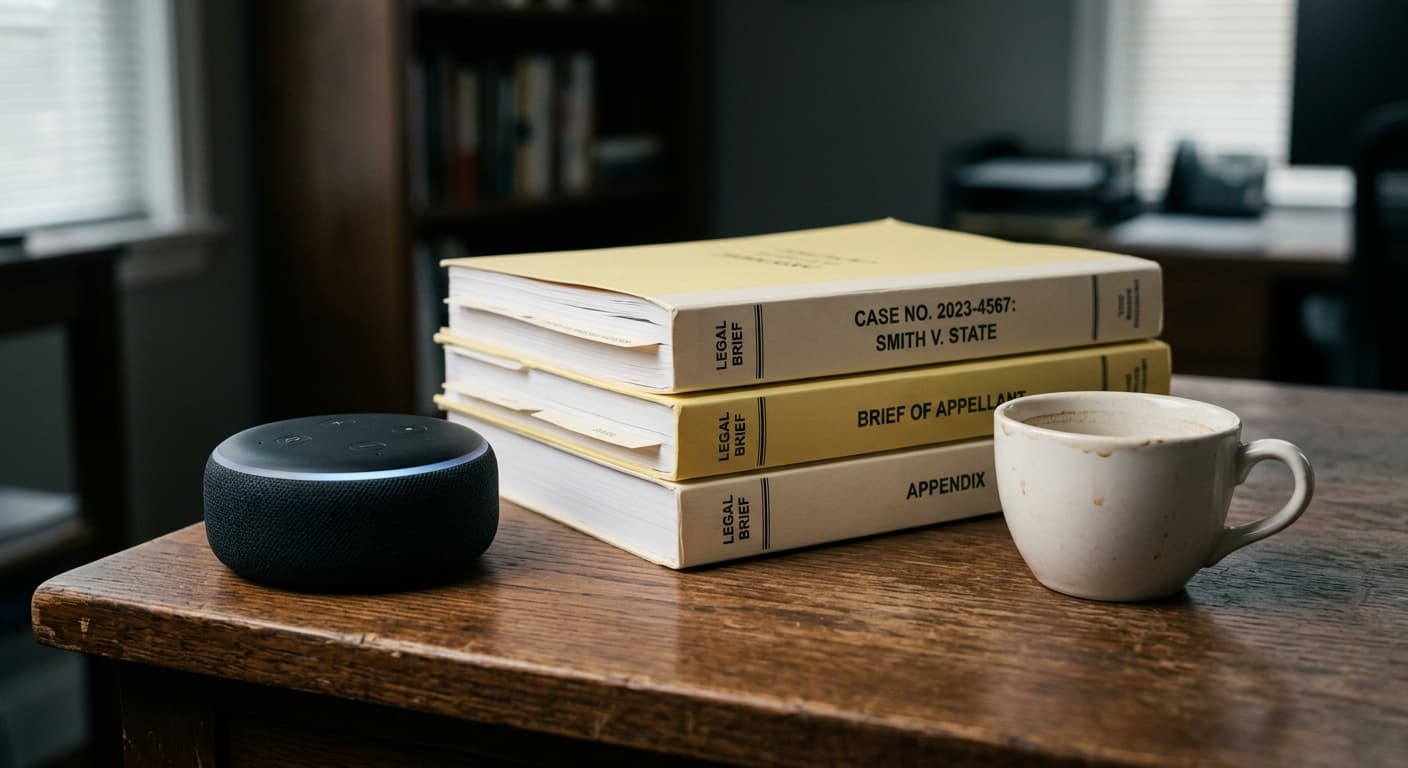
Google Must Face Robby Starbuck's AI Defamation Lawsuit, Delaware Judge Rules
A Delaware judge on July 24, 2026 denied Google's motion to dismiss Robby Starbuck's defamation suit over false statements its AI chatbots generated about him, letting the case proceed to discovery in one of the first rulings to test whether an AI developer can be sued for its model's output.
Information last verified on July 25, 2026. This is a developing story; we update it as the record changes.
Jurisdiction scope: This article addresses a defamation ruling under Delaware law in the Superior Court of the State of Delaware, and general US defamation principles as applied to AI-generated statements. It is not legal advice. For the underlying rules, see our overview of artificial intelligence laws in the United States.
What Happened
On July 24, 2026, Judge Meghan A. Adams of the Superior Court of the State of Delaware denied Google's motion to dismiss the defamation lawsuit filed by conservative activist Robby Starbuck (Starbuck v. Google LLC, No. N25C-10-211 MAA). Starbuck filed the complaint on October 22, 2025, seeking more than $15 million in damages. The ruling was reported by Bloomberg Law, Reason's Volokh Conspiracy, and Fox News.
Starbuck alleges that Google's Bard and Gemini models, in response to user queries about him, generated false statements describing him as a child rapist, a serial sexual abuser, and a shooter, and falsely tying him to white nationalist Richard Spencer. The complaint alleges that when prompted to support the claims, the AI fabricated news articles that were never written and attributed them to real journalists. Starbuck's complaint also alleges that Google's systems circulated the false outputs to a large number of users, a figure drawn from the complaint's allegations rather than an independently established fact.
Google argued the case should be dismissed on three grounds: that outputs prompted by a user's own query are not a publication attributable to Google, that Starbuck could not identify a specific reader who saw and relied on a given output, and that the models carried disclaimers about possible inaccuracies. The court rejected each as a basis for dismissal at this stage. Judge Adams wrote that the dispute represents "a new frontier for defamation law, in which artificial intelligence tools are allegedly employed to effectuate the defamatory ends of their makers."
What the Law Actually Says
Defamation requires a false statement of fact, communicated to others, that harms reputation, published with the required level of fault. Applying those elements to AI output is the novel question here, and it connects to the emerging body of state AI laws and to long-settled defamation doctrine covered in our guide to the elements of a defamation claim.
Two issues stand out. First is publication. Google argued that because a user prompts the model, the resulting text is not Google speaking. The court did not accept that framing as a reason to dismiss, allowing Starbuck to argue that a developer can be responsible for statements its own product generates. Second is fault. Because the parties agree Starbuck is a public figure, he must ultimately prove actual malice under New York Times Co. v. Sullivan, 376 U.S. 254 (1964), meaning knowledge of falsity or reckless disregard for the truth. The court found allegations that Google was notified internally about the false statements and did not act were sufficient, at the pleading stage, to support that inference.
Commentators, including Bloomberg Law, have noted that Section 230 of the Communications Decency Act, which shields platforms from liability for third-party user content, is a poor fit here because Starbuck is suing over Google's own model output rather than something another user posted. That framing is analysis from legal observers, not a holding the court issued in this order. Because the false statements were generated content rather than manipulated media, the case sits alongside, but is distinct from, the deepfake laws that address synthetic images and audio, and it will be watched closely under Delaware's developing AI law landscape.
Analysis: Why This Matters
The following is analysis from the Recording Law Editorial Team.
This order does not decide that Google is liable. It decides that Starbuck's complaint pleads enough to survive Google's threshold arguments and move into discovery. That distinction matters, because the headline questions, whether AI output is a publication and whether a disclaimer defeats a defamation claim, were not resolved on the merits. They were merely allowed to proceed.
Even so, the ruling is meaningful because it is among the first to let a defamation claim against an AI developer advance on the theory that the company is a first-party speaker of its model's output, not a conduit for someone else's content. The allegations doing the most work involve notice: that Google was told about the false statements and did not fix them. That is the same thread running through Starbuck's earlier case against Meta, which settled. How courts treat the publication and fault questions as the record develops will shape AI-defamation law well beyond this case. We will not predict how discovery or any trial comes out.
How This Affects You
For readers wondering whether someone can be held responsible when an AI chatbot invents damaging falsehoods, this ruling shows the question is now being litigated directly against a developer, but it remains unsettled. Courts are only beginning to apply defamation elements, publication, falsity, and fault, to generative AI, and outcomes will depend on the specific statements, the jurisdiction, and what the company knew. General reporting like this is not a substitute for advice about a specific situation.
This is general legal information, not legal advice. It covers a Delaware defamation ruling and general US defamation principles applied to AI, and reflects sources verified on July 25, 2026. Laws vary by state and this story is developing; consult a lawyer licensed in your jurisdiction about your specific situation.
Related articles
- Artificial intelligence laws in the United States
- Delaware AI law
- The elements of a defamation claim
- How US defamation law works
- Deepfake laws in the United States
Last updated: 2026-07-25. This is a developing story; details verified as of 2026-07-25.
Frequently Asked Questions
Can you sue an AI company for defamation?
A Delaware Superior Court judge allowed exactly this kind of suit, Starbuck v. Google LLC, to proceed past a motion to dismiss on July 24, 2026, finding the plaintiff adequately pled defamation against Google over its own AI chatbot's outputs. This is among the first such rulings, and it is a pleading-stage decision, not a final finding of liability.
Is an AI chatbot's output a publication for defamation purposes?
Google argued that outputs triggered by a user's own query are not a publication attributable to Google. The court declined to dismiss on that basis, letting the publication theory proceed to discovery. That is a decision to allow the claim forward, not a final legal rule settling the question.
Who is liable when an AI hallucinates false information about someone?
Starbuck's suit targets Google itself, the maker of the AI, rather than any third-party user, arguing Google is responsible for statements its own Bard and Gemini models generated. The court let that theory proceed on July 24, 2026.
Does Section 230 protect Google from lawsuits over its AI's statements?
Section 230 generally shields platforms from liability for content posted by other users. Because Starbuck sues over statements generated by Google's own model rather than user-posted content, legal commentators have noted Section 230 is a poor fit. The court did not issue a quotable holding resolving Section 230 in this order.
Do AI disclaimers protect a company from defamation liability?
Google argued its disclaimers about the AI being experimental and possibly inaccurate should defeat the claims. The court declined to treat those disclaimers as a complete defense at the motion-to-dismiss stage, allowing the case to move forward.
What did Robby Starbuck's lawsuit against Meta involve?
Starbuck sued Meta in 2025 over AI outputs he said falsely described him, and that case settled in August 2025, with Starbuck taking an advisory role on Meta's AI policy. The Google case is a separate, later suit that is now proceeding to discovery rather than settling.
What happens next in Starbuck v. Google?
With the motion to dismiss denied, the case proceeds to discovery, where Starbuck can seek internal Google records and testimony. No trial date, settlement, or liability finding has been reported as of July 25, 2026. This article does not predict any outcome.
Updates
Independently fact-checked against the cited primary sources
Sources and References
- Starbuck v. Google LLC, No. N25C-10-211 MAA (Del. Super. Ct., order denying motion to dismiss, July 24, 2026)(reason.com)
- Starbuck v. Google LLC, stamped complaint filed October 22, 2025(dhillonlaw.com)
- Google Ordered to Face Robby Starbuck's AI Defamation Lawsuit, Bloomberg Law (July 24, 2026)(news.bloomberglaw.com)
- Conservative Commentator Robby Starbuck's Lawsuit Alleging Google AI Had Defamed Him Can Go Forward, Reason (July 24, 2026)(reason.com)