
Arizona
Arizona AI Meeting Recording Laws (2026)
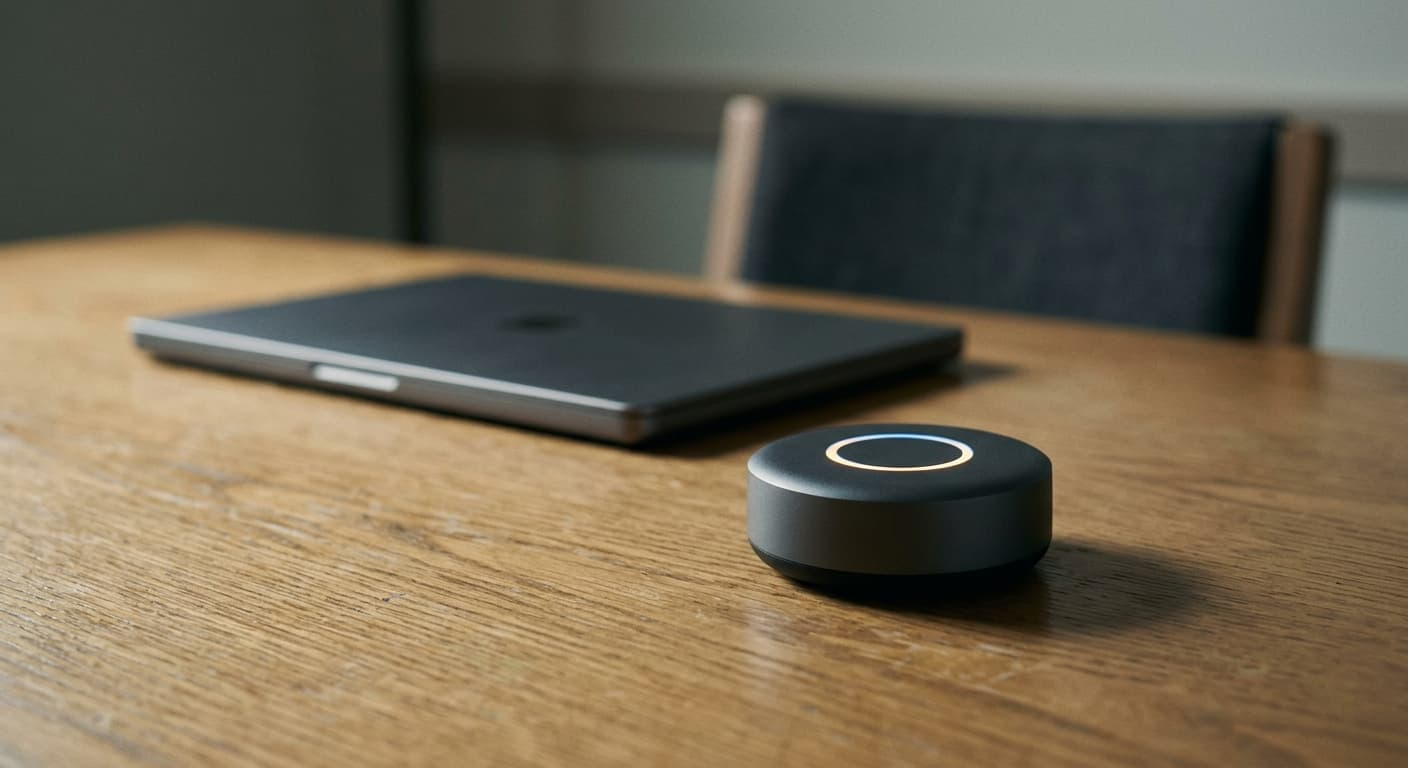
Arizona is a one-party consent state, so an AI meeting recorder activated by a meeting participant is lawful under A.R.S. 13-3005. The activating participant supplies the required consent. Unauthorized interception by a non-participant, however, constitutes a Class 5 felony under the same statute.
Arizona treats unauthorized interception of communications as a felony, not a misdemeanor. That single distinction sets Arizona apart from most one-party consent states and raises the stakes for anyone deploying AI meeting recording tools. Under ARS § 13-3005, a person who intentionally intercepts a wire or electronic communication without being a party or present, and without the consent of a sender or receiver, commits a Class 5 felony punishable by up to two years in prison.
For AI meeting recorders like Otter.ai, Fireflies, and Zoom AI Companion, this felony classification means the legal analysis carries real weight. When a human participant activates the tool, one-party consent is likely satisfied. But if a court classifies the AI bot as a non-participant interceptor acting independently, the consequences shift from a civil dispute to a potential felony charge.
Arizona's Recording Consent Framework
Arizona's wiretapping statute, ARS § 13-3005, establishes two parallel prohibitions. First, it criminalizes the intentional interception of a wire or electronic communication by a person who is not a party to the communication and does not have the consent of either a sender or receiver. Second, it criminalizes the intentional interception of a "conversation or discussion" by a person who is not present and does not have the consent of a party to the conversation.
One-Party Consent Standard
Under ARS § 13-3005, a recording is lawful when the person recording is a party to the communication, is present during the conversation, or has obtained the consent of at least one party. This framework functions as a one-party consent standard: if one participant consents to the recording, no violation occurs even if other participants are unaware.
The statute draws a clear line between participants and non-participants. A participant who records their own conversation is entirely outside the prohibition. A non-participant who intercepts without any party's consent commits a felony.
Reasonable Expectation of Privacy
Arizona's statute applies to oral communications where the speaker has "an expectation that the communication is not subject to interception under circumstances justifying the expectation." Conversations in truly public places, such as streets, restaurants, and parks, generally carry no reasonable expectation of privacy and fall outside the statute's scope.
Virtual meetings conducted over Zoom, Teams, or Google Meet typically carry a reasonable expectation of privacy among participants. The statute's protections apply to these communications.
The Felony Distinction
Unlike most one-party consent states that classify eavesdropping as a misdemeanor, Arizona categorizes unauthorized interception as a Class 5 felony. Under ARS § 13-702, a first-offense Class 5 felony carries a presumptive sentence of 1.5 years in prison, with a mitigated minimum of 9 months and an aggravated maximum of 2 years. This felony classification is unusual among one-party consent states and significantly increases the legal risk for AI meeting tools that may be classified as non-participant interceptors.

How Arizona Law Applies to AI Meeting Recorders
AI meeting recording tools like Otter.ai, Fireflies.ai, Microsoft Copilot, Zoom AI Companion, and Google Gemini in Meet function by joining virtual meetings as visible bot participants or by processing audio streams to produce transcriptions, summaries, and action items. The central legal question under Arizona law is whether the AI bot is a "party" to the communication or a non-participant interceptor.
The Consent Analysis
Under ARS § 13-3005, a recording is lawful when the person recording is a party or has a party's consent. When an Arizona-based meeting participant activates an AI recording tool, that participant is a party to the communication who has consented to the recording. The statute is satisfied.
The human user who activates the AI tool provides the required one-party consent. The AI bot functions as the participant's recording instrument. Under this analysis, the bot does not need to independently qualify as a "party" because the human participant's consent covers the interception.
Is the AI Bot a "Party" or "Non-Participant"?
Arizona's statute distinguishes between parties (who may record freely) and non-participants (who commit a felony if they intercept without consent). AI meeting bots that join as visible participants (displaying names like "Otter.ai Notetaker" or "Fireflies.ai" in the participant list) complicate this binary framework.
Under the most natural reading, the AI bot is a tool or agent of the consenting participant rather than an independent non-participant interceptor. As long as a human participant authorized the bot's presence and recording, the one-party consent requirement is met. The bot records on behalf of the authorizing participant.
However, if a court characterizes the AI bot as an independent entity, separate from the human participant, the felony provisions of ARS § 13-3005 could apply. The bot would be a non-party that intercepted communications. Because the human participant's consent would still constitute "consent of a party," the recording would likely remain lawful even under this less favorable analysis. But the felony classification means this question carries substantially greater risk than in misdemeanor states. No Arizona court has ruled on AI meeting bots as of April 2026.
Auto-Join and Autonomous Recording Risks
The most legally vulnerable scenario under Arizona law involves AI tools that auto-join meetings from calendar integrations without explicit per-meeting authorization from a human participant. If no participant actively authorized the bot's presence in a specific meeting, the bot functions as a non-participant interceptor without any party's consent, a clear Class 5 felony under ARS § 13-3005.
The Ambriz v. Google ruling (N.D. Cal., 2025), while decided under California law, established that a vendor's mere "capability" to use intercepted data for its own purposes can state a wiretapping claim. Arizona's felony classification makes autonomous AI recording even more dangerous from a legal perspective.

Popular AI Meeting Tools and Arizona Compliance
| Tool | How It Records | Arizona Compliance Notes |
|---|---|---|
| Otter.ai | Bot joins meeting as participant; auto-join from calendar | Lawful if activated by a participant; auto-join without participant authorization creates felony-level risk under ARS § 13-3005 |
| Fireflies.ai | Bot joins meeting; integrates with calendar | Same consent framework; felony stakes demand explicit participant authorization per meeting |
| Zoom AI Companion | Built into Zoom; summarizes and transcribes | Host activation provides one-party consent; notification banner adds compliance layer |
| Microsoft Copilot | Integrated into Teams meetings | Activated by participant; Teams displays recording indicator. Strong one-party consent position |
| Google Gemini in Meet | Native to Google Meet | Participant activation provides consent; meeting notification shown |
| Fathom | Records locally on host's device | Host is a party recording their own conversation; strongest compliance position under ARS § 13-3005 |
Given Arizona's felony classification, the safest approach is to ensure that every AI recording session is explicitly authorized by a human meeting participant. Tools that offer auto-join features should be configured to require per-meeting confirmation rather than passive calendar integration.
Penalties for Violations
Criminal Penalties
Arizona's wiretapping penalties are among the most severe of any one-party consent state.
| Offense | Statute | Classification | Prison (First Offense) | Notes |
|---|---|---|---|---|
| Unlawful interception of wire/electronic communication | ARS § 13-3005 | Class 5 felony | 9 months to 2 years | Presumptive 1.5 years |
| Unlawful interception of oral conversation | ARS § 13-3005 | Class 5 felony | 9 months to 2 years | Presumptive 1.5 years |
| Installing pen register/trap and trace device | ARS § 13-3005 | Class 6 felony | 4 months to 1.5 years | Presumptive 1 year |
The Class 5 felony classification for interception of communications is notably severe. For comparison, Alabama classifies the same conduct as a Class A misdemeanor (up to 1 year jail, $6,000 fine), and Alaska also classifies it as a misdemeanor (up to 1 year jail, $25,000 fine). Arizona's felony treatment means a conviction carries permanent criminal record consequences, including potential impacts on employment, professional licensing, and civil rights.
Civil Remedies
Arizona provides a statutory civil cause of action under ARS § 12-731. Any person whose wire, oral, or electronic communication is intentionally intercepted, disclosed, or used in violation of ARS Chapter 30 may bring a civil action to recover damages.
Recoverable damages include the greater of actual damages suffered by the plaintiff plus any profits made by the violator, or statutory damages of $100 per day for each day of the violation. Courts may also award preliminary and equitable or declaratory relief as appropriate.
Federal law under 18 U.S.C. § 2520 provides an additional civil remedy with statutory damages of $10,000 or actual damages (whichever is greater), plus attorney's fees and litigation costs.

Evidentiary Consequences
Communications intercepted in violation of ARS § 13-3005 may be excluded from evidence in court proceedings. The suppression doctrine applies to both criminal and civil litigation, meaning illegally obtained AI meeting transcripts cannot be used to support legal claims.
Employer and Workplace Considerations
Deploying AI Meeting Tools at Work
Arizona employers who use AI meeting recorders face the same felony-level stakes as individual users. Establishing clear written policies is not just best practice; it is risk mitigation against potential Class 5 felony liability.
Essential policy elements should include designating which individuals have authority to activate AI recording tools, requiring explicit per-meeting authorization rather than blanket auto-join settings, documenting participant consent in the meeting record, addressing cross-jurisdictional concerns when meetings include participants in all-party consent states, and establishing data retention and deletion schedules for AI-generated transcripts.
Cross-State Workforce Issues
Remote and hybrid work arrangements mean Arizona employers may have employees participating in meetings from all-party consent states like California, Florida, or Illinois. Arizona's one-party consent rule governs Arizona-based recordings but does not override the recording laws of other states where participants are located.
Employers should implement procedures to identify when meeting participants are in all-party consent jurisdictions and obtain everyone's consent before activating AI recording tools for those meetings.
HIPAA and Healthcare Settings
Healthcare employers in Arizona must comply with the Health Insurance Portability and Accountability Act (HIPAA) when AI meeting tools record conversations containing protected health information (PHI). Organizations should ensure that any AI transcription tool has a signed Business Associate Agreement (BAA), encrypts data in transit and at rest, and does not use recorded content to train AI models unless fully de-identified.
Employee Monitoring
Arizona does not have a specific employee monitoring statute. Employers may generally record workplace communications when at least one party (typically the employer or a manager participating in the meeting) consents. Recording conversations to which the employer is not a party and in which no party has consented constitutes a Class 5 felony under ARS § 13-3005.
Arizona's AI Legislative Landscape
Arizona is actively engaging with AI regulation, though no enacted law directly addresses AI meeting recording as of April 2026.
HB 2410 (2026), sponsored by Representative Alexander Kolodin, would extend privileged communication protections to AI interactions. Under this bill, a person's communication with an AI system would be privileged if the same conversation with a human professional would already qualify for privilege (attorney-client, doctor-patient, or similar). The bill passed the Arizona House 53-4 in March 2026 and was pending in the Senate Judiciary Committee as of March 11, 2026.
HB 2311 (2026) addresses AI chatbot disclosures, requiring operators to clearly inform minor account holders that they are interacting with artificial intelligence. SB 1786 would require provenance metadata on AI-generated or AI-modified content.
These bills signal Arizona's growing legislative interest in AI governance. Future sessions may address AI surveillance and workplace recording tools more directly, potentially creating specific rules for AI meeting bots that supplement the existing felony wiretapping framework.

Cross-State Considerations for Arizona Users
Arizona's one-party consent rule governs recordings made within Arizona. When a meeting includes participants from other states, the legal analysis grows more complex.
The general rule is that the most restrictive state's law applies. If an Arizona participant records a call that includes a California participant, California's all-party consent requirement under Cal. Penal Code § 632 could apply. Some courts apply the law of the state where the recording occurs, while others apply the law of the state where the recorded party is located.
For practical compliance, Arizona-based users of AI meeting tools should consider disclosing the use of AI recording whenever meeting participants are in all-party consent states. Many AI tools now include notification features designed to address cross-jurisdictional requirements.
The ongoing In re Otter.AI Privacy Litigation (N.D. Cal., No. 5:25-cv-06911), filed in August 2025, alleges that Otter.ai recorded meetings without all-party consent. While that case proceeds under California law, any resulting precedent about AI vendor liability could influence how courts nationwide, including Arizona courts, evaluate AI meeting recording tools. Given Arizona's felony classification for unauthorized interception, the outcome of this litigation may have outsized implications for AI tool vendors and users operating under Arizona law.
More Arizona Laws
- Arizona Alimony Laws
- Arizona At-Will Employment Laws
- Arizona Car Accident Laws
- Arizona Car Seat Laws
- Arizona Child Custody Laws
- Arizona Child Support Laws
- Arizona Common Law Marriage Laws
- Arizona Data Privacy Laws
- Arizona Deepfake Laws
- Arizona Divorce Laws
- Arizona Dog Bite Laws
- Arizona Emancipation Laws
- Arizona Expungement Laws
- Arizona Hit and Run Laws
- Arizona Landlord-Tenant Laws
- Arizona Lemon Laws
This article provides general legal information about Arizona recording laws as they apply to AI meeting tools. Laws and their interpretations can change. Consult an attorney for advice specific to your situation.
Frequently Asked Questions
Can I legally use Otter.ai or Fireflies in meetings if I am in Arizona?
Under ARS § 13-3005, Arizona follows a one-party consent rule. If you are a participant in the meeting and you activate the AI recording tool, you have provided the required consent. The recording is lawful under Arizona law without notifying other participants. However, because unauthorized interception is a Class 5 felony in Arizona, you should ensure the AI tool does not auto-join meetings without your explicit per-meeting authorization.
Why is Arizona's wiretapping law more serious than other one-party consent states?
Arizona classifies unauthorized interception of communications as a Class 5 felony under ARS § 13-3005, carrying a presumptive prison sentence of 1.5 years for a first offense. Most other one-party consent states, such as Alabama and Alaska, treat the same conduct as a misdemeanor with maximum jail time of one year and no prison exposure. This felony classification means a conviction in Arizona carries permanent criminal record consequences.
What civil remedies are available if someone illegally records my meeting in Arizona?
Under ARS § 12-731, you may file a civil lawsuit to recover actual damages plus any profits the violator made from the recording, or statutory damages of $100 per day for each day of the violation, whichever is greater. Federal law under 18 U.S.C. § 2520 provides additional statutory damages of $10,000 or actual damages, plus attorney's fees. Courts may also grant equitable or declaratory relief.
Can my Arizona employer record meetings using AI tools without telling me?
If your employer or a manager is a participant in the meeting and activates the AI tool, one-party consent is satisfied under Arizona law. The employer does not need to notify you for the recording to be lawful under ARS § 13-3005. However, employers with remote participants in all-party consent states must obtain everyone's consent. Healthcare employers must also comply with HIPAA when AI tools capture protected health information.
What happens if an AI bot auto-joins my meeting without anyone's consent in Arizona?
If an AI bot joins a meeting and records without any participant's authorization, the bot is functioning as a non-participant interceptor without consent, a clear violation of ARS § 13-3005. This constitutes a Class 5 felony punishable by up to 2 years in prison. Both the person who configured the auto-join feature and potentially the AI vendor could face criminal liability. This is why explicit per-meeting authorization is critical in Arizona.
Sources and References
- ARS § 13-3005 - Interception of Wire, Electronic and Oral Communications(azleg.gov).gov
- ARS § 13-702 - First Time Felony Offenders; Sentencing(azleg.gov).gov
- ARS § 12-731 - Recovery of Civil Damages (Wiretapping)(azleg.gov).gov
- Arizona HB 2410 - AI Privileged Communications (2026)(azleg.gov).gov
- 18 U.S.C. § 2511 - Federal Wiretap Act(law.cornell.edu)
- RCFP Reporters Recording Guide - Arizona(rcfp.org)
- In re Otter.AI Privacy Litigation, N.D. Cal., No. 5:25-cv-06911(courtlistener.com)
- Arizona AI Legislation Overview (NCSL 2025)(ncsl.org)