
Alaska
Alaska Security Camera Laws: Home, Business, and Surveillance Rules (2026)
Independently fact-checked against primary sources (last audited August 15, 2026). · Reviewed by the RecordingLaw editorial team. · Law checked current as of August 15, 2026. · 6 primary sources cited on this page. How we verify our legal content
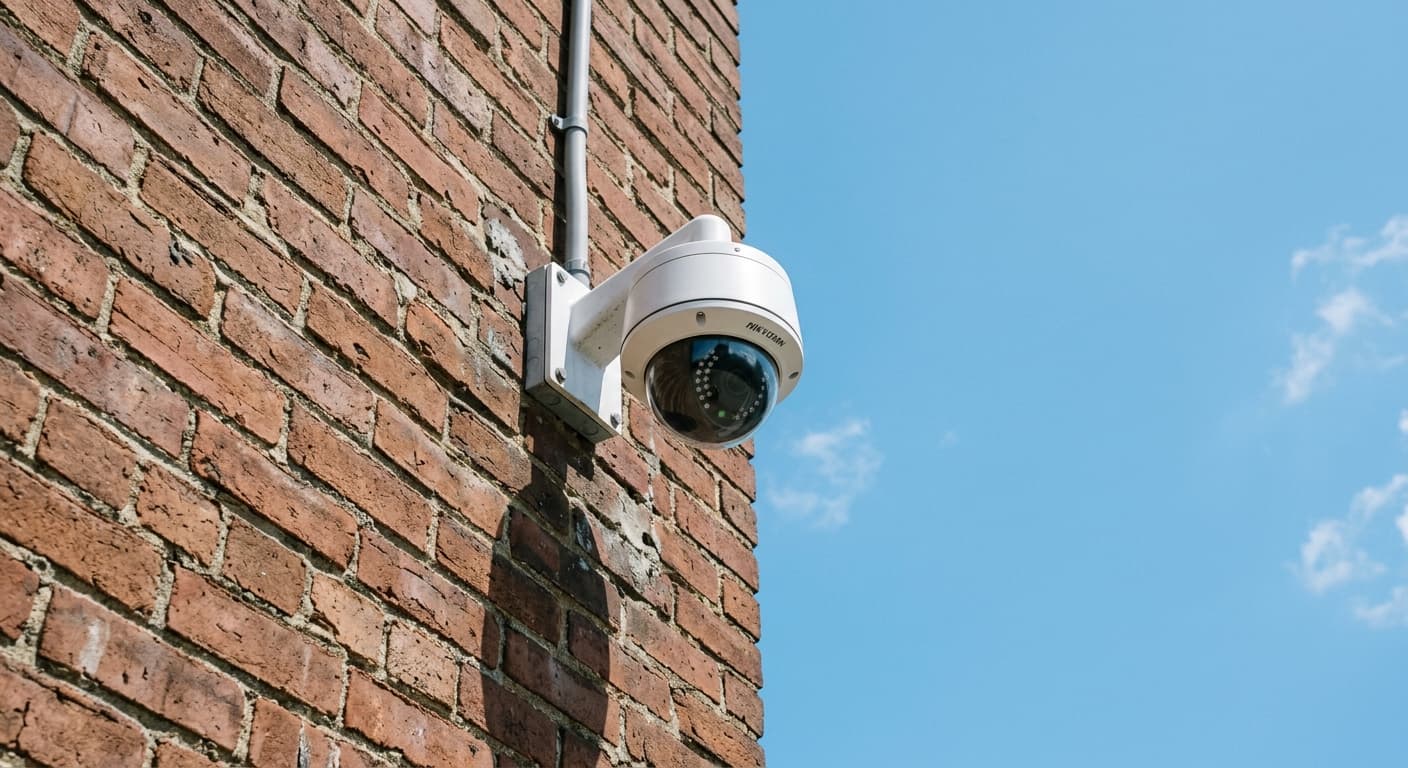
In Alaska, you may install security cameras on your own property and in public-facing areas without a permit. Cameras are barred from bathrooms, changing areas, and other spaces where privacy is expected. When a camera captures audio, Alaska's one-party consent law under AS 42.20.310 applies.
Alaska does not have a single comprehensive statute governing the use of security cameras. Instead, the legality of security camera placement and operation depends on a combination of eavesdropping laws, voyeurism statutes, property rights, and constitutional privacy protections. The general rule is that you can use security cameras freely on your own property and in public areas, but you cannot point cameras into spaces where others have a reasonable expectation of privacy.
This page covers the legal framework for home security cameras, business surveillance systems, neighbor disputes, audio recording through security cameras, and the specific rules that apply in Alaska.
Home Security Camera Laws in Alaska
Where You Can Place Cameras
Alaska homeowners can install security cameras on their property in locations that are reasonable for security purposes:
- Front door and entry areas (including video doorbells like Ring or Nest)
- Driveways and garages
- Backyard and side yards
- Interior rooms of your own home (living room, kitchen, hallways)
- Windows and porches facing public areas
Where You Cannot Place Cameras
Even on your own property, there are restrictions:
- Bathrooms used by other household members or guests
- Guest bedrooms where visitors have a reasonable expectation of privacy
- Changing areas such as pool changing rooms or closets where guests might change
- Any area aimed at a neighbor's private spaces such as their bedroom windows or bathroom windows
Placing cameras in areas where others have a reasonable expectation of privacy can violate AS 11.61.123 (Indecent Viewing or Production of a Picture), which carries felony penalties.
Nanny Cameras and Babysitter Monitoring
Nanny cameras (hidden cameras used to monitor childcare providers) are legal in Alaska in common areas of the home such as living rooms, kitchens, and playrooms. Because Alaska is a one-party consent state, you do not need to inform the nanny that video recording is occurring in these areas.
However, there are limits:
- Do not place nanny cameras in bathrooms or areas where the caregiver would change clothing
- If the camera records audio, the one-party consent analysis applies. Since you are not a participant in the recorded conversations, audio recording through nanny cameras of conversations between the caregiver and others (when you are not present) could implicate AS 42.20.310
- The safest approach for audio-capable nanny cameras is to inform the caregiver that cameras are present
Ring Doorbells and Smart Doorbell Cameras
Video doorbells are extremely popular in Alaska and are generally legal. These devices record video of the area in front of your door, typically including your porch, walkway, and portions of the street or sidewalk.
Legal considerations for video doorbells:
- Recording the public area in front of your home is legal because there is no reasonable expectation of privacy on a public street or sidewalk
- The camera should not be positioned to peer into a neighbor's windows or private areas
- If the doorbell records audio (most do), conversations with visitors at your door are covered by one-party consent when you are participating via the intercom. Ambient audio capture of passersby may raise eavesdropping concerns
- Many doorbell cameras can be set to motion-activated recording, which reduces the volume of ambient audio captured
Business Security Camera Laws

General Rules for Business Surveillance
Alaska businesses can operate security camera systems in their premises subject to the following guidelines:
Permitted areas:
- Sales floors and customer areas
- Cash registers and point-of-sale terminals
- Entrances, exits, and parking lots
- Warehouses and storage areas
- Loading docks and delivery areas
- Office common areas and hallways
- Break rooms (unless designated as private)
Prohibited areas:
- Restrooms and bathrooms
- Changing rooms and fitting rooms
- Locker rooms
- Lactation rooms
- Any area where employees or customers have a reasonable expectation of privacy
Notice Requirements for Businesses
Alaska does not have a specific statute requiring businesses to post notice of video surveillance. However, posting notice provides significant legal benefits:
- It supports the affirmative defense under AS 11.61.123 for security surveillance systems that post notice and use recordings only for crime prevention
- It reduces exposure to invasion of privacy claims from employees and customers
- It may be required by local ordinances in certain Alaska municipalities
- It demonstrates good faith in any legal proceedings involving surveillance footage
Best practice is to post clear, visible signs at entry points and in monitored areas stating that video surveillance is in use.
The AS 11.61.123 Security Surveillance Defense
AS 11.61.123 provides an affirmative defense for security surveillance systems that meet specific criteria:
- Notice is posted in a manner reasonably calculated to inform people that surveillance is occurring
- Recordings are used solely for crime prevention or prosecution of criminal activity
- The system is operated as a legitimate security measure, not for voyeuristic or improper purposes
This defense is critical for businesses that operate CCTV systems. Without meeting these requirements, a surveillance system that inadvertently captures protected images could result in criminal liability.
Audio Recording Through Security Cameras
The Critical Audio Distinction
Many modern security cameras include microphones that capture audio along with video. This is where Alaska's eavesdropping law comes into play.
AS 42.20.310 (in Title 42, Public Utilities, a structural quirk dating to the statute's 1966 telephone-tampering origin) prohibits using an eavesdropping device to hear or record an oral conversation without the consent of a party. The Alaska Supreme Court construed the statute in Palmer v. State, 604 P.2d 1106, 1108 n.5 (Alaska 1979), to reach only third-party interception, which is what makes Alaska a de facto one-party consent state. A security camera with a microphone that picks up conversations between people who are not in the recorder's presence is potentially an "eavesdropping device" under the statute.
Key scenarios:
- You are present and participating in the conversation: The recording is legal under one-party consent because you are a party to the conversation.
- The camera records conversations when you are not present or not a participant: This may violate AS 42.20.310 because no party to the conversation has consented to the recording.
- The camera is in a public area with posted notice: An argument can be made that people entering a clearly monitored area with audio recording notice have implicitly consented, though this has not been definitively tested in Alaska courts.
Recommendations for Audio-Capable Security Cameras
- Disable audio recording on security cameras in areas where you will not be present to participate in conversations
- If you keep audio enabled, post clear notice that audio and video recording is in progress
- Limit audio recording to areas where you regularly interact with visitors or where audio adds meaningful security value
- For business systems, consult with an attorney about the specific audio recording configuration
Neighbor Disputes Over Security Cameras

Common Neighbor Camera Conflicts
Security camera disputes between neighbors are increasingly common in Alaska. Typical conflicts include:
- A camera that captures a neighbor's yard, windows, or private areas
- Cameras perceived as surveillance or harassment
- Audio recording that picks up conversations in a neighbor's yard
- Bright infrared lights from night-vision cameras shining into a neighbor's home
- Cameras mounted on shared fences or property lines
Legal Standards for Camera Placement
Alaska courts would evaluate neighbor camera disputes based on several factors:
- Reasonable expectation of privacy: Does the camera record areas where the neighbor has a reasonable expectation of privacy? A front yard visible from the street carries less expectation than a fenced backyard.
- Purpose of the camera: Is the camera positioned for legitimate security purposes, or is it aimed specifically to surveil the neighbor?
- Proportionality: Is the level of surveillance proportionate to the security concern?
- Privacy and civil claims: Alaska's harassment statute (AS 11.61.120) targets specific conduct like threatening calls, offensive physical contact, and obscene communications; it does not reach camera surveillance. If a camera captures the private exposure of a neighbor's body, such as through a bathroom or bedroom window, AS 11.61.123 can apply. Otherwise, persistent, targeted surveillance of a neighbor is best addressed as a civil invasion of privacy claim
What to Do About a Neighbor's Camera
If a neighbor's security camera is invading your privacy:
- Talk to your neighbor. Many disputes can be resolved by asking the neighbor to adjust the camera angle.
- Document the situation. Take photos showing the camera's placement and what it can see from your property.
- Check local ordinances. Some Alaska municipalities may have specific rules about camera placement.
- Consult an attorney. If direct communication fails, an attorney can advise on potential legal claims, including invasion of privacy.
- Consider physical solutions. Privacy fences, landscaping, or window treatments can address the practical concern while legal issues are resolved.
Security Cameras in Multi-Unit Housing
Apartment and Condominium Common Areas
Property managers and homeowners' associations can install security cameras in common areas of apartment buildings and condominiums:
- Building entrances and lobbies
- Hallways and stairwells
- Parking garages and lots
- Laundry rooms and mail areas
- Recreational facilities and pool areas
Notice should be posted in monitored common areas. Cameras must never be placed inside individual units without the tenant's knowledge and consent.
Tenant Rights
Tenants in Alaska have the right to install security cameras inside their own rental units, subject to any lease restrictions on property modifications. Tenants should not install cameras that record common areas or other tenants' units without the property manager's approval.
Security Camera Footage and Law Enforcement
Police Requests for Footage
Alaska law enforcement may request security camera footage during investigations. Property owners are not generally required to provide footage without a warrant, but many choose to cooperate voluntarily. Key points:
- Without a warrant: You can choose whether to provide footage. There is no legal obligation to comply with a voluntary request.
- With a warrant: A valid search warrant compels you to provide the specified footage. Failure to comply can result in contempt charges.
- Subpoena: A grand jury or court subpoena also requires compliance.
Footage Retention
Alaska does not have a specific law requiring security camera owners to retain footage for a set period. However, if you become aware that footage is relevant to a legal proceeding or investigation, you may have an obligation to preserve it. Intentionally destroying relevant footage could result in spoliation sanctions in court proceedings.
Impact of Proposed SB 85 on Security Cameras
Senate Bill 85 was referred to the Senate Labor and Commerce Committee on February 5, 2025, and has seen no further committee action since. If enacted, it would convert Alaska to an all-party consent state and primarily affect security cameras that record audio:
- Security cameras with active microphones would need consent from all parties before recording conversations
- The practical effect would likely require disabling audio on most security cameras, since obtaining consent from everyone who passes by a camera is impractical
- Video-only recording would remain unaffected since the bill targets oral communications
As of August 2026, SB 85 remains pending in committee with no action since its February 2025 referral and has not been enacted.
More Alaska Recording Laws
Audio Recording | Video Recording | Voyeurism & Hidden Cameras | Workplace Recording | Recording Police | Phone Call Recording | Security Cameras | Recording in Public | Landlord-Tenant | Dashcam Laws | Schools | Medical Recording
More Alaska Recording Topics
See Also
- Alaska Surveillance Camera Laws covers home, HOA, neighbor, workplace, and landlord camera rules in Alaska.
More Alaska Laws
Frequently Asked Questions
Are security cameras legal in Alaska?
Yes. You can install security cameras on your own property and in public-facing areas. Cameras must not record areas where others have a reasonable expectation of privacy (bathrooms, bedrooms, changing areas). If cameras record audio, Alaska's eavesdropping law (AS 42.20.310) applies to conversations captured.
Can my neighbor point a security camera at my house in Alaska?
A neighbor can point a camera at areas visible from public spaces, such as your front yard. However, a camera aimed specifically at your windows, fenced backyard, or other private areas may give rise to a civil invasion of privacy claim. If the camera captures the private exposure of your body, such as through a bathroom or bedroom window, it may also violate Alaska's indecent viewing statute (AS 11.61.123). Alaska's harassment statute (AS 11.61.120) covers conduct like threatening calls and offensive physical contact, not camera surveillance.
Do I need to tell people about my security cameras in Alaska?
Alaska does not have a specific statute requiring notice of video surveillance on your own property. However, posting notice is strongly recommended. For businesses, posted notice is necessary to qualify for the affirmative defense under AS 11.61.123 for security surveillance systems.
Can security cameras record audio in Alaska?
Audio recording through security cameras is legal when you are a participant in the recorded conversation (one-party consent). When cameras record conversations between other people without any participant's consent, it may violate AS 42.20.310. The safest approach is to either disable audio recording or post clear notice that audio is being captured.
Can police take my security camera footage in Alaska?
Police can ask for your footage voluntarily, and you can choose whether to provide it. With a valid search warrant or court subpoena, you are legally required to turn over the specified footage. If you know footage is relevant to an investigation, intentionally destroying it could result in legal consequences.
Updates
Corrected the AS 11.61.123 business-surveillance affirmative defense to match the statute's actual text (crime prevention or prosecution only; removed an invented 'internal security' purpose), removed an unsupported citation to Alaska's harassment statute for neighbor camera disputes, and updated stale framing on pending Senate Bill 85 to reflect it has had no committee action since its February 2025 referral.
Independently fact-checked against the cited primary sources; governing law re-checked for recent changes
Corrected the KeyTakeaways claim that camera-based viewing of private body parts is always a felony: viewing an adult without producing an image is only a Class A misdemeanor under AS 11.61.123 (felony tiers apply to producing images or to viewing a minor).
Governing law re-checked for recent changes
Governing law re-checked for recent changes
Reviewed and approved by an editor
The Law Behind This Article
This article rests on the statutory provisions below, held in our own legal record and retrieved from the official source. Tap a section to read the operative text.
Alaska Statutes, Title 11. Criminal Law, Chapter 61. Offenses Against Public Order
§ 11.61.123Indecent viewing or production of a pictureIn forcecited in 13 of our articles
(a) A person commits the crime of indecent viewing or production of a picture if the person knowingly (1) views, or views a picture of, the private exposure of the genitals, anus, or female breast of another person; or (2) produces a picture of the private exposure of the genitals, anus, or female breast of another person. (b) Each viewing of a person, and each production of a picture of a person, whose genitals, anus, or female breast are viewed or are shown in a picture constitutes a separate violation of this section. (c) This section does not apply to the viewing or production of a picture conducted by a law enforcement agency for a law enforcement purpose. (d) In a prosecution under this section, it is an affirmative defense that the viewing or production of a picture was conducted as a security surveillance system, notice of the viewing or production was posted, and any viewing or use of pictures produced is done only in the interest of crime prevention or prosecution.
Official text (excerpt) · last checked 2026-08-31 · Read the full text in our law library · Verify at akleg.gov
Cited in 3 court opinions in our collectionLatest citing opinion in our collection: 2015
Opinions citing this section in our collection:
- Knutsen v. State (Court of Appeals of Alaska 2004, 101 P.3d 1065)“…eumstance that makes the defendant's conduct criminal under AS 11.61.123(a), we interpret AS 11.61.123(a) to mea…”
- Faye H. v. James B. (Alaska Supreme Court 2015, 348 P.3d 876)“…(1), .220(a)(1)(c), .436(a)(2). 4 See AS 11.61.123(a)(2). 5 See AS 1…”
- United States v. Moreland (Court of Appeals for the Fifth Circuit 2011, 665 F.3d 137)“…nority of states criminalize viewing child pornography. See Alaska Stat. § 11.61.123 (2009); Ark. Code Ann. § 5-27-602 (2010…”
Identified automatically from the court opinions citing this section — not a ranking of which case controls.
Also relied on in: Alaska Landlord-Tenant Recording Laws: Cameras, Privacy Rights, and Disputes (2026), Alaska Workplace Recording Laws: Employee and Employer Rights (2026), Alaska Video Recording Laws: Surveillance, Filming, and Consent Rules (2026)
Alaska Statutes, Title 42. Public Utilities and Carriers and Energy Programs, Chapter 20. Telegraph and Telephone Systems and Cable Lines; Eavesdropping
§ 42.20.310EavesdroppingIn forcecited in 17 of our articles
(a) A person may not (1) use an eavesdropping device to hear or record all or any part of an oral conversation without the consent of a party to the conversation; (2) use or divulge any information which the person knows or reasonably should know was obtained through the illegal use of an eavesdropping device for personal benefit or another's benefit; (3) publish the existence, contents, substance, purport, effect, or meaning of any conversation the person has heard through the illegal use of an eavesdropping device; (4) divulge, or publish the existence, contents, substance, purport, effect, or meaning of any conversation the person has become acquainted with after the person knows or reasonably should know that the conversation and the information contained in the conversation was obtained through the illegal use of an eavesdropping device. (b) In this section eavesdropping device means any device capable of being used to hear or record oral conversation whether the conversation is conducted in person, by telephone, or by any other means; provided that this definition does not include devices used for the restoration of the deaf or hard-of-hearing to normal or partial hearing.
Official text (excerpt) · last checked 2026-08-31 · Read the full text in our law library · Verify at akleg.gov
Also relied on in: Alaska Audio Recording Laws: One-Party Consent Rules and Penalties (2026), Alaska Phone Call Recording Laws: Rules for Landline, Cell, and VoIP (2026), Alaska AI Meeting Recording Laws (2026)
United States Code Title 18
§ 2511Interception and disclosure of wire, oral, or electronic communications prohibitedIn forcecited in 422 of our articles
Except as otherwise specifically provided in this chapter any person who— intentionally intercepts, endeavors to intercept, or procures any other person to intercept or endeavor to intercept, any wire, oral, or electronic communication; intentionally uses, endeavors to use, or procures any other person to use or endeavor to use any electronic, mechanical, or other device to intercept any oral communication when— such device is affixed to, or otherwise transmits a signal through, a wire, cable, or other like connection used in wire communication; or such device transmits communications by radio, or interferes with the transmission of such communication; or such person knows, or has reason to know, that such device or any component thereof has been sent through the mail or transported in interstate or foreign commerce; or such use or endeavor to use (A) takes place on the premises of any business or other commercial establishment the operations of which affect interstate or foreign commerce; or (B) obtains or is for the purpose of obtaining information relating to the operations of any business or other commercial establishment the operations of which affect interstate or foreign…
Official text (excerpt) · last checked 2026-08-28 · Read the full text in our law library · Verify at uscode.house.gov
Cited in 2,045 court opinions in our collectionLatest citing opinion in our collection: 2026
In the courts (editorial summary, independently checked):Griggs-Ryan v. Smith (1990) applied the Section 2511(2)(d) prior-consent exception, treating a tenant repeatedly told that all incoming calls were taped as having impliedly consented. United States v. United States District Court (1972) read the then-current Section 2511(3) as conferring no presidential surveillance power.
Opinions citing this section in our collection:
- Mitchell v. Forsyth (Supreme Court of the United States 1985, 472 U.S. 511)✓The Attorney General authorized a warrantless 1970 national security wiretap that caught the plaintiff's calls; the Court held the since-repealed Section 2511(3) disclaimer left the tap lawful under Title III, and that Mitchell had qualified immunity.
- United States v. United States District Court for the Eastern District of Michigan (Supreme Court of the United States 1972, 407 U.S. 297)✓The Attorney General approved warrantless wiretaps on members of a domestic group accused of bombing a CIA office; the Court read Section 2511(3) as a congressional disclaimer conferring no surveillance power, then held the Fourth Amendment required prior judicial approval.
- Forsyth v. Barr (Court of Appeals for the Fifth Circuit 1994, 19 F.3d 1527)✓Dallas police used, in an internal affairs probe of an officer, calls private parties allegedly intercepted illegally; assuming that was unlawful, the Fifth Circuit held Section 2517(1) and (2) allowed the disclosure and use, defeating the Section 2511(1)(c) and (d) claims.
Identified automatically from the court opinions citing this section — not a ranking of which case controls.
Also relied on in: Connecticut Recording Laws (2026): Hybrid Consent Rules Explained, Oregon Recording Laws (2026): Hybrid One-Party and All-Party Rules, US Recording Laws by State (2026): All 50 States Explained
Search our full record of US law — 2.1 million sections, every state + federal →
Sources and References
- AS 42.20.310 - Eavesdropping Statute(akleg.gov).gov
- AS 11.61.123 - Indecent Viewing or Production of a Picture(akleg.gov).gov
- AS 11.61.120 - Harassment(akleg.gov).gov
- Senate Bill 85 - 34th Alaska Legislature(akleg.gov).gov
- Alaska Constitution(ltgov.alaska.gov).gov
- 18 U.S.C. Section 2511 - Federal Wiretap Act(uscode.house.gov).gov