
Alaska
Alaska Dashcam Laws: Recording Rules, Windshield Mounting, and Legal Limits (2026)
Independently fact-checked against primary sources (last audited August 15, 2026). · Reviewed by the RecordingLaw editorial team. · Law checked current as of August 8, 2026. · 6 primary sources cited on this page. How we verify our legal content
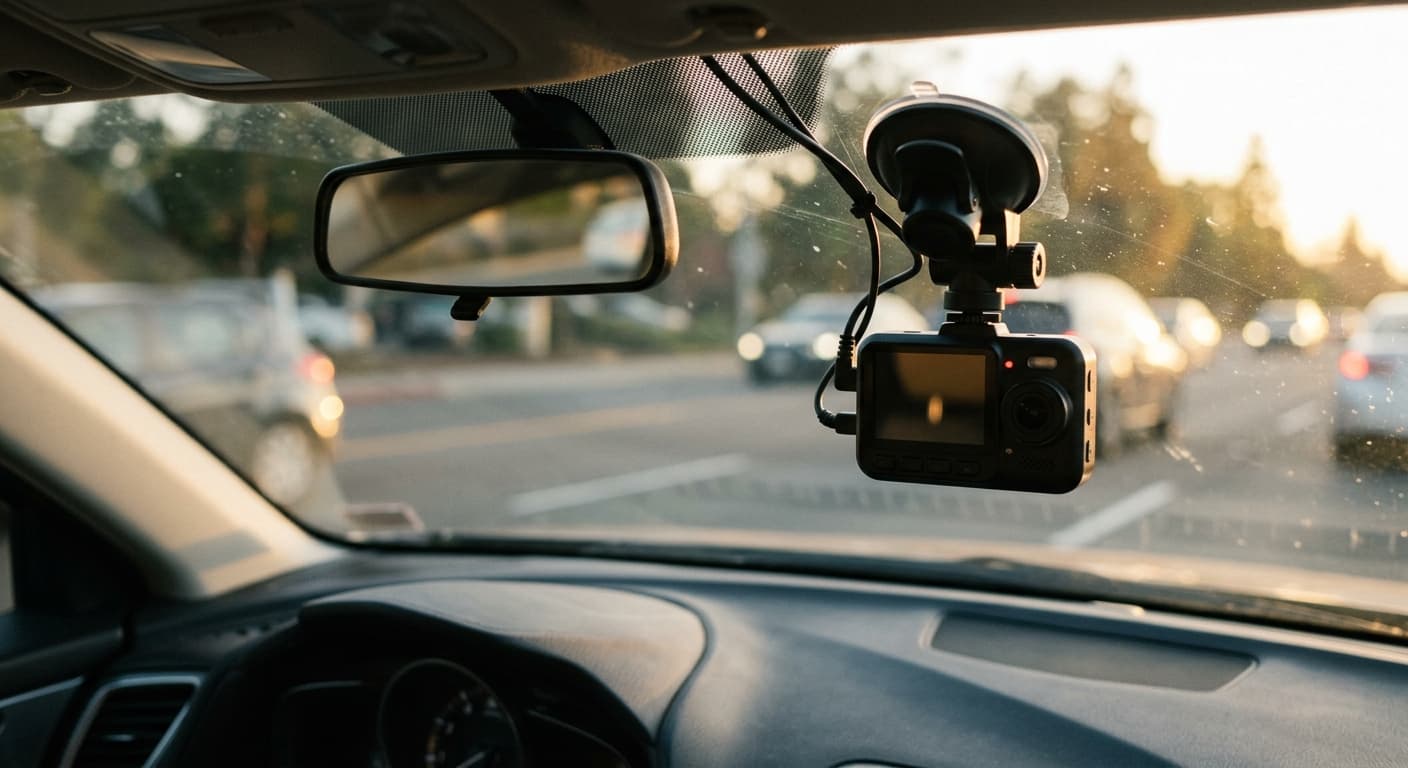
Dashcams are legal in Alaska. Audio-enabled dashcams are permitted under one-party consent (AS 42.20.310) because the driver is a party to any vehicle conversation. Windshield mounts are allowed under Alaska's windshield-obstruction regulation, 13 AAC 04.225, provided they do not obstruct, obscure, or impair the driver's view.
Alaska does not have a standalone dashcam statute, but dashboard cameras are fully legal throughout the state. As a one-party consent state, Alaska allows you to record any conversation you are a party to, which means you can use an audio-enabled dashcam in your own vehicle without informing or getting consent from passengers. The primary eavesdropping statute (AS 42.20.310) only prohibits recording conversations between other people that you are not part of.
This one-party consent framework makes Alaska one of the more permissive states for dashcam use. However, drivers still need to comply with windshield obstruction rules and general privacy principles.
Alaska Dashcam Legality Overview
Is It Legal to Use a Dashcam in Alaska?
Yes. Alaska law does not prohibit the installation or use of dashboard cameras in personal or commercial vehicles. Drivers throughout the state use dashcams for safety documentation, insurance claims, and recording Alaska's scenic highways.
The legal analysis is straightforward: because Alaska follows one-party consent, the driver (who is a party to any conversation in the vehicle) can record both audio and video without notifying passengers.
Video-Only vs. Audio-Enabled Dashcams
Unlike two-party consent states where audio creates significant legal risk, Alaska's one-party consent framework treats both types of dashcams similarly.
| Feature | Legal Status in Alaska |
|---|---|
| Video-only dashcam (no microphone) | Legal on public roads |
| Dashcam with audio recording passengers | Legal (driver is a party to the conversation) |
| Dashcam recording exterior road audio | Legal (no expectation of privacy) |
| Dashcam recording when driver is absent | May raise issues if it captures third-party conversations |
The one scenario that could create legal exposure is when a dashcam records conversations between passengers while the driver is not present (for example, if the dashcam continues recording when the driver leaves the vehicle). In that situation, no party to the conversation has consented, and the recording could violate AS 42.20.310.
Windshield Mounting Rules in Alaska
13 AAC 04.225: Windshields and Wipers
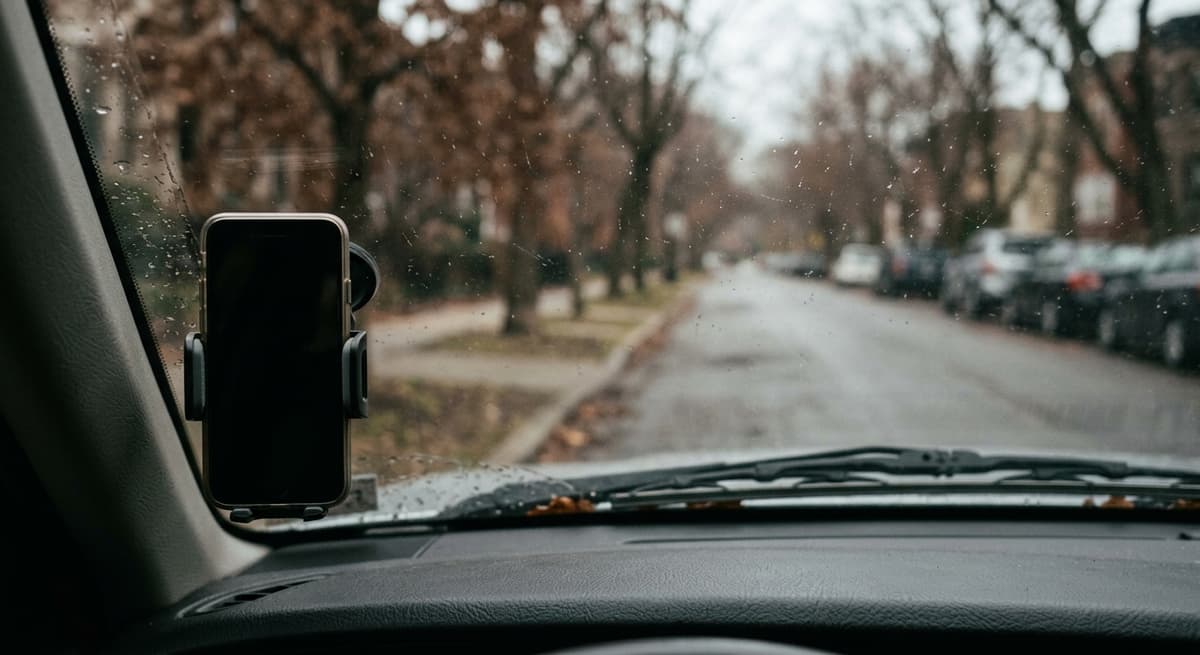
Alaska does not have a statute specifically addressing windshield obstructions. The governing rule is an administrative regulation, 13 AAC 04.225 (Windshields and Wipers), which prohibits driving with a defective windshield or with a sign, poster, or other nontransparent material on the windshield that obstructs, obscures, or impairs the driver's view.
While the regulation does not specifically address dashcams, any device mounted to the windshield that obstructs, obscures, or impairs the driver's forward view could lead to a citation. Alaska State Troopers and local law enforcement have discretion to determine whether a dashcam placement creates a safety hazard.
Best Practices for Dashcam Placement
Alaska driving conditions, including long winter darkness, ice, and wildlife on roadways, make proper dashcam placement especially important:
- Behind the rearview mirror: The most common and safest location. The dashcam sits in space already occupied by the mirror, adding minimal obstruction.
- Lower passenger-side corner: Keeps the camera out of the driver's direct line of sight.
- Dashboard mount: Avoids the windshield entirely, eliminating obstruction concerns.
- Avoid center and driver-side areas: Most likely to draw a citation and create a genuine safety hazard during Alaska's challenging driving conditions.
Alaska Winter and Extreme Cold Considerations
Alaska's extreme temperatures (down to -40 F and below in interior regions) create unique challenges for dashcam operation:
- Choose a dashcam rated for extreme cold. Standard lithium-ion batteries may fail below -4 F.
- Consider a supercapacitor-based dashcam, which handles extreme cold better than battery models.
- Hardwired installations prevent battery failures in cold weather.
- Windshield frost and ice can obscure the camera lens. Keep the windshield clear and use a defroster.
- Some dashcam suction mounts lose adhesion in extreme cold. Adhesive mounts are more reliable in Alaska winters.
Audio Recording and One-Party Consent
How AS 42.20.310 Applies to Dashcam Audio
AS 42.20.310 (located in Title 42, Public Utilities, rather than the criminal code, a quirk dating to the statute's 1966 telephone-tampering origin) makes it illegal to use an eavesdropping device to listen to or record a private conversation without the consent of a party. The key word is "party." As the driver of the vehicle, you are a party to any conversation taking place in your vehicle, so your own consent is sufficient under Palmer v. State, 604 P.2d 1106, 1108 n.5 (Alaska 1979).
This means:
- You can record conversations with passengers without telling them
- You can record phone calls you make or receive while driving
- You cannot leave the dashcam running to record conversations between passengers when you are not in the vehicle
- You cannot use a dashcam to record conversations in another person's vehicle
SB 85: Pending Change to Alaska Recording Law
Senate Bill 85, pending in the 34th Alaska Legislature, would convert Alaska from a de facto one-party consent state to an all-party consent state. If enacted, dashcam users would need to obtain consent from every passenger before recording audio. As of August 2026, SB 85 remains pending in the Senate Labor and Commerce Committee with no hearings scheduled. This is a material pending change worth tracking through the Alaska Legislature website.
Rideshare and Taxi Dashcams
Alaska rideshare and taxi drivers benefit from one-party consent because they can record audio and video in their vehicles without passenger notification. However, some rideshare platforms have their own policies about recording that may require driver disclosure. Posting a visible notice in the vehicle stating "Audio and video recording in progress" is a best practice even though it is not legally required.
Using Dashcam Footage as Evidence in Alaska

Accident and Insurance Claims
Dashcam footage is valuable evidence in Alaska accident and insurance claims. Alaska follows a pure comparative negligence system, meaning damages are apportioned based on each party's percentage of fault. Dashcam video can help establish fault percentages by showing:
- Vehicle speeds and positions before impact
- Traffic signals, stop signs, and road conditions
- Distracted or impaired driving behavior
- Wildlife on the roadway (a common cause of accidents in Alaska)
- Weather conditions at the time of the accident
Alaska insurance companies accept dashcam footage as supporting evidence. To maximize evidentiary value:
- Enable date and time stamps on your dashcam
- Use a camera with resolution sufficient to capture license plates
- Preserve original footage without editing
- Back up recordings promptly to prevent loop-recording overwrite
Admissibility in Alaska Courts
For dashcam footage to be admissible in an Alaska court:
- The footage must be relevant to the case
- The introducing party must demonstrate authenticity and that it has not been tampered with
- The footage must be preserved through a proper chain of custody
- Audio recorded under one-party consent is generally admissible
Unlike two-party consent states, Alaska courts do not typically exclude dashcam audio that was recorded by a party to the conversation.
Law Enforcement and Traffic Stops
Alaska law enforcement officers, including Alaska State Troopers, may request dashcam footage during investigations. You are not required to provide footage voluntarily, but a court order or search warrant may compel production. The Alaska Department of Public Safety oversees the Alaska State Troopers, who frequently use their own in-car camera systems.
Criminal Penalties for Illegal Dashcam Recording
Eavesdropping Under AS 42.20.310
Using a dashcam to record conversations you are not a party to violates the eavesdropping statute. This offense is classified as a Class A misdemeanor under Alaska law:
- Up to 1 year in jail
- A fine of up to $25,000
- Or both
Related Offenses
| Statute | Offense | Classification | Max Jail | Max Fine |
|---|---|---|---|---|
| AS 42.20.310 | Eavesdropping (third-party recording) | Class A Misdemeanor | 1 year | $25,000 |
| AS 42.20.300 (penalty: AS 42.20.330) | Divulging private communications | Class A Misdemeanor | 1 year | $25,000 |
| AS 11.61.123 | Indecent viewing or photography | Class C Felony (2nd+) | 5 years | $50,000 |
Commercial Vehicle Dashcams in Alaska
Trucking and Fleet Operations
Commercial trucking on Alaska highways, including the Alaska Highway and the Dalton Highway, increasingly relies on dashcams for safety and liability documentation. The Federal Motor Carrier Safety Administration (FMCSA) does not mandate or prohibit dashcams in commercial vehicles.
Alaska-specific considerations:
- Video-only and audio-enabled dashcams are both legal in commercial vehicles
- Interior-facing cameras monitoring drivers are legal under one-party consent
- Fleet management systems with audio recording are legal as long as the driver consents
- The Alaska Department of Transportation and Public Facilities (DOT&PF) does not regulate dashcams beyond general vehicle safety requirements
School Bus Dashcams
Alaska school districts use dashcams on school buses for safety monitoring. These cameras typically record video of the bus interior and exterior. Under one-party consent, audio recording on school buses is legal if the driver (a party to conversations) is present. Districts should still consider notifying parents about recording as a best practice.
Dashcam Privacy Considerations
Recording Other Drivers and Pedestrians
Recording other vehicles and pedestrians on public roads does not raise privacy concerns under Alaska law. People on public roadways have a reduced expectation of privacy. However, using dashcam footage to harass or stalk another person could violate Alaska's stalking and harassment statutes under AS 11.41.270.
Parking Mode Recording
Many dashcams have a parking mode that records when the vehicle detects motion or impact while parked. This feature is generally legal on public streets and in public parking areas. Recording on private property (such as a neighbor's driveway) without the property owner's knowledge may raise trespass-related concerns. Note also that AS 11.61.123 (Indecent Viewing or Production of a Picture) reaches any dashcam image that captures a person's exposed genitals, anus, or female breast in a place where they had a reasonable expectation of privacy. A parking-mode dashcam aimed at a private yard or window that incidentally captures such an image can trigger felony exposure regardless of the audio rule.
Sharing Dashcam Footage
Posting dashcam footage online is generally legal if the recording was lawfully made. However, avoid sharing footage that could be used to identify and harass specific individuals. AS 42.20.300 makes it illegal to divulge private communications, with the class A misdemeanor penalty set by AS 42.20.330, that were unlawfully obtained.
Explore More Alaska Recording Laws
Audio Recording | Video Recording | Voyeurism Laws | Workplace Recording | Recording Police | Phone Call Recording | Security Cameras | Recording in Public | Landlord-Tenant Recording | Dashcam Laws | School Recording | Medical Recording
More Alaska Recording Topics
More Alaska Laws
Frequently Asked Questions
Are dashcams legal in Alaska?
Yes. Alaska does not prohibit dashcams. Both video-only and audio-enabled dashcams are legal. As a one-party consent state, you can record audio in your vehicle without informing passengers because you are a party to the conversation.
Do I need to tell passengers my dashcam records audio in Alaska?
No. Alaska's one-party consent law under AS 42.20.310 allows you to record conversations you are part of without notifying other parties. However, posting a notice in your vehicle is a courtesy that some drivers choose to provide.
Where should I mount my dashcam in Alaska?
Mount your dashcam behind the rearview mirror or in the lower passenger-side corner of the windshield. Alaska law requires a clear view through the windshield. Avoid placements that obstruct your forward view, especially given Alaska's challenging winter driving conditions.
Can dashcam footage be used as evidence in Alaska courts?
Yes. Dashcam footage is admissible in Alaska courts if it is relevant, authentic, and unaltered. Audio recorded under one-party consent is generally admissible without the consent issues that arise in two-party consent states.
What are the penalties for illegal dashcam recording in Alaska?
Using a dashcam to eavesdrop on conversations you are not a party to is a Class A misdemeanor under AS 42.20.310, carrying up to 1 year in jail and a $25,000 fine.
Updates
Corrected the windshield-mounting section, which cited AS 28.35.185 as Alaska's windshield-obstruction rule; that statute is actually Alaska's Move-Over law for passing stopped emergency vehicles and has nothing to do with windshields. Replaced it, and the dead '13 AAC 04.370' link, with the actual governing regulation, 13 AAC 04.225 (Windshields and Wipers), and refreshed the SB 85 status date.
Independently fact-checked against the cited primary sources
Governing law re-checked for recent changes
Reviewed and approved by an editor
The Law Behind This Article
This article rests on the statutory provisions below, held in our own legal record and retrieved from the official source. Tap a section to read the operative text.
Alaska Statutes, Title 42. Public Utilities and Carriers and Energy Programs, Chapter 20. Telegraph and Telephone Systems and Cable Lines; Eavesdropping
§ 42.20.310EavesdroppingIn forcecited in 17 of our articles
(a) A person may not (1) use an eavesdropping device to hear or record all or any part of an oral conversation without the consent of a party to the conversation; (2) use or divulge any information which the person knows or reasonably should know was obtained through the illegal use of an eavesdropping device for personal benefit or another's benefit; (3) publish the existence, contents, substance, purport, effect, or meaning of any conversation the person has heard through the illegal use of an eavesdropping device; (4) divulge, or publish the existence, contents, substance, purport, effect, or meaning of any conversation the person has become acquainted with after the person knows or reasonably should know that the conversation and the information contained in the conversation was obtained through the illegal use of an eavesdropping device. (b) In this section eavesdropping device means any device capable of being used to hear or record oral conversation whether the conversation is conducted in person, by telephone, or by any other means; provided that this definition does not include devices used for the restoration of the deaf or hard-of-hearing to normal or partial hearing.
Official text (excerpt) · last checked 2026-08-31 · Read the full text in our law library · Verify at akleg.gov
Also relied on in: Alaska Recording Laws (2026): One-Party Consent Rules, Alaska Audio Recording Laws: One-Party Consent Rules and Penalties (2026), Alaska Security Camera Laws: Home, Business, and Surveillance Rules (2026)
Alaska Statutes, Title 28. Motor Vehicles, Chapter 35. Offenses and Accidents
§ 28.35.185Overtaking and passing certain stationary vehiclesIn force
(a) The driver of a vehicle that approaches a stationary emergency vehicle, fire vehicle, law enforcement vehicle, tow truck in the act of picking up a vehicle, vehicle in the act of performing maintenance or road service work, or animal control vehicle being used to perform official duties, when the stationary vehicle is displaying flashing emergency lights on a highway or roadway (1) with two or more lanes traveling in the same direction, unless otherwise directed by law enforcement or emergency personnel, shall (A) if possible in the existing safety and traffic conditions, vacate the lane closest to the emergency vehicle, fire vehicle, law enforcement vehicle, tow truck in the act of picking up a vehicle, vehicle in the act of performing maintenance or road service work, or animal control vehicle being used to perform official duties; or (B) if a lane change under (A) of this paragraph would be impossible, prohibited by law, or unsafe, slow to a reasonable and prudent speed considering the traffic, roadway, and weather conditions; (2) with fewer than two lanes traveling in the same direction, unless otherwise directed by law enforcement or emergency personnel, shall slow to a…
Official text (excerpt) · last checked 2026-07-31 · Read the full text in our law library · Verify at akleg.gov
Search our full record of US law — 2.1 million sections, every state + federal →
Sources and References
- Alaska Statutes AS 42.20.310 - Eavesdropping(akleg.gov).gov
- 13 AAC 04.225 - Windshields and Wipers(akleg.gov).gov
- Alaska Department of Public Safety(dps.alaska.gov).gov
- Alaska DOT&PF(dot.alaska.gov).gov
- Federal Motor Carrier Safety Administration(fmcsa.dot.gov).gov
- SB 85 - Alaska Legislature(akleg.gov).gov