
Alaska
Alaska Landlord-Tenant Recording Laws: Cameras, Privacy Rights, and Disputes (2026)
Independently fact-checked against primary sources (last audited August 15, 2026). · Reviewed by the RecordingLaw editorial team. · Law checked current as of August 15, 2026. · 5 primary sources cited on this page. How we verify our legal content
Alaska follows one-party consent under AS 42.20.310, so either a landlord or a tenant may record any conversation they participate in without notifying the other party. Landlords may install security cameras on rental property exteriors but cannot place cameras inside a tenant's unit.
The relationship between landlords and tenants in Alaska frequently involves questions about recording and surveillance. Whether a landlord wants to install security cameras on rental property or a tenant wants to record a contentious interaction, Alaska's one-party consent recording law and the state's landlord-tenant statutes both play a role.
Under AS 42.20.310 (located in Title 42, Public Utilities, a structural quirk dating to the statute's 1972 telephone-tampering origin), Alaska follows a de facto one-party consent framework. Either the landlord or the tenant can record a conversation they are part of without notifying the other party. The Alaska Supreme Court in Palmer v. State, 604 P.2d 1106, 1108 n.5 (Alaska 1979), construed the statute to reach only third-party interception of private conversations. This gives both landlords and tenants broad recording rights, but those rights must be balanced against privacy expectations in residential settings.
A material pending change to watch: Senate Bill 85, currently in the Senate Labor and Commerce Committee, would convert Alaska to an all-party consent state. If enacted, both landlords and tenants would lose the right to record interactions without the other party's consent. As of May 2026, SB 85 has not been enacted.
Landlord Security Cameras on Rental Property
Where Landlords Can Install Cameras
Alaska landlords can install security cameras on rental property to protect the premises, deter crime, and document common-area activity. Permissible camera locations include:
- Building entrances and exits
- Parking lots and driveways
- Hallways and common areas in multi-unit buildings
- Exterior walls, garages, and storage areas
- Laundry rooms and shared amenity spaces
Where Cameras Are Prohibited
Landlords may not place cameras in locations where tenants have a reasonable expectation of privacy. Prohibited locations include:
- Inside tenant units (living areas, bedrooms, kitchens)
- Bathrooms and shower areas
- Private balconies or patios enclosed for privacy
- Any area where tenants would reasonably expect not to be observed
Installing a hidden camera inside a tenant's unit could violate Alaska's indecent viewing statute (AS 11.61.123) in addition to the eavesdropping law, potentially resulting in felony charges.
Audio Recording on Security Cameras
Security cameras that record audio in common areas raise one-party consent questions. If the landlord is not a party to the conversations being captured, the recording could constitute eavesdropping under AS 42.20.310. The safest approach for landlords is to use video-only security cameras in common areas, or to post clear notice that audio and video recording is in progress.
| Location | Video | Audio |
|---|---|---|
| Building entrance | Permitted | Use caution; post notice |
| Hallways | Permitted | Use caution; post notice |
| Inside tenant unit | Prohibited | Prohibited |
| Parking lot | Permitted | Generally legal (exterior/public) |
| Bathrooms | Prohibited | Prohibited |
Tenant Recording Rights in Alaska
Recording Conversations with Landlords
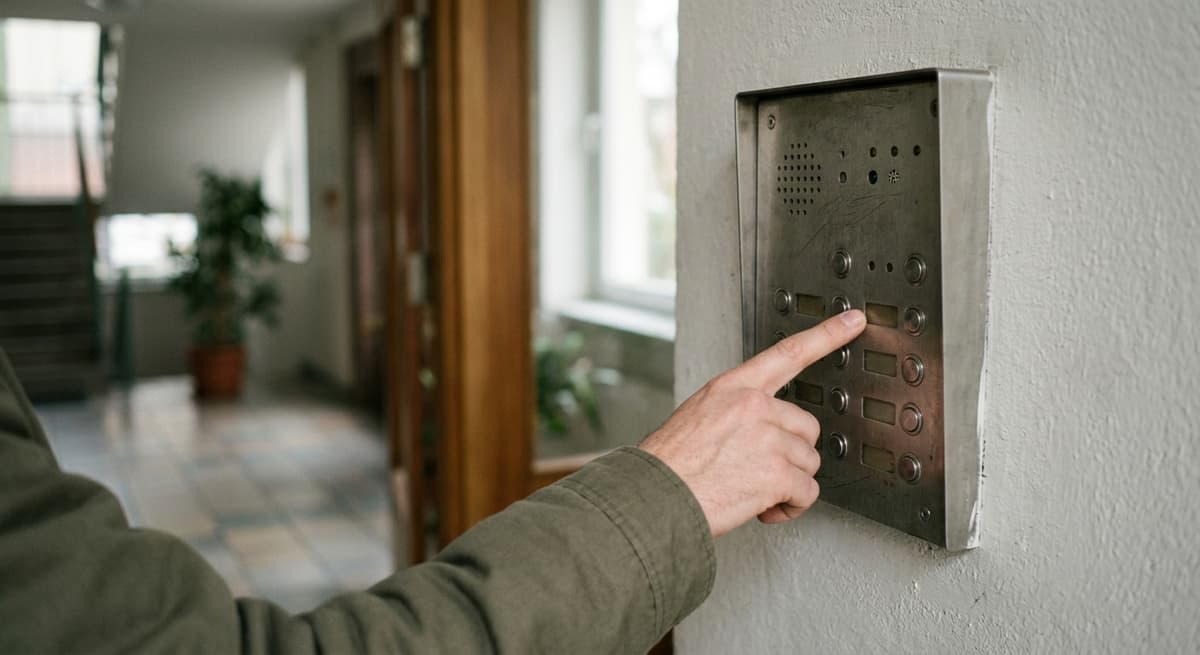
As a one-party consent state, Alaska allows tenants to record any conversation they participate in with their landlord. This includes:
- In-person discussions about rent, repairs, or lease terms
- Phone calls about maintenance requests or disputes
- Walk-through inspections where the tenant is present
- Meetings about lease violations or eviction notices
Tenants do not need to inform the landlord that recording is taking place. The recording is legal as long as the tenant is a party to the conversation.
Why Tenants Record Landlord Interactions
Recording interactions with a landlord can protect tenants in several situations:
- Maintenance disputes: Documenting a landlord's promise to make repairs establishes a record of the obligation.
- Harassment claims: Recording threatening or harassing behavior provides evidence for legal proceedings.
- Lease disagreements: Capturing verbal agreements about rent, security deposits, or move-out terms prevents disputes.
- Condition documentation: Video recording of unit conditions before and after move-in/move-out protects against unfair damage claims.
- Eviction proceedings: Recordings of interactions can be evidence in Alaska eviction hearings.
Tenant Security Cameras
Tenants in Alaska can install their own security cameras inside their rental units. These cameras can record video and audio of any conversations the tenant participates in. Tenants should:
- Avoid placing cameras that capture areas outside their unit (such as neighboring units or shared hallways) unless the landlord approves
- Check the lease for any restrictions on modifications to the unit
- Use wireless cameras that do not require permanent installation if the lease prohibits modifications
- Inform the landlord about exterior camera installations if they require drilling or mounting to the building
Alaska Landlord-Tenant Act and Privacy
AS 34.03: Entry and Notice Requirements
Alaska's Uniform Residential Landlord and Tenant Act (AS 34.03) establishes the legal framework for landlord-tenant relationships. Key provisions relevant to recording and privacy include:
Entry notice: Under AS 34.03.140, a landlord must provide at least 24 hours notice before entering a tenant's unit, except in emergencies. Entry is permitted only at reasonable times for specific purposes such as inspections, repairs, or showing the unit to prospective tenants.
Quiet enjoyment: Tenants have the right to quiet enjoyment of their rental unit, which includes freedom from unreasonable surveillance and intrusion by the landlord.
Retaliation prohibition: Under AS 34.03.310, landlords cannot retaliate against tenants for exercising their legal rights. This means a landlord cannot raise rent, reduce services, or evict a tenant because the tenant recorded a conversation or filed a complaint.
Unauthorized Entry and Recording
If a landlord enters a tenant's unit without proper notice or consent, a tenant's recording of the unauthorized entry can serve as evidence in court. Under one-party consent, the tenant can record the interaction as it happens. This recording may support:
- A claim for breach of the lease
- A claim under AS 34.03.140 for unlawful entry
- A request for a restraining order if the entry constitutes harassment
- Evidence in eviction defense proceedings
Recording During Disputes and Evictions

Documenting Disputes
Alaska tenants and landlords can both use recordings to document disputes. Common scenarios include:
- Repair requests: A tenant records a phone call where the landlord acknowledges a habitability issue and promises to fix it within a specific timeframe.
- Noise complaints: A tenant records noise levels to support a complaint or defense against eviction.
- Lease violations: A landlord records a conversation where the tenant admits to a lease violation.
- Security deposit disputes: Either party records a move-out inspection to document the condition of the unit.
Eviction Proceedings
Recordings made under one-party consent are admissible as evidence in Alaska eviction proceedings. Both landlords and tenants can present lawfully obtained recordings in court to support their positions. To maximize the evidentiary value:
- Preserve the original recording without editing
- Note the date, time, and participants of the recorded conversation
- Store recordings securely to maintain chain of custody
- Consult with an attorney about how to introduce recordings as evidence
Small Claims Court
Alaska Small Claims Court handles many landlord-tenant disputes, including security deposit claims. Recordings that document promises, agreements, or conditions are helpful evidence. The Alaska Court System provides resources for self-represented parties in small claims matters.
Doorbell Cameras and Smart Devices
Tenant Doorbell Cameras
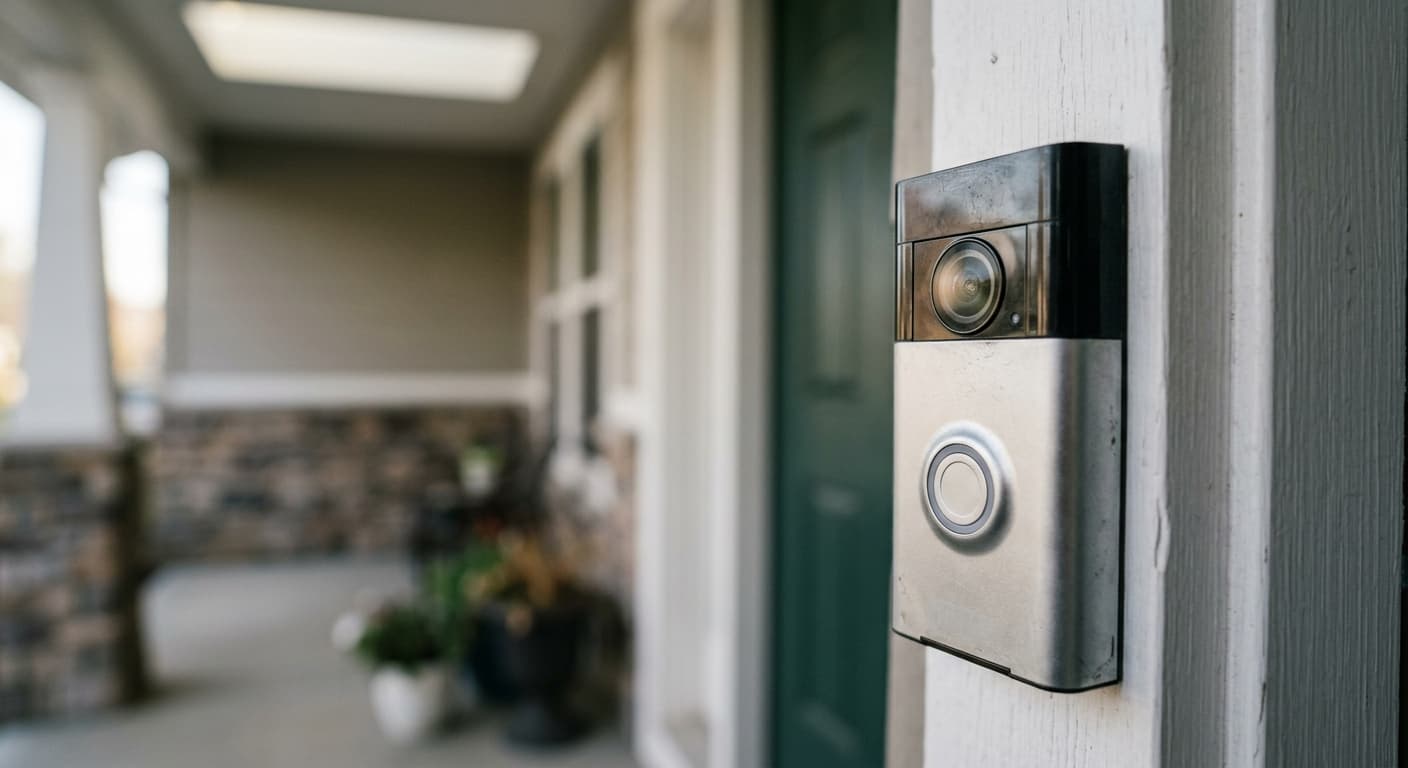
Tenants in Alaska can use doorbell cameras (such as Ring or Nest) at the entrance to their unit. Under one-party consent, audio captured by the doorbell camera when the tenant is interacting with a visitor is legal. However:
- Doorbell cameras should be positioned to capture only the tenant's entrance, not common hallways or neighboring doors
- Check the lease for restrictions on mounting devices on doors or exterior walls
- Be aware that a doorbell camera in a shared hallway may capture other tenants' conversations, which could raise eavesdropping issues if the recording tenant is not a party
Landlord Smart Locks and Access Systems
Modern rental properties may use smart lock systems that log entry and exit times. While these systems do not typically record audio or video, they create a record of access that can be relevant in disputes about unauthorized entry. Landlords should disclose the use of smart access systems in the lease agreement.
Penalties for Illegal Recording in Landlord-Tenant Situations
Criminal Penalties
| Statute | Offense | Classification | Max Jail | Max Fine |
|---|---|---|---|---|
| AS 42.20.310 | Eavesdropping (third-party recording) | Class A Misdemeanor | 1 year | $25,000 |
| AS 42.20.330 | Divulging private communications | Class A Misdemeanor | 1 year | $25,000 |
| AS 11.61.123 | Camera production of images in private areas | Class C Felony (adult) / Class B Felony (minor) | 5-10 years | $50,000-$100,000 |
Civil Remedies
Alaska does not provide a state-law civil cause of action for eavesdropping (AS 42.20.330 is a penalty section, not a private right of action). Victims of illegal recording in landlord-tenant situations may instead pursue:
- Common-law intrusion upon seclusion (Alaska tort)
- Federal Wiretap Act damages under 18 U.S.C. Section 2520
- Breach of the covenant of quiet enjoyment
- Damages under AS 34.03 for landlord violations
- Injunctive relief to remove illegal surveillance equipment
- Actual and punitive damages
Lease Consequences
A landlord who illegally surveils a tenant may face lease termination by the tenant. A tenant who installs cameras in violation of the lease may face eviction proceedings, though the landlord must follow proper eviction procedures under AS 34.03.
Best Practices for Landlords
- Use video-only security cameras in common areas and post visible notices
- Never install cameras inside tenant units or in private areas
- Disclose all surveillance equipment and practices in the lease agreement
- Provide proper notice before entering a tenant's unit
- Store security footage securely and establish a retention policy
- Do not use surveillance as a tool to harass or intimidate tenants
Best Practices for Tenants
- Document the condition of your unit with video at move-in and move-out
- Record conversations with your landlord if you anticipate a dispute
- Install personal security cameras inside your unit for safety
- Position doorbell cameras to capture only your entrance area
- Preserve recordings securely if you may need them as evidence
- Consult an attorney if you believe your landlord is conducting illegal surveillance
Explore More Alaska Recording Laws
Audio Recording | Video Recording | Voyeurism Laws | Workplace Recording | Recording Police | Phone Call Recording | Security Cameras | Recording in Public | Landlord-Tenant Recording | Dashcam Laws | School Recording | Medical Recording
More Alaska Recording Topics
More Alaska Laws
Frequently Asked Questions
Can a landlord put security cameras inside my apartment in Alaska?
No. Alaska landlords cannot install cameras inside a tenant's unit, including living areas, bedrooms, and bathrooms. These are areas where tenants have a reasonable expectation of privacy. Installing hidden cameras inside a unit could violate the eavesdropping statute (AS 42.20.310) and the indecent viewing statute (AS 11.61.123).
Can I record my landlord in Alaska without telling them?
Yes. Alaska is a one-party consent state under AS 42.20.310. As long as you are a party to the conversation, you can record it without informing your landlord. This applies to in-person discussions, phone calls, and walk-through inspections.
Can my landlord record me in common areas?
Landlords can install video security cameras in common areas such as hallways, parking lots, and building entrances. Audio recording in these areas is more complicated because the landlord may not be a party to the conversations captured. Video-only cameras with posted notice are the safest approach.
Can I use recordings as evidence in an Alaska eviction case?
Yes. Recordings made under one-party consent are admissible as evidence in Alaska courts, including eviction proceedings. Preserve the original recording without editing and be prepared to authenticate it if asked by the court.
What can I do if my landlord installed a hidden camera in my apartment?
If you discover a hidden camera in your Alaska rental unit, contact local law enforcement immediately. The landlord may face criminal charges under AS 42.20.310 (eavesdropping) or AS 11.61.123 (indecent viewing). You may also pursue civil claims for invasion of privacy and seek damages.
Updates
Independently fact-checked against the cited primary sources; governing law re-checked for recent changes
Corrected the penalty table for hidden cameras that produce images in private areas: under AS 11.61.123(g), a camera that produces (not just views) an image of someone's private exposure is always at least a Class C felony, never a Class A misdemeanor.
Governing law re-checked for recent changes
Reviewed and approved by an editor
The Law Behind This Article
This article rests on the statutory provisions below, held in our own legal record and retrieved from the official source. Tap a section to read the operative text.
Alaska Statutes, Title 42. Public Utilities and Carriers and Energy Programs, Chapter 20. Telegraph and Telephone Systems and Cable Lines; Eavesdropping
§ 42.20.310EavesdroppingIn forcecited in 17 of our articles
(a) A person may not (1) use an eavesdropping device to hear or record all or any part of an oral conversation without the consent of a party to the conversation; (2) use or divulge any information which the person knows or reasonably should know was obtained through the illegal use of an eavesdropping device for personal benefit or another's benefit; (3) publish the existence, contents, substance, purport, effect, or meaning of any conversation the person has heard through the illegal use of an eavesdropping device; (4) divulge, or publish the existence, contents, substance, purport, effect, or meaning of any conversation the person has become acquainted with after the person knows or reasonably should know that the conversation and the information contained in the conversation was obtained through the illegal use of an eavesdropping device. (b) In this section eavesdropping device means any device capable of being used to hear or record oral conversation whether the conversation is conducted in person, by telephone, or by any other means; provided that this definition does not include devices used for the restoration of the deaf or hard-of-hearing to normal or partial hearing.
Official text (excerpt) · last checked 2026-08-31 · Read the full text in our law library · Verify at akleg.gov
Also relied on in: Alaska Recording Laws (2026): One-Party Consent Rules, Alaska Audio Recording Laws: One-Party Consent Rules and Penalties (2026), Alaska Security Camera Laws: Home, Business, and Surveillance Rules (2026)
Alaska Statutes, Title 11. Criminal Law, Chapter 61. Offenses Against Public Order
§ 11.61.123Indecent viewing or production of a pictureIn forcecited in 11 of our articles
(a) A person commits the crime of indecent viewing or production of a picture if the person knowingly (1) views, or views a picture of, the private exposure of the genitals, anus, or female breast of another person; or (2) produces a picture of the private exposure of the genitals, anus, or female breast of another person. (b) Each viewing of a person, and each production of a picture of a person, whose genitals, anus, or female breast are viewed or are shown in a picture constitutes a separate violation of this section. (c) This section does not apply to the viewing or production of a picture conducted by a law enforcement agency for a law enforcement purpose. (d) In a prosecution under this section, it is an affirmative defense that the viewing or production of a picture was conducted as a security surveillance system, notice of the viewing or production was posted, and any viewing or use of pictures produced is done only in the interest of crime prevention or prosecution.
Official text (excerpt) · last checked 2026-08-31 · Read the full text in our law library · Verify at akleg.gov
Cited in 3 court opinions in our collectionLatest citing opinion in our collection: 2015
Opinions citing this section in our collection:
- Knutsen v. State (Court of Appeals of Alaska 2004, 101 P.3d 1065)“…eumstance that makes the defendant's conduct criminal under AS 11.61.123(a), we interpret AS 11.61.123(a) to mea…”
- Faye H. v. James B. (Alaska Supreme Court 2015, 348 P.3d 876)“…(1), .220(a)(1)(c), .436(a)(2). 4 See AS 11.61.123(a)(2). 5 See AS 1…”
- United States v. Moreland (Court of Appeals for the Fifth Circuit 2011, 665 F.3d 137)“…nority of states criminalize viewing child pornography. See Alaska Stat. § 11.61.123 (2009); Ark. Code Ann. § 5-27-602 (2010…”
Identified automatically from the court opinions citing this section — not a ranking of which case controls.
Also relied on in: Alaska Workplace Recording Laws: Employee and Employer Rights (2026), Alaska Video Recording Laws: Surveillance, Filming, and Consent Rules (2026), Alaska Voyeurism and Hidden Camera Laws: AS 11.61.123 Explained (2026)
Alaska Statutes, Title 34. Property, Chapter 03. Uniform Residential Landlord and Tenant Act
§ 34.03.140AccessIn force
(a) The tenant may not unreasonably withhold consent to the landlord to enter into the dwelling unit in order to inspect the premises, make necessary or agreed repairs, decorations, alterations, or improvements, supply necessary or agreed services, remove personal property belonging to the landlord that is not covered by a written rental agreement, or exhibit the dwelling unit to prospective or actual purchasers, mortgagees, tenants, workers, or contractors. (b) The landlord may enter the dwelling unit without the consent of the tenant in the case of emergency. (c) A landlord may not abuse the right of access or use it to harass the tenant. Except in case of emergency or if it is impracticable to do so, the landlord shall give the tenant at least 24 hours notice of intention to enter and may enter only at reasonable times and with the tenant's consent. (d) The landlord does not have a right of access to the dwelling unit (1) except (A) as permitted by this section; (B) by court order; or (C) as permitted by AS 34.03.230(b); or (2) unless the tenant has abandoned or surrendered the premises.
Official text (excerpt) · last checked 2026-07-31 · Read the full text in our law library · Verify at akleg.gov
Cited in 2 court opinions in our collectionLatest citing opinion in our collection: 2000
Opinions citing this section in our collection:
- Public Safety Employees Ass'n v. State (Alaska Supreme Court 1983, 658 P.2d 769)“…es for the purpose of harassment of tenants in violation of AS 34.03.140(c); 12 that the state had…”
- Chilton-Wren v. Olds (Alaska Supreme Court 2000, 1 P.3d 693)“…entered her apartment on several occasions in violation of AS 34.03.140. The statutory penalty under AS 34.03.3…”
Identified automatically from the court opinions citing this section — not a ranking of which case controls.
Search our full record of US law — 2.1 million sections, every state + federal →
Sources and References
- Alaska Statutes AS 42.20.310 - Eavesdropping(akleg.gov).gov
- Alaska Statutes AS 34.03 - Uniform Residential Landlord and Tenant Act(akleg.gov).gov
- Alaska Statutes AS 34.03.140 - Landlord Entry(akleg.gov).gov
- Alaska Statutes AS 11.61.123 - Indecent Viewing or Photography(akleg.gov).gov
- Alaska Court System(courts.alaska.gov).gov