
Kentucky
Kentucky Smart Glasses Recording Laws 2026
Independently fact-checked against primary sources (last audited August 24, 2026). · Reviewed by the RecordingLaw editorial team. · Law checked current as of August 24, 2026. How we verify our legal content
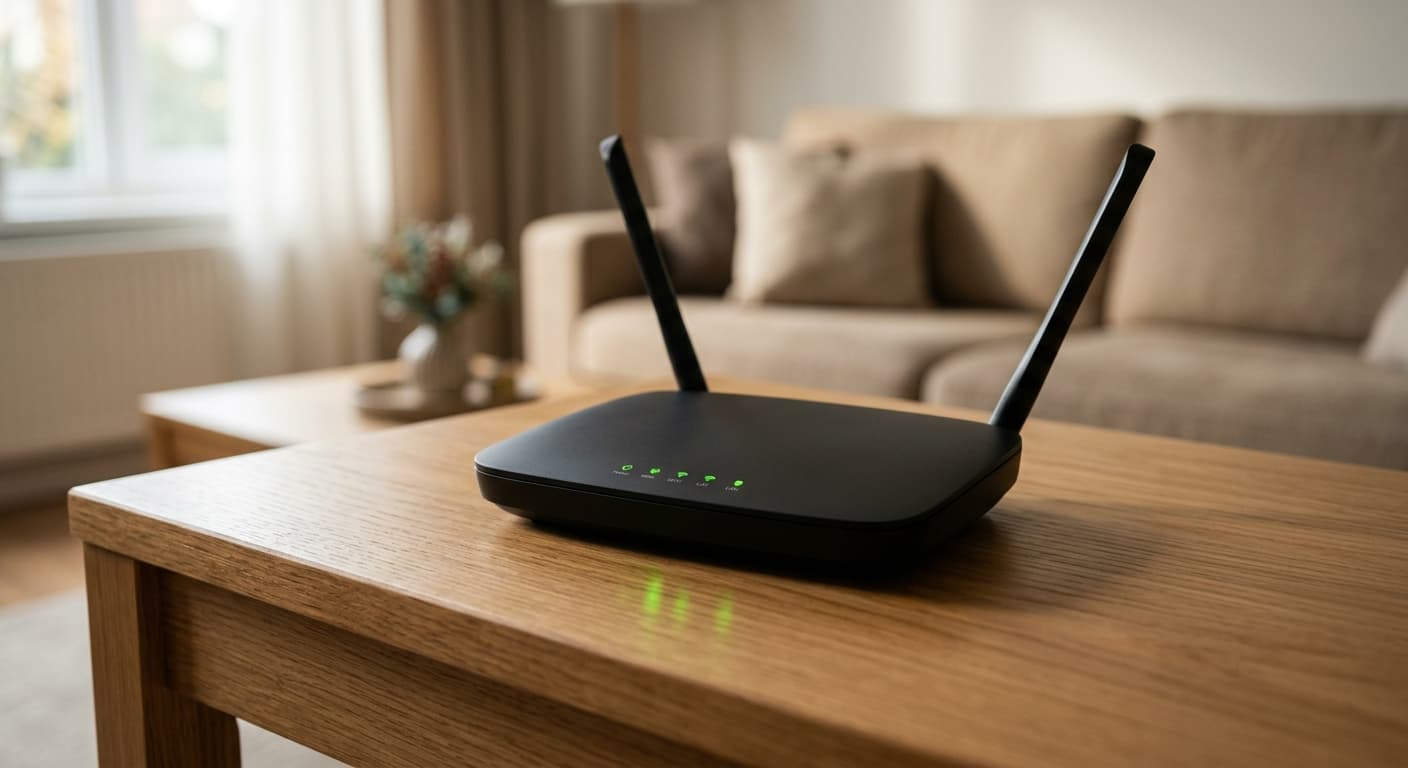
Smart glasses are legal to own and wear in Kentucky, and the state's one-party consent rule means you can lawfully record any conversation you are part of without notifying the other participants. The critical limit is audio in private spaces: the eavesdropping statute, KRS 526.020, applies the moment you capture another person's oral communication without being a participant or without their consent. Video of public spaces is broadly lawful; the trouble starts when the glasses record voices.
Are smart glasses legal to own and wear in Kentucky?
Smart glasses, including Meta Ray-Ban AI glasses, are legal consumer devices in Kentucky. The Commonwealth has enacted no statute restricting the ownership or wearing of smart glasses as of 2026. No pending Kentucky legislation specifically targets wearable recording devices, unlike California's SB 1130 (pending as of 2026), which would regulate covert smart-glasses recording.
The Meta Ray-Ban glasses include a built-in capture LED indicator, a white light located near the right frame, that illuminates whenever the camera is actively recording video, taking a photo, or livestreaming. Meta's official guidance instructs wearers to let the LED shine and to stop recording if anyone asks to opt out. The LED is designed to give bystanders notice that recording is occurring, but in Kentucky's one-party framework, notice to other parties is not legally required as long as the wearer is a participant in the conversation being captured.
Wearing the glasses in public without recording raises no legal issue in Kentucky. The legal analysis begins when the wearer activates video or audio capture.
Recording video in public vs. private spaces
Under the constitutional framework established in Katz v. United States, 389 U.S. 347 (1967), persons in public spaces such as streets, sidewalks, parks, parking lots, and open public gatherings have a reduced reasonable expectation of privacy from being observed and recorded. Silent video recording in these spaces is not a wiretap under either federal or Kentucky law because the federal Wiretap Act, 18 U.S.C. § 2510(18), limits the statute's reach to "aural transfers" that contain the human voice. A video recording with no audio component does not intercept a wire or oral communication.
This means a smart glasses wearer walking through Louisville, Lexington, or any Kentucky public space and recording video of streets, storefronts, public events, or open-air gatherings is not violating Kentucky wiretapping law by that video capture alone. The same analysis applies to recording in a public park or at a publicly accessible outdoor event.
The analysis changes in private and semi-private spaces. Inside a private home, a medical office, a restaurant booth, a vehicle in which passengers have a reasonable expectation of privacy, or a workplace conference room, even video recording that incidentally captures audio of a conversation can implicate KRS 526.020 if the wearer is not a party to that conversation. A smart glasses wearer invited into a private home as a guest who records the visit while participating in the conversation is lawfully within the one-party rule. The same wearer who uses the glasses to capture a conversation between two other people in that room, without being a participant, is eavesdropping.
The practical boundary: smart glasses recording in Kentucky is safest when the wearer is a participant in any audio being captured, the recording occurs in a clearly public space, or the recording captures video only with no audio.
Recording audio in Kentucky: the one-party consent rule
Kentucky's eavesdropping statutes occupy KRS Chapter 526. KRS 526.010 defines the relevant terms: "wire communication" means any communication transmitted in whole or in part through wire, cable, or a similar connection; "oral communication" means any oral communication uttered by a person with a reasonable expectation that the communication will not be intercepted. KRS 526.020 creates the eavesdropping offense.
The critical feature of Kentucky's framework is who qualifies to consent. A person who is a party to the communication, meaning someone actually participating in the conversation, may lawfully record it without the knowledge or consent of any other participant. This is the one-party (participant-party) rule that places Kentucky in the federal baseline camp under 18 U.S.C. § 2511(2)(d).
What KRS 526.020 prohibits is intercepting a wire or oral communication without the consent of at least one party. If the wearer of the glasses is present and participating, that participation is the required party consent. If the glasses are used to capture a conversation the wearer is not part of, no party to that conversation has consented, and the recording is a Class D felony.
For smart glasses users, this translates to three straightforward rules:
First, if you are present in and participating in a conversation, you may record it in Kentucky without telling the other participants. The glasses' capture LED will alert observant bystanders that recording is occurring, but disclosure is not legally required.
Second, if you set the glasses to record a room, a vehicle, or a space and then leave or step out of the conversation, you are no longer a party to any communication captured after your exit. The one-party rule no longer protects that recording.
Third, if you deliberately position the glasses to capture a private conversation between other people without joining it, that is eavesdropping regardless of where the recording occurs.
Kentucky's one-party rule aligns with the federal Wiretap Act's § 2511(2)(d) exception, which provides that it is not unlawful for a person who is a party to a communication to intercept it, unless the interception is for the purpose of committing a criminal or tortious act. Both federal and Kentucky law therefore permit participant recording; both prohibit third-party interception.
When conversations become "oral communications" under KRS 526.010
Not every spoken word in a public space is an "oral communication" protected by KRS 526.020. The statute incorporates the reasonable-expectation-of-privacy requirement from Katz: a person must have uttered the words with an objectively reasonable expectation that they would not be intercepted. Words shouted at a rally, broadcast over a public address system, or spoken loudly enough that nearby strangers can clearly hear them carry a weakened expectation of privacy. A quiet, close-range conversation at a restaurant table, in a break room, or in a private vehicle carries a much stronger expectation, even though those spaces are technically accessible to others.
Smart glasses users in Kentucky should be most cautious in close-range, low-volume conversations in semi-private settings, even where the wearer is a participant. If the glasses capture audio beyond the immediate conversation, such as overhearing nearby tables in a restaurant, the wearer is potentially capturing oral communications from non-parties without their consent, moving into eavesdropping territory.
Where smart glasses may never be used to record
Separate from the audio consent analysis, Kentucky law absolutely prohibits recording in locations where individuals have a reasonable expectation of privacy from being visually observed, regardless of whether the wearer is a participant in any conversation.
KRS 531.090 criminalizes the intentional use of a camera or other imaging device to view, photograph, film, or videotape the sexual or intimate areas of another person without consent in a location where that person has a reasonable expectation of privacy. This is a Class A misdemeanor, punishable by up to twelve months in jail and a fine of up to $500.
KRS 531.100 elevates the conduct to a Class D felony, carrying one to five years imprisonment and a fine of $1,000 to $10,000, when recordings of a sexual or intimate nature made in private spaces are distributed electronically or made for profit.
These prohibitions apply to smart glasses exactly as they apply to hidden cameras, smartphones, or any other imaging device. The wearable form factor does not create an exception, and the covert appearance of smart glasses (indistinguishable from ordinary eyewear) is particularly relevant because it demonstrates deliberate concealment of the recording device, which can aggravate prosecutorial treatment.
The federal Video Voyeurism Prevention Act, 18 U.S.C. § 1801, independently prohibits recording the private areas of individuals on federal property without consent. That federal floor operates alongside, not instead of, Kentucky's KRS 531.090 and 531.100.
Smart glasses users must never activate video or audio recording in:
- Restrooms, bathrooms, and toilet facilities, whether in homes, businesses, or public buildings
- Locker rooms, gym changing areas, and fitness facility changing rooms
- Fitting rooms, dressing rooms, and clothing store changing areas
- Hotel rooms, private residential bedrooms, or any space in a private home where a person expects personal privacy
- Medical examination rooms, hospital rooms, and therapy offices
The prohibition on recording in these spaces is absolute. It is not waived by participant consent to the audio conversation occurring there, and it is not excused by accident or a claim that the glasses were recording without the wearer's specific intent.
Facial recognition and biometric data
Kentucky has not enacted a dedicated biometric privacy statute comparable to Illinois's Biometric Information Privacy Act, 740 ILCS 14, or Texas's Capture or Use of Biometric Identifier Act, Tex. Bus. & Com. Code § 503.001, as of 2026. There is no Kentucky statute that specifically requires written consent before capturing face geometry or enrolling biometric data in a database.
However, using smart glasses with facial-recognition software to identify individuals without their knowledge creates civil liability exposure regardless of state statutory gaps. Under Restatement (Second) of Torts § 652B, intentional intrusion upon another's seclusion is actionable invasion of privacy if the intrusion would be highly offensive to a reasonable person. No publication or sharing of the data is required for liability; the act of capture itself is sufficient.
The 2024 I-XRAY demonstration, in which Harvard students combined Meta Ray-Ban smart glasses with third-party facial-recognition software to identify strangers on the street in real time and retrieve home addresses and partial Social Security numbers within minutes, illustrates that this risk is not hypothetical. Kentucky residents whose face geometry is captured by smart glasses and processed through out-of-state servers may have claims under the laws of the processing state, particularly Illinois if the data touches Illinois-based systems, where BIPA allows statutory damages of $1,000 to $5,000 per person per violation with a private right of action.
Smart glasses users in Kentucky who use any application involving facial recognition to identify individuals should be aware that no Kentucky statute currently authorizes that conduct without consent, and the Restatement § 652B theory does not require a state-specific biometric law to trigger liability.
Penalties summary
| Conduct | Statute | Classification | Max Imprisonment | Fine Range |
|---|---|---|---|---|
| Eavesdropping (intercepting oral/wire communication without party consent) | KRS 526.020 | Class D Felony | 5 years | $1,000 to $10,000 |
| Installing an eavesdropping device | KRS 526.030 | Class D Felony | 5 years | $1,000 to $10,000 |
| Possessing an eavesdropping device | KRS 526.040 | Class A Misdemeanor | 12 months | Up to $500 |
| Video voyeurism in private spaces | KRS 531.090 | Class A Misdemeanor | 12 months | Up to $500 |
| Distributing voyeuristic recordings / recording for profit | KRS 531.100 | Class D Felony | 5 years | $1,000 to $10,000 |
| Federal unlawful interception | 18 U.S.C. § 2511(1)(a) | Federal crime | 5 years | Court-imposed |
Civil liability under the federal Wiretap Act, 18 U.S.C. § 2520, allows a victim of unlawful interception to recover actual damages of at least $100 per day of violation or $10,000, whichever is greater, plus punitive damages for willful violations and reasonable attorney fees. Criminal prosecution and civil suit can proceed independently from the same recording.
Practical tips for smart glasses users in Kentucky
-
Stay in the conversation. Kentucky's one-party rule protects you only while you are an active participant in the communication being recorded. If you set your glasses to capture a room and step away, the recording continues without you as a party, removing your legal protection.
-
Keep the LED visible. The capture LED on Meta Ray-Ban glasses is the primary external signal that recording is occurring. Covering or disabling it is not required by Kentucky law, but doing so eliminates the notice bystanders might use to opt out of being recorded, and strengthens a prosecutor's argument about consciousness of guilt in any criminal matter.
-
Treat close conversations in semi-private spaces with care. Even as a participant, capturing the words of people at a nearby table or in an adjacent space when you are not part of their conversation is eavesdropping. Keep audio recording focused on conversations you are actually in.
-
Never record in private spaces where people have a reasonable expectation of physical privacy. The Class A misdemeanor and Class D felony prohibitions under KRS 531.090 and KRS 531.100 apply regardless of consent and regardless of intent.
-
Be cautious about facial recognition apps. Kentucky has no biometric privacy statute, but using third-party facial-recognition apps with your smart glasses to identify people without their knowledge exposes you to civil liability and, if face data flows through Illinois infrastructure, BIPA statutory damages.
-
Cross-state calls follow stricter rules. If you are in Kentucky on a call with someone in a two-party consent state such as California, Florida, or Washington, their state's law may govern if the call is deemed to take place where both parties are located. When in doubt, disclose.
-
Workplace and professional use. Kentucky's one-party rule allows you to record workplace meetings you attend without notifying coworkers or managers. However, employment agreements, professional ethics rules, and company policies may independently restrict recording in the workplace. The legal right to record under KRS 526.020 does not override a contractual obligation not to do so.
This article provides general legal information, not legal advice. Recording law depends on the specific facts of each situation and can change. Consult a licensed Kentucky attorney for advice about your specific circumstances.
More Kentucky Laws
Frequently Asked Questions
Is Kentucky a one-party or two-party consent state for recording?
Kentucky is a one-party consent state under KRS 526.020. A person who is a party to a wire or oral communication may lawfully record it without informing or obtaining the consent of any other participant. This aligns with the federal baseline under 18 U.S.C. § 2511(2)(d). The rule applies to smart glasses audio recording as long as the wearer is actively participating in the conversation being captured.
Can I record someone with my smart glasses in Kentucky without telling them?
Yes, as long as you are a participant in the conversation. Kentucky's one-party consent rule under KRS 526.020 does not require disclosure to other parties when the recorder is part of the communication. However, if you use the glasses to capture a conversation between other people you are not part of, that is eavesdropping, a Class D felony.
What is the penalty for illegal recording in Kentucky?
Eavesdropping under KRS 526.020, which includes intercepting a wire or oral communication without being a party and without any party's consent, is a Class D felony carrying 1 to 5 years imprisonment and a fine of $1,000 to $10,000. Installing an eavesdropping device under KRS 526.030 carries the same penalty. Possessing an eavesdropping device under KRS 526.040 is a Class A misdemeanor, punishable by up to 12 months jail and a fine of up to $500.
Are smart glasses legal in Kentucky?
Smart glasses are legal to own and wear in Kentucky. No state statute restricts their ownership or use as eyewear. The legality of using them to record depends on what is captured and where. Video in public spaces is generally lawful. Audio recording of a conversation you are participating in is lawful under the one-party rule. Recording conversations you are not part of, or recording in restrooms or locker rooms, is criminal.
Can I record police with smart glasses in Kentucky?
Yes. Recording police officers performing their official duties in a public space is constitutionally protected activity under the First Amendment. You must record from a location where you have a lawful right to be, avoid interfering with police activity, and maintain a safe distance. Kentucky's one-party rule also covers this scenario because you are present and a witness. There is no separate Kentucky statute prohibiting recording law enforcement in public.
Can I wear smart glasses in a locker room or restroom in Kentucky?
No. Activating any recording function in a restroom, locker room, changing room, or other space where individuals have a reasonable expectation of physical privacy violates KRS 531.090 (Class A misdemeanor) and, if recordings are distributed, KRS 531.100 (Class D felony). These prohibitions are absolute and cannot be waived by participant consent to any conversation occurring in the space.
Does Kentucky have a biometric privacy law covering facial recognition on smart glasses?
Kentucky has no dedicated biometric privacy statute as of 2026. However, using smart glasses with facial-recognition software to identify individuals without their knowledge can create civil liability for intrusion upon seclusion under Restatement (Second) of Torts § 652B. If face-geometry data is processed by servers in Illinois, that state's BIPA law may also apply, allowing statutory damages of $1,000 to $5,000 per person per violation.
Do I need to disclose the capture LED on my Meta Ray-Ban glasses in Kentucky?
Kentucky law does not require you to disclose recording under the one-party consent rule, and there is no Kentucky statute mandating that the capture LED remain visible. However, keeping the LED unobscured is good practice because covering it removes the only bystander notice that recording is occurring and could strengthen a prosecution's argument about intent in any criminal matter.
If I record a conversation in Kentucky with someone calling from California, which state's law applies?
This is a legally unresolved conflict-of-laws question. California requires all-party consent under Penal Code § 632, while Kentucky requires only one-party consent. Courts applying the stricter-state rule would require you to disclose and obtain consent from the California caller. The safest practice when recording any call with a party in a two-party consent state is to disclose at the start of the call.
Updates
Independently fact-checked against the cited primary sources; governing law re-checked for recent changes
Governing law re-checked for recent changes
Reviewed and approved by an editor
The Law Behind This Article
This article rests on the statutory provisions below, held in our own legal record and retrieved from the official source. Tap a section to read the operative text.
Kentucky Revised Statutes, Chapter 526: EAVESDROPPING AND RELATED OFFENSES
§ 526.010DefinitionIn forcecited in 15 of our articles
The following definition applies in this chapter, unless the context otherwise requires: "Eavesdrop" means to overhear, record, amplify or transmit any part of a wire or oral communication of others without the consent of at least one (1) party thereto by means of any electronic, mechanical or other device.
Official text (excerpt) · last checked 2026-07-29 · Read the full text in our law library · Verify at apps.legislature.ky.gov
Cited in 9 court opinions in our collectionLatest citing opinion in our collection: 2024
Opinions citing this section in our collection:
- Major v. Commonwealth (Kentucky Supreme Court 2006, 177 S.W.3d 700)“…the activity was appropriate under Kentucky Criminal Law, KRS 526.010; thus not in violation of his Fourth Am…”
- Springer v. Commonwealth (Kentucky Supreme Court 1999, 998 S.W.2d 439)“…ions, is not precluded by 18 U.S.C. § 2510 , et seq. and KRS 526.010, et seq. Nor do these statutes have a…”
- Carrier v. Commonwealth (Court of Appeals of Kentucky 1980, 607 S.W.2d 115)“…ucky to depart from the federal norm. See also KRS 526.010, which defines “eavesdrop” as “to overh…”
Identified automatically from the court opinions citing this section — not a ranking of which case controls.
Also relied on in: Kentucky Recording Laws (2026): One-Party Consent Rules, Kentucky Audio Recording Laws: One-Party Consent Rules and Penalties, Kentucky Phone Call Recording Laws: What You Need to Know
§ 526.020EavesdroppingIn forcecited in 20 of our articles
(1) A person is guilty of eavesdropping when he intentionally uses any device to eavesdrop, whether or not he is present at the time. (2) Eavesdropping is a Class D felony.
Official text (excerpt) · last checked 2026-08-31 · Read the full text in our law library · Verify at apps.legislature.ky.gov
Cited in 8 court opinions in our collectionLatest citing opinion in our collection: 2023
In the courts (editorial summary, independently checked):Basham v. Commonwealth (1984) held wiretap evidence obtained under a valid federal order is admissible in Kentucky, though it noted no state law authorizes electronic surveillance by Kentucky police. Brock v. Commonwealth (1997) held the exclusionary rule reaches only constitutional violations, so a private recording was not suppressed.
Opinions citing this section in our collection:
- Springer v. Commonwealth (Kentucky Supreme Court 1999, 998 S.W.2d 439)✓A neighbor used a police scanner to tape cordless calls from the victim's home, and detectives played it to induce Eades to confess; the court held the federal wiretap act and Kentucky's eavesdropping statutes did not bar using it against someone who was not a party to the calls.
- Stringer v. Wal-Mart Stores, Inc. (Kentucky Supreme Court 2004, 151 S.W.3d 781)✓Wal-Mart secretly ran about forty hours of audio and video surveillance of employees in a store claims area; the court did not decide whether that violated KRS 526.020, holding instead that the employees' statutory claim failed for lack of damages caused by the recording itself.
- Brock v. Commonwealth (Kentucky Supreme Court 1997, 947 S.W.2d 24)✓Brock, claiming self-defense, was kept from using a private tape of the victim's mother saying her son had gone to kill him; the court held that even assuming the tape violated KRS 526.020, the exclusionary rule reaches only state action, so suppression was not required.
Identified automatically from the court opinions citing this section — not a ranking of which case controls.
Also relied on in: Kentucky Landlord-Tenant Recording Laws: Surveillance, Privacy, and Disputes, Kentucky Video Recording Laws: Surveillance, Privacy, and Legal Limits, Kentucky Voyeurism and Hidden Camera Laws: Offenses, Penalties, and Protections
§ 526.030Installing eavesdropping deviceIn forcecited in 5 of our articles
(1) A person is guilty of installing an eavesdropping device when he intentionally installs or places such a device in any place with the knowledge that it is to be used for eavesdropping. (2) Installing an eavesdropping device is a Class D felony.
Official text (excerpt) · last checked 2026-07-29 · Read the full text in our law library · Verify at apps.legislature.ky.gov
Cited in 1 court opinions in our collectionLatest citing opinion in our collection: 2004
Opinions citing this section in our collection:
- Stringer v. Wal-Mart Stores, Inc. (Kentucky Supreme Court 2004, 151 S.W.3d 781)“…e that it was to be used for eavesdropping, in violation of KRS 526.030. 3. That the defendants, Wal-Mart Sto…”
Identified automatically from the court opinions citing this section — not a ranking of which case controls.
Also relied on in: Kentucky Surveillance Camera Laws (2026 Guide)
§ 526.040Possession of eavesdropping deviceIn forcecited in 5 of our articles
(1) A person is guilty of possession of an eavesdropping device when he possesses any electronic, mechanical or other device designed or commonly used for eavesdropping with intent to use that device to eavesdrop or knowing that another intends to use that device to eavesdrop. (2) Possession of an eavesdropping device is a Class A misdemeanor.
Official text (excerpt) · last checked 2026-07-29 · Read the full text in our law library · Verify at apps.legislature.ky.gov
Kentucky Revised Statutes, Chapter 531: PORNOGRAPHY
§ 531.090VoyeurismIn forcecited in 13 of our articles
(1) A person is guilty of voyeurism when: (a) He or she intentionally: 1. Uses or causes the use of any camera, videotape, photooptical, photoelectric, or other image recording device for the purpose of observing, viewing, photographing, filming, or videotaping the sexual conduct, genitals, an undergarment worn without being publicly visible, or nipple of the female breast of another person without that person's consent; or 2. Uses the unaided eye or any device designed to improve visual acuity for the purpose of observing or viewing the sexual conduct, genitals, an undergarment worn without being publicly visible, or nipple of the female breast of another person without that person's consent; or 3.
Official text (excerpt) · last checked 2026-08-31 · Read the full text in our law library · Verify at apps.legislature.ky.gov
Cited in 9 court opinions in our collectionLatest citing opinion in our collection: 2026
In the courts (editorial summary, independently checked):Kentucky courts have treated KRS 531.090 largely as a jury-instruction question. Williams v. Commonwealth (2005) held the 2002 voyeurism statute could not reach conduct predating its July 15, 2002 effective date, and Morgan v. Commonwealth (2006) held voyeurism is not a lesser-included offense of first-degree burglary.
Opinions citing this section in our collection:
- Williams v. Commonwealth (Kentucky Supreme Court 2005, 178 S.W.3d 491)✓Williams photographed his eight-year-old stepdaughter naked in January 2001 and sought a lesser-included voyeurism instruction; the court held KRS 531.090 created a new offense effective July 15, 2002 and was not retroactive, so it could not reach his earlier conduct.
- Morgan v. Commonwealth (Kentucky Supreme Court 2006, 189 S.W.3d 99)✓Morgan watched a couple through a trailer window, then cut the phone line and broke in armed; the court held voyeurism under KRS 531.090 is not a lesser-included offense of first-degree burglary because it requires proof of unlawful entry to view another person.
- Commonwealth v. Mixon (Kentucky Supreme Court 1992, 827 S.W.2d 689)“…lier cases, arising under the former habitual criminal act, KRS 531.090, required authenticated records of fore…”
Identified automatically from the court opinions citing this section — not a ranking of which case controls.
Also relied on in: Kentucky Laws on Recording in Public: Rights, Limits, and Exceptions, Kentucky School Recording Laws: Student, Parent, and Teacher Rights, Kentucky Security Camera Laws: Home, Business, and HOA Rules
§ 531.100Video voyeurismIn forcecited in 5 of our articles
(1) A person is guilty of video voyeurism when he or she intentionally: (a) Uses or causes the use of any camera, videotape, photooptical, photoelectric, or other image recording device for the purpose of observing, viewing, photographing, filming, or videotaping the sexual conduct, genitals, or nipple of the female breast of another person without that person's consent; and (b) Uses or divulges any image so obtained for consideration; or (c) Distributes any image so obtained by live or recorded visual medium, electronic mail, the Internet, or a commercial on-line service. (2) Video voyeurism is a Class D felony.
Official text (excerpt) · last checked 2026-07-29 · Read the full text in our law library · Verify at apps.legislature.ky.gov
Cited in 6 court opinions in our collectionLatest citing opinion in our collection: 2025
Opinions citing this section in our collection:
- Kentucky Bar Ass'n v. Daniels (Kentucky Supreme Court 2006, 193 S.W.3d 754)“…in Jefferson Circuit Court to one count of Video Voyeurism, KRS 531.100, and in Hardin Circuit Court to one cou…”
- Daniels v. Kentucky Bar Association (Kentucky Supreme Court 2008, 247 S.W.3d 530)“…ovant was indicted in Jefferson County for video voyeurism, KRS 531.100, a felony that criminalizes the non-co'…”
- Michelle Bray v. Commonwealth of Kentucky (Kentucky Supreme Court 2025)“…sexual performance by a minor. KRS 531.320(1) (promoting); KRS 531.100(3) (defining “promote”). 17 The…”
Identified automatically from the court opinions citing this section — not a ranking of which case controls.
Also relied on in: Kentucky Employee Monitoring Laws (2026): Workplace Surveillance Rights, Kentucky Ring Doorbell Laws: What You Need to Know in 2026
United States Code Title 18
§ 1801Video voyeurismIn forcecited in 79 of our articles
Whoever, in the special maritime and territorial jurisdiction of the United States, has the intent to capture an image of a private area of an individual without their consent, and knowingly does so under circumstances in which the individual has a reasonable expectation of privacy, shall be fined under this title or imprisoned not more than one year, or both. In this section— the term “capture”, with respect to an image, means to videotape, photograph, film, record by any means, or broadcast; the term “broadcast” means to electronically transmit a visual image with the intent that it be viewed by a person or persons; the term “a private area of the individual” means the naked or undergarment clad genitals, pubic area, buttocks, or female breast of that individual; the term “female breast” means any portion of the female breast below the top of the areola; and the term “under circumstances in which that individual has a reasonable expectation of privacy” means— circumstances in which a reasonable person would believe that he or she could disrobe in privacy, without being concerned that an image of a private area of the individual was being captured; or circumstances in which a…
Official text (excerpt) · last checked 2026-07-28 · Read the full text in our law library · Verify at uscode.house.gov
Cited in 53 court opinions in our collectionLatest citing opinion in our collection: 2026
In the courts (editorial summary, independently checked):Courts have applied 18 U.S.C. 1801 mainly at its edges. United States v. Johnson (2010) read it as Congress's answer to secretly filming nudity on federal property, acquitting on a child exploitation charge instead. EPIC v. Department of Homeland Security (2011) applied the Section 1801(c) law enforcement exception to a TSA scanner claim.
Opinions citing this section in our collection:
- United States v. Anthony Helton (Court of Appeals for the Fourth Circuit 2019, 944 F.3d 198)“…from this list of federal offenses is video voyeurism under 18 U.S.C. § 1801. Rather than list this statute as an enu…”
- United States v. Johnson (District Court, W.D. Missouri 2010, 719 F. Supp. 2d 1059)✓A weightlifting coach hid a camera to film minors weighing in nude; acquitting him under the child exploitation statute, the court called that conduct plain video voyeurism under section 1801, but noted the section reaches only federal maritime and territorial jurisdiction.
- Electronic Privacy Information Center v. United States Department of Homeland Security (Court of Appeals for the D.C. Circuit 2011, 653 F.3d 1)✓Privacy groups challenged TSA body scanners under the Video Voyeurism Prevention Act; the D.C. Circuit held the statute's exception for lawful law enforcement, correctional, or intelligence activity applied to airport screening, so the section 1801 claim failed.
Identified automatically from the court opinions citing this section — not a ranking of which case controls.
Also relied on in: South Dakota Voyeurism Laws, Utah Voyeurism Laws, Is It Illegal to Video Record Someone Without Their Consent? (2026)
§ 2510DefinitionsIn forcecited in 126 of our articles
As used in this chapter— “wire communication” means any aural transfer made in whole or in part through the use of facilities for the transmission of communications by the aid of wire, cable, or other like connection between the point of origin and the point of reception (including the use of such connection in a switching station) furnished or operated by any person engaged in providing or operating such facilities for the transmission of interstate or foreign communications or communications affecting interstate or foreign commerce; “oral communication” means any oral communication uttered by a person exhibiting an expectation that such communication is not subject to interception under circumstances justifying such expectation, but such term does not include any electronic communication; “State” means any State of the United States, the District of Columbia, the Commonwealth of Puerto Rico, and any territory or possession of the United States; “intercept” means the aural or other acquisition of the contents of any wire, electronic, or oral communication through the use of any electronic, mechanical, or other device.1 So in original. The period probably should be a semicolon.
Official text (excerpt) · last checked 2026-07-28 · Read the full text in our law library · Verify at uscode.house.gov
Cited in 2,382 court opinions in our collectionLatest citing opinion in our collection: 2026
In the courts (editorial summary, independently checked):United States v. New York Telephone Co. (1977) held that pen registers fall outside Title III because they do not acquire the contents of a communication as Section 2510(4) and (8) define interception. Forsyth v. Barr (1994) applied the same definitions, treating the defendant officers as law enforcement officers under Section 2510(7).
Opinions citing this section in our collection:
- Forsyth v. Barr (Court of Appeals for the Fifth Circuit 1994, 19 F.3d 1527)✓Neighbors tapped an informant's home line and the overheard charges reached Dallas internal affairs; the Fifth Circuit saw no evidence the police defendants intercepted anything and held they were 2510(7) law enforcement officers, so 2517(1) and (2) allowed their use of it.
- Nixon v. Administrator of General Services (Supreme Court of the United States 1977, 433 U.S. 425)“…of the Omnibus Crime Control and Safe Streets Act of 1968, 18 U. S. C. §§ 2510 et seq. 408 F. Supp., at 363 . We…”
- Gannett Co. v. DePasquale (Supreme Court of the United States 1979, 443 U.S. 368)“…of the Omnibus Crime Control and Safe Streets Act of 1968, 18 U. S. C. § 2510 et seq., be preserved prior to the d…”
Identified automatically from the court opinions citing this section — not a ranking of which case controls.
Also relied on in: Surveillance Camera Laws by State (2026 Guide), US Recording Laws by State (2026): All 50 States Explained, Georgia Recording Laws (2026): One-Party Audio, All-Party Video
§ 2511Interception and disclosure of wire, oral, or electronic communications prohibitedIn forcecited in 422 of our articles
Except as otherwise specifically provided in this chapter any person who— intentionally intercepts, endeavors to intercept, or procures any other person to intercept or endeavor to intercept, any wire, oral, or electronic communication; intentionally uses, endeavors to use, or procures any other person to use or endeavor to use any electronic, mechanical, or other device to intercept any oral communication when— such device is affixed to, or otherwise transmits a signal through, a wire, cable, or other like connection used in wire communication; or such device transmits communications by radio, or interferes with the transmission of such communication; or such person knows, or has reason to know, that such device or any component thereof has been sent through the mail or transported in interstate or foreign commerce; or such use or endeavor to use (A) takes place on the premises of any business or other commercial establishment the operations of which affect interstate or foreign commerce; or (B) obtains or is for the purpose of obtaining information relating to the operations of any business or other commercial establishment the operations of which affect interstate or foreign…
Official text (excerpt) · last checked 2026-08-28 · Read the full text in our law library · Verify at uscode.house.gov
Cited in 2,045 court opinions in our collectionLatest citing opinion in our collection: 2026
In the courts (editorial summary, independently checked):Griggs-Ryan v. Smith (1990) applied the Section 2511(2)(d) prior-consent exception, treating a tenant repeatedly told that all incoming calls were taped as having impliedly consented. United States v. United States District Court (1972) read the then-current Section 2511(3) as conferring no presidential surveillance power.
Opinions citing this section in our collection:
- Mitchell v. Forsyth (Supreme Court of the United States 1985, 472 U.S. 511)✓The Attorney General authorized a warrantless 1970 national security wiretap that caught the plaintiff's calls; the Court held the since-repealed Section 2511(3) disclaimer left the tap lawful under Title III, and that Mitchell had qualified immunity.
- United States v. United States District Court for the Eastern District of Michigan (Supreme Court of the United States 1972, 407 U.S. 297)✓The Attorney General approved warrantless wiretaps on members of a domestic group accused of bombing a CIA office; the Court read Section 2511(3) as a congressional disclaimer conferring no surveillance power, then held the Fourth Amendment required prior judicial approval.
- Forsyth v. Barr (Court of Appeals for the Fifth Circuit 1994, 19 F.3d 1527)✓Dallas police used, in an internal affairs probe of an officer, calls private parties allegedly intercepted illegally; assuming that was unlawful, the Fifth Circuit held Section 2517(1) and (2) allowed the disclosure and use, defeating the Section 2511(1)(c) and (d) claims.
Identified automatically from the court opinions citing this section — not a ranking of which case controls.
Also relied on in: Connecticut Recording Laws (2026): Hybrid Consent Rules Explained, Oregon Recording Laws (2026): Hybrid One-Party and All-Party Rules, Hawaii Recording Laws (2026): Hybrid Consent State Rules
§ 2520Recovery of civil damages authorizedIn forcecited in 115 of our articles
Except as provided in section 2511(2)(a)(ii), any person whose wire, oral, or electronic communication is intercepted, disclosed, or intentionally used in violation of this chapter may in a civil action recover from the person or entity, other than the United States, which engaged in that violation such relief as may be appropriate. In an action under this section, appropriate relief includes— such preliminary and other equitable or declaratory relief as may be appropriate; damages under subsection (c) and punitive damages in appropriate cases; and a reasonable attorney’s fee and other litigation costs reasonably incurred.
Official text (excerpt) · last checked 2026-07-28 · Read the full text in our law library · Verify at uscode.house.gov
Cited in 860 court opinions in our collectionLatest citing opinion in our collection: 2026
In the courts (editorial summary, independently checked):Walker v. Darby (1990) held a 2520 plaintiff need not prove the contents of intercepted conversations, only interception and a justified expectation against it. Bartnicki v. Vopper (2001) barred 2520 damages against defendants who took no part in the interception, obtained the tape lawfully, and disclosed a matter of public concern.
Opinions citing this section in our collection:
- Jessie Walker v. Thomas E. Darby, Hugh L. Robinson, Jr., and Kenneth Day (Court of Appeals for the Eleventh Circuit 1990, 911 F.2d 1573)✓A postal letter carrier said three supervisors wired an intercom near his workstation to listen in. Reversing summary judgment, the Eleventh Circuit held a section 2520 plaintiff can show interception without proving the contents of specific conversations.
- Gelbard v. United States (Supreme Court of the United States 1972, 408 U.S. 41)“…disclosure, or use is entitled to recover civil damages, 18 U. S. C. § 2520 . Title III also bars the use as eviden…”
- DirecTV, Inc. v. Hoa Huynh (Court of Appeals for the Ninth Circuit 2007, 503 F.3d 847)“…7 U.S.C. § 605 (e)(4), or alternatively, for violations of 18 U.S.C. § 2520 (a), or alternatively, for violations o…”
Identified automatically from the court opinions citing this section — not a ranking of which case controls.
Also relied on in: Alabama Audio Recording Laws: Consent Rules and Penalties, Alabama Phone Call Recording Laws: What You Need to Know, Alaska Phone Call Recording Laws: Rules for Landline, Cell, and VoIP (2026)
Search our full record of US law — 2.1 million sections, every state + federal →