
Vermont
Vermont Windshield Mounting Laws (2026 Guide)
Independently fact-checked against primary sources (last audited August 17, 2026). · Reviewed by the RecordingLaw editorial team. · Law checked current as of August 17, 2026. · 4 primary sources cited on this page. How we verify our legal content
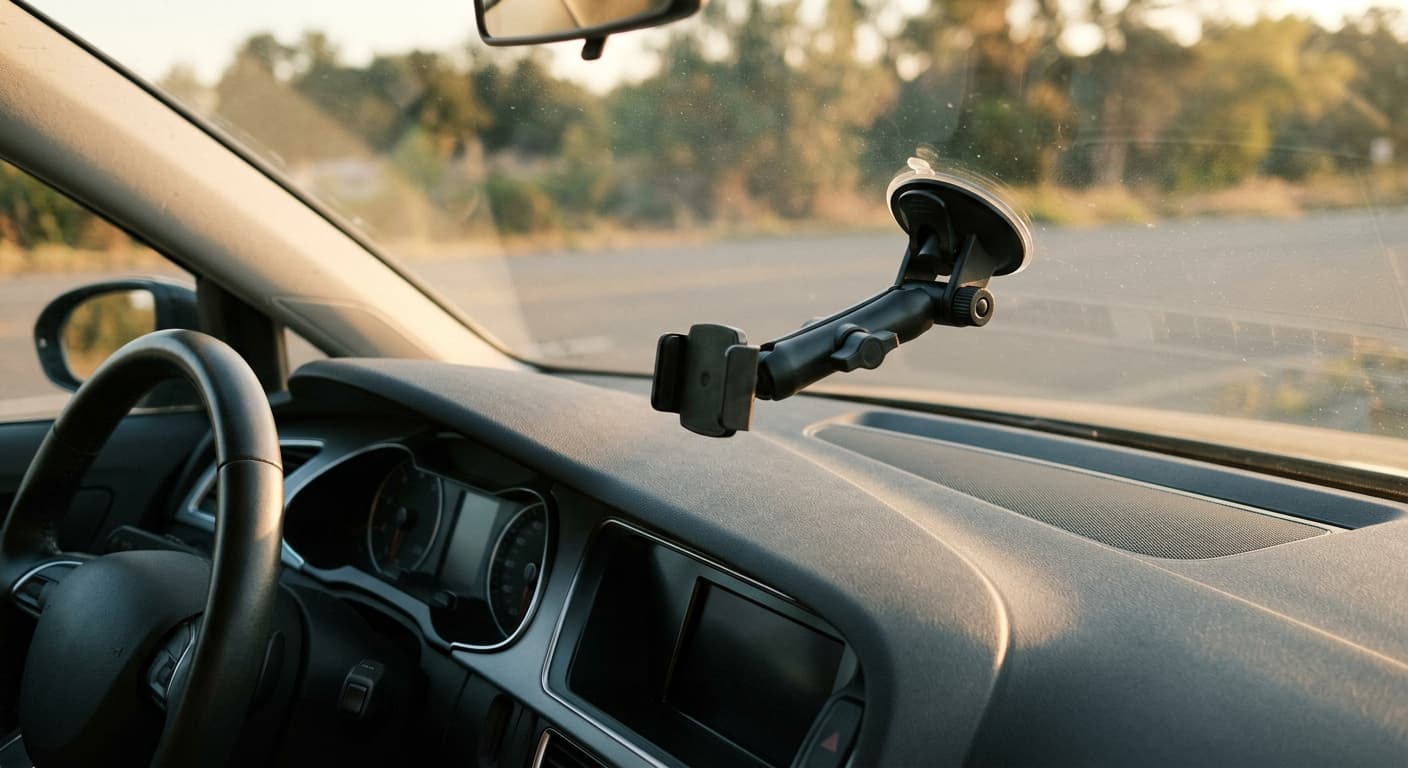
Vermont allows dashcams, GPS units, and phone mounts on the windshield within specific zones under 23 VSA 1125. The lower right corner permits devices up to 4 inches high by 12 inches long, and the upper left corner allows up to 2 inches high by 2.5 inches wide.
Vermont restricts what drivers can mount on or attach to their windshields through 23 VSA 1125. The law does not impose a total ban on all windshield-mounted devices but sets strict size and placement limits. Understanding these rules is essential whether you use a dashcam, GPS unit, or phone mount.
Vermont Windshield Obstruction Law (23 VSA 1125)
Under 23 VSA 1125, no person may operate a motor vehicle on which material or items have been painted on, adhered to, or hung behind any transparent part of the windshield, vent windows, or side windows located immediately to the left and right of the operator.
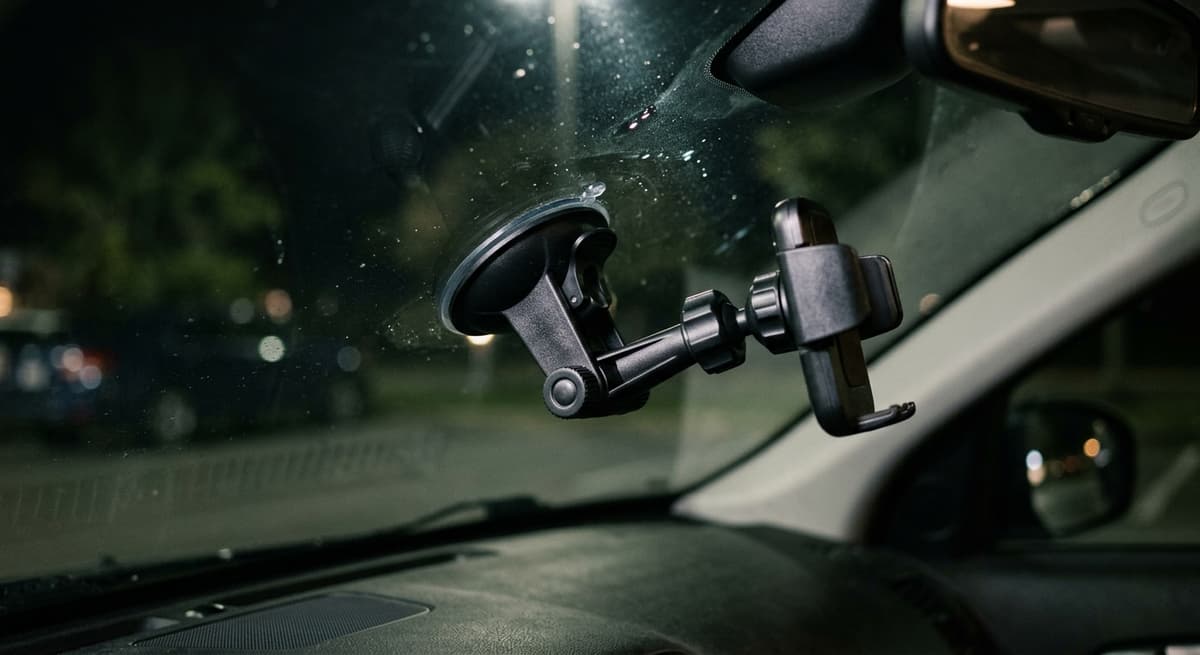
The statute also reaches items hung in back of the windshield, vent windows, or side windows immediately to the left and right of the operator, and its hanging-item prohibition applies only when the hanging item materially obstructs the driver's view. It does not reach items hung elsewhere in the vehicle. Air fresheners, parking passes, and similar items are allowed only when they do not create a meaningful visual obstruction.
Vermont treats windshield obstruction as a civil traffic violation handled through the Judicial Bureau rather than the criminal courts.
Permitted Windshield Zones
Vermont law carves out specific areas of the windshield where nontransparent materials are allowed:
| Zone | Maximum Size | Typical Use |
|---|---|---|
| Upper left corner | 2 inches high x 2.5 inches wide | Small decals and stickers (general allowance) |
| Upper right corner | 4 inches high x 18 inches wide | Dealer plates, permits (dealer use) |
| Lower right corner | 4 inches high x 12 inches wide | Dashcams, registration stickers |
| Behind rearview mirror | No specific size stated | Rearview mirror and toll transponders only |
| Space specified by the Commissioner of Motor Vehicles | Set by the DMV, not by a size limit | Inspection stickers and other government-required stickers |
| Upper left corner (dealer) | 3 inches high x 6 inches long | Dealer documentation, dealer vehicles only |
The upper right corner allowance of 4 inches by 18 inches, and a separate 3 inch by 6 inch upper-left allowance, apply specifically to licensed dealers displaying required documentation. Standard drivers should focus on the upper left, lower right, and behind-mirror zones.
GPS and Phone Mount Rules
Vermont does not have a standalone statute authorizing GPS or phone mounts on the windshield. Instead, the state's hands-free driving law (23 VSA 1095b) defines how portable electronic devices must be mounted.
Under this law, a device qualifies as "securely mounted" when it is placed in an accessory specifically designed to support hands-free use and is not affixed to the windshield in violation of section 1125. The mount must either follow manufacturer specifications or keep the device completely stationary under typical driving conditions.
In practice, this means windshield-mounted phone holders are restricted to the permitted zones described above. Drivers who want a phone or GPS visible while navigating should consider a dashboard mount or vent clip to avoid any conflict with section 1125.
Hands-Free Interaction
Vermont's hands-free law prohibits holding a portable electronic device while driving. Drivers may use a single touch or swipe to activate or deactivate hands-free features, but only when the device is securely mounted or the action is performed through the vehicle's built-in system.
Texting, scrolling, and manual dialing while driving are prohibited. Voice commands and single-touch navigation activation are permitted when the device is properly mounted.
Dashcam Placement
Vermont does not have a specific dashcam statute. Dashcams are treated like any other windshield-mounted device under 23 VSA 1125.
A dashcam that fits within the lower right windshield zone (4 inches high by 12 inches long) is the only clearly legal windshield placement. The behind-the-mirror exemption in section 1125(b)(6) is written narrowly: it covers a rearview mirror and an electronic toll-collection transponder, and nothing else. Subsection (b) is a closed list of exceptions, so a dashcam adhered to the glass behind the mirror falls under the general prohibition and matches no listed exemption. That spot is inconspicuous and rarely draws a citation, but treat it as a practical tolerance rather than a legal permission.
Dashboard-mounted cameras avoid windshield placement issues entirely and are always permitted as long as they do not interfere with the driver's control of the vehicle.
Windshield Tinting
Vermont regulates windshield tinting through the same statute (23 VSA 1125). The general rule prohibits applying any nontransparent material to the windshield or front side windows.
Factory-installed tinting that meets federal safety standards is permitted. Aftermarket tinting applied to the windshield is prohibited outright and is a cause for inspection rejection. Aftermarket tinting on the vent or side windows immediately to the left and right of the driver is allowed only under a medical exemption.
Medical Exemption for Tinting
The Commissioner of Motor Vehicles may grant an exemption for a person who needs sun shielding for medical reasons. The application must include a document signed by a licensed physician or optometrist certifying the medical necessity. The exemption applies only to the vent windows or side windows immediately to the left and right of the operator.
Medical tint certifications must be renewed every four years.
Electronic Toll Transponders
Electronic toll-collection transponders receive a specific exemption under 23 VSA 1125. They may be placed either between the roof line and the rearview mirror post or behind the rearview mirror.
This exemption is relevant for Vermont drivers who use E-ZPass or similar transponders when traveling on toll roads in neighboring states.
Inspection Sticker Placement
Vermont requires annual vehicle inspections, and the inspection sticker must be displayed on the windshield. The sticker sits under its own exemption in 23 VSA 1125(b)(2), which allows a government-required sticker in such space as the Commissioner of Motor Vehicles may specify. That is a separate carve-out from the size-limited corner allowances, so the inspection sticker does not have to fit inside the 2 inch by 2.5 inch upper left space. The DMV Periodic Inspection Manual states only that inspection stickers must be affixed to the windshield in a location specified by the Commissioner, without naming a corner.
During a vehicle inspection, examiners will check for windshield obstructions. Items that violate section 1125 may result in an inspection failure.
The 2026 Tint Inspection Change That Never Took Effect
Vermont enacted a tinted-window package in 2024 (Act 165, Secs. 14 through 16) that was scheduled to take effect on July 1, 2026. It would have added a visible-light-transmission allowance to section 1125 and declared that a vehicle with non-compliant tint should fail the annual safety inspection required under 23 VSA 1222.
That package never took effect. Act 66 of 2025, Sec. 38, deleted Secs. 14, 15, and 16 of Act 165 outright, and that deletion took effect on July 1, 2025, a year before the tint provisions would have arrived. Section 1125 therefore reads today exactly as it did before, with no visible-light-transmission subsection.
The current DMV Periodic Inspection Manual matches that outcome. Aftermarket tint applied to the windshield is a cause for rejection at inspection, while aftermarket tint on the windows immediately to the driver's left and right is still an advise-the-customer item noting a possible section 1125 violation rather than an automatic failure. The windshield mounting and obstruction rules described above were never part of the repealed package and are unchanged.
Penalties for Violations
Windshield obstruction violations under 23 VSA 1125 are handled as civil traffic violations through the Vermont Judicial Bureau.
| Penalty Type | Amount |
|---|---|
| Minimum fine | $47 |
| Waiver penalty (pay without contest) | $220 |
| Maximum fine | $1,197 |
| License points | None |
| Criminal record | No (civil violation) |
The waiver penalty of $220 allows drivers to resolve the ticket without appearing before the Judicial Bureau. Drivers who contest the ticket and lose may face a fine anywhere within the $47 to $1,197 range at the hearing officer's discretion.
Exemptions
| Exemption | Authority |
|---|---|
| Rearview mirrors | 23 VSA 1125 |
| Electronic toll transponders (behind mirror or between roof and mirror post) | 23 VSA 1125 |
| Inspection stickers and government-required decals | 23 VSA 1125 |
| Dealer documentation (upper right corner, dealer vehicles only) | 23 VSA 1125 |
| Medical sun-shielding exemption (side windows only, physician certified) | 23 VSA 1125 |
| Hanging items that do not materially obstruct the driver's view | 23 VSA 1125 |
- Vermont Sexting Laws
- Vermont Statute of Limitations
- Vermont Child Support Laws
- Vermont Whistleblower Laws
More Vermont Laws
Frequently Asked Questions
Can I mount a GPS or phone on my windshield in Vermont?
Vermont restricts windshield-mounted devices to specific zones: up to 4 inches high by 12 inches long in the lower right corner, or up to 2 inches high by 2.5 inches long in the upper left corner. Under the hands-free law (23 VSA 1095b), phone mounts must not be affixed to the windshield in violation of section 1125. Dashboard mounts and vent clips are the safest alternatives.
Are dashcams legal in Vermont?
Yes. Vermont does not have a specific dashcam law, so a windshield-mounted dashcam is governed by 23 VSA 1125. The clearly legal windshield placement is the lower right corner zone, up to 4 inches high by 12 inches long. The behind-the-mirror exemption covers only a rearview mirror and an electronic toll transponder, so a dashcam mounted there is not actually exempt, even though it rarely draws a citation. Dashboard-mounted cameras avoid the issue entirely.
What is the fine for windshield obstruction in Vermont?
Fines range from $47 to $1,197. The standard waiver penalty, which allows you to pay without contesting the ticket, is $220. No license points are assessed for this violation.
Can I hang an air freshener from my rearview mirror in Vermont?
Vermont law prohibits hanging items behind the windshield only when the item materially obstructs the driver's view. A small air freshener that does not block visibility is generally permitted, but a large or bulky hanging item could result in a citation.
Can I get a medical exemption for window tinting in Vermont?
Yes. The Commissioner of Motor Vehicles may grant an exemption for drivers who need sun shielding for medical reasons. You must submit a document signed by a licensed physician or optometrist certifying the medical necessity. The exemption covers vent windows and side windows next to the driver and must be renewed every four years.
Updates
Corrected the inspection sticker placement, narrowed the hanging item and behind-the-mirror rules to what 23 VSA 1125 actually says, and replaced the July 1, 2026 tint inspection section after confirming that Act 66 of 2025 deleted those provisions before they took effect.
Updated the windshield-obstruction waiver penalty from an outdated $105 to the current $220 (Vermont Judicial Bureau schedule effective 2026-08-05) and re-cited the live schedule; added the dealer-only 3-inch-by-6-inch upper-left documentation zone; verified that the page's note about a July 1, 2026 change to window-tint inspection enforcement is accurate and added its official source.
Independently fact-checked against the cited primary sources; governing law re-checked for recent changes
Governing law re-checked for recent changes
Reviewed and approved by an editor
The Law Behind This Article
This article rests on the statutory provisions below, held in our own legal record and retrieved from the official source. Tap a section to read the operative text.
Vermont Statutes Annotated, Title 23: Motor Vehicles, Chapter 13: Operation of Vehicles, Subchapter: MISCELLANEOUS RULES
§ 1125Obstructing windshields, windowsIn forcecited in 2 of our articles
(a) Except as otherwise provided in this section, a person shall not operate a motor vehicle on which material or items have been painted or adhered on or over, or hung in back of, any transparent part of a motor vehicle windshield, vent windows, or side windows located immediately to the left and right of the operator. The prohibition of this section on hanging items shall apply only when a hanging item materially obstructs the driver’s view. (b) Notwithstanding subsection (a) of this section, a person may operate a motor vehicle with material or items painted or adhered on or over, or hung in back of, the windshield, vent windows, or side windows: (1) in a space not over four inches high and 12 inches long in the lower right-hand corner of the windshield; (2) in such space as the Commissioner of Motor Vehicles may specify for location of any sticker required by governmental regulation; (3) in a space not over two inches high and two and one-half inches long in the upper left-hand corner of the windshield; (4) if the operator is a person employed by the federal, State, or local government or a volunteer emergency responder operating an authorized emergency vehicle, who…
Official text (excerpt) · last checked 2026-09-08 · Read the full text in our law library · Verify at legislature.vermont.gov
Cited in 2 court opinions in our collectionLatest citing opinion in our collection: 2016
Opinions citing this section in our collection:
- State v. Hurley (Supreme Court of Vermont 2015, 198 Vt. 552)“…n, J. ¶ 1. This case calls upon us to decide whether 23 V.S.A. § 1125 prohibits the hanging of any item on th…”
- State v. Shamel L. Alexander (Supreme Court of Vermont 2016, 201 Vt. 329)“…of the front windshield and stopped the cab for violating 23 V.S.A. § 1125, which prohibits driving with an obstr…”
Identified automatically from the court opinions citing this section — not a ranking of which case controls.
Also relied on in: Vermont Window Tint Laws (2026): Legal VLT Limits
Vermont Statutes Annotated, Title 23: Motor Vehicles, Chapter 13: Operation of Vehicles, Subchapter: VIOLATIONS AND PENALTIES
§ 1095bHandheld use of portable electronic device prohibitedIn force
(a) Definitions. As used in this section: (1) “Hands-free use” means the use of a portable electronic device without utilizing either hand by employing an internal feature of, or an attachment to, the device or a motor vehicle. (2) “Public highway” means a State or municipal highway as defined in 19 V.S.A. § 1(12). (3) “Securely mounted” means the portable electronic device is placed in an accessory specifically designed or built to support the hands-free use of a portable electronic device that is not affixed to the windshield in violation of section 1125 of this title and either: (A) is utilized in accordance with manufacturer specifications; or (B) causes the portable electronic device to remain completely stationary under typical driving conditions. (4) “Use” means the use of a portable electronic device in any way that is not a hands-free use, including an operator of a motor vehicle holding a portable electronic device in the operator’s hand or hands while operating a motor vehicle. (b) Use of handheld portable electronic device prohibited.
Official text (excerpt) · last checked 2026-08-01 · Read the full text in our law library · Verify at legislature.vermont.gov
Search our full record of US law — 2.1 million sections, every state + federal →
Sources and References
- 23 VSA 1125 - Obstructing windshields, windows(legislature.vermont.gov).gov
- 23 VSA 1095b - Handheld use of portable electronic device prohibited(legislature.vermont.gov).gov
- Vermont Judicial Bureau Waiver Penalty Schedule (current)(vermontjudiciary.org)
- Vermont DMV - Vehicle Inspections(dmv.vermont.gov).gov
- Vermont Motor Vehicle Inspection Regulations(law.cornell.edu)
- Vermont Act 165 (2024) - Act Summary (window tint inspection change, effective July 1, 2026)(legislature.vermont.gov).gov
- Vermont Act 66 of 2025 (S.123), Sec. 38 - deletes 2024 Act 165 Secs. 14, 15 and 16 (tinted windows), effective July 1, 2025(legislature.vermont.gov)
- Vermont Act 165 of 2024, Secs. 14-16 and 52(b) - the repealed tinted-window amendment to 23 VSA 1125(legislature.vermont.gov)
- Vermont DMV VN-113 Periodic Inspection Manual (rev. 3/2026) - inspection sticker placement and windshield glass rejection criteria(dmv.vermont.gov)