
West Virginia
West Virginia Squatters Rights and Adverse Possession Laws (2026)
Independently fact-checked against primary sources (last audited August 18, 2026). · Reviewed by the RecordingLaw editorial team. · Law checked current as of August 18, 2026. How we verify our legal content
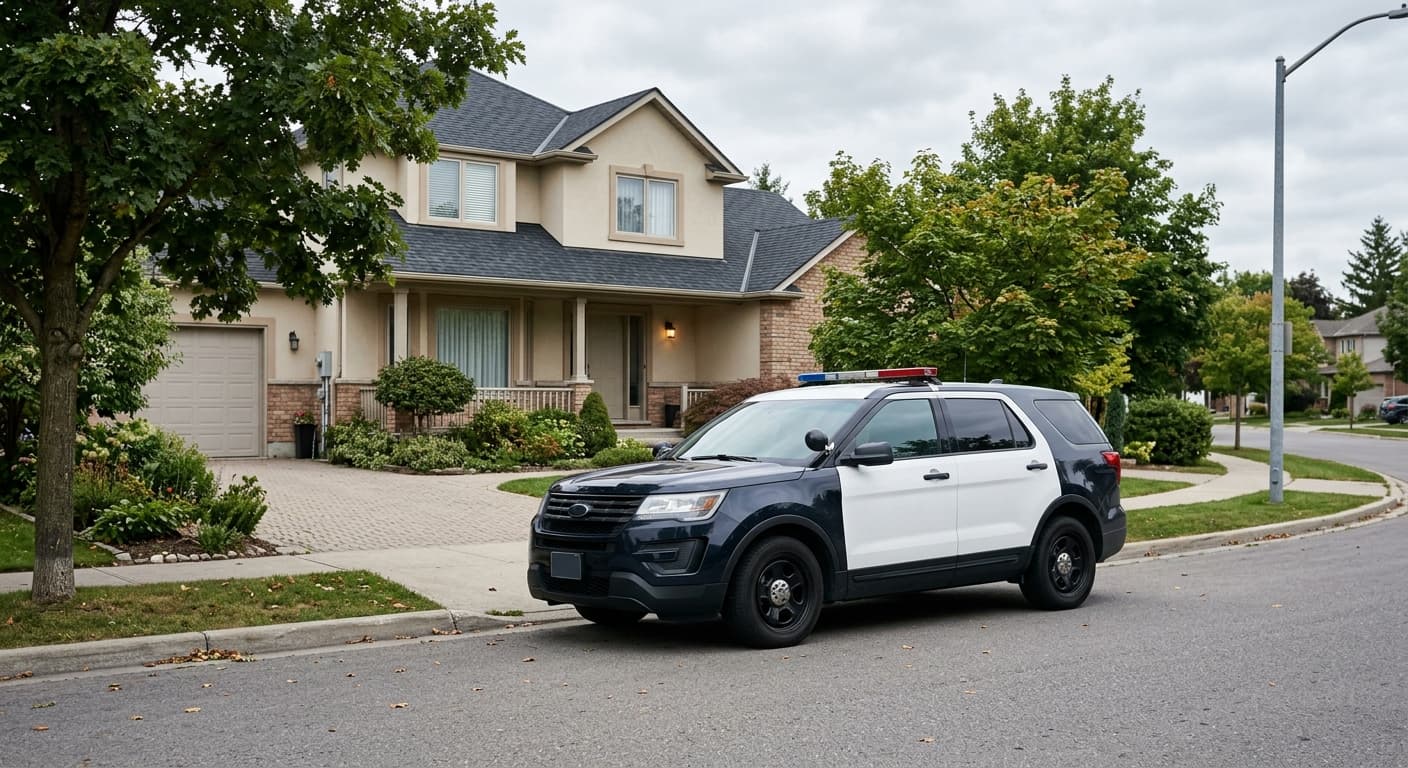
West Virginia requires 10 continuous years of open, hostile, and notorious possession before a squatter can claim title under W. Va. Code § 55-2-1. The West Virginia Stop Squatters Act declares squatting synonymous with criminal trespass, and a 2025 amendment (HB 2434, effective July 10, 2025) added a codified law-enforcement removal procedure that operates outside the civil eviction system.
Information last verified on May 27, 2026. This article provides general legal information, not legal advice.
Jurisdiction scope: This page covers squatters rights and adverse possession law in West Virginia only. For a comparison across all 50 states, see the national squatters rights guide.
Adverse Possession in West Virginia: Period and Elements
West Virginia sets one of the straightforward adverse possession timelines in the country. Under W. Va. Code § 55-2-1, no person may bring an action to recover land after 10 years from the time the right to bring that action first accrued. A claimant who occupies land openly for the full decade and satisfies all common-law elements acquires a defensible title claim.

The Five Common-Law Elements
West Virginia courts require a squatter to prove each of the following elements by clear and convincing evidence throughout the entire 10-year period:
Actual possession. The claimant must physically use the land in a way that a reasonable owner would use similar property. Cultivation, construction of improvements, and regular maintenance all qualify. Occasional or seasonal visits generally do not.
Open and notorious. The occupation must be visible and obvious so that a reasonably attentive owner would notice it. Concealed occupation does not start the adverse possession clock.
Exclusive possession. The claimant must possess the property without sharing control with the true owner or the general public. Joint occupation with the owner defeats the exclusivity element.
Continuous possession. The claimant must maintain possession without substantial interruption for the full 10-year period. A squatter may "tack" successive periods of adverse possession together if there is privity between the possessors, such as a transfer or inheritance.
Hostile possession. The claimant must possess without the owner's permission. A license or rental agreement breaks hostility and restarts the clock. West Virginia follows the objective standard: hostility is determined by the claimant's conduct, not by subjective bad intent.
Color of Title and Tax Payment
West Virginia does not provide a shortened adverse possession period for claimants holding color of title, nor does it require payment of property taxes as a condition of a valid adverse possession claim. Both factors may be relevant as evidence in a dispute, but neither changes the statutory 10-year requirement under § 55-2-1.
Color of title does change the geographic reach of a claim. W. Va. Code § 55-4-16 provides that when a person claiming under a patent, deed, or other writing enters and takes possession of any part of the land in controversy, that adverse possession is treated as extending to the full boundaries described in the writing, unless the person holding the better title has actual adverse possession of some part of the land the writing covers. So a written instrument does not shorten the 10 years, but it can expand what those 10 years of possession reach.
What Adverse Possession Does Not Cover
A successful adverse possession claim requires a court judgment quieting title. The claimant does not automatically receive a deed. Until a court enters judgment, the original owner retains legal title. Adverse possession cannot be used against federal government land, and certain other exemptions may apply depending on the character of the parcel.
How to Remove a Squatter in West Virginia
The Stop Squatters Act: Criminal Trespass and Arrest
The West Virginia Stop Squatters Act, enacted as HB 4940 and signed by the Governor on March 22, 2024, took effect on June 4, 2024. It was substantially expanded in the 2025 Regular Session by HB 2434, which amended W. Va. Code §§ 55-3C-1 and 55-3C-2 and added §§ 55-3C-3, 55-3C-4, 55-3C-5, and 55-3C-6. HB 2434 passed on April 11, 2025 and took effect 90 days from passage, on July 10, 2025. Article 3C now runs from § 55-3C-1 through § 55-3C-6.
The Act makes three things clear:
-
A squatter is not a tenant. Anyone unlawfully occupying a dwelling unit or other structure without a rental agreement, lease, or authorization from the owner or an authorized tenant is a squatter, not a tenant. Periodic tenants under W. Va. Code § 37-6-5 and the property owner are excluded from this definition.
-
Squatting is criminal trespass. The Act expressly provides that squatting constitutes criminal trespass in violation of W. Va. Code § 61-3B-2 (trespass in a structure or conveyance) or § 61-3B-3. Basic criminal trespass under § 61-3B-2 is a misdemeanor carrying a fine up to $100; armed trespass carries enhanced penalties of up to a $1,000 fine and one year in jail.
-
Courts may not require civil eviction to remove a squatter. W. Va. Code § 55-3C-2(c) prohibits courts from requiring an eviction petition, a wrongful-occupation proceeding under § 55-3A-1, or any equivalent civil procedure to remove a squatter. A parallel provision in the landlord-tenant article, W. Va. Code § 37-6-31, defines a squatter in the same terms, states that occupancy by a squatter is not governed by that article, and independently bars any court of this state from requiring eviction or a similar procedure to remove a squatter.

The Section 55-3C-3 Removal Complaint Procedure
Since July 10, 2025, W. Va. Code § 55-3C-3 has provided a codified limited alternative remedy for removing an unlawful occupant from a residential dwelling or a commercial building. It is not a walk-up request. The owner or an authorized agent must submit a completed and verified written complaint to the law-enforcement agency, and the complaint must establish all of the following:
- The person requesting removal is the property owner or an authorized agent of the owner.
- The property contains a residential dwelling or a commercial building.
- One or more persons are unlawfully occupying the property.
- The property was not open to the public at the time the person entered.
- The owner or agent has directed the unauthorized person to leave.
- The unauthorized person is not a current or former owner and is not a current or former lawful tenant.
- The unauthorized person is not an immediate family member of the owner or of a tenant.
- There is no pending litigation between the owner and the unauthorized person related to the property.
On receiving a verified complaint, the agency conducts preliminary fact-finding, which may include reviewing any alleged lease agreement, interviewing relevant individuals, and making other relevant inquiries, to determine whether probable cause exists that those conditions are met. If the preliminary findings establish probable cause, the agency serves a notice to immediately vacate on the unlawful occupants and puts the owner in possession of the property.
Practical steps for property owners:
- Gather proof of ownership and of the occupant's lack of authorization: the deed, tax records, and any correspondence directing the occupant to leave.
- Prepare a completed and verified written complaint addressing each of the § 55-3C-3 conditions, and be prepared to have every statement in it checked. The statute contemplates verification, not assertion.
- Submit the complaint to the local sheriff or municipal police and expect preliminary fact-finding, including a review of any lease the occupant produces, before any action is taken.
- Understand that arrest for criminal trespass under §§ 61-3B-2 and 61-3B-3 remains available and does not require the owner to first obtain a court order.
- Document the state of the property before and after removal for any subsequent civil damages claim.
Owner Liability for a Bad-Faith Complaint
The removal power in § 55-3C-3 comes with a statutory counterweight in W. Va. Code § 55-3C-5. An owner or authorized agent who knowingly submits a complaint under Article 3C in bad faith is subject to criminal prosecution for false swearing, and must indemnify the law-enforcement agency and its agents for all costs and damages arising from officers acting in good faith on that complaint. A person removed from a property under Article 3C has a civil cause of action for wrongful removal, with remedies including restoration of possession, actual costs, damages, and attorney fees. Law-enforcement officers sued over actions taken under the article may assert any immunity otherwise available to them.
The practical consequence is that the fast remedy is not a shortcut around getting the facts right. An owner who misclassifies a former tenant, a co-owner, or a family member as a squatter carries the risk personally.
Criminal Exposure Added by HB 2434
Two of the sections added in 2025 create offenses beyond ordinary trespass.
Damage caused by unlawful occupation (§ 55-3C-4). A person who unlawfully occupies a residential dwelling or commercial building and causes damage to the real property, its fixtures, or the owner's personal property in an amount less than $1,000 is guilty of a misdemeanor, punishable by up to one year in jail, a fine up to $2,500, or both. If the damage exceeds $1,000, the offense is a felony punishable by one to 10 years in the penitentiary, or, at the court's discretion, up to one year in jail and a fine up to $2,500.
Fraudulent listing or advertising (§ 55-3C-6). A person who knowingly lists or advertises residential real property or a commercial building for sale or for rent without legal title or authority to do so is guilty of a felony, punishable by one to 10 years in the penitentiary, or, at the court's discretion, up to one year in jail and a fine up to $2,500. This provision targets the practice of renting out a property the lister has no right to convey, which is how many squatter occupations begin for the person who moves in.
When the Standard Wrongful-Occupation Process Still Applies
The Stop Squatters Act applies only to true squatters who never had any legal right to occupy the property. If a person was once a lawful tenant, licensee, or guest whose authorization has since expired or been revoked, that person is not a squatter under § 55-3C-2, is expressly outside the § 55-3C-3 removal procedure, and the civil process applies.
For former tenants or holdover occupants, W. Va. Code § 55-3A-1 provides summary relief for wrongful occupation of residential rental property. The property owner files a verified petition in magistrate or circuit court. The court schedules a hearing within five to ten judicial days of filing. The owner must serve notice on the occupant, who then has five days to file written defenses. If the court finds in the owner's favor, it issues an order restoring possession.

Property owners dealing with a person whose legal status is unclear should consult a West Virginia attorney before proceeding, since misclassifying a former tenant as a squatter and involving law enforcement carries legal risk.
No Self-Help Removal
Regardless of the route taken, West Virginia property owners may not use self-help removal tactics such as:
- Changing the locks while the occupant is away
- Removing the occupant's belongings without a court order or law-enforcement involvement
- Shutting off utilities to force the occupant out
- Physically removing or threatening the occupant
Self-help removal outside the Stop Squatters Act's law-enforcement framework or the court process can expose owners to civil liability. Always work through law enforcement or the courts.
This article is for general informational purposes only and does not constitute legal advice. Adverse possession claims and squatter-removal procedures involve complex fact-specific determinations. Consult a licensed West Virginia attorney before taking action on any real property dispute.
For a 50-state comparison, see the national squatters rights guide.
Content last reviewed: May 27, 2026. Laws change; verify current statutes before relying on this information.
More West Virginia Laws
Frequently Asked Questions
How long does a squatter have to be on a property to claim ownership in West Virginia?
A squatter must maintain open, exclusive, hostile, and continuous possession for 10 uninterrupted years under W. Va. Code § 55-2-1 before a court will consider an adverse possession claim. West Virginia offers no shortened period for color-of-title situations, though § 55-4-16 can extend the reach of a claim to the full boundaries described in a deed or other writing.
Does West Virginia require squatters to pay property taxes to claim adverse possession?
No. West Virginia does not list tax payment as a required element of adverse possession. A claimant who satisfies the five common-law elements for 10 years may bring an adverse possession action regardless of whether taxes were paid.
What is the West Virginia Stop Squatters Act and when did it take effect?
The Stop Squatters Act began as HB 4940, signed on March 22, 2024 and effective June 4, 2024. HB 2434 then amended §§ 55-3C-1 and 55-3C-2 and added §§ 55-3C-3 through 55-3C-6; it passed on April 11, 2025 and took effect July 10, 2025. Article 3C now runs from W. Va. Code § 55-3C-1 through § 55-3C-6. The article declares squatting criminal trespass, prohibits courts from requiring civil eviction to remove squatters, and since 2025 provides a codified law-enforcement removal procedure.
Can West Virginia police remove a squatter without a court order?
Yes. Because squatting is classified as criminal trespass under W. Va. Code §§ 61-3B-2 and 61-3B-3, officers may arrest a squatter without the owner first obtaining an eviction order. Since July 10, 2025, § 55-3C-3 also allows an owner to submit a completed and verified written complaint meeting eight statutory conditions; the agency then conducts preliminary fact-finding and, if it finds probable cause, serves a notice to immediately vacate and puts the owner in possession.
What happens if a West Virginia owner files a squatter removal complaint in bad faith?
Under W. Va. Code § 55-3C-5, an owner or agent who knowingly submits a bad-faith complaint is subject to criminal prosecution for false swearing and must indemnify the law-enforcement agency and its agents for all costs and damages arising from officers acting in good faith. A person wrongly removed may sue for restoration of possession, actual costs, damages, and attorney fees.
Is a former tenant treated the same as a squatter in West Virginia?
No. The Stop Squatters Act excludes periodic tenants from the squatter definition, and the § 55-3C-3 removal procedure expressly does not apply to a current or former lawful tenant, a current or former owner, or an immediate family member. A former tenant or holdover occupant whose lease has expired must be removed through the summary wrongful-occupation process under W. Va. Code § 55-3A-1, which requires filing a petition in magistrate or circuit court.
Can a property owner change the locks to remove a squatter in West Virginia?
No. Self-help removal is not authorized under West Virginia law. Removal must be carried out by law enforcement, either through the criminal trespass process or the § 55-3C-3 complaint procedure, or through the courts. Property owners who take matters into their own hands risk civil liability.
What penalties apply to a squatter who damages a West Virginia property?
W. Va. Code § 55-3C-4 makes damage caused by unlawful occupation a misdemeanor punishable by up to one year in jail and a fine up to $2,500 when the damage is under $1,000, and a felony punishable by one to 10 years in the penitentiary when the damage exceeds $1,000. Separately, § 55-3C-6 makes it a felony, punishable by one to 10 years, to knowingly list or advertise residential or commercial property for sale or rent without legal title or authority.
How does tacking work for adverse possession in West Virginia?
Tacking allows successive periods of adverse possession to be combined to meet the 10-year requirement, but only if there is privity of possession between the current and previous possessors, such as a transfer of the property or an inheritance. Without privity, each period must independently satisfy the 10-year period.
Updates
Updated for HB 2434, which took effect July 10, 2025 and expanded the Stop Squatters Act to W. Va. Code §§ 55-3C-1 through 55-3C-6, adding the law-enforcement removal complaint procedure, owner liability for a bad-faith complaint, the removed occupant’s civil remedy, and new criminal penalties, and added the color-of-title and landlord-tenant authorities the page had been missing.
Independently fact-checked against the cited primary sources; governing law re-checked for recent changes
Governing law re-checked for recent changes
Reviewed and approved by an editor
The Law Behind This Article
This article rests on the statutory provisions below, held in our own legal record and retrieved from the official source. Tap a section to read the operative text.
West Virginia Code
§ 55-2-1Entry upon or recovery of lands.In forcecited in 5 of our articles
No person shall make an entry on, or bring an action to recover, any land, but within ten years next after the time at which the right to make such entry or to bring such action shall have first accrued to himself or to some person through whom he claims.
Official text (excerpt) · last checked 2026-09-08 · Read the full text in our law library · Verify at code.wvlegislature.gov
Cited in 1 court opinions in our collectionLatest citing opinion in our collection: 1975
Opinions citing this section in our collection:
- Payne v. Weirton Steel Company (District Court, N.D. West Virginia 1975, 397 F. Supp. 192)“…ch default.” (parentheses added). Plaintiff suggests W.Va.Code § 55-2-1 et seq. as being more anal…”
Identified automatically from the court opinions citing this section — not a ranking of which case controls.
Also relied on in: West Virginia Statute of Limitations: Filing Deadlines by Case Type, Squatters Rights by State: Adverse Possession Laws (2026)
§ 55-3C-2Squatters defined: squatters not tenants; squatting constitutes criminal trespass; petition and eviction not appropriate remedies for squatters; remedy is arrest for trespass.In forcecited in 3 of our articles
(a) “Squatter” means a person unlawfully occupying a dwelling unit or other structure who is not entitled under a rental or lease agreement or who is not authorized by the tenant or owner to occupy that dwelling unit or structure. “Squatter” does not include a tenant who holds over in a periodic tenancy as described in §37-6-5 of this code, or an owner. (b) “Squatting” means the act of being a squatter. Squatting is synonymous with trespass, and is a criminal act under §61-3B-2 or §61-3B-3 of this Code. (c) Squatters are not considered tenants for purposes of this code and are not entitled to eviction proceedings afforded to lawful tenants. A Court of this state shall not require the use of eviction, or a similar procedure such as those found under §55-3A-1, et seq. or §55-3B-1, et seq. of this Code, by an owner in any instance involving the removal of a squatter from possession of a property.
Official text (excerpt) · last checked 2026-07-30 · Read the full text in our law library · Verify at code.wvlegislature.gov
§ 55-3C-1Short title; findings.In forcecited in 2 of our articles
(a) This article shall be known and may be cited as the “Stop Squatters Act”. (b). The Legislature finds that the right to exclude others from entering and the right to direct others to immediately vacate a person’s residential or commercial property are fundamental property rights.
Official text (excerpt) · last checked 2026-07-30 · Read the full text in our law library · Verify at code.wvlegislature.gov
§ 61-3B-2Trespass in structure or conveyance.In forcecited in 2 of our articles
(a) Any person who knowingly enters in, upon, or under a structure or conveyance without being authorized, licensed, or invited, or having been authorized, licensed, or invited is requested to depart by the owner, tenant, or the agent of the owner or tenant, and refuses to do so, is guilty of a misdemeanor, and, upon conviction thereof, shall be fined not more than $100. (b) Notwithstanding the provisions of subsection (a) of this section, any person who, without permission, knowingly and willfully enters a structure which has a clear posting that the structure has been condemned by any municipal or county government as unfit for human habitation or use, is guilty of a misdemeanor and, upon conviction thereof, shall be fined not more than $100, or confined in jail not more than six months, or both fined and confined: Provided, That for any first violation of this subsection offense of trespass on condemned property, a court may substitute community service or pretrial diversion in lieu of a fine or confinement for trespassing on condemned property.
Official text (excerpt) · last checked 2026-07-30 · Read the full text in our law library · Verify at code.wvlegislature.gov
Cited in 1 court opinions in our collectionLatest citing opinion in our collection: 2018
Opinions citing this section in our collection:
- Distinguished Executives Transportation, LLC v. Cracker Barrel Old Country Store, Inc. (District Court, S.D. West Virginia 2018)“…fine[ment] in jail for twenty-four hours.” See W. Va. Code Ann. §§ 61-3B-2 (trespass), 61-6-1b (disorderly…”
Identified automatically from the court opinions citing this section — not a ranking of which case controls.
§ 61-3B-3Trespass on property other than structure or conveyance.In forcecited in 2 of our articles
(a) It is an unlawful trespass for any person to knowingly, and without being authorized, licensed, or invited, to enter or remain on any property, other than a structure or conveyance, as to which notice against entering or remaining is either given by actual communication to such person or by posting, fencing, or cultivation. (b) First offense conviction. — Upon a first trespassing conviction pursuant to subsection (a) of this section, the person is guilty of a misdemeanor and shall be fined not less than $100 nor more than $500. (c) Second offense conviction. — Upon a second trespassing conviction pursuant to subsection (a) of this section, the person is guilty of a misdemeanor and shall be fined not less than $500 nor more than $1,000. (d) Third offense conviction. — Upon a third and subsequent trespassing conviction pursuant to subsection (a) of this section, the person is guilty of a misdemeanor and shall be fined not less than $1,000 nor more than $1,500.
Official text (excerpt) · last checked 2026-07-30 · Read the full text in our law library · Verify at code.wvlegislature.gov
Cited in 1 court opinions in our collectionLatest citing opinion in our collection: 1999
Opinions citing this section in our collection:
- United States v. Hughes (Court of Appeals for the Fourth Circuit 1999)“…4 See W. Va. Code § 61-3B-3 (1997). 3 that h…”
Identified automatically from the court opinions citing this section — not a ranking of which case controls.
§ 55-3A-1Petition for summary relief for wrongful occupation of residential rental property.In forcecited in 2 of our articles
(a) A person desiring to remove a tenant from residential rental property may apply for relief to the magistrate court or the circuit court of the county in which the property is located, by verified petition, setting forth the following: (1) That he or she is the owner or agent of the owner and as such has a right to recover possession of the property; (2) A brief description of the property sufficient to identify it; (3) That the tenant is wrongfully occupying the property in that the tenant is in arrears in the payment of rent, has breached a warranty or a leasehold covenant, or has deliberately or negligently damaged the property or knowingly permitted another person to do so, and describing the arrearage, breach, or act or omission; and (4) A prayer for possession of the property. (b) Upon filing the petition, the court shall schedule a hearing, which may not be less than five nor more than 10 judicial days following the filing of the petition.
Official text (excerpt) · last checked 2026-07-30 · Read the full text in our law library · Verify at code.wvlegislature.gov
§ 37-6-5Notice to terminate tenancy.In forcecited in 3 of our articles
A tenancy from year to year may be terminated by either party giving notice in writing to the other, at least three months prior to the end of any year, of his intention to terminate the same. A periodic tenancy, in which the period is less than one year, may be terminated by like notice, or by notice for one full period before the end of any period. When such notice is to the tenant, it may be served upon him or upon anyone holding under him the leased premises, or any part thereof. When it is by the tenant, it may be served upon anyone who at the time owns the premises in whole or in part, or the agent of such owner, or according to the common law. This section shall not apply where, by special agreement, some other period of notice is fixed, or no notice is to be given; nor shall notice be necessary from or to a tenant whose term is to end at a certain time.
Official text (excerpt) · last checked 2026-07-30 · Read the full text in our law library · Verify at code.wvlegislature.gov
Also relied on in: West Virginia Ring Doorbell Laws: What You Need to Know in 2026
Search our full record of US law — 2.1 million sections, every state + federal →
Sources and References
- W. Va. Code § 55-2-1 - Entry upon or recovery of lands(code.wvlegislature.gov)
- W. Va. Code § 55-3C-1 - Stop Squatters Act (short title and findings)(code.wvlegislature.gov)
- W. Va. Code § 55-3C-2 - Squatters defined; criminal trespass; arrest as remedy (HB 4940, eff. June 4, 2024)(code.wvlegislature.gov)
- W. Va. Code § 55-3A-1 - Petition for summary relief for wrongful occupation of residential rental property(code.wvlegislature.gov)
- W. Va. Code § 61-3B-2 - Trespass in structure or conveyance(code.wvlegislature.gov)
- HB 4940 (2024) - Stop Squatters Act legislative history, signed March 22, 2024, effective June 4, 2024(wvlegislature.gov)
- W. Va. Code § 55-3C-3 - Limited alternative remedy to remove squatter from residential and commercial real properties(code.wvlegislature.gov)
- W. Va. Code § 55-3C-4 - Criminal mischief; penalties for damage caused by unlawful occupation(code.wvlegislature.gov)
- W. Va. Code § 55-3C-5 - Making false statement to detain real property; indemnification; civil action for wrongful removal(code.wvlegislature.gov)
- W. Va. Code § 55-3C-6 - Unlawful listing or advertising of real property without title or authority(code.wvlegislature.gov)
- W. Va. Code § 55-4-16 - Extent of possession under patent, deed or other writing(code.wvlegislature.gov)
- W. Va. Code § 37-6-31 - Exclusions from application of this article; squatter defined; eviction not required(code.wvlegislature.gov)
- W. Va. Code § 61-3B-3 - Trespass on property other than structure or conveyance(code.wvlegislature.gov)
- HB 2434 (2025 Reg. Sess.), enrolled - amends W. Va. Code §§ 55-3C-1 and 55-3C-2 and adds §§ 55-3C-3 through 55-3C-6; passed April 11, 2025, effective July 10, 2025(wvlegislature.gov)