
South Dakota
South Dakota Squatters Rights and Adverse Possession Laws (2026)
Independently fact-checked against primary sources (last audited August 18, 2026). · Reviewed by the RecordingLaw editorial team. How we verify our legal content
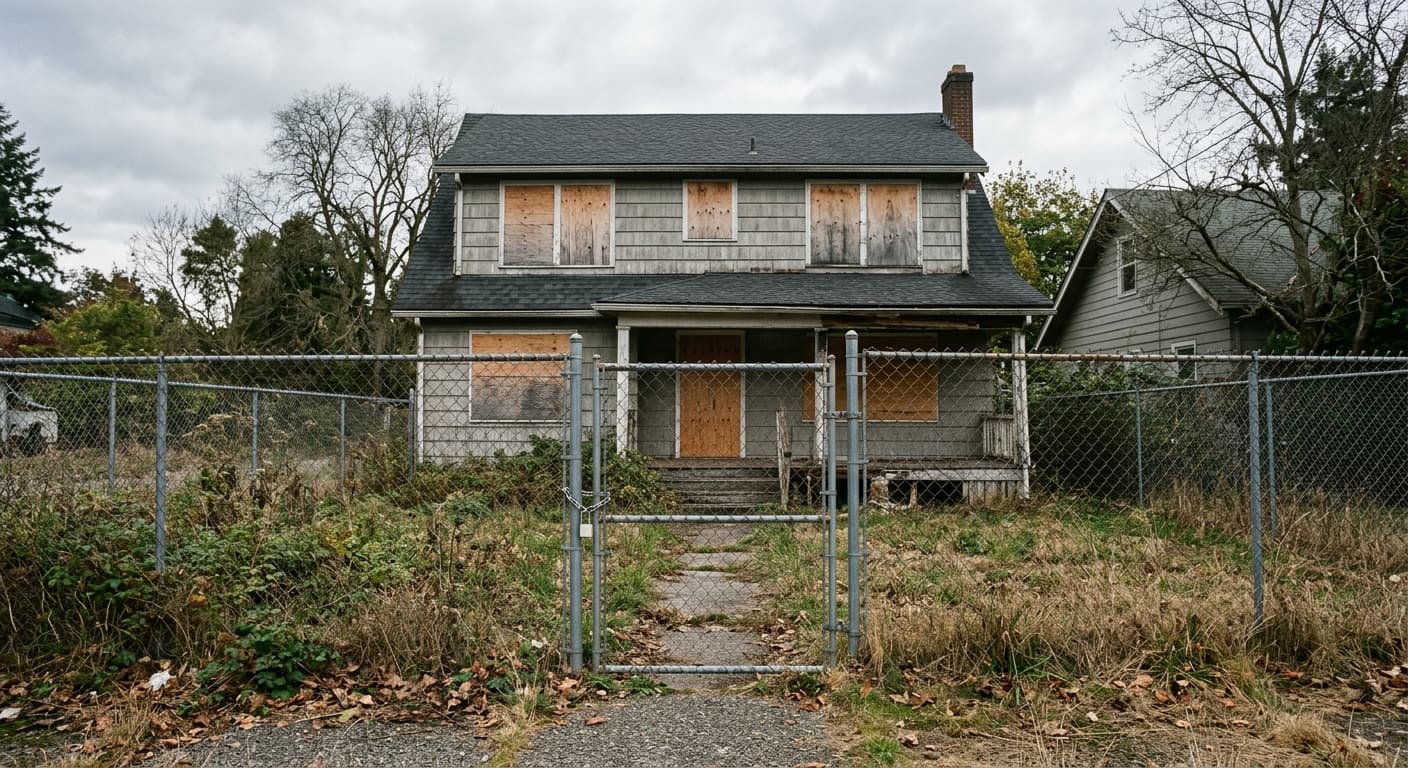
South Dakota's base adverse possession period is 20 years under SDCL § 15-3-1. A shorter 10-year track is available when a claimant holds color of title and pays all property taxes on the parcel under SDCL § 15-3-15. Property owners remove squatters through a Forcible Entry and Detainer action in circuit court under SDCL ch. 21-16.
Information last verified on May 27, 2026. This article provides general legal information, not legal advice.
Jurisdiction scope: This article covers South Dakota state adverse possession and squatter removal law under SDCL Title 15 and SDCL ch. 21-16. It does not address federal law or the law of other states. For a comparison of all 50 states, see the national squatters rights guide.
Adverse Possession in South Dakota: Period and Elements
The 20-Year General Period (SDCL § 15-3-1)
South Dakota's primary adverse possession rule is codified at SDCL § 15-3-1, which sets a 20-year limitation period for actions to recover real property. A claimant who enters land without the owner's permission and maintains possession for 20 continuous years, while satisfying each required element, may bring a quiet title action to establish legal ownership. The 20-year period is one of the longest standard adverse possession timelines in the United States.

To succeed on a 20-year adverse possession claim in South Dakota, the claimant must prove each of the following elements by clear and convincing evidence throughout the full period:
- Actual possession. The claimant must physically occupy and use the land in a manner consistent with how an owner of that type of property would use it, such as building structures, cultivating crops, grazing livestock, or maintaining the parcel.
- Open and notorious possession. The occupation must be visible and obvious, putting a reasonable owner on notice that someone else is asserting a claim over the land.
- Hostile possession. The claimant must occupy the property without the owner's permission and in a manner that is inconsistent with the owner's rights. Permission from the owner defeats the hostility element and restarts the clock.
- Exclusive possession. The claimant must possess the property as their own, not jointly with the public or with the record owner.
- Continuous possession. Possession must be uninterrupted for the entire 20-year period. Seasonal or periodic use may qualify as continuous if it is consistent with the ordinary use of that type of land, but outright abandonment breaks the chain.
All five elements must coexist simultaneously for the complete statutory period. A gap in any element resets the clock and requires the claimant to begin again.
Tacking Prior Possession
A claimant who has not personally held the property for the full 20 years may tack (add) the continuous possession of a predecessor in interest, provided there is privity between the two parties. Privity requires a voluntary transfer of the possessory interest from the prior occupant to the current claimant, typically evidenced by a deed or other written conveyance. The two periods of possession must be continuous without any gap between them.
The 10-Year Color-of-Title and Tax-Payment Track (SDCL § 15-3-15)
South Dakota provides a shorter adverse possession period when the claimant holds color of title and has paid property taxes on the parcel throughout the occupation. SDCL § 15-3-15 governs this track, which reduces the required period to 10 years when two additional elements are satisfied alongside the standard possession elements.
Color of title means the claimant holds a written instrument that appears on its face to convey ownership of the property but is legally defective and therefore does not transfer valid title. Examples include a deed executed by a grantor who lacked full authority to convey, a deed with a description error that does not encompass the disputed parcel, a defective tax deed, or a will that incorrectly identifies the property. Bare possession without any written instrument does not qualify as color of title, and a claimant relying solely on physical occupation cannot use this shorter track.
Payment of property taxes must be continuous throughout the 10-year period. Courts examine county treasurer records to confirm that taxes were paid each year. A single year in which taxes went unpaid defeats the tax-payment element, regardless of how long possession has continued. Tax payment under this track is not merely evidence; it is a mandatory separate condition.

A claimant who satisfies the color-of-title track under SDCL § 15-3-15 may assert constructive possession over the entire parcel described in the defective instrument, even if actual physical occupation covered only a portion of that parcel. This is a significant practical advantage over the general 20-year track, under which the claimant can only claim the land they actually occupied.
Vacant Land: Ten Years of Taxes Without Possession (SDCL § 15-3-16)
A separate and often overlooked provision applies to land that nobody is occupying. Under SDCL § 15-3-16, a person who holds color of title made in good faith to vacant and unoccupied land, and who pays all taxes legally assessed on that land for ten successive years, is deemed the legal owner of the land to the extent and according to the purport of the paper title. Unlike the SDCL § 15-3-15 track, this section imposes no possession requirement at all: the good-faith paper title and the ten years of tax payments do the work by themselves.
The statute also lets a successor finish the ten-year term. A person who takes from the taxpayer by purchase, devise, or descent before the ten years have run, and who keeps paying the taxes so that the full ten years of payments are completed, is entitled to the benefit of the section.
This route matters for exactly the kind of idle parcel that generates squatter-rights questions: unfenced acreage, an inherited lot nobody visits, or land whose record owner has stopped watching the tax bill. An owner can lose a vacant parcel to a defective deed and a decade of someone else's tax payments without anyone ever having lived on it.
Comparison of South Dakota's Adverse Possession Tracks
| Track | Statutory Basis | Period | Color of Title Required | Tax Payment Required | Possession Required |
|---|---|---|---|---|---|
| General | SDCL § 15-3-1 | 20 years | No | No | Yes |
| Color of title and tax | SDCL § 15-3-15 | 10 years | Yes (written instrument) | Yes (all years) | Yes |
| Vacant and unoccupied land | SDCL § 15-3-16 | 10 years | Yes (written instrument) | Yes (all years) | No |
When Does Title Vest?
Satisfying the statutory elements does not automatically transfer title on the public record. The claimant must file a quiet title action in South Dakota circuit court to obtain a judgment formally recognizing ownership. Until that judgment is entered and recorded with the county register of deeds, the record title remains in the original owner's name, and the claimant cannot sell the property, obtain a mortgage, or acquire title insurance.
How to Remove a Squatter in South Dakota
Step 1: Confirm the Occupant Has No Tenancy
Before filing any court action, a property owner should verify that the occupant has no rental agreement, whether written or oral, and that the owner has not accepted rent. An occupant who paid rent or entered with the owner's permission is a tenant, not a squatter. Tenants in South Dakota are governed by South Dakota's residential lease statutes, SDCL ch. 43-32 (Lease of Real Property), and require proper written notice before a FED action can proceed. Treating a former tenant as a trespasser without following the notice requirements can expose the owner to liability. A true squatter entered without any permission, paid no rent, and holds no lease.
Step 2: Serve a Written Notice to Vacate
South Dakota law does not specify a mandatory notice period for removing a squatter who has never been a tenant. Property owners should nonetheless serve a clear written notice demanding that the occupant vacate the premises within a stated period, typically three days for an unlawful occupant. Providing a written notice creates a documented record of the owner's demand and the squatter's refusal, which strengthens the owner's position in the FED proceeding. Delivering the notice in person or by posting it conspicuously on the property are both common methods.
Step 3: File a Forcible Entry and Detainer Action (SDCL ch. 21-16)
The legal mechanism for removing an unauthorized occupant in South Dakota is a Forcible Entry and Detainer action filed in the circuit court of the county where the property is located, under SDCL ch. 21-16. The FED process focuses on the right to current possession, not on the ultimate question of title, so the owner does not need to resolve any competing ownership claim in the FED proceeding itself.

The South Dakota FED process involves the following steps:
- The property owner files a verified complaint with the circuit court and pays the applicable filing fee. The Unified Judicial System provides form UJS-112 (Verified Complaint for Eviction) for this purpose.
- The court issues a summons (form UJS-111) directing the occupant to appear and respond.
- The occupant is served with the summons and complaint. Proper service is a prerequisite for the court to proceed.
- A hearing is scheduled. At the hearing, the owner must demonstrate a superior right to possession and establish that the occupant entered or remains without lawful authority.
- If the court rules in the owner's favor, it enters a judgment for restitution of the premises.
- If the occupant does not leave voluntarily after judgment, the owner requests a writ of execution. The county sheriff serves and enforces the writ by physically removing the occupant.
The owner should bring to the hearing all documents establishing ownership, such as the deed, property tax records, and any communications with the occupant.
Step 4: If the Squatter Claims Adverse Possession
A squatter who has occupied the property for a period approaching 20 years (or 10 years with color of title and taxes) may raise an adverse possession defense in the FED proceeding. When a genuine title dispute arises, the circuit court may bifurcate the FED claim and the ownership issue, or it may require a separate quiet title action to resolve the adverse possession claim. An owner who discovers that a squatter has been present for years approaching the statutory period should consult a South Dakota real estate attorney before filing, as the strategy for the FED and any quiet title counterclaim must be coordinated.
What Property Owners Cannot Do
South Dakota law prohibits self-help eviction. A property owner cannot lawfully remove a squatter by changing the locks, removing or destroying the occupant's belongings, shutting off utilities, threatening the occupant, or physically forcing the person off the property. These actions can expose the owner to civil liability for damages and potential criminal charges. The exclusive lawful method for physical removal is through a court order enforced by the county sheriff.
2024 and 2025 Legislative Update
South Dakota has not adopted the kind of expedited or administrative squatter-removal procedure that several other states enacted in 2024 and 2025, including Florida, Georgia, Alabama, and Tennessee. The Forcible Entry and Detainer chapter, SDCL ch. 21-16, contains no fast-track or sheriff-administered removal section, so the standard FED court process remains the civil mechanism for removing an unauthorized occupant from South Dakota real property.
The Legislature did reach into that chapter in 2024. SDCL 21-16-2 was repealed by SL 2024, ch 75, § 1, and its text is no longer published in the codified laws. Owners and occupants should therefore work from the current text of SDCL ch. 21-16 rather than from older summaries of South Dakota eviction procedure, which may still describe a section that no longer exists. Property owners who discover a squatter should act promptly: filing a FED action interrupts the squatter's continuous possession and prevents the accrual of an adverse possession claim.
Watch out: A squatter approaching 10 years of possession with any written instrument and consistent tax payments may assert a color-of-title adverse possession defense. Document your ownership, monitor your property, and act well before the 10-year mark if you discover unauthorized occupation with those facts.
Disclaimer: This article provides general legal information about South Dakota squatters rights and adverse possession law. It is not legal advice and does not create an attorney-client relationship. South Dakota law is subject to change, and individual circumstances vary significantly. If you are dealing with a squatter situation or an adverse possession claim in South Dakota, consult a licensed South Dakota real estate attorney for advice specific to your facts.
National squatters rights guide
RecordingLaw.com provides free legal information for educational purposes. Nothing on this site constitutes legal advice or creates an attorney-client relationship.
More South Dakota Laws
Frequently Asked Questions
How long does it take to get squatters rights in South Dakota?
South Dakota requires 20 years of actual, open, notorious, hostile, exclusive, and continuous possession under SDCL § 15-3-1 for the standard adverse possession track. A shorter 10-year track is available under SDCL § 15-3-15 when the claimant holds color of title (a defective written instrument) and has paid all property taxes on the parcel throughout the 10-year period. A separate 10-year route under SDCL § 15-3-16 applies to vacant and unoccupied land and requires no possession at all. After the applicable period, the claimant must still file a quiet title action in circuit court to formally vest title.
Does a squatter have to pay property taxes in South Dakota to claim adverse possession?
It depends on which track the claimant uses. Under the general 20-year track (SDCL § 15-3-1), payment of property taxes is not required. Under the shorter 10-year track (SDCL § 15-3-15), payment of all property taxes throughout the 10-year period is a mandatory element along with holding color of title. A gap of even one year in tax payment defeats the 10-year claim. A third provision, SDCL § 15-3-16, vests title in a good-faith color-of-title holder who pays ten successive years of taxes on vacant and unoccupied land, without requiring any possession.
What is color of title in South Dakota adverse possession?
Color of title is a written instrument that appears on its face to convey ownership of real property but is legally defective and does not transfer valid title. Examples include a deed from a grantor who lacked authority to convey, a deed with a description error, or a defective tax deed. Holding color of title is a prerequisite for the 10-year adverse possession track under SDCL § 15-3-15 and for the vacant-land route under SDCL § 15-3-16. Without a written instrument, a claimant cannot use either shorter period and must satisfy the 20-year general track.
How does a property owner remove a squatter in South Dakota?
A property owner files a Forcible Entry and Detainer (FED) action in the circuit court of the county where the property is located under SDCL ch. 21-16. The court issues a summons, a hearing is held, and if the owner proves a superior right to possession, the court enters a judgment for restitution. If the squatter does not leave voluntarily, the owner requests a writ of execution and the county sheriff enforces the removal. Self-help eviction, such as changing locks or removing belongings without a court order, is prohibited.
Can I call the police to remove a squatter in South Dakota?
Police may remove a person who is clearly trespassing and entered the property by force, especially if the entry was recent. However, once a person has established a pattern of habitation on the property, police typically treat the situation as a civil dispute requiring a court order. A property owner who faces an entrenched unauthorized occupant should file a FED action under SDCL ch. 21-16 rather than relying on police removal.
Does South Dakota have an expedited law for removing squatters without going to court?
No. South Dakota's Forcible Entry and Detainer chapter, SDCL ch. 21-16, contains no expedited administrative or sheriff-administered squatter-removal procedure. Property owners must use the FED court process under SDCL ch. 21-16 to obtain a judgment and writ of execution before a sheriff can remove an unauthorized occupant.
What happens if a squatter claims to own my South Dakota property?
If a squatter asserts an adverse possession claim, the circuit court may require a separate quiet title proceeding to resolve the ownership dispute. An owner who has held title and paid taxes continuously should be able to defeat the claim unless the squatter can prove all statutory elements for the full 20 years (or 10 years with color of title and taxes). Consult a South Dakota real estate attorney immediately if a squatter raises an ownership claim, as the litigation strategy requires coordinating the FED action with a quiet title defense.
Updates
Corrected the name of South Dakota's residential lease statutes (SDCL ch. 43-32 is titled Lease of Real Property, not a Residential Landlord and Tenant Act), rewrote the legislative-update section to reflect the 2024 repeal of SDCL 21-16-2, and added the separate SDCL 15-3-16 route to title on vacant and unoccupied land.
Independently fact-checked against the cited primary sources
Reviewed and approved by an editor
The Law Behind This Article
This article rests on the statutory provisions below, held in our own legal record and retrieved from the official source. Tap a section to read the operative text.
South Dakota Codified Laws, Chapter 15-3: ADVERSE POSSESSION AND LIMITATION OF ACTIONS TO RECOVER REAL ESTATE
§ 15-3-1Seizin or possession within twenty years required for action to recover real property or possession.In force
No action for the recovery of real property, or for the recovery of the possession thereof, shall be maintained unless it appears that the plaintiff, his ancestor, predecessor, or grantor was seized or possessed of the premises in question within twenty years before the commencement of such action.
Official text (excerpt) · last checked 2026-09-08 · Read the full text in our law library · Verify at sdlegislature.gov
Search our full record of US law — 2.1 million sections, every state + federal →
Sources and References
- SDCL § 15-3-1 - Actions for recovery of real property; twenty-year limitation(sdlegislature.gov)
- SDCL §§ 15-3-12 through 15-3-15 - Adverse possession under color of title with payment of taxes(sdlegislature.gov)
- SDCL ch. 21-16 - Forcible Entry and Detainer(sdlegislature.gov)
- SDCL ch. 43-32 - Residential Landlord and Tenant Act(sdlegislature.gov)
- South Dakota Unified Judicial System - Eviction Forms and Self-Help Resources(ujs.sd.gov)
- SDCL § 15-3-16 - Vesting of title to unoccupied land by payment of taxes for ten years under color of title(sdlegislature.gov)
- SDCL ch. 43-32 - Lease of Real Property(sdlegislature.gov)