
New Hampshire
New Hampshire Squatters Rights and Adverse Possession Laws (2026)
Independently fact-checked against primary sources (last audited August 18, 2026). · Reviewed by the RecordingLaw editorial team. · Law checked current as of August 18, 2026. · 1 primary source cited on this page. How we verify our legal content
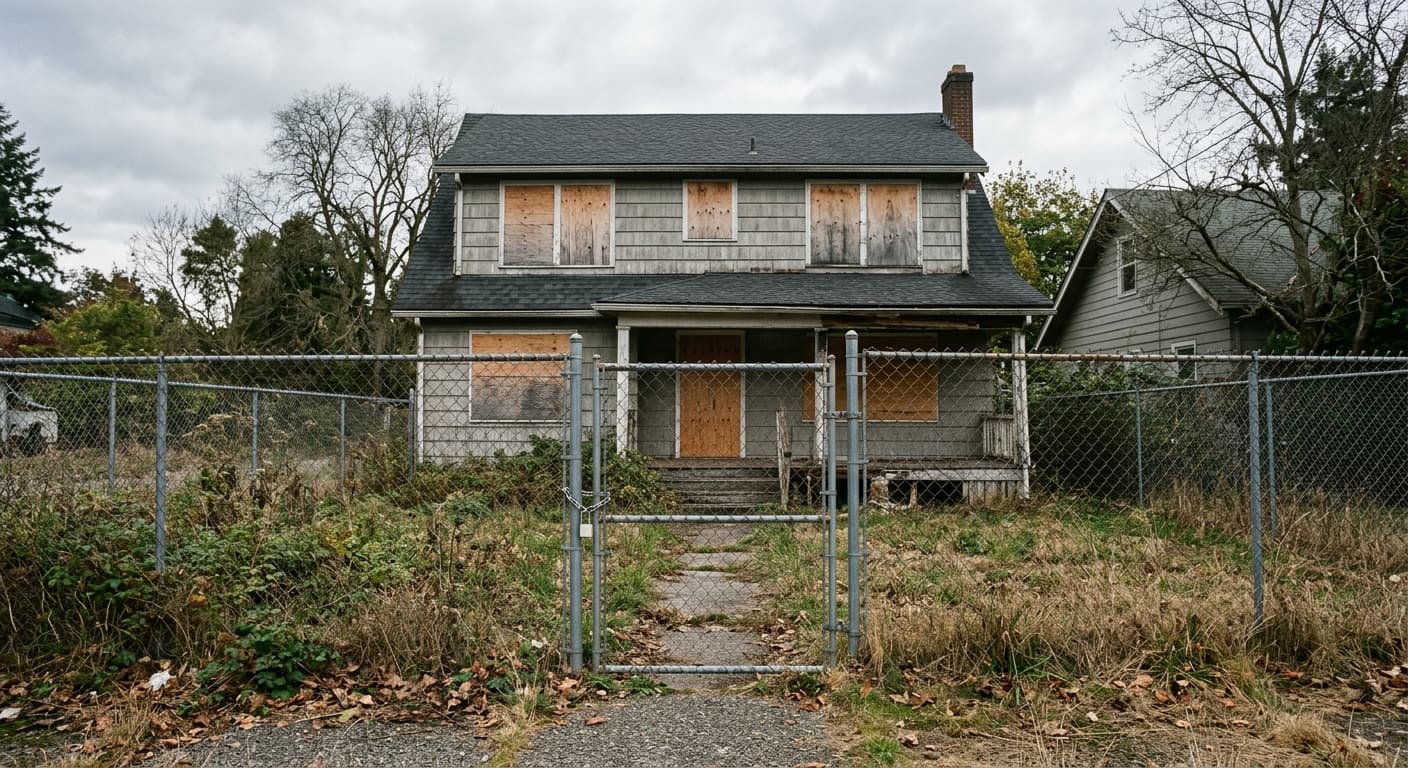
New Hampshire sets one of the longest adverse possession clocks in the country: a person who occupies another owner's land openly and without permission for 20 continuous years may acquire legal title under state statute.
Information last verified on May 27, 2026. This article provides general legal information, not legal advice.
Jurisdiction scope: This page covers New Hampshire state law only. For a comparison of all 50 states, see the national squatters rights guide.
Adverse Possession in New Hampshire: Period and Elements
The 20-Year Statutory Period
New Hampshire's adverse possession limitation is codified at N.H. Rev. Stat. Ann. § 508:2. That statute bars any action for the recovery of real estate brought more than 20 years after the right to recover first accrued to the party claiming it, or to some person under whom that party claims. As a practical matter, a person who meets all required elements for 20 uninterrupted years may assert an adverse possession claim in a quiet-title action and, if successful, receive a court decree vesting ownership in them.

New Hampshire stands with the minority of states that apply a uniform 20-year period. The legislature has not created a shorter period for persons holding color of title, meaning the 20-year rule applies whether or not the claimant holds a defective deed, an irregular conveyance, or any other instrument that appears to transfer ownership. Likewise, New Hampshire imposes no requirement that the adverse possessor pay property taxes during the statutory period. Tax payments may be offered as evidence of a claim of ownership, but they are not a required element under § 508:2.
The Required Elements
New Hampshire courts require every adverse possession claimant to satisfy five elements, each of which must be present continuously for the full 20-year statutory period. Failure to maintain any single element interrupts or defeats the claim.
Actual Possession. The claimant must physically occupy and use the land in a manner appropriate to its character and location. For residential land this typically means residing on the parcel, making improvements, or maintaining a structure. For rural or woodland parcels, clearing, fencing, or cultivating the land may qualify. Mere occasional presence on the land does not constitute actual possession.
Open and Notorious Possession. The occupation must be visible and obvious enough that a reasonably attentive owner inspecting the property would notice it. The purpose of this requirement is to give the true owner a fair opportunity to discover the intrusion and take legal action. A claim based on concealed or underground encroachments cannot satisfy this element.
Exclusive Possession. The claimant must hold the property to the exclusion of the true owner and the general public. Sharing use of the parcel with the record owner defeats exclusivity. Two claimants who are in privity with each other, such as successive occupants who transferred their interest, may satisfy the element jointly, but neither may share dominion with the titled owner.
Hostile Possession. Possession must be hostile to the rights of the true owner, meaning it is without the owner's permission and is inconsistent with the owner's title. New Hampshire courts have recognized that hostility is a legal concept rather than an emotional one. Permission, even informal permission granted by the owner, destroys hostility and prevents the 20-year period from running. A trespasser who receives oral or written consent from the landowner at any point during the occupation converts from adverse possession to permissive use.
Continuous Possession Under a Claim of Ownership. The 20-year period must run without substantial interruption. New Hampshire recognizes tacking, meaning a claimant may add a predecessor's qualifying period of possession to their own, provided there is privity of possession between them, such as a direct transfer or inheritance of the claim. The claimant must also act under a claim of ownership rather than merely using the land with knowledge that it belongs to another.
No Color-of-Title Shortcut and No Tax Requirement
As noted above, § 508:2 provides a single uniform period with no reduced timeline for claimants holding color of title. Several states create a shorter period, often five to ten years, for persons who entered the property under a defective deed. New Hampshire does not. The same 20 years applies regardless of any instrument the claimant may hold.

Nor does § 508:2 require that the claimant have paid property taxes during the statutory period, distinguishing New Hampshire from states such as California and Texas that condition adverse possession claims on tax compliance.
Practical Impact of the 20-Year Period
The 20-year requirement is a significant practical barrier. A squatter who began unauthorized occupation in 2005 would not reach the statutory threshold until 2025, and any gap in possession during those two decades resets or pauses the clock. For property owners who discover an encroachment or unauthorized occupant relatively quickly, the 20-year rule means an adverse possession claim is almost always preventable by acting before the period expires.
How to Remove a Squatter in New Hampshire
Step 1: Confirm the Occupant Has No Legal Right to the Property
Before starting a court proceeding, a property owner should verify that no lease, license, or informal agreement gives the occupant a colorable right of possession. If the occupant was once a tenant whose tenancy has ended, the same RSA 540 procedure applies. Whether the property is classified as restricted or nonrestricted under RSA 540:1-a affects which grounds for termination are available under RSA 540:2, not the length of the notice period.

Step 2: Serve a Written Notice to Quit
RSA 540:12 requires the property owner to give the occupant written notice to quit the premises before filing a possessory action. For all residential tenancies, RSA 540:3, II provides that 30 days' written notice is sufficient in all cases. For certain grounds, including substantial damage to the property or behavior that threatens health and safety, notice may be reduced to 7 days under RSA 540:3. The notice must state the reason for the termination with specificity. Serving notice by certified mail or personal delivery creates the clearest record.
Step 3: File a Possessory Action in Circuit Court
Under RSA 540:12, an owner who has given proper written notice may bring a possessory action in New Hampshire circuit court to recover possession from an occupant holding without right. Circuit court is the proper forum for most residential eviction and possessory matters under RSA 540. The owner files a writ of summons alleging that the occupant holds the premises without right after proper notice to quit.
Under RSA 540:13, the court issues a writ returnable within 7 days of service by the sheriff. If the occupant files an appearance, the court must schedule a hearing within 10 days, with at least 6 days' prior notice mailed to the parties. If the occupant fails to appear, the court mails a default notice and, if no response follows, issues a writ of possession.
Step 4: Obtain and Execute the Writ of Possession
If the owner prevails at hearing or by default, the court issues a writ of possession directing the sheriff to restore the owner to the property. The owner requests execution of that writ through the court clerk, and the sheriff or a constable carries out the physical removal. Owners must not take any self-help steps before the writ is executed.
No Self-Help Removal
New Hampshire does not permit property owners to remove occupants by their own action. Changing locks, removing the occupant's belongings, shutting off utilities, or physically confronting the occupant outside the court process exposes the owner to civil liability. The possessory action under RSA 540 is the exclusive lawful remedy.
No Expedited Squatter-Removal Statute as of May 2026
Several states enacted fast-track administrative or law enforcement removal procedures for squatters in 2024 and 2025. New Hampshire has not. A review of the 2024 and 2025 legislative sessions at the General Court of New Hampshire found no enacted bill creating an expedited or administrative removal process specifically for unauthorized occupants. New Hampshire property owners must use the standard RSA 540 circuit court procedure described above.
Legal disclaimer: This article provides general legal information about New Hampshire squatters rights and adverse possession law. It is not legal advice and does not create an attorney-client relationship. Property law matters are fact-specific. If you are a property owner facing an unauthorized occupant, or an occupant with questions about your legal status, consult a licensed New Hampshire attorney before taking action.
For a full 50-state comparison, visit the national squatters rights guide.
Page maintained by the RecordingLaw.com editorial team. Legal statutes verified against the official New Hampshire General Court database.
More New Hampshire Laws
Frequently Asked Questions
How long does a squatter have to stay in New Hampshire to claim ownership?
A squatter must maintain actual, open, exclusive, hostile, and continuous possession under a claim of ownership for 20 uninterrupted years under N.H. Rev. Stat. Ann. § 508:2. Missing any single required element stops or resets the clock.
Does New Hampshire have a shorter adverse possession period if the squatter holds a deed?
No. New Hampshire law does not provide a reduced period for claimants holding color of title. The 20-year requirement applies regardless of whether the occupant holds any instrument that appears to convey ownership.
Does a squatter in New Hampshire have to pay property taxes?
No. New Hampshire's adverse possession statute contains no tax-payment requirement. Payment of taxes may support a claim of ownership but is not a required element under RSA 508:2.
What court handles squatter removal in New Hampshire?
Possessory actions and most residential eviction matters are filed in New Hampshire circuit court under RSA 540. The circuit court's district division handles these cases statewide.
Can a property owner remove a squatter without going to court in New Hampshire?
No. Self-help eviction is prohibited in New Hampshire. Changing locks, removing belongings, or shutting off utilities without a court order is unlawful. A possessory action under RSA 540:12 filed in circuit court is the required procedure.
Does New Hampshire have a new expedited squatter removal law in 2024 or 2025?
No. As of May 2026, New Hampshire has not enacted any expedited or administrative squatter-removal procedure. Property owners must use the standard RSA 540 circuit court possessory action process.
Can giving a squatter permission to stay stop an adverse possession clock in New Hampshire?
Yes. Written or oral permission from the owner destroys the hostile element of adverse possession. Granting permission, even informally, converts the occupation from adverse to permissive and prevents the 20-year statutory period from running. Owners who discover unauthorized occupants should issue written notice promptly and document all communications.
Updates
Corrected the description of RSA 508:2 to match its current text, which runs the 20-year period from when the right to recover first accrued, and clarified that RSA 540:3, II's 30-day notice applies to all residential tenancies while the restricted/nonrestricted classification affects only the permissible grounds for termination.
Fixed a dead citation link for New Hampshire's 20-year adverse possession statute (RSA 508:2); the statute's file path changed titles on the state's website. No legal figures on the page were incorrect.
Independently fact-checked against the cited primary sources; governing law re-checked for recent changes
Governing law re-checked for recent changes
Reviewed and approved by an editor
The Law Behind This Article
This article rests on the statutory provisions below, held in our own legal record and retrieved from the official source. Tap a section to read the operative text.
New Hampshire Revised Statutes Annotated, TITLE LII ACTIONS, PROCESS, AND SERVICE OF PROCESS, CHAPTER 508 LIMITATION OF ACTIONS
§ 508:2Real Actions.In forcecited in 2 of our articles
I. No action for the recovery of real estate shall be brought after 20 years from the time the right to recover first accrued to the party claiming it or to some persons under whom the party claims. II. No action for the recovery of real estate pursuant to rights based on a possibility of reverter, right of re-entry, or executory interest shall be brought after 5 years from the time the right to recover possession or the right of re-entry first accrued to the party claiming it or to some persons under whom the party claims.
Official text (excerpt) · last checked 2026-09-08 · Read the full text in our law library · Verify at gc.nh.gov
Cited in 31 court opinions in our collectionLatest citing opinion in our collection: 2025
Opinions citing this section in our collection:
- Jenot v. White Mountain Acceptance Corp. (Supreme Court of New Hampshire 1984, 124 N.H. 701)“…collection of the promissory note, under the provisions of RSA 508:2 and RSA 508:6, beyond the three-year co…”
- Del Norte, Inc. v. Provencher (Supreme Court of New Hampshire 1997, 142 N.H. 535)“…provided for actions upon notes secured by mortgages, see RSA 508:2, :6 (1997), because foreclosure of the…”
- O'Hearne v. McCLAMMER (Supreme Court of New Hampshire 2012, 163 N.H. 430)“…rred by the twenty-year statute of limitations set forth in RSA 508:2 (2010), which the court determined had…”
Identified automatically from the court opinions citing this section — not a ranking of which case controls.
Also relied on in: New Hampshire Statute of Limitations: Filing Deadlines by Case Type
New Hampshire Revised Statutes Annotated, TITLE LV PROCEEDINGS IN SPECIAL CASES, CHAPTER 540 ACTIONS AGAINST TENANTS
§ 540:12Possessory Action.In force
The owner, lessor, or purchaser at a mortgage foreclosure sale of any tenement or real estate may recover possession thereof from a lessee, occupant, mortgagor, or other person in possession, holding it without right, after notice in writing to quit the same as herein prescribed.
Official text (excerpt) · last checked 2026-07-29 · Read the full text in our law library · Verify at gc.nh.gov
Cited in 25 court opinions in our collectionLatest citing opinion in our collection: 2025
Opinions citing this section in our collection:
- Liam Hooksett, LLC v. Boynton (Supreme Court of New Hampshire 2008, 157 N.H. 625)“…owner or lessor of the property at issue. See RSA 540:12 (2007). We further hold that, because t…”
- Wells Fargo Bank v. Schultz (Supreme Court of New Hampshire 2013, 164 N.H. 608)“…go Bank, in its action for possession of real estate. See RSA 540:12 (2007). We affirm. The following fact…”
- DEUTSCHE BANK NAT. TRUST CO. v. Kevlik (Supreme Court of New Hampshire 2011, 161 N.H. 800)“…ion for possession of real estate located in Chester. See RSA 540:12 (2007). We reverse. The following fac…”
Identified automatically from the court opinions citing this section — not a ranking of which case controls.
§ 540:13Writ; Service; Discovery; Record; Default.In force
I. A writ of summons may be issued, returnable before a district court, setting forth in substance that the plaintiff is entitled to the possession of the demanded premises, and that the defendant is in possession thereof without right, after notice in writing, to quit the same at a day named therein. II. The writ shall be accompanied by a notice from the district court, printed in no smaller than 12-point type, informing the tenant that: (a) If the tenant wishes to contest the eviction, he must file an appearance in the district court no later than the return day appearing on the writ. (b) The tenant shall not be evicted unless the court so orders; however, such an order may be granted if the tenant does not file an appearance. (c) At the time the tenant files his appearance, he may request that the court make a sound recording of the eviction hearing by checking an appropriate box on the appearance form.
Official text (excerpt) · last checked 2026-07-29 · Read the full text in our law library · Verify at gc.nh.gov
Cited in 34 court opinions in our collectionLatest citing opinion in our collection: 2022
Opinions citing this section in our collection:
- Miller v. Slania Enterprises, Inc. (Supreme Court of New Hampshire 2004, 150 N.H. 655)“…out objection, regarding his knowledge of the provisions of RSA 540:13, VII (Supp. 2003), which permits a land…”
- Liam Hooksett, LLC v. Boynton (Supreme Court of New Hampshire 2008, 157 N.H. 625)“…in property based upon nonpayment of rent. See RSA 540:13 (2007). We hold that the plaintiff fail…”
- Colonial Village, Inc. v. Pelkey (Supreme Court of New Hampshire 2008, 157 N.H. 91)“…The tenant also argues that the trial court misinterpreted RSA 540:13, VII by holding that the landlord could…”
Identified automatically from the court opinions citing this section — not a ranking of which case controls.
§ 540:2Termination of Tenancy.In force
I. The lessor or owner of nonrestricted property may terminate any tenancy by giving to the tenant or occupant a notice in writing to quit the premises in accordance with RSA 540:3 and 5. II. The lessor or owner of restricted property may terminate any tenancy by giving to the tenant or occupant a notice in writing to quit the premises in accordance with RSA 540:3 and 5, but only for one of the following reasons: (a) Neglect or refusal to pay rent due and in arrears, upon demand. (b) Substantial damage to the premises by the tenant, members of his household, or guests. (c) Failure of the tenant to comply with a material term of the lease. (d) Behavior of the tenant or members of his family which adversely affects the health or safety of the other tenants or the landlord or his representatives, or failure of the tenant to accept suitable temporary relocation due to lead-based paint hazard abatement, as set forth in RSA 130-A:8-a, I. (e) Other good cause.
Official text (excerpt) · last checked 2026-07-29 · Read the full text in our law library · Verify at gc.nh.gov
Cited in 39 court opinions in our collectionLatest citing opinion in our collection: 2024
Opinions citing this section in our collection:
- N.A.P.P. Realty Trust v. CC Enterprises (Supreme Court of New Hampshire 2001, 147 N.H. 137)“…had “other good cause” to evict the defendants pursuant to RSA 540:2, II (e) (1997). RSA 540:2, II (e) provi…”
- AIMCO Properties, LLC v. Dziewisz (Supreme Court of New Hampshire 2005, 152 N.H. 587)“…ter of Non-Renewal” does not comply with the requirement of RSA 540:2, II (1997) that a landlord of restricte…”
- Great Traditions Home Builders, Inc. v. O'Connor (Supreme Court of New Hampshire 2008, 157 N.H. 387)“…satisfy the statutory notice requirement. See RSA 540:2, III (2007). We affirm. *388…”
Identified automatically from the court opinions citing this section — not a ranking of which case controls.
§ 540:3Eviction Notice.In force
I. If a nonresidential tenant neglects or refuses to pay rent due and in arrears, upon demand, 7 days' notice shall be sufficient; if the rent is payable more frequently than once in 3 months, whether such rent is due or not, a notice equal to the rent period shall be sufficient, and 3 months' notice shall be sufficient in all cases. II. For all residential tenancies, 30 days' notice shall be sufficient in all cases; provided, however, that 7 days' notice shall be sufficient if the reason for the termination is as set forth in RSA 540:2, II(a), (b), (d), or (h). III. The eviction notice shall state with specificity the reason for the eviction. IV. If the eviction notice is based on nonpayment of rent, the notice shall inform the tenant of his or her right, if any, to avoid the eviction by payment of the arrearages and liquidated damages in accordance with RSA 540:9. V. For the purpose of interpreting or enforcing any lease or rental agreement for residential tenants in effect on July 1, 2006, a notice to quit shall be deemed an eviction notice under this section.
Official text (excerpt) · last checked 2026-07-29 · Read the full text in our law library · Verify at gc.nh.gov
Cited in 20 court opinions in our collectionLatest citing opinion in our collection: 2025
Opinions citing this section in our collection:
- South Willow Properties, LLC v. Burlington Coat Factory of New Hampshire, LLC (Supreme Court of New Hampshire 2009, 159 N.H. 494)“…ce BCF argued that the notice to quit failed to comply with RSA 540:3 because the notice was not specific as…”
- AIMCO Properties, LLC v. Dziewisz (Supreme Court of New Hampshire 2005, 152 N.H. 587)“…ord of restricted property have good cause for an eviction. RSA 540:3, III (1997) requires that the notice to…”
- Mountain View Park, LLC v. Gerald Robson, Jr. (Supreme Court of New Hampshire 2015, 168 N.H. 117)“…eement would be null and void. See id.; see also, e.g., RSA 540:3, IV (2007) (“If the eviction notice is…”
Identified automatically from the court opinions citing this section — not a ranking of which case controls.
Search our full record of US law — 2.1 million sections, every state + federal →
Sources and References
- N.H. Rev. Stat. Ann. § 508:2 (Limitation of Actions on Real Property; 20-year period)(gc.nh.gov).gov
- N.H. Rev. Stat. Ann. § 540:12 (Possessory Action; recovery from occupant holding without right)(gc.nh.gov)
- N.H. Rev. Stat. Ann. § 540:2 (Grounds for Termination of Tenancy)(gc.nh.gov)
- N.H. Rev. Stat. Ann. § 540:3 (Notice Requirements; eviction)(gc.nh.gov)
- N.H. Rev. Stat. Ann. § 540:13 (Writ of Summons; hearing and default procedures)(gc.nh.gov)
- General Court of New Hampshire, 2024 and 2025 Legislative Sessions (no squatter-removal bill enacted)(gc.nh.gov)
- N.H. Rev. Stat. Ann. § 540:1-a (Definitions; restricted and nonrestricted property)(gc.nh.gov)