
Nebraska
Nebraska Squatters Rights and Adverse Possession Laws (2026)
Independently fact-checked against primary sources (last audited August 18, 2026). · Reviewed by the RecordingLaw editorial team. · Law checked current as of August 18, 2026. · 1 primary source cited on this page. How we verify our legal content
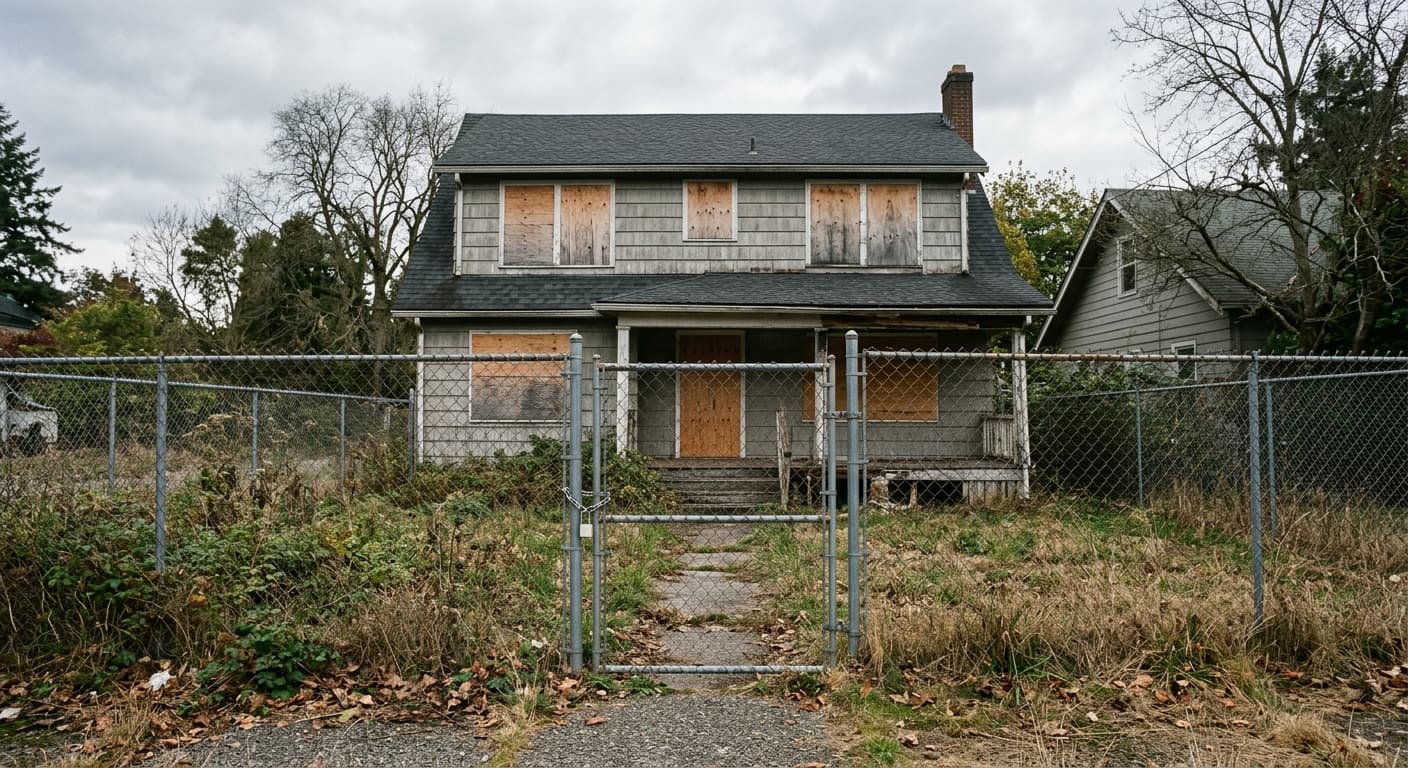
Nebraska property owners and occupants both need to understand how state law treats unauthorized occupation. The rules are set by statute and have not changed with any 2024 or 2025 reform legislation.
Information last verified on May 27, 2026. This article provides general legal information, not legal advice.
Jurisdiction scope: This page covers Nebraska state law only. For a comparison of all 50 states, see the national squatters rights guide.
Adverse Possession in Nebraska: Period and Elements
Nebraska's adverse possession statute is codified at Neb. Rev. Stat. § 25-202. Under that provision, a person who claims title by adverse possession must prove by a preponderance of the evidence that the possession was actual, continuous, exclusive, notorious, and adverse under a claim of ownership for the full statutory period of 10 years.

Each element carries independent legal weight under Nebraska case law, and a claimant who cannot satisfy every one of them will fail to acquire title regardless of how long the occupation has lasted.
Actual Possession
The claimant must physically occupy and use the land in a manner consistent with how a true owner would use it. Occasional visits or temporary improvements are not enough. Courts in Nebraska look for evidence such as cultivating the land, maintaining structures, or making regular improvements over the statutory period.
Open and Notorious Possession
The occupation must be visible and obvious enough that a reasonably attentive owner would notice it. The purpose of this element is to give the true owner a fair opportunity to discover the intrusion and take action. Hidden or concealed occupation cannot satisfy this requirement.
Exclusive Possession
The claimant must hold the property to the exclusion of the true owner. Sharing possession with the owner, or allowing the owner to use the property without objection, defeats this element. The adverse possessor may share use with others in privity with the claimant, but not with the general public or the record owner.
Hostile or Adverse Possession
Possession must be hostile to the interests of the true owner, meaning it is without the owner's permission. This is a legal concept, not an emotional one. If an owner gives express or implied consent to the occupant's use, the occupation is permissive rather than adverse and the statutory period never begins to run. Nebraska courts have held that the "hostile" element is satisfied when the possessor treats the land as their own without recognizing any superior right in the owner.

Continuous Possession Under a Claim of Ownership
The 10-year period must run without substantial interruption. Nebraska does allow "tacking," meaning a claimant can add the period of a predecessor's qualifying possession to their own, provided there is privity of possession between them. The claimant must also hold under a claim of ownership, meaning the intent to own rather than merely use. A life estate or a license from the owner is not a claim of ownership for this purpose.
No Color-of-Title Shortcut and No Tax Requirement
Nebraska statute § 25-202 does not create a shorter period for claimants holding color of title, nor does it require the adverse possessor to have paid property taxes. Both of those provisions exist in some other states but are absent from Nebraska law. A claimant in Nebraska needs 10 years regardless of whether they hold a defective deed, and they owe no tax-payment duty to perfect the claim.
Public Land Exception
The statute expressly exempts counties, cities, towns, villages, and other municipal corporations from the 10-year limitation when the property in question is a public road, street, alley, or other public land. Adverse possession claims cannot run against those categories of public property.
How to Remove a Squatter in Nebraska
Nebraska property owners have two main legal pathways to remove an unauthorized occupant, depending on the nature of the occupancy.

Forcible Entry and Detainer Under §§ 25-21,219 and 25-21,220
When an occupant has no tenancy relationship with the property owner and no colorable claim to possession, the owner may bring a forcible entry and detainer (FED) action in district or county court under Neb. Rev. Stat. § 25-21,219. The court has authority to award restitution of the premises to the owner if it finds the entry or detention was unlawful. The court may also examine related financial questions such as property damage caused during the occupation.
The provision that actually supplies the ground for this scenario is Neb. Rev. Stat. § 25-21,220(5), which authorizes FED proceedings "in all cases when the defendant is a settler or occupier of lands or tenements, without color of title, and to which the complainant has the right of possession." Section 25-21,219 grants the courts jurisdiction and the power to order restitution; § 25-21,220(5) is the subdivision that lets an owner aim that remedy at a true squatter.
One important limitation applies: the FED statute explicitly excludes residential properties governed by the Nebraska Uniform Residential Landlord and Tenant Act. If a court determines that a landlord-tenant relationship exists, the case must proceed under that Act instead.
A Three-Day Notice to Quit Comes First
An owner cannot go straight to the courthouse. Neb. Rev. Stat. § 25-21,221 makes pre-suit notice a duty: the party who wants to commence an FED action must "notify the adverse party to leave the premises," and that notice "shall be served at least three days before commencing the action by leaving a written copy with such adverse party, or at his usual place of abode, if he cannot be found."
Where neither the defendant nor the defendant's usual place of abode can be found in the county where the property sits, the statute permits service by leaving the notice at, or posting it on, the detained premises. Nebraska courts treat this as a precondition to relief rather than a formality. The three-day notice to quit is necessary to obtaining an order of restitution in a forcible entry and detainer action (I. P. Homeowners v. Morrow, 12 Neb. App. 119, 668 N.W.2d 515 (2003)).
FED Must Be Filed Within One Year
FED is not an open-ended remedy. Under Neb. Rev. Stat. § 25-203, an action for forcible entry and detainer, or forcible detainer only, "can only be brought within one year after the cause of such action shall have accrued." An owner who discovers an unauthorized occupant and lets the matter sit can lose the summary removal remedy entirely.
Once that window has closed, the owner still has options, but slower ones. Recovery then proceeds as an ejectment or quiet title action, in which title and the right of possession are actually litigated rather than summarily decided. In an action for the recovery of property, Neb. Rev. Stat. § 25-2128 lets the parties avail themselves of the occupying-claimant provisions at Neb. Rev. Stat. §§ 76-301 to 76-311, under which an occupant who made improvements or paid taxes while claiming title in good faith may seek compensation.
Two clocks govern this topic, and property owners need both. The ten-year adverse possession period under § 25-202 sets when an occupant may take title. The one-year period under § 25-203 sets how long the owner keeps the fast removal remedy.
Complaint for Restitution Under the URLTA
If the occupant has at some point held a tenancy, even an informal one, the Nebraska Uniform Residential Landlord and Tenant Act (Neb. Rev. Stat. §§ 76-1401 to 76-1449) governs the removal process. The owner must:
-
Serve a written notice that complies with the applicable statutory grounds. For nonpayment of rent, the notice period is 7 days after written notice. For a material breach affecting health or safety, the owner gives 30 days' notice with a 14-day cure period. For violent criminal activity, the notice period drops to 5 days with no right to cure.
-
File a complaint for restitution in district or county court under Neb. Rev. Stat. § 76-1441, setting out the statutory authority for the action, the facts with particularity, a description of the property, and a certification of proper notice.
-
Obtain a court order of restitution and, if the occupant does not leave voluntarily, arrange for the sheriff or constable to execute the writ.
Do Not Use Self-Help
Nebraska law prohibits self-help eviction. A property owner who changes locks, removes belongings, shuts off utilities, or physically forces an occupant out without a court order exposes themselves to civil liability. The proper remedy is always a court proceeding.
No Expedited Removal Law as of May 2026
Several states enacted fast-track squatter-removal statutes in 2024 and 2025. Nebraska did not. A review of 2024 and 2025 legislative sessions at nebraskalegislature.gov found no enacted bill creating an administrative or expedited court process specifically for squatter removal. Nebraska property owners must follow the standard FED or URLTA court procedure.
Legal disclaimer: This article provides general legal information about Nebraska squatters rights and adverse possession law. It is not legal advice and does not create an attorney-client relationship. Property law matters are fact-specific. If you are a property owner facing an unauthorized occupant, or an occupant with questions about your legal status, consult a licensed Nebraska attorney before taking action.
For a full 50-state comparison, visit the national squatters rights guide.
Page maintained by the RecordingLaw.com editorial team. Legal statutes verified against the official Nebraska Legislature database.
- Nebraska AI Meeting Recording Laws
- Nebraska Alimony Laws
- Nebraska At-Will Employment Laws
- Nebraska Car Accident Laws
- Nebraska Car Seat Laws
- Nebraska Child Custody Laws
- Nebraska Child Support Laws
- Nebraska Common Law Marriage Laws
- Nebraska Dashcam Laws
- Nebraska Data Privacy Laws
- Nebraska Deepfake Laws
- Nebraska Divorce Laws
- Nebraska Dog Bite Laws
- Nebraska Drone Laws
- Nebraska Emancipation Laws
- Nebraska Employee Monitoring Laws
More Nebraska Laws
Frequently Asked Questions
How long does a squatter have to stay in Nebraska to claim ownership?
A squatter must maintain actual, open, exclusive, hostile, and continuous possession under a claim of ownership for 10 uninterrupted years under Neb. Rev. Stat. § 25-202. Missing any single element resets or stops the clock.
Does Nebraska have a shorter adverse possession period if the squatter has a deed?
No. Nebraska law does not provide a reduced period for claimants holding color of title. The 10-year requirement applies regardless of whether the occupant holds a defective or partial document of title.
Does a squatter in Nebraska have to pay property taxes?
No. Nebraska's adverse possession statute has no tax-payment requirement. Payment of taxes may be offered as evidence of a claim of ownership, but it is not a required element for the claim to succeed.
Can a property owner remove a squatter without going to court in Nebraska?
No. Self-help eviction is prohibited in Nebraska. Changing locks, removing belongings, or cutting off utilities without a court order is unlawful and can expose the owner to civil liability. A forcible entry and detainer action or URLTA complaint for restitution is required.
What is the difference between a squatter and a trespasser in Nebraska?
A trespasser enters property without permission and without any intent to claim it. A squatter occupies property continuously and may, after 10 years of qualifying possession, assert an adverse possession claim. Trespassers can be removed by law enforcement; squatters require a court eviction proceeding.
Can giving a squatter permission to stay stop an adverse possession clock in Nebraska?
Yes. Written or oral permission from the owner destroys the hostile element of adverse possession. Granting even informal permission converts the occupation from adverse to permissive, preventing the statutory period from running. Property owners who discover unauthorized occupants should document any notice or permission in writing.
Is there a new Nebraska law in 2024 or 2025 that speeds up squatter removal?
No. As of May 2026, Nebraska has not enacted any expedited or administrative squatter-removal procedure. Property owners in Nebraska must use the standard forcible entry and detainer process under §§ 25-21,219 and 25-21,220(5), which requires a written three-day notice to leave the premises before the action is filed (§ 25-21,221), or the URLTA complaint for restitution under § 76-1441.
Does a Nebraska owner have to give notice before filing a forcible entry and detainer action?
Yes. Neb. Rev. Stat. § 25-21,221 requires the owner to notify the occupant to leave the premises at least three days before commencing the action, by leaving a written copy with the occupant or at the occupant's usual place of abode. If neither the occupant nor that usual place of abode can be found in the county where the property is located, the notice may be left at or posted on the premises. Nebraska courts have held that this three-day notice to quit is necessary to obtain an order of restitution.
Is there a deadline for filing a forcible entry and detainer action in Nebraska?
Yes. Under Neb. Rev. Stat. § 25-203, an FED action can only be brought within one year after the cause of action accrued. An owner who waits past that window loses the summary FED remedy and must instead pursue an ejectment or quiet title action, in which the occupant may seek occupying-claimant compensation for improvements or taxes under Neb. Rev. Stat. §§ 76-301 to 76-311.
Updates
Added the Nebraska provision that actually authorizes eviction of an occupant without color of title (Neb. Rev. Stat. § 25-21,220(5)), the mandatory three-day written notice to quit that must precede a forcible entry and detainer filing (§ 25-21,221), and the one-year deadline for bringing that action (§ 25-203) along with the ejectment and quiet title route that remains once it passes.
Independently fact-checked against the cited primary sources; governing law re-checked for recent changes
Governing law re-checked for recent changes
Reviewed and approved by an editor
The Law Behind This Article
This article rests on the statutory provisions below, held in our own legal record and retrieved from the official source. Tap a section to read the operative text.
Nebraska Revised Statutes, Chapter 25: COURTS; CIVIL PROCEDURE
§ 25-202Actions for the recovery of title or possession of real estate or foreclosure of mortgages or deeds of trust as mortgagesIn forcecited in 2 of our articles
(1) An action for the recovery of the title or possession of lands, tenements, or hereditaments, or for the foreclosure of mortgages or the foreclosure of deeds of trust as mortgages thereon, can only be brought within ten years after the cause of action accrues. No limitation shall apply to the time within which any county, city, town, village, other municipal corporation, public power and irrigation district, public power district, public irrigation district organized under Chapter 70, article 6, irrigation district organized under Chapter 46, article 1, or natural resources district may begin an action for the recovery of the title or possession of any public road, street, or alley, other public or political subdivision grounds or lands, or city or town lots.
Official text (excerpt) · last checked 2026-09-08 · Read the full text in our law library · Verify at nebraskalegislature.gov
Cited in 36 court opinions in our collectionLatest citing opinion in our collection: 2024
In the courts (editorial summary, independently checked):Blankenau held a landlord’s action to recover real estate from a holdover tenant falls under § 25-202’s 10-year period, accruing when the lease ends and the tenant stays without consent. Wait applied the same period to bar resulting- and constructive-trust claims that accrued with a 1954 deed.
Opinions citing this section in our collection:
- Hike v. State (Nebraska Supreme Court 2017, 899 N.W.2d 614)✓Homeowners sought inverse-condemnation damages from Nebraska. The court held § 25-202 is a general limit and the more specific two-year limit for claims against the State controlled, making their action untimely.
- Strode v. City of Ashland (Nebraska Supreme Court 2016, 295 Neb. 44)✓Owners sued over zoning enforcement more than 10 years after the city threatened legal action. Applying § 25-202, the court held their takings claims accrued by June 10, 2003, and were late; the wife’s actual notice was not required.
- Brtek v. Cihal (Nebraska Supreme Court 1994, 245 Neb. 756)✓In a family farm dispute, the court alternatively assumed an oral sale of the Pedersen farm. Even under § 25-202’s 10-year period, the 1986 claim was late after the final 1974 payment; the separate Urbanek title ruling was partly reversed.
Identified automatically from the court opinions citing this section — not a ranking of which case controls.
Also relied on in: Nebraska Statute of Limitations: Filing Deadlines by Case Type
§ 25-21,219Forcible entry and detainer; jurisdiction; exceptionsIn force
The district and county courts shall have jurisdiction over complaints of unlawful and forcible entry into lands and tenements and the detention of the same and of complaints against those who, having a lawful and peaceable entry into lands or tenements, unlawfully and by force hold the same. If the court finds that an unlawful and forcible entry has been made and that the same lands or tenements are held by force or that the same, after a lawful entry, are held unlawfully, the court shall cause the party complaining to have restitution thereof. The court or the jury, as the situation warrants, shall inquire into the matters between the two litigants such as the amount of rent owing the plaintiff and the amount of damage caused by the defendant to the premises while they were occupied by him or her and render a judgment or verdict accordingly. This section shall not apply to actions for possession of any premises subject to the provisions of the Uniform Residential Landlord and Tenant Act or the Mobile Home Landlord and Tenant Act.
Official text (excerpt) · last checked 2026-07-29 · Read the full text in our law library · Verify at nebraskalegislature.gov
Nebraska Revised Statutes, Chapter 76: REAL PROPERTY
§ 76-1441Complaint for restitution; filing; contentsIn force
(1) The person seeking possession shall file a complaint for restitution with the clerk of the district or county court. The complaint shall contain (a) the specific statutory authority under which possession is sought; (b) the facts, with particularity, on which he or she seeks to recover; (c) a reasonably accurate description of the premises; and (d) the requisite compliance with the notice provisions of the Uniform Residential Landlord and Tenant Act. The complaint may notify the tenant that personal property remains on the premises and that it may be disposed of pursuant to section 69-2308 or subsection (5) of section 76-1414. The complaint may also contain other causes of action relating to the tenancy, but such causes of action shall be answered and tried separately, if requested by either party in writing. (2) The person seeking possession pursuant to subsection (4) of section 76-1431 shall include in the complaint the incident or incidents giving rise to the suit for recovery of possession.
Official text (excerpt) · last checked 2026-07-29 · Read the full text in our law library · Verify at nebraskalegislature.gov
Cited in 2 court opinions in our collectionLatest citing opinion in our collection: 2023
Opinions citing this section in our collection:
- Blankenau v. Landess (Nebraska Supreme Court 2001, 261 Neb. 906)“…ver possession of property from Jackie Landess pursuant to Neb. Rev. Stat. § 76-1441 (Reissue 1996). The district court ent…”
- NP Dodge Mgmt. Co. v. Holcomb (Nebraska Supreme Court 2023, 314 Neb. 748)“…arcuzzo, 289 Neb. 301, 310, 854 N.W.2d 774, 781 (2014). See Neb. Rev. Stat. § 76-1441(1) (Reissue 2018). By its terms, forcib…”
Identified automatically from the court opinions citing this section — not a ranking of which case controls.
§ 76-1431Noncompliance; failure to pay rent; effect; violent criminal activity upon premises; landlord; powers; exceptionsIn force
(1) Except as provided in the Uniform Residential Landlord and Tenant Act, if there is a noncompliance with section 76-1421 materially affecting health and safety or a material noncompliance by the tenant with the rental agreement or any separate agreement, the landlord may deliver a written notice to the tenant specifying the acts and omissions constituting the breach and that the rental agreement will terminate upon a date not less than thirty days after receipt of the notice if the breach is not remedied in fourteen days, and the rental agreement shall terminate as provided in the notice subject to the following. If the breach is remediable by repairs or the payment of damages or otherwise and the tenant adequately remedies the breach prior to the date specified in the notice, the rental agreement will not terminate. If substantially the same act or omission which constituted a prior noncompliance of which notice was given recurs within six months, the landlord may terminate the rental agreement upon at least fourteen days' written notice specifying the breach and the date of termination of the rental agreement.
Official text (excerpt) · last checked 2026-07-29 · Read the full text in our law library · Verify at nebraskalegislature.gov
Cited in 2 court opinions in our collectionLatest citing opinion in our collection: 2025
Opinions citing this section in our collection:
- N.P. Dodge Mgmt. Co v. Eltouny (Nebraska Court of Appeals 2018)“…lt by serving a three day notice to quit in compliance with Neb. Rev. Stat. § 76-1431 (Reissue 2009) on March 6, 2016, which…”
- 8214 Wilson Drive, LLC v. Daugherty (District Court, D. Nebraska 2025)“…possession of premises and alleging lease termination under Neb. Rev. Stat. § 76-1431.” Filing 1 at 1.1 The roles of the par…”
Identified automatically from the court opinions citing this section — not a ranking of which case controls.
§ 76-1401Act, how citedIn forcecited in 2 of our articles
Sections 76-1401 to 76-1449 shall be known and may be cited as the Uniform Residential Landlord and Tenant Act.
Official text (excerpt) · last checked 2026-07-29 · Read the full text in our law library · Verify at nebraskalegislature.gov
Cited in 16 court opinions in our collectionLatest citing opinion in our collection: 2026
Opinions citing this section in our collection:
- Mason v. Schumacher (Nebraska Supreme Court 1989, 231 Neb. 929)“…ska’s Uniform Residential Landlord and Tenant Act (URLTA), Neb. Rev. Stat. §§ 76-1401 et seq. (Reissue 1986). Schumachers cr…”
- NP Dodge Mgmt. Co. v. Holcomb (Nebraska Supreme Court 2023, 314 Neb. 748)“…iform Residential Landlord and Tenant Act (the NURLTA). See Neb. Rev. Stat. § 76-1401 et seq. (Reissue 2018). Holcomb request…”
- Johnson v. Vosberg (Nebraska Supreme Court 2024, 316 Neb. 658)“…o-month basis when Johnson served a 30-day notice 1 See Neb. Rev. Stat. §§ 76-1401 to 76-1449 (Reissue 2018 & Cum. Supp.…”
Identified automatically from the court opinions citing this section — not a ranking of which case controls.
Also relied on in: Nebraska Landlord-Tenant Recording Laws: Cameras, Audio, and Privacy Rights (2026)
Search our full record of US law — 2.1 million sections, every state + federal →
Sources and References
- Neb. Rev. Stat. § 25-202 — Adverse Possession; 10-year statutory period and elements(nebraskalegislature.gov)
- Neb. Rev. Stat. § 25-21,219 — Forcible Entry and Detainer; court jurisdiction and restitution(nebraskalegislature.gov)
- Neb. Rev. Stat. § 76-1401 — Uniform Residential Landlord and Tenant Act; scope(nebraskalegislature.gov)
- Neb. Rev. Stat. § 76-1431 — URLTA; termination of tenancy and notice requirements(nebraskalegislature.gov)
- Neb. Rev. Stat. § 76-1441 — URLTA; complaint for restitution procedure(nebraskalegislature.gov)
- Nebraska Legislature 2024 Session Bill Search — no squatter-removal bill enacted(nebraskalegislature.gov)
- Nebraska Legislature 2025 Session Bill Search — no squatter-removal bill enacted(nebraskalegislature.gov)
- Nebraska Legislature 2024 and 2025 Session Bill Search (no squatter-removal bill enacted), Nebraska Legislature(nebraskalegislature.gov).gov
- Neb. Rev. Stat. § 25-21,220 — Forcible entry and detainer; when maintainable; subsection (5) covers a settler or occupier without color of title(nebraskalegislature.gov)
- Neb. Rev. Stat. § 25-21,221 — Forcible entry and detainer; mandatory three-day written notice to leave the premises before commencing the action(nebraskalegislature.gov)
- Neb. Rev. Stat. § 25-203 — Forcible entry and detainer action may only be brought within one year after the cause of action accrued(nebraskalegislature.gov)
- Neb. Rev. Stat. § 25-2128 — Ejectment; occupying claimants may avail themselves of the relief in §§ 76-301 to 76-311(nebraskalegislature.gov)