
Missouri
Missouri Squatters Rights and Adverse Possession Laws (2026)
Independently fact-checked against primary sources (last audited August 18, 2026). · Reviewed by the RecordingLaw editorial team. · Law checked current as of August 18, 2026. · 1 primary source cited on this page. How we verify our legal content
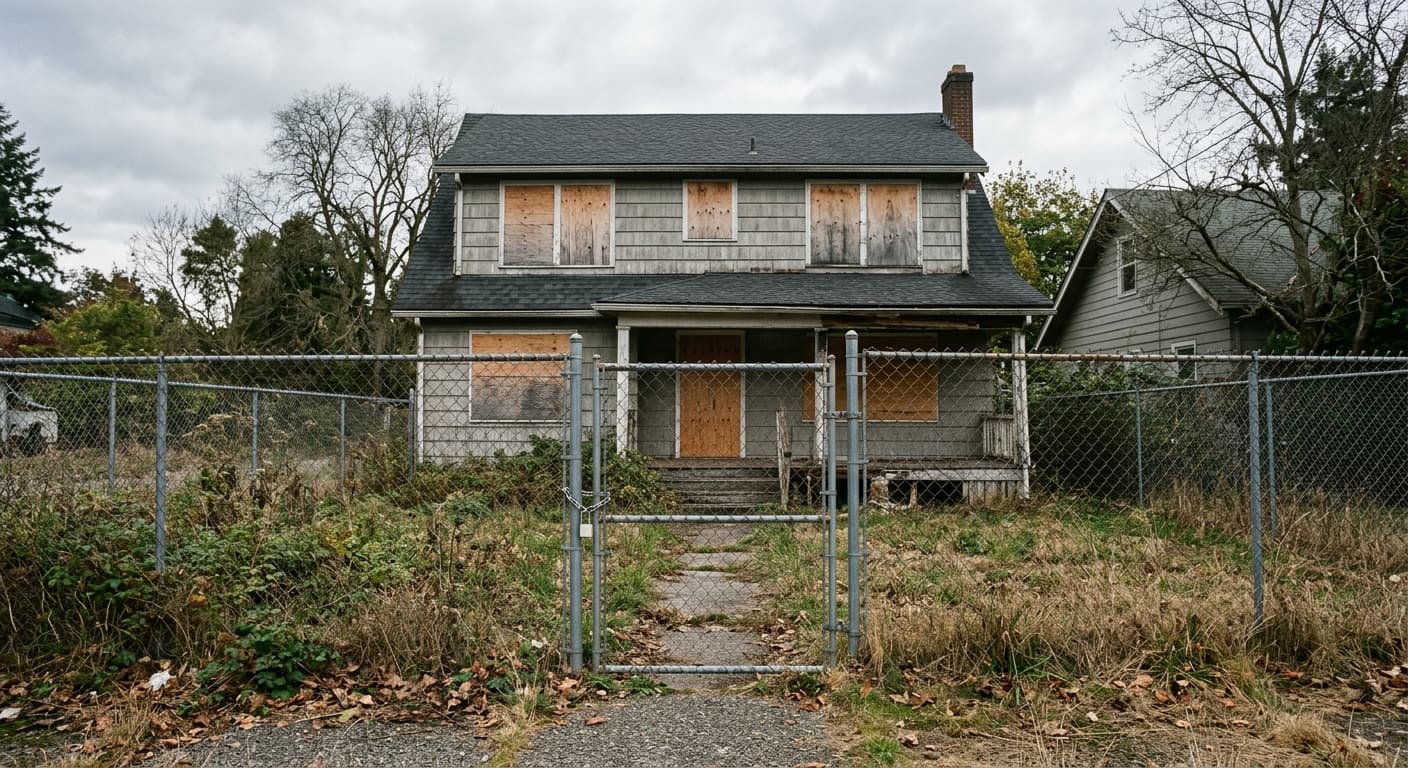
Missouri property owners and occupants face a 10-year clock under state law: a person who occupies land openly, continuously, and without the owner's permission for a decade may acquire legal title through adverse possession.
Information last verified on May 27, 2026. This article provides general legal information, not legal advice.
Jurisdiction scope: This page covers Missouri state law only. For a comparison of all 50 states, see the national squatters rights guide.
Adverse Possession in Missouri: Period and Elements
The 10-Year Statutory Period
Missouri's adverse possession clock is set by Mo. Rev. Stat. § 516.010, which bars any action to recover land unless the plaintiff, or someone through whom the plaintiff claims, was seized or in possession of the property within 10 years before filing suit. In practice, this means a squatter who satisfies all five elements for a continuous 10-year period can defend against an ejectment action and, in an affirmative suit, obtain a court decree quieting title in their favor.

Missouri has no shortened period for claimants holding color of title (a defective deed or other instrument that appears to convey ownership). The 10-year rule applies uniformly regardless of whether the claimant holds such a document. Missouri also imposes no tax-payment requirement: unlike Arizona, California, and several other states, paying property taxes is neither a statutory element nor a factor that shortens the limitation period under Missouri law.
The Five Elements
Missouri courts require every adverse possession claimant to establish five elements by a preponderance of the evidence, the ordinary civil standard. As Teson v. Vasquez, 561 S.W.2d 119 (Mo. Ct. App. 1977), puts it, the claimant "has the burden of proving by the preponderance of the evidence the existence for the entire statutory period of each and every element of adverse possession." All five must run concurrently for the full statutory period.
1. Actual Possession. The claimant must physically occupy and use the land in a manner consistent with its nature. For rural land this may mean farming or fencing; for urban parcels it typically means residing on or improving the property. Merely walking across land or occasionally mowing it does not constitute actual possession.
2. Hostile (Claim of Right). Possession must be hostile to the true owner's title, meaning the occupant holds the land without the owner's permission and treats it as their own. Missouri courts have clarified that "hostile" does not require ill will toward the owner; it requires only that the possession be inconsistent with the owner's rights. Permissive use: such as a neighbor's license to use a strip of land: breaks the hostility element and restarts the clock if permission is later withdrawn.
3. Open and Notorious. The occupation must be visible and obvious, giving a reasonably attentive owner notice that someone is claiming the parcel. Fencing, construction, cultivation, or continuous residence satisfies this element. Concealed or underground encroachments typically do not.
4. Exclusive. The claimant must hold the land to the exclusion of the general public and of the true owner. Sharing possession with the owner: even informally: destroys exclusivity. Two adverse possessors may hold jointly if they are in privity with each other (for example, as co-occupants acting under a common claim), but neither may share dominion with the titled owner.
5. Continuous. Possession must be uninterrupted for the entire 10-year period. Continuity does not demand the occupant be present every day; seasonal use of vacation or agricultural land can qualify if it matches the normal pattern of use for that type of property. Missouri permits "tacking," where a claimant adds the continuous possession period of a prior occupant in privity (such as a predecessor who sold or conveyed the claim) to their own period to reach 10 years.
Leading Missouri Authority
Missouri appellate courts have applied the five-element test in numerous cases. The reporters include Teson v. Vasquez, 561 S.W.2d 119 (Mo. Ct. App. 1977), a frequently cited Court of Appeals decision articulating the elements as they apply under § 516.010. Property owners and practitioners researching current standards should review recent Missouri Court of Appeals and Supreme Court decisions citing § 516.010 directly.
How to Remove a Squatter in Missouri
Step 1: Confirm the Occupant Has No Legal Right to Be There
Before filing any court action, owners should verify that no lease, license, or other agreement gives the occupant a right of possession. If the occupant was once a tenant whose lease has expired, the procedure is the same but the notice requirements under Ch. 535 (landlord-tenant law) may apply alongside Ch. 534.

Step 2: Make a Written Demand to Vacate
Missouri law does not require a demand before filing a forcible entry and detainer (FED) action against a pure trespasser, but issuing a written demand is strongly advisable. For properties that passed through foreclosure, Mo. Rev. Stat. § 534.030 requires at least 10 business days' written notice to vacate before an unlawful detainer action may be commenced, but subsection 2 limits that duty to an occupant "who was a residential tenant" before the foreclosure and who is "not in violation of the provisions of section 441.020." A squatter is neither, so this notice period does not run in favor of a pure trespasser. Notice may be delivered by certified mail (if the occupant's name is known), regular mail addressed to "occupant," or by posting on the residence door.
Step 3: File in Associate Circuit Court
Missouri's FED remedy is governed by Mo. Rev. Stat. ch. 534 (forcible entry and detainer). The owner files a verified complaint in the associate circuit court for the county where the property is located. The complaint must allege that the defendant is wrongfully holding the property and must request a writ of possession. Filing fees vary by county.

Step 4: Service of Summons and Hearing
The court issues a summons setting a hearing date. The summons must be personally served on the occupant. If the occupant fails to appear, the court may enter a default judgment for possession. If the occupant appears and contests the case, a hearing is held at which both parties present evidence. Jury trials are available in FED proceedings, though rarely used in straightforward squatter cases.
Step 5: Writ of Possession and Sheriff's Removal
If the owner prevails, the court issues a judgment for possession. The owner then requests a writ of execution (writ of possession), which directs the county sheriff to remove the occupant and restore the owner to possession. Under no circumstances may the owner remove the occupant by force, change locks, remove personal property, or cut utilities without a court order. Doing so exposes the owner to civil liability and potential criminal charges under Missouri's forcible entry statutes.
The 2024 Expedited Removal Law (§ 534.602)
Missouri enacted House Bill 2062 in 2024, effective August 28, 2024, creating Mo. Rev. Stat. § 534.602, an expedited process separate from the standard Ch. 534 forcible entry and detainer action. A property owner files a verified petition in the county where the property is located; on a showing of good cause, the court must immediately issue an ex parte order to remove the unlawful occupant, with a hearing held within 48 hours of filing unless good cause is shown for a delay. Once the court grants the order, the sheriff enforces it by removing the occupant. Eligibility is narrow: the verified petition must establish that the property has not been leased to any person for three consecutive months, that the occupants are not current or former tenants of the property under any agreement with the owner, and that they are not immediate family members of the owner. The former-tenant bar is categorical, so this procedure is unavailable against anyone who once rented the property, no matter how long ago the tenancy ended. A person removed without just cause may seek restored possession, actual damages to personal property, statutory damages of $1,000, and court costs. This gives Missouri property owners a faster, court-supervised alternative to the standard Ch. 534 process described above.
Disclaimer: This article provides general legal information about Missouri squatters rights and adverse possession laws. It is not legal advice and does not create an attorney-client relationship. Laws may change; always verify current statutes and consult a licensed Missouri real estate attorney for guidance on your specific situation.
Sources
- Mo. Rev. Stat. § 516.010 (adverse possession, 10-year limitation period), revisor.mo.gov
- Mo. Rev. Stat. ch. 534 (forcible entry and detainer), revisor.mo.gov
- Mo. Rev. Stat. § 534.030 (unlawful detainer; foreclosure notice requirement), revisor.mo.gov
- Mo. Rev. Stat. § 534.602 (expedited ex parte removal of unlawful occupants; H.B. 2062, eff. 8/28/2024), revisor.mo.gov
- Mo. Rev. Stat. ch. 535 (landlord-tenant actions; associate circuit court jurisdiction), revisor.mo.gov
- Teson v. Vasquez, 561 S.W.2d 119 (Mo. Ct. App. 1977)
For a nationwide comparison of squatter and adverse possession laws, see the national squatters rights guide.
Last updated: May 27, 2026.
Statutes cited reflect their in-force version as of May 27, 2026.
- Missouri AI Meeting Recording Laws
- Missouri Alimony Laws
- Missouri At-Will Employment Laws
- Missouri Car Accident Laws
- Missouri Car Seat Laws
- Missouri Child Custody Laws
- Missouri Child Support Laws
- Missouri Common Law Marriage Laws
- Missouri Dashcam Laws
- Missouri Data Privacy Laws
- Missouri Deepfake Laws
- Missouri Divorce Laws
- Missouri Dog Bite Laws
- Missouri Drone Laws
- Missouri Emancipation Laws
- Missouri Employee Monitoring Laws
More Missouri Laws
Frequently Asked Questions
How long does a squatter have to stay in Missouri to claim adverse possession?
Missouri requires 10 years of continuous, hostile, open, exclusive, and actual possession under Mo. Rev. Stat. § 516.010. There is no shorter period for claimants holding color of title.
Does a squatter in Missouri need to pay property taxes?
No. Missouri does not require adverse possession claimants to pay property taxes. Tax payment is neither a statutory element nor a factor that shortens the 10-year period.
Can I forcibly remove a squatter from my Missouri property?
No. Self-help removal: such as changing locks, removing belongings, or shutting off utilities: is illegal in Missouri. Owners must file a forcible entry and detainer action in associate circuit court under Mo. Rev. Stat. ch. 534 and obtain a writ of possession enforced by the sheriff.
What court handles squatter removal in Missouri?
Forcible entry and detainer (unlawful detainer) cases are filed in associate circuit court in the county where the property is located. Landlord-tenant disputes may also proceed under Ch. 535 in counties with specialized landlord-tenant courts, such as the City of St. Louis and Jackson County.
How long does it take to remove a squatter in Missouri?
Timeline depends on court scheduling and whether the occupant contests the case. An uncontested case can conclude in a few weeks from filing to writ of possession. A contested hearing or appeal can extend the process to several months.
Does Missouri have an expedited squatter removal law?
Yes. Missouri enacted HB 2062 in 2024 (effective August 28, 2024), codified at Mo. Rev. Stat. § 534.602. It lets a property owner obtain a court-ordered ex parte removal, with a hearing required within 48 hours of filing unless the court finds good cause for a delay, after which the sheriff enforces the order. It is not available against current or former tenants of the property, or against the owner's immediate family. This is faster than the standard Ch. 534 forcible entry and detainer process, though it still requires a court order rather than a law-enforcement-only removal.
What is 'tacking' and does Missouri allow it?
Tacking is adding the continuous possession periods of successive occupants in privity to reach the 10-year statutory minimum. Missouri courts recognize tacking where the claimant can show a direct chain of possession (for example, a conveyance or inheritance) from the prior occupant.
Updates
Corrected the adverse possession burden of proof to a preponderance of the evidence per Teson v. Vasquez, and tightened the descriptions of the 2024 expedited removal law's eligibility limits, its 48-hour hearing rule, and the foreclosure notice under section 534.030.
Corrected a false claim that Missouri has no expedited squatter-removal law: Missouri enacted HB 2062 in 2024 (Mo. Rev. Stat. § 534.602), which lets a property owner obtain a same-day ex parte court order for removal, enforced by the sheriff, without a full eviction trial.
Independently fact-checked against the cited primary sources; governing law re-checked for recent changes
Governing law re-checked for recent changes
Reviewed and approved by an editor
The Law Behind This Article
This article rests on the statutory provisions below, held in our own legal record and retrieved from the official source. Tap a section to read the operative text.
Revised Statutes of Missouri, Title XXXV (CIVIL PROCEDURE AND LIMITATIONS), Chapter 516
§ 516.010Actions for recovery of lands commenced, when.In forcecited in 2 of our articles
No action for the recovery of any lands, tenements or hereditaments, or for the recovery of the possession thereof, shall be commenced, had or maintained by any person, whether citizen, denizen, alien, resident or nonresident of this state, unless it appear that the plaintiff, his ancestor, predecessor, grantor or other person under whom he claims was seized or possessed of the premises in question, within ten years before the commencement of such action.
Official text (excerpt) · last checked 2026-09-08 · Read the full text in our law library · Verify at revisor.mo.gov
Cited in 95 court opinions in our collectionLatest citing opinion in our collection: 2025
In the courts (editorial summary, independently checked):Cunningham upheld rejection of an adverse-possession claim because credited evidence showed shared possession. Newton held title vested by ten years of adverse possession before a trust deed. General Refractories held admitted exclusion and a 1969 denial of mineral rights barred the 1981 suit under § 516.010.
Opinions citing this section in our collection:
- Cunningham v. Hughes (Missouri Court of Appeals 1994, 889 S.W.2d 864)✓Hughes claimed 18 acres through grazing, fence repairs, hunting and timber cutting. The trial court credited the owners’ competing acts of possession. Deferring to those findings, the appeals court upheld rejection of Hughes’s § 516.010 claim for lack of exclusivity.
- Newton v. Wimsatt (Missouri Court of Appeals 1990, 791 S.W.2d 823)✓After deeding land to her sister in 1959, Jeanette reacquired title by more than ten years of adverse possession before her 1980 trust deed. The court upheld that trust and remanded for title in Paul and Cleda Newton, who received the property after her death.
- General Refractories Co. v. Raack (Missouri Court of Appeals 1984, 674 S.W.2d 97)✓Mineral claimants admitted that the Raacks fenced the land and excluded them after a 1969 letter denying their rights. On those undisputed facts, the court held § 516.010 barred the 1981 suit despite no mining by the Raacks, and affirmed summary judgment.
Identified automatically from the court opinions citing this section — not a ranking of which case controls.
Also relied on in: Missouri Statute of Limitations: Filing Deadlines by Case Type
Revised Statutes of Missouri, Title XXXVI (STATUTORY ACTIONS AND TORTS), Chapter 534
§ 534.602Unlawful occupancy of residential dwelling, removal of — definitions — petition, procedure — ex parte order, effect of — permanent exclusion, when — sheriff enforcement.In force
1. For purposes of this section, the following terms mean: (1) "Petitioner", the property owner, or an authorized agent of a property owner, of property containing a residential dwelling who has filed a verified petition under the provisions of this section; (2) "Respondent", the person or persons unlawfully occupying property containing a residential dwelling, against whom a verified petition has been filed; (3) "Unlawful occupant" or "unlawful occupants", any person or persons who detain, occupy, or trespass on property containing a residential dwelling without the permission of the property owner, who otherwise have no legal right to occupy the property under state law, and who are not afforded any protections provided to a tenant under state law. 2. Notwithstanding any provision of this chapter to the contrary, a property owner or his or her authorized agent may seek relief for the removal of a person or persons unlawfully occupying property containing a residential dwelling under this section by filing a verified petition in the county or city not within a county where the property is located.
Official text (excerpt) · last checked 2026-07-31 · Read the full text in our law library · Verify at revisor.mo.gov
§ 534.030Unlawful detainer defined — foreclosure, notice to tenants, procedure.In force
1. When any person willfully and without force holds over any lands, tenements or other possessions, after the termination of the time for which they were demised or let to the person, or the person under whom such person claims; or after a mortgage or deed of trust has been foreclosed and the person has received written notice of a foreclosure; or at least ten business days have elapsed after the date of the notice described in subsection 3 of this section; or when premises are occupied incident to the terms of employment and the employee holds over after the termination of such employment; or when any person wrongfully and without force, by disseisin, shall obtain and continue in possession of any lands, tenements or other possessions, and after demand made, in writing, for the delivery of such possession of the premises by the person having the legal right to such possession, or the person's agent or attorney, shall refuse or neglect to vacate such possession, such person is guilty of an "unlawful detainer".
Official text (excerpt) · last checked 2026-07-31 · Read the full text in our law library · Verify at revisor.mo.gov
Cited in 24 court opinions in our collectionLatest citing opinion in our collection: 2026
Opinions citing this section in our collection:
- Henze v. Shell Oil Co. (Missouri Court of Appeals 1988, 758 S.W.2d 93)“…an unlawful detainer action under the first subdivision of Section 534.030 RSMo 1986. They did so in their capacity as…”
- Quirk v. Sanders (Missouri Court of Appeals 1984, 673 S.W.2d 850)“…the meaning of Missouri’s unlawful detainer statutes. See §§ 534.030 RSMo 1978 et seq. This failure, the Sanders…”
- Tower Properties Co. v. Allen (Missouri Court of Appeals 2000, 33 S.W.3d 684)“…the time for which they were demised or let to the person.” § 534.030, RSMo 1994. There can be no unlawful detentio…”
Identified automatically from the court opinions citing this section — not a ranking of which case controls.
Search our full record of US law — 2.1 million sections, every state + federal →
Sources and References
- Mo. Rev. Stat. § 516.010 - Actions for recovery of lands, ten-year limitation(revisor.mo.gov)
- Mo. Rev. Stat. ch. 534 - Forcible Entry and Detainer(revisor.mo.gov)
- Mo. Rev. Stat. § 534.030 - Unlawful detainer defined; foreclosure notice(revisor.mo.gov)
- Mo. Rev. Stat. ch. 535 - Landlord-Tenant Actions(revisor.mo.gov)
- Teson v. Vasquez, 561 S.W.2d 119 (Mo. Ct. App. 1977)(courtlistener.com)
- Mo. Rev. Stat. § 534.602 — Unlawful occupancy of residential dwelling, removal of (H.B. 2062, eff. 8/28/2024)(revisor.mo.gov).gov