
Colorado
Colorado Squatters Rights and Adverse Possession Laws (2026)
Independently fact-checked against primary sources (last audited August 18, 2026). · Reviewed by the RecordingLaw editorial team. · Law checked current as of August 18, 2026. · 1 primary source cited on this page. How we verify our legal content
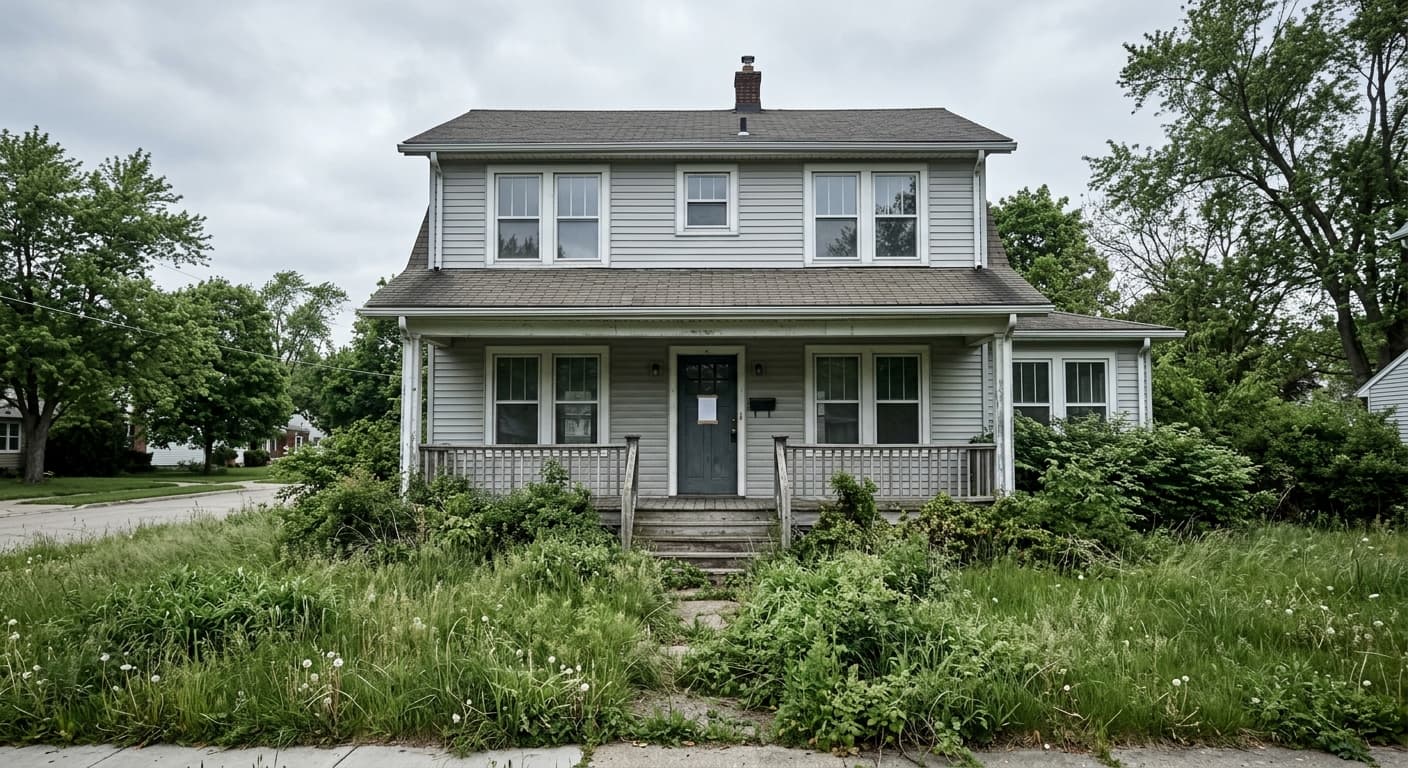
Colorado law requires a squatter to occupy property openly and continuously for 18 years before claiming title under adverse possession (C.R.S. § 38-41-101), or 7 years when the claimant holds color of title and has paid all property taxes throughout that period (C.R.S. § 38-41-108). Property owners generally remove squatters through the forcible entry and detainer (FED) process in county court under C.R.S. § 13-40-101 et seq., or, for a vacant residential property occupied by someone who has never had the owner's permission, through the faster removal process for unauthorized persons under C.R.S. § 13-40.1-101 et seq.
Information last verified on May 27, 2026. This article provides general legal information, not legal advice.
Jurisdiction scope: This page covers Colorado state law only. For a comparison of all 50 states, see the national squatters rights guide.
Adverse Possession in Colorado: The 18-Year and 7-Year Periods
Adverse possession is the legal doctrine that allows a person who openly occupies someone else's land, without the owner's permission, to eventually claim legal title through a court action. Colorado recognizes two distinct tracks.

The 18-Year General Rule (C.R.S. § 38-41-101)
Under C.R.S. § 38-41-101, a person cannot bring an action to recover real property unless they do so within 18 years after the cause of action accrues. In practice, this means a claimant who meets all five elements for 18 uninterrupted years can file a quiet-title lawsuit and ask a court to transfer ownership.
Colorado courts require the claimant to prove every one of the following five elements for the entire statutory period:
- Actual possession: The claimant physically occupies or uses the land in a manner consistent with its character (farming, building, fencing, and similar uses).
- Open and notorious: The occupation is visible and obvious, giving the true owner constructive notice.
- Hostile: Possession occurs without the owner's permission. In Colorado, hostility is assessed objectively: it does not require malice or bad intent, but it does mean the claimant treats the land as their own.
- Continuous: Possession continues without interruption for the full statutory period. Seasonal or periodic use can satisfy this element if it mirrors how a typical owner would use that type of land.
- Exclusive: The claimant does not share possession with the public or with the true owner.
If the owner successfully interrupts any element, for example by giving written permission that converts hostile possession into a license, the clock resets.
The 7-Year Color-of-Title Track (C.R.S. § 38-41-108)
C.R.S. § 38-41-108 provides a shorter 7-year period for claimants who satisfy two additional conditions on top of the five elements above:
- Color of title: The claimant holds a written instrument that appears to convey ownership but is legally defective (for example, a deed with a technical flaw, an unrecorded deed, or a tax deed later found invalid). The instrument must describe the land with reasonable certainty.
- Payment of all taxes: The claimant must have paid every general property tax assessed against the land during the entire 7-year period.
Both conditions must be met throughout the full 7-year period. A claimant who has color of title but missed even one year of tax payment cannot use the shorter track and must rely on the 18-year period instead.
The 2008 Good-Faith Reform (HB 08-1148)
Before 2008, Colorado adverse possession law was silent on the claimant's state of mind. A person who knowingly occupied a neighbor's land with the intent to claim it could still succeed if they ran out the clock on the statutory period.
The Colorado General Assembly changed that with HB 08-1148, enacted in 2008. The reform added a good-faith belief requirement: a court must find that the claimant held a good-faith belief that the property was theirs. If a claimant knew, or reasonably should have known, that the land belonged to another person, they cannot prevail on an adverse possession claim.
HB 08-1148 also gave courts equitable power to order monetary compensation to the dispossessed owner, but only as a supplement to a completed title transfer, not as an alternative to it. Once a court determines that a claimant has satisfied the statutory elements and enters the order awarding title to the adverse possessor, it may hold a separate evidentiary hearing and award the original owner fair compensation for the land in addition to that title transfer. This compensation remedy was intended to soften the result of an innocent property owner losing land through no fault of their own, not to let a court substitute a payout for the loss of title.
How to Remove a Squatter in Colorado
Colorado property owners must follow the legal FED process to remove a squatter. Self-help remedies, such as changing the locks, removing the squatter's belongings, or shutting off utilities, are illegal under Colorado law and can expose the owner to civil liability.

Step 1: Serve a Written Notice to Quit
Before filing in court, the owner should serve the occupant with a written demand to vacate. Which notice the law requires, and whether it requires one at all, depends on which ground under C.R.S. § 13-40-104(1) the occupant falls under.
An occupant who entered without the owner's permission and has never had a rental agreement falls under C.R.S. § 13-40-104(1)(a), which covers entry "without right or title, into any vacant or unoccupied lands or tenements." That subsection prescribes no pay-or-quit notice period, so no fixed statutory waiting period runs before the owner may file.
The 3-day figure often repeated online does not come from that subsection. C.R.S. § 13-40-104(1)(d) applies to a tenant or lessee who holds over after defaulting on rent under an existing agreement, and it requires ten days' notice in writing; three days applies only to a nonresidential agreement or an employer-provided housing agreement, and five days to an exempt residential agreement. A separate 3-day figure in C.R.S. § 13-40-107(2)(d) applies to ending a tenancy at will or a tenancy of less than one month, not to a trespasser.
When a demand is served, C.R.S. § 13-40-106 governs its contents: it must be in writing, specify the grounds for the owner's right to possession including a specific description of the alleged violation, describe the premises, state the date and time the premises must be delivered up, and be signed by the person claiming possession or their agent or attorney. Serving a notice under the wrong subsection is a real dismissal risk in an FED case, so an owner unsure which ground applies should get advice from a Colorado attorney before serving.
Step 2: File an FED Complaint in County Court
If the occupant does not leave, the owner files a Complaint for Forcible Entry and Detainer in the county court for the county where the property is located. Colorado county courts have original jurisdiction over FED actions. Filing fees are modest, and the court issues a summons setting a hearing date, typically within days of filing.
Step 3: Attend the Hearing
At the hearing, the owner presents evidence that the occupant has no legal right to be on the property. The squatter may appear and contest the action. If the owner prevails, the court issues a Judgment for Possession.
Step 4: Obtain and Execute a Writ of Restitution
After judgment, the owner requests a Writ of Restitution. The county sheriff executes the writ and physically removes the squatter if they have not left voluntarily. Only the sheriff, not the property owner, may physically carry out the removal.

Expedited Removal for Unauthorized Persons (C.R.S. § 13-40.1-101 et seq.)
Colorado has had a faster, court-based removal path since 2018: the Protecting Homeowners and Deployed Military Personnel Act (SB18-015), codified at C.R.S. § 13-40.1-101 et seq. It applies narrowly, to an 'unauthorized person' occupying uninhabited or vacant residential premises with no current or prior agreement or consent from the owner. The owner or an authorized agent files a complaint and a verified motion for a temporary mandatory injunction in county court. The court must hold a hearing no later than the next court day after filing. If the court grants the motion, it issues a writ of restitution, and the sheriff must remove the occupant within 24 hours of receiving the order and bar the occupant's return for 14 days. If the court finds the occupant does not meet the definition of an 'unauthorized person,' for example because the occupant ever had the owner's consent or a rental agreement, the owner must instead pursue the standard FED process below. Because this remedy is limited to vacant, uninhabited residential premises with an occupant who has never had the owner's consent, it does not reach every squatter situation, and the ordinary FED process under C.R.S. § 13-40-101 et seq. remains available for cases outside that scope.
Legal disclaimer: This article provides general legal information about Colorado squatter and adverse possession law. It is not legal advice. Laws change, and individual circumstances vary. Consult a lawyer licensed in Colorado for advice about your specific situation.
National squatters rights guide
Last updated: May 27, 2026.
Statutes cited reflect their in-force version as of May 27, 2026.
More Colorado Laws
Frequently Asked Questions
How long does it take to claim adverse possession in Colorado?
The general period is 18 years of continuous, open, hostile, actual, and exclusive possession under C.R.S. § 38-41-101. A claimant who holds color of title and pays all property taxes can use the shorter 7-year period under C.R.S. § 38-41-108.
What did Colorado's 2008 adverse possession reform change?
HB 08-1148 added a good-faith belief requirement. A claimant who knew or reasonably should have known the land belonged to someone else cannot succeed on an adverse possession claim. The reform also lets courts award monetary compensation to the dispossessed owner.
Can a squatter in Colorado ever gain legal rights?
Yes. If a squatter openly and continuously occupies land for 18 years (or 7 years with color of title and paid taxes), holds a good-faith belief the land is theirs, and satisfies all five adverse possession elements, they can file a quiet-title action to claim ownership.
What notice must a Colorado property owner give before evicting a squatter?
It depends on the ground for removal. An occupant who entered without permission and never had a rental agreement falls under C.R.S. § 13-40-104(1)(a), covering entry without right or title into vacant or unoccupied lands or tenements, which prescribes no notice period before the owner files an FED complaint in county court. C.R.S. § 13-40-104(1)(d), often miscited as a 3-day notice, instead covers a tenant who holds over after defaulting on rent and requires ten days' notice in writing, with three days only for a nonresidential or employer-provided housing agreement and five days for an exempt residential agreement. Any written demand that is served must meet the content requirements of C.R.S. § 13-40-106.
Can a Colorado landlord change the locks to remove a squatter?
No. Self-help removal, including changing locks, removing belongings, or cutting off utilities, is illegal in Colorado. The owner must use the FED court process and, if a Writ of Restitution is issued, have the county sheriff carry out the removal.
Does paying property taxes prevent adverse possession in Colorado?
Paying taxes is not a complete defense under the 18-year track; a claimant can still prevail without paying taxes over 18 years. However, payment of taxes is required for the shorter 7-year track under C.R.S. § 38-41-108. Consistent tax payment by the true owner is strong evidence of ownership.
Did Colorado pass a new squatter-removal law in 2024 or 2025?
Not a new one, but Colorado's expedited removal statute for unauthorized persons on vacant residential property is older than the 2023-2025 wave seen in states like Florida and Georgia: it dates to 2018 (C.R.S. § 13-40.1-101 et seq., SB18-015). A county court must hold a hearing within one court day of the owner's filing, and if it grants a temporary mandatory injunction, the sheriff must remove the occupant within 24 hours. It applies only to a vacant, uninhabited residential property occupied by someone who has never had the owner's consent; other situations still require the standard FED process under C.R.S. § 13-40-101 et seq.
Updates
Corrected the notice requirements for removing a squatter: a person who entered without right or title falls under C.R.S. § 13-40-104(1)(a), which sets no pay-or-quit notice period, and the 3-day figure the page previously cited under § 13-40-104(1)(d) actually applies to a tenant in rent default, where the residential notice is ten days.
Added coverage of Colorado's 2018 expedited removal statute for unauthorized persons on vacant residential property (C.R.S. § 13-40.1-101 et seq.), which the page previously and incorrectly said did not exist in three places.
Independently fact-checked against the cited primary sources; governing law re-checked for recent changes
Corrected the description of Colorado's 2008 adverse-possession compensation remedy: C.R.S. § 38-41-101(5)(a) allows a compensation hearing only after title has already been awarded to the adverse possessor, not as a substitute for the title transfer.
Governing law re-checked for recent changes
Reviewed and approved by an editor
The Law Behind This Article
This article rests on the statutory provisions below, held in our own legal record and retrieved from the official source. Tap a section to read the operative text.
Colorado Revised Statutes, Title 38: Property - Real and Personal
§ 38-41-101Limitation of eighteen yearsIn force
(1) No person shall commence or maintain an action for the recovery of the title or possession or to enforce or establish any right or interest of or to real property or make an entry thereon unless commenced within eighteen years after the right to bring such action or make such entry has first accrued or within eighteen years after he or those from, by, or under whom he claims have been seized or possessed of the premises. Eighteen years' adverse possession of any land shall be conclusive evidence of absolute ownership. (2) The limitation provided for in subsection (1) of this section shall not apply against the state, county, city and county, city, irrigation district, public, municipal, or quasi-municipal corporation, or any department or agency thereof.
Official text (excerpt) · last checked 2026-09-08 · Read the full text in our law library · Verify at olls.info
Cited in 8 court opinions in our collectionLatest citing opinion in our collection: 2020
In the courts (editorial summary, independently checked):San Juan Basin applied contract limitations, not § 38-41-101’s 18-year period, to a contract-based mineral-title dispute. Wingers rejected title because possession could not mature before the United States claimed an interest. Dejean enforced the 18-year rule only against owners lacking a res judicata defense.
Opinions citing this section in our collection:
- San Juan Basin Consortium, Ltd. v. Enervest San Juan Acquisition Ltd. Partnership (District Court, D. Colorado 1999, 67 F. Supp. 2d 1213)✓A federal district court treated a mineral-title claim based on contract assignments as contractual, so § 38-41-101’s 18-year real-property period was not the governing limitation.
- Wingers v. Sweet (Court of Appeals for the Tenth Circuit 2006, 190 F. App'x 629)✓Even assuming the claimant’s acts were possession, title could not mature until 1995, after the United States asserted its interest in 1994. The court did not decide the separate county-ownership issue.
- Dejean v. Grosz Ex Rel. Grosz (Court of Appeals for the Tenth Circuit 2016, 645 F. App'x 754)✓Duplex use violated a single-family covenant for 18 years. The court barred enforcement by the Rodells, but dismissed the claim against Grosz because a prior judgment was res judicata.
Identified automatically from the court opinions citing this section — not a ranking of which case controls.
§ 38-41-108Rights in possession seven years - color of title and payment of taxesIn force
Every person in the actual possession of lands or tenements, under claim and color of title, made in good faith, who for seven successive years continues in such possession and also during said time pays all taxes legally assessed on such lands or tenements shall be held and adjudged to be the legal owner of said lands or tenements to the extent and according to the purport of his paper title. All persons holding under such possession by purchase, devise, or descent, before said seven years have expired, who continue such possession and continue to pay the taxes as provided in this section, so as to complete the possession and payment of taxes for the term, provided in this section, shall be entitled to the benefit of this section.
Official text (excerpt) · last checked 2026-07-29 · Read the full text in our law library · Verify at olls.info
Cited in 6 court opinions in our collectionLatest citing opinion in our collection: 2024
Opinions citing this section in our collection:
- United States v. Novotny (District Court, D. Colorado 2001, 184 F. Supp. 2d 1071)“…property under C.R.S. § 88-41-108 or § 38-41-111(1). C.R.S. § 38-41-108 provides that a party who is in actual…”
- Wingers v. Sweet (Court of Appeals for the Tenth Circuit 2006, 190 F. App'x 629)“…lorado’s seven-year adverse possession statute also fails. Colo. Rev. Stat. § 38-41-108 provides that a person “in actual poss…”
- Dolan v. Madison (Court of Appeals for the Tenth Circuit 2006, 197 F. App'x 724)“…the record to establish such a claim. Similarly, although Colo. Rev. Stat. §§ 38-41-108 and 38-41-109 recognize claims of adve…”
Identified automatically from the court opinions citing this section — not a ranking of which case controls.
Colorado Revised Statutes, Title 13: Courts and Court Procedure
§ 13-40-101Forcible entry and detainer definedIn force
(1) If any person enters upon or into any lands, tenements, mining claims, or other possessions with force or strong hand or multitude of people, whether any person is actually upon or in the same at the time of such entry, or if any person by threats of violence or injury to the party in possession or by such words or actions as have a natural tendency to excite fear or apprehension of danger gains possession of any lands, tenements, mining claims, or other possessions and detains and holds the same, such person so offending is guilty of a forcible entry and detainer within the meaning of this article. (2) If any person enters peaceably upon any lands, tenements, mining claims, or other possessions, whether any person is actually in or upon the same at the time of such entry and by force turns the party in possession out or, by threats or by words or actions which have a natural tendency to excite fear or apprehension of danger, frightens the party out of possession and detains and holds the same, such person so offending is guilty of a forcible detainer within the meaning of this article.
Official text (excerpt) · last checked 2026-07-29 · Read the full text in our law library · Verify at olls.info
Cited in 3 court opinions in our collectionLatest citing opinion in our collection: 2026
Opinions citing this section in our collection:
- Sladek v. dePlomb (District Court, D. Colorado 1997, 981 F. Supp. 1364)“…Defendant filed a forcible entry and detainer action, under Colo. Rev.Stat. 13-40-101, et seq., against plaintiffs in El Pa…”
- In Re Lonepine Corp. (United States Bankruptcy Court, D. Colorado 1995, 184 B.R. 370)“…ith applicable Colorado statutory requirements set forth in C.R.S. § 13-40-101, et seq. and because the “…”
- Marcus A. Murphy v. Harmony Communities California (District Court, D. Colorado 2026)“…ges that, under Colorado’s Forcible Entry and Detainer Act, Colo. Rev. Stat. § 13-40-101, et seq., his full payment should have…”
Identified automatically from the court opinions citing this section — not a ranking of which case controls.
§ 13-40.1-101Removal of unauthorized persons - definitionsIn force
(1) As used in this article 40.1, unless the context otherwise requires: (a) Residential premises means a dwelling unit, the structure of which the unit is a part, and any immediately surrounding property that is owned by or subject to the exclusive control of the same person as the dwelling unit itself. (b) (I) Unauthorized person means a person who occupies an uninhabited or vacant residential premises without any current or prior agreement or consent of the owner or an authorized agent of the owner, whether written or oral, concerning the use of the residential premises. (II) Unauthorized person does not include: (A) A relative of the property owner or a relative of an authorized agent of the property owner, including a spouse, descendant, stepchild, parent, stepparent, grandparent, brother, sister, uncle, or aunt, whether related by whole or half blood or by adoption; (B) A person or persons from which the owner or an authorized agent of the owner has accepted money or anything of value; or (C) A person who was previously given permission to enter and remain on the premises.
Official text (excerpt) · last checked 2026-07-29 · Read the full text in our law library · Verify at olls.info
Search our full record of US law — 2.1 million sections, every state + federal →
Sources and References
- C.R.S. § 38-41-101 — Limitation for recovery of real property (18-year adverse possession period)(leg.colorado.gov)
- C.R.S. § 38-41-108 — Adverse possession with color of title and payment of taxes (7-year period)(leg.colorado.gov)
- C.R.S. § 13-40-101 et seq. — Forcible Entry and Detainer(leg.colorado.gov)
- HB 08-1148 — An Act Concerning Adverse Possession (good-faith requirement and compensation remedy)(leg.colorado.gov)
- Colorado Judicial Branch — County Court Eviction Self-Help(coloradojudicial.gov)
- C.R.S. § 13-40.1-101 et seq. — Removal of Unauthorized Persons (SB18-015, 2018)(leg.colorado.gov).gov
- C.R.S. § 13-40-104 (unlawful detention defined), § 13-40-106 (written demand), § 13-40-107 (notice to terminate tenancy) — Colorado Revised Statutes 2026, Office of Legislative Legal Services(olls.info)