Can a Self-Driving Car Get a Ticket? State Rules (2026)
Independently fact-checked against primary sources (last audited September 29, 2026). · 8 primary sources cited on this page. How we verify our legal content
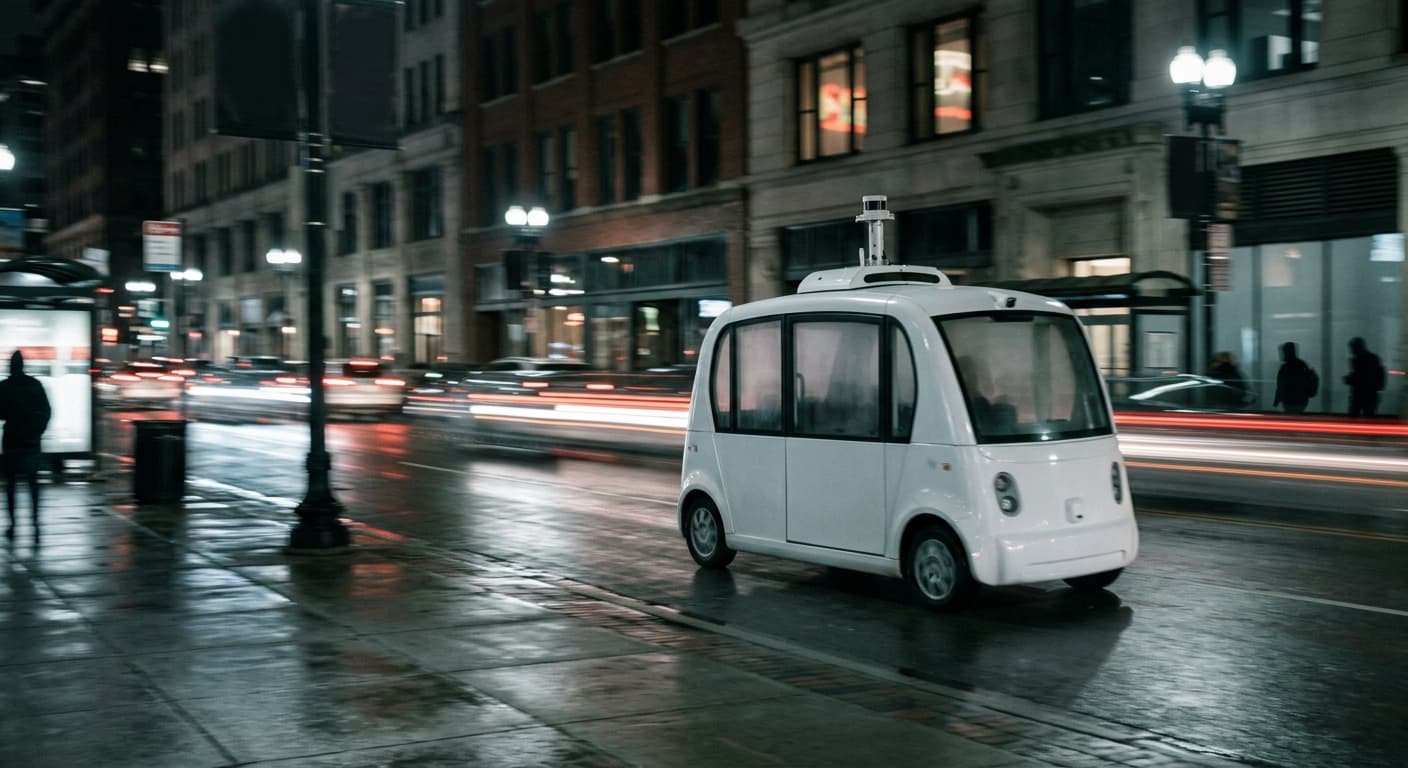
Yes, in a growing number of states a driverless car can be ticketed, but the ticket rarely lands on the car. Depending on the state, it goes to the company that holds the driverless permit or to the vehicle's owner. In California, since July 1, 2026, it arrives as a "notice of autonomous vehicle noncompliance" sent to the manufacturer instead of a traditional citation. Florida's statute treats the automated driving system as the vehicle's operator but does not say who receives a ticket at all.
This page covers US state law on traffic citations for vehicles running an automated driving system with no human driver. It reflects statutes as of September 2026. For the full state-by-state picture, see the self-driving car laws hub.
Can a driverless car actually get a ticket?
It can, but only where a state has written rules for it. Traffic codes were drafted around a human driver, so each state that allows driverless operation has had to decide what enforcement looks like when nobody is at the wheel. They have reached several different answers.
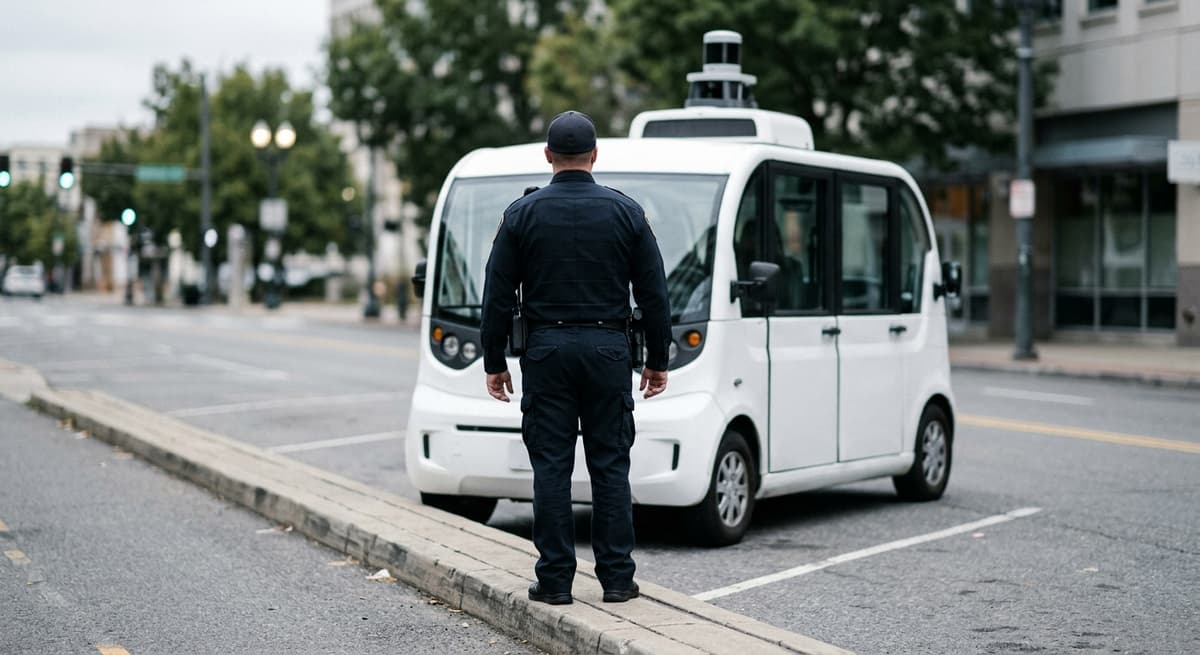
Three questions separate those answers. Who receives the paper: the company, the owner, or nobody named? Is it a real citation or a different kind of notice? And what does the company risk, a fine or its permit to operate? The table below compares the states covered on this page.
| State | Who receives it | What the statute says | Consequence stated in the text |
|---|---|---|---|
| California | The manufacturer | A peace officer may issue a notice of autonomous vehicle noncompliance (Veh. Code 38752) | Manufacturer must forward it to the DMV; failing to do so can affect its driverless permit. No fine or points in the statute or DMV memo |
| Texas | The authorization holder, or otherwise the owner | The holder or owner "shall be issued any citation" (Transp. Code 545.454(b)) | Ordinary citation; separate misdemeanor for unauthorized commercial driverless operation |
| Arizona | The person who filed the statement for the vehicle | That person "may be issued a traffic citation or other applicable penalty" (A.R.S. 28-9702) | Citation or other penalty |
| Pennsylvania | The certificate holder | Officer "shall charge the certificate holder" (75 Pa.C.S. 8510.1) | Charge under Title 75 |
| Florida | Not stated | The engaged system is deemed the operator (Fla. Stat. 316.85) | The statute does not address citations |
California: a notice to the company, not a ticket
California has the newest and most discussed mechanism. Assembly Bill 1777 (2024) added Vehicle Code section 38752, which defines a "notice of autonomous vehicle noncompliance" as a notice issued by a peace officer that identifies "an alleged violation of this code or an alleged violation of a local traffic ordinance" by an autonomous vehicle "while the autonomous technology is engaged." The notice must also state the date, time and location, and the vehicle's license plate number.
The section did not take effect on the bill's own date. It stayed inoperative "until the department issues regulations addressing notices of autonomous vehicle noncompliance." Those DMV regulations are now in the California Code of Regulations (title 13, sections 227.68 and 228.42), and the DMV's industry memo AVIM 2026-002, effective July 1, 2026, explains how the notice process works under them.
What the notice does and does not do
The notice goes to the manufacturer, not to a passenger, and not to a human who was never driving. Under section 38752, a manufacturer must give any issued notice to the DMV "within 72 hours of issuance, or within a timeframe otherwise determined by the department." The DMV memo shortens that deadline to 24 hours when the officer marks the notice for priority review because the vehicle's driving "presented a clear or potential danger or risk of injury to others."
The statute also limits what a notice means. It "shall not create a presumption that the autonomous vehicle is unsafe and shall not limit the manufacturer's ability to contest the nature or occurrence of an alleged violation identified in the notice."
Just as important is what the notice does not carry. Section 38752 does not mention a fine or license points. The DMV memo describes the consequence of a missed deadline as permit action: failing to submit a notice on time "may result in restriction, suspension or revocation of an autonomous vehicles driverless testing or deployment permit." In practice, the notice creates a paper trail for the regulator that controls the company's permit.
Which vehicles count as autonomous in California
The statute covers vehicles that meet Level 3, 4 or 5 of the SAE J3016 taxonomy. A Level 2 driver-assistance car is not handled through a notice to the manufacturer, because in those cars a human is still driving.
Emergency-scene duties that go with it
A separate section, Vehicle Code 38751, also became operative July 1, 2026. It requires a manufacturer's emergency phone line to be staffed so that calls are "picked up within 30 seconds by a remote human operator," and it says that "within two minutes of receiving an emergency geofencing message, a manufacturer shall issue direction to its fleet to leave or avoid the area identified." These duties sit alongside the notice process and matter mainly to police and firefighters at a scene.
A bill on this subject, Senate Bill 1246, passed the Legislature and was presented to the Governor on September 9, 2026. As of September 2026 it is pending and is not law.
Texas: a citation to the company or the owner
Texas has the clearest statement that a driverless vehicle gets an ordinary citation. Under Transportation Code section 545.454(b), as added by Senate Bill 2807, "the owner of, or if the vehicle is operating under an authorization issued by the department under Section 545.456, the authorization holder for, the automated motor vehicle shall be issued any citation for a violation of traffic or motor vehicle laws related to the vehicle."
In practice, when a commercial robotaxi operates under a state authorization, the company holding that authorization is cited. If no authorization is in play, the owner is.
Authorization and a plan for first responders
Texas also regulates who may run a driverless commercial service at all. Under section 545.455(c), a company that uses automated vehicles to carry property or passengers commercially without a human driver must hold an authorization from the Texas Department of Motor Vehicles. It must also give the Department of Public Safety a plan for how emergency responders should interact with the vehicle, covering matters such as communicating with fleet support, removing or towing the vehicle safely, and recognizing whether the automated system is engaged.
Operating without either one is an offense: "An offense under this subsection is a Class B misdemeanor," and "each day the person operates an automated motor vehicle in violation of Subsection (c) constitutes a separate offense."
The Texas Department of Motor Vehicles can also act against an authorization. If it determines that an authorized vehicle is not in safe operational condition and its operation has resulted in or is likely to result in serious bodily injury, it must first give the authorization holder a notice of intent and a reasonable period to correct the issues. If they are not corrected, it can suspend, revoke or cancel the authorization or restrict the vehicle's operation (Transp. Code 545.459). Separately, it can suspend an authorization immediately if the holder fails to keep its filed documents current (Transp. Code 545.456(f)).
Arizona: the company that filed the statement
Arizona ties citations to a filing. Before a fully autonomous vehicle operates without a human driver, the person submits a written statement to the Arizona Department of Transportation. Among other things, that statement acknowledges that "the person who submits the written statement for the fully autonomous vehicle may be issued a traffic citation or other applicable penalty if the vehicle fails to comply with traffic or motor vehicle laws."
The same section requires a law enforcement interaction plan filed with ADOT and the Department of Public Safety, consistent with the state's law enforcement protocol. Under A.R.S. 28-9703, that protocol is to include guidance on how to "provide contact information for insurance and citation purposes."
Pennsylvania: the certificate holder is charged
Pennsylvania's rule is short. Under 75 Pa.C.S. section 8510.1(a)(1)(i), "If a police officer charges for a violation of this title, the police officer shall charge the certificate holder for any applicable offense." The certificate holder is the entity holding the certificate of compliance that Pennsylvania's automated vehicle chapter requires.
The section also adjusts a routine roadside duty. If no human driver is aboard, the requirements for showing a driver's license and registration card "are satisfied if a vehicle registration card is in the highly automated vehicle and physically or electronically available for inspection by a police officer."
Florida: the statute names the operator but not who is cited
Florida is the example of a state that is silent on the question. Section 316.85 says a licensed human operator is not required to operate a fully autonomous vehicle and that "the automated driving system, when engaged, shall be deemed to be the operator of an autonomous vehicle."

The statute does not say who receives a citation, and it does not create a notice process like California's. That is a gap in the text, not a rule that the vehicle cannot be cited. A reader in Florida should not assume a driverless car is exempt from enforcement, and should not assume the opposite either.
What happens when police stop a car with no driver
States that allow driverless operation increasingly require the company to plan for this moment in advance. Texas requires a plan filed with the Department of Public Safety. Arizona requires a law enforcement interaction plan filed with ADOT and the Department of Public Safety. California's notice process refers to the manufacturer's First Responder Interaction Plan.
Under the California DMV memo, an officer making a traffic stop "may interact with the autonomous vehicle remote operator indicating that a Notice of Autonomous Vehicle Noncompliance will be issued to the manufacturer." The officer places the notice "in the location where the registration and insurance information is stored in the vehicle, as described in the manufacturer's First Responder Interaction Plan," or may hand it to a manufacturer representative who arrives at the scene. If the notice is issued outside a traffic stop, the officer sends a copy to the DMV and to the manufacturer, at the address listed in that plan, within 72 hours of the incident.
Other states use different steps, and many say nothing about the roadside process. The plan requirements are worth knowing because they define who the officer is supposed to reach, but they do not by themselves mean every police department follows a uniform procedure.
Level 2 driver-assistance cars: the human is still the driver
Driver-assistance systems that steer and manage speed while the driver supervises are usually marketed as autopilot-style or hands-on features. They are not driverless cars. California's definition of an autonomous vehicle covers only vehicles that meet Level 3, 4 or 5 of the SAE taxonomy, which leaves Level 2 outside the notice-to-manufacturer process.
In such a car, California's autonomous vehicle rules do not apply, and the person who drives or is in actual physical control of the vehicle is the driver under Vehicle Code 305. A traffic stop looks like any other. The same line matters for impaired driving; for that question, see DUI in a self-driving car and the DUI laws hub.
Does a ticket mean the company is liable for a crash?
Not automatically. A citation or notice is an enforcement step for a traffic violation, while civil responsibility after a collision is a separate question with its own rules. California's statute says a notice does not create a presumption that the vehicle is unsafe. For how fault is decided after a crash, see who is liable in a self-driving car accident and Waymo and robotaxi accidents.
Federal law does not set a national citation rule. Traffic enforcement is a state matter, though federal agencies regulate vehicle safety and crash reporting. See federal self-driving car laws.
Can a passenger be ticketed in a robotaxi?
None of the ticketing provisions reviewed here directs a citation or notice to a rider. Texas and Pennsylvania point to the authorization or certificate holder, Arizona to the person who filed the statement, and California to the manufacturer. Whether a passenger could face a separate charge for their own conduct, such as breaking a seat belt rule, depends on the ordinary law of the state; these statutes do not address it.
Frequently Asked Questions
Can a self-driving car get a ticket?
In some states, yes, though the ticket goes to a company or owner rather than the car. Texas issues the citation to the authorization holder or owner, Arizona to the person who filed the statement for the vehicle, and Pennsylvania charges the certificate holder. California issues a notice of autonomous vehicle noncompliance to the manufacturer. Some states, such as Florida, name the automated system as the operator without saying who receives a citation.
Can police pull over a Waymo?
Nothing in the statutes reviewed here bars an officer from stopping a driverless vehicle. States that permit driverless operation, including California, Texas and Arizona, require companies to prepare plans for how police and other emergency responders should interact with the vehicle. California's DMV memo describes an officer interacting with the vehicle's remote operator during a traffic stop.
Can Waymo get a ticket in California?
Since July 1, 2026, a California peace officer can issue a notice of autonomous vehicle noncompliance to an autonomous vehicle manufacturer for an alleged violation while the autonomous technology is engaged. It is a notice, not a traditional ticket. Neither the statute nor the DMV memo mentions a fine or license points, and the manufacturer may contest the alleged violation.
Who gets the ticket in a driverless car?
It depends on the state. By statute, it is the manufacturer in California, the authorization holder or owner in Texas, the person who filed the statement in Arizona, and the certificate holder in Pennsylvania. In Florida the statute names the automated driving system as the operator but does not say who receives a citation.
Does the passenger of a robotaxi get the ticket?
None of the ticketing provisions covered here directs a citation or notice to a passenger. They point to the company, owner, filer or certificate holder instead. A passenger remains subject to the ordinary rules that apply to riders.
What is a notice of autonomous vehicle noncompliance?
It is a notice issued by a California peace officer identifying an alleged violation of the Vehicle Code or a local traffic ordinance by an autonomous vehicle while its autonomous technology is engaged, with the date, time, location and license plate. The manufacturer must give it to the DMV within 72 hours, or 24 hours if the officer marks it for priority review.
What if my car has Autopilot or another driver-assist feature?
A Level 2 driver-assistance system does not make the car driverless. California's autonomous vehicle definition begins at Level 3 and excludes driver-assistance features, so the person driving or in actual physical control is the driver under the ordinary Vehicle Code.
Is it a crime to run a driverless taxi in Texas without authorization?
Yes. Under Transportation Code 545.455, operating an automated motor vehicle without a human driver to carry passengers or property for a commercial enterprise is a Class B misdemeanor unless the operator holds Texas DMV authorization and has filed an emergency-responder plan with the Department of Public Safety. Missing either one is enough, and each day is a separate offense.
Updates
Independently fact-checked against the cited primary sources
The Law Behind This Article
This article rests on the statutory provisions below, held in our own legal record and retrieved from the official source. Tap a section to read the operative text.
Arizona Revised Statutes, Title 28 (Transportation), Chapter 32 (AUTONOMOUS VEHICLES), Article 1 (General Provisions)
§ 28-9702Operation of autonomous vehiclesIn forcecited in 3 of our articles
A. Except as otherwise provided in this chapter, the operation of autonomous vehicles with or without a human driver is subject to all applicable federal and state laws. B. A person may operate an autonomous vehicle with the automated driving system engaged on public roads in this state with a licensed human driver who is able to resume part or all of the dynamic driving task or respond to a request to intervene, if any. C. A fully autonomous vehicle may operate on public roads without a human driver only if a person submits both: 1. A law enforcement interaction plan to the department of transportation and the department of public safety that is consistent with and addresses all of the elements in the law enforcement protocol that was issued by the department of public safety on May 14, 2018, before beginning the operation or if the operation has already begun, within sixty days after September 29, 2021. 2.
Official text (excerpt) · last checked 2026-08-04 · Read the full text in our law library · Verify at azleg.gov
Also relied on in: Can You Get a DUI in a Self-Driving Car or Waymo? (2026), Who Is Liable in a Self-Driving Car Accident? (2026)
§ 28-9703Department of public safety; law enforcement protocols; law enforcement interaction planIn force
The department of public safety, in coordination with other relevant law enforcement agencies, shall maintain a law enforcement protocol for fully autonomous vehicles. The protocol shall include guidelines for persons who operate fully autonomous vehicles to provide information to law enforcement agencies and other first responders on how to interact with fully autonomous vehicles in emergency and traffic enforcement situations, including how to provide contact information for insurance and citation purposes and any other information needed to ensure the safe operation of fully autonomous vehicles in this state. The department of public safety may issue a revised law enforcement protocol after providing advance notice to and an opportunity for comment from persons that have submitted statements pursuant to section 28-9702, subsection C, paragraph 2.
Official text (excerpt) · last checked 2026-08-04 · Read the full text in our law library · Verify at azleg.gov
Florida Statutes
§ 316.85Autonomous vehicles; operation; compliance with traffic and motor vehicle laws; testing.In forcecited in 3 of our articles
(1) Notwithstanding any other law, a licensed human operator is not required to operate a fully autonomous vehicle as defined in s. 316.003(3). (2) A fully autonomous vehicle may operate in this state regardless of whether a human operator is physically present in the vehicle. (3)(a) For purposes of this chapter, unless the context otherwise requires, the automated driving system, when engaged, shall be deemed to be the operator of an autonomous vehicle, regardless of whether a person is physically present in the vehicle while the vehicle is operating with the automated driving system engaged. (b) Unless otherwise provided by law, applicable traffic or motor vehicle laws of this state may not be construed to:1. Prohibit the automated driving system from being deemed the operator of an autonomous vehicle operating with the automated driving system engaged. 2. Require a licensed human operator to operate a fully autonomous vehicle. (4) An on-demand autonomous vehicle network shall operate pursuant to state laws governing the operation of transportation network companies and transportation network company vehicles as defined in s. 627.748, except that any provision of s.
Official text (excerpt) · last checked 2026-07-28 · Read the full text in our law library · Verify at leg.state.fl.us
Also relied on in: Self-Driving Car Laws by State: Are They Legal? (2026)
Pennsylvania Consolidated Statutes Title 75 (Vehicles)
§ 8510.1Enforcement and penaltiesIn forcecited in 2 of our articles
(a) Enforcement of title.-- (1) The certificate holder is considered a driver of a highly automated vehicle for the purpose of assessing compliance under any provision of this title relating to a driver of a vehicle or motor vehicle, subject to the following: (i) If a police officer charges for a violation of this title, the police officer shall charge the certificate holder for any applicable offense. (ii) If there is no HAV driver on board, the requirements of this title relating to exhibiting a driver's license and registration card are satisfied if a vehicle registration card is in the highly automated vehicle and physically or electronically available for inspection by a police officer. (2) (Reserved). (b) Enforcement by department.-- (1) The department may only suspend or limit a certificate of compliance for the following reasons: (i) The certificate holder's highly automated vehicle or automated driving system does not meet the applicable requirements of this subchapter. (ii) The certificate holder submitted materially false information on the self-certification form submitted to the department under section 8506 (relating to self-certification).
Official text (excerpt) · last checked 2026-07-29 · Read the full text in our law library · Verify at palegis.us
Search our full record of US law — 2.1 million sections, every state + federal →
Sources and References
- California AB 1777 (2024), Vehicle Code 38751 and 38752 (notice of autonomous vehicle noncompliance; emergency response duties)(leginfo.legislature.ca.gov).gov
- California DMV Autonomous Vehicle Industry Memo AVIM 2026-002, Notice of Autonomous Vehicle Noncompliance Reporting Requirements(dmv.ca.gov).gov
- Texas SB 2807 (89th Leg.), Transportation Code 545.454, 545.455, 545.459(capitol.texas.gov).gov
- Arizona Revised Statutes 28-9702, fully autonomous vehicles; requirements(azleg.gov).gov
- Arizona Revised Statutes 28-9703, law enforcement interaction protocol(azleg.gov).gov
- Pennsylvania Consolidated Statutes Title 75, Chapter 85, section 8510.1 (highly automated vehicles; enforcement)(palegis.us).gov
- Florida Statutes 316.85, autonomous vehicles; operation(leg.state.fl.us).gov
- California SB 1246 (2025-2026), bill history(leginfo.legislature.ca.gov).gov