Mail Theft and Check Washing: What to Do If Your Check Was Stolen
Independently fact-checked against primary sources (last audited October 3, 2026). · 13 primary sources cited on this page. How we verify our legal content
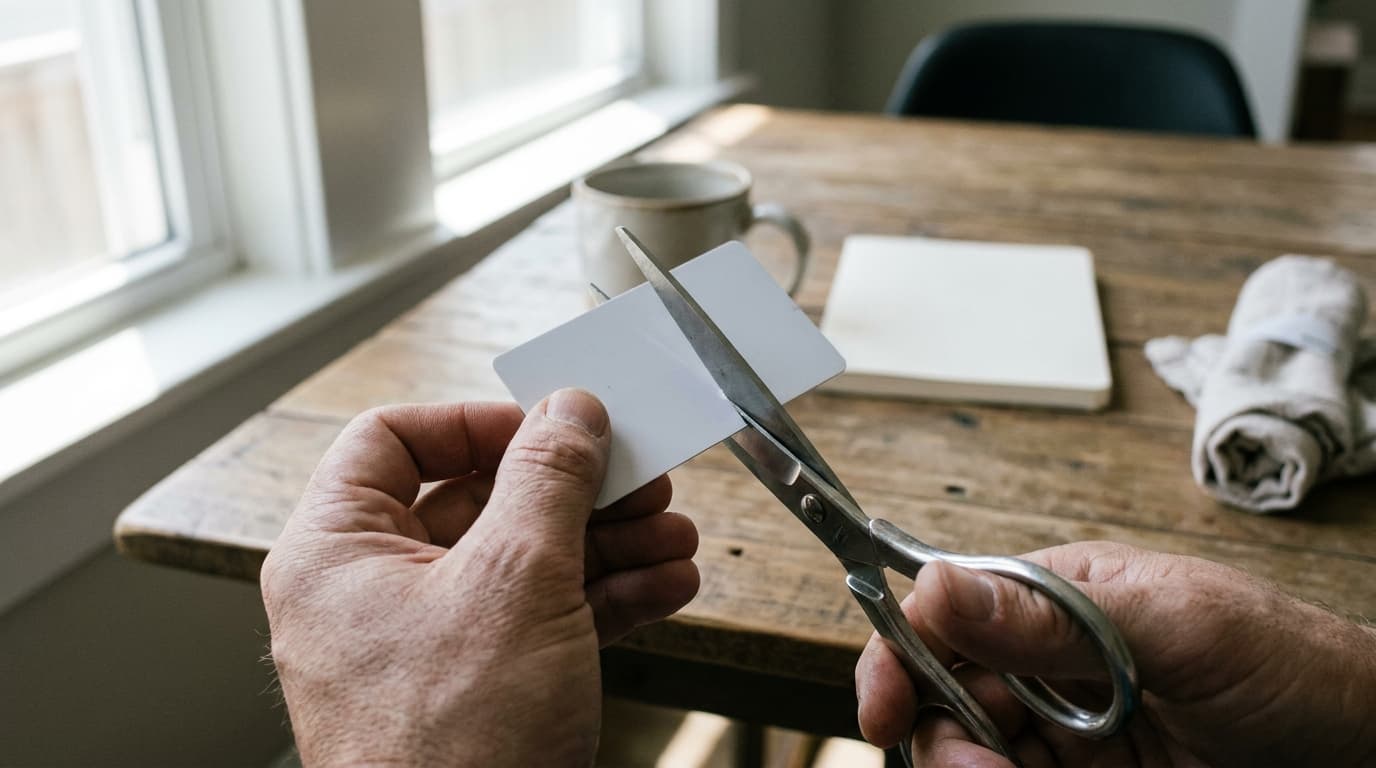
If a check you mailed was stolen, washed and cashed, call your bank or credit union right away and report the theft to the U.S. Postal Inspection Service (USPIS) at uspis.gov/report or 1-877-876-2455. Criminals steal checks from USPS blue collection boxes, home mailboxes and apartment cluster boxes, then use chemicals to erase the ink and write in a new payee and often a bigger amount. The Financial Crimes Enforcement Network (FinCEN) issued a nationwide alert on this "surge in check fraud schemes targeting the U.S. Mail" in February 2023.
Whether you get the money back depends mostly on your state's law and your account agreement, not on one federal rule, and the agency guidance we reviewed gives no grace period: the Consumer Financial Protection Bureau (CFPB) says to contact your bank "as quickly as you can." The signs are usually simple: a check you sent never reached the person you paid, or your statement shows it cleared for a different name or a higher amount.
Information last verified on October 3, 2026. This article has not been reviewed by a licensed lawyer.
Jurisdiction scope: This article covers United States federal criminal law on mail theft (18 U.S.C. §§ 1708, 1704 and 1344) and published guidance from FinCEN, the FBI, the U.S. Postal Inspection Service, the U.S. Postal Service and the CFPB. Who bears a check loss is governed by each state's version of the Uniform Commercial Code and by your account agreement; we do not summarize any state's rules or deadlines. If you received a fake check from a stranger rather than having your own check stolen, see our guide to money mule and fake check scams instead.
How mail theft check fraud happens
FinCEN's 2023 alert describes criminals "located throughout the country" who "target USPS blue collection boxes, unsecured residential mailboxes, and privately owned cluster box units at apartment complexes, planned neighborhoods, and high-density commercial buildings." Some force the boxes open or use "makeshift fishing devices."
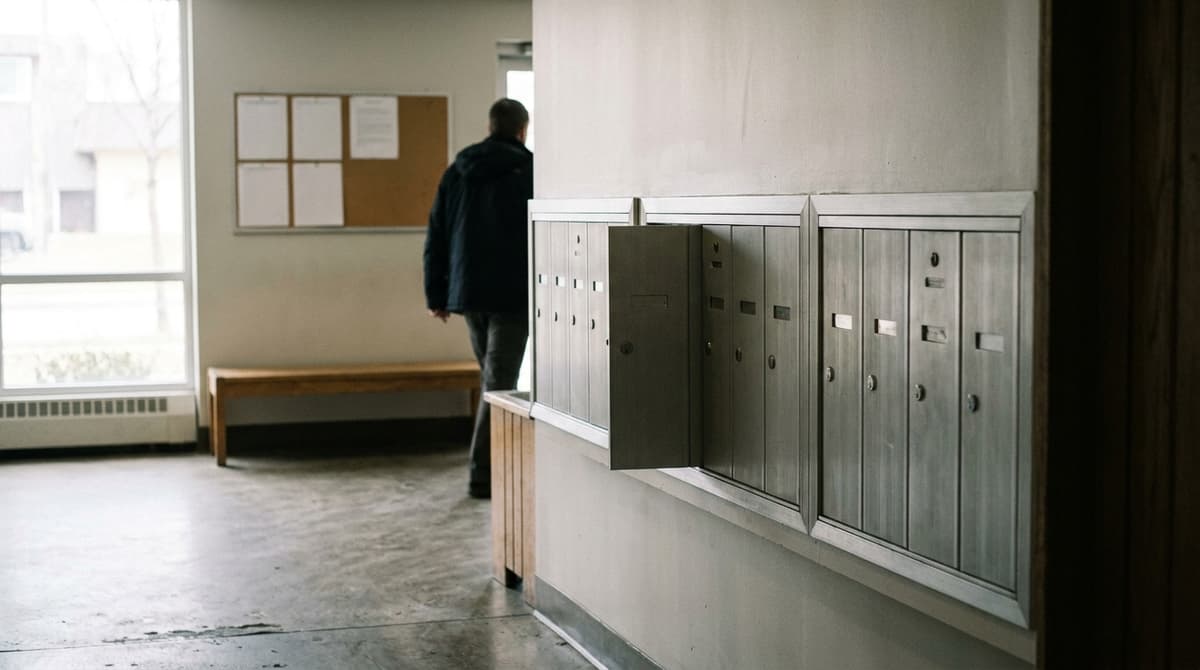
Others use Arrow Keys, which FinCEN says "open USPS blue collection boxes and cluster box units within a geographic area." FinCEN adds that "a number of recent cases involve organized criminals violently targeting USPS mail carriers with the intent of stealing Arrow Keys."
The FBI's January 27, 2025 public service announcement, issued with USPIS, lists where checks get taken:
- Checks left in residential mailboxes overnight or for long periods of time
- USPS blue collection boxes after the last pickup time
- Burglary of USPS facilities
- Robbery of USPS employees
- Bribery or collusion of USPS employees
The checks thieves want, according to FinCEN, include "personal checks, business checks, tax refund checks, and checks related to government assistance programs, such as Social Security payments and unemployment benefits." FinCEN notes business checks "may be more valuable."
What thieves do with a stolen check
A stolen check gets used in different ways. FinCEN's analysis of reports covering February 27 to August 31, 2023 (published September 9, 2024) measured how often the main ones happened:
| What happened to the stolen check | Share of reports |
|---|---|
| Altered (washed) and then deposited | 44 percent |
| Used as a template to create counterfeit checks | 26 percent |
| Fraudulently signed and deposited | 20 percent |
Check washing is the first row. FinCEN defines it this way:
"Check washing involves the use of chemicals to remove the original ink on a check to replace the payee and often the dollar amount."
FinCEN found that "the payee line was the most frequently altered section, followed by the amount, which is typically made higher than the intended amount." In some cases the fraudster opened a new account "that had either the same name as the intended recipient or a nearly identical name," so the deposit looked ordinary.
Check cooking is the digital version. The FBI explains that it "involves the digital manipulation of an image of a stolen check" and "allows fraudsters to manufacture multiple checks from a single check image. Often these checks are written for smaller amounts which can go undetected for longer periods of time by escaping the scrutiny or visibility of a larger check amount." That is why a single stolen check can keep causing losses after you have dealt with the first one.
After the deposit, FinCEN says fraudsters "rapidly withdraw the funds through ATMs or wire them to other accounts." They may also "further exploit the victims by using personal identifiable information found in the stolen mail for future fraud schemes."
Signs your mailed check was stolen
These are the patterns the agencies describe:
- The person you paid says they never got it. USPIS says that if you do not receive a check you are expecting, contact the sender as soon as possible, and the FBI says to follow up with payees to make sure they received your check.
- The cleared check shows a different payee. FinCEN found the payee line is the part most often changed. The FBI suggests using mobile or online banking to view copies of your checks and make sure they were not altered.
- The cleared amount is higher than what you wrote. The amount line is the second most altered section.
- Checks you never wrote start clearing, possibly for small amounts. That fits counterfeits made from a template or a cooked image.
- A check someone mailed you never arrived, such as a refund or benefit check. USPIS says to contact the sender.
Why the money can be gone before you notice
The FBI explains the timing problem directly:
"Fraudsters take advantage of regulations requiring financial institutions to make check funds available within specified timeframes, which is often too short a window for the consumer or financial institutions to identify and stop the fraud."
So a washed check can be deposited, made available and withdrawn before you or your bank see anything wrong. That is the practical reason to watch your account closely and report the moment something looks off.
What to do right now if your check was stolen or washed
Work through these in order. Speed matters most with your bank.
- Contact your bank or credit union right away. The CFPB says to "Tell your bank or credit union what happened and ask for the money to be restored to your account." Use the phone number on your card, your statement or the bank's official app.
- Ask for copies of every fraudulent check. The FBI says to "file a report with your bank and request copies of all fraudulent checks."
- Ask how the check was processed. The CFPB says federal protections apply if the check was processed as an electronic transfer, and that "Your monthly statement will often indicate if a check was processed as an electronic transfer, such as an ACH payment."
- Ask about closing the account. The FBI says to "Consider opening a new account and closing out the compromised account to prevent future counterfeit checks being drawn off the account." Ask the bank what that means for checks you have already written; the FBI lists "stop payment fees for other outstanding checks" among the costs victims face.
- Report to USPIS. File online at uspis.gov/report or call 1-877-876-2455. USPIS says to call 911 to report an active crime in progress, and to use the U.S. Postal Service help page for delivery delays or service issues.
- Report to local police and to the FBI. The FBI's announcement says to report to your local police and to the FBI Internet Crime Complaint Center at ic3.gov.
- Tell the person you were paying. They have not been paid. Arrange a new payment once your account is secure.
- Treat the stolen mail as an identity risk. Because criminals can use personal information from stolen mail, follow the steps in a scammer has my information and our identity theft guide.
For other agencies and what each one does with a report, see where to report a scam.
Watch out: the FBI notes that victims "are often refunded some of the charges, but refunds are often delayed until investigations are complete." Keep copies of everything you send the bank, and write down who you spoke to and when.
Will the bank pay you back? It depends on state law and your account agreement
No single federal refund rule covers a washed or forged paper check. The rules that decide who absorbs the loss come from state law, meaning each state's enactment of the Uniform Commercial Code (UCC), and from your account agreement with the bank. The CFPB's consumer answers point to state law: "If the check was not processed as an electronic transfer, you may have protections under state law."
The CFPB describes these general outcomes:
| What happened | What the CFPB says |
|---|---|
| Someone forged the signature of the person you made the check out to | "State law generally provides that you are not responsible for a check if someone forged the signature of the person to whom you made out the check." |
| The amount was raised before it was cashed | "You may be able to have the difference restored to your account. You are still responsible for the original amount of the check." |
| You signed a blank check | The CFPB says protections "generally do not apply if you signed a blank check," and "You usually can't get your money back if someone fills in his or her own name and cashes the check." |
| The check was processed as an electronic transfer | "You have additional protections under federal law." |
A washed check can involve a new payee, a higher amount or both, and which of these rules fits depends on what was changed and on your state's law. Ask your bank which rule it is applying, and ask for the answer in writing.
On deadlines: we have not verified a specific reporting deadline from an official source, and it can depend on your state's law and your account agreement. Do not assume you have time. Report immediately, read your account agreement's section on unauthorized or altered items, and ask the bank in writing what deadline applies to your account.
If the bank says the check was converted to an electronic payment, the federal Regulation E process may apply. Our guide to getting money back after a scam explains that process, and what to do if your bank refused a scam refund covers challenging an electronic-transfer denial.
How to protect outgoing mail
The FBI and USPIS give the same core advice for mail you send:
- Use the letter slots inside your local post office to send mail, especially checks.
- If you use a blue collection box, the FBI says to "drop your mail as close to the posted pickup time as possible and before the last collection of the day." USPIS says to deposit outgoing mail in blue boxes "before the last pickup or at your local Post Office."
- Never leave your mail in your mailbox overnight, USPIS says.
- Pick up incoming mail promptly after delivery. The FBI says not to leave mail in your mailbox overnight.
- Hold your mail when you travel. USPIS lists the USPS Hold Mail Service and suggests holding mail at the Post Office while you are on vacation.
- Don't send cash by mail, USPIS advises.
- File a change of address when you move, another USPIS tip.
What Informed Delivery does and does not do
The FBI recommends signing up for Informed Delivery at USPS.com "to receive daily email notifications of incoming mail and packages." USPS describes the free service as letting you "See images of your incoming letter-sized mail (grayscale, address side only)," with a Daily Digest that previews "mail and packages scheduled to arrive soon." Signing up includes verifying your identity and address.
It is a way to notice a problem, not a lock. It can show you that a check you were expecting was scheduled to arrive and then never reached your box, which is your cue to contact the sender. It previews incoming mail, so it will not tell you whether a check you dropped in a blue box reached the person you paid; follow up with the payee for that.
How to make your checks harder to wash
The FBI's announcement lists these steps:
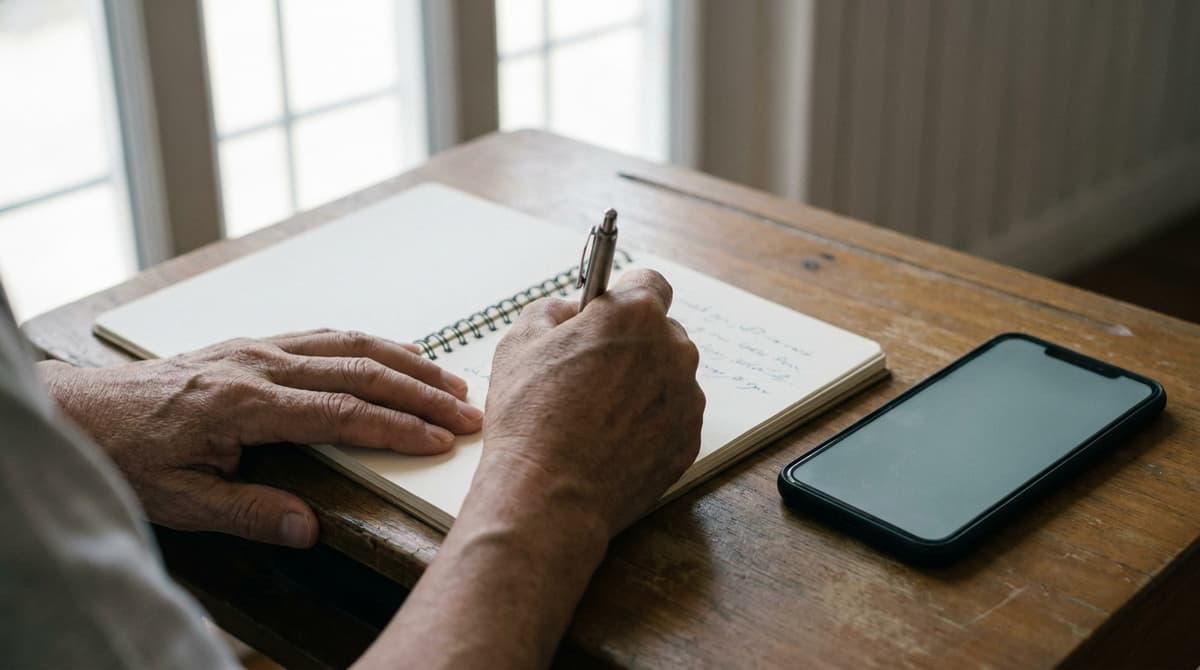
- "Use pens with indelible black ink so it is more difficult for a criminal to wash your checks."
- "Don't leave blank spaces in the payee or amount lines."
- "Use mobile or online banking to access copies of your checks and ensure they are not altered."
- "Follow up with payees to make sure they received your check."
- "Use check positive pay if available at financial institutions to help detect and stop fraudulent checks."
- "Consider using e-check, ACH automatic payments, and other electronic and/or mobile payments."
Fewer paper checks in the mail means fewer chances for theft. If you still mail checks, the post office slot and a follow-up with the payee are two habits the FBI recommends.
Mail theft is a federal crime
Stealing mail is prosecuted under federal law. These statutes punish the thief; they do not by themselves return your money.
- 18 U.S.C. § 1708 covers anyone who "steals, takes, or abstracts, or by fraud or deception obtains" mail "from or out of any mail, post office, or station thereof, letter box, mail receptacle, or any mail route or other authorized depository for mail matter, or from a letter or mail carrier." It also covers anyone who "buys, receives, or conceals, or unlawfully has in his possession" stolen mail knowing it was stolen. The penalty: the person "Shall be fined under this title or imprisoned not more than five years, or both."
- 18 U.S.C. § 1704 covers anyone who "steals, purloins, embezzles, or obtains by false pretense any key suited to any lock adopted by the Post Office Department or the Postal Service," and also reaches knowingly and unlawfully making, forging or counterfeiting such keys, and possessing a mail lock or key with intent to use, sell or dispose of it unlawfully or improperly. The penalty is a fine, imprisonment of not more than ten years, or both.
- 18 U.S.C. § 1344, the federal bank fraud statute, reaches schemes to defraud a financial institution or to obtain its funds by false pretenses. A person convicted "shall be fined not more than $1,000,000 or imprisoned not more than 30 years, or both."
USPIS reports that from 2019 to 2024, postal inspectors arrested almost 9,300 suspects for theft of mail and packages.
How big the problem is
Each of these figures comes from a different dataset, so they should not be added together:
- FinCEN, September 9, 2024: from February 27 to August 31, 2023, FinCEN "received 15,417 BSA reports from 841 financial institutions on mail theft-related check fraud, amounting to more than $688 million in reported suspicious activity." Reported suspicious activity is not the same as confirmed losses.
- FBI, January 27, 2025: "Suspicious Activity Reports related to check fraud have nearly doubled from 2021 to 2023." That figure covers check fraud reports generally.
- USPIS: almost 9,300 arrests for theft of mail and packages from 2019 to 2024.
For the broader picture of scam types and your options, start at our scams and fraud laws hub.
Related guides
- Scams and fraud laws: what to do if you got scammed
- Money mule and fake check scams
- How to get money back after a scam
- Where to report a scam
- A scammer has my information: what to do
- Identity theft laws
- Online Shopping and Marketplace Scams
This article provides general legal information about United States federal law and federal agency guidance on mail theft and check fraud, verified on October 3, 2026. It is not legal advice. For your specific situation, contact your bank or credit union, the U.S. Postal Inspection Service, or a lawyer licensed in your state.
Last updated: October 3, 2026.
Frequently Asked Questions
What is check washing?
FinCEN defines check washing as using chemicals to remove the original ink on a check to replace the payee and often the dollar amount. Its 2024 analysis found the payee line was the most frequently altered section, followed by the amount.
What should I do if my check was stolen from the mail and cashed?
Contact your bank or credit union right away, tell them what happened and ask for the money to be restored, as the CFPB advises. The FBI also says to request copies of the fraudulent checks and report to USPIS at uspis.gov/report or 1-877-876-2455, your local police and IC3.
Will my bank refund a washed check?
It depends on your state's law and your account agreement. The CFPB says state law generally provides that you are not responsible for a check if someone forged the payee's signature, and that if the amount was raised you may be able to have the difference restored but remain responsible for the original amount.
How long do I have to report check fraud to my bank?
We have not verified a specific deadline from an official source, and it can depend on your state's law and your account agreement. Report immediately and ask the bank in writing what deadline applies to your account.
Is it safe to put mail in a blue mailbox?
The FBI lists USPS blue collection boxes after the last pickup time as a theft target. It advises using the letter slots inside your local post office, or dropping mail in a blue box as close to the posted pickup time as possible and before the last collection of the day.
Does Informed Delivery prevent mail theft?
It is a way to notice a problem, not to stop one. USPS Informed Delivery shows images of incoming letter-size mail (grayscale, address side only), which can help you spot an expected check that never arrived; the FBI and USPIS say to contact the sender when that happens.
Should I close my bank account after check fraud?
The FBI says to consider opening a new account and closing the compromised one to prevent future counterfeit checks being drawn off the account. The FBI also notes victims can face stop payment fees for other outstanding checks, so ask your bank about the costs.
Who investigates mail theft?
The U.S. Postal Inspection Service takes mail theft reports at uspis.gov/report or 1-877-876-2455. Call 911 for a crime in progress. For delivery delays or service issues, USPIS points you to the U.S. Postal Service help page instead.
What is the penalty for stealing mail?
Under 18 U.S.C. 1708, stealing mail or knowingly possessing stolen mail is punishable by a fine, up to five years in prison, or both. Stealing postal lock keys, unlawfully copying them, or possessing them with intent to misuse them is punishable by up to ten years under 18 U.S.C. 1704.
Updates
Independently fact-checked against the cited primary sources
The Law Behind This Article
This article rests on the statutory provisions below, held in our own legal record and retrieved from the official source. Tap a section to read the operative text.
United States Code Title 18
§ 1708Theft or receipt of stolen mail matter generallyIn force
Whoever steals, takes, or abstracts, or by fraud or deception obtains, or attempts so to obtain, from or out of any mail, post office, or station thereof, letter box, mail receptacle, or any mail route or other authorized depository for mail matter, or from a letter or mail carrier, any letter, postal card, package, bag, or mail, or abstracts or removes from any such letter, package, bag, or mail, any article or thing contained therein, or secretes, embezzles, or destroys any such letter, postal card, package, bag, or mail, or any article or thing contained therein; or Whoever steals, takes, or abstracts, or by fraud or deception obtains any letter, postal card, package, bag, or mail, or any article or thing contained therein which has been left for collection upon or adjacent to a collection box or other authorized depository of mail matter; or Whoever buys, receives, or conceals, or unlawfully has in his possession, any letter, postal card, package, bag, or mail, or any article or thing contained therein, which has been so stolen, taken, embezzled, or abstracted, as herein described, knowing the same to have been stolen, taken, embezzled, or abstracted— Shall be fined under this…
Official text (excerpt) · last checked 2026-07-28 · Read the full text in our law library · Verify at uscode.house.gov
§ 1704Keys or locks stolen or reproducedIn force
Whoever steals, purloins, embezzles, or obtains by false pretense any key suited to any lock adopted by the Post Office Department or the Postal Service and in use on any of the mails or bags thereof, or any key to any lock box, lock drawer, or other authorized receptacle for the deposit or delivery of mail matter; or Whoever knowingly and unlawfully makes, forges, or counterfeits any such key, or possesses any such mail lock or key with the intent unlawfully or improperly to use, sell, or otherwise dispose of the same, or to cause the same to be unlawfully or improperly used, sold, or otherwise disposed of; or Whoever, being engaged as a contractor or otherwise in the manufacture of any such mail lock or key, delivers any finished or unfinished lock or the interior part thereof, or key, used or designed for use by the department, to any person not duly authorized under the hand of the Postmaster General and the seal of the Post Office Department or the Postal Service, to receive the same, unless the person receiving it is the contractor for furnishing the same or engaged in the manufacture thereof in the manner authorized by the contract, or the agent of such manufacturer— Shall…
Official text (excerpt) · last checked 2026-07-28 · Read the full text in our law library · Verify at uscode.house.gov
§ 1344Bank fraudIn force
Whoever knowingly executes, or attempts to execute, a scheme or artifice— to defraud a financial institution; or to obtain any of the moneys, funds, credits, assets, securities, or other property owned by, or under the custody or control of, a financial institution, by means of false or fraudulent pretenses, representations, or promises; shall be fined not more than $1,000,000 or imprisoned not more than 30 years, or both.
Official text (excerpt) · last checked 2026-07-28 · Read the full text in our law library · Verify at uscode.house.gov
Search our full record of US law — 2.1 million sections, every state + federal →
Sources and References
- U.S. Postal Inspection Service, Report a crime (mail theft report)(www.uspis.gov).gov
- FinCEN Alert FIN-2023-Alert003, Mail Theft-Related Check Fraud (Feb. 27, 2023)(www.fincen.gov).gov
- Consumer Financial Protection Bureau, I discovered an unauthorized check written on my account (modified Sept. 4, 2024)(www.consumerfinance.gov).gov
- FBI and USPIS Public Service Announcement I-012725-PSA, Mail Theft-Related Check Fraud is on the Rise (Jan. 27, 2025)(www.fbi.gov).gov
- FinCEN news release, in-depth analysis of check fraud related to mail theft (Sept. 9, 2024)(www.fincen.gov).gov
- FinCEN Financial Trend Analysis, Mail Theft-Related Check Fraud (Feb. 27 to Aug. 31, 2023 data)(www.fincen.gov).gov
- U.S. Postal Inspection Service, Mail and Package Theft(www.uspis.gov).gov
- Consumer Financial Protection Bureau, I wrote a check but it was stolen and cashed by the thief(www.consumerfinance.gov).gov
- Consumer Financial Protection Bureau, How can I tell if a check was processed as an electronic payment(www.consumerfinance.gov).gov
- FBI Internet Crime Complaint Center (IC3)(www.ic3.gov).gov
- Consumer Financial Protection Bureau, The person I gave a check to increased the amount before cashing it(www.consumerfinance.gov).gov
- U.S. Postal Inspection Service, Check Washing(www.uspis.gov).gov
- U.S. Postal Service, Informed Delivery(www.usps.com).gov
- 18 U.S.C. § 1708, Theft or receipt of stolen mail matter generally (Cornell LII)(www.law.cornell.edu)
- 18 U.S.C. § 1704, Keys or locks stolen or reproduced (Cornell LII)(www.law.cornell.edu)
- 18 U.S.C. § 1344, Bank fraud (Cornell LII)(www.law.cornell.edu)