North Dakota
North Dakota Pepper Spray and Stun Gun Laws (2026)
Independently fact-checked against primary sources (last audited September 23, 2026). · 15 primary sources cited on this page. How we verify our legal content
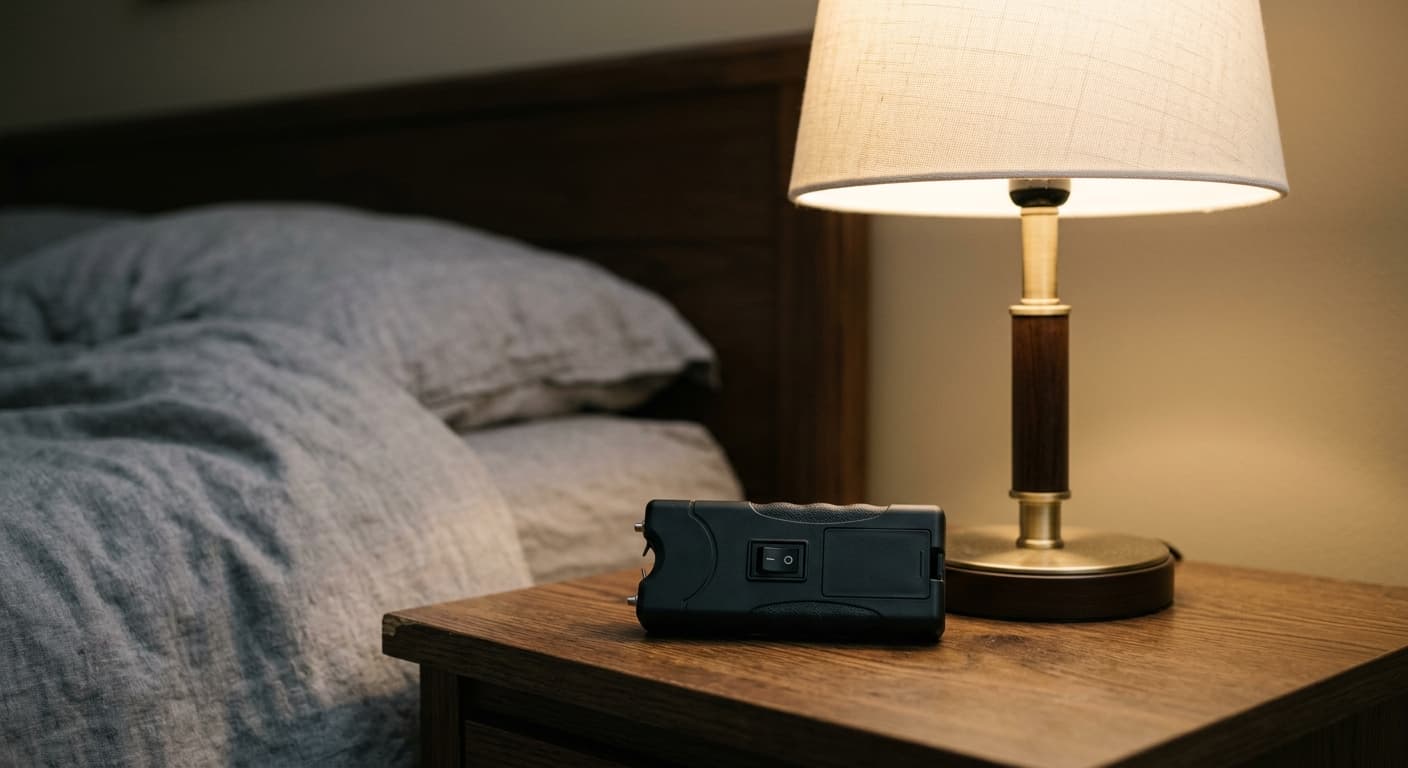
North Dakota takes an unusually direct approach to both devices: instead of exempting pepper spray and stun guns from a weapons offense, the state's core Title 62.1 "dangerous weapon" definition excludes an ordinary self-defense spray outright and excludes an ordinary stun gun with a narrow carve-back for certain projectile devices. That exclusion is narrower, and less universal, than it first reads. North Dakota's separate criminal code carries its own "dangerous weapon" definition, with no spray or voltage exclusion at all, feeding a felony assault charge. A liquor-establishment statute inside Title 62.1 itself makes a qualifying stun device an offense for anyone, not only a firearm-prohibited person. A school-district policy statute borrows a broader federal definition with no carve-out. And the carve-back that does apply within Title 62.1 turns on the word "or," not "and": a single-shot device that fires a projectile and delivers voltage is swept back in for a firearm-prohibited person, with no multiple-application requirement at all.
Jurisdiction scope: This page covers North Dakota state law only, principally N.D.C.C. 62.1-01-01, 62.1-02-04, 62.1-02-05, 62.1-04-02, 62.1-04-05, 62.1-01-03, 12.1-01-04, 12.1-17-02, and 15.1-19-10. It does not cover the concealed-carry license application process in detail. Fargo Municipal Code s. 10-0304 is discussed because it directly illustrates the local-regulation question; no other municipal ordinance is covered.
Is pepper spray legal in North Dakota?
Yes, and North Dakota's approach is unusually direct: pepper spray is written out of the state's core weapons definition entirely, rather than exempted from a separate offense. N.D.C.C. 62.1-01-01(1) defines "dangerous weapon" broadly for Title 62.1, then carves out self-defense sprays by name: "'Dangerous weapon' does not include a spray or aerosol containing CS, also known as ortho-chlorobenzamalonitrile; CN, also known as alpha-chloroacetophenone; or other irritating agent intended for use in the defense of an individual." Because nearly every weapons restriction inside Title 62.1, the concealed-carry license requirement, and the public-gathering and school-property ban, is written to cover a "firearm or dangerous weapon," and pepper spray is excluded from "dangerous weapon" by this definition, those restrictions do not reach it. No age minimum, capacity or formula limit, or purchase restriction on pepper spray appears in chapter 62.1-01 (definitions, arrest forfeiture, preemption, buyback ban, test administrators), chapter 62.1-02 (its firearm and dangerous-weapon offenses, including the handgun-sale-only regulation at 62.1-02-02), or chapter 62.1-04 (the concealed-carry licensing chapter).

Are stun guns legal in North Dakota?
Mostly yes, with a disjunctive exception that reaches more devices than a quick read suggests. N.D.C.C. 62.1-01-01(1) continues past the pepper-spray exclusion: "nor does the term include a device that uses voltage for the defense of an individual, unless the device uses a projectile and voltage or the device uses a projectile and may be used to apply multiple applications of voltage during a single incident, then the term includes the device for an individual who is prohibited from possessing a firearm under this title." An ordinary direct-contact stun gun, the kind that has to touch the target to work, is excluded from "dangerous weapon" for everyone, with no license, age floor, or prohibited-persons list under Title 62.1. The carve-back is written as an "or," not an "and": a device that fires a projectile and delivers voltage is swept back into "dangerous weapon," with no requirement that it deliver more than one application, and so is a device that fires a projectile and can apply voltage more than once in a single incident. Either branch alone is enough. Even then, the reattachment applies only to a person who is independently prohibited from possessing a firearm under Title 62.1; for everyone else, a projectile stun device is not a "dangerous weapon" under this section.
North Dakota's own licensing agency does not describe the rule this narrowly. The Attorney General's office, which issues the concealed-weapon license, publishes guidance stating: "A Taser that only delivers a single application of voltage is not considered a dangerous weapon and may be carried without a concealed weapon license. However, if the Taser is capable of delivering multiple applications of voltage, you must have a concealed weapon license." That guidance states the rule with no prohibited-person qualifier at all, a simpler and broader reading than the statute's own text supports. A reader planning around this device should know both readings exist: the statute's plain text limits the licensing requirement to a firearm-prohibited person, while the agency that issues the license describes a rule that applies to everyone.
The Title 62.1 exclusion is not the only rule in North Dakota that can reach a stun gun. N.D.C.C. 62.1-02-04 separately makes it an offense, for anyone, to knowingly possess "a device that uses a projectile and voltage or a device that uses a projectile and may be used to apply multiple applications of voltage during a single incident" in the part of a liquor establishment set aside for the retail sale and consumption of alcoholic beverages, regardless of whether the person is otherwise prohibited from possessing a firearm. That device offense does not extend to a bingo gaming site; a separate first sentence in the same section makes possessing an ordinary firearm or dangerous weapon, not the excluded devices this page covers, an infraction at either the liquor-service area or a bingo gaming site. Neither offense applies to a law enforcement officer, the proprietor, the proprietor's employee, a proprietor's designee displaying an unloaded firearm or dangerous weapon as a raffle or auction prize, private security personnel delivering or receiving money at the establishment, or the restaurant part of an establishment where a person under 21 is not otherwise prohibited.
North Dakota's criminal code has its own definition, with no carve-out
Title 62.1's exclusion governs Title 62.1 only; it does not touch North Dakota's separate criminal code, Title 12.1. N.D.C.C. 12.1-01-04 opens "As used in this title, unless a different meaning plainly is required," and defines "dangerous weapon" without any spray or voltage exception: "any switchblade or gravity knife, machete, scimitar, stiletto, sword, or dagger; any billy, blackjack, sap, bludgeon, cudgel, metal knuckles, or sand club; any slingshot; any bow and arrow, crossbow, or spear; any weapon that will expel, or is readily capable of expelling, a projectile by the action of a spring, compressed air, or compressed gas including any such weapon, loaded or unloaded, commonly referred to as a BB gun, air rifle, or CO2 gun; and any projector of a bomb or any object containing or capable of producing and emitting any noxious liquid, gas, or substance." That last clause reaches a spray canister without any self-defense carve-out. This definition drives N.D.C.C. 12.1-17-02, aggravated assault: a person who "knowingly causes bodily injury or substantial bodily injury to another human being with a dangerous weapon or other weapon, the possession of which under the circumstances indicates an intent or readiness to inflict serious bodily injury" is guilty of a class C felony, rising to a class B felony if the victim "is a peace officer or correctional institution employee acting in an official capacity, which the actor knows to be a fact," is under 12 years of age, or suffers a permanent loss or impairment of a bodily function. Using a spray or a stun gun on another person in North Dakota can be a felony assault under this title even though the same device is not a "dangerous weapon" anywhere in Title 62.1.
Concealed carry and public places
North Dakota's concealed-carry statute, N.D.C.C. 62.1-04-02(1), states: "An individual, other than a law enforcement officer, may not carry a firearm or dangerous weapon concealed unless the individual is licensed to do so or exempted under this chapter." Because pepper spray and an ordinary stun gun are excluded from "dangerous weapon," this licensing requirement does not apply to either one; it applies only to the narrow projectile-stun-device case described above. North Dakota's permitless-carry provision does not help in that narrow case, and neither does the license itself: subsection (2) lets an eligible individual "carry a firearm concealed" without a license, a grant limited to a firearm, not a dangerous weapon, and N.D.C.C. 62.1-04-03(1)(c) separately bars issuing a license to "an individual specified in section 62.1-02-01," the same firearm-prohibited-person list that triggers the projectile carve-back in the first place. So the only people the carve-back reaches are also the only people who cannot obtain the license that would authorize carrying the device concealed; for them, concealed carry of a qualifying projectile stun device is simply prohibited, not a case where a license exists but constitutional carry does not apply. Violating the concealed-carry chapter is a class A misdemeanor under N.D.C.C. 62.1-04-05.
The same firearm-or-dangerous-weapon scoping runs through N.D.C.C. 62.1-02-05, which bars possessing a "firearm or dangerous weapon" at a school or school-sponsored event on school property, a church or other place of worship, or a publicly owned or operated building, punishable as a noncriminal offense with a $100 fee under subsection 6. An ordinary pepper-spray canister or non-projectile stun gun falls outside this specific section for the same reason. The section carries sixteen exceptions, among them one for "an instructor, a test administrator, an official, or a participant in educational, training, cultural, or competitive events involving the authorized use of a dangerous weapon if the event occurs with permission of the person or entity with authority over the function or premises in question." Two further subsections matter beyond the exceptions list: subsection 3 lets a political subdivision or the state board of higher education adopt an ordinance or policy that is "less restrictive" than this section, which then supersedes it within that jurisdiction, and subsection 5 lets the governing body of a school, or the entity controlling a publicly owned building or property, authorize a "less than lethal weapon" as part of its own security plan.
The school-weapon-policy statute is different: it uses the federal definition
North Dakota's schools face a separate requirement that does not carry the same carve-out. N.D.C.C. 15.1-19-10 requires every school district board to "adopt a policy governing the possession of weapons and firearms on school property or at a school function," and that policy must "prohibit the possession of a dangerous weapon or a firearm by a student on school property and at school functions." Subsection 6(a) defines "dangerous weapon" for this section specifically as having "the meaning provided in 18 U.S.C. 930(g)(2)," the federal standard, a weapon, device, instrument, material, or substance, animate or inanimate, that is used for, or is readily capable of, causing death or serious bodily injury, with no exception for a self-defense spray or an electric device the way North Dakota's own state-law definition carries. A firearm violation under this section requires a mandatory one-year expulsion, subject to case-by-case modification by the superintendent or principal under subsection 2(c). A dangerous-weapon violation, which could reach pepper spray or a stun gun under this broader federal standard even though neither counts as a "dangerous weapon" anywhere else in Title 62.1, requires punishment under the district's own adopted policy rather than the automatic one-year expulsion the statute reserves for firearms.
Local regulation: Fargo has already used the room state law leaves
N.D.C.C. 62.1-01-03(1) bars a political subdivision, including a home rule city or county, from enacting "any ordinance relating to the purchase, sale, ownership, possession, transfer of ownership, registration, or licensure of firearms and ammunition which is more restrictive than state law," and voids any existing ordinance that does. The statute's text is scoped to "firearms and ammunition"; it does not mention a dangerous weapon, an electric device, or a spray or aerosol anywhere. North Dakota cities and counties are accordingly not state-preempted from adopting their own local rules for pepper spray or stun guns, and the state's largest city already has.
Fargo Municipal Code s. 10-0304 tracks the state's "dangerous weapon" definition word for word, with two deliberate changes. It sets a five-inch knife-blade threshold where the state sets six inches, and it rewrites the stun-gun carve-back: "'Dangerous weapon' does not include a spray or aerosol containing CS... or other irritating agent intended for use in the defense of an individual, nor does the term include a device that uses voltage for the defense of an individual, unless the device uses a projectile and voltage, then the term includes the device for an individual who is prohibited from possessing a firearm under this title. However, the term includes a device that uses a projectile and may be used to apply multiple applications of voltage during a single incident." That final sentence carries no firearm-prohibited-person limit at all, so in Fargo, a multi-application projectile stun device is a "dangerous weapon" for every carrier, not only one who is otherwise barred from possessing a firearm. The ordinance goes on to make it unlawful within city limits for anyone but a law enforcement officer, or a person state law permits, to carry a dangerous weapon or firearm concealed (subsection B), and separately unlawful to discharge or activate a dangerous weapon or firearm within the city, with exceptions including a person acting in defense of person or property (subsection C). Subsection D bars carrying or possessing a dangerous weapon or firearm at a public gathering, as N.D.C.C. 62.1-02-05 defines it, or in a publicly owned or operated building, for anyone outside that state statute's own exceptions. Pepper spray, an ordinary aerosol containing CS or CN for self-defense, remains excluded from Fargo's definition on the same terms as the state's.
Federal law: what it does and does not reach
No federal statute regulates a civilian's purchase or possession of pepper spray or a stun gun. Federal law matters in three places.
Federal buildings. Under 18 U.S.C. § 930(a), whoever knowingly possesses or causes to be present "a firearm or other dangerous weapon in a Federal facility (other than a Federal court facility)" faces a fine, imprisonment of up to 1 year, or both. Subsection (e) sets up to 2 years for a federal court facility, and subsection (b) up to 5 years where the weapon is intended to be used in a crime. Section 930(g)(2) defines the term:
The term "dangerous weapon" means a weapon, device, instrument, material, or substance, animate or inanimate, that is used for, or is readily capable of, causing death or serious bodily injury, except that such term does not include a pocket knife with a blade of less than 2½ inches in length.
The definition names neither device. Whether a particular spray or stun gun is "readily capable of" causing serious bodily injury is a question of fact the statute does not answer. Subsection (d)(3) exempts "the lawful carrying of firearms or other dangerous weapons in a Federal facility incident to hunting or other lawful purposes," and subsection (h) requires notice of the ban to be posted at each public entrance. A "Federal facility" is "a building or part thereof owned or leased by the Federal Government, where Federal employees are regularly present for the purpose of performing their official duties."
Air travel. The Transportation Security Administration's screening rules, which are agency policy rather than statute, bar both devices from carry-on bags. One 4 fl. oz. (118 ml) container of mace or pepper spray is permitted in checked baggage if it has a safety mechanism to prevent accidental discharge, and sprays containing more than 2 percent by mass of tear gas (CS or CN) are prohibited in checked baggage. Tasers, stun guns and other electro-shock weapons may travel in checked baggage only if transported so the device cannot discharge accidentally. Airlines may set stricter rules.
National parks. National Park Service regulations prohibit possessing, carrying or using a "weapon" in a park area except as the regulations provide (36 CFR 2.4(b)(1)). 36 CFR 1.4 defines "weapon" to include an "irritant gas device" and any "weapon the possession of which is prohibited under the laws of the State in which the park area or portion thereof is located."
Disclaimer: This article provides general legal information about North Dakota's pepper spray and stun gun laws as of September 2026. It is not legal advice. Consult a lawyer licensed in North Dakota for advice about a specific situation.
For a state-by-state comparison, see pepper spray and stun gun laws by state. North Dakota's self-defense statutes are covered separately on the North Dakota self-defense laws page.
Statutes cited reflect their in-force version as of 2026-09-23. Last updated: 2026-09-23.
Frequently Asked Questions
Does North Dakota limit the size or formula of pepper spray?
No. N.D.C.C. 62.1-01-01 excludes a spray or aerosol containing CS, CN, or another irritating agent intended for self-defense from the 'dangerous weapon' definition entirely, without stating any size, volume, or concentration limit, and no other section in chapters 62.1-01, 62.1-02, or 62.1-04 sets one.
Do you need a license for a stun gun in North Dakota?
Not for an ordinary, non-projectile stun gun; it is excluded from 'dangerous weapon' and so falls outside the concealed-carry license requirement. Under the statute's text, a device that fires a projectile and delivers voltage, or fires a projectile and can apply voltage more than once, becomes a 'dangerous weapon' only for a person already prohibited from possessing a firearm, and that same person cannot obtain a concealed-weapon license at all: N.D.C.C. 62.1-04-03(1)(c) bars a license to anyone specified in section 62.1-02-01. For that person, concealed carry of such a device is prohibited outright, not merely license-gated. The North Dakota Attorney General's own published guidance describes a broader rule with no prohibited-person qualifier, so a caller to the licensing office may be told a stricter standard applies to everyone.
Are stun guns banned on North Dakota school grounds?
A stun gun is not a 'dangerous weapon' under N.D.C.C. 62.1-02-05's public-gathering and school-property restriction, but N.D.C.C. 15.1-19-10 requires each school district to adopt its own policy prohibiting possession of a 'dangerous weapon' by a student on school property, defined there by the broader federal standard in 18 U.S.C. 930(g)(2), which could reach a stun gun even though state law otherwise excludes it. That student-directed policy does not by itself reach a non-student adult on school property; for a visitor, N.D.C.C. 62.1-02-05's narrower state-law definition applies instead.
Can a felon possess pepper spray or a stun gun in North Dakota?
Pepper spray and an ordinary stun gun are not 'dangerous weapons' under N.D.C.C. 62.1-01-01 for anyone, felon or not, so Title 62.1 does not bar a felon's possession of either. A device that fires a projectile and delivers voltage, or fires a projectile with multiple voltage applications, is different: it becomes a 'dangerous weapon' specifically for a person prohibited from possessing a firearm. Separately, North Dakota's criminal code carries its own 'dangerous weapon' definition with no spray or voltage exclusion at all, so using either device to injure someone can be felony aggravated assault under N.D.C.C. 12.1-17-02 regardless of the carrier's criminal history.
Why does North Dakota treat pepper spray and stun guns differently at school than elsewhere in state law?
N.D.C.C. 15.1-19-10, the school weapon-policy statute, defines 'dangerous weapon' by cross-reference to the federal definition in 18 U.S.C. 930(g)(2), which has no carve-out for a self-defense spray or an electric device, unlike N.D.C.C. 62.1-01-01's state-law definition used everywhere else in Title 62.1.
Can a North Dakota city or county ban pepper spray or stun guns even though state law excludes them from 'dangerous weapon'?
Yes, and Fargo has done exactly that for stun guns. N.D.C.C. 62.1-01-03's local-preemption statute is scoped to 'firearms and ammunition' only. Fargo Municipal Code s. 10-0304 keeps the state's pepper-spray exclusion but rewrites the stun-gun carve-back to drop the firearm-prohibited-person limit, so a projectile device that can apply voltage more than once is a 'dangerous weapon' for everyone within city limits, on top of the city's own concealed-carry, discharge, and public-gathering rules.
Updates
Independently fact-checked against the cited primary sources
The Law Behind This Article
This article rests on the statutory provisions below, held in our own legal record and retrieved from the official source. Tap a section to read the operative text.
North Dakota Century Code
§ 12.1-01-04General definitionsIn forcecited in 2 of our articles
As used in this title, unless a different meaning plainly is required: "Absconded" means when a probationer, parolee, participant in a pretrial services program, or participant in a prosecution-led diversion program willfully avoids supervision by making their whereabouts unknown or fails to report to a supervising authority. "Act" or "action" means a bodily movement, whether voluntary or involuntary. "Acted", "acts", and "actions" include, where relevant, "omitted to act" and "omissions to act". "Actor" includes, where relevant, a person guilty of an omission. "Bodily injury" means any impairment of physical condition, including physical pain. "Court" means any of the following courts: the supreme court, a district court, and where relevant, a municipal court.
Official text (excerpt) · last checked 2026-07-30 · Read the full text in our law library · Verify at ndlegis.gov
Cited in 69 court opinions in our collectionLatest citing opinion in our collection: 2026
Opinions citing this section in our collection:
- Thompson v. Olson (North Dakota Supreme Court 2006, 711 N.W.2d 226)“…ion, that is what it means. N.D.C.C. § 1-02-02. [¶ 29] In N.D.C.C. § 12.1-01-04(29), the legislature had defined "serio…”
- State v. Keller (North Dakota Supreme Court 2005, 695 N.W.2d 703)“…of culpability suffices to establish its commission. N.D.C.C. § 12.1-01-04(15). [¶ 26] As noted above, this…”
- Moses v. Burleigh County (North Dakota Supreme Court 1989, 438 N.W.2d 186)“…d. She stressed statutory definitions of "peace officer" in NDCC 12.1-01-04(17) ("a public servant authorized ... t…”
Identified automatically from the court opinions citing this section — not a ranking of which case controls.
Also relied on in: North Dakota Knife Laws (2026): The 6-Inch Rule and Licensing
§ 12.1-17-02Aggravated assaultIn force
Except as provided in subsection 2, a person is guilty of a class C felony if that person: Willfully causes serious bodily injury to another human being; Knowingly causes bodily injury or substantial bodily injury to another human being with a dangerous weapon or other weapon, the possession of which under the circumstances indicates an intent or readiness to inflict serious bodily injury; Causes bodily injury or substantial bodily injury to another human being while attempting to inflict serious bodily injury on any human being; or Fires a firearm or hurls a destructive device at another human being. The person is guilty of a class B felony if the person violates subsection 1 and the victim: Is under twelve years of age; Is a peace officer or correctional institution employee acting in an official capacity, which the actor knows to be a fact; or Suffers permanent loss or impairment of the function of a bodily member or organ.
Official text (excerpt) · last checked 2026-07-30 · Read the full text in our law library · Verify at ndlegis.gov
Cited in 54 court opinions in our collectionLatest citing opinion in our collection: 2025
Opinions citing this section in our collection:
- State v. Mathre (North Dakota Supreme Court 1999, 603 N.W.2d 173)“…23, 1998, Mathre was charged with aggravated assault under N.D.C.C. § 12.1-17-02. On December 31, 1998, the State filed…”
- Dellwo v. R.D.B. (North Dakota Supreme Court 1998, 575 N.W.2d 420)“…to another, constituting aggravated assault in violation of N.D.C.C. § 12.1-17-02(1). [¶ 4]At an initial hearing on Oct…”
- State v. Vetter (North Dakota Supreme Court 2013, 826 N.W.2d 334)“…t. [¶ 4] Vetter was convicted of aggravated assault under N.D.C.C. § 12.1-17-02(1). The jury' specially found Vetter “i…”
Identified automatically from the court opinions citing this section — not a ranking of which case controls.
§ 15.1-19-10Possession of a weapon - Policy - Expulsion from schoolIn forcecited in 2 of our articles
The board of each school district shall adopt a policy governing the possession of weapons and firearms on school property or at a school function and provide for the punishment of any student found to be in violation of the policy. The policy must: Prohibit the possession of a dangerous weapon or a firearm by a student on school property and at school functions and provide for the punishment of any student found to be in violation. Require a student who possesses a firearm in violation of this section to be expelled for at least one year. Authorize the school district superintendent or the school principal, if the school district does not have a superintendent, to modify an expulsion for firearms possession under this section on a case-by-case basis in accordance with criteria established by the board. Before expelling a student, a school board or its designated hearing officer, within ten days of the student's suspension, shall provide the student with a hearing at which time the school board or its designated hearing officer shall take testimony and consider evidence, including the existence of mitigating circumstances.
Official text (excerpt) · last checked 2026-07-30 · Read the full text in our law library · Verify at ndlegis.gov
§ 62.1-01-01General definitionsIn forcecited in 2 of our articles
As used in this title, unless the context otherwise requires: "Dangerous weapon" includes any switchblade or gravity knife, machete, scimitar, stiletto, sword, dagger, or knife with a blade of six inches [15.24 centimeters] or more; any throwing star, nunchaku, or other martial arts weapon; any billy, blackjack, sap, bludgeon, cudgel, metal knuckles, or sand club; any slungshot; any bow and arrow, crossbow, or spear; any weapon that will expel, or is readily capable of expelling, a projectile by the action of a spring, compressed air, or compressed gas, including any such weapon, loaded or unloaded, commonly referred to as a BB gun, air rifle, or CO2 gun; and any projector of a bomb or any object containing or capable of producing and emitting any noxious liquid, gas, or substance.
Official text (excerpt) · last checked 2026-07-30 · Read the full text in our law library · Verify at ndlegis.gov
Cited in 5 court opinions in our collectionLatest citing opinion in our collection: 2026
Opinions citing this section in our collection:
- State v. Luetzen (North Dakota Supreme Court 2026, 2026 ND 13)“…The first issue requires interpretation of an amendment to N.D.C.C. § 62.1-01-01(11), which defines the term “possession…”
- State v. Buchholz (North Dakota Supreme Court 2006, 723 N.W.2d 534)“…ver, rifle, gun, machine gun, shotgun, bazooka, or cannon.” N.D.C.C. § 62.1-01-01(3). [¶ 22] During the search of…”
- State v. Vermilya (North Dakota Supreme Court 1988, 423 N.W.2d 153)“…he ordinary observation of a passerby.” Section 62.1-04-01, N.D.C.C. Section 62.1-01-01, N.D.C.C., provides: “62.1-01…”
Identified automatically from the court opinions citing this section — not a ranking of which case controls.
§ 62.1-01-03Limitation on authority of political subdivision regarding firearms - Civil actionIn forcecited in 2 of our articles
A political subdivision, including home rule cities or counties, may not enact any ordinance relating to the purchase, sale, ownership, possession, transfer of ownership, registration, or licensure of firearms and ammunition which is more restrictive than state law. All such existing ordinances are void. A political subdivision, including home rule cities or counties, may not enact a zoning ordinance relating to the purchase, sale, ownership, possession, transfer of ownership, registration, or licensure of firearms and ammunition. All such existing ordinances are void. This section does not limit the ability of a political subdivision, including home rule cities or counties, to enforce an ordinance or zoning regulation relating to a business operation if the restriction in the ordinance or regulation: Applies equally to all persons engaging in commerce within the area subject to the ordinance or regulation; and Is not specifically related to the purchase, sale, ownership, possession, transfer of ownership, registration, or licensure of firearms and ammunition.
Official text (excerpt) · last checked 2026-07-30 · Read the full text in our law library · Verify at ndlegis.gov
Cited in 1 court opinions in our collectionLatest citing opinion in our collection: 2024
Opinions citing this section in our collection:
- City of Fargo v. State (North Dakota Supreme Court 2024, 2024 ND 236)“…nded N.D.C.C. § 40-05.1-06, governing home rule powers, and N.D.C.C. § 62.1-01-03, governing limitation on political subd…”
Identified automatically from the court opinions citing this section — not a ranking of which case controls.
§ 62.1-02-04Possession of firearm or dangerous weapon in liquor establishment prohibited - Penalty - ExceptionsIn forcecited in 2 of our articles
An individual who enters or remains in that part of the establishment set aside for the retail sale of alcoholic beverages and the consumption of purchased alcoholic beverages or used as a gaming site at which bingo is the primary gaming activity while that individual knowingly possesses a firearm or dangerous weapon is guilty of an infraction. In addition, an individual is guilty of an offense under this section for the knowing possession of a device that uses a projectile and voltage or a device that uses a projectile and may be used to apply multiple applications of voltage during a single incident in the part of an establishment set aside for the retail sale and consumption of alcoholic beverages. This section does not apply to: A law enforcement officer. The proprietor. The proprietor's employee. A designee of the proprietor when the designee is displaying an unloaded firearm or dangerous weapon as a prize or sale item in a raffle or auction. Private security personnel while on duty for the purpose of delivering or receiving moneys used at the liquor establishment or at the gaming site at which bingo is the primary gaming activity.
Official text (excerpt) · last checked 2026-07-30 · Read the full text in our law library · Verify at ndlegis.gov
§ 62.1-02-05Possession of a firearm or dangerous weapon at a public gathering - Penalty - ApplicationIn forcecited in 2 of our articles
An individual may not possess a firearm or dangerous weapon at: A school or school-sponsored event on school property; A church or other place of worship; or A publicly owned or operated building. This section does not apply to: A law enforcement officer, or a correctional officer employed by the department of corrections and rehabilitation or by a correctional facility governed by chapter 12-44.1. A correctional officer employed by the department of corrections and rehabilitation may carry a firearm only as authorized in section 12-47-34.
Official text (excerpt) · last checked 2026-07-30 · Read the full text in our law library · Verify at ndlegis.gov
Cited in 1 court opinions in our collectionLatest citing opinion in our collection: 2017
Opinions citing this section in our collection:
- Keller v. Keller (North Dakota Supreme Court 2017, 894 N.W.2d 883)“…titutionality of ban on possession of firearms by a felon); N.D.C.C. Sec. 62.1-02-05 (restrictions on possession of firearms…”
Identified automatically from the court opinions citing this section — not a ranking of which case controls.
§ 62.1-04-02Carrying concealed firearms or dangerous weapons - License distinctionsIn forcecited in 2 of our articles
An individual, other than a law enforcement officer, may not carry a firearm or dangerous weapon concealed unless the individual is licensed to do so or exempted under this chapter. An individual who is not otherwise precluded from possessing a class 2 firearm and dangerous weapon license under this chapter and who possesses a valid driver's license or nondriver identification card issued by the department of transportation or by the individual's state or territory of residence may carry a firearm concealed under this chapter. An individual may carry a firearm concealed under this chapter if the individual qualifies for reciprocity under section 62.1-04-03.1 and the individual has the equivalent of a class 2 firearm and dangerous weapon license from the state in which the individual is a resident. For purposes of this chapter, the difference between a class 1 and class 2 firearm and dangerous weapon license is only the extent to which a holder of either license may be eligible to receive reciprocal rights in other jurisdictions.
Official text (excerpt) · last checked 2026-09-24 · Read the full text in our law library · Verify at ndlegis.gov
Cited in 6 court opinions in our collectionLatest citing opinion in our collection: 2025
Opinions citing this section in our collection:
- State v. Anderson (North Dakota Supreme Court 2006, 710 N.W.2d 392)“…ing a concealed firearm or dangerous weapon in violation of N.D.C.C. § 62.1-04-02. They moved to suppress the evidence se…”
- State v. Foster (North Dakota Supreme Court 2020, 942 N.W.2d 829)“…ortation may carry a firearm concealed under this chapter.” N.D.C.C § 62.1-04-02(2). [¶25] Evidence at trial supports t…”
- State v. Vermilya (North Dakota Supreme Court 1988, 423 N.W.2d 153)“…traight razor is not a dangerous weapon under § 62.1-01-01, N.D.C.C. Section 62.1-04-02, N.D.C.C., provides that “[n]o person,…”
Identified automatically from the court opinions citing this section — not a ranking of which case controls.
§ 62.1-04-05PenaltyIn forcecited in 2 of our articles
Any person who violates this chapter is guilty of a class A misdemeanor.
Official text (excerpt) · last checked 2026-07-30 · Read the full text in our law library · Verify at ndlegis.gov
Code of Federal Regulations Title 36
§ 1.4What terms do I need to know?In forcecited in 53 of our articles
(a) The following definitions shall apply to this chapter, unless modified by the definitions for a specific part or regulation: Abandonment means the voluntary relinquishment of property with no intent to retain possession. Administrative activities means those activities conducted under the authority of the National Park Service for the purpose of safeguarding persons or property, implementing management plans and policies developed in accordance and consistent with the regulations in this chapter, or repairing or maintaining government facilities. Airboat means a vessel that is supported by the buoyancy of its hull and powered by a propeller or fan above the waterline. This definition should not be construed to mean a “hovercraft,” that is supported by a fan-generated air cushion. Aircraft means a device that is used or intended to be used for human flight in the air, including powerless flight. Archeological resource means material remains of past human life or activities that are of archeological interest and are at least 50 years of age.
Official text (excerpt) · last checked 2026-07-28 · Read the full text in our law library · Verify at ecfr.gov
Cited in 34 court opinions in our collectionLatest citing opinion in our collection: 2026
Opinions citing this section in our collection:
- WildEarth Guardians v. National Park Service (Court of Appeals for the Tenth Circuit 2013, 703 F.3d 1178)“…collect, kill, wound, or attempt to do any of the above.” 36 C.F.R. § 1.4(a). WildEarth argues that because NPS…”
- Nature v. United States (District Court, E.D. California 2017, 250 F. Supp. 3d 634)“…ent, historic, parkway, recreational, or other purposes. 36 C.F.R. § 1.4 . Nature argues that the El Portal Admi…”
- United States v. Knauer (District Court, E.D. New York 2010, 707 F. Supp. 2d 379)“…ng or attempting to take wildlife, except trapping. 36 C.F.R. § 1.4 (a) (in relevant part, reordered for cl…”
Identified automatically from the court opinions citing this section — not a ranking of which case controls.
Also relied on in: Knife Laws by State (2026): Carry Rules, Blade Limits, Penalties, Pepper Spray and Stun Gun Laws by State (2026), Alabama Pepper Spray and Stun Gun Laws (2026)
§ 2.4Weapons, traps and nets.In forcecited in 53 of our articles
(a) None of the provisions in this section or any regulation in this chapter may be enforced to prohibit an individual from possessing a firearm, including an assembled or functional firearm, in any National Park System unit if: (1) The individual is not otherwise prohibited by law from possessing the firearm; and (2) The possession of the firearm is in compliance with the law of the State in which the National Park System unit is located. (b)(1) Except as otherwise provided in this section and parts 7 (special regulations) and 13 (Alaska regulations), the following are prohibited: (i) Possessing a weapon, trap or net (ii) Carrying a weapon, trap or net (iii) Using a weapon, trap or net (2) Weapons, traps or nets may be carried, possessed or used: (i) At designated times and locations in park areas where: (A) The taking of wildlife is authorized by law in accordance with § 2.2 of this chapter; (B) The taking of fish is authorized by law in accordance with § 2.3 of this part. (ii) When used for target practice at designated times and at facilities or locations designed and constructed specifically for this purpose and designated pursuant to special regulations.
Official text (excerpt) · last checked 2026-07-28 · Read the full text in our law library · Verify at ecfr.gov
Cited in 26 court opinions in our collectionLatest citing opinion in our collection: 2024
Opinions citing this section in our collection:
- United States v. Masciandaro (Court of Appeals for the Fourth Circuit 2011, 638 F.3d 458)“…motor vehicle within a national park area, in violation of 36 C.F.R. § 2.4(b). He challenges his con- viction on t…”
- Brady Campaign to Prevent Gun Violence v. Salazar (District Court, District of Columbia 2009, 612 F. Supp. 2d 1)“…eady use.” 48 Fed.Reg. 30,252 (June 30, 1983), codified at 36 C.F.R. § 2.4 (a)(2). A similar regulation applied to…”
- United States v. Otis Lofton, United States of America v. Otis Lofton (Court of Appeals for the Fourth Circuit 2000, 233 F.3d 313)“…l Park Service. See 36 C.F.R. § 1.2 (2000); 36 C.F.R. § 2.4 (2000). Lofton’s conviction was affirm…”
Identified automatically from the court opinions citing this section — not a ranking of which case controls.
Also relied on in: Pennsylvania Pepper Spray and Stun Gun Laws (2026), Alaska Pepper Spray and Stun Gun Laws (2026), Arizona Pepper Spray and Stun Gun Laws (2026)
United States Code Title 18
§ 930Possession of firearms and dangerous weapons in Federal facilitiesIn forcecited in 55 of our articles
Except as provided in subsection (d), whoever knowingly possesses or causes to be present a firearm or other dangerous weapon in a Federal facility (other than a Federal court facility), or attempts to do so, shall be fined under this title or imprisoned not more than 1 year, or both. Whoever, with intent that a firearm or other dangerous weapon be used in the commission of a crime, knowingly possesses or causes to be present such firearm or dangerous weapon in a Federal facility, or attempts to do so, shall be fined under this title or imprisoned not more than 5 years, or both. A person who kills any person in the course of a violation of subsection (a) or (b), or in the course of an attack on a Federal facility involving the use of a firearm or other dangerous weapon, or attempts or conspires to do such an act, shall be punished as provided in sections 1111, 1112, 1113, and 1117.
Official text (excerpt) · last checked 2026-07-28 · Read the full text in our law library · Verify at uscode.house.gov
Cited in 90 court opinions in our collectionLatest citing opinion in our collection: 2026
Opinions citing this section in our collection:
- United States v. Odeh (Court of Appeals for the Second Circuit 2008, 552 F.3d 93)“…f an attack on a U.S. facility in Nairobi, in violation of 18 U.S.C. § 930 (c) (Counts 9-221); murder of U.S. offi…”
- Kawaljeet Tagore v. USA (Court of Appeals for the Fifth Circuit 2013, 735 F.3d 324)“…statutory ban on weapons with blades exceeding 2.5 inches. 18 U.S.C. § 930(a), (g)(2).…”
- Heller v. District of Columbia (Court of Appeals for the D.C. Circuit 2015, 801 F.3d 264)“…universally prohibited from possessing firearms. See, e.g., 18 U.S.C. § 930(a), (g)(1) (unlawful to “knowingly poss…”
Identified automatically from the court opinions citing this section — not a ranking of which case controls.
Also relied on in: Idaho Knife Laws (2026): Carry, Blade Length, Preemption, Arkansas Pepper Spray and Stun Gun Laws (2026), California Pepper Spray and Stun Gun Laws (2026)
Search our full record of US law — 2.1 million sections, every state + federal →
Sources and References
- N.D.C.C. 62.1-01-01 - General definitions ('dangerous weapon,' pepper-spray and stun-gun exclusions)(ndlegis.gov).gov
- N.D.C.C. 62.1-01-03 - Limitation on authority of political subdivision regarding firearms(ndlegis.gov).gov
- N.D.C.C. 62.1-02-04 - Possession of firearm or dangerous weapon in liquor establishment prohibited(ndlegis.gov).gov
- N.D.C.C. 62.1-02-05 - Possession of a firearm or dangerous weapon at a public gathering(ndlegis.gov).gov
- N.D.C.C. 62.1-04-02 - Carrying concealed firearms or dangerous weapons; license distinctions(ndlegis.gov).gov
- N.D.C.C. 62.1-04-05 - Penalty(ndlegis.gov).gov
- N.D.C.C. 12.1-01-04 - General definitions ('dangerous weapon,' criminal code, no spray/voltage exclusion)(ndlegis.gov).gov
- N.D.C.C. 12.1-17-02 - Aggravated assault(ndlegis.gov).gov
- N.D.C.C. 15.1-19-10 - Possession of a weapon; policy; expulsion from school(ndlegis.gov).gov
- North Dakota Attorney General - Stun Guns, Defense Sprays, Tasers(attorneygeneral.nd.gov).gov
- Fargo Municipal Code s. 10-0304 - Carrying, possession, discharge of dangerous weapons(library.municode.com).gov
- 18 U.S.C. § 930 - Possession of firearms and dangerous weapons in Federal facilities(law.cornell.edu)
- Transportation Security Administration - What Can I Bring? Pepper Spray(tsa.gov).gov
- Transportation Security Administration - What Can I Bring? Stun Guns/Shocking Devices(tsa.gov).gov
- 36 CFR 1.4 - National Park Service definitions (weapon)(ecfr.gov).gov
- 36 CFR 2.4 - Weapons, traps and nets(ecfr.gov).gov