
Louisiana
Louisiana Pepper Spray and Stun Gun Laws (2026)
Independently fact-checked against primary sources (last audited September 23, 2026). · 9 primary sources cited on this page. How we verify our legal content
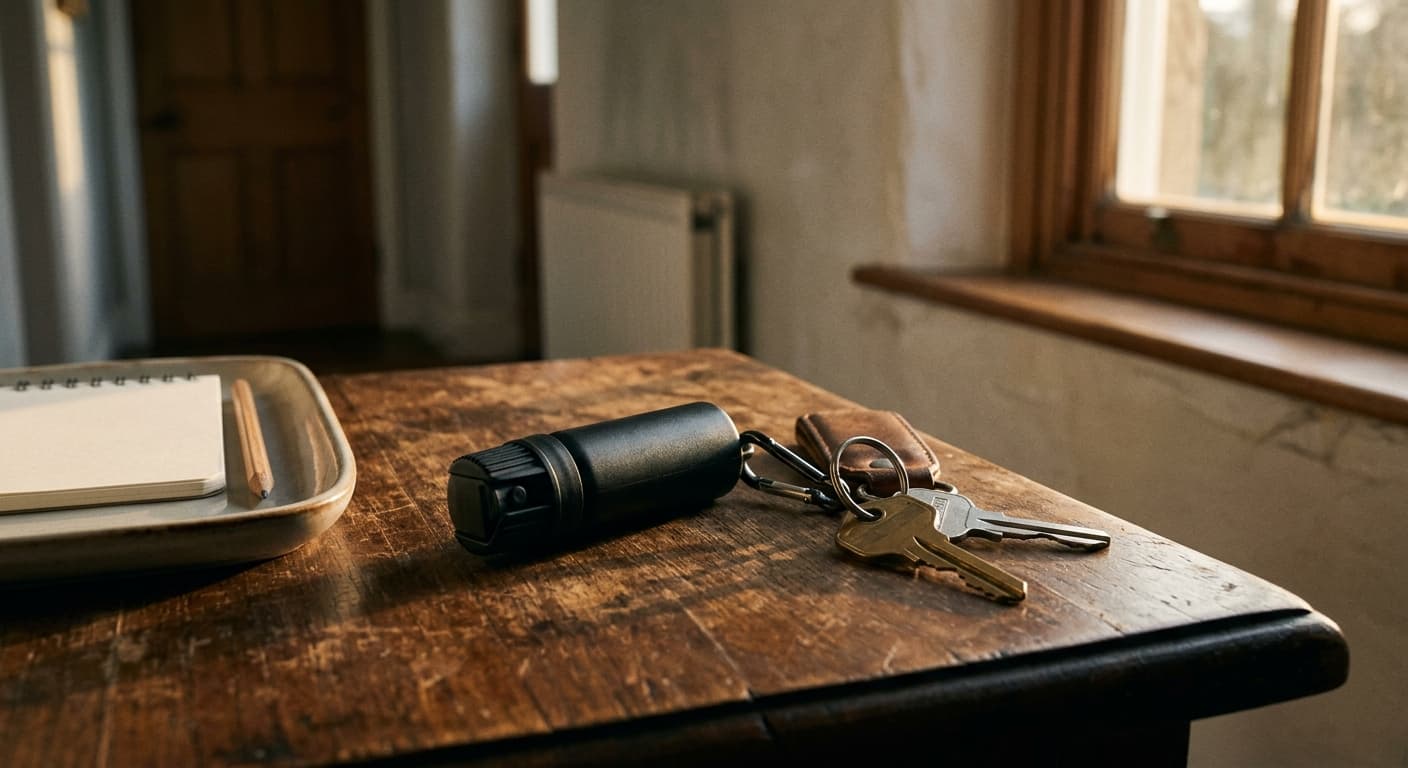
Louisiana has no statute that names pepper spray or a stun gun as a purchase-restricted item, and no capacity cap for either device. But its concealed-carry statute does draw an age line: R.S. 14:95(M) exempts anyone eighteen or older who is not barred from possessing a firearm under R.S. 14:95.1 or 18 U.S.C. 922(g) from the general concealment offense, which by its terms can also cover an "other instrumentality customarily used or intended for probable use as a dangerous weapon." Louisiana's "dangerous weapon" definition is written by function, not by a list of named items, and it includes "any gas, liquid or other substance," which means how a device is carried, and who is carrying it, decides whether Louisiana's weapons statutes reach pepper spray or a stun gun.
Jurisdiction scope: This page covers Louisiana state law only, principally R.S. 14:2, 14:95, 14:95.1, 14:95.2, and 40:1796. It does not cover Louisiana's concealed handgun permit statute (R.S. 40:1379.3) in detail, or local ordinances outside the preemption statute discussed below.
Is pepper spray legal to carry in Louisiana?
Yes, for ordinary self-defense carry, but the reason takes some explaining because Louisiana does not define its weapons statutes around a list of named items the way many states do. R.S. 14:2(A)(3), in the Criminal Code's definitions section, states that "dangerous weapon," a term used throughout the Code, includes "any gas, liquid or other substance or instrumentality, which, in the manner used, is calculated or likely to produce death or great bodily harm." That listing is illustrative rather than exhaustive: it turns on how an item is used, not on a fixed list, and its reference to "any gas, liquid or other substance" is broad enough to cover pepper spray.

Louisiana's general illegal-carrying statute, R.S. 14:95(A)(1)(a), criminalizes intentionally concealing "any firearm, or other instrumentality customarily used or intended for probable use as a dangerous weapon" on one's person. That phrase is narrower than the bare "dangerous weapon" definition; it requires the item be one "customarily used or intended for probable use as" a dangerous weapon, not merely capable of being used as one. R.S. 14:95(M), added by Acts 2024, 2nd Extraordinary Session, No. 1, effective July 4, 2024, switches that entire concealment offense off for any person eighteen years of age or older who is not barred from possessing a firearm under R.S. 14:95.1, 18 U.S.C. 922(g), or any other state or federal law. R.S. 14:95(A)(1)(b) separately exempts a valid concealed handgun permit holder from the same paragraph. For most adults, R.S. 14:95(A)(1)(a) therefore does not apply to concealed pepper spray at all, regardless of whether the canister meets the "customarily used or intended for probable use as a dangerous weapon" standard. For a person under eighteen, or one barred under R.S. 14:95.1 or 18 U.S.C. 922(g), the statute does not say whether ordinary concealed carry of pepper spray meets that standard, and no published Louisiana opinion resolves the question. R.S. 14:95 does not name a chemical spray, mace, or tear gas device anywhere in its text.
No Louisiana statute sets a stand-alone purchase age, capacity limit, or purchase-channel restriction for pepper spray as a named item, and nothing in R.S. 14:2, 14:95, or 14:95.1 lists pepper spray, mace, or tear gas by name. The one age-related line in the code is the one described above: R.S. 14:95(M)'s eighteen-year threshold for the concealment exemption. Louisiana's felon-weapons statute, R.S. 14:95.1, does not name pepper spray, but it independently bars a person with a qualifying felony conviction from carrying "a concealed weapon" of any kind, not only a firearm, so a disqualified person who conceals pepper spray risks the same felony exposure as concealing a firearm: five to twenty years at hard labor without benefit of probation, parole, or suspension of sentence, and a fine of $1,000 to $5,000.
Are stun guns legal to carry in Louisiana?
Yes, on the same functional basis as pepper spray, and subject to the same two provisions. No Louisiana statute mentions a stun gun, taser, or electronic weapon by name anywhere in the Criminal Code. R.S. 14:95(A)(1)(a)'s concealment offense can reach a concealed stun gun as an "other instrumentality customarily used or intended for probable use as a dangerous weapon," but R.S. 14:95(M) switches that offense off for anyone eighteen or older who is not barred from possessing a firearm under R.S. 14:95.1 or 18 U.S.C. 922(g), and R.S. 14:95(A)(1)(b) exempts a valid concealed handgun permit holder. R.S. 14:95.1's felon-weapons statute does not name a stun gun, but its bar on carrying "a concealed weapon" by a person with a qualifying felony conviction is not limited to firearms, so it can reach a concealed stun gun carried by a disqualified person, with the same five-to-twenty-year exposure described above. Separately, R.S. 14:2(A)(3)'s "dangerous weapon" definition reaches "any... instrumentality, which, in the manner used, is calculated or likely to produce death or great bodily harm," language broad enough to sweep in a stun gun used against a person in a manner meeting that test, even though simple possession of the device is not itself an offense.

Where you can't carry either device, and preemption
Louisiana restricts "dangerous weapons," under R.S. 14:2(A)(3)'s broad definition, in specific places regardless of what the item is. R.S. 14:95(A)(4) bans intentional possession or use of a dangerous weapon on a school campus during regular school hours or on a school bus, with exceptions for peace officers, school officials and employees, and students with written permission engaged in competition or marksmanship instruction. R.S. 14:95.2 extends a related ban to a student or nonstudent carrying a dangerous weapon on school property generally, at a school-sponsored function, or within 1,000 feet of a school campus, again subject to law-enforcement, school-employee, and other listed exceptions. A violation of R.S. 14:95.2 carries a far harsher penalty than base R.S. 14:95: subsection (D)(1) sets imprisonment at hard labor for not more than five years, rising under (D)(2) to a fine of not more than $2,000 or imprisonment, with or without hard labor, for one to five years, or both, served consecutively, if the weapon is used in a crime of violence on school property or in the firearm-free zone. Separately, R.S. 14:95(A)(5) bans possessing or using a dangerous weapon in a law enforcement office, station, or building; a detention facility, prison, or jail; a courthouse or courtroom, except a judge in his own courtroom; and the state capitol building. Because pepper spray and a stun gun can both meet R.S. 14:2(A)(3)'s functional "dangerous weapon" test depending on how they are used, these place-based restrictions can reach either device even though neither is named in the statute's text.

Base illegal carrying of weapons under R.S. 14:95 is punishable by a fine of not more than $500 or imprisonment of not more than six months, or both, rising to up to five years on a second conviction and up to ten years without benefit of parole, probation, or suspension of sentence on a third or subsequent conviction; a separate, harsher penalty applies if the weapon was used while committing a crime of violence or during unlawful drug activity.
Louisiana's preemption statute, R.S. 40:1796, bars a political subdivision from enacting or enforcing an ordinance more restrictive than state law concerning "the manufacture, sale, purchase, possession, carrying, storage, ownership, taxation, transfer, transportation, license, or registration of firearms, ammunition, components of firearms or ammunition, firearms accessories, knives, edged weapons, or any combination thereof"; a violating ordinance is null and void, and an adversely affected person may sue for declaratory and injunctive relief plus attorney fees. That list reaches knives and edged weapons alongside firearms, but it does not mention pepper spray, tear gas, a stun gun, or any other electronic weapon, so it does not, on its own text, bar a Louisiana parish or municipality from adopting a stricter local rule for either device.
Federal law: what it does and does not reach
No federal statute regulates a civilian's purchase or possession of pepper spray or a stun gun. Federal law matters in three places.
Federal buildings. Under 18 U.S.C. § 930(a), whoever knowingly possesses or causes to be present "a firearm or other dangerous weapon in a Federal facility (other than a Federal court facility)" faces a fine, imprisonment of up to 1 year, or both. Subsection (e) sets up to 2 years for a federal court facility, and subsection (b) up to 5 years where the weapon is intended to be used in a crime. Section 930(g)(2) defines the term:
The term "dangerous weapon" means a weapon, device, instrument, material, or substance, animate or inanimate, that is used for, or is readily capable of, causing death or serious bodily injury, except that such term does not include a pocket knife with a blade of less than 2½ inches in length.
The definition names neither device. Whether a particular spray or stun gun is "readily capable of" causing serious bodily injury is a question of fact the statute does not answer. Subsection (d)(3) exempts "the lawful carrying of firearms or other dangerous weapons in a Federal facility incident to hunting or other lawful purposes," and subsection (h) requires notice of the ban to be posted at each public entrance. A "Federal facility" is "a building or part thereof owned or leased by the Federal Government, where Federal employees are regularly present for the purpose of performing their official duties."
Air travel. The Transportation Security Administration's screening rules, which are agency policy rather than statute, bar both devices from carry-on bags. One 4 fl. oz. (118 ml) container of mace or pepper spray is permitted in checked baggage if it has a safety mechanism to prevent accidental discharge, and sprays containing more than 2 percent by mass of tear gas (CS or CN) are prohibited in checked baggage. Tasers, stun guns and other electro-shock weapons may travel in checked baggage only if transported so the device cannot discharge accidentally. Airlines may set stricter rules.
National parks. National Park Service regulations prohibit possessing, carrying or using a "weapon" in a park area except as the regulations provide (36 CFR 2.4(b)(1)). 36 CFR 1.4 defines "weapon" to include an "irritant gas device" and any "weapon the possession of which is prohibited under the laws of the State in which the park area or portion thereof is located."
Disclaimer: This article provides general legal information about Louisiana's pepper spray and stun gun laws as of September 2026. It is not legal advice. Consult a lawyer licensed in Louisiana for advice about a specific situation.
For a state-by-state comparison, see pepper spray and stun gun laws by state. Louisiana's self-defense statutes are covered separately on the Louisiana self-defense laws page.
Statutes cited reflect their in-force version as of 2026-09-18. Last updated: 2026-09-18.
Frequently Asked Questions
Is pepper spray legal in Louisiana?
Yes, for ordinary self-defense carry. Louisiana does not name pepper spray in its weapons statutes, and it sets no capacity limit or purchase restriction on it. The general concealment offense, R.S. 14:95(A)(1)(a), can reach an 'other instrumentality customarily used or intended for probable use as a dangerous weapon,' but R.S. 14:95(M) exempts anyone eighteen or older who is not barred from possessing a firearm under R.S. 14:95.1 or 18 U.S.C. 922(g), and R.S. 14:95(A)(1)(b) exempts a valid concealed handgun permit holder; a barred person faces the same concealed-weapon exposure for pepper spray as for a firearm, five to twenty years at hard labor under R.S. 14:95.1. Louisiana's 'dangerous weapon' definition (R.S. 14:2(A)(3)) is functional rather than a fixed list, covering 'any gas, liquid or other substance... calculated or likely to produce death or great bodily harm,' which can bring pepper spray into the place-based restrictions in R.S. 14:95(A)(4), R.S. 14:95(A)(5), and R.S. 14:95.2 depending on how it is carried or used.
Are stun guns legal to carry in Louisiana?
Yes. Louisiana does not name a stun gun, taser, or electronic weapon in its Criminal Code, and it sets no permit or age requirement for ordinary civilian possession. The same two exemptions that apply to pepper spray, R.S. 14:95(M)'s eighteen-year threshold and R.S. 14:95(A)(1)(b)'s permit-holder exemption, remove most adults from the general concealment offense. A person with a qualifying felony conviction is separately barred by R.S. 14:95.1 from carrying a concealed weapon of any kind, including a stun gun, on pain of five to twenty years at hard labor. Louisiana's broad, use-based 'dangerous weapon' definition can still reach a stun gun used in a manner calculated or likely to produce death or great bodily harm.
Can you carry pepper spray or a stun gun on Louisiana school property?
It depends on how the device is used, because Louisiana's school-carrying statutes (R.S. 14:95(A)(4) and R.S. 14:95.2) ban a 'dangerous weapon' as broadly defined in R.S. 14:2(A)(3), which includes 'any gas, liquid or other substance' calculated or likely to produce death or great bodily harm. That definition can reach pepper spray or a stun gun carried onto school property, at a school function, or within 1,000 feet of a campus, subject to the statutes' law-enforcement and school-employee exceptions. A violation of R.S. 14:95.2, the broader school-property and firearm-free-zone ban, is punishable by up to five years at hard labor, a far harsher penalty than R.S. 14:95's base six-month misdemeanor.
Does Louisiana preempt local pepper spray or stun gun ordinances?
Not under its statewide preemption statute. R.S. 40:1796 bars a local government from more strictly regulating firearms, ammunition, firearms accessories, knives, and edged weapons; its list does not include pepper spray or stun guns, so it does not bar a Louisiana parish or municipality from adopting a stricter local rule for either device.
Updates
Independently fact-checked against the cited primary sources
The Law Behind This Article
This article rests on the statutory provisions below, held in our own legal record and retrieved from the official source. Tap a section to read the operative text.
Louisiana Revised Statutes
§ 14:2DefinitionsIn forcecited in 6 of our articles
A. In this Code the terms enumerated shall have the designated meanings: (1) "Another" refers to any other person or legal entity, including the state of Louisiana or any subdivision thereof. (2) "Anything of value" must be given the broadest possible construction, including any conceivable thing of the slightest value, movable or immovable, corporeal or incorporeal, public or private, and including transportation, telephone and telegraph services, or any other service available for hire. It must be construed in the broad popular sense of the phrase, not necessarily as synonymous with the traditional legal term "property." In all cases involving shoplifting the term "value" is the actual retail price of the property at the time of the offense. (3) "Dangerous weapon" includes any gas, liquid or other substance or instrumentality, which, in the manner used, is calculated or likely to produce death or great bodily harm. (4) "Felony" is any crime for which an offender may be sentenced to death or imprisonment at hard labor. (5) "Foreseeable" refers to that which ordinarily would be anticipated by a human being of average reasonable intelligence and perception.
Official text (excerpt) · last checked 2026-07-29 · Read the full text in our law library · Verify at legis.la.gov
Cited in 700 court opinions in our collectionLatest citing opinion in our collection: 2026
Opinions citing this section in our collection:
- State v. Lindsey (Supreme Court of Louisiana 2000, 770 So. 2d 339)“…for simple robbery, did involve a crime of violence under La. R.S. 14:2(13) and thus was a sufficient basis for…”
- State v. Strother (Supreme Court of Louisiana 2010, 49 So. 3d 372)“…imes of violence as enumerated in, or generally defined by, La.R.S. 14:2(B). On that record, the Third Ci…”
- State v. Parker (Supreme Court of Louisiana 2004, 871 So. 2d 317)“…r felonies is a felony defined as a crime of violence under La. R.S. 14:2(13) or as a violation of the Uniform Co…”
Identified automatically from the court opinions citing this section — not a ranking of which case controls.
Also relied on in: Louisiana Expungement Laws: Eligibility, Costs, and How to Clear Your Record, Louisiana Name Change Laws: The District Attorney's Role in Your Petition, Pepper Spray and Stun Gun Laws by State (2026)
§ 14:95Illegal carrying of weaponsIn forcecited in 3 of our articles
A. Illegal carrying of weapons is any of the following: (1)(a) The intentional concealment of any firearm, or other instrumentality customarily used or intended for probable use as a dangerous weapon, on one's person. (b) The provisions of this Paragraph shall not apply to a person with a valid concealed handgun permit issued pursuant to R.S. 40:1379.1.1, 1379.3, or 1379.3.2 nor shall it prohibit a person with a valid concealed handgun permit issued pursuant to R.S. 40:1379.1.1, 1379.3, or 1379.3.2 from carrying a concealed firearm or other instrumentality customarily used or intended for probable use as a dangerous weapon on his person unless otherwise prohibited by this Section. (2) The ownership, possession, custody, or use of any firearm, or other instrumentality customarily used as a dangerous weapon, at any time by an enemy alien. (3) The ownership, possession, custody, or use of any tools, or dynamite, or nitroglycerine, or explosives, or other instrumentality customarily used by thieves or burglars at any time by any person with the intent to commit a crime.
Official text (excerpt) · last checked 2026-09-24 · Read the full text in our law library · Verify at legis.la.gov
Cited in 331 court opinions in our collectionLatest citing opinion in our collection: 2026
Opinions citing this section in our collection:
- State v. Sandifer (Supreme Court of Louisiana 1996, 679 So. 2d 1324)“…tate of Louisiana's writ of certiorari to determine whether La.R.S. 14:95(E), as applied to the facts of this cas…”
- State v. Baker (Supreme Court of Louisiana 2008, 970 So. 2d 948)“…ame act which amended provisions of the previously existing La. R.S. 14:95. La. R.S. 14:95 makes criminal the inte…”
- State v. Blanchard (Supreme Court of Louisiana 2001, 776 So. 2d 1165)“…VICTORY, J. We granted this writ to determine whether La. R.S. 14:95(E), which prohibits a person from posse…”
Identified automatically from the court opinions citing this section — not a ranking of which case controls.
Also relied on in: Louisiana Knife Laws (2026): Carry, Preemption, and School Rules, Knife Laws by State (2026): Carry Rules, Blade Limits, Penalties
§ 14:95.1Possession of firearm or carrying concealed weapon by a person convicted of certain feloniesIn force
A.(1) It is unlawful for any person who has been convicted of, or has been found not guilty by reason of insanity for, a crime of violence as defined in R.S. 14:2(B) which is a felony or simple burglary, burglary of an inhabited dwelling, unauthorized entry of an inhabited dwelling, felony illegal use of weapons or dangerous instrumentalities, manufacture or possession of a delayed action incendiary device, manufacture or possession of a bomb, or possession of a firearm while in the possession of or during the sale or distribution of a controlled dangerous substance, or any violation of the Uniform Controlled Dangerous Substances Law which is a felony, or any crime which is defined as a sex offense in R.S. 15:541, or any crime defined as an attempt to commit one of the above-enumerated offenses under the laws of this state, or who has been convicted under the laws of any other state or of the United States or of any foreign government or country of a crime which, if committed in this state, would be one of the above-enumerated crimes, to possess a firearm or carry a concealed weapon.
Official text (excerpt) · last checked 2026-07-29 · Read the full text in our law library · Verify at legis.la.gov
Cited in 1,019 court opinions in our collectionLatest citing opinion in our collection: 2026
Opinions citing this section in our collection:
- State v. Bradford (Louisiana Court of Appeal 1996, 676 So. 2d 1108)“…Judge. These companion appeals relate to the violation of La.R.S. 14:95.1 and 14:94 wherein the trial court found…”
- State v. Johnson (Supreme Court of Louisiana 2004, 870 So. 2d 995)“…mous conviction and sentence of a defendant in violation of La. R.S. 14:95.1, felon in possession of a firearm. For…”
- State v. Caffrey (Louisiana Court of Appeal 2009, 8 La.App. 5 Cir. 717)“…ssession of a firearm by a convicted felon, in violation of La. R.S. 14:95.1. On November 22, 2006, defendant entere…”
Identified automatically from the court opinions citing this section — not a ranking of which case controls.
§ 14:95.2Carrying a firearm or dangerous weapon by a student or nonstudent on school property, at school-sponsored functions, or in a firearm-free zoneIn forcecited in 2 of our articles
A. Carrying a firearm, or dangerous weapon as defined in R.S. 14:2, by a student or nonstudent on school property, at a school sponsored function, or in a firearm-free zone is unlawful and shall be defined as possession of any firearm or dangerous weapon, on one's person, at any time while on a school campus, on school transportation, or at any school sponsored function in a specific designated area including but not limited to athletic competitions, dances, parties, or any extracurricular activities, or within one thousand feet of any school campus. B. For purposes of this Section, the following words have the following meanings: (1) "Campus" means all facilities and property within the boundary of the school property. (2) "Nonstudent" means any person not registered and enrolled in that school or a suspended student who does not have permission to be on the school campus. (3) "School" means any elementary, secondary, high school, vocational-technical school, college, or university in this state. "School" shall not mean a vocational-technical school that is privately owned.
Official text (excerpt) · last checked 2026-07-29 · Read the full text in our law library · Verify at legis.la.gov
Cited in 86 court opinions in our collectionLatest citing opinion in our collection: 2025
Opinions citing this section in our collection:
- State v. Quinn (Louisiana Court of Appeal 1985, 479 So. 2d 592)“…of probation, parole or suspension of sentence. Pursuant to La.R.S. 14:95.2, the trial judge enhanced the sentence…”
- State v. Roussel (Supreme Court of Louisiana 1982, 424 So. 2d 226)“…ood time for the use of a firearm at the time of the crime. La.R.S. 14:95.2. On appeal, defendant relies on four as…”
- State v. Allen (Supreme Court of Louisiana 1986, 496 So. 2d 301)“…to amend the sentence by application of Article 893.1 (and La.R.S. 14:95.2). The trial court increased the sentenc…”
Identified automatically from the court opinions citing this section — not a ranking of which case controls.
§ 40:1796Preemption of state lawIn forcecited in 2 of our articles
A. No governing authority of a political subdivision shall enact or enforce any ordinance, order, regulation, policy, procedure, rule, or any other form of executive or legislative action more restrictive than state law concerning in any way the manufacture, sale, purchase, possession, carrying, storage, ownership, taxation, transfer, transportation, license, or registration of firearms, ammunition, components of firearms or ammunition, firearms accessories, knives, edged weapons, or any combination thereof. Any existing ordinance, order, regulation, policy, procedure, rule, or any other form of executive or legislative action in violation of this Subsection shall be null and void and of no effect. B. A political subdivision shall repeal, rescind, or amend to conform any ordinance, order, regulation, policy, procedure, rule, or any other form of executive or legislative action in violation of this Section within six months after August 1, 2024. C.
Official text (excerpt) · last checked 2026-07-29 · Read the full text in our law library · Verify at legis.la.gov
Cited in 1 court opinions in our collectionLatest citing opinion in our collection: 2001
Opinions citing this section in our collection:
- Morial v. Smith & Wesson Corp. (Supreme Court of Louisiana 2001, 785 So. 2d 1)“…ly a creature of the state. [11] Defendants argue that La. R.S. 40:1796, a statute effective July 17, 1985, pre…”
Identified automatically from the court opinions citing this section — not a ranking of which case controls.
Code of Federal Regulations Title 36
§ 1.4What terms do I need to know?In forcecited in 53 of our articles
(a) The following definitions shall apply to this chapter, unless modified by the definitions for a specific part or regulation: Abandonment means the voluntary relinquishment of property with no intent to retain possession. Administrative activities means those activities conducted under the authority of the National Park Service for the purpose of safeguarding persons or property, implementing management plans and policies developed in accordance and consistent with the regulations in this chapter, or repairing or maintaining government facilities. Airboat means a vessel that is supported by the buoyancy of its hull and powered by a propeller or fan above the waterline. This definition should not be construed to mean a “hovercraft,” that is supported by a fan-generated air cushion. Aircraft means a device that is used or intended to be used for human flight in the air, including powerless flight. Archeological resource means material remains of past human life or activities that are of archeological interest and are at least 50 years of age.
Official text (excerpt) · last checked 2026-07-28 · Read the full text in our law library · Verify at ecfr.gov
Cited in 34 court opinions in our collectionLatest citing opinion in our collection: 2026
Opinions citing this section in our collection:
- WildEarth Guardians v. National Park Service (Court of Appeals for the Tenth Circuit 2013, 703 F.3d 1178)“…collect, kill, wound, or attempt to do any of the above.” 36 C.F.R. § 1.4(a). WildEarth argues that because NPS…”
- Nature v. United States (District Court, E.D. California 2017, 250 F. Supp. 3d 634)“…ent, historic, parkway, recreational, or other purposes. 36 C.F.R. § 1.4 . Nature argues that the El Portal Admi…”
- United States v. Knauer (District Court, E.D. New York 2010, 707 F. Supp. 2d 379)“…ng or attempting to take wildlife, except trapping. 36 C.F.R. § 1.4 (a) (in relevant part, reordered for cl…”
Identified automatically from the court opinions citing this section — not a ranking of which case controls.
Also relied on in: Alabama Pepper Spray and Stun Gun Laws (2026), Alaska Pepper Spray and Stun Gun Laws (2026), Arizona Pepper Spray and Stun Gun Laws (2026)
§ 2.4Weapons, traps and nets.In forcecited in 53 of our articles
(a) None of the provisions in this section or any regulation in this chapter may be enforced to prohibit an individual from possessing a firearm, including an assembled or functional firearm, in any National Park System unit if: (1) The individual is not otherwise prohibited by law from possessing the firearm; and (2) The possession of the firearm is in compliance with the law of the State in which the National Park System unit is located. (b)(1) Except as otherwise provided in this section and parts 7 (special regulations) and 13 (Alaska regulations), the following are prohibited: (i) Possessing a weapon, trap or net (ii) Carrying a weapon, trap or net (iii) Using a weapon, trap or net (2) Weapons, traps or nets may be carried, possessed or used: (i) At designated times and locations in park areas where: (A) The taking of wildlife is authorized by law in accordance with § 2.2 of this chapter; (B) The taking of fish is authorized by law in accordance with § 2.3 of this part. (ii) When used for target practice at designated times and at facilities or locations designed and constructed specifically for this purpose and designated pursuant to special regulations.
Official text (excerpt) · last checked 2026-07-28 · Read the full text in our law library · Verify at ecfr.gov
Cited in 26 court opinions in our collectionLatest citing opinion in our collection: 2024
Opinions citing this section in our collection:
- United States v. Masciandaro (Court of Appeals for the Fourth Circuit 2011, 638 F.3d 458)“…motor vehicle within a national park area, in violation of 36 C.F.R. § 2.4(b). He challenges his con- viction on t…”
- Brady Campaign to Prevent Gun Violence v. Salazar (District Court, District of Columbia 2009, 612 F. Supp. 2d 1)“…eady use.” 48 Fed.Reg. 30,252 (June 30, 1983), codified at 36 C.F.R. § 2.4 (a)(2). A similar regulation applied to…”
- United States v. Otis Lofton, United States of America v. Otis Lofton (Court of Appeals for the Fourth Circuit 2000, 233 F.3d 313)“…l Park Service. See 36 C.F.R. § 1.2 (2000); 36 C.F.R. § 2.4 (2000). Lofton’s conviction was affirm…”
Identified automatically from the court opinions citing this section — not a ranking of which case controls.
Also relied on in: Pennsylvania Pepper Spray and Stun Gun Laws (2026), Arkansas Pepper Spray and Stun Gun Laws (2026), California Pepper Spray and Stun Gun Laws (2026)
United States Code Title 18
§ 922Unlawful actsIn forcecited in 72 of our articles
It shall be unlawful— for any person— except a licensed importer, licensed manufacturer, or licensed dealer, to engage in the business of importing, manufacturing, or dealing in firearms, or in the course of such business to ship, transport, or receive any firearm in interstate or foreign commerce; or except a licensed importer or licensed manufacturer, to engage in the business of importing or manufacturing ammunition, or in the course of such business, to ship, transport, or receive any ammunition in interstate or foreign commerce; for any importer, manufacturer, dealer, or collector licensed under the provisions of this chapter to ship or transport in interstate or foreign commerce any firearm to any person other than a licensed importer, licensed manufacturer, licensed dealer, or licensed collector, except that— this paragraph and subsection (b)(3) shall not be held to preclude a licensed importer, licensed manufacturer, licensed dealer, or licensed collector from returning a firearm or replacement firearm of the same kind and type to a person from whom it was received; and this paragraph shall not be held to preclude an individual from mailing a firearm owned in compliance…
Official text (excerpt) · last checked 2026-09-16 · Read the full text in our law library · Verify at uscode.house.gov
Cited in 40,024 court opinions in our collectionLatest citing opinion in our collection: 2026
In the courts (editorial summary, independently checked):Section 922(g)(1) bars a felon from possessing a firearm, and the Supreme Court cases in this line turn on sentencing, not on the ban. Taylor v. United States (1990) and Shepard v. United States (2005) held that whether prior convictions enhance a 922(g) sentence under 924(e) is decided from offense elements and limited plea records.
Opinions citing this section in our collection:
- United States v. Booker (Supreme Court of the United States 2004, 543 U.S. 220)“…e Johnson with one crime (say, illegal gun possession, see 18 U. S. C. § 922 (g)) and Jackson with another (say, ban…”
- Almendarez-Torres v. United States (Supreme Court of the United States 1998, 523 U.S. 224)“…cidivism an offense element in such circumstances. But cf. 18 U. S. C. § 922 (g)(1) (prior felony conviction an elem…”
- Taylor v. United States (Supreme Court of the United States 1990, 495 U.S. 575)✓Taylor pleaded guilty to felon-in-possession under 18 U.S.C. § 922(g)(1) and had two Missouri burglary convictions; the Court held that 'burglary' in the § 924(e) enhancement attached to a § 922(g) conviction means generic burglary judged by the prior statute's elements.
Identified automatically from the court opinions citing this section — not a ranking of which case controls.
Also relied on in: Can You Become an ICE Agent with a Criminal Record? (2026 Guide), How Long Does a Felony Stay on Your Record? (2026), Supreme Court Limits the Federal Gun Ban on Marijuana Users (Hemani, 2026)
§ 930Possession of firearms and dangerous weapons in Federal facilitiesIn forcecited in 55 of our articles
Except as provided in subsection (d), whoever knowingly possesses or causes to be present a firearm or other dangerous weapon in a Federal facility (other than a Federal court facility), or attempts to do so, shall be fined under this title or imprisoned not more than 1 year, or both. Whoever, with intent that a firearm or other dangerous weapon be used in the commission of a crime, knowingly possesses or causes to be present such firearm or dangerous weapon in a Federal facility, or attempts to do so, shall be fined under this title or imprisoned not more than 5 years, or both. A person who kills any person in the course of a violation of subsection (a) or (b), or in the course of an attack on a Federal facility involving the use of a firearm or other dangerous weapon, or attempts or conspires to do such an act, shall be punished as provided in sections 1111, 1112, 1113, and 1117.
Official text (excerpt) · last checked 2026-07-28 · Read the full text in our law library · Verify at uscode.house.gov
Cited in 90 court opinions in our collectionLatest citing opinion in our collection: 2026
Opinions citing this section in our collection:
- United States v. Odeh (Court of Appeals for the Second Circuit 2008, 552 F.3d 93)“…f an attack on a U.S. facility in Nairobi, in violation of 18 U.S.C. § 930 (c) (Counts 9-221); murder of U.S. offi…”
- Kawaljeet Tagore v. USA (Court of Appeals for the Fifth Circuit 2013, 735 F.3d 324)“…statutory ban on weapons with blades exceeding 2.5 inches. 18 U.S.C. § 930(a), (g)(2).…”
- Heller v. District of Columbia (Court of Appeals for the D.C. Circuit 2015, 801 F.3d 264)“…universally prohibited from possessing firearms. See, e.g., 18 U.S.C. § 930(a), (g)(1) (unlawful to “knowingly poss…”
Identified automatically from the court opinions citing this section — not a ranking of which case controls.
Also relied on in: Idaho Knife Laws (2026): Carry, Blade Length, Preemption, North Dakota Knife Laws (2026): The 6-Inch Rule and Licensing, Colorado Pepper Spray and Stun Gun Laws (2026)
Explore the law
The laws cited above reference these related sections in their own text:
- Louisiana Revised Statutes § 14:79 — Violation of protective orders view in our statute record · read at the official source
Related law for further reading — not part of this article’s citations.
Search our full record of US law — 2.1 million sections, every state + federal →
Sources and References
- La. R.S. 14:2 - Definitions ('dangerous weapon': any gas, liquid, or other substance or instrumentality calculated or likely to produce death or great bodily harm)(legis.la.gov).gov
- La. R.S. 14:95 - Illegal carrying of weapons (concealment, school hours, restricted places, penalties)(legis.la.gov).gov
- La. R.S. 14:95.1 - Possession of firearm or carrying concealed weapon by a person convicted of certain felonies(legis.la.gov).gov
- La. R.S. 14:95.2 - Carrying a firearm or dangerous weapon by a student or nonstudent on school property, at school-sponsored functions, or in a firearm-free zone(legis.la.gov).gov
- La. R.S. 40:1796 - Preemption of state law (firearms, ammunition, accessories, knives, edged weapons)(legis.la.gov).gov
- 18 U.S.C. § 930 - Possession of firearms and dangerous weapons in Federal facilities(law.cornell.edu)
- Transportation Security Administration - What Can I Bring? Pepper Spray(tsa.gov).gov
- Transportation Security Administration - What Can I Bring? Stun Guns/Shocking Devices(tsa.gov).gov
- 36 CFR 1.4 - National Park Service definitions (weapon)(ecfr.gov).gov
- 36 CFR 2.4 - Weapons, traps and nets(ecfr.gov).gov