
Wisconsin
Wisconsin Nursing Home Camera Laws (2026): DHS Guidance Rules
Independently fact-checked against primary sources (last audited August 14, 2026). · 5 primary sources cited on this page. How we verify our legal content
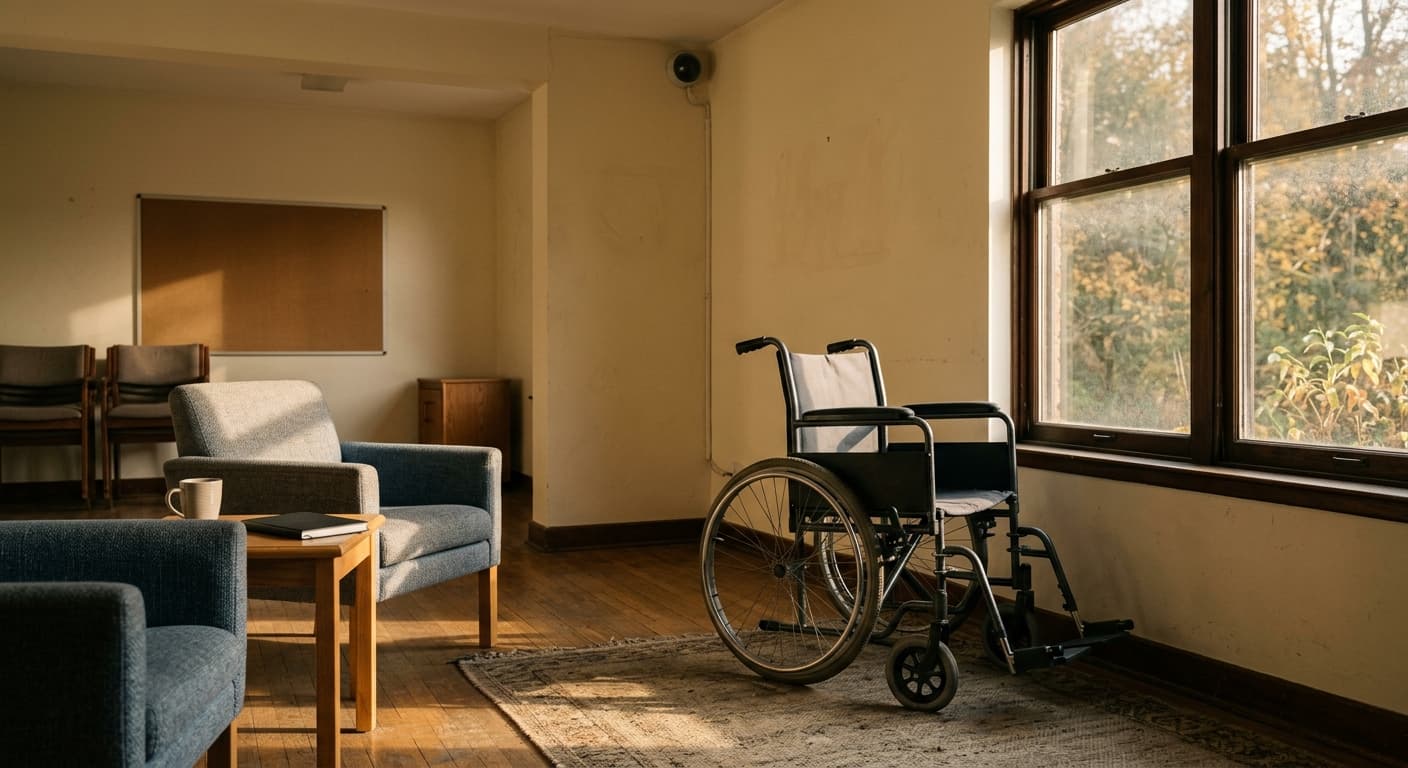
Wisconsin has no electronic-monitoring statute. The Department of Health Services instead issues guidance reading a resident's right to a personal camera out of the state's general privacy law, and that guidance is explicit that a provider cannot condition admission on giving up the right to install one.
Information last verified on 2026-08-14. This article has not yet been reviewed by a licensed lawyer.
This page covers how Wisconsin's Department of Health Services guidance handles in-room cameras, the mandatory roommate-consent and anti-retaliation rules it sets out, the open question of whether it reaches skilled nursing facilities specifically, and the state's audio consent overlay. It does not cover general home-security cameras; see Wisconsin Recording Laws for the state's one-party consent framework.
No Statute, But a Real Agency Guidance Framework
Wisconsin has never passed an Authorized Electronic Monitoring Act of the kind Illinois, Texas, and roughly 16 other states have enacted. What exists instead is Department of Health Services guidance, issued by the Division of Quality Assurance's Bureau of Assisted Living, titled "Assisted Living: Guidance for the Use of Electronic Recording, Video Monitoring, or Filming Equipment." The guidance reads a monitoring right out of Wisconsin's general resident-privacy statute, Wis. Stat. § 50.09, and its assisted-living companion regulations, Wis. Admin. Code DHS 83.32(3) (Community-Based Residential Facilities) and DHS 88.10(3) (Adult Family Homes). The underlying statute itself, read directly, grants "physical and emotional privacy in treatment, living arrangements and in caring for personal needs" but does not mention electronic monitoring, cameras, or recording anywhere in its text. DHS's guidance is the document that connects that general privacy language to a specific camera right; the statute does not name cameras itself.
An earlier standalone document on this topic, DQA Memo 16-001, no longer has a live URL on the DHS site. The current statement of agency policy is the guidance webpage above, which DHS announced to assisted living providers in a bulletin dated July 18, 2025 and which carries a last-revised date of June 22, 2026.
What the Guidance Actually Grants
The guidance is direct about the underlying right: "residents and tenants capable of making their own decisions and/or the legal representatives have the right to install electronic recording or video monitoring or filming equipment within their personal areas of residence and providers cannot prohibit them from doing so." It also bars a provider from making consent to monitoring a condition of admission in the first place: "no prospective resident or tenant shall be required by facility policy to give up rights related to a resident's or tenant's desire to operate an electronic recording or video monitoring device within the personal space of the resident's bedroom or tenant's apartment."

A roommate, or their legal representative, has to agree to the device's presence before it can be used. The provider cannot obstruct the image or sound of the device while a desired recording is happening. A resident or legal representative who installs a device should post a sign at the room entrance stating the room is electronically monitored. The continued use of any device should be reviewed by everyone involved in the decision at least annually, and whenever the resident's needs, abilities, or condition change.
Anti-Retaliation and Enforcement
The guidance states plainly that "a provider cannot refuse to admit or to discharge a resident or tenant because of a desire to monitor the room or refuse to provide care because a monitoring device is present." On the enforcement side, DHS treats a provider's interference with a resident's privacy rights, including generalized facility-initiated recording that infringes on those rights, as a violation the department can sanction directly. The restriction on provider-initiated monitoring is far broader than bathrooms alone. In Adult Family Homes and Community-Based Residential Facilities, the Bureau of Assisted Living has determined that provider recording, video monitoring, or filming in any of these locations infringes resident privacy rights: resident bedrooms; facility or resident bathrooms or shower rooms; dining rooms; therapy rooms; visiting areas, lounges, multipurpose rooms, or activity rooms; hallways that lead to resident rooms; and any other space where a resident may be seen meeting with visitors, engaging in an activity including eating, sleeping, discussing their current condition, or receiving personal care, medical treatment or therapy. DHS treats provider monitoring in those places as a privacy violation "even with the residents' informed, written consent."
What a provider may monitor is a short list, and only where the facility posts signs saying monitoring is taking place: parking areas, locations where individuals enter or exit the building, areas marked for employees only, storage areas, hallways or corridors that do not lead to resident rooms or activity areas, and a personnel office not accessible to residents. In Residential Care Apartment Complexes the prohibition covers the tenant's private apartment, any space where a tenant may be seen receiving supportive, personal, or nursing services, and any space where a tenant may receive visitors or take part in social activities.
A narrower rule governs facility-owned equipment installed to meet an individual assessed need. There the guidance states a provider "shall not place electronic recording or video monitoring or filming equipment in bathrooms or shower rooms due to a reasonable person's expectation of privacy in these areas." For resident-installed devices the guidance imposes no outright ban, telling legal representatives instead to "strongly consider" a reasonable person's expectation of privacy in those same areas.
That assessed-need pathway is allowed only following an individualized, documented assessment and consent process, and the guidance is explicit that monitoring "must never be used as a measure to reduce staffing or to replace staff responsibilities for monitoring resident function and behavior."
Does This Reach Skilled Nursing Facilities?
The guidance page is titled "Assisted Living," and its own scope language names Adult Family Homes, Community-Based Residential Facilities, and Residential Care Apartment Complexes, the settings Wisconsin's Bureau of Assisted Living regulates. It does not separately name skilled nursing facilities, which fall under a different chapter of state law and a different DHS bureau. Wis. Stat. § 50.09 applies by its own terms to "every resident in a nursing home or community-based residential facility," which is why it plainly reaches skilled nursing. The parallel rights in Adult Family Homes and Residential Care Apartment Complexes rest on the DHS administrative-code provisions, DHS 88.10(3) for Adult Family Homes and DHS ch. 89 for Residential Care Apartment Complexes, rather than on § 50.09. So the statute the guidance builds on does cover skilled nursing, and the same interpretive logic plausibly extends there, but no skilled-nursing-specific DHS memo confirming that extension was located. A family considering a camera in a Wisconsin skilled nursing room, as opposed to assisted living, should raise the guidance directly with the facility and, if needed, the Board on Aging and Long Term Care, rather than assume the assisted-living guidance automatically transfers.
Audio Recording: Wisconsin's One-Party Consent Overlay
Wisconsin is a one-party consent state under Wis. Stat. § 968.31(2)(c): a person who is a party to a communication, or who has the prior consent of one party to it, can lawfully intercept and record it. Non-consensual interception outside that exception is a Class H felony, and the statute also provides a civil remedy of actual damages, a minimum of $100 per day or $1,000, plus punitive damages and attorney fees. This is a meaningfully different starting point than an all-party consent state: a resident who is personally a party to a conversation in their own room can generally record audio lawfully without needing everyone else's consent, though a camera capturing a conversation the resident is not part of, such as staff talking to each other, still raises the same one-party consent question that applies to any Wisconsin recording. For the general framework, see Wisconsin Recording Laws.

Using Camera Footage as Evidence of Abuse or Neglect
Footage from a lawfully installed device can support a complaint to the Board on Aging and Long Term Care, a licensing complaint to DHS, or a civil claim for abuse or neglect. As with any state, footage alone rarely resolves a claim; it is typically reviewed together with the resident's care plan, staffing records, and medical documentation.
Harmed by a product or exposure? Speak with an attorney about your options
If you or a loved one may have been harmed, you can speak with an attorney about your legal options at no cost. Whether you have a claim depends on the specific facts. This is attorney advertising, not a guarantee that you qualify or of any particular outcome.
Getting Help: The Board on Aging and Long Term Care
Wisconsin's Long-Term Care Ombudsman Program is administered by the Board on Aging and Long Term Care (BOALTC), which investigates complaints of abuse, neglect, and rights violations and can help a resident or family work through a provider that resists a monitoring request. Reach the program at 1-800-815-0015 or through boaltc.wi.gov.

Related Resources
- Nursing Home Camera Laws by State covers the 18 states with an enacted electronic-monitoring statute and where Wisconsin's guidance-based approach fits by comparison.
- Wisconsin Recording Laws covers the state's one-party consent framework for any recorded conversation.
- Nursing Home Abuse & Neglect covers how an abuse or neglect claim works once evidence, including camera footage, is in hand.
- Surveillance Camera Laws by State covers the general legal framework for security and hidden cameras outside a nursing facility setting.
Last updated: 2026-08-14. Guidance and statutes cited reflect their in-force version as of this date.
Frequently Asked Questions
Does Wisconsin have a nursing home camera law?
Not a statute. The Department of Health Services issues guidance reading a monitoring right out of the general resident-privacy statute, Wis. Stat. § 50.09, for assisted living settings.
Can a Wisconsin assisted living facility refuse to let me install a camera?
No. DHS guidance states a provider cannot prohibit a resident or legal representative from installing a device in their own room, and cannot make giving up that right a condition of admission.
Does my roommate have to consent to the camera in Wisconsin?
Yes. The roommate, or their legal representative, must agree to the device's presence before it can be used.
Does Wisconsin's guidance apply to skilled nursing facilities?
The guidance page is titled 'Assisted Living' and names Adult Family Homes, Community-Based Residential Facilities, and Residential Care Apartment Complexes specifically. It does not separately confirm skilled nursing facilities are covered, so check directly with the facility or the state ombudsman program.
Can a Wisconsin facility retaliate against me for requesting a camera?
No. The guidance states a provider cannot refuse to admit or discharge a resident, or refuse to provide care, because a monitoring device is present.
Can I record audio in a Wisconsin nursing home room?
Wisconsin is a one-party consent state, so a resident who is personally part of a conversation can generally record it lawfully. A device capturing a conversation the resident is not part of raises the same one-party consent question that applies to any recording in Wisconsin.
Updates
Corrected the scope of Wis. Stat. § 50.09, which covers nursing homes and community-based residential facilities rather than long-term care facilities generally, expanded the description of where DHS guidance bars provider-installed cameras to the full list of prohibited locations, and replaced an unverifiable claim about DQA Memo 16-001 with the guidance's confirmed bulletin and revision dates.
Independently fact-checked against the cited primary sources
The Law Behind This Article
This article rests on the statutory provisions below, held in our own legal record and retrieved from the official source. Tap a section to read the operative text.
Wisconsin Statutes, Chapter 50: Uniform Licensure
§ 50.09Rights of residents in certain facilities.In force
(1) Residents’ rights. Every resident in a nursing home or community-based residential facility shall, except as provided in sub. (5), have the right to: (a) Private and unrestricted communications with the resident’s family, physician, physician assistant, advanced practice registered nurse, attorney, and any other person, unless medically contraindicated as documented by the resident’s physician, physician assistant, or advanced practice registered nurse in the resident’s medical record, except that communications with public officials or with the resident’s attorney shall not be restricted in any event. The right to private and unrestricted communications shall include, but is not limited to, the right to: Effective date note Effective date text 1. Receive, send and mail sealed, unopened correspondence, and no resident’s incoming or outgoing correspondence shall be opened, delayed, held or censored. 2. Reasonable access to a telephone for private communications. 3. Opportunity for private visits.
Official text (excerpt) · last checked 2026-08-31 · Read the full text in our law library · Verify at docs.legis.wisconsin.gov
Wisconsin Statutes, Chapter 968: Commencement Of Criminal Proceedings
§ 968.31Interception and disclosure of wire, electronic or oral communications prohibited.In forcecited in 22 of our articles
(1) Except as otherwise specifically provided in ss. 196.63 or 968.28 to 968.30, whoever commits any of the acts enumerated in this section is guilty of a Class H felony: (a) Intentionally intercepts, attempts to intercept or procures any other person to intercept or attempt to intercept, any wire, electronic or oral communication. (b) Intentionally uses, attempts to use or procures any other person to use or attempt to use any electronic, mechanical or other device to intercept any oral communication. (c) Discloses, or attempts to disclose, to any other person the contents of any wire, electronic or oral communication, knowing or having reason to know that the information was obtained through the interception of a wire, electronic or oral communication in violation of this section or under circumstances constituting violation of this section. (d) Uses, or attempts to use, the contents of any wire, electronic or oral communication, knowing or having reason to know that the information was obtained through the interception of a wire, electronic or oral communication in violation of this section or under circumstances constituting violation of this section.
Official text (excerpt) · last checked 2026-08-31 · Read the full text in our law library · Verify at docs.legis.wisconsin.gov
Cited in 23 court opinions in our collectionLatest citing opinion in our collection: 2026
In the courts (editorial summary, independently checked):State v. Maloney held recordings made with one party's prior consent fall under Section 968.31(2)(b) and (c), and that aiding a police sting is not an "injurious act." State v. Gilmore pointed to 968.31(2m) damages and 968.31(1)(e) penalties, reserving suppression for illegal interceptions.
Opinions citing this section in our collection:
- State v. Maloney (Wisconsin Supreme Court 2005, 281 Wis. 2d 595)✓A homicide suspect's girlfriend let police record her hotel room conversations with him in Las Vegas; the court held the videotapes lawful under 968.31(2)(b) and (c) because she was a consenting party, and that helping a lawful sting is not an injurious act.
- State v. Popenhagen (Wisconsin Supreme Court 2008, 309 Wis. 2d 601)“…Arnold, 51 Wis.2d at 442 , 187 N.W.2d 354 (citing Wis. Stat. § 968.31 (2)(b)). However, in considering all th…”
- State v. Gilmore (Wisconsin Supreme Court 1996, 201 Wis. 2d 820)✓Prosecutors filed a public complaint quoting 27 pages of lawfully wiretapped calls; the court held the unsealed filing violated the surveillance law but refused suppression, pointing to the civil action in 968.31(2m) and the criminal penalty in 968.31(1)(e) as the remedies.
Identified automatically from the court opinions citing this section — not a ranking of which case controls.
Also relied on in: One-Party Consent States: Complete 2026 Guide, Wisconsin Security Camera Laws: Home, Business, and HOA Rules (2026), Wisconsin Video Recording Laws: Surveillance, Filming, and Privacy Rules (2026)
Search our full record of US law — 2.1 million sections, every state + federal →
Sources and References
- Wisconsin DHS, Assisted Living: Guidance for the Use of Electronic Recording, Video Monitoring, or Filming Equipment(dhs.wisconsin.gov).gov
- Wis. Stat. § 50.09, resident rights (privacy in treatment, living arrangements, and communications)(docs.legis.wisconsin.gov).gov
- Wis. Stat. § 968.31, interception of wire, electronic, or oral communications(docs.legis.wisconsin.gov).gov
- Wisconsin DHS bulletin reannouncing electronic monitoring guidance (July 18, 2025)(content.govdelivery.com).gov
- Wisconsin Board on Aging and Long Term Care, Ombudsman Program(boaltc.wi.gov).gov