North Dakota
North Dakota Landlord-Tenant Laws (2026): Deposits, Notice, and Tenant Rights

North Dakota caps security deposits at one month's rent (with three narrow statutory exceptions), requires the deposit to be held in a federally insured interest-bearing account and returned within 30 days after move-out, and requires a landlord to notify the tenant and obtain consent for a time certain before entering a rental unit under N.D.C.C. 47-16-07.3.
Security deposits in North Dakota
North Dakota limits security deposits to one month's rent. N.D.C.C. 47-16-07.1 creates only three exceptions, and each carries its own hard ceiling. A landlord may take up to two months' rent from an individual convicted of a felony offense, as an incentive to rent to that individual, and up to two months' rent from an individual who has had a judgment entered against them for violating the terms of a previous rental agreement. Separately, a pet security deposit for an animal that is not a service or companion animal may not exceed the greater of $2,500 or two months' rent.
There is no general written-agreement route around the cap. A tenant who does not fall into one of those three categories cannot lawfully be asked for more than one month's rent as security, no matter what the lease says, and no exception permits more than two months' rent except the pet deposit's $2,500 alternative ceiling.
North Dakota landlords must deposit security money in a federally insured interest-bearing savings or checking account for the benefit of the tenant. The deposit and any interest that accrues on it must be paid to the tenant when the lease terminates, subject to allowed deductions. A landlord is not required to pay interest if the period of occupancy was less than nine months, so on tenancies of nine months or longer the accrued interest belongs to the tenant.
The landlord must return the deposit with a written itemization within 30 days after the lease terminates and the tenant delivers possession. The itemization must describe each deduction and the amount. Allowed deductions include unpaid rent, damage caused by the tenant, the tenant's guest, or the tenant's pet beyond reasonable wear and tear, and cleaning or repairs needed to return the unit to its original condition.
| Rule | Amount or Deadline |
|---|---|
| Standard cap | 1 month's rent |
| Tenant with a felony conviction | Up to 2 months' rent |
| Tenant with a prior rental-agreement judgment | Up to 2 months' rent |
| Pet security deposit | Greater of $2,500 or 2 months' rent |
| Where the deposit must be held | Federally insured interest-bearing account |
| Interest owed to tenant | Yes, unless occupancy was under 9 months |
| Return deadline | 30 days after termination and delivery of possession |
If the landlord fails to return the deposit or provide a written accounting within 30 days, the tenant may pursue the landlord in small claims court. N.D.C.C. 47-16-07.1(4) makes a landlord liable for treble damages for any security deposit money withheld without reasonable justification. Tenants should document the condition of the unit at move-in and move-out with dated photos and a written checklist signed by both parties.
When can a landlord enter? Notice rules
North Dakota law at N.D.C.C. 47-16-07.3 sets a stronger standard than advance notice alone. For non-emergency entry, such as inspections, repairs, agreed services, or showing the unit to prospective buyers, tenants, or contractors, the landlord must first notify the tenant and receive the tenant's consent, unless it is impractical to do so. That consent must identify a time certain, and the tenant may not unreasonably withhold it. Entry must also occur during reasonable hours and in a reasonable manner.
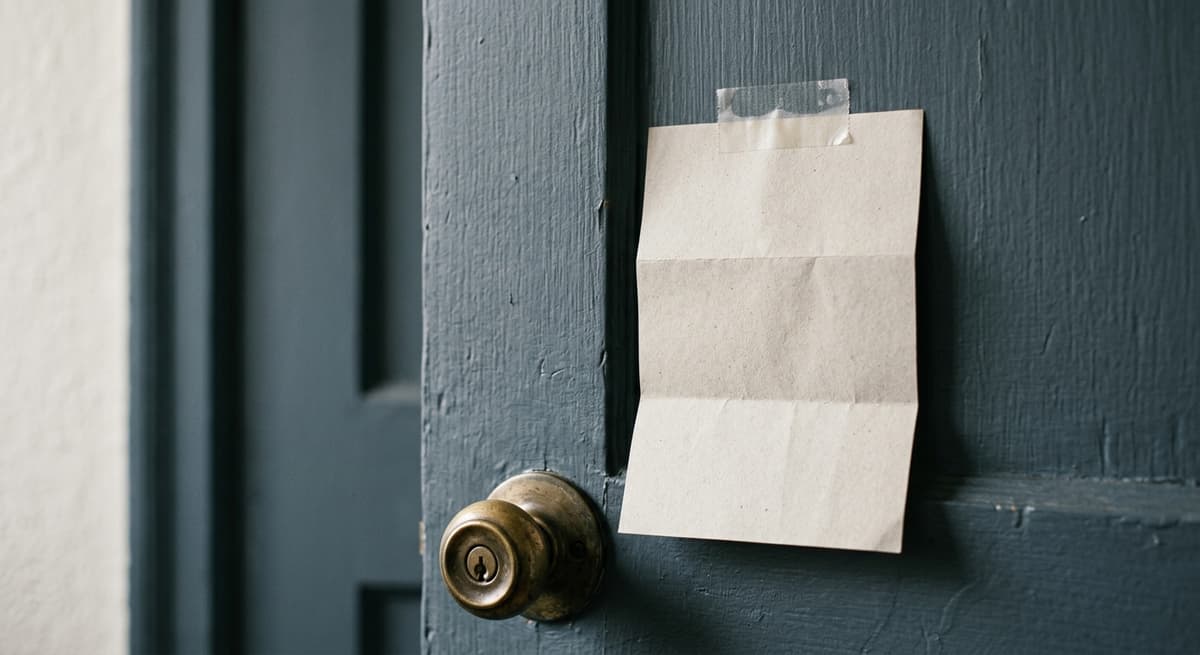
Consent is presumed if the tenant does not object after the landlord gives notice of intent to enter at a time certain. Notice may be given by personal service, by posting it in a conspicuous place in or about the dwelling unit for a reasonable period, or by any other method that results in actual notice to the tenant. The statute sets no number of hours, so what counts as adequate notice depends on the circumstances rather than on a fixed figure.
The statute allows entry at any time in three situations: a genuine emergency, such as a burst pipe, gas leak, or fire; where the landlord reasonably believes the tenant has abandoned the premises; and where the landlord reasonably believes the tenant is in substantial violation of the lease or rental agreement. Outside those situations the notice-and-consent rule applies.
A landlord may not abuse the right of access or use it to harass or intimidate the tenant. Repeated entries without notice, or entries at unreasonable hours, can give rise to a claim of interference with the tenant's right to quiet enjoyment and may support a tenant's defense in an eviction proceeding.
Ending a lease: notice to vacate
To end a month-to-month tenancy in North Dakota, either the landlord or the tenant must give at least one calendar month's written notice under N.D.C.C. 47-16-15(2). A calendar month is not the same as 30 days, and the notice may be given at any time rather than only before the start of the next rental period. Rent is due and payable through the date of termination, so a tenant who gives notice mid-month does not owe a full extra month's rent. The parties may agree in writing to a longer notice period or a different notice time.
Two variations are worth knowing. If a lease converts to a month-to-month tenancy under N.D.C.C. 47-16-06 or 47-16-06.1, either party may terminate on the last day of a month with at least one calendar month's notice. And if a lease requires the tenant to give more than one month's notice from the end of a month, that requirement must be stated with space for the tenant to initial next to it; if the tenant did not initial it when signing, the tenant may still terminate on the last day of a month with one calendar month's notice.
The notice should be delivered in a way that creates a verifiable record, such as certified mail or personal delivery with a signed receipt.
For fixed-term leases, no additional termination notice is required unless the lease specifies one. The lease expires on the date stated in the agreement. If a residential tenant stays past the end date and the landlord accepts rent, North Dakota law presumes the parties renewed the lease as a month-to-month tenancy.
If the landlord needs to remove a tenant for nonpayment of rent or a lease violation, that process is separate from a standard termination notice. For details on the eviction process, including required pay-or-quit notices, see the North Dakota eviction notice guide or the eviction notice hub.
Repairs and the warranty of habitability
Under N.D.C.C. 47-16-13.1, a North Dakota landlord of a residential dwelling unit must comply with applicable building and housing codes materially affecting health and safety, make all repairs necessary to put and keep the premises in a fit and habitable condition, keep common areas clean and safe, maintain electrical, plumbing, sanitary, heating, ventilating, and air-conditioning systems in good and safe working order, provide waste receptacles and arrange for removal, and supply running water, reasonable amounts of hot water, and reasonable heat. A reasonable time is allowed to remedy noncompliance with most of those duties.
North Dakota is one of the states that gives tenants a repair-and-deduct remedy. Under N.D.C.C. 47-16-13, if the landlord neglects to repair dilapidations within a reasonable time after notice from the tenant, the tenant may repair the premises and deduct the expense from rent, recover the cost from the landlord in any other lawful manner, or vacate the premises and be discharged from further rent and other conditions. The statute sets no dollar figure and no rent-multiple ceiling on the deduction, so the limit is the documented expense of the repair the landlord ought to have made.
Tenants should always put repair requests in writing and give the landlord a reasonable period to respond before invoking repair-and-deduct. Keeping copies of all notices, invoices, and correspondence is essential if the landlord contests the deduction later.
For serious habitability failures, tenants may also pursue an action for damages. The North Dakota Department of Health and Human Services and local code-enforcement offices can inspect premises and issue official notices of violation, which strengthen a tenant's legal position.
Rent, late fees, and rent control
North Dakota does not cap the amount of a late fee by statute. Late-fee terms must be included in the written lease to be enforceable; a landlord cannot charge a late fee that is not spelled out in the agreement.

There is no statutory requirement in North Dakota for advance notice of a rent increase during a fixed-term lease unless the lease provides one. For month-to-month tenancies, N.D.C.C. 47-16-07 supplies its own rule: the landlord may change the terms of the lease, including rent, to take effect at the expiration of the month by giving written notice at least 30 days before the end of that month. The change binds the tenant if the tenant continues to hold the premises after the month ends. This 30-day change-of-terms rule is separate from the one-calendar-month termination notice under 47-16-15(2); do not read one as setting the other.
A tenant who does not want to accept a change made under 47-16-07 has a shorter exit than the general rule. Under N.D.C.C. 47-16-15(3), a tenant may terminate the lease at the end of the month by giving at least 25 days' notice.
North Dakota state law bans local rent control. N.D.C.C. 47-16-02.1 prohibits any political subdivision from enacting, maintaining, or enforcing an ordinance or resolution that would have the effect of controlling the amount of rent charged for private residential or commercial property. No locality in North Dakota has rent stabilization or rent control, and none may adopt it under current law.
If you have a landlord-tenant dispute in North Dakota
Document everything from the start. Take dated photos of the unit at move-in and move-out, get move-in inspection checklists signed by the landlord, and send all repair requests and formal communications by certified mail or email. North Dakota also requires the landlord to provide a signed statement describing the condition of the premises when the rental agreement is made (N.D.C.C. 47-16-07.2), and that statement is prima facie proof of the unit's condition at the start of the tenancy.
For deposit disputes, small claims court in North Dakota handles claims up to $15,000. The filing fee is modest and the process does not require an attorney. Bring the lease, the move-in and move-out checklists, photos, and any written correspondence about the deposit. A landlord who cannot produce a timely itemization is at a significant disadvantage, and money withheld without reasonable justification exposes the landlord to treble damages.
For habitability complaints, contact local code enforcement, the county health department, or the North Dakota Department of Health and Human Services. An official inspection report is powerful evidence in any subsequent legal action.
Legal aid organizations in North Dakota, including Legal Services of North Dakota, provide free or low-cost assistance to qualifying tenants. The North Dakota Supreme Court's self-help center also provides guides for small claims and landlord-tenant procedures.
For more about the eviction process, including notice periods, see the North Dakota eviction notice page. For adverse possession and squatter rules, visit the North Dakota squatters rights page. For a state-by-state comparison, see the landlord-tenant laws hub.
This article is general legal information, not legal advice. Landlord-tenant rules vary by state and city and change, and some cities add their own ordinances. For advice about a specific situation, consult a licensed attorney or your state housing agency.

More North Dakota Laws
Frequently Asked Questions
How long does a landlord have to return my deposit in North Dakota?
A landlord in North Dakota must return the security deposit, along with a written itemization of any deductions, within 30 days after the lease terminates and the tenant delivers possession. A landlord who withholds deposit money without reasonable justification is liable for treble damages under N.D.C.C. 47-16-07.1(4).
What is the maximum security deposit in North Dakota?
The standard cap is one month's rent. N.D.C.C. 47-16-07.1 allows only three exceptions: up to two months' rent from an individual convicted of a felony offense, up to two months' rent from an individual who has had a judgment entered against them for violating a previous rental agreement, and a pet security deposit that may not exceed the greater of $2,500 or two months' rent. There is no general written-agreement route around the one-month cap.
Does my landlord have to pay interest on my security deposit in North Dakota?
Yes, in most cases. N.D.C.C. 47-16-07.1(1) requires the landlord to deposit security money in a federally insured interest-bearing savings or checking account for the tenant's benefit, and the deposit plus any accrued interest must be paid to the tenant when the lease terminates. The one exception is that a landlord is not required to pay interest if the period of occupancy was less than nine months.
How much notice must a landlord give to enter in North Dakota?
N.D.C.C. 47-16-07.3 requires more than notice. For non-emergency entry the landlord must first notify the tenant and receive the tenant's consent identifying a time certain, unless it is impractical to do so, and the tenant may not unreasonably withhold consent. Consent is presumed if the tenant does not object after notice of intent to enter at a time certain. No number of hours appears in the statute. The landlord may enter at any time in an emergency, or if the landlord reasonably believes the tenant has abandoned the premises or is in substantial violation of the lease.
How much notice is needed to end a month-to-month lease in North Dakota?
At least one calendar month's written notice from either party under N.D.C.C. 47-16-15(2), unless the parties agreed in writing to a longer period or a different notice time. The notice may be given at any time, not just before the next rental period begins, and rent is due through the date of termination. A calendar month runs 28 to 31 days depending on the month, so it is not the same as a flat 30 days.
Can a landlord raise rent in North Dakota?
Yes. State law bars political subdivisions from adopting rent control (N.D.C.C. 47-16-02.1). For a month-to-month tenancy, N.D.C.C. 47-16-07 lets the landlord change the rent effective at the expiration of the month by giving written notice at least 30 days before the end of that month. A tenant who does not want to accept the change may terminate at the end of the month by giving at least 25 days' notice under 47-16-15(3).
Can I withhold rent for repairs in North Dakota?
North Dakota allows a repair-and-deduct remedy (N.D.C.C. 47-16-13). If the landlord neglects to repair dilapidations within a reasonable time after the tenant's notice, the tenant may repair the premises and deduct the expense from rent, recover the cost in any other lawful manner, or vacate and be discharged from further rent. The statute sets no dollar cap and no one-month-of-rent ceiling on the deduction.
Is there a cap on late fees in North Dakota?
North Dakota does not set a statutory cap on late fees. However, the late-fee amount and any grace period must be clearly stated in the written lease to be enforceable. A landlord cannot charge a late fee that is not disclosed in the lease agreement.
Updates
Corrected the security deposit section to reflect that North Dakota law requires deposits to be held in a federally insured interest-bearing account with interest paid to the tenant, replaced a repealed habitability citation and a nonexistent repair-and-deduct cap with the operative statutes, and fixed the deposit-cap exceptions, the month-to-month termination notice, and the landlord entry standard against the official chapter text.
The Law Behind This Article
This article rests on the statutory provisions below, held in our own legal record and retrieved from the official source. Tap a section to read the operative text.
North Dakota Century Code
§ 47-16-07.1Real property and dwelling security deposits - Limitations and requirementsIn forcecited in 2 of our articles
The lessor of real property or a dwelling who requires money as a security deposit, however denominated, shall deposit the money in a federally insured interest-bearing savings or checking account for the benefit of the tenant. The security deposit and any interest accruing on the deposit must be paid to the lessee upon termination of a lease, subject to the conditions of subsection 2. A lessor may not demand or receive security, however denominated, in an amount or value in excess of one month's rent, except: A lessor may accept an amount or value up to two month's rent, as security, from an individual convicted of a felony offense as an incentive to rent the property to the individual. A lessor may demand an amount or value up to two months rent, as security, from an individual who has had a judgment entered against that individual for violating the terms of a previous rental agreement. A lessor may charge a lessee a pet security deposit for keeping an animal that is not a service animal or companion animal required by a tenant with a disability as a reasonable accommodation under fair housing laws.
Official text (excerpt) · last checked 2026-09-06 · Read the full text in our law library · Verify at ndlegis.gov
Cited in 2 court opinions in our collectionLatest citing opinion in our collection: 2026
Opinions citing this section in our collection:
- Chegwidden v. Evenson (North Dakota Supreme Court 2015, 863 N.W.2d 843)“…without reasonable justification and failed to comply with N.D.C.C. § 47-16-07.1(2), which requires a landlord to give a…”
- Meridian Property Management v. Cordie (North Dakota Supreme Court 2026, 2026 ND 52)“…ease and delivery of possession of the property pursuant to N.D.C.C. § 47-16-07.1(3)(c). The court took the matter under…”
Identified automatically from the court opinions citing this section — not a ranking of which case controls.
Also relied on in: North Dakota Landlord-Tenant Recording Laws: Rights for Renters and Landlords (2026)
Explore the law
This article also draws on these acts and chapters (opening at their first section): North Dakota Century Code § 47-16-01 (Leasing of real property - Definition)
Related law for further reading — not part of this article’s citations.
Search our full record of US law — 2.1 million sections, every state + federal →
Sources and References
- N.D.C.C. Chapter 47-16 (Landlord and Tenant)(ndlegis.gov).gov
- North Dakota Office of the Attorney General - Consumer Protection(attorneygeneral.nd.gov).gov
- Legal Services of North Dakota(legalassist.org)
- N.D.C.C. Chapter 47-16 (Landlord and Tenant), official chapter text(ndlegis.gov)