
Nebraska
Nebraska Court Records: How to Search JUSTICE, the $17 Search Fee, and How Sealing Works
Independently fact-checked against primary sources (last audited August 10, 2026). · 5 primary sources cited on this page. How we verify our legal content
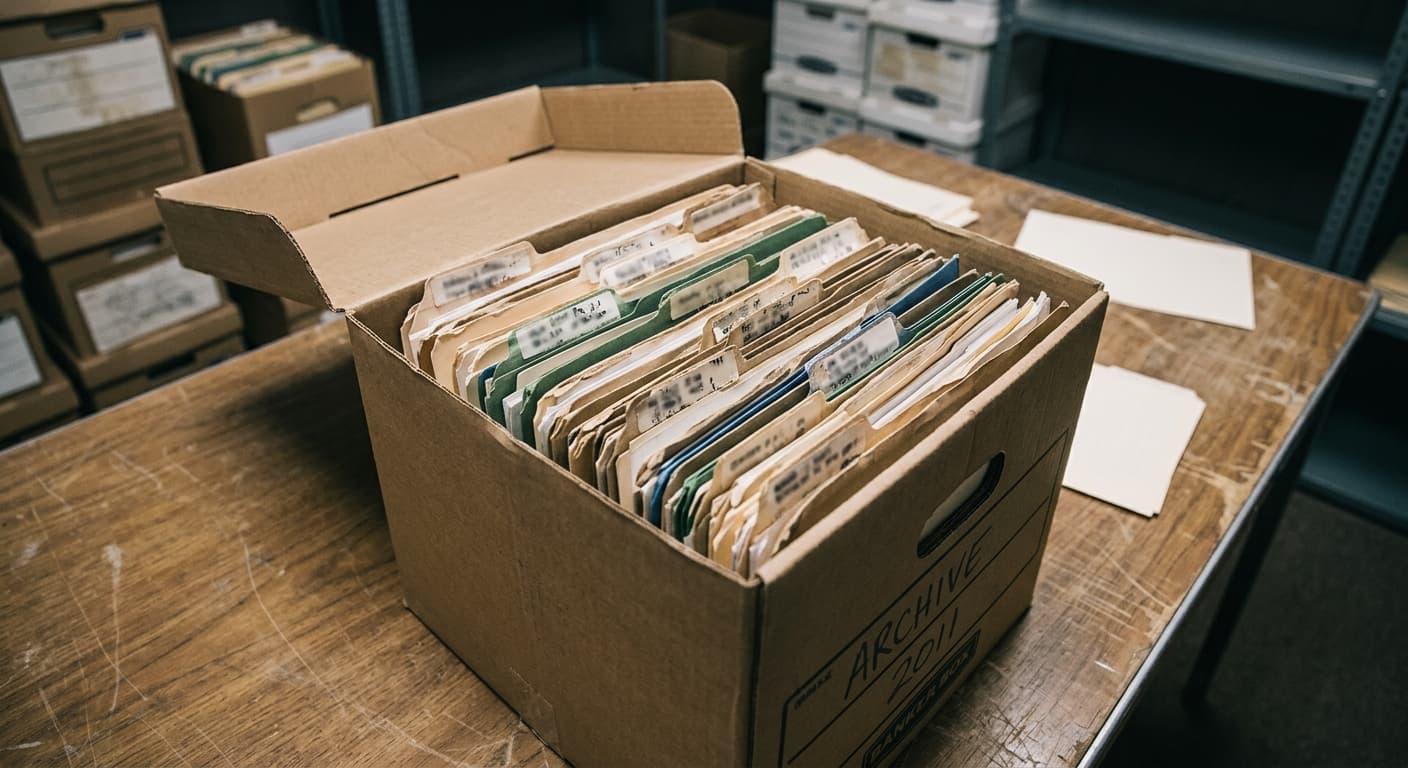
Nebraska is one of the few states where searching a court case online costs money every time, whether or not the search finds anything. The state's statewide trial-court search, run through the JUSTICE case management system, charges a flat fee per search, and that fee went up on January 1, 2026.
That pay-per-search structure is the single fact that shapes how most people should approach a Nebraska court records search: know the cost up front, and know that free alternatives exist at courthouses and law libraries if the fee is the obstacle.
Information last verified on 2026-08-10. This article has not yet been reviewed by a licensed lawyer.
This guide is part of a broader look at court records by state; for the mechanics of federal versus state versus county searches generally, see how to look up court records and are court records public.
Nebraska's Pay-Per-Search JUSTICE Portal
Nebraska's statewide trial-court case search sits behind a paywall on nebraska.gov, run through the JUSTICE system. The service's own terms and conditions state it plainly: "You will be required to pay a $17.00 fee in order to access any information from the Service." That fee applies to a one-time search regardless of the outcome, meaning a search that turns up nothing still costs $17.00, and whatever results a paid search does return remain accessible for a period of three days from the day the search was performed.
Charging for that access is something a Nebraska statute specifically contemplates. Neb. Rev. Stat. section 84-1205.03 allows the courts and the Legislature to charge a fee for electronic access to public records. Subsection (3) requires them to file a written report with the State Records Board describing the contract, the records involved, the implementation timeline, and the security provisions, and subsection (4) carves out an exception: courts "may charge a fee for electronic access to public records for a one-time sale in a unique format" without filing that report.
The Nebraska Supreme Court raised this and related fees effective January 1, 2026. Before the increase, a one-time search cost $15.00; the current one-time search fee is $17.00. For anyone who needs to search repeatedly, a Subscriber Case Search service charges $2.00 per record (up from $1.00), and a monthly Bulk Court Record Search System subscription, aimed at high-volume users, now costs $1,000 per month for up to 20,000 records, up from $500.
Nebraska also offers a free path around the fee: free access to the same case information at courthouse public-access kiosks and at select law libraries, including the Nebraska State Library and university law libraries. Anyone who does not want to pay the online fee, or who is doing a one-off search, can use one of those free access points instead.
What's Public in Nebraska
Nebraska court records start out as public records by statute, not by court rule. The Nebraska Public Records Act, Neb. Rev. Stat. sections 84-712 through 84-712.09, defines public records to include "all records and documents, regardless of physical form, of or belonging to this state" and to any "agency, branch, department, board, bureau, commission, council, subunit, or committee" of it. Section 84-712 gives Nebraska residents and other interested persons the right to examine those records during regular business hours and to make their own memoranda and copies free of charge, and it caps what a custodian may charge for copies it produces at the actual added cost of making them available. The categories a custodian may withhold are listed in section 84-712.05, and section 84-712.01 adds a carve-out for anything another statute expressly makes non-public.
Article 8 of the Nebraska Supreme Court Rules, sections 1-801 through 1-810, is the administrative layer the courts built on top of that statutory right. First adopted as an interim policy in 2003 and revised into permanent policy in 2013, it governs how electronic court records are made available, which categories are withheld, and how fees for access are structured. Section 1-810 covers fees for access.
The exclusions are consolidated in one rule, section 1-808, rather than scattered through the article, and that rule largely defers to the statute. It withholds "Information enumerated in Neb. Rev. Stat. section 84-712.05," criminal history information as set forth in the Security, Privacy, and Dissemination of Criminal History Information Act (section 29-3501 et seq.), adoption case records (the rule cites section 43-113), and "Court records sealed pursuant to statute or by court order." It also imposes a duty on anyone who obtains court records through a court-authorized provider not to disclose a record once it has been sealed, with a safe harbor for lawyers and parties who already held a document that was filed before the case was sealed and who make no new disclosure of it.

Sealing, Set-Aside, and What Each One Actually Does
Nebraska uses three distinct terms, and they are not interchangeable. A set aside, under Neb. Rev. Stat. section 29-2264, applies to a conviction after a person successfully completes probation or a short sentence; it nullifies the conviction and removes the civil disabilities that came with it, but the underlying record still exists and remains visible to the public.
Sealing is a separate track that applies mainly to records with no conviction at all, meaning charges that were dismissed or that ended in acquittal. Nebraska's own courts describe the effect plainly: "Once a record is sealed, the events surrounding the matter are deemed to have never occurred." A set-aside conviction can later be sealed on request, but a set aside and a sealing are two different actions, not the same step under two names.
Nebraska already has a working automatic-relief mechanism for the sealing track, separate from any Clean Slate branding used elsewhere. Cases dismissed or resulting in acquittal after December 31, 2016 are sealed automatically, with no motion required. Cases from before January 1, 2017 still require filing a Motion to Seal. This automatic mechanism is narrower than a full Clean Slate law because it reaches only non-conviction records, not convictions themselves. For eligibility on the conviction side and the set-aside and sealing filing process, see Nebraska expungement laws, which this page does not duplicate.
Certified Copies
Certified copies of Nebraska court documents are handled by the clerk of the court where the case was filed. Confirm the current process and any fee directly with that court, since this was not itemized in the sources reviewed for this page.

Using Nebraska Court Records the Right Way
Nebraska's paid search tool is built for checking your own case or a matter you are personally involved in, not for compiling a background file on someone else, and the fee structure makes casual browsing of other people's records an expensive habit in any case. Under the federal Fair Credit Reporting Act, most arrests and civil judgments age off a consumer report after seven years, but criminal convictions are carved out of that limit under 15 U.S.C. section 1681c(a)(5) and can be reported indefinitely unless the record has been sealed. Anyone assembling public court records for a hiring or housing decision may be acting as a consumer reporting agency under federal law, and the FTC has enforced this directly: in 2023 it reached a $5.8 million settlement with TruthFinder and Instant Checkmate over marketing public-records reports for tenant and employee screening without following FCRA requirements. A paid JUSTICE search is not a substitute for an FCRA-compliant background check when the decision involves employment or housing.
Related Resources
Court Records by State covers the full 50-state picture. See also How to Look Up Court Records, Are Court Records Public?, Nebraska Expungement Laws, Nebraska Background Check Laws, Nebraska Warrant Search, and Nebraska Public Records Laws.
Disclaimer
This article explains how Nebraska's court records tools are organized and priced. It is general legal information, not legal advice. Fees change; verify current pricing with nebraskajudicial.gov before relying on it. Consult a Nebraska-licensed attorney for advice about a specific case.
Last updated: 2026-08-10. Portal facts and fees reflect their published status as of August 2026.
Frequently Asked Questions
What law makes Nebraska court records public?
The Nebraska Public Records Act, Neb. Rev. Stat. sections 84-712 through 84-712.09, is the governing access law. It gives residents and other interested persons the right to examine public records and make their own copies free of charge, and lists the withholding categories in section 84-712.05. Article 8 of the Nebraska Supreme Court Rules is the administrative layer for electronic court records, and its exclusion rule, section 1-808, points back to that statutory list.
Is Nebraska court records search free?
No. Nebraska's statewide JUSTICE case search charges a flat $17.00 fee per search as of January 1, 2026, even if the search returns no results. Free access to the same information is available at courthouse public terminals and select law libraries.
Why does Nebraska charge for a court records search that finds nothing?
The JUSTICE system's terms and conditions state that the $17.00 fee is required to access the service itself, not tied to whether a matching record is found. This is a flat access fee, not a per-record charge. Neb. Rev. Stat. section 84-1205.03 is the statute that lets the courts charge for electronic access to public records.
How do I search Nebraska court records for free?
Visit a courthouse public-access terminal or one of the participating law libraries, including the Nebraska State Library and university law libraries, which offer free access to the same case information available through the paid JUSTICE portal.
What is the difference between a set aside and a sealed record in Nebraska?
A set aside, under Neb. Rev. Stat. section 29-2264, nullifies a conviction's civil disabilities but leaves the record visible. Sealing, which applies mainly to non-conviction cases, treats the matter as though it never occurred. A set-aside conviction can later be sealed on separate request.
Does Nebraska automatically seal any court records?
Yes, but only for non-conviction cases. Charges dismissed or resulting in acquittal after December 31, 2016 are sealed automatically, without a motion. Cases from before that date still require filing a Motion to Seal. Convictions are not covered by this automatic mechanism.
What does the Nebraska Bulk Court Record Search System cost?
As of January 1, 2026, a monthly subscription costs $1,000 and provides access to up to 20,000 records per month, up from the prior $500 rate.
Updates
Reframed the access-law section around the Nebraska Public Records Act (Neb. Rev. Stat. 84-712 to 84-712.09) as the governing statute, corrected the description of how the court rules list records excluded from public access, and added the statute that authorizes the electronic-access fee.
Independently fact-checked against the cited primary sources
The Law Behind This Article
This article rests on the statutory provisions below, held in our own legal record and retrieved from the official source. Tap a section to read the operative text.
Nebraska Revised Statutes, Chapter 84: STATE OFFICERS
§ 84-712Public records; free examination; memorandum and abstracts; copies; feesIn forcecited in 6 of our articles
(1) Except as otherwise expressly provided by statute, all residents of this state and all other persons interested in the examination of the public records as defined in section 84-712.01 are hereby fully empowered and authorized to (a) examine such records, and make memoranda, copies using their own copying or photocopying equipment in accordance with subsection (2) of this section, and abstracts therefrom, all free of charge, during the hours the respective offices may be kept open for the ordinary transaction of business and (b) except if federal copyright law otherwise provides, obtain copies of public records in accordance with subsection (3) of this section during the hours the respective offices may be kept open for the ordinary transaction of business. (2) Copies made by residents or other persons using their own copying or photocopying equipment pursuant to subdivision (1)(a) of this section shall be made on the premises of the custodian of the public record or at a location mutually agreed to by the requester and the custodian. (3)(a) Copies may be obtained pursuant to subdivision (1)(b) of this section only if the custodian has copying equipment reasonably available.
Official text (excerpt) · last checked 2026-09-02 · Read the full text in our law library · Verify at nebraskalegislature.gov
Cited in 43 court opinions in our collectionLatest citing opinion in our collection: 2024
In the courts (editorial summary, independently checked):State ex rel. BH Media Group v. Frakes (2020) held the execution team confidentiality statute is an "other statute" under section 84-712(1) but only a narrow exemption, with the burden on the agency. Nebraska Journalism Trust v. Dept. of Envt. & Energy (2024) read section 84-712(3) to allow fees for nonattorney review past four hours.
Opinions citing this section in our collection:
- State ex rel. BH Media Group v. Frakes (Nebraska Supreme Court 2020, 943 N.W.2d 231)✓News organizations sought corrections records on lethal injection drug purchases. The court held the execution team confidentiality statute is an exemption, not a complete exception to section 84-712, and that the director failed to prove it justified withholding the records.
- Nebraska Journalism Trust v. Dept. of Envt. & Energy (Nebraska Supreme Court 2024, 316 Neb. 174)✓A nonprofit newsroom challenged a $44,000 fee estimate for keyword email searches. The court held section 84-712 lets an agency charge for nonattorney staff time beyond four cumulative hours spent reviewing records for a statutory basis to withhold, and vacated the writ.
- Jacob v. Nebraska Bd. of Parole (Nebraska Supreme Court 2022, 313 Neb. 109)✓An inmate sought the record of his first-step parole review. The court held the interview record could be withheld as an examination record, and that the statute making parole files confidential is an "other statute" under section 84-712(1), so those files are not public records.
Identified automatically from the court opinions citing this section — not a ranking of which case controls.
Also relied on in: Nebraska Laws on Recording Police: Your Rights and Limits (2026), Nebraska Police Body Camera Laws: Retention & Records, Public Records Laws by State: FOIA Guide for All 50 States (2026)
Nebraska Revised Statutes, Chapter 29: CRIMINAL PROCEDURE
§ 29-2264Probation; completion; conviction may be set aside; conditions; retroactive effectIn forcecited in 4 of our articles
(1) Whenever any person is placed on probation by a court and satisfactorily completes the conditions of his or her probation for the entire period or is discharged from probation prior to the termination of the period of probation, the sentencing court shall issue an order releasing the offender from probation. Such order in all felony cases shall provide notice that the person's voting rights are restored upon completion of probation. The order shall include information on restoring other civil rights through the pardon process, including application to and hearing by the Board of Pardons. (2) Whenever any person is convicted of an offense and is placed on probation by the court, is sentenced to a fine only, or is sentenced to community service, he or she may, after satisfactory fulfillment of the conditions of probation for the entire period or after discharge from probation prior to the termination of the period of probation and after payment of any fine and completion of any community service, petition the sentencing court to set aside the conviction.
Official text (excerpt) · last checked 2026-09-01 · Read the full text in our law library · Verify at nebraskalegislature.gov
Cited in 27 court opinions in our collectionLatest citing opinion in our collection: 2024
In the courts (editorial summary, independently checked):State v. Kudlacz (2014) held that county jail confinement imposed as a condition of probation does not bar a petition to set aside a conviction under Neb. Rev. Stat. 29-2264. State v. Brunsen (2022) reviewed a denial for abuse of discretion and held the relevant-information factor does not permit resting on erroneous facts.
Opinions citing this section in our collection:
- State v. Brunsen (Nebraska Supreme Court 2022, 311 Neb. 368)✓A truck driver with a long record asked to set aside a 1988 theft conviction under section 29-2264 and the State agreed; the court held the denial rested on public welfare and his criminal history rather than erroneous facts, and was no abuse of discretion.
- State v. Kudlacz (Nebraska Supreme Court 2014)✓Kudlacz completed probation that had been amended to include 90 days of weekend county jail; the court held section 29-2264 does not disqualify a petitioner because jail was a probation condition, and remanded for the sentencing court to weigh the statutory factors.
- Opinion No. (2002) (Nebraska Attorney General Reports 2002)“…on would provide relief. In Spady the Court determined that Neb. Rev. Stat. § 29-2264 did not violate Art. II , § 1 of th…”
Identified automatically from the court opinions citing this section — not a ranking of which case controls.
Also relied on in: Nebraska Expungement Laws: Set Aside vs. Sealing and How Relief Works, Nebraska Background Check Laws (2026 Guide), Nebraska DUI Laws: Penalties, BAC Limit & License (2026)
United States Code Title 15
§ 1681cRequirements relating to information contained in consumer reportsIn forcecited in 54 of our articles
Except as authorized under subsection (b), no consumer reporting agency may make any consumer report containing any of the following items of information: Cases under title 11 or under the Bankruptcy Act that, from the date of entry of the order for relief or the date of adjudication, as the case may be, antedate the report by more than 10 years. Civil suits, civil judgments, and records of arrest that, from date of entry, antedate the report by more than seven years or until the governing statute of limitations has expired, whichever is the longer period. Paid tax liens which, from date of payment, antedate the report by more than seven years. Accounts placed for collection or charged to profit and loss which antedate the report by more than seven years. Any other adverse item of information, other than records of convictions of crimes which antedates the report by more than seven years.
Official text (excerpt) · last checked 2026-07-28 · Read the full text in our law library · Verify at uscode.house.gov
Cited in 383 court opinions in our collectionLatest citing opinion in our collection: 2026
In the courts (editorial summary, independently checked):Katz v. Donna Karan Co. (2017) addressed the FACTA truncation rule in 1681c(g) and affirmed dismissal for lack of Article III standing, treating material risk of harm as a fact question. Edward Seamans v. Temple University (2014) held the seven-year window in 1681c(a)(4) is extended for an education loan only until that loan is repaid.
Opinions citing this section in our collection:
- Katz v. Donna Karan Co. (Court of Appeals for the Second Circuit 2017, 872 F.3d 114)✓A shopper sued two stores whose receipts printed the first six digits of his credit card number; the Second Circuit affirmed dismissal for lack of standing, seeing no clear error in the finding that those digits show only the card issuer, not a material risk of identity theft.
- Edward Seamans v. Temple University (Court of Appeals for the Third Circuit 2014, 744 F.3d 853)✓A defaulted university loan kept appearing on a borrower's credit reports after he repaid it because the school never reported the delinquency date; the Third Circuit held the Higher Education Act suspends section 1681c(a)(4)'s aging-off rule only until repayment.
- Gonzales v. Arrow Financial Services, LLC (Court of Appeals for the Ninth Circuit 2011, 660 F.3d 1055)✓A debt buyer offered to settle health club debts over seven years old, saying that if it was reporting the account the bureaus would be told it was settled; the Ninth Circuit, treating those debts as unreportable under section 1681c(a)(4), called that implication misleading.
Identified automatically from the court opinions citing this section — not a ranking of which case controls.
Also relied on in: How Long Does a Felony Stay on Your Record? (2026), Alabama Background Check Laws (2026 Guide), Louisiana Background Check Laws (2026 Guide)
Search our full record of US law — 2.1 million sections, every state + federal →
Sources and References
- Nebraska Judicial Branch, Nebraska Supreme Court Introduces New Fee Structure(nebraskajudicial.gov).gov
- Nebraska.gov, JUSTICE Case Search Terms and Conditions(nebraska.gov).gov
- Nebraska Judicial Branch, Adult Record Sealing(nebraskajudicial.gov).gov
- Nebraska Judicial Branch, Supreme Court Rules, Article 8: Public Access to Electronic Court Records and Information(nebraskajudicial.gov).gov
- Cornell Legal Information Institute, 15 U.S.C. 1681c, Requirements relating to information contained in consumer reports(law.cornell.edu)
- Federal Trade Commission, FTC Says TruthFinder and Instant Checkmate Deceived Users About Background Report Accuracy, Violated FCRA(ftc.gov).gov
- Nebraska Legislature, Neb. Rev. Stat. 84-712, Public records; free examination; memoranda and copies; fees(nebraskalegislature.gov)
- Nebraska Legislature, Neb. Rev. Stat. 84-712.01, Public records; right of citizens; definition(nebraskalegislature.gov)
- Nebraska Legislature, Neb. Rev. Stat. 84-1205.03, Electronic access to public records; fees; report to State Records Board(nebraskalegislature.gov)
- Nebraska Judicial Branch, Neb. Ct. R. 1-808, Court records and information excluded from public access; duty not to disclose(nebraskajudicial.gov)