
Utah
Utah License Plate Reader Laws (2026)
Independently fact-checked against primary sources (last audited October 1, 2026). · 11 primary sources cited on this page. How we verify our legal content
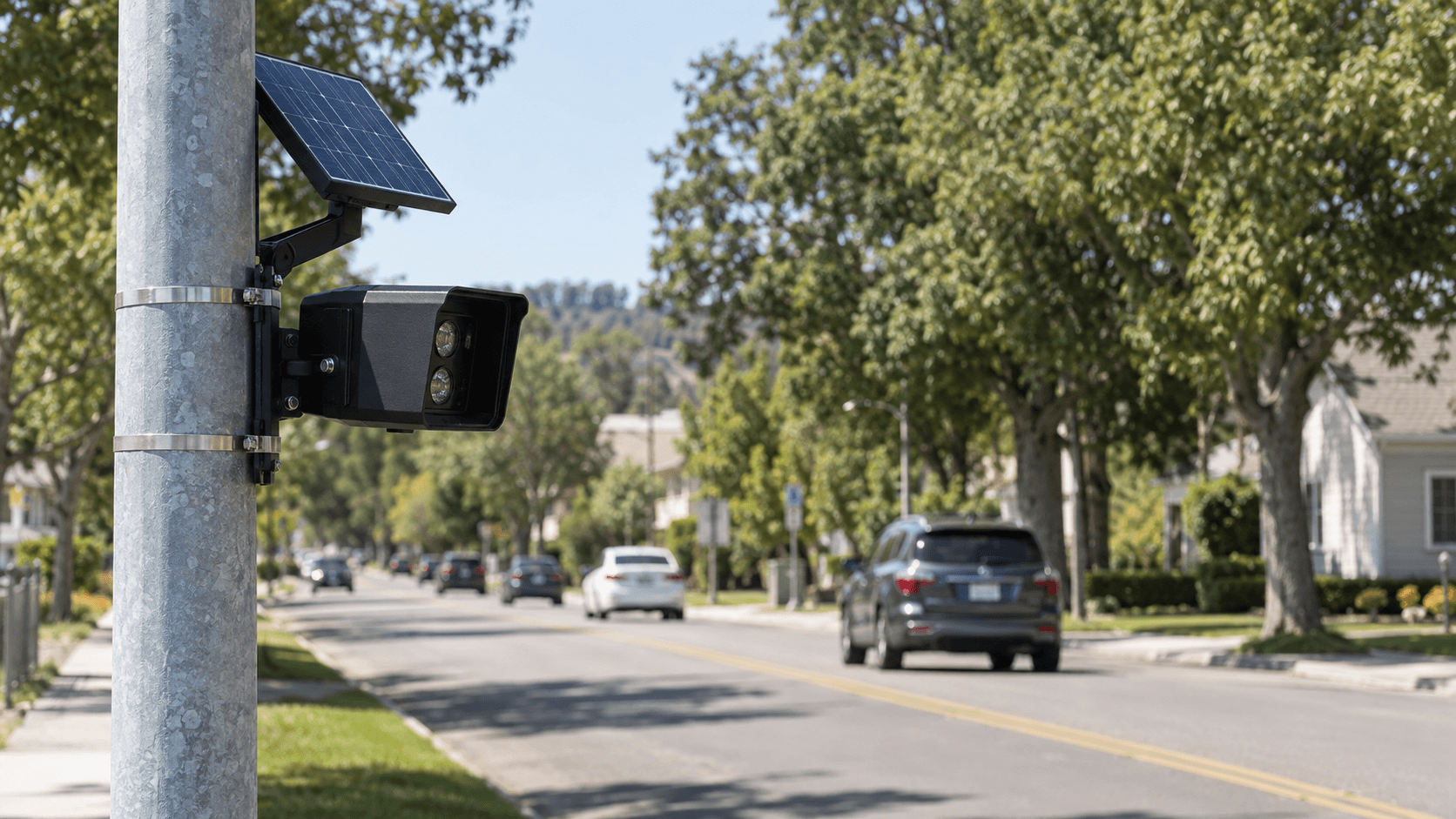
Utah has a full license plate reader statute, the Automatic License Plate Reader System Act, Utah Code §§ 41-6a-2001 to 41-6a-2006. Its starting rule is that "a governmental entity may not use an automatic license plate reader system" except for listed purposes. Police must have a written policy, a Utah Department of Transportation permit for fixed readers on state highways, and a public posting of both. Captured plate data is a protected record, generally may not be kept longer than nine months, and may not be sold, and knowingly misusing it is a class B misdemeanor.
Information reviewed September 30, 2026.
For related pages, see the Utah entry in the state comparison, the ALPR laws hub, Are Flock cameras legal?, What are Flock cameras?, and our Utah surveillance camera laws guide.
Does Utah have a license plate reader law?
Yes. Part 20 of the Traffic Code, Title 41, Chapter 6a, "is known as the 'Automatic License Plate Reader System Act'" (§ 41-6a-2001). It was enacted in the 2013 General Session (Chapter 447) and has been amended several times since.
The versions we read on the Legislature's site on September 30, 2026 are: the definitions in § 41-6a-2002, effective January 1, 2025; the use restrictions in § 41-6a-2003, effective October 14, 2025 (amended by Chapter 9, 2025 Special Session 1); and §§ 41-6a-2004 to 41-6a-2006, effective May 3, 2023. No 2026 General Session amendment appears on those pages.
Who does the Utah Act cover?
The core prohibition runs against a "governmental entity," which the Act defines broadly. The list includes state executive agencies, the Legislature and courts, "any state-funded institution of higher education or public education," "any political subdivision of the state," and "a law enforcement agency." It also includes "a person acting as an agent of a governmental entity or acting on behalf of a governmental entity." Anyone else is a "nongovernmental entity."
A private business, landlord or homeowners association is therefore not barred from using readers by § 41-6a-2003(1). But other parts of the Act still reach private operators:
- The 14-day preservation duty in § 41-6a-2005(1) applies to "[a] person or governmental entity using an automatic license plate reader system."
- Under § 41-6a-2005(5), a governmental entity "may obtain, receive, or use captured plate data from a nongovernmental entity only" with a warrant or a court disclosure order, and only for an authorized purpose.
- The criminal penalty in § 41-6a-2006 applies to "[a] person" who knowingly or intentionally violates the part.
The definitions also cover data broadly. "Captured plate data" means "the global positioning system coordinates, date and time, photograph, license plate number, and any other data captured by or derived from an automatic license plate reader system."
What can plate readers be used for in Utah?
Section 41-6a-2003(2) lists the permitted uses. Subject to the conditions in subsection (3), a reader may be used:
- by a law enforcement agency to access captured plate data as part of an active criminal investigation, to apprehend an individual with an outstanding warrant, to locate a missing or endangered person, or to locate a stolen vehicle;
- by a law enforcement agency to access the Utah Criminal Justice Information System to verify registration or insurance, confirm vehicle identification, or identify a stolen vehicle;
- for parking enforcement, by a governmental parking enforcement entity or a parking enforcement entity regulating a parking facility;
- to control access to a secured area, collect an electronic toll, or enforce motor carrier laws;
- by a public transit district to assess parking needs and conduct travel pattern analysis;
- by an institution of higher education for the law enforcement, parking or secured-area purposes above, or, if the data is anonymized, for research and educational purposes;
- by the Utah Inland Port Authority or an approved contractor, only within an Authority project area, to study commercial vehicle traffic for supply chain efficiency, with specific plate information anonymized; and
- by an international airport owned by a governmental entity for traffic control, parking, security and similar operational objectives on the airport campus.
An "active criminal investigation" has a defined meaning: "an officer has documented reasonable suspicion that a crime is being or has been committed, and believes the suspected criminal activity may be connected to a vehicle, a registered owner of a vehicle, or an occupant of a vehicle." The investigation category therefore depends on documented reasonable suspicion.
The Inland Port Authority and airport paragraphs appear in the version effective October 14, 2025. We did not open the 2025 Special Session bill that last amended the section, so we do not state which paragraphs it added.
What must Utah police do before using a reader?
Section 41-6a-2003(3) says a law enforcement agency may not use a reader unless three conditions are met:
- It has "a written policy regarding the use, management, and auditing of the automatic license plate reader system."
- For "any stationary device installed with the purpose of capturing license plate data of vehicles traveling on a state highway," it obtains a special use permit from the Department of Transportation "before installing the device."
- The policy and any permits are posted on the appropriate city, county or state website, or on the Utah Public Notice Website if the agency has no website.
The posting rule is the most practical part of the Act for residents: an agency using readers should have its policy, and any highway permits, online.
How does UDOT's highway permit work?
Utah Code § 72-1-212 defines a special use permit to include one issued "to a law enforcement agency to install an automatic license plate reader on a state highway for the purpose of capturing license plate data of vehicles traveling on a state highway, regardless of whether the device is installed on property owned by the department or the law enforcement agency." Those permits do not count toward the limit UDOT may set on the number of special use permits issued on a particular highway in a calendar year. UDOT's rules must consider whether the agency has published its policy online, UDOT may also require an encroachment permit, and the agency is responsible for installing, maintaining, collecting data from and removing the device. UDOT must keep a record of the permits it issues to law enforcement, "including the stated purpose for each permit," for at least five years.
UDOT's rule, Utah Admin. Code R920-4-16 (effective November 21, 2023), fills in the process:
- A permit "is required before installing an ALPRS to capture the license plate data of vehicles traveling on a state highway," and UDOT may issue one only to a law enforcement agency with contracting authority or a local government on its behalf.
- UDOT may not issue a permit unless the agency demonstrates compliance with § 41-6a-2003.
- Each permittee must file with UDOT a list of the GPS coordinates of each proposed or installed reader in its jurisdiction and update it promptly when a reader is added, moved or removed.
- UDOT may revoke a permit for a violation, and the holder must then stop operating the readers authorized under it.
- UDOT may not charge an application fee.
How long can Utah keep plate reader data?
Nine months is the general limit. Under § 41-6a-2004(1)(c), captured plate data obtained for the Act's purposes "may not be preserved for more than nine months by a governmental entity except pursuant to" a preservation request under § 41-6a-2005, a disclosure order under § 41-6a-2005(2), or "a warrant issued under the Utah Rules of Criminal Procedure or an equivalent federal warrant."
Nine months is a ceiling. Section 41-6a-2004(4) separately requires a governmental entity to "destroy as soon as reasonably possible, in an unrecoverable manner," plate data that "is not specifically necessary to achieve the authorized objectives" of the Act, including data it obtained from a private operator by warrant.
Two other rules apply. Toll data collected under § 72-6-118 may be kept as long as needed to collect the toll or a penalty, and the nine-month limit does not apply to it. And a governmental entity may keep and disclose aggregate data for planning and statistical purposes if the information identifying a specific plate is not kept or disclosed.
Who can Utah plate reader data be shared with or sold to?
Under § 41-6a-2004(2), a governmental entity authorized to use readers "may not sell captured plate data for any purpose" and "may not share or use captured plate data for a purpose not authorized under Subsection 41-6a-2003(2)."
Governmental entities may enter "a memorandum of understanding with another governmental entity to share access to an automatic license plate reader system or captured plate data otherwise authorized by this part" (§ 41-6a-2005(4)). The text does not have a separate rule for out-of-state or federal agencies; the purpose limits apply to all sharing, and the Act accepts an "equivalent federal warrant" where it requires a warrant.
Data held by a private operator can reach a governmental entity only through a warrant or a court disclosure order, and only for an authorized purpose (§ 41-6a-2005(5)).
How do preservation requests and court orders work?
Section 41-6a-2005 gives both prosecutors and criminal defendants a way to keep and obtain plate data.
A governmental entity or "defendant in a criminal case" may send a written statement asking the system's user to preserve data, identifying the cameras, the plate, or the dates and time frames, and saying it is applying for a court order. The user must then preserve the data "for 14 days after the date the data is captured" pending the order.
A court "shall issue a court order requiring the disclosure of captured plate data" if the applicant "offers specific and articulable facts showing that there are reasonable grounds to believe that the captured plate data is relevant and material to an ongoing criminal or missing person investigation." The data may be destroyed at the latest of the denial of the application and any appeal, the end of 14 days if not otherwise preserved, or the end of the nine-month period.
Does Utah require audit logs?
Partly. Every law enforcement agency must keep a record of "the number of times a search of captured license plate data is conducted by the agency or the agency's employees or agents" and "the crime type and incident number associated with each search," and must keep that record "for at least five years" (§ 41-6a-2005(6)).
The written policy must address auditing, but the Act does not set how often audits happen and does not require a public report on searches.
Can you get Utah plate reader data through a public records request?
Generally not the data. Captured plate data maintained by a governmental entity "is a protected record" under the Government Records Access and Management Act (GRAMA) (§ 41-6a-2004(1)(a)). GRAMA's list of protected records, in the version of § 63G-2-305 effective July 1, 2026, includes item (63): "captured plate data that is obtained through an automatic license plate reader system used by a governmental entity as authorized in Section 41-6a-2003."
The Act says the data "may only be disclosed" under GRAMA's disclosure rules for protected records in § 63G-2-202, under a court disclosure order, or under a warrant. We did not analyze § 63G-2-202, so we do not say who can obtain protected records under it.
The policy and any highway permits are a different matter: § 41-6a-2003(3)(c) requires them to be posted publicly.
What are the penalties?
Under § 41-6a-2006, "[a] person who knowingly or intentionally uses, obtains, or discloses captured license plate data in violation of this part is guilty of a class B misdemeanor." We found no private right to sue for damages in Part 20.
How does Utah handle toll plate data?
Under § 72-6-118, UDOT may use "license plate reading technology" and photographic or video recording technology to monitor a tollway and collect tolls. That data is a protected record under GRAMA when the photographic or video data is maintained by a governmental entity, may not be used or shared beyond the toll purposes in the section, and may be kept only as long as needed to collect a toll or penalty or under a warrant. UDOT may not sell photographic or video data captured for tolling.
What have Utah courts said?
We did not research Utah case law for this page, so we cannot say whether any Utah court has applied or interpreted the Act. We also did not look for Attorney General opinions.
Is Utah changing its plate reader law?
The 2026 attempt failed. H.B. 327, License Plate Reader Amendments (sponsor Rep. Kristen Chevrier), would have repealed §§ 41-6a-2001 to 41-6a-2006 and enacted a new Automatic License Plate Reader Act in Title 77, Chapter 23g, with conforming changes to §§ 63G-2-305, 72-1-212 and 53G-8-805. The bill's official page shows its last action on March 6, 2026, and its location as the "House file for bills not passed." It is not law.
A Utah News Dispatch report of September 17, 2026 says the Law Enforcement and Criminal Justice Interim Committee requested a bill file for new plate reader guardrails, and that the Governor asked the Utah Privacy Governing Board and Privacy Commission to review plate reader regulation. We did not confirm either step on an official page, and no bill number was reported.
How can I check my local system?
Start online. Section 41-6a-2003(3)(c) requires a law enforcement agency's plate reader policy, and any UDOT highway permits, to be posted on its city, county or state website, or on the Utah Public Notice Website. If you cannot find them, ask the agency.
Other records that exist under the Act include the agency's five-year search log, UDOT's five-year record of permits with their stated purposes, and the GPS location list each permittee files with UDOT. We did not check whether those records are released on request. Captured plate data itself is a protected record. For the technology itself, see What are Flock cameras?.
What did we check, and what did we not?
We read all six sections of Part 20, § 72-1-212, the tolling provisions of § 72-6-118, item (63) of § 63G-2-305 and Utah Admin. Code R920-4-16 on the official Legislature and administrative rules sites. Phrase searches of the Utah Code for "license plate data" returned only §§ 41-6a-2003, 41-6a-2005, 41-6a-2006 and 72-1-212. A search for "license plate reader" also returned § 53-10-1002, under which an investigating law enforcement agency "may use relevant law enforcement technology, including an automatic license plate reader system, to locate a vehicle that is being sought in connection with an issued Amber Alert." Separately, § 53G-8-805, which requires a local education agency to make all security cameras in a school building accessible to local law enforcement and public safety answering points, says the section "is not subject to the restrictions in Section 41-6a-2003." Searches for "license plate number" returned sections that use a plate number as an identifier on registrations, citations and reports. Utah's geofence statute, § 77-23f-102, which requires a warrant for reverse-location information from electronic devices, concerns devices rather than plate readers.
We did not open the Government Data Privacy Act (Title 63A, Chapter 19) or the Utah Consumer Privacy Act (Title 13, Chapter 61), so we do not say whether either reaches plate data. Searches pairing "license plate" with immigration returned loose results that we did not review exhaustively. We did not review state records retention schedules, local ordinances or Attorney General opinions.
Last updated: September 30, 2026. This page reflects the statutes, rule and records described above as we reviewed them; it is general legal information, not legal advice.
Frequently Asked Questions
Is it legal for Utah police to use license plate readers?
Yes, for the purposes listed in Utah Code § 41-6a-2003(2), such as an active criminal investigation, an outstanding warrant, a missing or endangered person, or a stolen vehicle. The agency must first have a written policy on use, management and auditing, a UDOT permit for stationary readers aimed at a state highway, and public posting of the policy and permits.
How long can Utah keep license plate reader data?
A governmental entity generally may not preserve captured plate data for more than nine months unless a preservation request, a court disclosure order or a warrant applies. Data not specifically necessary for an authorized purpose must be destroyed as soon as reasonably possible. Toll data may be kept as long as needed to collect the toll or penalty.
Can a Utah business or HOA use license plate readers?
The Act's prohibition applies to governmental entities, not private operators. A private operator is still subject to the 14-day preservation duty on a written request that meets the statute's requirements, a governmental entity can obtain its data only by warrant or court order, and knowingly misusing plate data in violation of the Act is a class B misdemeanor for any person.
Can Utah police get plate data from Flock or a private camera owner?
Under § 41-6a-2005(5), a governmental entity may obtain, receive or use captured plate data from a nongovernmental entity only with a warrant or a court disclosure order, and only for a purpose the Act authorizes.
Can I get Utah plate reader data through a GRAMA request?
Captured plate data held by a governmental entity is a protected record under GRAMA and may be disclosed only under the protected-record rules, a court disclosure order or a warrant. The agency's plate reader policy and any UDOT highway permits must be posted publicly.
Can a criminal defendant in Utah get plate reader data?
The Act lets a defendant in a criminal case request 14-day preservation and apply for a court order. The court must order disclosure if the defendant offers specific and articulable facts showing reasonable grounds to believe the data is relevant and material to an ongoing criminal or missing person investigation.
Did Utah change its plate reader law in 2026?
No. H.B. 327 (2026), which would have repealed and replaced the Act, was filed on March 6, 2026 in the House file for bills not passed. A September 2026 news report says lawmakers requested a bill file ahead of the next legislative session, which we did not confirm on an official page.
Updates
Independently fact-checked against the cited primary sources
The Law Behind This Article
This article rests on the statutory provisions below, held in our own legal record and retrieved from the official source. Tap a section to read the operative text.
Utah Code, Title 41: Motor Vehicles
§ 41-6a-2003Automatic license plate reader systems -- Restrictions.In forcecited in 6 of our articles
(1) Except as provided in Subsection (2), a governmental entity may not use an automatic license plate reader system. (2) Subject to Subsection (3), an automatic license plate reader system may be used: (a) by a law enforcement agency to access captured license plate data: (i) as part of an active criminal investigation; (ii) to apprehend an individual with an outstanding warrant; (iii) to locate a missing or endangered person; or (iv) to locate a stolen vehicle; (b) by a law enforcement agency to access the Utah Criminal Justice Information System to: (i) verify valid vehicle registration information; (ii) confirm vehicle identification; (iii) verify insurance information; or (iv) identify a stolen vehicle; (c) by a governmental parking enforcement entity for the purpose of enforcing state and local parking laws; (d) by a parking enforcement entity for regulating the use of a parking facility; (e) for the purpose of controlling access to a secured area; (f) for the purpose of collecting an electronic toll; (g) for the purpose of enforcing motor carrier laws; (h) by a public transit district for the purpose of assessing parking needs and conducting a travel…
Official text (excerpt) · last checked 2026-07-29 · Read the full text in our law library · Verify at le.utah.gov
Also relied on in: License Plate Reader Laws by State: 2026 Comparison, Are Flock Cameras Legal? State Rules and Court Limits
§ 41-6a-2004Captured plate data -- Preservation and disclosure.In forcecited in 6 of our articles
(1) Captured plate data obtained for the purposes described in Section 41-6a-2003: (a) in accordance with Section 63G-2-305, is a protected record under Title 63G, Chapter 2, Government Records Access and Management Act, if the captured plate data is maintained by a governmental entity; (b) may not be used or shared for any purpose other than the purposes described in Section 41-6a-2003; (c) except as provided in Subsection (3), may not be preserved for more than nine months by a governmental entity except pursuant to: (i) a preservation request under Section 41-6a-2005; (ii) a disclosure order under Subsection 41-6a-2005(2); or (iii) a warrant issued under the Utah Rules of Criminal Procedure or an equivalent federal warrant; and (d) may only be disclosed: (i) in accordance with the disclosure requirements for a protected record under Section 63G-2-202; (ii) pursuant to a disclosure order under Subsection 41-6a-2005(2); or (iii) pursuant to a warrant issued under the Utah Rules of Criminal Procedure or an equivalent federal warrant.
Official text (excerpt) · last checked 2026-07-29 · Read the full text in our law library · Verify at le.utah.gov
§ 41-6a-2005Preservation request.In forcecited in 4 of our articles
(1) A person or governmental entity using an automatic license plate reader system shall take all steps necessary to preserve captured plate data in its possession for 14 days after the date the data is captured pending the issuance of a court order requiring the disclosure of the captured plate data if a governmental entity or defendant in a criminal case requesting the captured plate data submits a written statement to the person or governmental entity using an automatic license plate reader system: (a) requesting the person or governmental entity to preserve the captured plate data; (b) identifying: (i) the camera or cameras for which captured plate data shall be preserved; (ii) the license plate for which captured plate data shall be preserved; or (iii) the dates and time frames for which captured plate data shall be preserved; and (c) notifying the person or governmental entity maintaining the captured plate data that the governmental entity or defendant in a criminal case is applying for a court order for disclosure of the captured plate data.
Official text (excerpt) · last checked 2026-07-29 · Read the full text in our law library · Verify at le.utah.gov
§ 41-6a-2006Penalties.In forcecited in 2 of our articles
A person who knowingly or intentionally uses, obtains, or discloses captured license plate data in violation of this part is guilty of a class B misdemeanor.
Official text (excerpt) · last checked 2026-07-29 · Read the full text in our law library · Verify at le.utah.gov
§ 41-6a-2002Definitions.In forcecited in 4 of our articles
As used in this chapter: (1) "Active criminal investigation" means an officer has documented reasonable suspicion that a crime is being or has been committed, and believes the suspected criminal activity may be connected to a vehicle, a registered owner of a vehicle, or an occupant of a vehicle. (2) "Automatic license plate reader system" means a system of one or more mobile or fixed automated high-speed cameras used in combination with computer algorithms to convert an image of a license plate into computer-readable data. (3) "Captured plate data" means the global positioning system coordinates, date and time, photograph, license plate number, and any other data captured by or derived from an automatic license plate reader system.
Official text (excerpt) · last checked 2026-07-29 · Read the full text in our law library · Verify at le.utah.gov
Utah Code, Title 72: Transportation Code
§ 72-1-212Special use permitting -- Rulemaking.In forcecited in 2 of our articles
(1) As used in this section: (a) "Law enforcement agency" means the same as that term is defined in Section 53-1-102. (b) "Special use permit" means a permit issued: (i) for a special use or a special event that takes place on a highway; or (ii) to a law enforcement agency to install an automatic license plate reader on a state highway for the purpose of capturing license plate data of vehicles traveling on a state highway, regardless of whether the device is installed on property owned by the department or the law enforcement agency. (2) In accordance with Title 63G, Chapter 3, Utah Administrative Rulemaking Act, and in consultation with representatives of the Utah League of Cities and Towns and the Utah Association of Counties, the department shall make rules that are not inconsistent with this chapter or the constitution and laws of this state or of the United States governing the issuance of a special use permit to maintain public safety and serve the needs of the traveling public.
Official text (excerpt) · last checked 2026-07-29 · Read the full text in our law library · Verify at le.utah.gov
Utah Code, Title 53: Public Safety Code
§ 53-10-1002Amber Alert criteria.In forcecited in 2 of our articles
(1) Except as provided in Subsection (2), if a law enforcement agency receives a report that an abduction of a child has occurred, including an abduction of a child by the child's parent or guardian, the investigating law enforcement agency may issue an Amber Alert if: (a) the investigating law enforcement agency confirms that an abduction of the child has occurred; (b) the investigating law enforcement agency believes there is a credible threat of imminent danger of serious bodily injury or death to the child; and (c) there is sufficient descriptive information about the child, alleged abductor, or the circumstances surrounding the abduction to indicate that issuing an Amber Alert will assist in the safe recovery of the child or the apprehension of the abductor. (2) A law enforcement agency may not issue an Amber Alert: (a) for a reported runaway; or (b) for the taking, concealing, or detaining of a child by the child's parent during a child custody dispute regarding the child, unless there is a credible threat of imminent danger of serious bodily injury or death to the child.
Official text (excerpt) · last checked 2026-07-29 · Read the full text in our law library · Verify at le.utah.gov
Utah Code, Title 53G: Public Education System -- Local Administration
§ 53G-8-805Panic alert device -- Security cameras -- Key box.In forcecited in 2 of our articles
(1) As used in this section: (a) "Universal access key box" means a UL Standard 1037 compliant secure container designed to store and protect emergency access keys and devices. (b) "Emergency responder" means law enforcement, fire service, or emergency medical personnel authorized by local authorities to respond to school emergencies. (2) In accordance with the results of the school safety needs assessment described in Section 53G-8-701.5, an LEA shall provide the following with a wearable panic alert device that shall communicate directly with public safety answering points: (a) the lead teacher in each classroom; and (b) beginning July 1, 2027, the appropriate school safety personnel described in Subsection 53G-8-701.5(2). (3) An LEA shall ensure, before the school year begins, all school building personnel receive training on the protocol and appropriate use of the panic alert device described in Subsection (2).
Official text (excerpt) · last checked 2026-07-29 · Read the full text in our law library · Verify at le.utah.gov
Search our full record of US law — 2.1 million sections, every state + federal →
Sources and References
- Utah Code § 41-6a-2001(le.utah.gov).gov
- Utah Code § 41-6a-2002(le.utah.gov).gov
- Utah Code § 41-6a-2003(le.utah.gov).gov
- Utah Code § 41-6a-2005(le.utah.gov).gov
- Utah Code § 41-6a-2006(le.utah.gov).gov
- Utah Code § 72-1-212(le.utah.gov).gov
- Utah Admin. Code R920-4-16(adminrules.utah.gov).gov
- Utah Code § 41-6a-2004(le.utah.gov).gov
- Utah Code § 63G-2-305(le.utah.gov).gov
- Utah Code § 72-6-118(le.utah.gov).gov
- Utah H.B. 327 (2026 General Session) bill page(le.utah.gov).gov
- Utah News Dispatch report (Sept. 17, 2026)(utahnewsdispatch.com)