
Nebraska
Nebraska License Plate Reader Laws (2026)
Independently fact-checked against primary sources (last audited October 1, 2026). · 12 primary sources cited on this page. How we verify our legal content
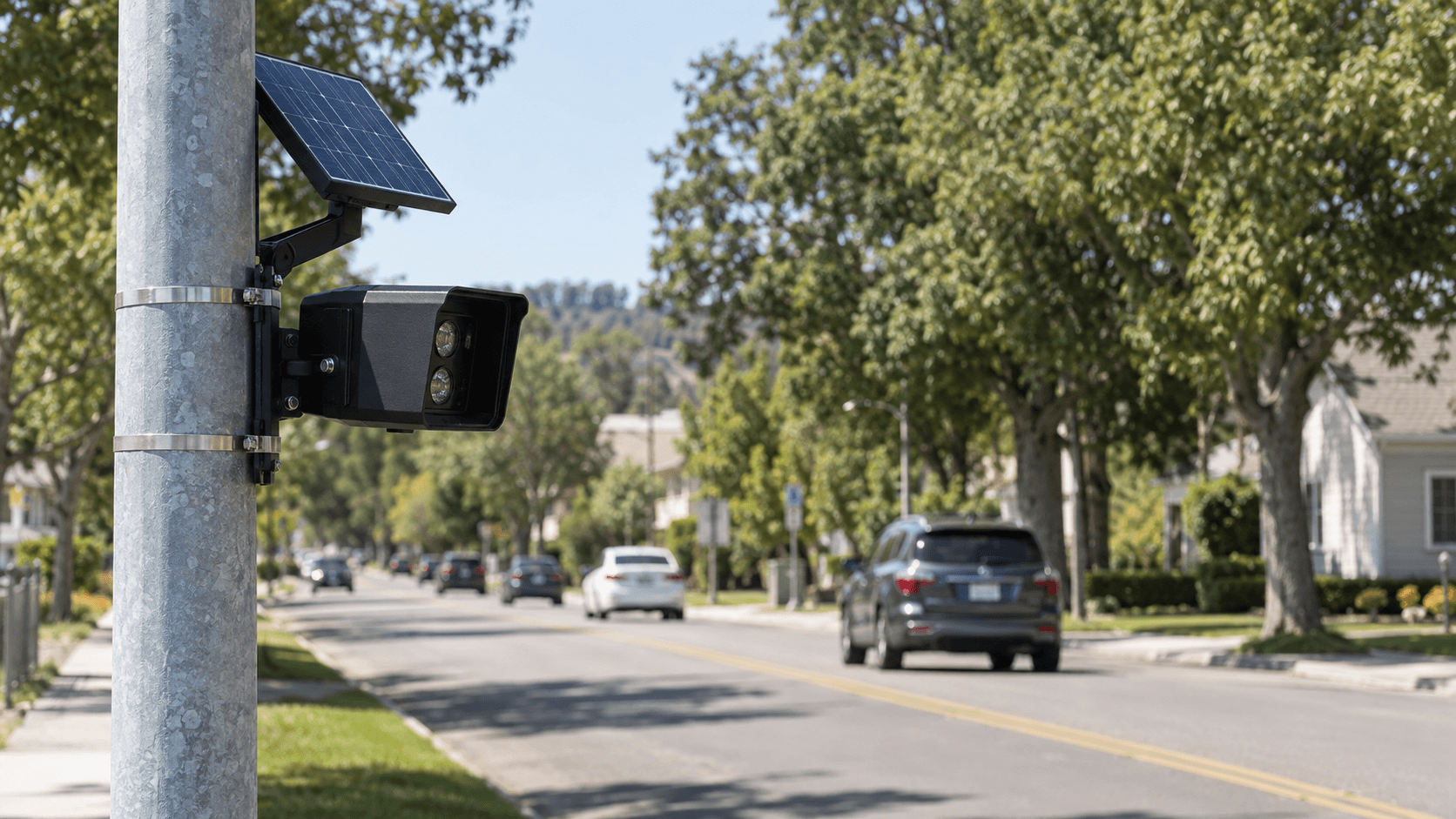
Nebraska has a dedicated license plate reader statute, the Automatic License Plate Reader Privacy Act, Neb. Rev. Stat. §§ 60-3201 to 60-3209. It prohibits use of plate readers by a governmental entity except for listed purposes, limits retention of law enforcement plate data to 180 days with exceptions, requires posted use and privacy policies and an annual report, and says captured plate data held by a governmental entity is not a public record. It also bars plate data obtained in violation of the Act from use as evidence and makes violators liable for damages.
Information reviewed September 30, 2026.
For related pages, see the Nebraska entry in the state comparison, the ALPR laws hub, Are Flock cameras legal?, What are Flock cameras?, and our Nebraska surveillance camera laws guide.
Does Nebraska have a license plate reader law?
Yes. "Sections 60-3201 to 60-3209 shall be known and may be cited as the Automatic License Plate Reader Privacy Act" (§ 60-3201). The Act was enacted by Laws 2018, LB93. On the Legislature's official pages, §§ 60-3201 to 60-3208 still show only that 2018 source, and § 60-3209 was amended by Laws 2025, LB80, § 46. The official Search Laws page says it was last updated May 27, 2026.

Who does the Nebraska Act cover?
The prohibition applies to a "governmental entity," defined in § 60-3202(4) as "a department or agency of this state, the federal government, another state, or a political subdivision or an individual acting for or as an agent of any of such entities." So the definition covers federal agencies and other states' agencies as well as Nebraska's own state agencies and political subdivisions, along with individuals acting for any of them.
A private business, landlord or homeowners association is not a governmental entity, so the use prohibition in § 60-3203(1) does not reach it. The one provision that speaks to any "operator" is the preservation duty in § 60-3205(1), discussed below. The damages section applies to "[a]ny person who violates" the Act.
The definitions also set out what counts as data. "Captured plate data means global positioning system coordinates, date and time information, photographs, license plate numbers, and any other data captured by or derived from any automatic license plate reader system."
What can plate readers be used for in Nebraska?
Section 60-3203 opens: "Except as otherwise provided in this section or in section 60-3204, the use of an automatic license plate reader system by a governmental entity is prohibited." Subsection (2) then lists the permitted uses.
A law enforcement agency of a governmental entity may use a reader to identify:
- outstanding parking or traffic violations;
- an unregistered or uninsured vehicle;
- a vehicle violating equipment requirements under the Nebraska Rules of the Road, or any other registration requirement;
- a vehicle registered to an individual with an outstanding warrant;
- a vehicle associated with a missing person;
- a vehicle reported stolen; or
- "[a] vehicle that is relevant and material to an ongoing criminal investigation."
Readers may also be used by a parking enforcement entity to regulate a parking facility, to control access to a secured area, for electronic toll collection, and to assist weighing stations under § 60-1301.
What other limits apply to police use?
Section 60-3204 adds two operating rules for law enforcement users.
First, systems must be updated from the databases the governmental entities use "at the beginning of each law enforcement agency shift if such updates are available." The Act defines an "alert" by listing those databases: Department of Motor Vehicles data, Nebraska criminal justice information systems, the FBI's National Crime Information Center, the FBI Kidnappings and Missing Persons list, and the Missing Persons Information Clearinghouse, plus manually entered plates.
Second, an agency "may manually query captured plate data only when a law enforcement officer determines that the vehicle or individuals associated with the license plate number are relevant and material to an ongoing criminal or missing persons investigation." Each manual entry "must document the reason for the entry," and manual entries "must be automatically purged at the end of each law enforcement agency shift, unless the criminal investigation or missing persons investigation remains ongoing."
How long can Nebraska keep plate reader data?
One hundred eighty days for law enforcement data. Under § 60-3204(1), a governmental entity "shall not retain captured plate data obtained under subsection (2) of section 60-3203 for more than one hundred eighty days unless the captured plate data is: (a) Evidence related to a purpose listed in subsection (2) of section 60-3203; (b) Subject to a preservation request under subsection (1) of section 60-3205; or (c) The subject of a warrant, subpoena, or court order."
The 180-day limit is a maximum, so an agency policy or contract can set a shorter period.
The Nebraska State Patrol's policy 05-24-01 on plate readers, in the version we saw (effective July 13, 2022, revised February 7, 2024), references the Act and sets a 180-day maximum for captured plate data. It also lists random audits of State Patrol data among supervisory duties. We did not confirm that this is the current version.
Who can Nebraska plate reader data be disclosed to?
The Act controls disclosure in two places.
Section 60-3209(1) says captured plate data held by a governmental entity "shall only be disclosed to the person to whom the vehicle is registered or with the prior written consent of the person to whom the vehicle is registered or pursuant to a disclosure order under subsection (2) of section 60-3205 or as the result of a match pursuant to subsection (2) of section 60-3203."
Under § 60-3205(2), a governmental entity or criminal defendant may apply for a court order, which "shall be issued by the court if the governmental entity or defendant in a criminal case offers specific and articulable facts showing there are reasonable grounds to believe the captured plate data is relevant and material to the criminal or civil action." The same subsection says nothing in it prevents the governmental entity from disclosing plate data to the parties to a criminal or civil action, for administrative purposes, to alert the public of an emergency, or relating to a missing person.
The Act has no separate rule on sharing with federal or out-of-state agencies. Because federal and other-state agencies are themselves governmental entities under § 60-3202(4), the Act's use limits are written to reach them when they operate readers.
Section 60-3206(2) requires a privacy policy "to ensure that captured plate data is not shared in violation of the Automatic License Plate Reader Privacy Act or any other law."
What about domestic violence protection orders?
Section 60-3209(2) adds a protection for drivers. This protection applies once the order is presented to the governmental entity: if a valid, outstanding protection order under the Protection Orders Act or the Uniform Interstate Enforcement of Domestic Violence Protection Orders Act protects the driver of a vehicle that is jointly registered with, or registered solely to, the person the order was issued against, plate data "may not be disclosed except pursuant to a disclosure order under subsection (2) of section 60-3205 or as the result of a match pursuant to subsection (2) of section 60-3203." In that situation, the registered-owner route described above is closed.
How do preservation requests work?
Under § 60-3205(1), "[a]n operator of an automatic license plate reader system shall, upon the request of a governmental entity or a defendant in a criminal case, take all necessary steps to preserve captured plate data in its possession pending the issuance of a warrant, subpoena, or order of a court." The request must be a written sworn statement naming the camera or cameras, or the plate, and the dates and timeframes.
The section does not set a fixed number of days for the preservation. It also uses the word "operator," which is not one of the Act's defined terms.
Does Nebraska require policies, reports or audits?
Policies and an annual report, yes. Under § 60-3206, any governmental entity that uses a reader must:
- adopt a policy governing use of the system and conspicuously post it on its website, or in its main office if it has no website;
- adopt a privacy policy and post it the same way; and
- "[r]eport annually to the Nebraska Commission on Law Enforcement and Criminal Justice on its automatic license plate reader practices and usage," and post the report.
If the system captures it, the report must list each list the plate data was checked against, the number of confirmed matches, and the number of matches that "did not correlate to an alert," with the same figures for manually entered plates. The reporting duty does not apply to parking, secured-area, toll or weighing-station uses.
The Act does not set an audit schedule or give a state agency power to audit users. Section 60-3206 does not set a date for the annual report.
Can you get Nebraska plate reader data through a public records request?
Not the data itself. Section 60-3209(1) says "[c]aptured plate data held by a governmental entity is not considered a public record for purposes of sections 84-712 to 84-712.09," Nebraska's public records statutes. The registered owner of a vehicle is one of the people the data may be disclosed to.
The section covers captured plate data. It does not say whether camera locations, contracts or audit records are covered, and we did not open the public records statutes themselves. The posted policies and annual reports required by § 60-3206 are, by design, public.
What are the remedies for a violation?
Two, and neither is criminal. Under § 60-3207, "[n]o captured plate data and no evidence derived therefrom may be received in evidence in any trial, hearing, or other proceeding before any court, grand jury, department, officer, agency, regulatory body, legislative committee, or other authority of this state, or a political subdivision thereof, if the disclosure of that information would be in violation of the Automatic License Plate Reader Privacy Act."
Under § 60-3208, "[a]ny person who violates the Automatic License Plate Reader Privacy Act shall be liable for damages that proximately cause injury to the business, person, or reputation of another individual or entity." The Act contains no criminal penalty or fine.
What have Nebraska courts said?
We did not find a Nebraska court opinion applying the Act, but our search was limited and we did not run a case law database search, so this is not proof that none exists.
Is Nebraska changing its plate reader law?
Not in 2026. Two bills titled "Change provisions relating to the Nebraska Rules of the Road and the Automatic License Plate Reader Privacy Act" died:
- LB1176, introduced January 21, 2026 and referred to the Transportation and Telecommunications Committee, was indefinitely postponed April 17, 2026.
- LB600, introduced January 22, 2025 and referred to the Judiciary Committee, was indefinitely postponed April 17, 2026. Its actions page also shows that on June 6, 2025, provisions or portions of LB600 were amended into LB530 by AM1238. LB530, approved by the Governor on June 4, 2025, does not list any section of the Act among the sections it amends, and §§ 60-3201 to 60-3208 still show only their 2018 source on the official pages.
Where are plate readers reported in Nebraska?
This list is not complete. The City of Chadron has a Flock Safety System page, and our records mark the Chadron Police Department's system as active as of September 28, 2026.
How can I check my local system?
Start with the agency's website. Section 60-3206 requires every governmental entity using readers to post its use policy and privacy policy, and law enforcement users to post their annual report, on the website or, without one, in the main office.
If you are the registered owner of a vehicle, § 60-3209(1) lists you among the people plate data may be disclosed to, which is a different route from a public records request. For the technology itself, see What are Flock cameras?.
What did we check to find other Nebraska rules?
We ran phrase searches on the Legislature's official Search Laws form. "License plate reader," "plate reader" and "automatic license plate" returned only §§ 60-3201 to 60-3208. "License plate data" also returned § 60-1506 (vehicle record fees), § 75-362 and § 28-636, which are unrelated. Of 78 results for "license plate," the rest concern plate issuance, display and undercover plates.
The Nebraska Data Privacy Act defines precise geolocation data, but § 87-1103(2)(a) says it "does not apply to any: (a) State agency or political subdivision of this state," so it does not reach government plate data. Searches for "surveillance technology," "immigration enforcement," "vehicle location" and "location data" returned hit lists we did not open in full, so we do not say whether any of those sections touch plate data.
Last updated: September 30, 2026. This page reflects the statute and records described above as we reviewed them; it is general legal information, not legal advice.
Frequently Asked Questions
Is it legal for Nebraska police to use license plate readers?
Only for the purposes listed in Neb. Rev. Stat. § 60-3203(2), such as identifying outstanding parking or traffic violations, uninsured or unregistered vehicles, vehicles tied to warrants or missing persons, stolen vehicles, and vehicles relevant and material to an ongoing criminal investigation. Other governmental use is prohibited.
How long can Nebraska keep license plate reader data?
A governmental entity may not keep law enforcement plate data longer than 180 days unless it is evidence related to a listed purpose, subject to a preservation request, or the subject of a warrant, subpoena or court order. Manually entered plates must be purged at the end of each shift unless the investigation remains ongoing.
Can I see plate reader data about my own car in Nebraska?
Section 60-3209(1) says captured plate data held by a governmental entity may be disclosed to the person to whom the vehicle is registered. If a valid protection order presented to the governmental entity protects the driver of a vehicle registered to the person the order was issued against, disclosure is limited to a court order or a match.
Can a Nebraska business or HOA use license plate readers?
The Act's prohibition applies to governmental entities, so it does not bar private use. An operator must still preserve data on a sworn written request from a governmental entity or a criminal defendant, pending a warrant, subpoena or court order.
What happens if Nebraska plate reader data is misused?
Plate data and evidence derived from it may not be received in a Nebraska proceeding if its disclosure would violate the Act, and any person who violates the Act is liable for damages that proximately cause injury. The Act has no criminal penalty.
Did Nebraska change its plate reader law in 2026?
No. LB1176 and LB600, both of which would have changed the Act, were indefinitely postponed on April 17, 2026.
Updates
Independently fact-checked against the cited primary sources
The Law Behind This Article
This article rests on the statutory provisions below, held in our own legal record and retrieved from the official source. Tap a section to read the operative text.
Nebraska Revised Statutes, Chapter 60: MOTOR VEHICLES
§ 60-3203Prohibited acts; exceptionsIn forcecited in 4 of our articles
(1) Except as otherwise provided in this section or in section 60-3204, the use of an automatic license plate reader system by a governmental entity is prohibited. (2) An automatic license plate reader system may be used when such use is: (a) By a law enforcement agency of a governmental entity for the purpose of identifying: (i) Outstanding parking or traffic violations; (ii) An unregistered or uninsured vehicle; (iii) A vehicle in violation of the vehicle equipment requirements set forth under the Nebraska Rules of the Road; (iv) A vehicle in violation of any other vehicle registration requirement; (v) A vehicle registered to an individual for whom there is an outstanding warrant; (vi) A vehicle associated with a missing person; (vii) A vehicle that has been reported as stolen; or (viii) A vehicle that is relevant and material to an ongoing criminal investigation; (b) By a parking enforcement entity for regulating the use of a parking facility; (c) For the purpose of controlling access to a secured area; (d) For the purpose of electronic toll collection; or (e) To assist weighing stations in performing their duties under section 60-1301.
Official text (excerpt) · last checked 2026-07-29 · Read the full text in our law library · Verify at nebraskalegislature.gov
Also relied on in: License Plate Reader Laws by State: 2026 Comparison
§ 60-3204Retention of captured plate data; limitation; updates; use; limitationsIn forcecited in 4 of our articles
(1) A governmental entity shall not retain captured plate data obtained under subsection (2) of section 60-3203 for more than one hundred eighty days unless the captured plate data is: (a) Evidence related to a purpose listed in subsection (2) of section 60-3203; (b) Subject to a preservation request under subsection (1) of section 60-3205; or (c) The subject of a warrant, subpoena, or court order. (2) Any governmental entity that uses automatic license plate reader systems pursuant to subsection (2) of section 60-3203 must update such systems from the databases used by the governmental entities enumerated in such subsection at the beginning of each law enforcement agency shift if such updates are available.
Official text (excerpt) · last checked 2026-07-29 · Read the full text in our law library · Verify at nebraskalegislature.gov
§ 60-3205Operator; preserve data; written sworn statement; court order for disclosure; disclosures authorizedIn forcecited in 4 of our articles
(1)(a) An operator of an automatic license plate reader system shall, upon the request of a governmental entity or a defendant in a criminal case, take all necessary steps to preserve captured plate data in its possession pending the issuance of a warrant, subpoena, or order of a court. (b) A requesting governmental entity or defendant in a criminal case must specify in a written sworn statement: (i) The particular camera or cameras for which captured plate data must be preserved or the particular license plate for which captured plate data must be preserved; and (ii) The date or dates and timeframes for which captured plate data must be preserved. (2) A governmental entity or defendant in a criminal case may apply for a court order for disclosure of captured plate data, which shall be issued by the court if the governmental entity or defendant in a criminal case offers specific and articulable facts showing there are reasonable grounds to believe the captured plate data is relevant and material to the criminal or civil action.
Official text (excerpt) · last checked 2026-07-29 · Read the full text in our law library · Verify at nebraskalegislature.gov
§ 60-3206Governmental entity; duties; report; contentsIn forcecited in 4 of our articles
Except as otherwise provided in subdivision (3)(b) of this section, any governmental entity that uses an automatic license plate reader system shall: (1) Adopt a policy governing use of the system and conspicuously post the policy on the governmental entity's Internet website or, if no website is available, in its main office; (2) Adopt a privacy policy to ensure that captured plate data is not shared in violation of the Automatic License Plate Reader Privacy Act or any other law and conspicuously post the privacy policy on its Internet website or, if no website is available, in its main governmental office; and (3)(a) Report annually to the Nebraska Commission on Law Enforcement and Criminal Justice on its automatic license plate reader practices and usage. The report shall also be conspicuously posted on the governmental entity's Internet website or, if no website is available, in its main office.
Official text (excerpt) · last checked 2026-07-29 · Read the full text in our law library · Verify at nebraskalegislature.gov
§ 60-3209Data not considered public record; protection orders; effectIn forcecited in 2 of our articles
(1) Captured plate data held by a governmental entity is not considered a public record for purposes of sections 84-712 to 84-712.09 and shall only be disclosed to the person to whom the vehicle is registered or with the prior written consent of the person to whom the vehicle is registered or pursuant to a disclosure order under subsection (2) of section 60-3205 or as the result of a match pursuant to subsection (2) of section 60-3203. (2) Upon the presentation to a governmental entity of a valid, outstanding protection order pursuant to the Protection Orders Act or the Uniform Interstate Enforcement of Domestic Violence Protection Orders Act protecting the driver of a vehicle jointly registered with or registered solely in the name of the individual against whom the order was issued, captured plate data may not be disclosed except pursuant to a disclosure order under subsection (2) of section 60-3205 or as the result of a match pursuant to subsection (2) of section 60-3203.
Official text (excerpt) · last checked 2026-07-29 · Read the full text in our law library · Verify at nebraskalegislature.gov
§ 60-3207Use of captured plate data and related evidence; prohibitedIn forcecited in 4 of our articles
No captured plate data and no evidence derived therefrom may be received in evidence in any trial, hearing, or other proceeding before any court, grand jury, department, officer, agency, regulatory body, legislative committee, or other authority of this state, or a political subdivision thereof, if the disclosure of that information would be in violation of the Automatic License Plate Reader Privacy Act.
Official text (excerpt) · last checked 2026-07-29 · Read the full text in our law library · Verify at nebraskalegislature.gov
§ 60-3208Violation of act; liability for damagesIn forcecited in 4 of our articles
Any person who violates the Automatic License Plate Reader Privacy Act shall be liable for damages that proximately cause injury to the business, person, or reputation of another individual or entity.
Official text (excerpt) · last checked 2026-07-29 · Read the full text in our law library · Verify at nebraskalegislature.gov
§ 60-3202Terms, definedIn forcecited in 4 of our articles
For purposes of the Automatic License Plate Reader Privacy Act: (1) Alert means data held by the Department of Motor Vehicles, each criminal justice information system maintained in this state, the Federal Bureau of Investigation National Crime Information Center, the Federal Bureau of Investigation Kidnappings and Missing Persons list, the Missing Persons Information Clearinghouse established under section 29-214.01, and license plate numbers that have been manually entered into the automatic license plate reader system upon a law enforcement officer's determination that the vehicles or individuals associated with the license plate numbers are relevant and material to an ongoing criminal or missing persons investigation; (2) Automatic license plate reader system means one or more mobile or fixed automated high-speed cameras used in combination with computer algorithms to convert images of license plates into computer-readable data; (3) Captured plate data means global positioning system coordinates, date and time information, photographs, license plate numbers, and any other data captured by or derived from any automatic license plate reader system; (4) Governmental entity…
Official text (excerpt) · last checked 2026-07-29 · Read the full text in our law library · Verify at nebraskalegislature.gov
Search our full record of US law — 2.1 million sections, every state + federal →
Sources and References
- Neb. Rev. Stat. § 60-3201(nebraskalegislature.gov).gov
- Neb. Rev. Stat. § 60-3202(nebraskalegislature.gov).gov
- Neb. Rev. Stat. § 60-3203(nebraskalegislature.gov).gov
- Neb. Rev. Stat. § 60-3204(nebraskalegislature.gov).gov
- Nebraska State Patrol Policy 05-24-01, Automatic License Plate Reader(statepatrol.nebraska.gov).gov
- Neb. Rev. Stat. § 60-3209(nebraskalegislature.gov).gov
- Neb. Rev. Stat. § 60-3205(nebraskalegislature.gov).gov
- Neb. Rev. Stat. § 60-3206(nebraskalegislature.gov).gov
- Neb. Rev. Stat. § 60-3207(nebraskalegislature.gov).gov
- Neb. Rev. Stat. § 60-3208(nebraskalegislature.gov).gov
- Nebraska LB1176 (2026) bill page(nebraskalegislature.gov).gov
- Nebraska LB600 actions page(www.nebraskalegislature.gov).gov
- City of Chadron, Flock Safety System page(www.chadron-nebraska.com)