
Louisiana
Louisiana License Plate Reader Laws (2026)
Independently fact-checked against primary sources (last audited October 1, 2026). · 9 primary sources cited on this page. How we verify our legal content
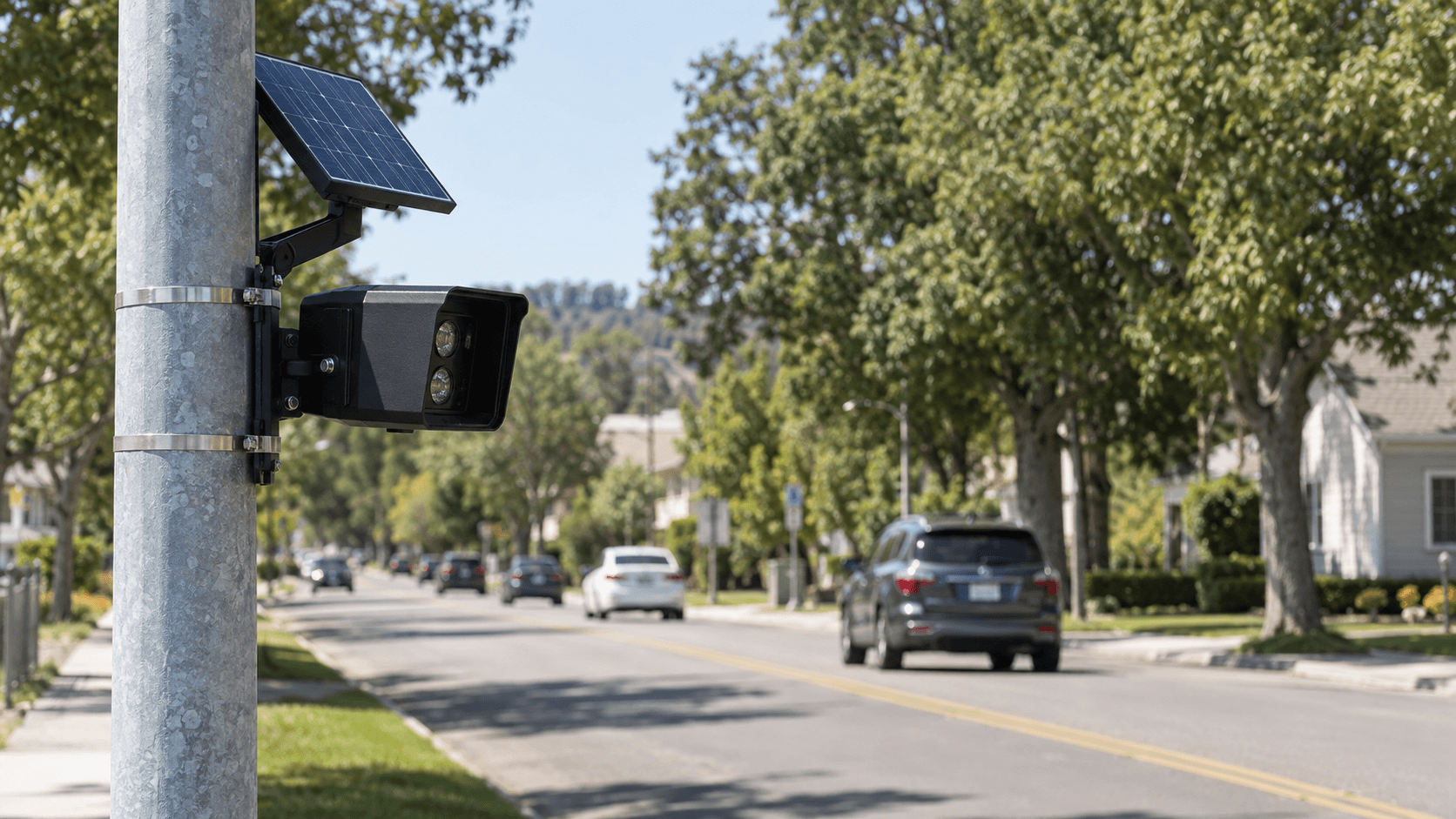
Our search of the full official Louisiana code found no statute that regulates how license plate readers are used, how long their data is kept, or who may see it. The only section that names a plate reader is La. R.S. 14:57.1, added in 2024, which makes it a crime to vandalize, tamper with or destroy a crime camera system, a term that includes plate readers. For police use, the most directly relevant authority we found is a federal appeals decision: in March 2026 the Fifth Circuit held that the use of a plate reader in the case before it was not a Fourth Amendment search.
Information reviewed September 30, 2026.
For related pages, see the Louisiana entry in the state comparison, the ALPR laws hub, Are Flock cameras legal?, What are Flock cameras?, and our Louisiana surveillance camera laws guide.
Does Louisiana have a license plate reader law?
Not one that governs use of the data. On September 30, 2026 we ran the Legislature's full-text law search across every law body it covers: the Revised Statutes, the Civil Code, the Code of Civil Procedure, the Code of Criminal Procedure, the Children's Code, the Code of Evidence and the Constitution.
- "License plate reader" and "plate reader" each returned exactly one section, R.S. 14:57.1.
- "License plate recognition" returned none.
- "License plate" returned 359 sections. We read all four result pages by title. They are overwhelmingly specialty plates, plus registration, sex offender registries, insurance, towing, ride-hailing and protected-official provisions. Only R.S. 14:57.1 mentions a plate reader.
- "Geolocation" returned 7 sections and "location data" 3, including cellular tracking provisions. None concerns plate readers.
The search covered statutes only, and the Legislature's law database says it is updated through the 2025 First Extraordinary Session, so for 2026 we relied on the bill-text search described below. We did not search the Louisiana Administrative Code, plate reader policies of the State Police, the Department of Transportation and Development or toll authorities, executive orders, or Attorney General opinions, so rules in those sources are not ruled out.

What does R.S. 14:57.1 say?
La. R.S. 14:57.1 makes it unlawful "for any person to intentionally vandalize, tamper with, or destroy a crime camera system" by causing functional or cosmetic damage, adjusting or modifying its location, position, aim, focus or functionality, tampering with its performance, functions or features, or rendering it temporarily or permanently inoperable.
Subsection B defines the protected equipment:
For the purposes of this Section, a "crime camera system" includes any camera or license plate reader erected or installed for the purpose of observing or deterring illegal activity ...
The definition continues through the lights, mounting poles, software, housings, microphones, data connectivity hardware and other parts needed for the system to work.
Under subsection C, a violator "shall be imprisoned, with or without hard labor, for not more than two years or may be fined not more than two thousand dollars, or both." The section's source note is Acts 2024, No. 343, § 1.
The section regulates damage to the hardware, not what the camera's owner does with plate data. It is the reason Louisiana appears on our comparison page as a state with a limited provision rather than none at all.
How long can Louisiana keep plate reader data?
No statute we found sets a period, limits who may search the data, or controls sharing with other agencies. Any such terms would come from an agency's own policy or its vendor contract, and we did not review any Louisiana agency's policy for this page.
Are Louisiana plate reader records public?
Louisiana's Public Records Law has no plate reader provision. The general exception for law enforcement records, La. R.S. 44:3(A), says nothing in the chapter requires disclosure of records held by listed offices, including the attorney general, district attorneys, sheriffs, police departments and the Department of Public Safety and Corrections, that are:
"Records pertaining to pending criminal litigation or any criminal litigation which can be reasonably anticipated, until such litigation has been finally adjudicated or otherwise settled"
We read only the opening of § 44:3, and we did not analyze whether bulk plate reads, search logs or hit lists fall within any of its categories.
A separate statute, R.S. 44:11.2, lets protected individuals such as judges, district attorneys, legislators and statewide officials demand that a public body or third party not publish their personal information, which includes a "License plate number or unique identifier of a vehicle." That is a right for those individuals to have their information removed from publication. It does not make plate reader data confidential generally.
What have courts said about plate readers in Louisiana?
The leading authority we found is federal. In United States v. Porter, No. 25-60163 (5th Cir. Mar. 17, 2026), a published opinion in an appeal from the Southern District of Mississippi, the Fifth Circuit held that use of a license plate reader system was not a Fourth Amendment search: "Because the use of an LPR did not constitute a search, no warrant was required." The court also found the stop supported by reasonable suspicion.
The facts matter to how far the case reaches. The plate reader data there showed the vehicle's periodic location at ten fixed cameras, and the officer did not know how long the system kept its data. As a published Fifth Circuit decision, Porter binds the federal courts in Louisiana. Its holding rests on the Fourth Amendment; it does not interpret any Louisiana statute.
Louisiana's state courts of appeal have mentioned plate readers in roughly 28 opinions from 2016 to 2026, which we reviewed through search excerpts only. In those excerpts the readers appear as investigative background. We found none deciding a Fourth Amendment, state constitutional or public records challenge to plate reader use, though that review was not exhaustive.
Is Louisiana considering a plate reader bill?
No 2026 bill proposed rules for plate readers. The Legislature's bill-text search for the 2026 Regular Session returned no instrument containing "license plate reader." The phrase "license plate" appeared in 42 instruments, none of which used the word reader. In the 2025 Regular Session, the phrase license plate reader appeared in one instrument, HB 460 (Act 461), a supplemental appropriations act. It appropriates state general funds for license plate reader systems for the Many, Zwolle and Florien police departments, and for license plate recognition cameras and body cameras for the Kenner Police Department. The 2026 supplemental appropriations act, HB 312 (Act 961), again lists $500,000 for the Kenner Police Department for license plate recognition cameras and body cameras. These lines fund equipment; they set no rules for its use, and we did not check whether any of them was vetoed.
KNOE reported on August 13, 2026 that a state representative was drafting legislation to ban license plate reading cameras statewide. We found no bill number, so any such bill would have to be filed in a later session. We did not check when the next session meets.
Louisiana considered a statewide program a decade ago. 2016 Senate Bill 54 would have created a pilot Statewide Motor Vehicle Theft and Uninsured Motorists Identification Program using license plate recognition devices. Its official history ends with "Involuntarily deferred in House and Governmental Affairs-Considered 5/24/16." It never became law.
How can I check my local system?
Because no state statute sets data rules, the governing documents are the agency's own. Ask the operating agency for its written plate reader policy, its retention setting, who may search the data and whether it is shared, and its vendor contract. A public records request for plate data would be decided under the general law enforcement exception described above.
Our deployment records include no Louisiana entry. The appropriations acts described above fund plate reader equipment for several police departments, but they do not show whether or how those systems are in use. For how the technology works, see What are Flock cameras?.
Last updated: September 30, 2026. This page reflects the statutes and records described above as we reviewed them; it is general legal information, not legal advice.
Frequently Asked Questions
Is it legal to use a license plate reader in Louisiana?
Our search of every Louisiana law body on September 30, 2026 found no statute that prohibits, authorizes or regulates the use of plate readers or their data. The only section naming a plate reader, La. R.S. 14:57.1, concerns damage to the equipment. We did not search agency policies, administrative rules or Attorney General opinions.
Is it a crime to damage or move a plate reader camera in Louisiana?
Yes. La. R.S. 14:57.1 makes it unlawful to intentionally vandalize, tamper with or destroy a crime camera system, including adjusting its aim or position or rendering it inoperable. A crime camera system includes any camera or license plate reader installed to observe or deter illegal activity. The penalty is up to two years of imprisonment, a fine of up to $2,000, or both.
How long can Louisiana police keep plate reader data?
We found no statute setting a retention period. Any limit would come from the agency's own policy or contract, which we did not review.
Does police use of a plate reader require a warrant in Louisiana?
No Louisiana statute addresses it. In United States v. Porter (5th Cir. Mar. 17, 2026), a published decision binding on federal courts in Louisiana, the court held that the use of a license plate reader in that case was not a Fourth Amendment search, so no warrant was required. The data there showed periodic locations at ten fixed cameras.
Can I request Louisiana plate reader records?
The Public Records Law has no plate-reader-specific rule. La. R.S. 44:3 lets listed law enforcement agencies withhold records pertaining to pending or reasonably anticipated criminal litigation. We did not analyze how that applies to plate reader data.
Is Louisiana going to ban license plate readers?
News reports in August 2026 said a state representative was drafting a statewide ban, but no 2026 Regular Session instrument contained the phrase license plate reader. Any such bill would be filed for a later session, and nothing proposed is law.
Updates
Independently fact-checked against the cited primary sources
Sources and References
- Louisiana Legislature, Louisiana Laws full-text search (all law bodies)(legis.la.gov).gov
- La. R.S. 14:57.1, vandalizing, tampering with, or destroying a crime camera system(legis.la.gov).gov
- La. R.S. 44:3, records of prosecutive, investigative, and law enforcement agencies(legis.la.gov).gov
- La. R.S. 44:11.2, protected individuals personal information(legis.la.gov).gov
- United States v. Porter, No. 25-60163 (5th Cir. Mar. 17, 2026) (published opinion)(www.ca5.uscourts.gov).gov
- Louisiana Legislature bill search, 2026 Regular Session(legis.la.gov).gov
- KNOE, Lawmaker proposes license plate detecting cameras (Aug. 13, 2026)(www.knoe.com)
- S.B. 54, 2016 Regular Session, bill history(legis.la.gov).gov
- HB 460 (2025 Regular Session), Act 461, enrolled text(legis.la.gov).gov
- HB 312 (2026 Regular Session), Act 961, enrolled text(legis.la.gov).gov