
Georgia
Georgia AI Laws and Regulation (2026)
Independently fact-checked against primary sources (last audited August 20, 2026). · Reviewed by the RecordingLaw editorial team. · Law checked current as of August 9, 2026. · 6 primary sources cited on this page. How we verify our legal content

Georgia regulates AI through targeted laws rather than a single comprehensive statute. O.C.G.A. § 16-11-90 covers AI-generated intimate images, and two AI measures signed in 2026, SB 444 and SB 540, address AI in health coverage decisions and disclosures for conversational AI services. The Georgia Technology Authority requires prior authorization for all state agency generative AI deployments.
Overview of Georgia AI Laws
Georgia has taken a targeted, incremental approach to artificial intelligence regulation rather than pursuing a single comprehensive AI statute. The state has enacted laws addressing AI-generated sexual imagery, AI in health coverage decisions, and conversational AI disclosures; established a formal AI governance structure within the Georgia Technology Authority; and considered several broader AI bills during its 2025-2026 legislative session.
The state's regulatory framework reflects a combination of executive action and legislative effort. The Georgia Technology Authority created an Office of Artificial Intelligence in 2023, establishing an AI Advisory Council and issuing governance guidelines for state agencies before the legislature acted on broader AI regulation.
Georgia's 2025-2026 legislative session was active on AI issues, with bills addressing election deepfakes, healthcare AI, government AI transparency, and a proposed comprehensive AI governance board. Most of those proposals did not pass, but they signal the direction of Georgia's AI regulatory trajectory.
This article covers Georgia's enacted AI laws, the AI bills that did not pass, executive actions, and the interaction between state and federal AI policy. This information is current as of September 2026, but you should consult a licensed attorney for advice specific to your situation.
Georgia's Enacted AI Laws: SB 444 and SB 540
Georgia's 2026 session produced two AI laws. Both appear on the Governor's official 2026 signed-legislation list.
SB 444: No AI-Only Health Coverage Decisions
Senate Bill 444 is listed as "Private Review Agents; certain decisions with regard to the provision of insurance coverage for healthcare services shall not be based solely on artificial intelligence systems; provide."
The law places Georgia among the states that require a human, rather than an algorithm on its own, to stand behind a coverage decision on health care services. It works through the private review agent framework that already governs utilization review in Georgia, so it reaches the entities that conduct coverage reviews rather than regulating AI tools generally. Read the enrolled bill text for the exact scope, the decisions covered, and the effective date.
SB 540: Disclosure for Conversational AI Services
Senate Bill 540 is listed as "Online Internet Safety; certain disclosures related to conversational AI services; require."
The law requires certain disclosures in connection with conversational AI services, the chatbot-style products a user interacts with in natural language. As with SB 444, the operative disclosure triggers and the effective date are in the enrolled text rather than in the one-line signed-legislation caption, so read the bill itself before relying on it.
SB 9: The Election Deepfake Bill That Did Not Become Law
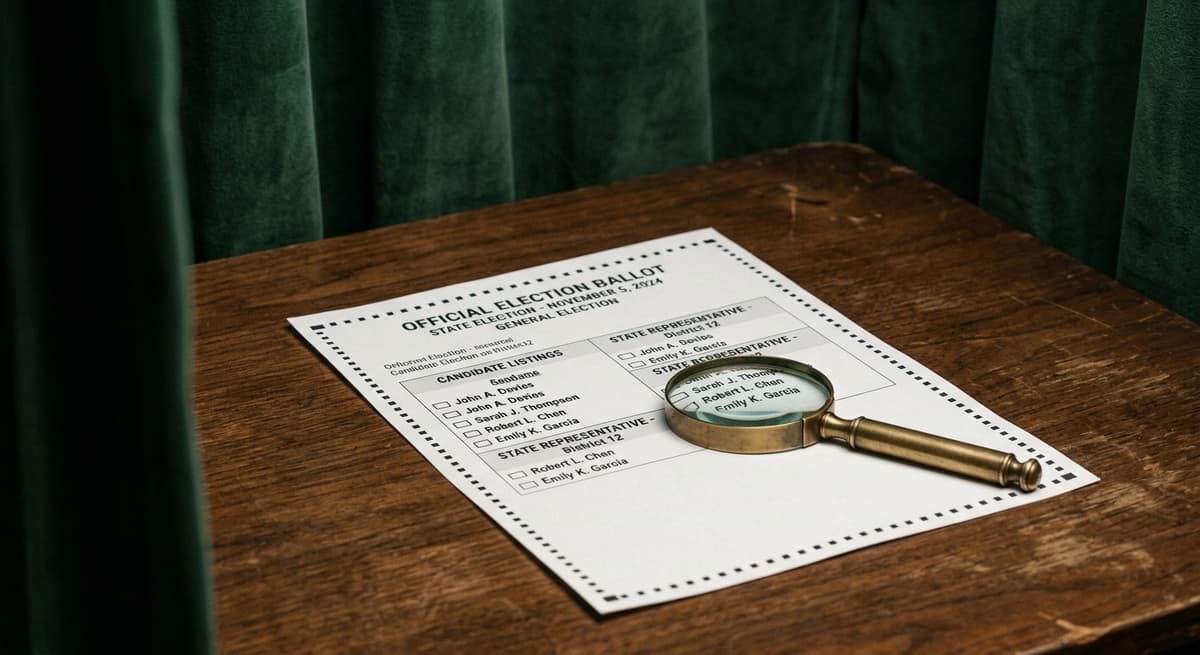
Senate Bill 9 would have criminalized AI-generated images, audio, or video in political campaign advertisements disseminated within 90 days of a primary or general election without a disclaimer, with exemptions for constitutionally protected speech such as satire and parody. It was authored by Roswell Republican Senator John Albers and passed the Georgia House during the 2025 session, drawing attention as one of the strictest AI political-ad proposals in the country.
It never reached the Governor. SB 9 does not appear on the Governor's signed-legislation list for 2025 or 2026, and it was not enacted before the 2025-2026 biennium ended. There is no Georgia statute creating an AI-specific offense for election advertising, and a bill along the lines of SB 9 would have to be reintroduced in a new session to move forward.
Why the Bill Was Introduced
The urgency behind SB 9 was underscored by real-world events. During the 2025 Georgia Senate campaign, Representative Mike Collins' campaign used an AI-generated deepfake of Senator Jon Ossoff in campaign materials, highlighting the practical case for disclosure requirements.
Deepfake and Revenge Porn Law: O.C.G.A. § 16-11-90
Georgia was among the earlier states to address AI-generated sexually explicit content through its existing revenge porn statute. The law, codified at O.C.G.A. § 16-11-90, was enacted in 2014 (Ga. L. 2014, p. 220/HB 838) and amended in 2015, 2020, and twice in 2021.
The deepfake language came from the 2020 amendment. Act 550/SB 337, effective August 3, 2020, revised the offense "to include falsely created videographic or still images of other persons," inserting that phrase into the prohibition. The 2021 amendments restructured the offense and the penalty subsection into the two tiers described below.
What the Law Prohibits
Under O.C.G.A. § 16-11-90, it is illegal to knowingly distribute intimate images of another person without their consent, including distributing a "falsely created videographic or still image." This language explicitly encompasses AI-generated deepfakes.
The law applies to any distribution made with the intent to harass the depicted person or cause them financial loss. Both direct sharing (texting, emailing) and public posting (websites, social media, file-sharing sites) are covered.
Criminal Penalties
| Conduct | Classification | Prison Term | Maximum Fine |
|---|---|---|---|
| First offense, texting, emailing, or posting to ordinary social media (§ 16-11-90(c)(1)) | Misdemeanor of a high and aggravated nature | Up to 12 months | Varies |
| Second or subsequent offense by those same ordinary electronic means (§ 16-11-90(c)(1)) | Felony | 1 to 5 years | Up to $100,000 |
| First offense, posting to a site that advertises itself as hosting sexually explicit content (§ 16-11-90(c)(2)) | Felony | 1 to 5 years | Up to $100,000 |
| Second or subsequent offense on such a site (§ 16-11-90(c)(2)) | Felony | 2 to 5 years | Up to $100,000 |
The felony-on-first-offense tier applies only to posting on a site, gallery, or message board that advertises or promotes itself as showing, previewing, or distributing sexually explicit content, such as a dedicated porn-hosting or gallery site. Posting the same content to ordinary social media, like texting or emailing it, falls under the misdemeanor tier on a first offense and becomes a felony only on a second or subsequent violation.
The two-year mandatory minimum is narrower than it is often described. Under § 16-11-90(c)(2), it applies only to second and subsequent convictions on the porn-site tier. A repeat conviction for ordinary electronic transmission under § 16-11-90(c)(1) carries a one-year floor, not a two-year one.
Protection for Minors: O.C.G.A. § 16-12-100
Georgia handles AI-generated and digitally altered child sexual abuse material by closing a defense rather than by creating a separate AI offense. Under O.C.G.A. § 16-12-100(b.2), it is not a defense to a prosecution under that Code section that the visual medium "was created, adapted, or modified to appear that an identifiable minor is engaging in sexually explicit conduct."
In practice, a synthetic or digitally altered image of an identifiable minor is charged under the existing sexual exploitation of children offense, and the fact that the image was generated or manipulated is not a way out of that charge. The penalties are those of the underlying offense, which for most violations is a felony carrying 5 to 20 years and a fine of up to $100,000.
Georgia Office of Artificial Intelligence
Georgia established one of the most structured state-level AI governance frameworks in the country through the Georgia Technology Authority (GTA). In 2023, GTA created a dedicated Office of Artificial Intelligence and an AI Advisory Council.
AI Advisory Council
The AI Advisory Council comprises leaders from Georgia state agencies, educational institutions, and the private sector. The council provides guidance and supervision on AI applications across state government.
Enterprise AI Policy
GTA adopted an AI Responsible Use Policy (PS-23-001) and AI Responsible Use Standard (SS-23-002), establishing principles and responsibilities for state entities and employees using AI. These policies require prior authorization from GTA before any executive branch agency can deploy generative AI tools for regular organizational use.
Authorization Requirements
State agencies must obtain GTA approval before implementing any generative AI tools intended for regular use, including AI-driven transcription, summarization, note-taking, or decision-making assistance. This prior-authorization requirement ensures centralized oversight of government AI adoption.
Other AI Bills Introduced in the 2025-2026 Session
None of the bills in this section became law. None appears on the Governor's signed-legislation list for 2025 or 2026, so each would have to be reintroduced in a new session to move forward. They are covered here because they show what Georgia lawmakers have been willing to put on paper.
HB 147: AI Inventory and Reporting
House Bill 147, sponsored by Representative Brad Thomas, passed the Georgia House on February 20, 2025. The bill would have required state agencies to report all AI usage to the Georgia Technology Authority.
Key requirements would have included:
- Annual inventory of all AI systems used by state departments and agencies
- Each report disclosing the name of the AI tool, its capabilities, and whether the system operates without human oversight
- GTA developing model policies for AI system development, procurement, implementation, and assessment
- Similar reporting requirements for local governments
- GTA compiling agency reports into an annual report to the Governor, Lieutenant Governor, and state legislature
The bill was recommitted to the Senate in January 2026 and did not reach the Governor.

SB 37: AI Accountability Act
Senate Bill 37, the "AI Accountability Act," proposed a comprehensive AI governance framework for Georgia. The bill would have created a 12-member Georgia Board for Artificial Intelligence with appointees from the Governor, Senate President, and House Speaker.
Under SB 37, every state agency and municipality would have been required to develop and publish an AI usage plan. Those plans would have had to address goals, bias prevention, data privacy, governance roles, legal compliance, human oversight, employee training, incident response, and reporting protocols.
The bill did not make it out of committee before Crossover Day in the 2025 session and did not reach the Governor.
SB 455: Georgia AI Commission
Senate Bill 455, introduced on February 3, 2026, would have established the Georgia Artificial Intelligence Commission. The bill defined "artificial intelligence system" as a machine-based system that can process information to emulate human cognitive functions like learning and reasoning. It did not pass.
Healthcare AI Regulation
Georgia has been particularly active on AI in health care, and it is the one area where a Georgia AI bill has actually reached the statute books. SB 444, described above, is now law. A broader clinical-practice bill was introduced in the same period but was not enacted.
HB 887: AI in Clinical Decision-Making
House Bill 887, introduced by Representative Mandisha Ann-Marie Thomas, would have prohibited clinicians from making healthcare decisions solely based on results produced by AI or automated decision tools. It was not enacted.
Key provisions of HB 887 included:
- Healthcare decisions resulting from AI use would have to be "meaningfully reviewed" under procedures established by the Georgia Composite Medical Board
- The Board would adopt rules and regulations governing AI standards in clinical practice
- Clinicians who failed to comply would face disciplinary action
- The bill would also have restricted AI use in insurance coverage determinations and public assistance decisions
HB 887 defined "artificial intelligence" as a machine-based system that can make predictions, recommendations, or decisions influencing a real or virtual environment for human-defined objectives.
AI and Employment in Georgia
Georgia has not enacted specific legislation governing AI in employment decisions such as automated hiring, algorithmic scheduling, or AI-driven performance evaluation. However, the state has proposed legislation to place parameters on AI-driven compensation decisions.
Georgia employers using AI in hiring or workforce management must comply with federal anti-discrimination protections, including Title VII, the ADA, and the ADEA. The EEOC has emphasized that these laws apply fully to automated employment systems, regardless of whether the state has enacted AI-specific employment legislation.
As the national regulatory landscape evolves, Georgia employers should monitor developments in states like Colorado, California, and Illinois, where AI employment regulations have already taken effect and may signal future Georgia legislative action.
Federal AI Policy and Georgia
Executive Order 14365
President Trump's Executive Order 14365 (December 11, 2025) creates tension with Georgia's AI legislative efforts by attempting to establish federal preemption of state AI laws. The order directs the DOJ to challenge state AI regulations and potentially condition federal funding on states avoiding certain AI regulations.
Impact on Georgia's AI Measures
Several of Georgia's AI measures may fall within the executive order's carve-outs for protected state authority. HB 147 and SB 37, which addressed state government AI procurement and use, align with the carve-out for state government AI oversight. SB 444, now law, and HB 887 address healthcare AI and may also find protection under the order's exemptions for traditional areas of state regulatory authority.
However, because federal preemption typically requires congressional legislation rather than executive orders, EO 14365 alone likely cannot displace Georgia's existing AI laws. The practical impact may be more of a chilling effect on ambitious new state AI regulation than actual legal preemption.
Looking Ahead: Georgia's AI Regulatory Future
Georgia's AI regulatory landscape is at an inflection point. The state has established foundational governance through the GTA's Office of Artificial Intelligence and has enacted targeted laws on sexually explicit deepfakes, AI in health coverage decisions, and conversational AI disclosures.
The volume of AI bills introduced in the 2025-2026 session, covering healthcare, government transparency, comprehensive governance, and elections, suggests that Georgia lawmakers are preparing for more expansive regulation. The enactment of SB 444 and SB 540 in 2026 shows that narrowly drawn AI bills can reach the Governor's desk; the failure of SB 9, HB 147, and SB 37 shows that broader ones have not yet.
Georgia's proximity to Atlanta's growing technology sector, which includes significant AI research at Georgia Tech and a thriving startup ecosystem, creates both opportunity and pressure to balance innovation with consumer protection. The Constellations Center for Education in Computing at Georgia Tech has been actively involved in analyzing Georgia's readiness for AI legislation.
More Georgia Laws
Explore other Georgia law topics on Recording Law:
Frequently Asked Questions
Does Georgia have a comprehensive AI law?
No. As of September 2026, Georgia does not have a single comprehensive AI statute. It has enacted targeted measures instead: O.C.G.A. § 16-11-90 covers sexually explicit deepfakes of adults, § 16-12-100(b.2) removes the digital-alteration defense in child exploitation cases, SB 444 (2026) provides that certain health coverage decisions may not be based solely on artificial intelligence systems, and SB 540 (2026) requires certain disclosures for conversational AI services. The Georgia Technology Authority has separately established AI governance rules for state agencies.
Does Georgia criminalize AI deepfakes in political ads?
No. SB 9 would have criminalized undisclosed AI-generated content in campaign advertising within 90 days of an election, and it passed the Georgia House in 2025, but it never became law. It appears on the Governor's signed-legislation list for neither 2025 nor 2026. There is currently no Georgia statute creating an AI-specific election advertising offense.
Can health insurers in Georgia use AI to deny claims?
Not on their own. SB 444 was signed into law in the 2026 session and provides that certain decisions on insurance coverage for health care services shall not be based solely on artificial intelligence systems. It operates through Georgia's private review agent framework, so check the enrolled bill text for the exact decisions covered and the effective date. A separate bill, HB 887, would have barred clinicians from making healthcare decisions based solely on AI results, but it was not enacted.
How does the federal AI executive order affect Georgia's AI laws?
Executive Order 14365 (December 2025) attempts to limit state AI regulation through DOJ enforcement actions and potential federal funding conditions. However, several of Georgia's AI measures fall within the order's carve-outs for state government AI oversight and healthcare regulation. Because federal preemption typically requires congressional legislation, the executive order alone likely cannot override Georgia's existing AI laws.
Does Georgia regulate AI in hiring and employment?
Georgia has not enacted specific laws governing AI in employment decisions. The state proposed legislation to restrict AI-driven compensation decisions, but it did not advance. Employers using AI tools in hiring or workforce management must comply with federal anti-discrimination laws including Title VII, the ADA, and the ADEA, which the EEOC has confirmed apply to automated employment systems.
Updates
Corrected the Georgia AI ledger: SB 9 never became law and its enacted framing and penalty table were removed, SB 444 and SB 540 were signed in 2026 and are now covered, the O.C.G.A. 16-11-90 amendment history and repeat-offense prison ranges were fixed, and the mischaracterized HB 993 passage was replaced with the actual text of O.C.G.A. 16-12-100(b.2).
Independently fact-checked against the cited primary sources
Corrected O.C.G.A. 16-11-90's penalty table and prose: the first-offense felony tier applies only to posting on sites that advertise themselves as hosting sexually explicit content, not to ordinary social-media posting or texting, which is a misdemeanor of a high and aggravated nature unless it is a repeat offense.
Governing law re-checked for recent changes
Reviewed and approved by an editor
The Law Behind This Article
This article rests on the statutory provisions below, held in our own legal record and retrieved from the official source. Tap a section to read the operative text.
Official Code of Georgia Annotated
§ 16-11-90Prohibition on nude or sexually explicit electronic transmissions.In forcecited in 7 of our articles
(a) As used in this Code section, the term: (1) "Harassment" means engaging in conduct directed at a depicted person that is intended to cause substantial emotional harm to the depicted person. (2) "Nudity" means: (A) The showing of the human male or female genitals, pubic area, or buttocks witho
Official text (excerpt) · last checked 2026-09-03 · Read the full text in our law library · Verify at legis.ga.gov
Cited in 6 court opinions in our collectionLatest citing opinion in our collection: 2023
In the courts (editorial summary, independently checked):Somerville v. White (2016) held that this Code section creates no private right of action. The Court of Appeals of Georgia reversed compensatory and punitive damages awarded to a woman whose nude photographs were emailed to her contacts, because a criminal statute enacted after July 1, 2010 must expressly provide a civil remedy.
Opinions citing this section in our collection:
- Somerville v. White (Court of Appeals of Georgia 2016, 337 Ga. App. 414)✓A trial court found a man violated OCGA 16-11-90 by electronically transmitting nude photos of his ex-girlfriend and awarded her $500 plus $15,000 in punitive damages; the court held the criminal statute creates no private right of action and reversed both awards.
- Rogers v. Dupree (Court of Appeals of Georgia 2017, 340 Ga. App. 811)“…based on a defendant’s counterclaim for “Intentional Tort (OCGA § 16-11-90).” Somerville v. White, 337 Ga. App…”
- Joe Rogers, Jr. v. Hylton B. Dupree (Court of Appeals of Georgia 2017)“…based on a defendant’s counterclaim for “Intentional Tort (OCGA § 16-11-90).” Somerville v. White, 337 Ga. App. 41…”
Identified automatically from the court opinions citing this section — not a ranking of which case controls.
Also relied on in: Georgia Sexting Laws: Legal Consequences and Penalties, Georgia Recording Laws (2026): One-Party Audio, All-Party Video, Georgia Voyeurism and Hidden Camera Laws: Criminal Penalties (2026)
Search our full record of US law — 2.1 million sections, every state + federal →
Sources and References
- Georgia House passes SB 9 to regulate AI in election ads(thecurrentga.org)
- Georgia SB 9 criminalizes AI political ads without disclaimers(georgiarecorder.com)
- Georgia Office of Artificial Intelligence(ai.georgia.gov).gov
- Georgia Technology Authority AI programs(gta.georgia.gov).gov
- Georgia AI Advisory Council(ai.georgia.gov).gov
- Georgia AI Responsible Use Standard SS-23-002(gta-psg.georgia.gov).gov
- Georgia GTA guidance for state organizations on AI(ai.georgia.gov).gov
- Georgia HB 147 passes House requiring AI monitoring(wuga.org)
- Georgia HB 147 bill tracking(legiscan.com)
- Georgia SB 37 AI Accountability Act(trackbill.com)
- Georgia SB 444 healthcare AI insurance regulation(distilinfo.com)
- Georgia joins states limiting AI in health decisions(govtech.com)
- Georgia HB 887 AI healthcare restrictions(manatt.com)
- Georgia HB 887 proposed AI healthcare bill(bassberry.com)
- Georgia deepfake revenge porn law(revengepornvictims.com)
- Georgia HB 993 protects minors from deepfake exploitation(reviewofailaw.com)
- Executive Order 14365 on AI state preemption(whitehouse.gov).gov
- Limitations of federal push to override state AI regulation(ropesgray.com)
- Georgia AI deepfake policy overview(ballotpedia.org)
- Georgia Governor 2026 signed legislation list (SB 444 and SB 540)(gov.georgia.gov)
- Georgia Governor 2025 signed legislation list(gov.georgia.gov)
- Georgia General Assembly, Summary of 2020 General Statutes (Act 550/SB 337 amending O.C.G.A. 16-11-90, effective August 3, 2020)(legis.ga.gov)
- O.C.G.A. 16-11-90, prohibition on nude or sexually explicit electronic transmissions(legis.ga.gov)