
Alaska
Alaska AI Laws and Regulation (2026)
Independently fact-checked against primary sources (last audited August 20, 2026). · Reviewed by the RecordingLaw editorial team. · Law checked current as of August 20, 2026. · 6 primary sources cited on this page. How we verify our legal content
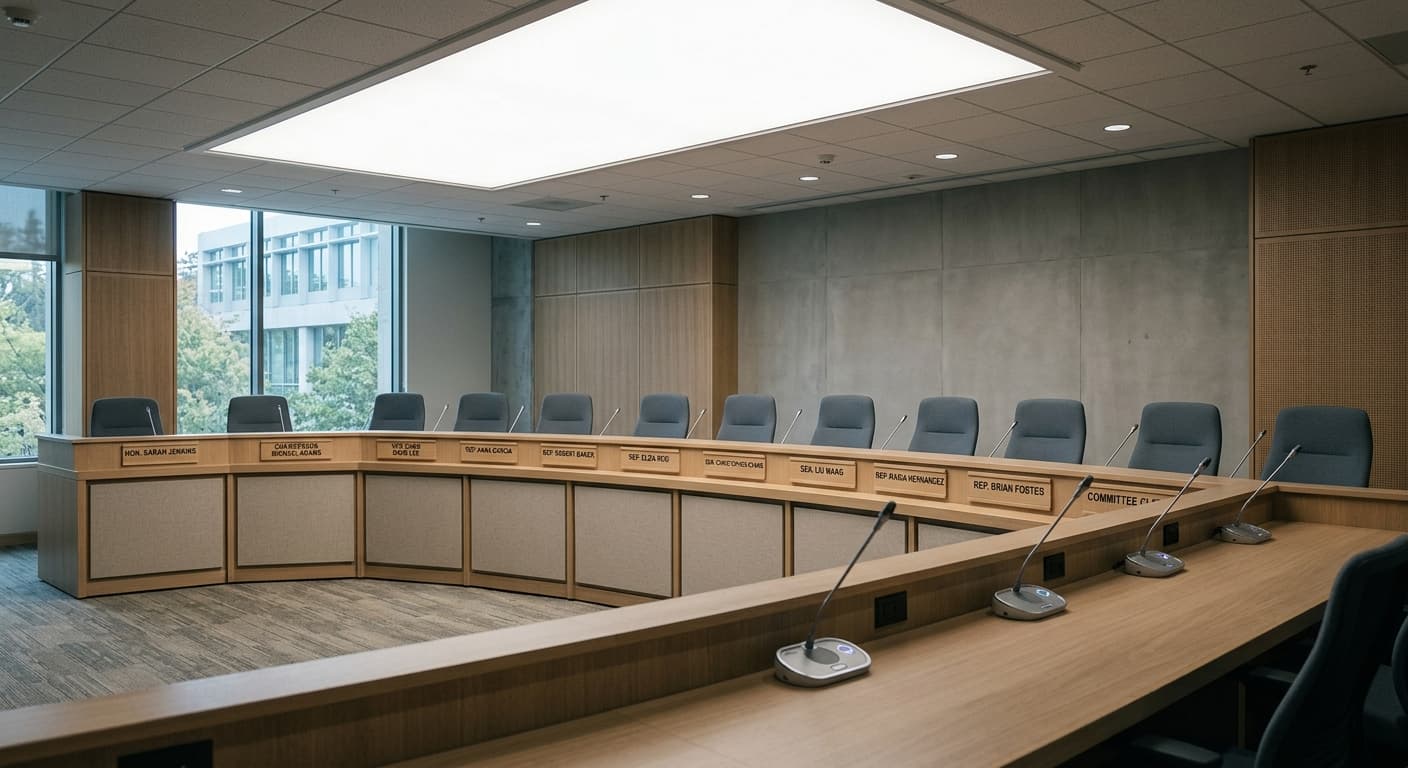
Alaska criminalized AI-generated child sexual abuse material in 2026. House Bill 239, the consolidated public safety bill, became law without the governor's signature on June 18, 2026 as chapter 9, SLA 2026, and the new offenses it created at AS 11.61.121 and AS 11.61.122 took effect July 1, 2026. Alaska still has no comprehensive AI statute: the broader 2026 proposals on election deepfake disclosures, platform liability, and state agency use of AI all died when the 34th Legislature adjourned.
Overview of Alaska AI Laws
Alaska has taken its first concrete step on artificial intelligence, and it is a criminal one. The state has no comprehensive AI framework governing private-sector development, disclosure, or automated decision-making, but as of July 1, 2026 it does have felony offenses aimed squarely at AI-generated child sexual abuse material.
Those offenses arrived through House Bill 239, a wide-ranging public safety act that folded in provisions from roughly ten separate bills. Section 25 of the act added two new sections to AS 11.61: distribution of generated obscene child sexual abuse material (AS 11.61.121) and possession of generated obscene child sexual abuse material (AS 11.61.122). The bill's current status on the legislature's own tracking system reads "CHAPTER 9 SLA 26."
The standalone AI bill that got most of the attention, House Bill 47, did not pass. It cleared the House in February 2026, stalled in Senate Judiciary in April, and died there. Several of its most-discussed features never became law, a distinction covered in detail below.
Meanwhile, Senate Bill 2, which proposed a broader AI governance framework covering election deepfakes and state agency AI use, never moved past its initial committee referral.
This article covers Alaska's enacted AI criminal statutes, the proposals that failed, the state's AI task force, and how federal policy affects Alaska's regulatory approach. This information is current as of September 2026, but you should consult an attorney for advice specific to your situation.
HB 239: AI-Generated Child Sexual Abuse Material
House Bill 239 is Alaska's most significant AI-related legislation to date. It passed the Senate 20-0 on May 19, 2026 and the House 39-1 on May 20, 2026, the final day of the session. Governor Dunleavy neither signed nor vetoed it, so it became law without his signature on June 18, 2026.
Why This Law Was Needed
Alaska was among only five states that had not yet criminalized AI-generated child sexual abuse material as of early 2025. Alaska investigators reported encountering AI-generated child abuse cases that could not be prosecuted under existing law, creating an urgent gap in child protection.
Criminal Penalties
The enacted law creates two offenses, both effective for conduct on or after July 1, 2026:
| Offense | Statute | Classification |
|---|---|---|
| Distribution of generated obscene child sexual abuse material | AS 11.61.121(e)(1) | Class B felony |
| Same offense, with a prior conviction for it or for distribution of child sexual abuse material under AS 11.61.125 | AS 11.61.121(e)(2) | Class A felony |
| Possession, or knowingly accessing on a computer with intent to view | AS 11.61.122(d) | Class C felony |
HB 239 also added distribution of generated obscene child sexual abuse material to the list of crimes in AS 12.10.010(a) that may be prosecuted at any time, so there is no statute of limitations on a distribution charge.
Two details of the drafting matter in practice. First, the statute never uses the words "artificial intelligence." AS 11.61.122(a)(2) reaches material that, "by manipulation, creation, or modification," appears to depict a child under 18 engaged in the conduct described in AS 11.41.455(a)(1) to (8), "regardless of whether an actual child was used." That language is technology-neutral and covers AI-generated imagery without naming the tool. Second, the possession offense is written around an obscenity test: the material must appeal to the prurient interest under contemporary community standards and lack serious literary, artistic, political, or scientific value.
Both sections carry a narrow exception for employees and contractors of interactive computer services, internet service providers, cloud providers, and telecommunications networks who handle the material solely to detect, report, or respond to it in the scope of their work.
Provisions That Did Not Become Law
Several measures widely reported during the 2026 session were part of HB 47, not HB 239, and they are not Alaska law. The enrolled text of HB 239 contains no reference to any of them:
| Proposal | Bill | Status |
|---|---|---|
| $1 million civil penalty per instance on AI platforms | HB 47 | Not enacted |
| Distribution of a generated sexual depiction of an adult, class A misdemeanor | HB 47 | Not enacted |
| Distribution of a forged digital likeness, class A misdemeanor | HB 47 | Not enacted |
| Social media restrictions for minors | HB 47 | Not enacted |

HB 47: What Failed and Why It Matters
House Bill 47 passed the Alaska House by a vote of 39 to 0 on February 27, 2026. It was referred to Senate Community and Regional Affairs, moved out of that committee on April 10, 2026, and was referred to Senate Judiciary, where it sat until the session ended. Its recorded status remains "(S) JUD."
Because the CSAM felonies were rescued into HB 239, the practical effect of HB 47's failure is limited to the provisions HB 239 left behind.
Platform Liability: Proposed, Not Enacted
HB 47's most-discussed provision was a $1 million civil penalty on AI platforms for every instance their system was used to generate child sexual abuse material. Nothing comparable appears in HB 239, and Alaska imposes no such penalty today. Platform exposure in Alaska is governed by ordinary federal and state law, not by a state AI-specific civil penalty.
Other Failed Proposals
Lawmakers expanded HB 47 before the House vote to add two misdemeanor offenses. Neither survived into the enacted law:
- Forged digital likenesses: distributing AI-generated voice or visual clones used to defraud, harass, or intimidate would have been a crime. Alaska has no such offense.
- Generated sexual depictions of adults: distributing manipulated sexual imagery of an adult intended to cause physical, emotional, or economic harm would have been a class A misdemeanor. Alaska has no such offense.
Social Media Restrictions for Minors: Not Enacted
The expanded version of HB 47 also carried a package of social media rules for children. None of them is in force:
- Anyone under 18 would have needed parental or guardian permission to create a social media account
- Parents would have received full access to their children's accounts
- A default 10:30 p.m. social media curfew for minors
- Platforms would have been prohibited from advertising to minors
- Algorithms could not have targeted content to children based on their identity or interests
Senate Bill 2: A Comprehensive AI Bill That Stalled
Senate Bill 2, introduced by Senator Shelley Hughes on January 22, 2025, took a broader approach to AI regulation. The bill addressed three distinct areas: election deepfakes, state agency AI use, and data transfers. It never received a committee vote and died with the 34th Legislature.
Election Deepfake Disclosure Requirements
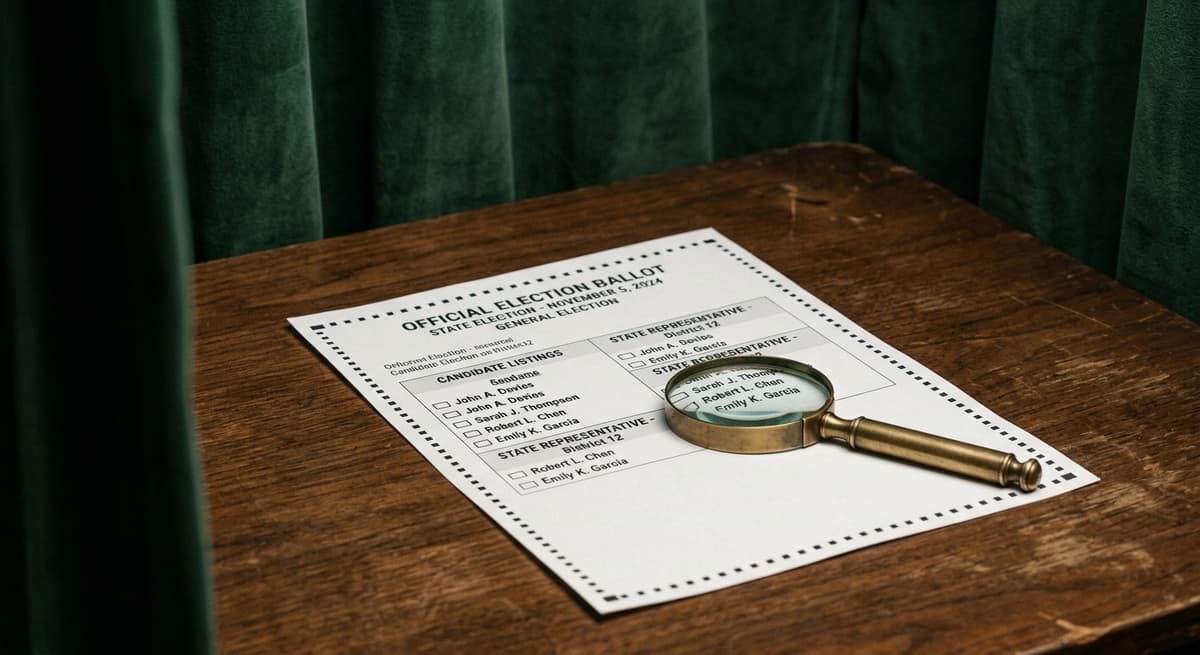
SB 2 would have required disclosure for election-related deepfakes. If a person knew or reasonably should have known that a communication included a deepfake depicting a candidate or political party intended to injure their reputation or deceive voters, they would have had to include a statement reading: "This communication has been manipulated or generated by artificial intelligence."
The disclosure requirements varied by format:
- Audio content: The disclaimer had to be easily heard
- Print materials: The disclaimer had to be clearly visible
- Video content: The disclaimer had to be easily discernible on screen
State Agency AI Regulations
The bill would have established some of the most stringent state-level rules for government AI use in the country:
- Biennial inventories: Every two years, state agencies would catalog all AI systems used for consequential decisions, including system names, vendor information, and general capabilities
- Impact assessments: Agencies would complete assessments for AI systems used in consequential decision-making
- Individual rights: Citizens would have rights to consent, notification, and appeal when AI is used in decisions affecting them
- Prohibited uses: State agencies would be banned from using AI for biometric identification, emotion recognition, and social scoring
Data Transfer Restrictions
SB 2 also addressed data transfers between state agencies, requiring that personal data be disclosed to individuals before it could be shared between government entities. This provision would have added a layer of transparency to how the state manages citizen data.
Current Status
SB 2 never advanced. Its recorded status is "(S) STA / Then JUD" with a status date of January 22, 2025, the day it was introduced, meaning it received its committee referrals and no further floor or committee action. It died when the 34th Legislature adjourned on May 20, 2026. A similar bill would have to be reintroduced in the 35th Legislature to move forward.
Alaska's AI Task Force: HCR 3
The Alaska Legislature established the Joint Legislative Task Force on Artificial Intelligence through HCR 3. The task force was charged with evaluating and supporting the responsible use and development of artificial intelligence statewide.
Task Force Mandate
The resolution directed the task force to study several key areas:
- AI applications in state government operations
- AI use in education and workforce development
- Legal and ethical issues including data privacy, algorithmic bias, and deepfakes
- Economic opportunities from AI development, including the potential for AI data centers in Alaska
- Frameworks for responsible AI governance
Reporting Deadline
The task force was required to submit a report of its findings and recommendations to the Senate Secretary and the Chief Clerk of the House of Representatives by January 31, 2026. These recommendations are expected to inform future AI legislation in the state.
AI in Alaska State Government
Alaska has already begun integrating AI into state operations. The Alaska Office of Information Technology has introduced AI features for state employees, and the state has explored embedding "agentic artificial intelligence" into the myAlaska mobile app.
The myAlaska app serves as the state's official platform for citizens to access government services through a single sign-on system. Plans to integrate AI would allow the system to act on behalf of users, streamlining access to services like the Permanent Fund Dividend and other state programs.
These developments highlight the tension between promoting efficient AI use in government and establishing adequate safeguards. With SB 2 dead, no Alaska statute currently governs how state agencies deploy AI, and agency practice is set by executive and departmental policy rather than legislation.
AI and Employment in Alaska
Alaska has not enacted specific legislation governing AI in employment decisions. Senate Bill 177, a predecessor bill from the previous legislative session, proposed transparency requirements for AI hiring tools and broader AI governance measures, but did not advance to passage.
The key employment-related AI proposals that have been discussed in Alaska include:
- Requiring employers to disclose when AI is used in recruitment or evaluation processes
- Encouraging state agencies to adopt responsible AI practices with risk assessments and human oversight
- Establishing definitions for automated decision-making systems within Alaska's legal framework
Until specific AI employment legislation is enacted, Alaska employers using AI in hiring must comply with existing federal and state anti-discrimination protections. AI systems that produce biased outcomes in employment decisions could create liability under federal civil rights laws.
Federal AI Policy and Alaska
Executive Order 14365
President Trump's Executive Order 14365, signed December 11, 2025, creates potential tension with state AI legislation. The order establishes mechanisms to challenge state AI laws and conditions certain federal funding on states' regulatory approaches.
Impact on Alaska
Alaska's AI legislation intersects with the federal framework in several ways:
The enacted CSAM offenses (AS 11.61.121 and AS 11.61.122): These fall within EO 14365's protected carve-outs for child safety regulations, making them less vulnerable to federal challenge. The executive order explicitly preserves state authority over child safety matters.
Any revival of SB 2: Provisions governing state government procurement and use of AI would also fall within a protected carve-out. Election deepfake disclosure requirements could face more scrutiny if they were deemed to conflict with the federal policy framework.
Broader concerns: The threat of lost Broadband Equity Access and Deployment (BEAD) funding is particularly relevant for Alaska, where broadband infrastructure development is critical given the state's vast geography and many rural communities with limited connectivity.
Deepfake Protections in Alaska
Alaska's deepfake coverage is narrow. Only one category is criminalized:
Sexually explicit deepfakes involving children (enacted): AS 11.61.121 and AS 11.61.122 create felony penalties for distributing and possessing generated obscene child sexual abuse material, effective July 1, 2026.
Election deepfakes (not enacted): SB 2 would have required disclosure statements on AI-manipulated political communications depicting candidates or parties. It died in committee, so Alaska has no election deepfake disclosure law.
Sexually explicit deepfakes of adults (not enacted): HB 47 would have made distributing manipulated sexual imagery of an adult a class A misdemeanor. That provision was not carried into HB 239.
Forged digital likenesses (not enacted): HB 47 would have criminalized AI-generated voice or visual clones used to defraud, harass, or intimidate. That provision was not carried into HB 239 either.
Alaskans harmed by a non-child deepfake are left with general legal theories such as defamation, harassment, fraud, and the right of publicity rather than a purpose-built statute.
Looking Ahead: Alaska's AI Regulatory Future
Alaska's AI regulatory landscape is developing rapidly. The 2026 session produced the state's first AI-related criminal statutes and left most of the rest of the AI agenda unfinished.
Key factors that will shape Alaska's AI policy:
Legislative momentum: The unanimous House passage of HB 47 and the near-unanimous passage of HB 239 show strong bipartisan support for AI regulation in the context of child safety. Whether that momentum extends to platform liability, election deepfakes, or minors' social media use is untested, since each of those measures failed to get a Senate floor vote.
The vehicle problem: HB 47's fate is a reminder that a standalone bill can pass one chamber unanimously and still die. The provisions that survived did so by being folded into an omnibus public safety act.
Federal constraints: EO 14365's funding conditions are particularly significant for Alaska, which relies on federal broadband funding for connectivity in remote areas. This dynamic may moderate the scope of state AI regulation.
AI task force recommendations: The findings from the HCR 3 task force will likely inform the next wave of AI legislation in the 35th Legislature, providing a research-backed foundation for policy decisions.
More Alaska Laws
Explore other Alaska law topics on Recording Law:
Frequently Asked Questions
Does Alaska have an AI law?
Alaska has AI-specific criminal law but no comprehensive AI statute. Effective July 1, 2026, AS 11.61.121 and AS 11.61.122 make it a felony to distribute or possess generated obscene child sexual abuse material, including AI-generated imagery. Those sections were enacted by HB 239, chapter 9, SLA 2026. Broader proposals covering election deepfakes, state agency AI use, platform liability, and minors' social media all failed in the 2026 session.
What are the penalties for AI-generated child sexual abuse material in Alaska?
Distribution is a class B felony under AS 11.61.121(e)(1). It becomes a class A felony under AS 11.61.121(e)(2) if the person has a prior conviction for that offense or for distributing child sexual abuse material under AS 11.61.125. Possession, or knowingly accessing the material on a computer with intent to view it, is a class C felony under AS 11.61.122(d). These penalties apply to offenses committed on or after July 1, 2026, and there is no statute of limitations on a distribution charge. Alaska imposes no civil penalty on AI platforms; the proposed $1 million per-instance penalty was part of HB 47, which did not pass.
Does Alaska regulate deepfakes in elections?
No. SB 2 would have required anyone distributing AI-manipulated media depicting political candidates to include a clear disclosure that the content was generated or manipulated by artificial intelligence, with format-specific rules for audio, print, and video. The bill never advanced past its initial committee referral and died with the 34th Legislature, so Alaska has no election deepfake disclosure requirement.
How does Alaska regulate AI in state government?
It does not, by statute. Alaska has begun integrating AI into state operations, including the myAlaska app, but no law governs government AI use. SB 2 would have required biennial inventories of AI systems, impact assessments, and individual consent and appeal rights, and would have banned state agencies from using AI for biometric identification, emotion recognition, and social scoring. It did not pass.
How does federal AI policy affect Alaska?
Executive Order 14365 (December 2025) creates tension with state AI regulation by establishing mechanisms to preempt state AI laws and conditioning broadband funding. The order includes carve-outs for child safety and state government AI procurement, so Alaska's enacted offenses at AS 11.61.121 and AS 11.61.122 sit within a protected category. The broadband funding condition is particularly significant for Alaska, where federal support is critical for connecting remote and rural communities.
Updates
Corrected to reflect that Alaska enacted AI-generated child sexual abuse material felonies through HB 239 (chapter 9, SLA 2026, effective July 1, 2026) at AS 11.61.121 and AS 11.61.122, and clarified that HB 47 and SB 2, including the proposed $1 million platform penalty and the minors social media rules, did not become law.
Corrected the KeyTakeaways summary of HB 47, Alaska's AI-generated child sexual abuse material bill, to state it remains pending in the Senate Judiciary Committee rather than crediting it as already-enacted law.
Independently fact-checked against the cited primary sources; governing law re-checked for recent changes
Reviewed and approved by an editor
The Law Behind This Article
This article rests on the statutory provisions below, held in our own legal record and retrieved from the official source. Tap a section to read the operative text.
Alaska Statutes, Title 11: Criminal Law (Ch. 61, Offenses Against Public Order)
§ 11.61.122Possession of generated obscene child sexual abuse materialIn force
Sec. 11.61.122. Possession of generated obscene child sexual abuse material. (a) A person commits the crime of possession of generated obscene child sexual abuse material if the person knowingly possesses or knowingly accesses on a computer with intent to view any material that (1) the average person, applying contemporary community standards, would find, when considered as a whole, appeals to the prurient interest; (2) depicts, in a patently offensive way, a child under 18 years of age who, by manipulation, creation, or modification, appears to be engaged in conduct described in AS 11.41.455(a)(1) - (8), regardless of whether an actual child was used; and (3) when considered as a whole, lacks serious literary, artistic, political, or scientific value. (b) This section does
Official text (excerpt) · last checked 2026-09-02 · Read the full text in our law library · Verify at akleg.gov
Search our full record of US law — 2.1 million sections, every state + federal →
Sources and References
- Alaska HB 47 bill details - state legislature(akleg.gov).gov
- Alaska House passes HB 47 limiting AI sexual imagery(alaskapublic.org)
- Alaska House OKs AI-generated CSAM crackdown(alaskabeacon.com)
- Alaska SB 2 bill details - state legislature(akleg.gov).gov
- Alaska SB 2 on LegiScan(legiscan.com)
- Alaska HCR 3 AI Task Force resolution text(akleg.gov).gov
- HB 47 unanimously passes House with comprehensive protections(alaskahousemajority.com).gov
- Alaska investigators report unprosecutable AI child abuse cases(alaskasnewssource.com)
- Alaska Office of Information Technology AI features(oit.alaska.gov).gov
- Executive Order 14365 on AI state preemption(whitehouse.gov).gov
- Lawmakers advance AI-generated CSAM felony charges(alaskabeacon.com)
- Alaska HB 239 bill history and status (CHAPTER 9 SLA 26) - Alaska State Legislature(akleg.gov)
- Enrolled HB 239, ch. 9 SLA 2026 (sec. 25 adding AS 11.61.121 and AS 11.61.122; sec. 42 amending AS 12.10.010(a); sec. 94 effective date July 1, 2026)(akleg.gov)
- Alaska Legislature passes sweeping crime bill on last day of session (HB 239, 20-0 Senate, 39-1 House)(alaskapublic.org)