
Ohio
Ohio Security Camera Laws: Residential, Commercial, and Privacy Rules
Independently fact-checked against primary sources (last audited August 15, 2026). · Reviewed by the RecordingLaw editorial team. · Law checked current as of August 15, 2026. · 6 primary sources cited on this page. How we verify our legal content
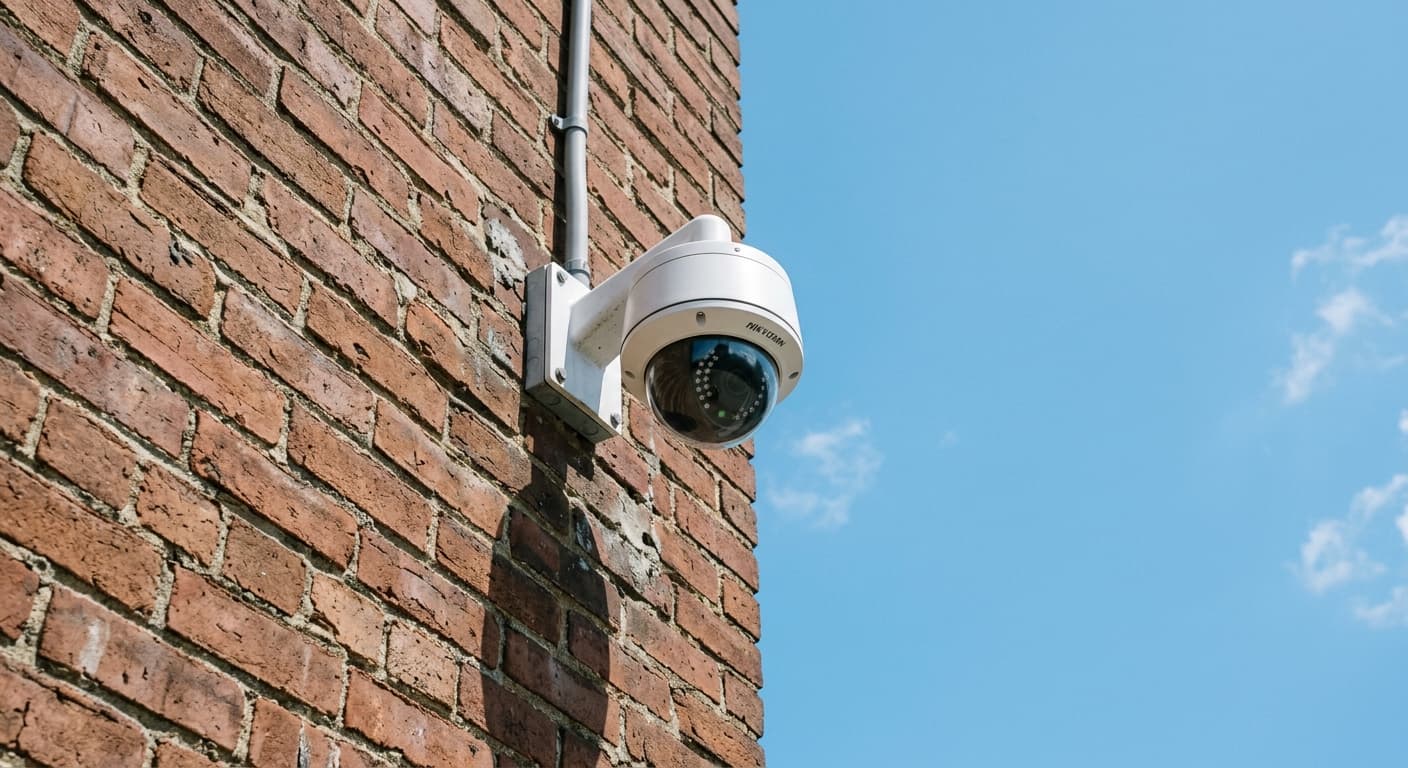
Ohio has no dedicated security camera statute, so general privacy principles govern camera placement. Video surveillance of your own property is legal, but audio recording triggers one-party consent rules under ORC 2933.52. Pointing cameras into private spaces such as bathrooms or bedrooms violates the voyeurism prohibition in ORC 2907.08.
Quick Answer
Ohio does not have a dedicated security camera statute. There is no single law that specifically governs the installation and use of residential or commercial security cameras. Instead, several overlapping laws create the legal framework: ORC 2933.52 governs audio recording, ORC 2907.08 prohibits voyeurism, and general privacy principles protect individuals from surveillance in areas where they have a reasonable expectation of privacy.
You can install security cameras on your property to monitor your home, business, and surrounding areas. Cameras can cover driveways, front yards, backyards, entrances, hallways, and public-facing areas. Cameras cannot point into spaces where people have a reasonable expectation of privacy, such as bathrooms, bedrooms visible through windows, or changing areas.
Residential Security Camera Rules
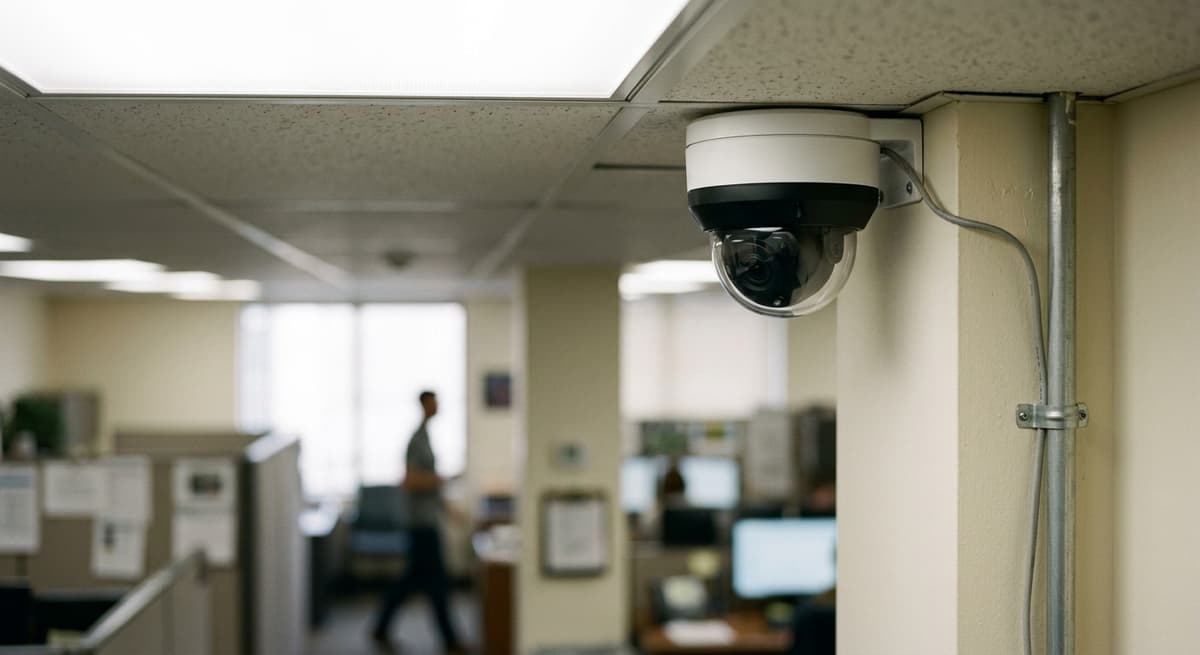
Where You Can Install Cameras
Ohio homeowners can install security cameras in and around their property to protect their home and family. Legal placement locations include:
- Exterior areas: Front door, back door, garage, driveway, walkways, and yard perimeters
- Doorbell cameras: Ring, Nest, and similar video doorbells are legal and widely used
- Interior common areas: Living rooms, kitchens, hallways, and entryways
- Detached structures: Garages, sheds, and outbuildings
Where Cameras Are Prohibited
You cannot place cameras in locations where household members or guests have a reasonable expectation of privacy:
- Bathrooms: Never place cameras in bathrooms, even in your own home
- Bedrooms: Cameras in bedrooms raise serious privacy concerns, especially for guests and non-consenting household members
- Guest rooms: Visitors have a reasonable expectation of privacy in rooms designated for their use
- Changing areas: Any space where people undress
Placing cameras in these locations could violate Ohio's voyeurism statute, ORC 2907.08, even in your own home.
Nanny Cameras and Indoor Monitoring
Ohio homeowners commonly use nanny cameras to monitor childcare providers, housekeepers, and other service workers inside their homes. Video-only nanny cameras are generally legal in common areas of your home. Adding audio to the recording triggers one-party consent rules under ORC 2933.52.
For a video-only nanny camera in a common area like the living room or kitchen, you do not need to notify the caregiver. However, best practice is to inform employees about cameras in the home to build trust and avoid disputes.
Renting vs. Owning
If you rent your home or apartment, your ability to install security cameras may be limited by your lease agreement. Landlords can restrict modifications to the property, including drilling holes for camera mounts. Many renters use wireless, adhesive-mounted cameras that do not require permanent installation.
Landlords cannot install cameras inside tenant living spaces without consent. See our Ohio Landlord-Tenant Recording Laws page for details.
Commercial Security Camera Rules

Business Surveillance
Ohio businesses can install security cameras throughout their premises for loss prevention, safety, employee monitoring, and liability protection. Common locations include:
- Retail floors, aisles, and checkout areas
- Warehouse and inventory storage areas
- Lobbies, reception areas, and waiting rooms
- Parking lots and loading docks
- Building entrances and exits
- Hallways and stairwells
Prohibited Areas in Businesses
Just as with residential cameras, business security cameras cannot be placed in areas where individuals have a reasonable expectation of privacy:
- Employee restrooms and bathrooms
- Locker rooms and changing areas
- Nursing/lactation rooms provided under federal law
- Private offices where the occupant has a reasonable expectation of privacy (this depends on context)
Signage and Notification
While Ohio does not legally require businesses to post signs about security cameras, doing so is strongly recommended. "Security Cameras in Use" signs at entrances serve several purposes:
- They reduce the expectation of privacy, strengthening the business's legal position
- They deter theft and misconduct
- They demonstrate good faith and transparency
- They help protect the admissibility of footage in court
Employee Notification
Employers should inform employees about security camera locations, what areas are monitored, and how footage is stored and accessed. Including camera policies in the employee handbook creates documentation that the employer acted transparently. See our Ohio Workplace Recording Laws page for comprehensive employer guidance.
Audio Recording on Security Cameras

The Critical Distinction
Video-only security cameras operate outside Ohio's wiretapping statute. Once you enable audio recording on a security camera, ORC 2933.52 applies. This is one of the most important distinctions in Ohio security camera law.
When Audio Is Permitted
Audio recording on security cameras is permitted when:
- You are present in the area and are a party to conversations being recorded (one-party consent satisfied)
- The cameras are in a location where there is no reasonable expectation of private conversation (public-facing areas, clearly monitored spaces)
- Proper notice has been given, and individuals entering the area have implied consent by remaining
When Audio Is Problematic
Audio recording becomes legally risky when:
- The camera records private conversations between third parties who do not know about the recording
- No one involved in the recorded conversations has consented
- The camera captures conversations in areas where people reasonably expect privacy
Best Practice: Disable Audio
Many security professionals recommend disabling audio on outdoor security cameras to avoid wiretapping law concerns. Video-only surveillance provides substantial security benefits without triggering ORC 2933.52 requirements. If audio is important for your security needs, post clear signage and provide notice that audio recording is in use.
Neighbor Camera Disputes
Cameras Pointing at Neighbor's Property
Ohio law does not prohibit a security camera from capturing portions of a neighbor's property that are visible from public areas or from your own property. Your front-door camera may capture your neighbor's driveway, front yard, or vehicles parked on the street. This is generally lawful because these areas are visible to anyone passing by and carry a reduced expectation of privacy.
However, cameras should not be deliberately aimed at:
- A neighbor's windows, especially bedroom or bathroom windows
- A neighbor's fenced backyard that is otherwise screened from public view
- Any area where the neighbor has taken steps to create privacy
When a Neighbor's Camera Becomes Harassment
If a neighbor's camera is part of a pattern of harassment, intimidation, or stalking, other Ohio laws may apply:
- Menacing by stalking (ORC 2903.211): A pattern of conduct that causes the victim to believe the offender will cause physical harm or mental distress
- Voyeurism (ORC 2907.08): Using cameras to spy on someone for sexual gratification in a place where they expect privacy
- Invasion of privacy tort: Ohio recognizes common-law invasion of privacy claims, including intrusion upon seclusion
Resolving Camera Disputes
If you have a concern about a neighbor's security camera:
- Talk to your neighbor directly about adjusting the camera angle
- Review your HOA rules if applicable; many HOAs have camera placement policies
- Document any concerning camera placement with photographs
- Consult a local attorney if the camera appears to target private areas of your property
- File a police report if the surveillance appears to involve stalking or voyeurism
HOA and Condominium Camera Rules
HOA Authority Over Cameras
Homeowners associations in Ohio may adopt rules governing security camera installation, especially for exterior cameras on common elements or in shared spaces. Common HOA camera policies address:
- Aesthetic requirements: Camera size, color, and visibility from the street
- Placement restrictions: Limiting cameras to certain exterior areas
- Common area surveillance: Whether the association itself installs cameras in lobbies, parking garages, and hallways
- Privacy buffers: Requiring cameras to be angled away from neighboring units
Condominium-Specific Rules
Condominium boards generally have authority over common elements, including hallways, lobbies, parking areas, and building exteriors. Individual unit owners typically can install cameras inside their units and on their limited common elements (such as a balcony or front door area).
Before installing exterior cameras in a condominium, review:
- The condominium declaration and bylaws
- Any board-adopted rules regarding cameras and modifications
- Whether board approval is required for exterior installations
Security Camera Data and Storage
Footage Retention
Ohio does not mandate specific retention periods for security camera footage in most contexts. Businesses should establish a retention policy based on their needs. Common practices include:
- Residential systems: 7 to 30 days of rolling storage, with important clips saved separately
- Retail businesses: 30 to 90 days, longer for areas with frequent incidents
- Financial institutions: Regulatory requirements may mandate specific retention periods
Cloud Storage and Privacy
Cloud-connected security cameras (Ring, Nest, Arlo, Wyze, etc.) transmit footage to remote servers. While Ohio does not regulate cloud storage of security footage, users should:
- Use strong passwords and two-factor authentication on camera accounts
- Review the camera manufacturer's privacy policy and data sharing practices
- Understand how law enforcement may request footage from cloud providers
- Consider local storage options if cloud privacy is a concern
Law Enforcement Access to Footage
Ohio law enforcement can request security camera footage from property owners. You can voluntarily provide footage to police. If you decline, law enforcement can obtain a warrant or court order to compel production of the footage.
Under ORC 2933.523 (effective April 2025), electronic communication service providers must comply with Ohio court-issued warrants for stored data, which may include cloud-stored security camera footage.
Criminal Penalties for Illegal Security Camera Use
Voyeurism: ORC 2907.08
Using security cameras for voyeurism carries the following penalties:
| Offense | Classification | Penalty |
|---|---|---|
| Spying for sexual gratification | Third-degree misdemeanor | Up to 60 days jail, $500 fine |
| Recording in private place | Second-degree misdemeanor | Up to 90 days jail, $750 fine |
| Recording under/through clothing | First-degree misdemeanor | Up to 180 days jail, $1,000 fine |
| Recording a minor in private place | Fifth-degree felony | 6-12 months prison, $2,500 fine |
Illegal Audio Interception: ORC 2933.52
If a security camera illegally records audio conversations, the camera owner faces:
- Fourth-degree felony charges
- 6 to 18 months in prison
- Fines up to $5,000
- Civil liability of at least $10,000 under ORC 2933.65
Explore More Ohio Recording Law Topics
Ohio Phone Call Recording Laws | Ohio Audio Recording Laws | Ohio Video Recording Laws | Ohio Workplace Recording Laws | Ohio Dashcam Laws | Ohio School Recording Laws | Ohio Landlord-Tenant Recording Laws | Ohio Medical Recording Laws | Ohio Laws on Recording Police | Ohio Laws on Recording in Public | Ohio Voyeurism and Hidden Camera Laws
See Also
- Ohio Surveillance Camera Laws covers home, HOA, neighbor, workplace, and landlord camera rules in Ohio.
More Ohio Recording Topics
More Ohio Laws
Frequently Asked Questions
Can I install security cameras on my property in Ohio?
Yes. Ohio homeowners and business owners can install security cameras on their property. Cameras can cover exteriors, entrances, driveways, and interior common areas. Cameras cannot be placed in bathrooms, bedrooms, or areas where people have a reasonable expectation of privacy.
Can my neighbor point a security camera at my house in Ohio?
A neighbor can have a camera that incidentally captures public-facing areas of your property, such as your driveway or front yard. However, cameras deliberately aimed at your windows, especially bedrooms or bathrooms, may violate privacy laws or constitute harassment under ORC 2903.211.
Do I need to post signs about security cameras in Ohio?
Ohio does not legally require signs, but posting them is strongly recommended. Signs reduce privacy expectations, deter crime, demonstrate good faith, and help protect the admissibility of footage in court.
Can security cameras record audio in Ohio?
Video-only cameras operate outside Ohio wiretapping law. Adding audio triggers ORC 2933.52 one-party consent requirements. If you enable audio, either be present in the area or provide clear notice that audio recording is in use.
Can police access my security camera footage in Ohio?
Police can ask you to voluntarily share footage. If you decline, they can obtain a warrant or court order. Under ORC 2933.523 (effective April 2025), cloud storage providers must also comply with Ohio court-issued warrants for stored footage.
Updates
Independently fact-checked against the cited primary sources; governing law re-checked for recent changes
Governing law re-checked for recent changes
Reviewed and approved by an editor
The Law Behind This Article
This article rests on the statutory provisions below, held in our own legal record and retrieved from the official source. Tap a section to read the operative text.
Ohio Revised Code
§ 2933.52Interception of wire, oral or electronic communicationsIn forcecited in 19 of our articles
(A) No person purposely shall do any of the following: (1) Intercept, attempt to intercept, or procure another person to intercept or attempt to intercept a wire, oral, or electronic communication; (2) Use, attempt to use, or procure another person to use or attempt to use an interception device to…
Official text (excerpt) · last checked 2026-07-31 · Read the full text in our law library · Verify at codes.ohio.gov
Cited in 64 court opinions in our collectionLatest citing opinion in our collection: 2025
In the courts (editorial summary, independently checked):State v. Bidinost (1994) held R.C. 2933.52(A)'s ban on purposeful interception applies to cordless telephone conversations intercepted and recorded on a baby monitor, requiring suppression. State v. Childs (2000) held the party seeking to suppress bears the burden of proving a 2933.52(A)(1) violation.
Opinions citing this section in our collection:
- State v. Robb (Ohio Supreme Court 2000, 88 Ohio St. 3d 59)✓During a prison siege, FBI agents used tunnel microphones to record rioting inmates' conversations without a warrant; the court held those interceptions were exempt under former Section 2933.52(B)(1), Ohio's exception for interceptions made under federal wiretap law.
- State v. Childs (Ohio Supreme Court 2000, 88 Ohio St. 3d 558)✓A defendant sought to suppress tapes of her own conversations as intercepted in violation of Section 2933.52(A)(1), but no one proved whether the other party consented; the court held the party seeking suppression carries the burden of proof, so the motion failed.
- State v. Bidinost (Ohio Supreme Court 1994, 71 Ohio St. 3d 449)✓A neighbor's baby monitor began picking up the defendant's cordless phone calls, and at police direction she recorded them; the court held that was a purposeful interception barred by Section 2933.52(A) and that the recordings had to be suppressed.
Identified automatically from the court opinions citing this section — not a ranking of which case controls.
Also relied on in: Ohio Audio Recording Laws: Consent, Devices, and Penalties, Ohio Landlord-Tenant Recording Laws: Privacy, Cameras, and Rights, Ohio Medical Recording Laws: Patient Rights, HIPAA, and Consent
§ 2903.211Menacing by stalkingIn forcecited in 6 of our articles
(A)(1) No person by engaging in a pattern of conduct shall knowingly cause another person to believe that the offender will cause physical harm to the other person or a family or household member of the other person or cause mental distress to the other person or a family or household member of the…
Official text (excerpt) · last checked 2026-07-31 · Read the full text in our law library · Verify at codes.ohio.gov
Cited in 666 court opinions in our collectionLatest citing opinion in our collection: 2026
Opinions citing this section in our collection:
- State v. Fry (Ohio Supreme Court 2010, 125 Ohio St. 3d 163)“…nderlying felony enhancements to the charge. {¶ 126} R.C. 2903.211 defines menacing by stalking:…”
- State v. Tichon (Ohio Court of Appeals 1995, 102 Ohio App. 3d 758)“…ally require psychiatric treatment.” *763 R.C. 2903.211(A) states that “[n]o person by engaging…”
- State v. Spaulding (Slip Opinion) (Ohio Supreme Court 2016, 2016 Ohio 8126)“…e that he would cause her physical harm or mental distress. R.C. 2903.211(A)(1). Accordingly, as explained below…”
Identified automatically from the court opinions citing this section — not a ranking of which case controls.
Also relied on in: Ohio Laws on Recording in Public: Rights, Limits, and Privacy, Ohio Video Recording Laws: Public Filming, Privacy, and Penalties, Ohio Voyeurism and Hidden Camera Laws: Offenses, Penalties, and Protections
§ 2907.08VoyeurismIn forcecited in 13 of our articles
(A) No person, for the purpose of sexually arousing or gratifying the person's self, shall commit trespass or otherwise surreptitiously invade the privacy of another, to spy or eavesdrop upon another.
Official text (excerpt) · last checked 2026-07-31 · Read the full text in our law library · Verify at codes.ohio.gov
Cited in 97 court opinions in our collectionLatest citing opinion in our collection: 2026
In the courts (editorial summary, independently checked):Ohio courts have applied R.C. 2907.08 to conduct concealed from the victim. State v. Sipple (2021) held the state need not prove an image was actually captured to sustain an attempted-voyeurism conviction. State v. Goldblum (2014) held that acts committed while the victims slept satisfied the surreptitious-invasion element.
Opinions citing this section in our collection:
- State v. Sipple (Ohio Court of Appeals 2021, 170 N.E.3d 1273)✓Sipple put his phone under a woman's dress at an event without her knowledge. The court affirmed his attempted voyeurism conviction under R.C. 2907.08(D), holding the state need not prove a photo was taken and that stealth without her authority was surreptitious.
- State v. Goldblum (Ohio Court of Appeals 2014, 2014 Ohio 5068)✓Goldblum lifted the covers and clothing off girls sleeping at his home and stared at their genitals. Affirming convictions under R.C. 2907.08(C), the court held acts done while the victims slept surreptitiously invaded their privacy and that sexual purpose could be inferred.
- State v. Huffman (Ohio Court of Appeals 2006, 165 Ohio App. 3d 518)✓Huffman hid wireless cameras in his tanning salon rooms and recorded patrons, including a minor. Affirming convictions under R.C. 2907.08(B) and (C), the court held digital video is a series of photographs, so recording video counted as photographing under the statute.
Identified automatically from the court opinions citing this section — not a ranking of which case controls.
Also relied on in: Ohio Recording Laws (2026): One-Party Consent Rules, Ohio School Recording Laws: Classrooms, IEP Meetings, and Surveillance, Ohio Smart Glasses Recording Laws: One-Party Consent Guide
§ 2917.211Dissemination of image of another personIn forcecited in 8 of our articles
(A) As used in this section: (1) "Child-victim oriented offense" and "sexually oriented offense" have the same meanings as in section 2950.01 of the Revised Code.
Official text (excerpt) · last checked 2026-07-31 · Read the full text in our law library · Verify at codes.ohio.gov
Cited in 5 court opinions in our collectionLatest citing opinion in our collection: 2026
In the courts (editorial summary, independently checked):Ohio's Fifth District Court of Appeals has twice found the evidence sufficient under this section for person-to-person sends. State v. Allison (2021) upheld a conviction where nude photographs of the victim were texted to her daughter, and State v. Gilmore (2024) did the same where nude images of an ex-girlfriend were emailed.
Opinions citing this section in our collection:
- State v. Hudson (Ohio Court of Appeals 2022, 2022 Ohio 3253)“…ssemination of private sexual images, each in violation of R.C. 2917.211, misdemeanors of the second degree. The…”
- State v. Gilmore (Ohio Court of Appeals 2024, 2024 Ohio 2095)✓A man emailed nude and sexually explicit photos of his ex-girlfriend to her brother-in-law with taunting messages after she refused to reconcile; the court held the evidence sufficient on the elements of R.C. 2917.211 and affirmed the conviction.
- State v. Bradley (Ohio Court of Appeals 2026, 2026 Ohio 232)✓After a breakup, a man stalked his ex, broke into her home, and sent nude photos and a video of her to her new boyfriend; the court held the R.C. 2917.211(B) dissemination count was committed separately from the stalking counts, so the offenses did not merge.
Identified automatically from the court opinions citing this section — not a ranking of which case controls.
Also relied on in: Ohio Deepfake Laws: AI Images, Voice Cloning & Penalties (2026), Revenge Porn Laws by State: All 50 States and DC (2026), Ohio Sexting Laws: Legal Consequences and Penalties
§ 2933.523Electronic search warrantIn forcecited in 2 of our articles
(A) A provider of an electronic communication service or a provider of remote computing service operating in the state shall comply with any court-issued search warrant or interception warrant issued for wire communications, electronic communications, an electronic communications system, or other…
Official text (excerpt) · last checked 2026-07-31 · Read the full text in our law library · Verify at codes.ohio.gov
§ 2933.65Civil and criminal actions for wiretapping and electronic surveillance violationsIn forcecited in 11 of our articles
(A) A person whose wire, oral, or electronic communications are intercepted, disclosed, or intentionally used in violation of sections 2933.51 to 2933.66 of the Revised Code may bring a civil action to recover from the person or entity that engaged in the violation any relief that may be…
Official text (excerpt) · last checked 2026-07-31 · Read the full text in our law library · Verify at codes.ohio.gov
Cited in 5 court opinions in our collectionLatest citing opinion in our collection: 2020
Opinions citing this section in our collection:
- State v. Bidinost (Ohio Supreme Court 1994, 71 Ohio St. 3d 449)“…se of an interception warrant. See R.C. 2933.52(B)(1). 8 R.C. 2933.65 provides, in part: "(A) Any person…”
- Choby v. Aylsworth, 2006-L-144 (6-29-2007) (Ohio Court of Appeals 2007, 2007 Ohio 3375)“…ity), R.C. 2307.60 (civil recovery for criminal act), and R.C. 2933.65 (civil remedy for interception of wire…”
- John H. Nix v. Patrick J. O'Malley Weston, Hurd, Fallon, Paisley & Howley (Court of Appeals for the Sixth Circuit 1998, 160 F.3d 343)“…parties to the intercepted communications. See Ohio Rev.Code Ann. § 2933.65 (Banks-Baldwin 1998) (reprinting the pr…”
Identified automatically from the court opinions citing this section — not a ranking of which case controls.
Also relied on in: Ohio Phone Call Recording Laws: Rules, Penalties, and Compliance, Ohio Workplace Recording Laws: Employee and Employer Rights, Ohio AI Meeting Recording Laws (2026)
Search our full record of US law — 2.1 million sections, every state + federal →
Sources and References
- Ohio Rev. Code 2933.52 - Interception of wire, oral, or electronic communications(codes.ohio.gov).gov
- Ohio Rev. Code 2907.08 - Voyeurism(codes.ohio.gov).gov
- Ohio Rev. Code 2933.65 - Civil liability for unlawful interception(codes.ohio.gov).gov
- Ohio Rev. Code 2903.211 - Menacing by stalking(codes.ohio.gov).gov
- Ohio Rev. Code 2933.523 - Service provider warrant compliance(codes.ohio.gov).gov
- Ohio Rev. Code 2917.211 - Nonconsensual dissemination of private sexual images(codes.ohio.gov).gov