Federal Court Vacates the 2024 HIPAA Reproductive Health Privacy Rule in Purl v. HHS
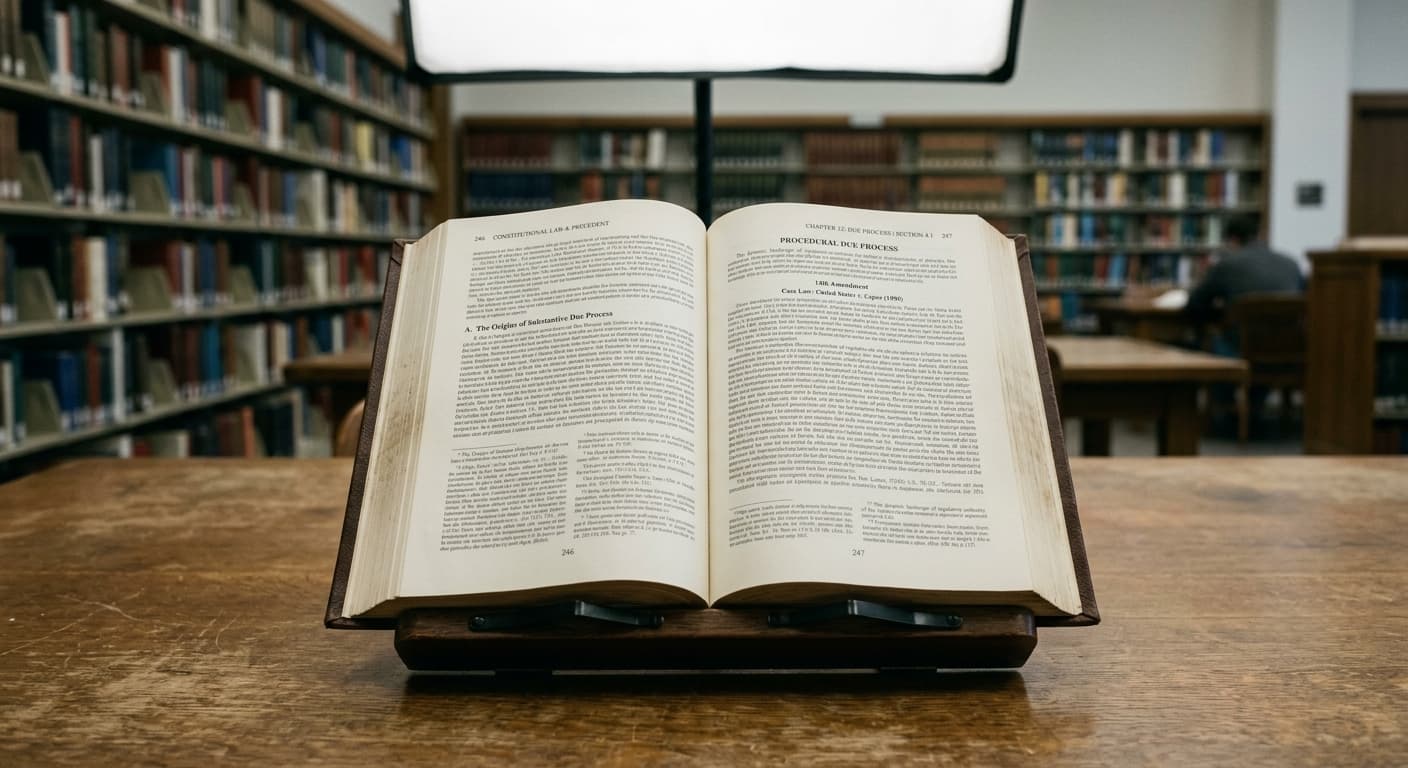
A Texas federal court vacated the 2024 HIPAA reproductive health privacy rule in Purl v. HHS on June 18, 2025. HHS did not appeal, and the vacatur stands.
Breaking developments in recording laws, privacy legislation, digital rights, and legal technology.
296 articles

A Texas federal court vacated the 2024 HIPAA reproductive health privacy rule in Purl v. HHS on June 18, 2025. HHS did not appeal, and the vacatur stands.

Maryland's Supreme Court upheld the Child Victims Act of 2023 in a 4-3 ruling, holding lawmakers could revive previously time-barred child sexual abuse claims.

A Fourth Circuit appeal asks whether Norfolk's network of about 200 Flock license plate cameras is an unconstitutional search. What the case argues, explained.

A Texas federal court set aside the FTC's 2024 noncompete ban in Ryan LLC v. FTC. The agency dropped its appeal in 2025, and the rule was pulled from the CFR in 2026.

Pennsylvania's Paul Miller's Law (Act 18 of 2024) banned handheld device use while driving as of June 5, 2025. Here is what the statute says and why it matters.

Missouri's HB 737 raised the marriage age to 18 with no exceptions, effective Aug. 28, 2025, removing marriage as a route to emancipation for minors.

Michigan's Uniform Power of Attorney Act, Public Act 187 of 2023, took effect July 1, 2024, setting agent duties and letting courts order a bank to accept a valid POA.

In Anderson v. Streeter (2026 S.D. 17), South Dakota's high court affirmed civil self-defense immunity, holding a shove an hour earlier did not erase the right.

A 2024 New York law, refined by a 2025 amendment, lets any worker, not just first responders, claim workers' comp for mental injury from extraordinary job stress.

In Clay v. Union Pacific (Apr. 1, 2026), the Seventh Circuit held Illinois SB 2979, capping BIPA at one recovery per person, applies retroactively.

California's SB 343 rewrote the statewide child support guideline effective September 1, 2024, changing the K-factor, low-income adjustment, and add-on rules.
Florida SB 1168, effective Oct. 1, 2025, makes using a tracking device or app to further a dangerous crime a second-degree felony. Here is what the law changes.

Florida HB 479, effective Oct. 1, 2025, lets courts order restitution from drivers who leave the scene of a property-damage crash. Here is what the law changes.

In United States v. Rahimi (2024), the Supreme Court upheld the federal law barring guns for people under domestic-violence restraining orders, 8-1.

In Simone v. Alam (2025), Pennsylvania's Supreme Court let a slip-and-fall suit proceed against the owner in control, not every co-owner.

No official tally of Elon Musk defamation lawsuits exists. This tracks the verified cases, including the Unsworth trial he won, and flags suits often mislabeled as defamation.

There is no official tally of Trump's defamation cases. A sourced guide to the major ones, where he is both a plaintiff and a defendant. Verified June 20, 2026.

No official tally exists of every defamation suit against Fox News. A sourced guide to the major cases, led by Dominion's $787.5M settlement.

No official count exists for CNN defamation suits. Here are the major documented cases, including the $5M Zachary Young verdict. Verified June 20, 2026.

A federal judge ruled Aug. 13, 2026 that the Otter.ai class action’s core claims proceed: federal wiretap, California CIPA, and Illinois BIPA. What the order held and what happens next.

Vermont signed H.816 on June 17, 2026, barring AI-delivered mental health therapy. Diagnosis and treatment are reserved for qualified professionals.

Florida AG James Uthmeier sued TikTok on June 15, 2026 under HB3, Florida's social media minors law, seeking a public-nuisance ruling and per-violation penalties.

FISA Section 702 lapsed June 12, 2026 after the House rejected an extension 198 to 218. Why warrantless surveillance continues anyway, and what 50 U.S.C. 1881a does.

The Connecticut Supreme Court, in TOV Realty v. Suarez (June 2026), affirmed that a court may stay an eviction while a tenant's Fair Rent Commission complaint is pending. What the ruling means.