Otter.ai Lawsuit: Judge Lets Core Privacy Claims Proceed (2026)
Independently fact-checked against primary sources (last audited August 20, 2026). · 3 primary sources cited on this page. How we verify our legal content
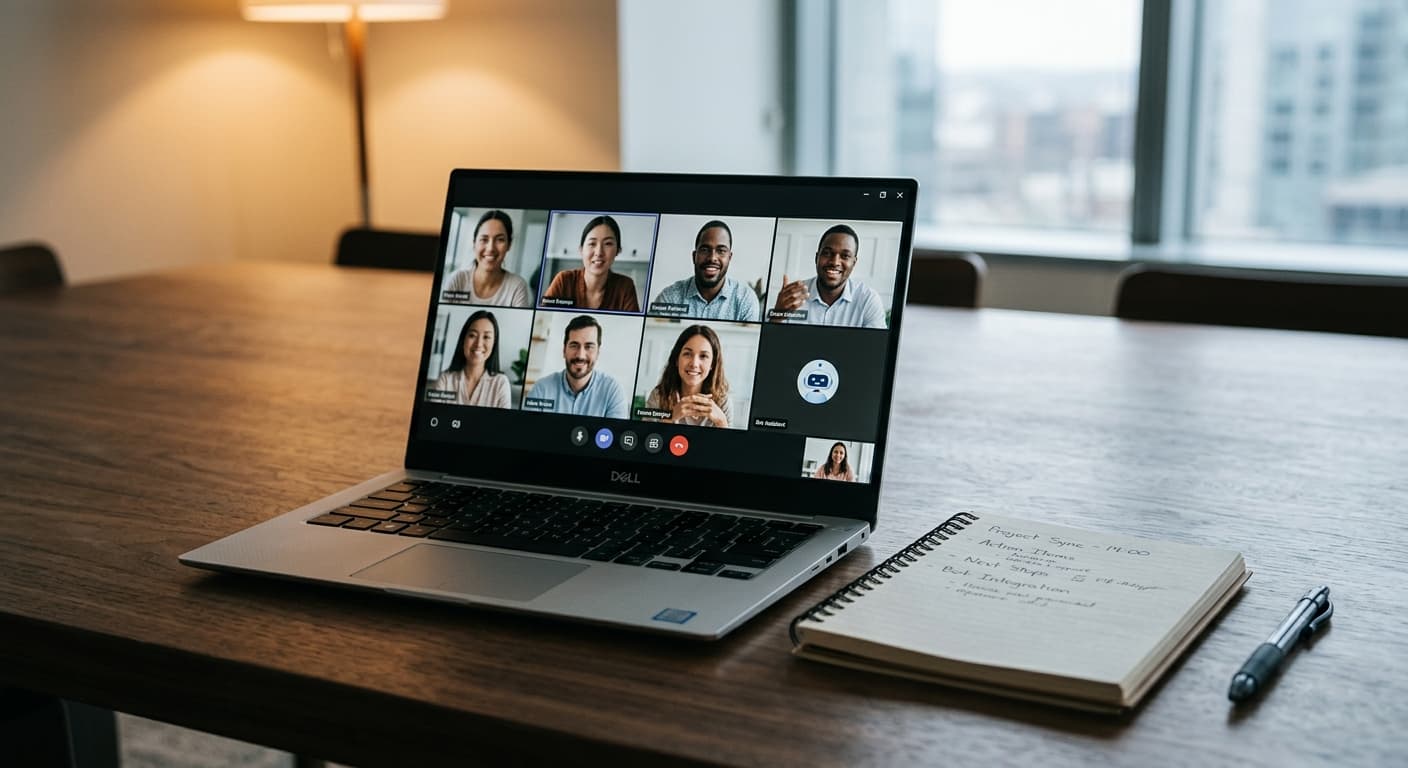
A federal judge has ruled that the core privacy claims against the AI notetaking service Otter.ai will go forward. On August 13, 2026, Judge Eumi K. Lee of the Northern District of California granted Otter's motion to dismiss only in part, holding that the plaintiffs plausibly alleged Otter acts as a third-party eavesdropper, and allowing the federal Wiretap Act claim, the California Invasion of Privacy Act claim, and both Illinois biometric-privacy claims to proceed toward discovery.
Status: On August 13, 2026, the court in In re Otter.AI Privacy Litigation, No. 5:25-cv-06911-EKL (N.D. Cal.), granted Otter's motion to dismiss in part and denied it in part. The core wiretap, CIPA, and BIPA claims survive. This is a ruling on the pleadings, not a finding of liability; the case continues.
Information last verified on August 20, 2026. This is a developing story; we update it as the record changes.
Jurisdiction scope: This article addresses a putative class action pending in the U.S. District Court for the Northern District of California and the California, Illinois, Washington, and federal statutes it invokes. It explains the law generally and does not advise on any specific meeting, account, or dispute. For state rules, see California recording laws and AI meeting recording laws by state.
What Happened
Otter.ai markets an AI assistant, often called the Otter Notetaker, that joins video calls on platforms such as Zoom, Google Meet, and Microsoft Teams to record audio, generate live transcripts, and produce summaries. Beginning in August 2025, users and meeting participants sued the company in California federal court, alleging the service captured their conversations without permission. Judge Eumi K. Lee consolidated the suits into In re Otter.AI Privacy Litigation, No. 5:25-cv-06911-EKL, and seven named plaintiffs from California, Illinois, and Washington filed a consolidated complaint on December 5, 2025.
The complaint alleges that Otter obtained consent, at most, from the meeting host who added the assistant, but not from the other participants whose voices it recorded and transcribed. It further alleges that Otter used recorded content to train and improve its artificial intelligence models. In the court's words, the case alleges that Otter "surreptitiously eavesdrops and records conversations held over virtual meeting platforms like Zoom and Microsoft Teams without obtaining consent from all meeting participants."
Otter moved to dismiss the consolidated complaint, denying that any unlawful interception occurred and arguing that its assistant acts for the meeting host rather than as a separate eavesdropping third party. After three continuances, Judge Lee heard argument on August 3, 2026 in San Jose and took the motion under submission. (An earlier version of this article said the motion was argued on May 20, 2026; the docket shows that hearing date was reset three times — to July 15, July 29, and finally August 3 — and argument was actually heard on August 3.) Ten days later, on August 13, 2026, the court issued a 23-page written order.
What the Court Decided
The order grants the motion in part and denies it in part, and the parts that survive are the heart of the case.
Standing. The court first held the plaintiffs have Article III standing, reasoning that the alleged harm — "the unauthorized interception, recording, transcription, and retention of Plaintiffs' private conversations without their consent" — "closely resembles the common-law privacy tort of intrusion upon seclusion." Otter had leaned on the Ninth Circuit's recent decision in Popa v. Microsoft, which involved website session-replay tracking; Judge Lee distinguished it, writing that eavesdropping on entire conversations is "materially more invasive than the monitoring of browsing activity."
The federal Wiretap Act claim survives. Otter argued the "party exception," which permits a party to a communication to record it. The court held that exception can fall away at the pleading stage because the plaintiffs allege Otter "tortiously used their conversational data without their knowledge or consent to train its 'machine learning systems for its own pecuniary gain,'" invoking the statute's criminal-or-tortious-purpose carve-out.
The CIPA section 631 claim survives for all three California plaintiffs. This is the ruling's most consequential passage for the AI-notetaker industry. Otter argued it is merely an extension of the meeting host, like a tape recorder. The court disagreed at this stage: "Because Plaintiffs plausibly allege that Otter independently collects, retains, and uses communications for its own commercial purposes, they have sufficiently alleged that Otter is a third-party eavesdropper under section 631." The court distinguished Graham v. Noom, the leading case treating a vendor as a mere tool.
Both Illinois BIPA claims survive. The plaintiffs allege Otter creates and stores voiceprints "so that, in future meetings, Otter can identify the same individuals and transcribe their conversations." The court held that plausibly alleges biometric identifiers collected without the written consent BIPA requires, and rejected Otter's extraterritoriality argument at the pleading stage. So did the unjust enrichment, Unfair Competition Law, and declaratory judgment claims.
What was dismissed. Both Computer Fraud and Abuse Act counts were dismissed with leave to amend — one for conclusory "access" allegations, the other for failing to allege a cognizable statutory "loss." In a footnote, the court flagged that a brand-new Ninth Circuit opinion, Amazon.com Services v. Perplexity AI (decided August 4, 2026), "casts doubt" on the plaintiffs' theory that Otter accesses their computers indirectly through the users who deploy the Notetaker, though the court said it did not rely on that opinion here. The CDAFA claim and the Washington Privacy Act claim were also dismissed with leave to amend, the latter because the Washington plaintiff had not pleaded enough facts that his communications were "private" — and his common-law intrusion-upon-seclusion claim was dismissed on the same ground. Intrusion-upon-seclusion claims failed for two California plaintiffs who alleged only that their conversations were generically private, but survived for plaintiff Chaka Theus, who alleged Otter intercepted a conversation with his medical provider involving "deeply personal and private medical information."
What was withdrawn. The plaintiffs voluntarily dropped their conversion, trespass to chattels, larceny, and CIPA sections 635 and 638.51 claims; the order's conclusion also lists the Illinois plaintiffs' intrusion-upon-seclusion claims among the withdrawn counts. Because the deadline to amend the pleadings had already passed, they cannot bring those back without showing good cause.
What the Law Actually Says
The lawsuit turns on California's recording statutes. California is one of a minority of states that require all-party consent to record a private conversation. Under California Penal Code section 632, it is unlawful to use an electronic device to record a confidential communication without the consent of every party to it. A communication is confidential when at least one party reasonably expects that it is not being overheard or recorded.
"A person who, intentionally and without the consent of all parties to a confidential communication, uses an electronic amplifying or recording device to eavesdrop upon or record the confidential communication . . ."
The plaintiffs also rely on section 631, which reaches a person who, without consent, reads or attempts to read the contents of a communication while it is in transit, or who aids another in doing so. Section 637.2 lets a person harmed by a violation recover $5,000 for each violation or three times actual damages, whichever is greater, and it does not require proof of actual damage. That statutory structure is what gives these cases their scale when they proceed as class actions.
A parallel claim arises under the federal Wiretap Act, part of the Electronic Communications Privacy Act, codified at 18 U.S.C. sections 2510 through 2522. Federal law sets a one-party consent floor, so it generally permits recording when one participant consents — unless the interception is made for a criminal or tortious purpose, the carve-out the court relied on here. The federal statute also carries its own civil damages, the greater of $10,000 per violation or $100 per day. For background on the federal baseline, see our guide to the federal Wiretap Act and ECPA.
The dividing line the ruling sharpens is whether a technology vendor counts as a separate eavesdropping party or merely a tool used by a participant. Judge Lee's reasoning tracks the approach Judge Rita F. Lin took in the Google Cloud Contact Center AI litigation in February 2025, which adopted a "capability test": whether the vendor "has the capability to use the wiretapped data it collects . . . to improve its AI/ML models," regardless of whether it actually does or is contractually barred from doing so. Under that line of cases, an AI vendor's own retention and training use of meeting audio is exactly what converts it from the host's recorder into a potential eavesdropper.
Analysis: Why This Matters
The following is analysis from the Recording Law Editorial Team.
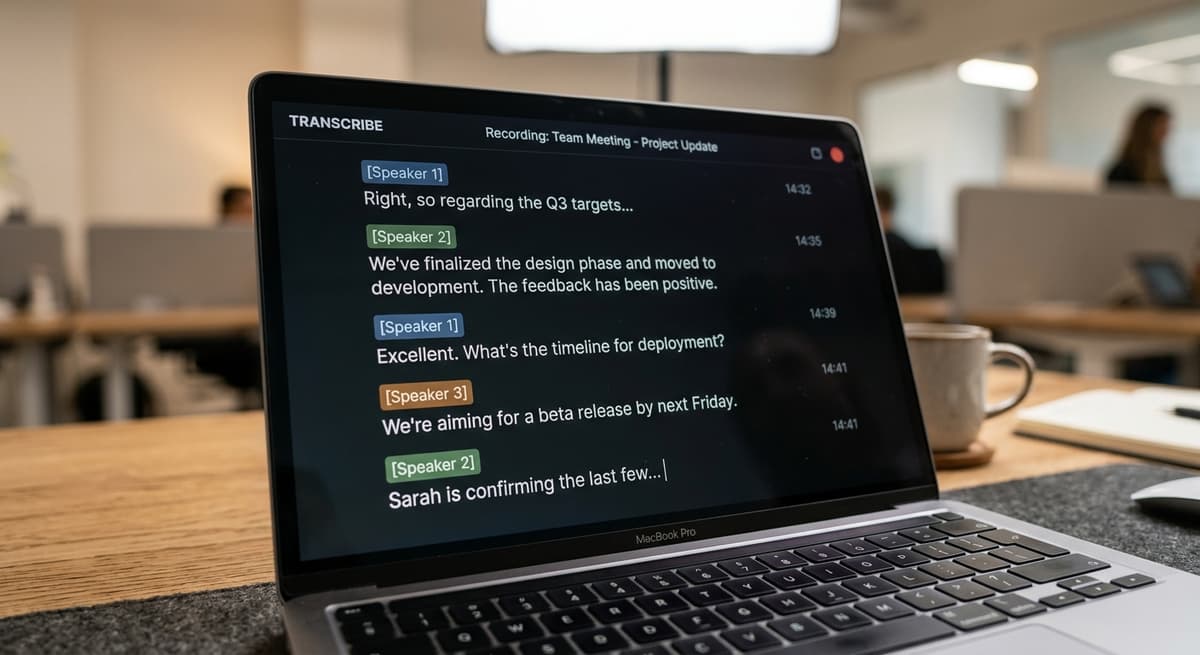
This is the clearest signal yet from a federal court that an AI notetaker can be treated as a third-party eavesdropper rather than a neutral recording tool, at least where the vendor is alleged to keep the audio and train its models on it. The reasoning matters more than the caption: it did not turn on anything unique to Otter. Any meeting assistant whose vendor retains conversational data for its own purposes faces the same pleading-stage logic, which is why the ruling is being read across the industry and not just in Mountain View.
The procedural posture still matters. A motion to dismiss tests only whether the complaint states a legal claim, accepting its factual allegations as true. Nothing in the order finds that Otter actually did what the complaint alleges, and Otter denies unlawful interception. But the practical consequences of surviving dismissal are real: discovery into how the Notetaker joins meetings, what notice participants actually receive, and how recordings feed model training; a coming fight over class certification; and, hanging over it, statutory damages that accrue per violation under CIPA and BIPA. The surviving BIPA counts are notable on their own — voiceprint claims carry $1,000 to $5,000 per violation without proof of actual harm.
There is also a quiet second storyline for the AI industry in the CFAA footnote. The Ninth Circuit's August 4 Perplexity AI opinion, flagged but not relied on by Judge Lee, suggests courts are narrowing the theory that an AI service "accesses" your computer when a user points it at your data. Plaintiffs' lawyers will keep testing that seam; the wiretap and biometric statutes, not the hacking statute, look like the durable vehicles. We are not predicting how this case ends. We are flagging that its framework — consent ceremonies, vendor data use, per-violation exposure — is becoming the compliance checklist for every AI meeting product.
How This Affects You
This section describes general implications, not advice about any specific situation. The lawsuit is a reminder that consent rules vary sharply by state. In all-party consent states, recording a private conversation generally requires permission from everyone on the call, and a setting that captures a meeting for one host does not by itself supply that consent for the others. Courts have generally treated a clear, up-front notice that a meeting is being recorded, paired with a real chance to object or leave, as central to consent.
For anyone deploying an AI notetaker, the ruling sharpens rather than changes the practical guidance our state guides already give: announce the assistant before it captures anything, get affirmative agreement in all-party states, and turn off auto-join, the feature at the center of this complaint. Because the law is unsettled for AI notetakers specifically, people and organizations using these tools across several states can face different rules at once. Anyone weighing a specific recording question should consult a lawyer licensed in the relevant jurisdiction.
What Happens Next
The plaintiffs may file an amended complaint within 14 days of the order, on or about August 27, 2026, to try to cure the dismissed claims; Otter must respond within 21 days after that, whether or not they amend. Then the case moves into discovery and, eventually, a fight over class certification. As of August 20, 2026, no amended complaint had been docketed.
The wider docket tells its own story. Cruz v. Fireflies.AI, a parallel suit against another notetaking vendor, was voluntarily dismissed without prejudice in March 2026 without explanation. The Google Cloud Contact Center AI litigation, source of the capability test, remains active more than a year after its own motion-to-dismiss ruling. The event that converts this explainer into settled law is a merits ruling or an appellate decision; until then, the legal status of AI notetakers under wiretap and eavesdropping statutes remains contested. We will keep updating this article as the record changes.
This is general legal information, not legal advice. It covers a putative class action pending in the U.S. District Court for the Northern District of California and the statutes it invokes, and reflects sources verified on August 20, 2026. Laws change and this matter remains undecided on the merits; consult a lawyer licensed in your jurisdiction about your specific situation.
Related articles
- California Recording Laws: All-Party Consent Rules
- AI Meeting Recording Laws by State
- California AI Meeting Recording Laws
- Federal Wiretap Act and ECPA
Last updated: 2026-08-20. This is a developing story; details verified as of 2026-08-20.
Frequently Asked Questions
Has a court ruled that Otter.ai is illegal?
No. The August 13, 2026 order in In re Otter.AI Privacy Litigation decided only that the core claims are plausible enough to proceed. It accepts the complaint's allegations as true for that purpose and makes no finding that Otter actually violated any law. Otter denies unlawful interception.
What did the August 2026 Otter.ai ruling decide?
Judge Eumi K. Lee granted Otter's motion to dismiss only in part. The federal Wiretap Act claim, the California Invasion of Privacy Act section 631 claim, both Illinois BIPA voiceprint claims, unjust enrichment, and the UCL claim all survive. Both CFAA counts, the CDAFA claim, the Washington Privacy Act claim, and most intrusion-upon-seclusion claims were dismissed with leave to amend.
Why did the court say Otter might be an eavesdropper rather than a tool?
Because the plaintiffs allege Otter does not just record for the meeting host: it independently retains conversational data and uses it to improve its own machine-learning models. Under California case law, a vendor with its own use for intercepted communications can be a third-party eavesdropper under Penal Code section 631 rather than an extension of a party.
What is the significance of the BIPA claims?
Illinois's Biometric Information Privacy Act requires written consent before collecting voiceprints. The plaintiffs allege Otter stores voiceprints so it can identify the same speakers in future meetings. BIPA allows $1,000 to $5,000 per violation without proof of actual harm, which scales quickly in a class action.
Why does California law matter here?
California requires all-party consent to record a confidential communication. Penal Code section 632 bars recording without everyone's consent, and section 637.2 allows $5,000 per violation or three times actual damages, whichever is greater.
Is it legal to record a meeting with an AI notetaker?
It depends on the state and the facts. In one-party consent states, one participant's consent can be enough; in all-party consent states like California, everyone generally must consent. This ruling makes clear that a vendor's own use of the recordings can create separate legal exposure even where a participant consented.
What happens next in the case?
Plaintiffs may amend the dismissed claims by about August 27, 2026, and Otter responds within 21 days after that. The surviving claims head toward discovery and a class-certification fight. No trial date has been set, and no damages have been awarded.
Updates
Updated for the court's August 13, 2026 order granting Otter's motion to dismiss only in part: the federal Wiretap Act, CIPA section 631, and both Illinois BIPA claims proceed; CFAA, CDAFA, and Washington Privacy Act claims were dismissed with leave to amend. Also corrected the motion-hearing date: argument was heard August 3, 2026 after three continuances, not May 20, 2026 as previously stated.
Independently fact-checked against the cited primary sources
Independently fact-checked against the cited primary sources
The Law Behind This Article
This article rests on the statutory provisions below, held in our own legal record and retrieved from the official source. Tap a section to read the operative text.
California Penal Code
§ 631In forcecited in 9 of our articles
(a) Any person who, by means of any machine, instrument, or contrivance, or in any other manner, intentionally taps, or makes any unauthorized connection, whether physically, electrically, acoustically, inductively, or otherwise, with any telegraph or telephone wire, line, cable, or instrument, including the wire, line, cable, or instrument of any internal telephonic communication system, or who willfully and without the consent of all parties to the communication, or in any unauthorized manner, reads, or attempts to read, or to learn the contents or meaning of any message, report, or communication while the same is in transit or passing over any wire, line, or cable, or is being sent from, or received at any place within this state; or who uses, or attempts to use, in any manner, or for any purpose, or to communicate in any way, any information so obtained, or who aids, agrees with, employs, or conspires with any person or persons to unlawfully do, or permit, or cause to be done any of the acts or things mentioned above in this section, is punishable by a fine not exceeding two thousand five hundred dollars ($2,500), or by imprisonment in the county jail not exceeding one year,…
Official text (excerpt) · last checked 2026-07-28 · Read the full text in our law library · Verify at leginfo.legislature.ca.gov
Cited in 202 court opinions in our collectionLatest citing opinion in our collection: 2026
Opinions citing this section in our collection:
- Ribas v. Clark (California Supreme Court 1985, 38 Cal. 3d 355)“…iminal statutes prohibiting various forms of eavesdropping (Pen. Code, §§ 631, subd. (a), and 637), as well as for in…”
- Warden v. Kahn (California Court of Appeal 1979, 99 Cal. App. 3d 805)“…not to be found elsewhere among the states of the nation. Penal Code section 631 provides: "Any person who, by means of…”
- Rogers v. Ulrich (California Court of Appeal 1975, 52 Cal. App. 3d 894)“…nowledge the incident amounted to wiretapping as defined by Penal Code section 631; a statutory penalty in the amount of $…”
Identified automatically from the court opinions citing this section — not a ranking of which case controls.
Also relied on in: Serial CIPA Website-Wiretap Filer Declared a Vexatious Litigant, California Pixel-Wiretap Rulings Split the Same Week: Blue Shield Claim Dismissed, BlueChew Claims Advance, Otter.ai Faces Consolidated Wiretap Class Action Over Its AI Meeting Notetaker and All-Party Consent
§ 632In forcecited in 41 of our articles
(a) A person who, intentionally and without the consent of all parties to a confidential communication, uses an electronic amplifying or recording device to eavesdrop upon or record the confidential communication, whether the communication is carried on among the parties in the presence of one another or by means of a telegraph, telephone, or other device, except a radio, shall be punished by a fine not exceeding two thousand five hundred dollars ($2,500) per violation, or imprisonment in a county jail not exceeding one year, or in the state prison, or by both that fine and imprisonment. If the person has previously been convicted of a violation of this section or Section 631, 632.5, 632.6, 632.7, or 636, the person shall be punished by a fine not exceeding ten thousand dollars ($10,000) per violation, by imprisonment in a county jail not exceeding one year, or in the state prison, or by both that fine and imprisonment.
Official text (excerpt) · last checked 2026-08-31 · Read the full text in our law library · Verify at leginfo.legislature.ca.gov
Cited in 267 court opinions in our collectionLatest citing opinion in our collection: 2026
In the courts (editorial summary, independently checked):Kimmel v. Goland (1990) held the section 47(2) litigation privilege does not bar a damages claim under Section 632 for recording confidential conversations without consent. Lieberman v. KCOP Television, Inc. (2003) held a Section 632 violation is complete the moment the recording is made, whether or not it is disclosed.
Opinions citing this section in our collection:
- Rubin v. Green (California Supreme Court 1993, 4 Cal. 4th 1187)“…f telephone conversations with defendants, an offense under Penal Code section 632. We noted that defendants alleged that…”
- Kimmel v. Goland (California Supreme Court 1990, 51 Cal. 3d 202)✓Mobilehome owners secretly taped phone calls with park management in anticipation of suing; the court held the section 47(2) litigation privilege did not bar the cross-complaint for damages under Penal Code section 632, since the injury came from recording, not publication.
- Shulman v. Group W Productions, Inc. (California Supreme Court 1998, 74 Cal. Rptr. 2d 843)✓A TV producer put a wireless microphone on the flight nurse treating a crash victim. No section 632 claim was before the court, but it called section 632 and the intrusion tort laws of general applicability and said the press may not eavesdrop in violation of section 632.
Identified automatically from the court opinions citing this section — not a ranking of which case controls.
Also relied on in: California Recording Laws (2026): All-Party Consent Rules, US Recording Laws by State (2026): All 50 States Explained, Can an Employer Record Conversations Without Consent? (2026)
§ 637.2In forcecited in 20 of our articles
(a) Any person who has been injured by a violation of this chapter may bring an action against the person who committed the violation for the greater of the following amounts: (1) Five thousand dollars ($5,000) per violation. (2) Three times the amount of actual damages, if any, sustained by the plaintiff. (b) Any person may, in accordance with Chapter 3 (commencing with Section 525) of Title 7 of Part 2 of the Code of Civil Procedure, bring an action to enjoin and restrain any violation of this chapter, and may in the same action seek damages as provided by subdivision (a). (c) It is not a necessary prerequisite to an action pursuant to this section that the plaintiff has suffered, or be threatened with, actual damages. (d) This section shall not be construed to affect Title 4 (commencing with Section 3425.1) of Part 1 of Division 4 of the Civil Code.
Official text (excerpt) · last checked 2026-07-28 · Read the full text in our law library · Verify at leginfo.legislature.ca.gov
Cited in 103 court opinions in our collectionLatest citing opinion in our collection: 2026
In the courts (editorial summary, independently checked):Ribas v. Clark (1985) held the section 637.2 award accrues at the moment of the Privacy Act violation, so the Civil Code section 47 litigation privilege does not bar it, though damages flowing solely from privileged testimony fail. Kimmel v. Goland (1990) applied that reasoning to recordings made in anticipation of litigation.
Opinions citing this section in our collection:
- Rubin v. Green (California Supreme Court 1993, 4 Cal. 4th 1187)“…asion of privacy and related torts as well as damages under Penal Code section 637.2, granting persons injured by eavesdropp…”
- Ribas v. Clark (California Supreme Court 1985, 38 Cal. 3d 355)✓A wife asked a third party to listen on an extension phone while she called her husband, and that listener later testified about it; the court held the judicial privilege barred damages from the testimony but not Section 637.2's fixed award, which accrues at the violation.
- Kimmel v. Goland (California Supreme Court 1990, 51 Cal. 3d 202)✓Mobilehome residents secretly taped calls with park management to gather evidence for a planned lawsuit; the court held the litigation privilege did not bar management's Section 637.2 claim, because the injury came from the recording itself and not from any publication.
Identified automatically from the court opinions citing this section — not a ranking of which case controls.
Also relied on in: Can I Sue Someone for Recording Me on Private or Public Property?, How to Detect and Block Listening Devices in Your Home (2026), Is It Illegal to Video Record Someone Without Their Consent? (2026)
United States Code Title 18
§ 2511Interception and disclosure of wire, oral, or electronic communications prohibitedIn forcecited in 422 of our articles
Except as otherwise specifically provided in this chapter any person who— intentionally intercepts, endeavors to intercept, or procures any other person to intercept or endeavor to intercept, any wire, oral, or electronic communication; intentionally uses, endeavors to use, or procures any other person to use or endeavor to use any electronic, mechanical, or other device to intercept any oral communication when— such device is affixed to, or otherwise transmits a signal through, a wire, cable, or other like connection used in wire communication; or such device transmits communications by radio, or interferes with the transmission of such communication; or such person knows, or has reason to know, that such device or any component thereof has been sent through the mail or transported in interstate or foreign commerce; or such use or endeavor to use (A) takes place on the premises of any business or other commercial establishment the operations of which affect interstate or foreign commerce; or (B) obtains or is for the purpose of obtaining information relating to the operations of any business or other commercial establishment the operations of which affect interstate or foreign…
Official text (excerpt) · last checked 2026-08-28 · Read the full text in our law library · Verify at uscode.house.gov
Cited in 2,045 court opinions in our collectionLatest citing opinion in our collection: 2026
In the courts (editorial summary, independently checked):Griggs-Ryan v. Smith (1990) applied the Section 2511(2)(d) prior-consent exception, treating a tenant repeatedly told that all incoming calls were taped as having impliedly consented. United States v. United States District Court (1972) read the then-current Section 2511(3) as conferring no presidential surveillance power.
Opinions citing this section in our collection:
- Mitchell v. Forsyth (Supreme Court of the United States 1985, 472 U.S. 511)✓The Attorney General authorized a warrantless 1970 national security wiretap that caught the plaintiff's calls; the Court held the since-repealed Section 2511(3) disclaimer left the tap lawful under Title III, and that Mitchell had qualified immunity.
- United States v. United States District Court for the Eastern District of Michigan (Supreme Court of the United States 1972, 407 U.S. 297)✓The Attorney General approved warrantless wiretaps on members of a domestic group accused of bombing a CIA office; the Court read Section 2511(3) as a congressional disclaimer conferring no surveillance power, then held the Fourth Amendment required prior judicial approval.
- Forsyth v. Barr (Court of Appeals for the Fifth Circuit 1994, 19 F.3d 1527)✓Dallas police used, in an internal affairs probe of an officer, calls private parties allegedly intercepted illegally; assuming that was unlawful, the Fifth Circuit held Section 2517(1) and (2) allowed the disclosure and use, defeating the Section 2511(1)(c) and (d) claims.
Identified automatically from the court opinions citing this section — not a ranking of which case controls.
Also relied on in: Connecticut Recording Laws (2026): Hybrid Consent Rules Explained, Oregon Recording Laws (2026): Hybrid One-Party and All-Party Rules, Hawaii Recording Laws (2026): Hybrid Consent State Rules
§ 2520Recovery of civil damages authorizedIn forcecited in 115 of our articles
Except as provided in section 2511(2)(a)(ii), any person whose wire, oral, or electronic communication is intercepted, disclosed, or intentionally used in violation of this chapter may in a civil action recover from the person or entity, other than the United States, which engaged in that violation such relief as may be appropriate. In an action under this section, appropriate relief includes— such preliminary and other equitable or declaratory relief as may be appropriate; damages under subsection (c) and punitive damages in appropriate cases; and a reasonable attorney’s fee and other litigation costs reasonably incurred.
Official text (excerpt) · last checked 2026-07-28 · Read the full text in our law library · Verify at uscode.house.gov
Cited in 860 court opinions in our collectionLatest citing opinion in our collection: 2026
In the courts (editorial summary, independently checked):Walker v. Darby (1990) held a 2520 plaintiff need not prove the contents of intercepted conversations, only interception and a justified expectation against it. Bartnicki v. Vopper (2001) barred 2520 damages against defendants who took no part in the interception, obtained the tape lawfully, and disclosed a matter of public concern.
Opinions citing this section in our collection:
- Jessie Walker v. Thomas E. Darby, Hugh L. Robinson, Jr., and Kenneth Day (Court of Appeals for the Eleventh Circuit 1990, 911 F.2d 1573)✓A postal letter carrier said three supervisors wired an intercom near his workstation to listen in. Reversing summary judgment, the Eleventh Circuit held a section 2520 plaintiff can show interception without proving the contents of specific conversations.
- Gelbard v. United States (Supreme Court of the United States 1972, 408 U.S. 41)“…disclosure, or use is entitled to recover civil damages, 18 U. S. C. § 2520 . Title III also bars the use as eviden…”
- DirecTV, Inc. v. Hoa Huynh (Court of Appeals for the Ninth Circuit 2007, 503 F.3d 847)“…7 U.S.C. § 605 (e)(4), or alternatively, for violations of 18 U.S.C. § 2520 (a), or alternatively, for violations o…”
Identified automatically from the court opinions citing this section — not a ranking of which case controls.
Also relied on in: Alabama Audio Recording Laws: Consent Rules and Penalties, Alabama Phone Call Recording Laws: What You Need to Know, Alaska Phone Call Recording Laws: Rules for Landline, Cell, and VoIP (2026)
Search our full record of US law — 2.1 million sections, every state + federal →
Sources and References
- In re Otter.AI Privacy Litigation, No. 5:25-cv-06911-EKL (N.D. Cal. Aug. 13, 2026), Order Granting Motion to Dismiss in Part(courtlistener.com)
- Docket, In re Otter.AI Privacy Litigation, No. 5:25-cv-06911-EKL (N.D. Cal.)(courtlistener.com)
- In re Google Cloud Contact Center AI Privacy Litigation, No. 3:23-cv-05437-RFL (N.D. Cal. Feb. 10, 2025), Order Denying Motion to Dismiss(courtlistener.com)
- California Penal Code section 632 (recording confidential communications)(leginfo.legislature.ca.gov).gov
- California Penal Code section 631 (wiretapping)(leginfo.legislature.ca.gov).gov
- California Penal Code section 637.2 (civil remedy)(leginfo.legislature.ca.gov).gov
- 18 U.S.C. 2511, Federal Wiretap Act (ECPA)(law.cornell.edu)
- 18 U.S.C. 2520, civil remedies under the Wiretap Act(law.cornell.edu)
- Cruz v. Fireflies.AI Corp., No. 3:25-cv-03399 (C.D. Ill.), Notice of Voluntary Dismissal(courtlistener.com)
- Bloomberg Law, Otter.AI Stuck With Privacy Lawsuit Over Meeting Transcriptions(news.bloomberglaw.com)