Connecticut Court Stays Eviction Over Fair Rent Complaint (2026)
Independently fact-checked against primary sources (last audited June 14, 2026). · 5 primary sources cited on this page. How we verify our legal content
Connecticut Court Stays an Eviction While a Fair Rent Complaint Is Pending
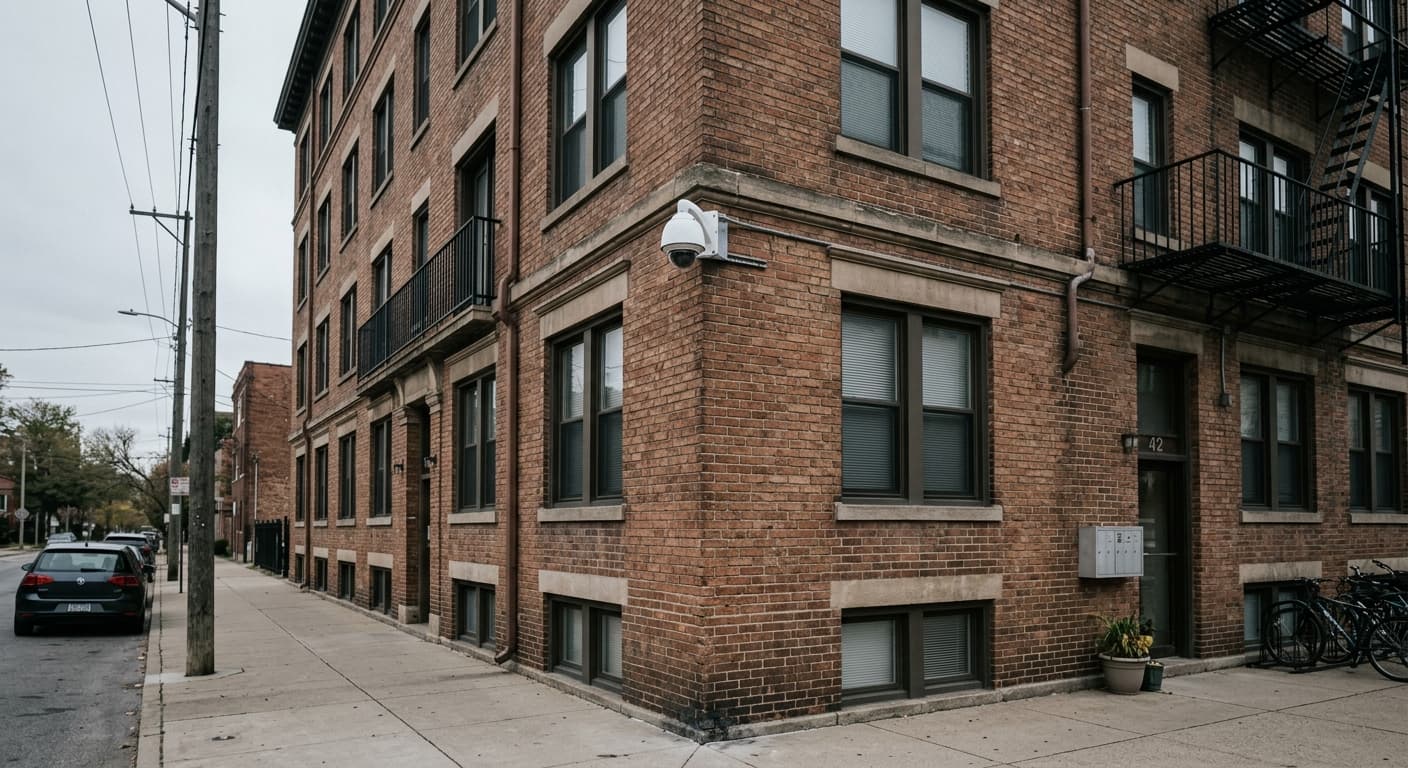
The Connecticut Supreme Court, in an opinion officially released the week of June 9, 2026, upheld a trial court order pausing a Hartford eviction while the tenant's complaint before the city's Fair Rent Commission remained unresolved. The court found no abuse of discretion in staying the landlord's case.
Information last verified on June 14, 2026. This is a developing story; we update it as the record changes.
Jurisdiction scope: This article addresses Connecticut landlord-tenant procedure, specifically the interaction between municipal Fair Rent Commissions and summary process (eviction) actions in state court. It does not address other states' eviction rules or federal housing law. For Connecticut recording and surveillance rules in rental housing, see Connecticut landlord-tenant recording and surveillance laws.
What Happened
The Connecticut Supreme Court released its decision in TOV Realty, LLC v. Suarez the week of June 9, 2026. The matter began in the Hartford Housing Session under trial court docket HFH-CV-25-6033680-S and reached the state's highest court on certification by the Chief Justice under Conn. Gen. Stat. section 52-265a, the procedure reserved for issues of substantial public interest. According to the reported record, the tenant leased a Hartford apartment for a one-year term at 700 dollars per month, and the corporate, New York based landlord later proposed an increase of roughly 64 percent. The tenant complained to Hartford's Fair Rent Commission and continued paying the existing rent. The commission found the proposed increase unfair, found that the landlord had moved to evict within six months of the complaint in violation of the state's retaliatory-action statute, and ordered the landlord to stop the eviction and withdraw its court case.
After the commission's order, the landlord pursued a summary process (nonpayment) action in state court anyway. The tenant asked the trial court to stay that case, and the court agreed. On review, the Supreme Court affirmed, holding that the trial judge did not abuse the discretion to pause an eviction while a related Fair Rent Commission proceeding remained outstanding. The court reasoned that a tenant's interest in obtaining redress through the commission outweighed the landlord's interest in a fast eviction in these circumstances, and it rejected the landlord's challenges to the commission's authority. The opinion is in advance-release status, so a bound-volume citation may not yet be assigned.
What the Law Actually Says
Connecticut authorizes municipal Fair Rent Commissions under Conn. Gen. Stat. sections 7-148b to 7-148f. These commissions can hold hearings, examine whether a rent or a proposed increase is unfair or excessive, and order that an unfair rent be reduced. They are creatures of local ordinance, so a commission exists only where a municipality has adopted one.
Public Act 22-30, enacted in 2022, expanded that framework. It required every town, city, or borough with a population of 25,000 or more to adopt an ordinance creating a Fair Rent Commission, with a deadline of July 1, 2023. Smaller municipalities remained free to establish a commission but were not required to do so under that act.
A separate statute protects tenants from retaliation. Conn. Gen. Stat. section 47a-20 prohibits a landlord from recovering possession, raising rent, or reducing services within six months after a tenant, in good faith, takes certain protected steps, including complaining to a Fair Rent Commission. Conn. Gen. Stat. section 47a-20a sets out the limited circumstances that are deemed not retaliatory, and Conn. Gen. Stat. section 47a-33 gives a tenant a retaliatory-eviction defense in a summary process case. Connecticut's eviction procedure itself, called summary process, runs through Conn. Gen. Stat. section 47a-23 and the sections that follow.
The decision does not rewrite any of these statutes. Instead, it addresses how they fit together in time, that is, whether a court handling an eviction may wait while the commission process plays out. The court treated that as a matter of judicial discretion rather than an automatic rule, which means the outcome can turn on the facts of each case.

Analysis: Why This Matters
The following is analysis from the Recording Law Editorial Team.
The decision matters less for any single phrase in it than for the sequencing question it answers. Connecticut has spent the last several years expanding Fair Rent Commissions, and a recurring practical problem is that a tenant can win an order from a commission while a parallel eviction races ahead in court. By confirming that a trial judge may stay the eviction in that situation, the court gives the administrative process room to work. A commission's order is less likely to be rendered hollow by a faster-moving court case.
It is worth being precise about what the ruling does and does not do. It does not hold that every tenant who files a Fair Rent complaint automatically freezes an eviction. The court framed the stay as discretionary and tied it to the facts, including a commission finding of retaliation. Landlords retain their statutory grounds to seek possession, and the limits in section 47a-20a on what counts as retaliation remain in place. The decision also reflects a broader pattern in which states are strengthening the procedural side of tenant protections, not only the substantive rules about rent.
How This Affects You
For Connecticut tenants, the case signals that a pending Fair Rent Commission complaint can be a reason a court pauses an eviction, though whether a stay is granted depends on the facts and the judge's discretion. For landlords, it is a reminder that pursuing an eviction while a commission matter is unresolved carries litigation risk, particularly where the commission has found retaliation under section 47a-20. Because Fair Rent Commissions exist only in municipalities that have created them, the practical reach of the decision is greatest in the larger Connecticut cities and towns covered by the Public Act 22-30 mandate. None of this substitutes for advice about a specific lease or eviction.
This is general legal information, not legal advice. It addresses Connecticut landlord-tenant procedure and reflects sources verified on June 14, 2026. This is a developing story, the opinion is in advance-release status, and laws and case records change. Consult a lawyer licensed in Connecticut about your specific situation.
Related articles
- Connecticut landlord-tenant recording and surveillance laws
- Connecticut recording laws hub
- Arizona squatter law: SB 1426 fast-tracks removal
Last updated: 2026-06-14. This is a developing story; details verified as of 2026-06-14.
Frequently Asked Questions
What did the Connecticut Supreme Court decide in TOV Realty v. Suarez?
It affirmed a trial court order staying a Hartford eviction while the tenant's Fair Rent Commission complaint remained unresolved, holding that the stay was within the trial judge's discretion. The opinion was officially released the week of June 9, 2026.
Does this mean a Fair Rent complaint automatically stops an eviction in Connecticut?
No. The court described the stay as discretionary and tied to the facts of the case, including a commission finding of retaliation. A judge decides whether to pause an eviction based on the circumstances.
What is a Fair Rent Commission?
Under Conn. Gen. Stat. sections 7-148b to 7-148f, a Fair Rent Commission is a municipal body that can review rents and order reductions of rents it finds unfair or excessive. Connecticut municipalities of 25,000 or more residents were required to establish one under Public Act 22-30 (2022).
What is retaliatory eviction under Connecticut law?
Conn. Gen. Stat. section 47a-20 bars a landlord from recovering possession, raising rent, or reducing services within six months after a tenant in good faith takes certain protected steps, such as complaining to a Fair Rent Commission. Section 47a-33 provides a related defense in a summary process case.
Which Connecticut towns have Fair Rent Commissions?
Public Act 22-30 required every municipality with a population of 25,000 or more to create one by July 1, 2023. Smaller municipalities may also establish a commission, but were not required to under that act.
How did this case reach the Connecticut Supreme Court so quickly?
It reached the court on certification by the Chief Justice under Conn. Gen. Stat. section 52-265a, which allows early review of issues of substantial public interest rather than waiting for a final judgment.
Is the rent increase or the eviction itself resolved by this ruling?
No. The decision addresses whether the eviction could be paused, not the ultimate merits of the rent dispute. As of June 14, 2026, the underlying matter continues and the opinion is in advance-release status.
Updates
Independently fact-checked against the cited primary sources
The Law Behind This Article
This article rests on the statutory provisions below, held in our own legal record and retrieved from the official source. Tap a section to read the operative text.
Connecticut General Statutes, Title 52 (Civil Actions), Chapter 902
§ 52-265aDirect appeal on questions involving the public interest.In force
(a) Notwithstanding the provisions of sections 52-264 and 52-265, any party to an action who is aggrieved by an order or decision of the Superior Court in an action which involves a matter of substantial public interest and in which delay may work a substantial injustice, may appeal under this section from the order or decision to the Supreme Court within two weeks from the date of the issuance of the order or decision. The appeal shall state the question of law on which it is based. (b) The Chief Justice shall, within one week of receipt of the appeal, rule whether the issue involves a substantial public interest and whether delay may work a substantial injustice. (c) Upon certification by the Chief Justice that a substantial public interest is involved and that delay may work a substantial injustice, the trial judge shall immediately transmit a certificate of his decision, together with a proper finding of fact, to the Chief Justice, who shall thereupon call a special session of the Supreme Court for the purpose of an immediate hearing upon the appeal.
Official text (excerpt) · last checked 2026-07-29 · Read the full text in our law library · Verify at cga.ct.gov
Cited in 119 court opinions in our collectionLatest citing opinion in our collection: 2026
Opinions citing this section in our collection:
- Pamela B. v. Ment (Supreme Court of Connecticut 1998, 244 Conn. 296)“…e remedy *348 available by way of appellate review. 1 See General Statutes § 52-265a; State v. Curcio, 191 Conn. 27, 3…”
- Ambroise v. William Raveis Real Estate, Inc. (Supreme Court of Connecticut 1993, 226 Conn. 757)“…ve noncompliance with two week requirement for appeal under General Statutes § 52-265a; time period not jurisdictional). We ha…”
- Moore v. Ganim (Supreme Court of Connecticut 1995, 233 Conn. 557)“…ly to the Supreme Court, and the Chief Justice, pursuant to General Statutes § 52-265a, granted certification to appeal. 3 Th…”
Identified automatically from the court opinions citing this section — not a ranking of which case controls.
Search our full record of US law — 2.1 million sections, every state + federal →
Sources and References
- TOV Realty, LLC v. Suarez, Connecticut Supreme Court, opinion officially released the week of June 9, 2026 (trial court docket HFH-CV-25-6033680-S), the primary source for the holding(storage.courtlistener.com)
- Conn. Gen. Stat. sections 7-148b to 7-148f, municipal Fair Rent Commission powers(cga.ct.gov).gov
- Conn. Gen. Stat. section 47a-20 (retaliatory action by landlord prohibited) and section 47a-20a (circumstances deemed not retaliatory)(cga.ct.gov).gov
- Conn. Gen. Stat. section 47a-23 et seq. (summary process) and section 47a-33 (defense that the action is retaliatory)(cga.ct.gov).gov
- Conn. Gen. Stat. section 52-265a, appeal of an issue of substantial public interest(cga.ct.gov).gov
- Connecticut Public Act 22-30 (2022), requiring municipalities of 25,000 or more to establish a Fair Rent Commission(cga.ct.gov).gov
- Connecticut Public, CT Supreme Court sides with tenants in key Fair Rent Commission case (June 12, 2026), corroborating coverage(ctpublic.org)