
Canada
Squatters Rights in Yukon, the Northwest Territories, and Nunavut
Independently fact-checked against primary sources (last audited August 16, 2026). · 13 primary sources cited on this page. How we verify our legal content
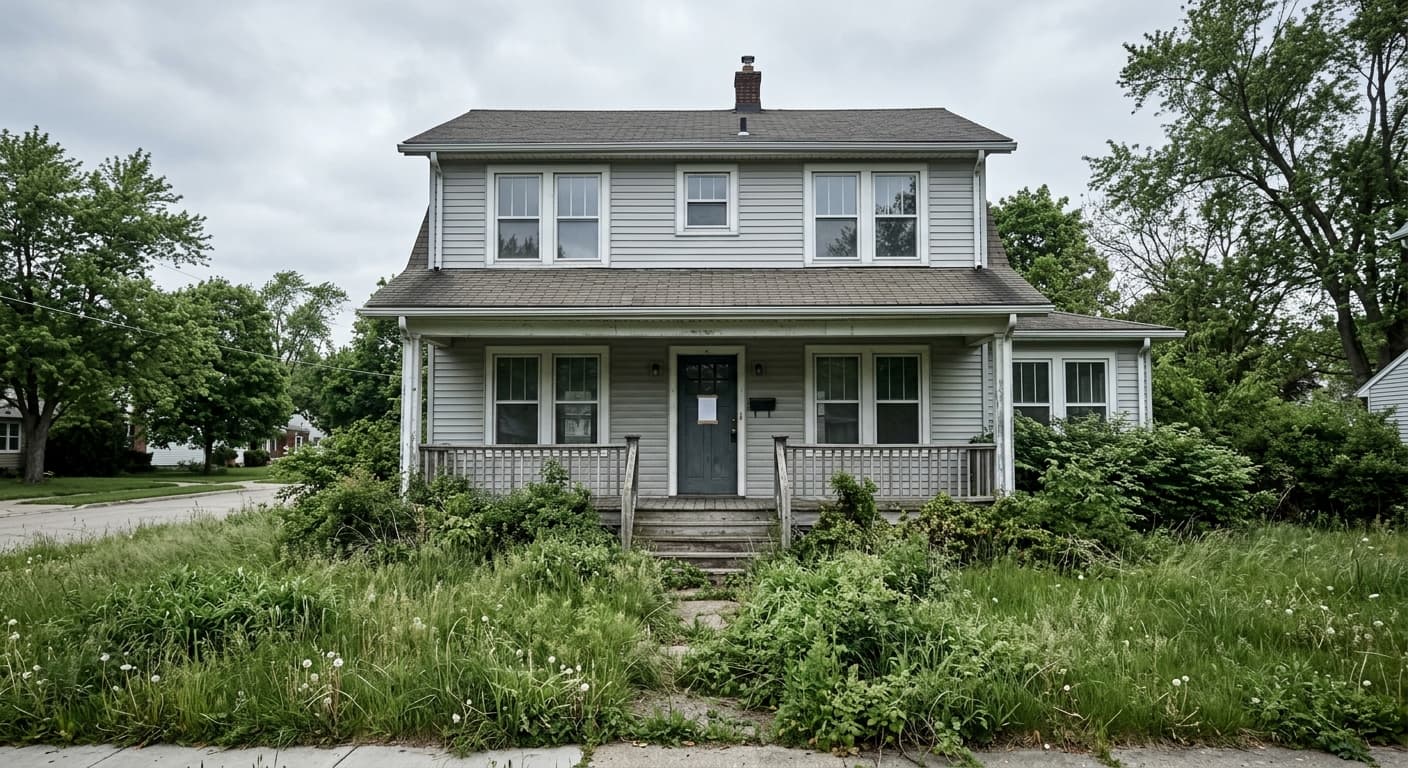
Squatters' rights work differently in each of Canada's three territories. Yukon has expressly abolished both prescription and adverse possession by statute, the Northwest Territories reaches the same practical result through land-titles indefeasibility rather than an express ban, and Nunavut has not yet taken over its own Crown land from the federal government at all, so most Nunavut land is still governed by federal law, not territorial law.
Information last verified on 2026-08-15. The Northwest Territories' new private-property trespass statute had recently received legislative assent but its regulations were still being drafted as of this date, so its in-force status should be re-confirmed directly with the Government of the Northwest Territories before relying on it. This article has not yet been reviewed by a licensed lawyer.
Yukon: A Flat Statutory Bar
Yukon consolidated its land registration onto a single Land Titles Act in 2015, and that Act killed adverse possession outright rather than leaving a registry-conversion loophole the way some provinces still have. Section 43 states that title to land cannot be acquired by prescription under the Act; section 44 states separately that the doctrine of adverse possession does not apply to land under the Act. Two named doctrines, both barred by name, for all Yukon land under the Act, not just land that has already gone through some conversion process.
Yukon's Limitation of Actions Act does still set a 10-year period for an owner to sue to recover land, at section 17, but section 16 expressly subordinates that whole part of the Act to the Land Titles Act. In practice, that limitation period can only govern when an owner is allowed to sue a trespasser; it cannot function as a route to acquiring title, since sections 43 and 44 close that door regardless of how long the 10 years runs.
Yukon's Interpretation Act does not expressly bind the territorial government to most enactments unless a law says so, the ordinary Crown-non-binding default found across Canadian statutory interpretation. In Yukon's case this is largely academic anyway, since the Land Titles Act's bar on adverse possession and prescription applies to all Land Titles land, Crown or private, regardless of whether the Crown is technically bound by the limitation statute.
Northwest Territories: Same Result, Different Mechanism
The Northwest Territories reaches essentially the same outcome as Yukon, but its Land Titles Act contains no express abolition clause anywhere in the text. Instead, it relies on ordinary Torrens-style indefeasibility. Under section 66, a registered owner holds their land absolutely free of other claims except a prior certificate holder or fraud they participated in, and under section 183, every certificate of title is conclusive evidence against everyone, including the Crown, that the named person holds the stated interest.
The NWT Limitation of Actions Act does set the same familiar 10-year period to recover land, at section 18, with title extinguishment at section 43, but section 17 subordinates that whole part to the Land Titles Act, the identical structural pattern used in Yukon. Because a squatter has no way to get a certificate of title issued from mere possession, indefeasibility functions as a de facto bar even without a sentence anywhere saying 'adverse possession is abolished.' The practical result for a reader is the same as Yukon: possession, however long, does not lead to ownership of registered NWT land. The mechanism getting there is genuinely different, and a page describing NWT as having 'the same law as Yukon' would be technically wrong even though the bottom line matches.
The Northwest Territories' Interpretation Act uses the same general default as Yukon's: no enactment binds the Government of the Northwest Territories or affects its rights unless the enactment says so.
Nunavut: Devolution Has Not Happened Yet
This is the single most important fact about Nunavut's land law, and it should not be treated as a footnote. Yukon took over its own land and resource management from Canada in 2003, widely reported across government and legal sources though not confirmed against a single primary devolution-agreement text in this research, and the Northwest Territories did the same in 2014. Nunavut has not. Under the Nunavut Lands and Resources Devolution Agreement, signed January 18, 2024, the earliest possible Transfer Date is defined as at least three full years after that signing date, landing at April 1, 2027 at the earliest. Multiple government and legal sources treat that date as the actual plan, not just a legislated floor, but it remains a future event, not a completed one, as of this article's verification date.

Until that transfer happens, most Nunavut land is federal Crown land administered directly by Canada through Crown-Indigenous Relations and Northern Affairs Canada, governed by the federal Territorial Lands Act rather than a Nunavut-specific mirror statute. This is a real structural difference from Yukon and the Northwest Territories, where the bulk of public land is already territorial Commissioner's land. A description of Nunavut's land regime as simply 'the same as the Northwest Territories, just a few years behind' understates how much of Nunavut's land law is still, today, federal rather than territorial.
Nunavut also has a third land category neither of the other two territories has: Inuit Owned Land, created by the 1993 Nunavut Land Claims Agreement. It is owned by Inuit and administered by Nunavut Tunngavik Incorporated together with three Regional Inuit Associations, under the Land Claims Agreement's own access and use rules rather than territorial or federal land law. Inuit Owned Land covers meaningful acreage near every Nunavut community, and anyone with a question touching it should go to Nunavut Tunngavik Incorporated or a Regional Inuit Association directly rather than treat it as ordinary Crown or territorial land.
Nunavut's Land Titles Act and Limitation of Actions Act were both inherited essentially verbatim from the pre-1999 Northwest Territories statutes at Nunavut's creation, which is the same indefeasibility-based structure described above for the NWT, with no express adverse possession abolition clause. Nunavut's current, independently confirmed consolidations were not fully re-verified in this research and carry pending amendments whose substance was not identified, so this should be understood as the best available inference from a shared statutory lineage rather than a freshly re-opened Nunavut-specific text.
Nunavut's Crown-Binding Reversal
Here is a genuine, confirmed divergence that has nothing to do with the devolution timeline. Nunavut replaced its inherited interpretation statute with its own Legislation Act in 2020. Section 22 states plainly that all enactments are binding on the Government of Nunavut, the exact opposite of the default rule in both Yukon's and the Northwest Territories' interpretation statutes, which exempt their territorial governments from a law's effect unless the law says otherwise.
This matters for one specific reason and should not be overstated for another. It means the general claim that 'limitation periods do not run against the Crown' is presumptively wrong for Nunavut's own territorial government and its Commissioner's land specifically, since Nunavut chose to bind itself. But it does not touch federal Crown land, which is most of Nunavut today, since section 22 binds the Government of Nunavut, not the federal Crown, a separate legal person. The ordinary federal default, that the federal Crown is not bound by a statute unless the statute says so, still governs federal land in Nunavut. And because the Land Titles Act's indefeasibility mechanism blocks adverse possession regardless of which Crown-binding default applies, the practical effect on a possession claim is unchanged either way. The reversal is a real and interesting legal fact about Nunavut specifically; it does not open a door to adverse possession that the other mechanisms already close.
Trespass and Removal on Territorial Public Land
All three territories use, or share a lineage with, the same basic removal mechanism for someone occupying territorial or federal land without authority: an application to a judge for a summons ordering the person to vacate immediately or show cause within 30 days, followed by a removal warrant if they do not comply. Yukon's version is in the Territorial Lands (Yukon) Act, sections 18 and 19; the Northwest Territories' version is in the Northwest Territories Lands Act, sections 16 and 17; and the federal Territorial Lands Act, which still governs the bulk of Nunavut's land pending devolution, uses the identical structure at sections 20 and 21.
The penalties for ignoring a removal order and staying, or coming back, differ enormously and must never be assumed to match across territories. Yukon's statute sets a fine of not more than $300, plus up to 6 months' imprisonment; that figure has not been confirmed as updated by any later amendment and reads as an old, likely unindexed number. The Northwest Territories Lands Act, by contrast, sets a fine of up to $100,000 for a first offence and up to $200,000 for a second or subsequent offence, plus up to 6 months' imprisonment, with each day of continued occupation counted as a separate offence. The federal Territorial Lands Act, which governs most Nunavut land today, uses the same $100,000 and $200,000 figures as the NWT statute, since the NWT's 2014 law was built to mirror the federal template. Yukon's much lower figure is the outlier here, not the norm, and a reader should not average the three territories' penalties into one typical number.
No General Private-Property Trespass Law, With One Exception in Progress
None of the three territories has had a general trespass statute covering ordinary private property the way most provinces do, a gap the Northwest Territories' own Department of Justice has stated explicitly in its own public materials. The narrow tool that already applies everywhere is Criminal Code section 177, which makes it an offence to loiter or prowl at night, without lawful excuse, near a dwelling house on someone else's property. That covers a specific nighttime scenario and does not reach most everyday trespass situations, such as someone simply staying on rural or vacant land in daylight.

The Northwest Territories moved to close this gap: a Trespass to Property Act received legislative assent in early 2026, which would make it the territories' first general private-property trespass statute. As of this article's verification date, its regulations were still being drafted, with early reporting suggesting they were still months away, so whether the Act is actually in force should be confirmed directly with the Government of the Northwest Territories before relying on it. Yukon and Nunavut have shown no indication of a similar reform underway.
Federal Land Inside Every Territory
Alongside territorial and Commissioner's land, genuinely federal land, national parks, defence sites, and any land not yet transferred to territorial administration, exists inside all three territories, and it carries its own separate protection. The Federal Real Property and Federal Immovables Act states outright, at section 14, that no person acquires federal real property or a federal immovable by prescription, and at section 13, that no interest in federal property can be acquired under a provincial or territorial Act except where expressly authorized. This applies wherever land is genuinely federal, which today means essentially anywhere in Nunavut outside Commissioner's land and Inuit Owned Land, and smaller pockets like national parks or defence sites inside Yukon and the Northwest Territories.
For how an owner actually gets an occupant removed once a trespass or unauthorized-occupation claim is established, see squatters rights in Canada, which covers the underlying national mechanics that apply across the territories the same as anywhere else. An owner cannot lawfully force someone off land themselves; retaking the property is itself the Criminal Code's forcible entry or forcible detainer offence under section 72 wherever doing so is likely to cause a breach of the peace or a reasonable apprehension of one, and the offence applies regardless of who actually owns the property.
Squatter or Tenant? Each Territory's Own Tribunal
A true squatter, someone who never had permission to be on the land, is handled through the removal and trespass mechanisms above, not a residential tenancy process. Someone who was let onto property as a tenant and has simply stayed past their agreement is a different legal category, and each territory routes that through its own residential tenancy framework rather than the courts directly.
Yukon's Residential Landlord and Tenant Act is administered by the Yukon Residential Tenancies Office. The Northwest Territories' Residential Tenancies Act is administered by the NWT Rental Office, and a landlord who wins an eviction order there still needs a separate writ of possession from the NWT Supreme Court Clerk to actually enforce it, a two-step process more court-integrated than a single tribunal order. Nunavut inherited the same Residential Tenancies Act as the Northwest Territories at their 1999 split, administered through a comparable rental-officer process, though this article did not independently re-confirm current Nunavut-specific amendments to it. None of the three territories has published notice-period specifics in this cluster's national eviction coverage, so a reader dealing with an actual tenancy dispute should contact the relevant territorial office directly rather than rely on provincial timelines.
Related Resources
For the ownership-side doctrine and provincial comparison table this page extends, see adverse possession and squatters in Canada, noting that its existing table does not yet include a territories row. For boundary disputes between neighbouring owners rather than a stranger occupying land outright, see property lines and fences in Canada and trespass laws in Canada.
Disclaimer
This article is informational only and is not legal advice. Several points here are genuinely unsettled or time-sensitive: the Northwest Territories' new Trespass to Property Act had received legislative assent but its regulations were still pending as of this article's verification date, and its in-force status should be confirmed directly with the Government of the Northwest Territories before relying on it. Nunavut's own current Land Titles Act and Limitation of Actions Act text was not independently re-verified in this research and rests on its confirmed inheritance from the Northwest Territories' pre-1999 statutes; pending amendments to both were referenced in Nunavut's own consolidations but their substance was not identified. Nunavut's Inuit Owned Land regime and Commissioner's Land Act penalty figures were not independently confirmed and should be checked directly with Nunavut Tunngavik Incorporated, the relevant Regional Inuit Association, or the Government of Nunavut. Yukon's $300 territorial-land trespass fine has not been confirmed as current against any amending regulation. Anyone considering a possession claim, dealing with an occupant on their land, or affected by Nunavut's approaching devolution date should speak with a lawyer or contact the relevant territorial or federal department directly rather than rely on this summary alone.
Frequently Asked Questions
Does Yukon have squatters rights?
No. Yukon's Land Titles Act, 2015, sections 43 and 44, expressly abolish both title by prescription and the doctrine of adverse possession for land under the Act. There is no equivalent to the old-registry loophole some provinces still have.
Can someone gain ownership of land in the Northwest Territories just by living on it?
No, though the mechanism is different from Yukon's. The NWT Land Titles Act contains no express abolition clause, but a registered certificate of title is made conclusive against everyone, so a possessor has no route to get one issued from mere occupation. The practical result is the same as Yukon, no ownership through possession, reached through indefeasibility rather than an outright statutory ban.
Has Nunavut taken over control of its own land yet?
No. The earliest possible Transfer Date under the Nunavut Lands and Resources Devolution Agreement is April 1, 2027, and that is treated as the actual planned date by multiple government sources, not just a legal floor. Until that date, most Nunavut land remains federal Crown land administered directly by Canada, not territorial land the way it already is in Yukon and the Northwest Territories.
What is Inuit Owned Land in Nunavut?
A third land category unique to Nunavut, created by the 1993 Nunavut Land Claims Agreement. It is owned by Inuit and administered by Nunavut Tunngavik Incorporated and three Regional Inuit Associations under the Agreement's own rules, separate from both federal Crown land and Nunavut's own Commissioner's land. Anyone with a question touching Inuit Owned Land should contact Nunavut Tunngavik Incorporated or the relevant Regional Inuit Association directly.
What happens if you occupy territorial land without authorization?
All three territories use a similar removal process, a court summons ordering the person to vacate or show cause within 30 days, followed by a removal warrant if they do not comply. The penalty for ignoring that order and staying varies enormously by territory: Yukon sets a fine of not more than $300, while the Northwest Territories and the federal statute governing most Nunavut land both set up to $100,000 for a first offence and $200,000 for a second, plus up to 6 months' imprisonment. These figures should never be assumed to match across territories.
Is there a general trespass law for private property in the territories?
Not yet, in any of the three, though the Northwest Territories is closest. Its Trespass to Property Act received legislative assent in early 2026 but its regulations were still being drafted as of this article's verification date, so whether it is fully in force should be confirmed directly with the Government of the Northwest Territories. Yukon and Nunavut have no equivalent statute; the narrow federal Criminal Code offence covering nighttime loitering near a dwelling applies everywhere but does not cover most trespass situations.
What is the difference between a squatter and a tenant in the territories?
A squatter never had permission to be on the land and is handled through the removal and trespass mechanisms described above. A tenant who overstays their tenancy is a different legal category, handled by each territory's own residential tenancy office, Yukon's Residential Tenancies Office, the NWT Rental Office, or Nunavut's equivalent rental-officer process, not by land-recovery law.
Updates
Independently fact-checked against the cited primary sources
Sources and References
- Land Titles Act, 2015, S.Y. 2015, c. 10, sections 43-44(laws.yukon.ca).gov
- Limitation of Actions Act, R.S.Y. 2002, c. 139(laws.yukon.ca).gov
- Territorial Lands (Yukon) Act, S.Y. 2003, c. 17(laws.yukon.ca).gov
- Land Titles Act, R.S.N.W.T. 1988, c. 8(Supp.)(justice.gov.nt.ca).gov
- Limitation of Actions Act, R.S.N.W.T. 1988, c. L-8(justice.gov.nt.ca).gov
- Northwest Territories Lands Act, S.N.W.T. 2014, c. 13(justice.gov.nt.ca).gov
- Trespass Legislation Frequently Asked Questions, NWT Department of Justice (September 2025)(justice.gov.nt.ca).gov
- Territorial Lands Act, R.S.C. 1985, c. T-7 (federal)(laws-lois.justice.gc.ca).gov
- Nunavut Lands and Resources Devolution Agreement, Crown-Indigenous Relations and Northern Affairs Canada(rcaanc-cirnac.gc.ca).gov
- Legislation Act, S.Nu. 2020, c. 15, section 22(nunavutlegislation.ca).gov
- Criminal Code, R.S.C. 1985, c. C-46, section 177 (trespassing at night)(laws-lois.justice.gc.ca).gov
- Criminal Code, R.S.C. 1985, c. C-46, section 72 (forcible entry and forcible detainer)(laws-lois.justice.gc.ca).gov
- Federal Real Property and Federal Immovables Act, S.C. 1991, c. 50, sections 13-14(laws-lois.justice.gc.ca).gov