
Canada
Squatters' Rights in Saskatchewan: Abolished Since 2001, Reverse-Onus Trespass Law
Independently fact-checked against primary sources (last audited August 16, 2026). · 7 primary sources cited on this page. How we verify our legal content
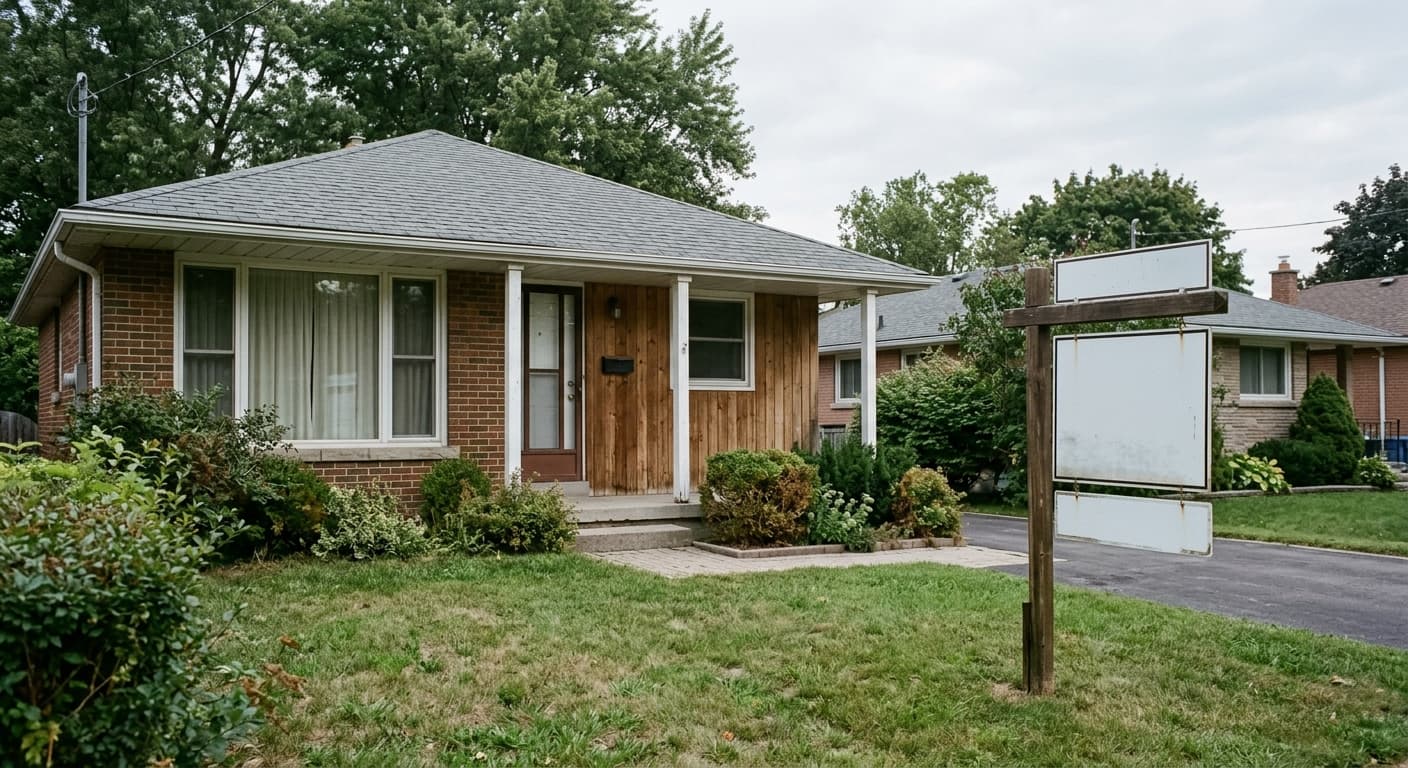
Saskatchewan abolished adverse possession, the legal doctrine popularly called squatters rights, when The Land Titles Act, 2000 took effect in 2001, and its Trespass to Property Act now puts the burden on the person found on land to prove they had permission to be there.
Information last verified on 2026-08-15. This article has not yet been reviewed by a licensed lawyer.
No Adverse Possession Since 2001, Not a Recent Change
The Land Titles Act, 2000, SS 2000, c. L-5.1, section 21, is titled "No title by adverse possession." After first title issues for a parcel under a Crown grant, no person acquires by way of possession any right, title, or interest against the registered owner, and the owner's right to bring an action to recover the land is not affected by anyone else's possession of it.
The one exception lives in section 21(2): a title is void against the claim of a person who was already adversely in actual occupation of the land, and rightly entitled to it, at the exact moment first title was issued. That moment is essentially historical for almost all Saskatchewan land today, so the exception is not a live route for a present-day occupant.
Unlike Alberta, which abolished adverse possession only in December 2022, Saskatchewan's rule is not a recent reform. Section 21's marginal citation carries no amendment history since the Act commenced in 2001, so this has been the settled answer for the entire life of the modern Act.
Section 150 of the same Act separately kills the doctrine of prescription: no easement, right in gross, or profit a prendre can be acquired, or is deemed to have been acquired, by prescription. So a long-used path or right-of-way cannot ripen into a legal easement through mere years of use.
The Trespass to Property Act Puts the Burden on the Occupant
Saskatchewan's default trespass rule is broader, and stricter on the person entering, than the rule in some neighbouring provinces. The Trespass to Property Act, SS 2009, c. T-20.2, was amended substantially in 2019, and section 4(1) closes a long list of land categories to entry without any notice or posted signage required at all: lawns, gardens, yard sites, land under cultivation, land used for grazing, and enclosed land. Most rural and agricultural land in the province is presumptively closed by default.

The 2019 reform went further with a reverse onus. Section 3(2) states that the burden rests on the person found on the land, the defendant, to prove on a balance of probabilities that they had the occupier's consent to be there. That flips the usual expectation that an owner or the Crown has to prove someone lacked permission. Section 13.1, added the same year, closes the obvious workaround: the fact that entry was not expressly prohibited does not by itself imply the occupier consented to it.
Penalties under section 14 escalate by offence count: up to $5,000 and up to 6 months in jail for an individual's first offence, up to $25,000 for a second or later offence on the same premises, and up to $200,000 for a corporation.
Squatter or Tenant? Where the Line Falls
The Residential Tenancies Act, 2006, SS 2006, c. R-22.0001, defines a tenancy agreement as one that can be written, oral, or implied. A genuine squatter, someone with no agreement or relationship to the owner at all, falls outside that definition and is handled under the Trespass to Property Act and the civil courts, not through the tenancy tribunal's protective eviction process.
That line can move, though. An owner who accepts rent from an occupant, or otherwise behaves in a way that implies a tenancy, risks creating exactly that: an implied tenant who can then only be removed through the province's residential tenancy process. Anyone dealing with an occupant who may have paid rent or been allowed to stay should read tenant rights in Saskatchewan before assuming the trespass route applies.
When Someone Builds on Land That Turns Out Not to Be Theirs
Saskatchewan keeps a distinctive remedy for a narrower situation than squatting: a genuine mistaken belief of ownership. The Improvements under Mistake of Title Act, RSS 1978, c. I-1, amended as recently as 2021 and 2024, applies when a person makes lasting improvements on land honestly believing it is their own.
In that situation, section 2 gives the Court of King's Bench two options. The person can be granted a lien on the land for the amount by which the improvements enhanced its value, or, if the court is satisfied that retention is just and appropriate in the circumstances, the person may be entitled, or even required, to keep the land itself, with compensation paid for it. That second option is more direct than the equivalent remedy in some neighbouring provinces, which generally offer only a lien or an easement. It remains a discretionary court remedy tied to an honest mistake about ownership, not a route available to someone who knowingly occupies land they know is not theirs.
Crown Land: A Separate, Less Certain Answer
Crown land in Saskatchewan is governed by The Provincial Lands Act, 2016, SS 2016, c. P-31.1. A full-text search of that Act for trespass or unauthorized-occupation language turned up nothing; the Act itself does not contain a trespasser-deeming provision.

That rule instead appears to live in the Provincial Lands Regulations made under the Act. A Government of Saskatchewan backgrounder document states that the regulations provide that someone occupying provincial land without authority from the province is a trespasser. That backgrounder is a genuine primary government source, but the regulation's specific section number was not confirmed directly from the regulation text itself in the research behind this article, so it should be treated as unconfirmed rather than cited as a specific section. Section 21's general bar on possession-based claims is not written to exclude Crown-owned land, so it likely covers provincial land too, though no clause naming Crown land and adverse possession together was found.
How an Owner Actually Removes a Squatter
Saskatchewan offers no self-help remedy that lets an owner physically force a squatter out. Section 72 of the Criminal Code makes forcible entry and forcible detainer an offence regardless of who actually owns the land, triggered wherever the retaking is likely to cause a breach of the peace or a reasonable apprehension of one. A true trespasser is a matter for the police; a genuinely disputed claim to title or possession instead needs a court order, enforced by a sheriff.
For the removal process in more depth, see squatters rights in Canada, which covers the police-versus-civil-court reality nationally, and eviction notice rules in Canada for the separate process that applies once someone is a tenant rather than a trespasser. For the ownership and boundary side of this topic, including how Saskatchewan's registered-title system interacts with encroachment disputes, see adverse possession and squatters in Canada and property lines and fences in Canada. For the general trespass framework this article draws its penalty figures from, see trespass laws in Canada.
Related Resources
Manitoba, Saskatchewan's neighbour, abolished adverse possession the same way but structures its trespass law and its Crown-land bar differently, including a notable gap in its own current Trespass Act's penalty text. See squatters rights in Manitoba for that comparison. Court procedure tied to a Saskatchewan property dispute is covered at court records in Saskatchewan.
Disclaimer
This article is informational only and is not legal advice. Two items in this article remain genuinely unconfirmed by primary source text: the exact section number of the Provincial Lands Regulations provision that deems unauthorized occupants of Crown land trespassers, and whether any clause exists naming Crown land and adverse possession together beyond the general, ownership-neutral wording of Land Titles Act section 21. Both possession claims and squatter removals can turn on facts specific to your situation, so speak to a licensed Saskatchewan lawyer before relying on this article for a real dispute.

Frequently Asked Questions
Can someone gain ownership of my land in Saskatchewan just by living on it?
No. The Land Titles Act, 2000, section 21, has barred adverse possession against registered private land since the Act took effect in 2001. The only exception protects someone who was already occupying the land at the exact moment its first title was issued, which is not a live possibility for land registered today.
What does the reverse onus in Saskatchewan's trespass law actually mean?
Under section 3(2) of the Trespass to Property Act, added in 2019, the person found on land has to prove they had the occupier's consent to be there, rather than the occupier having to prove the person lacked permission. Section 13.1 adds that simply not posting a no-entry sign does not imply consent.
Can a person who builds on the wrong piece of land end up owning it in Saskatchewan?
Only in a narrow situation covered by the Improvements under Mistake of Title Act, and only if a court agrees. Someone who honestly believed they owned the land they built on can be granted a lien for the value the improvements added, or, if a court finds it just and appropriate, may be entitled or required to keep the land itself in exchange for paying compensation for it.
Is Crown land in Saskatchewan protected differently from private land?
Yes, though the exact mechanism is less clearly documented than the private-land rule. The Provincial Lands Act itself contains no trespass or adverse-possession language; the trespasser rule for provincial land instead appears to sit in the Provincial Lands Regulations, per a government backgrounder, though the exact regulation section was not independently confirmed.
What if the person occupying the property might actually be a tenant?
Check whether any agreement, even an oral or implied one, exists. Saskatchewan's Residential Tenancies Act, 2006 covers implied tenancy agreements, and an owner who has accepted rent or otherwise treated someone as a tenant may need to use the tenancy process rather than the trespass route to remove them.
How does an owner in Saskatchewan actually remove a squatter?
Not by physically forcing them out. Forcibly retaking property can itself be a criminal offence under Criminal Code section 72 regardless of true ownership. The realistic path is reporting a genuine trespasser to police, or, where possession is genuinely disputed, obtaining a court order enforced by a sheriff.
What are the penalties for trespassing in Saskatchewan?
Under section 14 of the Trespass to Property Act, an individual's first offence carries a fine of up to $5,000 and up to 6 months in jail. A second or later offence on the same premises carries a fine of up to $25,000, and a corporation faces up to $200,000.
Updates
Independently fact-checked against the cited primary sources
Sources and References
- The Land Titles Act, 2000, SS 2000, c. L-5.1 (consolidation)(pubsaskdev.blob.core.windows.net).gov
- The Trespass to Property Act, SS 2009, c. T-20.2 (consolidation)(pubsaskdev.blob.core.windows.net).gov
- The Improvements under Mistake of Title Act, RSS 1978, c. I-1 (consolidation)(pubsaskdev.blob.core.windows.net).gov
- The Residential Tenancies Act, 2006, SS 2006, c. R-22.0001 (consolidation)(pubsaskdev.blob.core.windows.net).gov
- The Provincial Lands Act, 2016, SS 2016, c. P-31.1 (consolidation)(pubsaskdev.blob.core.windows.net).gov
- Government of Saskatchewan, backgrounder on trespass-related legislation, 2018(saskatchewan.ca).gov
- Criminal Code, R.S.C. 1985, c. C-46, section 72 (forcible entry and detainer)(laws-lois.justice.gc.ca).gov