
France
France Recording Laws 2025: All-Party Consent Rules and Penalties
Independently fact-checked against primary sources (last audited June 19, 2026). · Law checked current as of August 9, 2026. · 2 primary sources cited on this page. How we verify our legal content
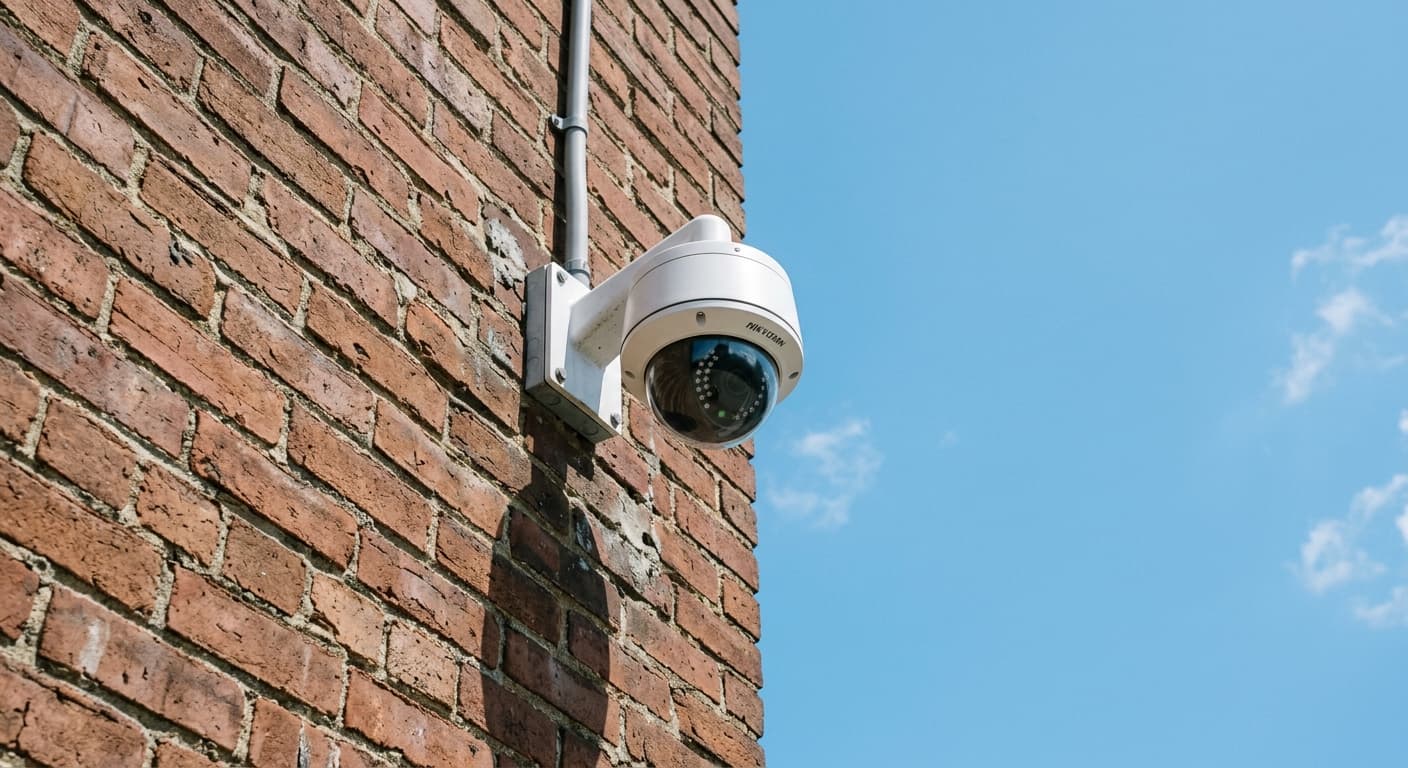
Under Article 226-1 of the Code penal, France requires consent from every participant before any private conversation or image may be recorded or transmitted. The prohibition covers phone calls, in-person exchanges, and digital communications; violations carry up to one year imprisonment and a 45,000 euro fine.
France Recording Laws 2025: All-Party Consent, Deepfakes, and GDPR
France is an all-party consent jurisdiction. Under Article 226-1 of the Code pénal, recording or transmitting private conversations or images without the consent of everyone involved is a criminal offence carrying up to 1 year in prison and a €45,000 fine. The rule covers audio, video, and location tracking and applies equally to phone calls, in-person conversations, and digital communications.
Information last verified on 2026-05-15. This article presents general legal information about French law and is not legal advice. Statutes cited reflect their in-force versions as of May 2026.
Jurisdiction scope: This article addresses recording and privacy law in France under the Code pénal (Articles 226-1 through 226-8-1), the Code civil (Article 9), the Loi Informatique et Libertés, GDPR, and the EU AI Act. It does not address surveillance law in other EU member states; for Germany, see Germany Recording Laws.
For a broader overview of how EU countries treat recording consent, see the World Recording Laws hub.
Quick Answer: Is France a One-Party or All-Party Consent State?
France is an all-party consent country. Article 226-1 of the Code pénal makes it a criminal offence to capture, record, or transmit private words or images without the consent of the person being recorded. Consent must come from every participant in a conversation, not just one. The base penalty is 1 year imprisonment and €45,000 fine. Consent is presumed only when the recording takes place openly and the subject could have objected but chose not to. This rule covers phone calls, face-to-face conversations, and any other form of private communication.
France's all-party consent requirement is stricter than the federal rule in the United States (one-party consent under the Wiretap Act, 18 U.S.C. § 2511) and stricter than the Canadian rule under the Criminal Code, RSC 1985, c C-46, s 184(2)(a). The French approach flows from a deep constitutional tradition: Article 9 of the Civil Code declares that "everyone has the right to respect for his private life," and French courts have interpreted this broadly for over a century.

Article 226-1: The Core All-Party Consent Rule
Article 226-1 of the Code pénal, as most recently amended by Loi no. 2024-247 of March 21, 2024, defines three categories of prohibited recording:
- Capturing, recording, or transmitting, without consent, words spoken in a private or confidential capacity.
- Recording or transmitting the image of a person in a private place without their consent.
- Capturing a person's real-time or delayed location data without authorisation (added by the 2024 amendment).
The base penalty is 1 year imprisonment and €45,000 fine. Aggravated penalties of 2 years imprisonment and €60,000 apply in two circumstances:
- The offender is the victim's spouse, cohabiting partner, or civil union partner.
- The target is a public official, public servant, elected representative, election candidate, or a family member of any of these.
Consent presumption: Article 226-1 itself codifies a limited presumption of consent: when a recording is conducted openly and the subject could have objected but did not, consent is treated as given. For example, if a journalist openly holds a microphone at a press conference and no one present objects, consent is presumed. This doctrine does not apply to covert or concealed recording.
Minors: For recordings involving persons under 18, consent must be obtained from the holders of parental authority under Code civil Article 372-1.
"Est puni d'un an d'emprisonnement et de 45 000 euros d'amende le fait, au moyen d'un procédé quelconque, volontairement de porter atteinte à l'intimité de la vie privée d'autrui..." (Code pénal, Article 226-1, Légifrance)
Article 226-2 and Article 226-2-1: Distributing Illegal Recordings
Obtaining an illegal recording is only half of the offence framework. Possessing, using, or distributing it compounds the criminal exposure.
Article 226-2 criminalises keeping, using, or disclosing to the public or a third party any recording or document obtained through a violation of Article 226-1. Penalties mirror Article 226-1: 1 year imprisonment and €45,000 fine at base, rising to 2 years and €60,000 under the same aggravating circumstances.
Article 226-2-1 (created by Loi no. 2016-1321, October 7, 2016) goes further for sexually explicit material. It imposes 2 years imprisonment and €60,000 fine on anyone who records, transmits, or distributes images of a sexual character taken in a public or private place without the consent of the person depicted. This covers what English-language jurisdictions call non-consensual intimate imagery (NCII) or "revenge porn." The 2016 law was a direct legislative response to a sharp rise in non-consensual sharing of intimate images on social media.
Admissibility of clandestine recordings in court: French law historically excluded clandestine recordings from civil proceedings as "disloyal evidence." The Cour de cassation, Assemblée plénière, reversed this blanket rule in twin landmark decisions of December 22, 2023 (nos. 20-20.648 and 21-11.330). The court held that judges must now balance competing rights: a clandestine recording is admissible in civil proceedings only if (1) its production is indispensable to the exercise of the right to evidence and (2) the infringement of privacy is strictly proportionate to the aim pursued. Obtaining a clandestine recording in violation of Article 226-1 can still trigger criminal liability even if a civil court later admits the recording as evidence.

Article 226-8 and Article 226-8-1: Deepfakes and Montage (Loi SREN 2024 Amendments)
The Loi SREN (Loi no. 2024-449, May 21, 2024, in force May 23, 2024) made France one of the first countries to explicitly criminalise AI-generated deepfake content in its criminal code.
Article 226-8 (as amended) now covers two categories:
- Traditional montage: Publishing or distributing manipulated content depicting a person's image or words without their consent, when the artificial nature is not obvious or clearly disclosed.
- AI-generated content: Publishing or distributing visual or audio content generated by algorithmic processing that reproduces a person's image or voice without consent, when the artificial nature is not obvious or clearly labelled.
The penalties are:
- Offline distribution: 1 year imprisonment and €15,000 fine.
- Distribution via online public communication services: 2 years imprisonment and €45,000 fine.
If the fictional or manipulated nature of the content is obvious to the viewer or expressly stated, the offence is not constituted. This exception is designed to protect legitimate satire, parody, and artistic expression.
Article 226-8-1 (new, created by Loi SREN 2024) addresses sexual deepfakes as a separate, more serious category. It criminalises distributing sexual montage or AI-generated sexual content depicting a person without their consent:
- Base penalty: 2 years imprisonment and €60,000 fine.
- When distributed online: 3 years imprisonment and €75,000 fine.
This article applies regardless of whether the content is a traditional edit of existing photographs or fully AI-generated. The focus is on the non-consensual sexualisation of a person's likeness, not on how the content was technically produced.
Watch out: Using a face-swap app to create an intimate image of another person, even for "private" use that later ends up being shared, can trigger both Article 226-8-1 (if distributed) and Article 226-8 (if published without a clear AI disclosure). The Loi SREN made France's deepfake criminal exposure among the most comprehensive in the EU.
GDPR, the Loi Informatique et Libertés, and CNIL
Any recording that captures identifiable individuals constitutes processing of personal data under GDPR (Regulation (EU) 2016/679), which has applied directly in France since May 25, 2018.
The Loi Informatique et Libertés (Loi no. 78-17 du 6 janvier 1978, as fundamentally amended by Loi no. 2018-493 du 20 juin 2018) is France's national data-protection implementing law. It supplements GDPR in areas where France has national discretion, including the minimum age for a child's independent consent to online services (set at 15 in France, below GDPR's default of 16), certain health data processing regimes, and rules on deceased persons' data.
CNIL powers: The Commission Nationale de l'Informatique et des Libertés is France's supervisory authority. It enforces both GDPR and the Loi Informatique et Libertés. Under GDPR Article 83, CNIL can impose administrative fines of:
- Up to €10 million or 2% of annual global turnover for less serious violations.
- Up to €20 million or 4% of annual global turnover for more serious violations (including breach of core principles like lawfulness, data minimisation, and purpose limitation).
In practice, CNIL fines have been significant. In December 2023, CNIL fined Amazon France Logistique €32 million for operating an excessively intrusive employee monitoring system that tracked workers' idle time, breaks, and handling speeds in granular detail, finding it disproportionate and contrary to GDPR principles.
Practical consequences for recording: An organisation that records meetings, customer calls, or public events in France must have a lawful basis under GDPR Article 6 (typically consent, legitimate interest, or legal obligation), must notify data subjects, must limit retention, and must implement appropriate security measures. Retaining call recordings longer than necessary or using them for purposes beyond those disclosed at collection are enforceable GDPR violations on top of any Code pénal exposure.
EU AI Act Application in France
The EU AI Act (Regulation (EU) 2024/1689) entered force on August 1, 2024. For France, the most immediately relevant provisions are the prohibition rules that became enforceable on February 2, 2025:
- Prohibited: Real-time remote biometric identification (including face recognition) in publicly accessible spaces, subject to narrow law-enforcement exceptions.
- Prohibited: Building facial recognition databases through untargeted scraping of facial images from the internet or from CCTV footage.
- Prohibited: AI-based social scoring systems that classify individuals based on their behaviour or characteristics.
From December 2, 2027, the full set of obligations for the high-risk AI systems listed in Annex III applies. Surveillance systems and remote biometric identification systems are classified as high-risk, requiring conformity assessments, transparency, human oversight, and registration in the EU database before deployment. That date was August 2, 2026 until Regulation (EU) 2026/1744, the July 2026 Digital Omnibus on AI, moved it. AI built into products already regulated under EU product-safety law (Annex I) follows on August 2, 2028.
The CNIL acts as France's market surveillance authority for the AI Act, giving it authority to investigate and sanction non-compliant AI systems alongside its existing GDPR enforcement powers. CNIL has stated that it will pursue an "integrated vision" coordinating AI Act and GDPR enforcement to avoid conflicting requirements on the same system.
For deepfake tools specifically, Article 50 of the AI Act requires providers to ensure that their systems label AI-generated or manipulated audio-visual content as such. Failure to label constitutes an AI Act violation and may simultaneously constitute a violation of Article 226-8 of the Code pénal if the unlabelled output is distributed without the subject's consent.
Penalties Summary
| Offence | Statute | Imprisonment | Fine |
|---|---|---|---|
| Recording private conversation or image without consent | Art. 226-1 | 1 year | €45,000 |
| Art. 226-1 by spouse/partner or targeting a public official | Art. 226-1 (aggravated) | 2 years | €60,000 |
| Keeping, using, or disclosing an illegal recording | Art. 226-2 | 1 year | €45,000 |
| Distributing sexual images without consent (NCII) | Art. 226-2-1 | 2 years | €60,000 |
| Manufacturing or selling covert surveillance devices | Art. 226-3 | 5 years | €300,000 |
| Recording intimate body parts without consent (basic) | Art. 226-3-1 | 1 year | €15,000 |
| Art. 226-3-1 with aggravating circumstances | Art. 226-3-1 (aggravated) | 2 years | €30,000 |
| Publishing non-consensual deepfake / montage (offline) | Art. 226-8 | 1 year | €15,000 |
| Publishing non-consensual deepfake / montage (online) | Art. 226-8 (online) | 2 years | €45,000 |
| Distributing sexual deepfake (basic) | Art. 226-8-1 | 2 years | €60,000 |
| Distributing sexual deepfake (online) | Art. 226-8-1 (online) | 3 years | €75,000 |
In addition to criminal penalties, civil liability under Code civil Article 9 allows victims to claim damages, injunctions, and seizure and destruction of the offending material. Courts have awarded €100,000 or more in damages for serious privacy invasions. GDPR violations carry additional administrative fines of up to €20 million or 4% of global turnover.
Civil Liability under Article 9 of the Civil Code
Article 9 of the Code civil states: "Everyone has the right to respect for his private life." French courts have interpreted this single sentence expansively to cover protection of personal image and likeness, private conversations, personal correspondence, health information, family and romantic relationships, and private spaces.
Civil remedies available to victims of unlawful recording include:
- Damages: Courts can award substantial moral damages. The precise amount depends on the nature and severity of the violation. In the 2017 judgment arising from the 2012 publication of photographs of the Duchess of Cambridge, a French court ordered the magazine and photographer to pay €145,000 in total damages, finding a serious breach of privacy even though the photographs were taken from a public road.
- Injunctions: Courts can order immediate cessation of the privacy-violating activity and prohibit future publication or distribution.
- Seizure and destruction: Courts can order seizure and destruction of illegally obtained recordings and all copies.
- Publication of judgment: Courts may require the violator to publish the judgment at their own expense as a form of public acknowledgment.
Civil and criminal proceedings are not mutually exclusive. A victim can pursue both simultaneously, and French criminal courts can also award civil damages (dommages et intérêts) to victims who constitute themselves as partie civile in criminal proceedings.
Phone Calls
Phone calls are expressly covered by Article 226-1's prohibition on capturing or transmitting "words spoken in a private or confidential capacity." Recording a phone call without the consent of all parties is therefore the same criminal offence as recording an in-person conversation. The base penalty is 1 year imprisonment and €45,000 fine.
There is no lawful one-party-consent exception for phone calls in France. A participant in a conversation who records it without the knowledge and agreement of the other party commits a criminal offence under Article 226-1, even if they are using the recording purely for their own reference.
Call-centre and business call recording is subject to GDPR and requires a lawful basis, clear disclosure to callers before the call begins, and strict retention limits. Consent is the most commonly used basis, but legitimate interest may also apply where the recording is genuinely necessary for quality assurance and the data subject's interests are not overridden. The CNIL's guidance on call recording requires that the disclosure message be given before recording starts, not after.
Using a phone recording as evidence: Following the Cour de cassation Assemblée plénière decisions of December 22, 2023 (nos. 20-20.648 and 21-11.330), a clandestine phone recording may be admitted in civil proceedings if it is indispensable to the right to evidence and the privacy intrusion is strictly proportionate to the aim. However, the recording remains criminally unlawful under Article 226-1 regardless of its civil admissibility.
In-Person and Public Place Recording
Private places: Recording any person in a private place without their consent violates Article 226-1. Private places include homes, hotel rooms, changing rooms, toilets, medical offices, and any location where a person has a reasonable expectation of privacy. The offence does not require that the recording be covert: even overt recording without consent in a private place is prohibited.
Public places: The law is more nuanced in genuinely public spaces. Recording a crowd, a public event, or a demonstration does not violate Article 226-1 provided the recording does not deliberately capture the private words of specific individuals in confidence. However, the droit à l'image (right to one's image) under Article 9 of the Civil Code applies independently: even in public spaces, close-up photography or filming that singles out an identifiable individual, particularly in ways that reveal private information, may give rise to civil liability if published without consent.
French courts have repeatedly held that celebrities and public figures retain privacy rights in public spaces when the recording or photograph captures them in a personal, non-public moment. The public-figure exception is narrower in France than in common-law countries.
Recording Police in France
Recording police officers on duty in France is lawful as a general rule.
The Loi pour une sécurité globale (Loi no. 2021-646, May 25, 2021) originally included a provision (Article 52, previously Article 24) that would have criminalised distributing images of police officers on duty with the intent to harm their physical or psychological integrity. This provision attracted widespread protest from civil liberties organisations and journalists.
The Conseil Constitutionnel, in Decision no. 2021-817 DC of May 20, 2021, struck down that provision as unconstitutional. The Council found that the legislature had not sufficiently defined the constituent elements of the offence, violating the constitutional principle of legality of offences and penalties (légalité des délits et des peines). In particular, the provision failed to clarify whether "provocation to identify" an officer occurred only during active operations or could also arise after an operation, and whether psychological harm required a concrete threat.
The provision that survived the constitutional review only sanctions actively provoking others to identify an officer "with the manifest intent to harm their physical or psychological integrity." Simply filming, photographing, or sharing video of a police operation does not constitute this offence.
Practical limits: While recording is lawful, individuals who film police operations should be aware that:
- Interfering with an active police operation while filming can be an independent offence.
- Recording in ways that obstruct officers may constitute obstruction (entrave).
- Distributing footage in a manner that reveals an undercover officer's identity with intent to endanger them could raise issues under other Code pénal provisions.
The Ligue des Droits de l'Homme (LDH) has published detailed guidance confirming the right to film police interventions in France following the 2021 Conseil Constitutionnel ruling.
Workplace Recording Rules
Workplace recording in France is governed by the Code du travail, GDPR, the Loi Informatique et Libertés, and CNIL guidance.
Employer-initiated surveillance:
The CNIL's authoritative guidance prohibits audio recording by workplace CCTV cameras: "L'enregistrement du son par une caméra de vidéoprotection est interdit par la loi." Permanent video surveillance of employees at their workstations is also prohibited absent exceptional security circumstances. The default maximum retention period for workplace CCTV footage is 30 days.
Employers who want to install any monitoring or recording system must:
- Consult the comité social et économique (CSE) in advance (companies with 50 or more employees).
- Notify all employees of what is being monitored, the purpose, the retention period, and who has access.
- Ensure the monitoring is proportionate to the legitimate business interest it serves.
- Conduct a Data Protection Impact Assessment (DPIA) under GDPR Article 35 for large-scale or systematically intrusive monitoring.
The Cour de cassation, social chamber, in its June 23, 2021 decision (Cass. soc., no. 19-13.856) held that constant video surveillance of a single employee in an isolated workstation was disproportionate under Code du travail Article L. 1121-1 and inadmissible as evidence of gross misconduct.
2024 proportionality test: The Cour de cassation, social chamber, issued a significant clarification in its February 14, 2024 decision (Cass. soc., no. 22-23.073), upholding video surveillance evidence against a cashier found to have committed 19 anomalies at her register. The court applied a three-part test: (1) there must be concrete legitimate reasons for the surveillance; (2) less privacy-invasive means could not have achieved the same result; (3) the intrusion must be strictly proportionate to the goal. The "right to evidence" can justify privacy-infringing surveillance only when all three factors favour admission.
Employee-initiated recordings: An employee who secretly records a conversation with a manager or colleague also commits an Article 226-1 offence. Such recordings were previously excluded from civil proceedings as disloyal evidence. Following the Assemblée plénière decisions of December 22, 2023, they may now be admitted if the proportionality test is met, but criminal liability under Article 226-1 remains regardless of civil admissibility.
CNIL enforcement: The CNIL fined Amazon France Logistique €32 million in December 2023 for excessive employee monitoring, in what is the largest workplace surveillance sanction in French history. The CNIL found that Amazon's system tracked workers' idle time, handling speeds, and break durations in a manner that was disproportionate, intrusive, and insufficiently disclosed to employees.
Voyeurism and Non-Consensual Intimate Imagery (NCII)
Voyeurism (Article 226-3-1): Created by Loi no. 2018-703 of August 3, 2018, Article 226-3-1 of the Code pénal criminalises recording the intimate body parts of another person when those parts are concealed by clothing or the person is in a private place, without their consent or knowledge. Base penalty: 1 year imprisonment and €15,000 fine.
Aggravated penalties of 2 years imprisonment and €30,000 apply when:
- The offender abuses authority conferred by their functions.
- The victim is a minor.
- The victim is a vulnerable person (due to illness, age, infirmity, disability, or pregnancy) apparent to the offender.
- Multiple persons act as co-perpetrators or accomplices.
- The offence is committed in a vehicle or facility used for collective passenger transport.
- Images are actually captured and stored.
NCII / Revenge porn (Article 226-2-1): Distributing sexual images without consent carries 2 years imprisonment and €60,000 fine, as discussed above in the Article 226-2-1 section.
Deepfakes: The 2024 Amendments in Detail
Prior to 2024, Article 226-8 of the Code pénal covered only traditional montage: fixing a person's image in a composite or juxtaposition with other content to harm their dignity. The Loi SREN (Loi no. 2024-449, May 21, 2024) expanded the article significantly.
What is now covered under Article 226-8:
- Content generated by any algorithmic or AI processing that reproduces a person's likeness or voice without consent.
- The fictional or artificial nature must not be obvious to viewers or expressly disclosed.
- The press exception applies: liability for violations through print or audiovisual press follows sector-specific media laws.
What is covered under the new Article 226-8-1:
- Sexual montage or AI-generated sexual content depicting a person without their consent.
- This is a separate, standalone offence from Article 226-8; the explicit sexual nature is what elevates the penalty.
- No exception for the artificial nature being obvious: even a labelled sexual deepfake can be criminal if distributed without consent.
Intersection with the EU AI Act: The AI Act's Article 50 transparency obligation (requiring labelling of AI-generated deepfakes) applies from August 2, 2026. The July 2026 Digital Omnibus left that date in place, and only gave systems already on the market before it until December 2, 2026 to add machine-readable marking. Before August 2, 2026, Article 226-8's exception for "obviously artificial or clearly labelled" content relies on the French legislative standard. From August 2026, AI Act compliance will effectively mandate the kind of labelling that satisfies Article 226-8's exception.
Cross-Border Situations
Visitors and tourists in France: France's all-party consent rule applies to all recordings made within French territory, regardless of the nationality or residence of the parties involved. A tourist from a one-party consent country (such as the United States or Canada) who records a conversation in France without all-party consent commits a criminal offence under French law.
Remote cross-border recordings: Where one party is in France and the other is abroad, French prosecutors have taken the position that if the act of recording has effects in France, French law applies. There is no settled case law on every fact pattern, so caution is warranted for any recording involving a French participant.
EU-based businesses recording French customers: GDPR applies to any business (regardless of location) that processes personal data of individuals in France in connection with offering goods or services, or monitoring their behaviour. A US-based company recording a Zoom call with a French customer must comply with both GDPR and, depending on the circumstances, Article 226-1 of the Code pénal.
Jurisdiction for GDPR enforcement: The lead supervisory authority principle under GDPR Article 56 generally designates the supervisory authority of the controller's EU main establishment as the lead authority. For non-EU controllers with no EU main establishment, each member state's supervisory authority has jurisdiction for data subjects in that state. The CNIL is therefore competent to investigate and sanction privacy violations affecting French individuals regardless of where the data controller is based.
Everyday French law in more detail
This page covers the recording rules as they apply to anyone dealing with France. Our France law hub goes further into the areas those rules touch in practice.
For the recording rules themselves, see recording and evidence in France, which sets out whether you can record a conversation without consent and when a secret recording can be used as evidence after the 2023 Cour de cassation decision.
Recording disputes often start as workplace or family disputes, so the related guides on French employment law and privacy and surveillance are usually the next thing worth reading.
Disclaimer
This article presents general legal information about recording and privacy law in France. It is not legal advice and does not create a lawyer-client relationship. The law described reflects statutes and court decisions in force as of May 2026. Laws change; always verify the current version of any statute on Légifrance (legifrance.gouv.fr) before acting. If you have a specific legal situation involving recording in France, consult a lawyer (avocat) licensed to practise in France.
About the Author
[PLACEHOLDER: author roster pending. Information last verified on 2026-05-15.]
Authorities Cited
- Code pénal, Art. 226-1 (as amended by Loi no. 2024-247 of March 21, 2024). https://www.legifrance.gouv.fr/codes/article_lc/LEGIARTI000049312755
- Code pénal, Art. 226-2. https://www.legifrance.gouv.fr/codes/section_lc/LEGITEXT000006070719/LEGISCTA000006165309/
- Code pénal, Art. 226-2-1 (created by Loi no. 2016-1321 of October 7, 2016). https://www.legifrance.gouv.fr/codes/article_lc/LEGIARTI000033207318
- Code pénal, Art. 226-3. https://www.legifrance.gouv.fr/codes/section_lc/LEGITEXT000006070719/LEGISCTA000006165309/
- Code pénal, Art. 226-3-1 (created by Loi no. 2018-703 of August 3, 2018). https://www.legifrance.gouv.fr/codes/section_lc/LEGITEXT000006070719/LEGISCTA000006165309/
- Code pénal, Art. 226-8 (as amended by Loi no. 2024-449 of May 21, 2024). https://www.legifrance.gouv.fr/codes/article_lc/LEGIARTI000049571542
- Code pénal, Art. 226-8-1 (created by Loi no. 2024-449 of May 21, 2024). https://www.legifrance.gouv.fr/codes/article_lc/LEGIARTI000049567458
- Code civil, Art. 9. https://www.legifrance.gouv.fr/codes/article_lc/LEGIARTI000006419288
- Loi no. 2024-449 du 21 mai 2024 visant à sécuriser et à réguler l'espace numérique (Loi SREN). https://www.legifrance.gouv.fr/jorf/id/JORFTEXT000049563368
- Loi no. 2024-247 du 21 mars 2024 (amended Art. 226-1 to add location tracking). https://www.legifrance.gouv.fr/jorf/id/JORFTEXT000049312547
- Loi no. 2021-646 du 25 mai 2021 pour une sécurité globale préservant les libertés. https://www.legifrance.gouv.fr/jorf/id/JORFTEXT000043540571
- Conseil constitutionnel, Décision no. 2021-817 DC du 20 mai 2021 (striking down Art. 52 on filming police). https://www.conseil-constitutionnel.fr/decision/2021/2021817DC.htm
- Cour de cassation, Assemblée plénière, 22 décembre 2023, no. 20-20.648 (clandestine recording admissibility in civil proceedings). https://www.legifrance.gouv.fr/juri/id/JURITEXT000048769030
- Cour de cassation, Assemblée plénière, 22 décembre 2023, no. 21-11.330. https://www.legifrance.gouv.fr/juri/id/JURITEXT000048769031
- Cour de cassation, chambre sociale, 14 février 2024, no. 22-23.073 (workplace video surveillance proportionality). https://www.legifrance.gouv.fr/juri/id/JURITEXT000049163178
- Cour de cassation, chambre sociale, 23 juin 2021, no. 19-13.856 (constant workplace surveillance disproportionate). https://www.legifrance.gouv.fr/juri/id/JURITEXT000043711120
- Loi no. 78-17 du 6 janvier 1978 relative à l'informatique, aux fichiers et aux libertés (Loi Informatique et Libertés, as amended). https://www.legifrance.gouv.fr/loda/id/JORFTEXT000000886460/
- Loi no. 2018-493 du 20 juin 2018 relative à la protection des données personnelles (GDPR implementing law). https://www.legifrance.gouv.fr/jorf/id/JORFTEXT000037085952
- Regulation (EU) 2016/679 (GDPR). https://eur-lex.europa.eu/legal-content/EN/TXT/?uri=CELEX:32016R0679
- Regulation (EU) 2024/1689 (EU AI Act). https://eur-lex.europa.eu/EN/legal-content/summary/rules-for-trustworthy-artificial-intelligence-in-the-eu.html
- CNIL, La vidéosurveillance au travail (workplace video surveillance guidance). https://www.cnil.fr/fr/la-videosurveillance-au-travail
- CNIL, Sanctions: Amazon France Logistique (€32 million, December 2023). https://www.cnil.fr/en/employee-monitoring-cnil-fined-amazon-france-logistique-eu32-million
Related Articles
- World Recording Laws: Global Consent Rules by Country
- Germany Recording Laws: All-Party Consent and StGB § 201
- GDPR and Recording Laws in the EU
Last updated: 2026-05-15. Statutes cited reflect their in-force version as of May 2026.
Frequently Asked Questions
Is France a one-party or all-party consent country for recording?
France is an all-party consent country. Under Article 226-1 of the Code pénal, recording a private conversation without the consent of every participant is a criminal offence carrying up to 1 year imprisonment and €45,000 fine. There is no lawful one-party consent exception in France.
Can I record a phone call in France?
No, not without the consent of all parties. Article 226-1 of the Code pénal covers words spoken in a private or confidential capacity, which includes phone calls. Recording a phone call without the knowledge and agreement of everyone on the call is a criminal offence. Businesses recording customer service calls must disclose the recording before it begins and have a GDPR-compliant lawful basis.
Can I record police officers in France?
Yes. Recording police officers on duty is lawful in France. The Conseil Constitutionnel struck down the provision of the Loi sécurité globale 2021 that would have restricted filming of police officers, in Decision no. 2021-817 DC of May 20, 2021. The only remaining offence is actively provoking others to identify an officer with manifest intent to endanger them physically or psychologically, which is a much narrower standard than simple filming or photography.
What are the penalties for violating France's recording laws?
The base penalty under Article 226-1 is 1 year imprisonment and €45,000 fine. Aggravated circumstances (e.g., the offender is the victim's spouse, or the target is a public official) increase this to 2 years and €60,000. Distributing sexual deepfakes online under Article 226-8-1 carries up to 3 years imprisonment and €75,000 fine. Manufacturing covert surveillance devices under Article 226-3 can attract 5 years imprisonment and €300,000 fine.
Are secretly recorded conversations admissible in French courts?
It depends on the proceeding. In criminal proceedings, the Chambre criminelle has generally allowed recordings as evidence to support criminal complaints. In civil proceedings, the Cour de cassation Assemblée plénière held in December 2023 (nos. 20-20.648 and 21-11.330) that clandestine recordings can be admitted if their production is indispensable to the right to evidence and the privacy intrusion is strictly proportionate to the aim. The recording remains criminally unlawful under Article 226-1 regardless of its civil admissibility.
Can my employer record me at work in France?
Employers can use CCTV for legitimate security purposes but face strict limits. Audio recording by workplace CCTV cameras is prohibited by law (CNIL guidance). Permanent surveillance of an employee at their workstation is prohibited absent exceptional circumstances (Cass. soc., no. 19-13.856, June 23, 2021). Employers must consult the works council (CSE), inform all employees, and limit monitoring to what is proportionate to the business interest. The CNIL fined Amazon France Logistique €32 million in 2023 for excessive monitoring.
Is AI-generated deepfake content illegal in France?
Yes, under Article 226-8 of the Code pénal as amended by the Loi SREN (Loi no. 2024-449, May 21, 2024). Publishing or distributing algorithmically-generated content that reproduces a person's likeness or voice without their consent, when the artificial nature is not obvious or clearly disclosed, is punishable by up to 2 years imprisonment and €45,000 fine. Sexual deepfakes carry higher penalties under the new Article 226-8-1: up to 3 years imprisonment and €75,000 fine when distributed online.
Does GDPR apply to recordings made in France?
Yes. Any recording capturing identifiable individuals is processing of personal data under GDPR (Regulation (EU) 2016/679), which has applied in France since May 25, 2018. A lawful basis under GDPR Article 6 is required, along with transparency obligations, data minimisation, and appropriate security measures. The CNIL enforces GDPR in France and can impose fines up to €20 million or 4% of global turnover.
Can a tourist from the US record conversations in France without consent?
No. France's all-party consent rule under Article 226-1 applies to all recordings made in France regardless of the nationality of the participants. A visitor from a one-party consent jurisdiction who records a conversation in France without all parties' consent commits a criminal offence under French law.
What is the 'droit à l'image' and how does it affect recording in France?
The droit à l'image (right to one's image) is a principle rooted in Article 9 of the Code civil that gives every person the exclusive right to control how their image is captured and used. It applies even in public spaces: photographing or filming an identifiable individual and publishing that content without their consent may give rise to civil liability for damages, injunctions, and destruction of the material, independent of any criminal offence under the Code pénal.
Updates
AI Act dates updated for the July 2026 Digital Omnibus: high-risk obligations now apply December 2, 2027 (Annex III) and August 2, 2028 (Annex I); the August 2, 2026 Article 50 transparency date is unchanged.
Governing law re-checked for recent changes
Governing law re-checked for recent changes
Independently fact-checked against the cited primary sources
Full refresh: added phone calls, recording police, Article 226-8 deepfake amendments (Loi SREN 2024), EU AI Act, Cour de cassation 2023 admissibility ruling, Cass. soc. 2024 workplace proportionality test, CNIL Amazon fine, cross-border section, Authorities Cited, disclaimer. Title updated from 'France Recording Laws: Consent Rules and Penalties' to 'France Recording Laws 2025: All-Party Consent Rules and Penalties'. Meta description rewritten for AEO. Citations expanded from 1 placeholder to 22 Tier-1 sources.
The Law Behind This Article
This article rests on the statutory provisions below, held in our own legal record and retrieved from the official source. Tap a section to read the operative text.
United States Code Title 18
§ 2511Interception and disclosure of wire, oral, or electronic communications prohibitedIn forcecited in 418 of our articles
Except as otherwise specifically provided in this chapter any person who— intentionally intercepts, endeavors to intercept, or procures any other person to intercept or endeavor to intercept, any wire, oral, or electronic communication; intentionally uses, endeavors to use, or procures any other person to use or endeavor to use any electronic, mechanical, or other device to intercept any oral communication when— such device is affixed to, or otherwise transmits a signal through, a wire, cable, or other like connection used in wire communication; or such device transmits communications by radio, or interferes with the transmission of such communication; or such person knows, or has reason to know, that such device or any component thereof has been sent through the mail or transported in interstate or foreign commerce; or such use or endeavor to use (A) takes place on the premises of any business or other commercial establishment the operations of which affect interstate or foreign commerce; or (B) obtains or is for the purpose of obtaining information relating to the operations of any business or other commercial establishment the operations of which affect interstate or foreign…
Official text (excerpt) · last checked 2026-08-28 · Read the full text in our law library · Verify at uscode.house.gov
Cited in 2,045 court opinions in our collectionLatest citing opinion in our collection: 2026
In the courts (editorial summary, independently checked):Griggs-Ryan v. Smith (1990) applied the Section 2511(2)(d) prior-consent exception, treating a tenant repeatedly told that all incoming calls were taped as having impliedly consented. United States v. United States District Court (1972) read the then-current Section 2511(3) as conferring no presidential surveillance power.
Opinions citing this section in our collection:
- Mitchell v. Forsyth (Supreme Court of the United States 1985, 472 U.S. 511)✓The Attorney General authorized a warrantless 1970 national security wiretap that caught the plaintiff's calls; the Court held the since-repealed Section 2511(3) disclaimer left the tap lawful under Title III, and that Mitchell had qualified immunity.
- United States v. United States District Court for the Eastern District of Michigan (Supreme Court of the United States 1972, 407 U.S. 297)✓The Attorney General approved warrantless wiretaps on members of a domestic group accused of bombing a CIA office; the Court read Section 2511(3) as a congressional disclaimer conferring no surveillance power, then held the Fourth Amendment required prior judicial approval.
- Forsyth v. Barr (Court of Appeals for the Fifth Circuit 1994, 19 F.3d 1527)✓Dallas police used, in an internal affairs probe of an officer, calls private parties allegedly intercepted illegally; assuming that was unlawful, the Fifth Circuit held Section 2517(1) and (2) allowed the disclosure and use, defeating the Section 2511(1)(c) and (d) claims.
Identified automatically from the court opinions citing this section — not a ranking of which case controls.
Search our full record of US law — 2.1 million sections, every state + federal →
Sources and References
- France is an all-party consent jurisdiction. Under Article 226-1 of the Code pénal, deliberately capturing, recording, or transmitting, without consent, words spoken in a private or confidential capacity constitutes a violation of private life punishable by 1 year imprisonment and €45,000 fine.(legifrance.gouv.fr)
- Consent is presumed when the recording is conducted openly and the subject could have objected but did not. Article 226-1 codifies this doctrine explicitly.(legifrance.gouv.fr)
- Article 226-1 also prohibits recording the image of a person in a private place without consent, and tracking a person's real-time or delayed location without authorization. The 2024 amendment (Loi 2024-247, March 21, 2024) added the location-tracking prohibition.(legifrance.gouv.fr)
- Aggravated penalties of 2 years imprisonment and €60,000 apply when the offender is the victim's spouse, cohabiting partner, or civil union partner, or when the target is a public official, elected representative, election candidate, or their family member.(legifrance.gouv.fr)
- Article 226-2 criminalises using, keeping, or disclosing to the public or a third party any recording or document obtained through a violation of Article 226-1. Penalties are identical to those under Article 226-1: 1 year / €45,000, with the same aggravated circumstances applying.(legifrance.gouv.fr)
- Article 226-2-1 (created by Loi 2016-1321, October 7, 2016) imposes enhanced penalties of 2 years imprisonment and €60,000 fine for distributing recordings or images of a sexual character taken in a public or private place without consent. This covers what is known in English as non-consensual intimate imagery (NCII).(legifrance.gouv.fr)
- The Loi SREN (Loi no. 2024-449, May 21, 2024, in force May 23, 2024) rewrote Article 226-8 to cover both traditional montage and algorithmically-generated (AI deepfake) content. Publishing or distributing visual or audio content generated by algorithmic processing that reproduces a person's image or voice without consent is punishable by 1 year imprisonment and €15,000 fine (offline) or 2 years and €45,000 (via online communication service), when the artificial nature is not obvious or clearly d(legifrance.gouv.fr)
- The Loi SREN also created Article 226-8-1, targeting sexual deepfakes specifically. Distributing sexual montage or AI-generated sexual content depicting a person without their consent carries 2 years imprisonment and €60,000 fine, increased to 3 years imprisonment and €75,000 when disseminated via online communication services.(legifrance.gouv.fr)
- The Loi pour une sécurité globale (Loi no. 2021-646, May 25, 2021) originally included Article 52 (formerly Article 24), which would have criminalised distributing images of police officers on duty with intent to harm their physical or psychological integrity. The Conseil Constitutionnel struck down this provision in Decision no. 2021-817 DC (May 20, 2021), finding it violated the principle of legality of offences and penalties because the language did not sufficiently define the constituent ele(conseil-constitutionnel.fr)
- As a result of the Conseil Constitutionnel ruling, recording police officers on duty remains lawful in France as a general matter. The offence that was upheld only covers provocation to identify an officer 'with the manifest intent to harm their physical or psychological integrity,' not simple filming or photography.(conseil-constitutionnel.fr)
- The Cour de cassation, social chamber, in its June 23, 2021 decision (19-13.856, published in the bulletin) held that constant video surveillance of an employee in a location where only one employee works violates Article L. 1121-1 of the Labour Code, which requires restrictions on employee freedoms to be justified by the nature of the task and proportionate to the goal. The employer could not rely on the video footage to justify dismissal for gross misconduct.(legifrance.gouv.fr)
- The Cour de cassation, social chamber, in its February 14, 2024 decision (22-23.073, published in the bulletin) upheld the admissibility of video surveillance footage against a cashier employee, applying a three-part test: (1) legitimate concrete reasons justifying the surveillance scope; (2) whether less privacy-invasive means could achieve the same result; (3) proportionality of the intrusion against the legitimate purpose. The court held that the right to evidence may justify producing elemen(legifrance.gouv.fr)
- The Cour de cassation, Assemblée plénière, in twin decisions of December 22, 2023 (nos. 20-20.648 and 21-11.330, published in the bulletin), reversed the prior blanket rule excluding disloyal or clandestine evidence in civil proceedings. The court held that judges must now balance the right to evidence against conflicting rights, admitting such evidence only if its production is indispensable and the infringement of privacy is strictly proportionate to the aim pursued.(legifrance.gouv.fr)
- GDPR (Regulation 2016/679) applies directly in France from May 25, 2018. The French implementing law, Loi Informatique et Libertés (Loi no. 78-17 du 6 janvier 1978, as amended by Loi no. 2018-493 du 20 juin 2018), supplements GDPR for national margins of manoeuvre including health data, minor consent age (set at 15), and certain processing contexts. Any video or audio recording that captures identifiable individuals constitutes processing of personal data subject to GDPR.(legifrance.gouv.fr)
- The CNIL (Commission Nationale de l'Informatique et des Libertés) is France's supervisory authority for both GDPR and Loi Informatique et Libertés. It can impose fines up to €20 million or 4% of annual global turnover for serious GDPR infringements. In 2023, CNIL fined Amazon France Logistique €32 million for excessive employee monitoring, the largest workplace surveillance fine in French history.(cnil.fr)
- The CNIL prohibits audio recording by workplace CCTV cameras: 'L'enregistrement du son par une caméra de vidéoprotection est interdit par la loi.' Permanent surveillance of employees at their workstations is also prohibited absent exceptional security circumstances. Data retention for workplace CCTV should generally not exceed 30 days.(cnil.fr)
- The EU AI Act (Regulation 2024/1689) entered force August 1, 2024. Prohibition provisions including a ban on real-time remote biometric identification in public spaces and a ban on building facial recognition databases through untargeted scraping of faces from the internet or CCTV footage became enforceable February 2, 2025. Obligations for high-risk AI systems including surveillance AI apply from December 2, 2027 (Annex III) and August 2, 2028 (Annex I), after Regulation (EU) 2026/1744 moved them. The CNIL acts as France's market surveillance authority for the AI Act.(eur-lex.europa.eu).gov
- Under the EU AI Act, providers of AI systems that generate content presenting 'specific transparency risk' (such as deepfake tools and chatbots) must ensure outputs are visibly labelled. Failure to label AI-generated deepfakes is both an AI Act violation and potentially a violation of Article 226-8 of the Code pénal.(cnil.fr)
- Article 226-3 criminalises manufacturing, importing, possessing, displaying, offering, renting, or selling technical devices capable of enabling violations of Article 226-1, and advertising such devices. Penalty: 5 years imprisonment and €300,000 fine.(legifrance.gouv.fr)
- Article 226-3-1 (created by Loi 2018-703, August 3, 2018) criminalises recording intimate body parts when they are concealed by clothing or the person is in a private place, without consent. Base penalty: 1 year imprisonment and €15,000 fine. Aggravated penalty of 2 years / €30,000 applies for abuse of authority, victims who are minors or vulnerable persons, multiple perpetrators, commission in public transport, or where images are actually captured and stored.(legifrance.gouv.fr)
- Article 9 of the Civil Code declares: 'Everyone has the right to respect for his private life.' French courts have interpreted this broadly to include protection of personal image, private conversations, personal correspondence, and private spaces. Civil remedies include damages, injunctions, seizure and destruction of recordings, and publication of judgment.(legifrance.gouv.fr)
- The Loi SREN (Loi no. 2024-449, May 21, 2024) is France's primary digital space safety law. Its key elements relevant to recording include: expansion of CNIL's powers over online platforms; age verification obligations for pornographic sites enforced by ARCOM; cyberbullying provisions allowing six-month social media bans; and the deepfake amendments to Articles 226-8 and 226-8-1. It adapts French law to the EU DSA, DMA, and Data Governance Regulation.(legifrance.gouv.fr)
- Regulation (EU) 2026/1744 of 8 July 2026 amending Regulation (EU) 2024/1689 (Digital Omnibus on AI), OJ L 2026/1744, 24.7.2026(eur-lex.europa.eu).gov