
Austria
Austria Recording Laws: One-Party Consent, Disclosure Rules, and Penalties (2026)
Independently fact-checked against primary sources (last audited July 28, 2026). · 15 primary sources cited on this page. How we verify our legal content
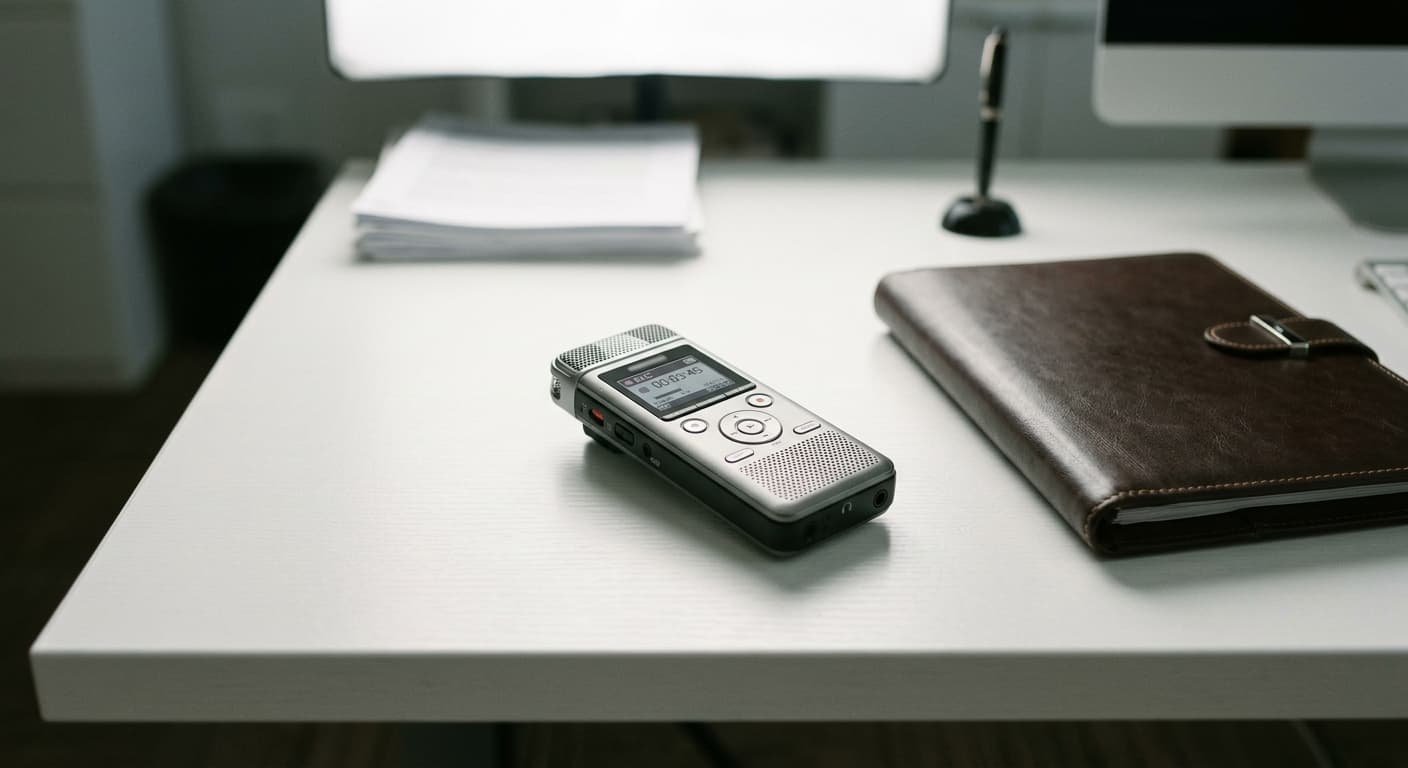
Austria's criminal recording statute, StGB §120, is narrower than it is often described: §120(1) targets someone who uses a device to capture a statement not intended for their knowledge, so a person recording their own conversation generally does not commit that offense. What is squarely criminal is sharing or publishing a recording of someone's private statement without their consent, under §120(2), and Austria's civil law separately treats secret recording of a private conversation, even by a participant, as an actionable violation of personality rights. This guide covers every major provision, from phone calls to workplace surveillance to deepfakes.
Information last verified on 2026-07-28. This article has not yet been reviewed by a licensed lawyer. Readers should consult a qualified Austrian attorney for advice on their specific situation.
Jurisdiction scope: This article addresses recording law in Austria under the Austrian Criminal Code (Strafgesetzbuch, StGB), the Civil Code (Allgemeines bürgerliches Gesetzbuch, ABGB), the Data Protection Act (Datenschutzgesetz, DSG), the Labour Constitution Act (Arbeitsverfassungsgesetz, ArbVG), and directly applicable EU law including the GDPR and the EU AI Act (Regulation 2024/1689). It does not address the recording laws of Germany or Switzerland; for those, see the relevant country spokes on this site.
Quick Answer: Is Austria a One-Party or All-Party Consent State?
Austria is a one-party consent jurisdiction for the act of recording. Under §120(1) StGB, it is a crime to use a recording or eavesdropping device to obtain knowledge of a non-public statement that was "not intended for the user's knowledge" (nicht zu seiner Kenntnisnahme bestimmt). Austrian legal commentary (the Salzburger Kommentar and the Wiener Kommentar to the StGB) reads that element strictly: if you are a participant in the conversation, the statement was, by definition, intended for your knowledge, so recording your own conversation does not satisfy §120(1). The provision is aimed at outside eavesdroppers, someone who was never meant to hear the statement at all, not at a person the words were addressed to.
That does not make recording risk-free. Two things still apply regardless of who made the recording: sharing or publishing it without the speaker's consent is a separate crime under §120(2) StGB, and Austrian civil law recognizes a "right to one's own spoken word" derived from ABGB §16 that the Supreme Court has confirmed reaches further than §120 StGB, including recordings made by a participant. So a secret recording that is not a §120(1) crime can still be the basis of a civil injunction or damages claim, and disclosing any recording to someone the speaker didn't intend to reach is criminal either way. Violations of §120(1) or §120(2) carry up to one year in prison or a fine of up to 720 Tagessätze (daily rates).

StGB §120: The Core Criminal Prohibition
Section 120 of Austria's Criminal Code is titled "Missbrauch von Tonaufnahme- oder Abhörgeräten" (Misuse of Recording or Eavesdropping Devices). It contains four subsections. Read together, they make Austria one-party consent for the act of recording (Abs 1) but require the speaker's consent before a recording can be shared or published (Abs 2).
§120(1): Recording a Statement Not Meant for You
The first subsection prohibits using any recording device or eavesdropping device to obtain knowledge of a non-public statement of another person that is not intended for the user's knowledge. The penalty is imprisonment of up to one year or a fine of up to 720 daily rates (Tagessätze).
The two key legal elements are:
- "Nicht öffentlich" (not public): The statement must have been made in a private setting.
- "Nicht zu seiner Kenntnisnahme bestimmt" (not intended for the user's knowledge): The speaker did not intend for the person operating the device to be aware of the statement at all.
This second element is where Austrian law departs from a straightforward all-party rule. Austrian commentary on §120 (the Salzburger Kommentar and the Wiener Kommentar to the StGB) treats it as never satisfied by a conversation participant: if you took part in the conversation, the statement was, by definition, intended for your knowledge, so recording your own end of it does not meet this element of the offense. The provision targets an outside listener who uses a device to learn of a conversation they were never meant to hear at all, such as someone bugging a room they are not part of, not a participant who simply activates a recorder during their own conversation. The Austrian Supreme Court (OGH) has confirmed the related point that Austria's civil-law "right to one's own spoken word" (see below) reaches further than §120 precisely because it also covers recordings made by a participant, something §120 itself does not clearly reach.
§120(2): Sharing or Publishing Recordings
Subsection 2 carries the same penalty structure. It prohibits making a recording of someone's non-public statement accessible to a third party, or publishing such a recording, without the speaker's consent. Even if a recording was originally made lawfully, distributing it without permission is a separate criminal act.
§120(2a): Telecommunications Interception
This subsection specifically addresses telecommunications. Anyone who records a message transmitted via telecommunications that was not intended for them, with the intent to learn or share its contents, faces up to three months in prison or a fine of up to 180 daily rates. This provision applies when the conduct does not already fall under the stricter penalties of §120(1) or (2), or under §119 StGB.
The lower penalty reflects that telecommunications interception by someone outside the conversation is treated somewhat differently from face-to-face recording abuse. However, it remains a criminal offense.
§120(3): Prosecution Requires Victim Authorization
Prosecution under §120 is an "Ermächtigungsdelikt," meaning the victim must authorize prosecution. The state does not pursue these cases on its own initiative. The injured party must file a formal authorization (Ermächtigung) for the prosecutor to act.
This procedural requirement does not diminish the seriousness of the offense. It simply means the victim controls whether charges move forward.

Civil Law: The Right to One's Own Spoken Word (ABGB §16)
Criminal liability under §120 is not the whole picture. Austrian courts also recognize a personality right, the "Recht am gesprochenen Wort" (right to one's own spoken word), derived from the general personality-rights clause in §16 of the Civil Code (Allgemeines Bürgerliches Gesetzbuch, ABGB). This civil right is the vehicle Austrian courts use to reach secret recordings that fall outside §120(1), including recordings made by a participant.
In a 2020 decision arising from the covert recording of a private political meeting (the "Ibiza" case, discussed below), the Austrian Supreme Court held that the making of a secret audio and video recording of a non-public conversation violated the plaintiff's personality rights under §16 ABGB, and stated explicitly that this civil-law protection "geht über § 120 StGB hinaus" (goes beyond §120 StGB), extending to recordings made by a conversation participant, a scenario the court treated as outside §120's own reach. Practically, this means a secret recording of your own conversation that does not amount to a §120(1) crime can still expose you to an injunction and damages in a civil suit, particularly where the recording captures sensitive or intimate subject matter, was obtained by deception, or was made for commercial exploitation rather than personal use.
StGB §119 and §119a: Telecommunications and Computer Secrecy
§119: Telecommunications Secrecy
Section 119 StGB protects the secrecy of telecommunications more broadly. It criminalizes the use of any device attached to a telecommunications system or computer system to intercept messages not intended for the interceptor. Since a 1 September 2023 amendment (BGBl. I Nr. 99/2023), the penalty is imprisonment of up to two years, with no fine alternative; the fine option that used to apply was removed.
The provision covers electronic surveillance devices, software-based interception tools (such as trojans used to spy on email traffic), and any hardware modifications to telecommunications infrastructure. It protects the transmission path specifically. Stored messages, such as emails sitting in an inbox, fall under different legal provisions.
Like §120, prosecution under §119 requires the authorization of the injured party.
§119a: Computer Data Interception
Section 119a StGB extends beyond telecommunications to cover the interception of computer data specifically. The provision implements Article 3 of the Budapest Convention on Cybercrime and criminalizes the surveillance of non-public data transmissions to, from, or within computer systems, including the interception of electromagnetic emissions from computer equipment. The same 2023 amendment that changed §119 applies here too: the penalty is imprisonment of up to two years, with no fine alternative.
The key distinction from §119 is scope: §119 protects the telecommunications transmission path; §119a protects data flows within and between computer systems, including data that never traverses a traditional telecommunications network. Software-based keyloggers, packet sniffers on a local network, and tools that capture electromagnetic radiation from screens or keyboards can all fall within §119a. The intent requirement is the same: the interceptor must act with the purpose of obtaining knowledge for themselves or an unauthorized third party.
StGB §120a: Unauthorized Image Recording
Since January 1, 2021, Austria has also criminalized certain unauthorized image recordings under §120a StGB. This provision targets anyone who intentionally captures images of another person's intimate areas (genitals, buttocks, female breasts, or underwear covering those areas) without consent, where the person has taken steps to protect those areas from view or is in a private residence.
The penalty is up to six months in prison or a fine of up to 360 daily rates. If the offender makes the images accessible to others or publishes them, the penalties increase.
This statute was introduced to address "upskirting" and similar invasions of bodily privacy. It complements §120's protections for audio recording by extending criminal liability to specific categories of visual recording.
StGB §107c: Publication of Recordings and Non-Consensual Intimate Images (NCII)
Section 107c StGB, titled "Fortdauernde Belästigung im Wege einer Telekommunikation oder eines Computersystems" (continued harassment via telecommunications or computer systems), addresses what is commonly called cybermobbing. It became effective January 1, 2016 and is directly relevant to anyone who publishes recordings or intimate images without consent.
Under §107c, a person commits an offense if, via telecommunications or computer system, and in a manner suited to unreasonably impair a victim's conduct of life over an extended period, they either:
- Damage a person's honor in a manner perceptible to a larger number of people, or
- Make facts or photo images from a person's most intimate life sphere perceptible to a larger number of people without that person's consent.
The base penalty is imprisonment of up to one year or a fine of up to 720 Tagessätze.
Aggravated penalties apply in three circumstances:
- The victim attempted or committed suicide as a result: up to three years in prison.
- The offender committed the acts repeatedly over a period exceeding one year: up to three years in prison.
- The harmful content remained perceptible to the public for more than one year: up to three years in prison.
§107c and Non-Consensual Intimate Images
The "most intimate life sphere" language in §107c covers non-consensual intimate images, including recordings made without consent and sexual or intimate images shared without the subject's permission (commonly referred to as "revenge porn"). The provision requires that the content be perceptible to a "larger number of people," which means private one-to-one sharing may fall outside §107c's scope while still potentially being covered by §120 StGB or civil law.
A significant legislative gap exists regarding single-instance publication of non-consensual deepfake pornography. Austrian parliamentary materials (XXVII/A/2860, XXVII/A/372, and the November 2025 proposal XXVIII/A/576) have identified that the current §107c requirement for extended duration or large-audience perceptibility may not capture a single viral posting of AI-generated intimate images. Proposals to remove the "extended duration" element from §107c to close this gap have been under parliamentary consideration since 2024. As of May 2026, no amendment to §107c has been enacted to address this specific gap.
OGH Case Law on Covert Recording
Austria's Supreme Court (Oberster Gerichtshof, OGH) has addressed covert recording in several significant decisions. Both of the leading cases below turn primarily on the civil-law right to one's own spoken word (ABGB §16), which the court repeatedly describes as reaching further than §120 StGB, rather than on §120 itself.
OGH 6 Ob 82/18d (2018): Recording a Court Hearing
This decision was primarily a civil procedure dispute over whether a settlement had been reached, but a party had also made an unauthorized audio recording of the hearing to support its case. Addressing that point, the OGH reaffirmed that the civil-law "right to one's own spoken word," derived from ABGB §16, has a protective scope that "geht über § 120 StGB hinaus" (goes beyond §120 StGB) and applies regardless of who makes the recording, including a conversation participant. The court explained the underlying harm principle: it would seriously impair a person's ability to freely develop their personality if they had to fear that every turn of a conversation, and the sound of their voice, would be captured without their knowledge, since that fear is inseparable from constant suspicion and mistrust. The OGH extended this reasoning to court hearings and recommended that, to avoid civil or professional-disciplinary liability, anyone wishing to record a hearing obtain the express consent of everyone present, even though the hearing itself was public.
OGH 6 Ob 236/19b (2020): Ibiza Recording Case
This decision arose from the covert video and audio recording of a private political meeting in Ibiza, obtained through a staged sting and an assumed identity. The OGH reached a split result, and its reasoning is easy to mischaracterize as a §120 StGB holding when it is not.
On the making of the recording, the OGH ruled against the person who arranged it, but on the basis of the general civil personality right (ABGB §16, the same "right to one's own spoken word" as above), not §120 StGB. The court weighed Article 8 ECHR privacy against Article 10 ECHR free expression and found the balance favored the person recorded: the recording was obtained by deception, aimed at a private, off-the-record conversation, and the person who commissioned it was, on the evidence before the court, primarily motivated by selling it for profit rather than contributing to public debate. On publication, the court reached the opposite conclusion for a narrower reason: once two media outlets published parts of the footage, that specific act was justified under Article 10 ECHR, because it made an extraordinary contribution to a debate of genuine public interest about a senior politician's fitness for office in a way a transcript alone could not. In assessing publication, the court weighed Article 10 alongside both §120(2) StGB (which criminalizes disclosing a non-public recording without the speaker's consent) and DSG §12(5), and found the balance tipped toward publication given the strength of the public interest.
The case is a useful illustration of why the civil right and §120 StGB are not the same thing: the OGH needed the broader civil right to reach the making of this recording at all, and it addressed §120(2) only once the question became disclosure to the press.
Phone Call Recording Rules
Austria treats phone call recording as a matter of criminal law, civil personality rights, and data protection law together, and the three do not all draw the line in the same place.
- If you are a participant on the call, recording your own end of it generally does not satisfy §120(1) StGB, because the statement was, by definition, intended for your knowledge. It can, however, still be an actionable violation of the civil-law right to one's own spoken word (ABGB §16), which the OGH has confirmed reaches recordings made by a participant.
- If you are not a participant, using a device to listen in on or record a call you were never meant to hear satisfies §120(1) directly, up to one year in prison or 720 Tagessätze.
- Regardless of who recorded it, sharing or publishing a recording of a private call without the speaker's consent is a separate crime under §120(2) StGB, with the same maximum penalties.
- Any recording of a call is personal data. The GDPR and the DSG require a lawful basis for processing it, and consent remains the most straightforward basis for an ordinary phone recording, particularly once the recording will be stored, reviewed by staff, or potentially disclosed.
Businesses that record phone calls for quality assurance, training, or compliance should still obtain active consent from callers at the start of the call. This is not because §120(1) itself criminalizes an unannounced business recording of the caller's own call (the business is a participant in the call it is recording), but because consent is the GDPR/DSG lawful basis a business can rely on with confidence, because the recording will typically be reviewed or stored by people beyond the two parties on the line (which risks §120(2) exposure if handled carelessly), and because the civil-law right to one's own spoken word does not disappear simply because the recorder is a business. A recorded message stating "this call may be recorded for quality purposes," paired with a genuine ability to decline and still receive service, remains the safest practice.
Penalties Connected to Phone Recording
| Conduct | Statute | Maximum Prison | Maximum Fine |
|---|---|---|---|
| A non-participant secretly recording or listening to a call not meant for them | §120(1) StGB | 1 year | 720 Tagessätze |
| Sharing or publishing a private phone recording without the speaker's consent (any recorder) | §120(2) StGB | 1 year | 720 Tagessätze |
| Intercepting a telecom message not meant for you | §120(2a) StGB | 3 months | 180 Tagessätze |
| Tapping into telecom infrastructure | §119 StGB | 2 years | none (fine option removed 2023) |
| A participant secretly recording their own call without telling the other party | Not a §120 StGB offense; may still be a civil claim under ABGB §16 | n/a (civil, not criminal) | Civil damages and/or injunction |
A Tagessatz (daily rate) in Austria ranges from EUR 4 to EUR 5,000, calculated based on the offender's income, assets, and personal circumstances. For a middle-income earner, a fine of 720 Tagessätze could easily reach tens of thousands of euros.
In-Person Conversation Recording
The rules for recording face-to-face conversations mirror those for phone calls. Section 120(1) StGB does not distinguish between in-person and remote communications, and the same participant/non-participant line applies: if the statement was addressed to you, capturing it with a device generally is not a §120(1) crime; if you were never meant to hear it at all, it is.
Practical scenarios, and which body of law actually governs them:
- Business meetings: If you are in the meeting, recording it without telling the other attendees is not a §120(1) crime, but it can be a civil personality-rights violation under ABGB §16, and sharing the recording outside the meeting without consent is a separate crime under §120(2).
- Personal disputes: Recording an argument with a spouse, neighbor, or colleague you are actually part of is not a §120(1) crime for that reason alone, but Austrian courts treat a secret recording of a private, personal conversation as one of the clearest cases for civil liability under the right to one's own spoken word, since it captures unguarded, "keineswegs stets wohlüberlegte" (not always well-considered) words the speaker did not expect to be preserved.
- Medical appointments: Patient-doctor conversations are private by nature. A patient recording their own appointment is not a §120(1) matter, but providers may still object on civil-law and confidentiality grounds, and disclosing such a recording without consent remains criminal under §120(2).
- Legal consultations: Attorney-client conversations carry additional privilege protections independent of §120.
Being present in the conversation means §120(1) itself is very unlikely to apply to your own recording of it. That does not mean recording is risk-free: the civil-law right to one's own spoken word can still reach it, and disclosing it to someone the speaker did not intend to reach is a separate crime regardless of who made the recording.
Recording Police and Public Officials
Recording police officers and other public officials in Austria is a nuanced area where §120 StGB's "non-public" criterion does significant analytical work.
When a police officer or public official is performing a public duty in a public space, their actions and spoken statements in that capacity are generally not "non-public" within the meaning of §120(1). A police officer issuing commands at a public demonstration, conducting a visible traffic stop, or making a public arrest is acting in a role where the public character of the conduct is inherent to the function. Recording the visual action is generally permissible under UrhG §78 provided publication does not violate legitimate personal interests.
However, the following limitations apply:
- Audio recording of the officer's private statements (anything beyond official commands or statements made in an official capacity) may still engage §120 if those statements were not intended for broader audience capture.
- Recording inside non-public spaces (a police station interior, a holding room) reverts to ordinary §120 analysis.
- GDPR obligations apply to any recording that captures and processes personal data, including images of identified or identifiable officers.
- Obstruction laws (§§ 269, 270 StGB) remain in force; recording must not physically obstruct police action.
The Austrian Ministry of Interior has not issued a formal public guidance document on citizen recording of police. The legal framework as understood from §120 StGB and UrhG §78 permits recording of publicly conducted official acts but does not authorize secret recording of private statements made by officers even in public settings.
Watch out: Recording an internal investigation interview, a private police conversation, or statements made by officers in non-official contexts (e.g., off-duty remarks) without consent almost certainly violates §120 StGB regardless of where the recording occurs.
Recording in Public Spaces
Austrian law distinguishes between public and private settings, but "public" does not mean "anything goes."
Under §120 StGB, the prohibition applies to non-public statements. A conversation held in a public park but conducted at a volume intended only for the direct participants could still qualify as non-public. Context matters. A political speech delivered to a crowd is public. Two people whispering at a cafe table are having a private conversation, even though the location is public.
For photography and video in public spaces, Austria's Copyright Act (UrhG) §78 establishes the "Recht am eigenen Bild" (right to one's own image). You may photograph people in public, but publishing those images requires that the subject's legitimate interests are not violated. Photographs used in derogatory, misleading, or commercial contexts without permission can give rise to civil liability.
Austria's Supreme Court has ruled that under certain circumstances, even the act of taking photos of individuals can violate their general personality rights, regardless of whether the images are published.
GDPR and the Austrian Data Protection Act (DSG)
Recording someone creates personal data. A voice recording, video, or photograph that identifies or can identify a natural person falls squarely within the scope of the GDPR and Austria's supplementary Data Protection Act (DSG).
Lawful Basis for Recording
Under Article 6 of the GDPR, any processing of personal data requires a lawful basis. For recording, the most common bases are:
- Consent (Article 6(1)(a)): The data subject has given clear, informed, and voluntary consent.
- Legitimate interest (Article 6(1)(f)): The controller has a legitimate interest that is not overridden by the data subject's rights. This basis is narrow for recording and generally requires a balancing test.
For audio recording of conversations, consent is almost always the safest lawful basis in Austria. This is not because §120(1) StGB itself requires every participant's consent (it generally does not, for a recording made by a participant), but because a legitimate-interest justification is narrow and fact-specific, because the civil-law right to one's own spoken word (ABGB §16) sits alongside the GDPR analysis, and because any later disclosure of the recording still needs the speaker's consent under §120(2) StGB.
CCTV and Video Surveillance Under DSG §§12-13
Sections 12 and 13 of the DSG regulate video surveillance (Bildverarbeitung) specifically. The rules permit CCTV cameras only under limited circumstances:
- On privately owned property, to protect persons or goods.
- Where previous rights violations or specific security threats have occurred.
- For private documentation purposes, provided identification of individuals is not intended.
Controllers operating CCTV must ensure that recorded data is secured against unauthorized access and alteration. Audio recording combined with video surveillance triggers additional scrutiny and typically requires a Data Protection Impact Assessment (DPIA).
DSB Enforcement
The Austrian Data Protection Authority (Datenschutzbehörde, or DSB) is the national supervisory authority. Per its own 2024 annual report (Datenschutzbericht 2024), the DSB concluded 214 administrative penalty proceedings (Verwaltungsstrafverfahren) in 2024, of which 62 resulted in fines totaling EUR 1,684,230. GDPR penalties in Austria can reach up to EUR 20 million or 4% of annual global turnover, whichever is higher.
The DSB has the power to investigate complaints, order the deletion of unlawfully processed data, and impose administrative fines. For recording violations, individuals may also pursue damages through civil courts under Article 82 of the GDPR.
EU AI Act and Deepfake Regulations in Austria
The EU AI Act (Regulation 2024/1689) entered into force on 1 August 2024, but it does not apply all at once. Under Article 113, only Chapters I and II, the general provisions and the prohibited-practices rules (including the real-time biometric surveillance ban discussed below), began applying on 2 February 2025. The transparency obligations in Chapter IV, which include Article 50's deepfake-labeling duty, are not part of that early batch: they apply from 2 August 2026, the same general date most of the Act (including the high-risk AI system rules) takes effect. As an EU regulation, it applies directly in Austria without national transposition.
Prohibited Practices Relevant to Recording and Surveillance
The AI Act prohibits several practices with direct relevance to recording law:
- Real-time remote biometric identification in publicly accessible spaces by law enforcement is prohibited, except in narrowly defined circumstances: locating missing persons, preventing imminent threats to life, or identifying suspects of serious crimes. Each deployment requires prior judicial or independent administrative authorization.
- Biometric categorization using AI to infer sensitive characteristics (political opinion, religious belief, sexual orientation) from surveillance imagery is prohibited outright.
- Social scoring using AI systems to evaluate individuals' trustworthiness based on their behavior is prohibited.
Deepfake Disclosure Requirements
Under Article 50 of the AI Act, providers and deployers of AI systems that generate or manipulate image, audio, or video content must ensure outputs are labeled as AI-generated in a machine-readable format. Where deepfakes depicting real identifiable persons are disseminated publicly, a visible disclosure is also required, unless the content is clearly satirical, artistic, or fictional in a context that makes the AI nature evident. This duty is part of Chapter IV of the Act, so it takes effect on 2 August 2026, not on the earlier 2 February 2025 date that started the Act's prohibited-practices rules.
This obligation applies alongside, not instead of, the criminal prohibitions in §107c StGB and §120a StGB. An AI-generated intimate image published without the subject's consent violates §107c StGB regardless of whether the AI Act disclosure obligation has been met.
Austria's National Deepfake Proposals
Austria's parliament has been active on deepfake regulation. Key parliamentary materials include:
- XXVII/A/372 (2020): Motion calling for criminal prosecution of deepfakes.
- XXVII/A/2860 (2024): Motion proposing identity theft and deepfakes as standalone criminal offenses, postponed from the Justice Committee in June 2024.
- XXVII/III/740: Government action plan on deepfakes.
- XXVIII/A/576 (November 2025): Most recent proposal, advocating for technical safeguards on AI providers and civil and criminal liability for providers who fail to prevent creation of abusive deepfakes despite awareness of the risk.
As of May 2026, no standalone deepfake criminal offense has been enacted in Austria. The existing framework of §107c StGB (cybermobbing), §120a StGB (unauthorized intimate images), and §207a StGB (child sexual abuse material, which already covers AI-generated content involving minors) provides partial coverage but leaves a recognized gap for single-instance adult deepfake abuse.
Workplace Recording and Surveillance
Austrian labor law adds a distinct regulatory layer for workplace recording. The Arbeitsverfassungsgesetz (ArbVG) governs employee monitoring, and its requirements are strict.
ArbVG §96(1)(3): Works Council Consent
Section 96(1)(3) ArbVG requires the works council's consent (through a formal Betriebsvereinbarung, or works agreement) before an employer may implement control measures and technical systems for monitoring employees that affect human dignity.
This covers:
- Video surveillance cameras in the workplace
- Audio recording of calls or conversations
- GPS tracking of field employees
- Software that monitors computer usage or keystrokes
- Automated performance tracking systems
The threshold is whether the monitoring measure affects human dignity (die Menschenwürde berührt). Austrian courts interpret this broadly. Permanent video surveillance of entrances, exits, and work areas almost always crosses this threshold.
What Happens Without Works Council Approval
If an employer implements monitoring without a valid works agreement, the system is unlawful. The employer must remove the monitoring equipment, and any data collected through it may be inadmissible. Employees and the works council can seek injunctive relief through labor courts.
Companies Without a Works Council
In workplaces where no works council exists, the employer must obtain individual consent from each affected employee before implementing monitoring measures that touch human dignity. This consent must meet GDPR standards: freely given, specific, informed, and unambiguous.
Absolute Prohibitions
Some forms of workplace surveillance are categorically prohibited, regardless of any agreement:
- Secret tapping of telephone conversations
- Surveillance cameras in washrooms, changing rooms, or rest areas
- Routine body searches
- Investigation of employees' private lives
These measures violate human dignity outright and cannot be authorized through any works agreement or individual consent.
Recordings as Evidence in Court
Austrian law takes an unusual position on unlawfully obtained recordings. Unlike some jurisdictions that exclude unlawfully gathered evidence entirely, Austrian courts generally allow such evidence to be presented, including a covert recording that violated §120 StGB (a non-participant's secret recording of a conversation, or any unconsented disclosure) or that was unlawfully made under the civil-law right to one's own spoken word (a participant's secret recording of their own conversation, which §120 does not reach but ABGB §16 does).
However, this does not mean recording or disclosing someone's statement without consent is consequence-free. Depending on how the recording was made and used, the person responsible can still face criminal prosecution under §120 StGB (for a non-participant's recording, or for any unconsented disclosure), a civil claim under ABGB §16, and potential liability under the GDPR and the Copyright Act (UrhG).
Austrian courts apply a two-part test when a party seeks to introduce a clandestine recording:
- Evidentiary emergency (Beweisnotstand): There must be no other means available to prove the claim. The recording must be the only way to establish the relevant facts.
- Balance of interests: The interests of the party presenting the recording must outweigh the privacy interests of the person who was recorded.
If both conditions are met, the court may admit the recording while separately addressing the criminal and civil liability of the party who created it.
Business Compliance Guide
Organizations operating in Austria must navigate the intersection of criminal law, data protection, and labor law. Here is a practical compliance framework.
Call Centers and Customer Service
- Obtain explicit, active consent from every caller before recording begins.
- Provide callers with a genuine option to decline recording and still receive service.
- Store recordings securely and establish retention limits.
- Conduct a DPIA if recording is systematic or large-scale.
- Document the lawful basis for processing under the GDPR.
Office and Facility Surveillance
- Negotiate a Betriebsvereinbarung with the works council before installing cameras or audio equipment.
- Post visible signage identifying surveillance areas.
- Never install cameras in private areas (restrooms, break rooms, changing areas).
- Limit audio recording to situations where it is strictly necessary and proportionate.
- Conduct a DPIA for any system that combines audio and video capture.
Remote Workers and Digital Monitoring
- Screen monitoring, keystroke logging, and activity tracking software all require works council agreement under ArbVG §96(1)(3).
- Inform employees in writing about what is monitored, how data is stored, and how long it is retained.
- Ensure monitoring is proportionate to the legitimate business interest.
Data Retention and Security
- Under DSG §13, recorded data must be secured to prevent unauthorized access or alteration.
- Establish and enforce data retention schedules. Austrian law does not permit indefinite storage of surveillance footage.
- Under the GDPR, data subjects have the right to access, rectify, and request deletion of their recorded data.
Penalties Summary
The consequences of illegal recording in Austria come from multiple legal sources.
Criminal Penalties (StGB)
| Offense | Statute | Maximum Prison | Maximum Fine |
|---|---|---|---|
| A non-participant secretly recording a statement not meant for them | §120(1) StGB | 1 year | 720 Tagessätze |
| Sharing or publishing a recording without the speaker's consent (any recorder) | §120(2) StGB | 1 year | 720 Tagessätze |
| Recording telecom messages not meant for you | §120(2a) StGB | 3 months | 180 Tagessätze |
| Violating telecom secrecy (interception) | §119 StGB | 2 years | none (fine option removed by a 2023 amendment) |
| Computer data interception | §119a StGB | 2 years | none (fine option removed by a 2023 amendment) |
| Unauthorized intimate image recording | §120a StGB | 6 months | 360 Tagessätze |
| Cybermobbing / NCII publication (base) | §107c StGB | 1 year | 720 Tagessätze |
| Cybermobbing (aggravated: suicide, >1 year conduct) | §107c StGB | 3 years | (court discretion) |
Tagessätze range from EUR 4 to EUR 5,000 per day, depending on the offender's financial situation. A participant secretly recording their own conversation is not on this table because it generally does not satisfy §120(1); see Civil Liability below for the claim that does reach it.
Administrative Penalties (GDPR/DSG)
- Fines up to EUR 20 million or 4% of annual global turnover.
- Orders to cease processing and delete data.
- Public reprimands published by the DSB.
Civil Liability
- Right to one's own spoken word (Recht am gesprochenen Wort, derived from ABGB §16): a claim for secretly recording someone's private statement, available even against a conversation participant, and confirmed by the Austrian Supreme Court to reach further than §120 StGB.
- Damages under GDPR Article 82 for material and non-material harm.
- Copyright Act (UrhG §78) claims for violations of the right to one's own image.
- Injunctive relief and compensation for personality rights violations.
Labor Law Consequences
- Court orders to remove unlawful monitoring systems.
- Potential invalidity of disciplinary actions based on unlawfully obtained surveillance data.
Cross-Border Recording: Austria, Germany, and Switzerland
Austria's criminal regime for the act of recording is narrower than its neighbors'. Germany's §201 StGB prohibits a participant from secretly recording their own conversation (see this site's Germany recording law page); Austria's §120(1) does not reach that scenario at all. Austria makes up part of that difference elsewhere: §120(2) requires the speaker's consent before any recording, however it was made, can be disclosed, and the civil-law right to one's own spoken word (ABGB §16) can still reach a participant's secret recording even where §120 itself does not. Understanding how these regimes compare, and where Austria's criminal law stops and its civil law picks up, matters for anyone operating across borders.
| Jurisdiction | Primary Statute | Consent Rule for Recording | Maximum Prison | Key Difference |
|---|---|---|---|---|
| Austria | StGB §120 | One-party to record; the speaker's consent is required only to disclose (§120(2)), and a participant's secret recording can still be a civil claim under ABGB §16 | 1 year | Prosecution requires victim's authorization (Ermächtigungsdelikt) |
| Germany | StGB §201 | All-party, including a participant recording their own conversation | 3 years (most serious cases) | Prosecution does not always require victim authorization |
| Switzerland | StGB Art. 179bis | All-party | 3 years | Broader territorial jurisdiction provisions |
Austria and Germany
The two countries diverge on the criminal-law question of who can lawfully record. Germany's §201 StGB criminalizes a participant secretly recording their own conversation; Austria's §120(1) generally does not, because the statement was intended for that participant's knowledge. Where the two countries converge is disclosure: both restrict sharing a recording without the speaker's consent, and Austria's civil-law right to one's own spoken word narrows the practical gap for a secretly-recorded participant, even though the legal route (civil claim rather than criminal prosecution) is different. Germany's maximum penalty is also harsher where it applies (up to three years for the most serious violations versus one year in Austria). The Austrian procedural requirement that the victim authorize prosecution (Ermächtigungsdelikt under §120(3)) is a further practical distinction: in Austria, a victim who chooses not to authorize prosecution effectively blocks the criminal case, whereas German law does not uniformly condition prosecution on victim consent.
For a call between an Austrian and a German participant, both countries' laws potentially apply. Each party is subject to the law of their own country, and a participant making the call from Austrian territory must comply with Austrian law regardless of where the other party is located.
Austria and the EU GDPR Cross-Border Framework
When a recording involves personal data processed across EU member states, GDPR's one-stop-shop mechanism applies. The supervisory authority of the controller's main establishment has lead jurisdiction. Austria's DSB cooperates with other EU data protection authorities through the European Data Protection Board (EDPB) consistency mechanism for cross-border cases.
International Calls from Austria
When recording a call with a person located outside the EU, Austrian law still applies to conduct that takes place on Austrian territory. For the Austrian participant recording their own end of the call, that mainly means the civil-law right to one's own spoken word and the GDPR/DSG, since §120(1) StGB generally does not reach a participant's own recording; §120(2) does apply if that recording is later disclosed without the speaker's consent. The foreign participant's home country law may also apply simultaneously to their own conduct, and, as the Germany comparison above illustrates, that other country's rule may be stricter than Austria's. Jurisdiction is determined by where the conduct occurs, and activating a recording device on Austrian territory is conduct on Austrian territory regardless of where the other party is located.
Disclaimer
This article presents general legal information about recording laws in Austria. It is not legal advice and does not create an attorney-client relationship. The information covers Austrian law including StGB §§107c, 119, 119a, 120, and 120a, ABGB §16 (the civil-law right to one's own spoken word), the Datenschutzgesetz (DSG), the Arbeitsverfassungsgesetz (ArbVG), and EU law including the GDPR and EU AI Act as in force as of July 2026. Laws change; always verify current statute versions via ris.bka.gv.at. Readers with questions about a specific situation should consult a lawyer licensed to practice in Austria.
Last updated: 2026-07-28. Statutes cited reflect their in-force version as of 2026-07-28.
More on Austria law
This page covers one area of law in Austria. For a complete guide to Austria's legal system, including employment, family, driving, tenancy, inheritance, criminal law and consumer rights, see our full Austria law hub.
Frequently Asked Questions
Can I record my own phone call in Austria without telling the other person?
Generally yes, as far as §120(1) StGB is concerned. That provision only reaches a statement that was not intended for the listener's knowledge, and as a participant, the other person's words were addressed to you, so recording your own call typically does not satisfy that element. It is not risk-free: Austrian civil law recognizes a right to one's own spoken word (ABGB §16) that the Supreme Court has confirmed reaches recordings made by a participant, so a secret recording can still support a civil injunction or damages claim. Sharing or publishing the recording without the other person's consent is a separate crime under §120(2) StGB regardless of who made it, carrying up to one year in prison or 720 Tagessätze.
What are the rules for security cameras at an Austrian business?
Businesses must comply with three overlapping legal frameworks. Under ArbVG §96(1)(3), any monitoring system affecting human dignity requires a works council agreement (Betriebsvereinbarung). Under DSG §§12-13, video surveillance is permitted only where a legitimate interest exists, such as property protection, and must be proportionate. Under the GDPR, a Data Protection Impact Assessment (DPIA) is typically required for systematic surveillance. Cameras are prohibited in restrooms, changing rooms, break areas, and similar private spaces. Audio recording combined with video triggers additional scrutiny.
Can an illegally recorded conversation be used as evidence in Austrian court?
Austrian courts may admit unlawfully obtained recordings as evidence, but only if two conditions are met: there must be an evidentiary emergency (no other means of proving the claim exists), and the presenting party's interests must outweigh the privacy interests of the recorded person. That does not immunize the person who made or shared the recording. Depending on the facts, they can still face criminal prosecution under §120 StGB (if a non-participant made the recording, or if it was disclosed without the speaker's consent), a civil claim under the right to one's own spoken word (ABGB §16) if a participant secretly recorded the conversation, GDPR penalties, and civil liability under the Copyright Act. Producing the recording in court does not create immunity from those consequences.
Does Austria's recording law apply to tourists and foreign visitors?
Yes. Austria's criminal law, including StGB §§119, 119a, 120, 120a, and 107c, applies to all conduct on Austrian territory regardless of the individual's nationality, citizenship, or residency status. A tourist or business traveler who, as an outside listener, secretly records or bugs a conversation they were never meant to hear, installs a listening device, or captures unauthorized intimate images while in Austria faces the same criminal penalties as an Austrian citizen would. The GDPR similarly applies to any data processing that takes place within Austria's borders, and Austria's civil-law right to one's own spoken word applies regardless of nationality too.
How does Austria's recording law compare to Germany's?
They differ on who can commit the criminal offense of recording. Germany's §201 StGB criminalizes a participant secretly recording their own conversation; Austria's §120(1) generally does not reach that scenario, because the statement was intended for the participant's own knowledge. The gap narrows on disclosure: both countries restrict sharing a recording without the speaker's consent, and Austria's civil-law right to one's own spoken word (ABGB §16) can still reach a participant's secret recording even though it is not a §120 crime. Where German law applies, it also carries a harsher maximum (up to three years in prison for the most serious violations, versus one year in Austria). Both countries require works council involvement for workplace surveillance. A further structural difference is that Austria's §120(3) makes prosecution dependent on the victim's authorization (Ermächtigungsdelikt), while Germany allows prosecution to proceed without the victim's explicit authorization in certain cases.
Is publishing a deepfake of someone illegal in Austria?
It can be. Austria does not yet have a standalone deepfake criminal offense, but multiple existing provisions may apply. If the deepfake depicts intimate images and is published to a large audience without consent, §107c StGB (cybermobbing) applies with penalties up to one year in prison or up to three years in aggravated cases. If the subject is a minor, §207a StGB applies. The EU AI Act also requires that AI-generated content depicting real persons be labeled as AI-generated, but that specific labeling duty (Article 50) does not take effect until 2 August 2026, later than the Act's 2 February 2025 prohibited-practices date; once in force, failure to comply can result in regulatory consequences separate from the criminal liability. Parliamentary proposals to create a standalone deepfake offense were pending as of May 2026.
Can I record a police officer in Austria?
Recording a police officer performing publicly visible official duties in a public space is generally permissible, because official acts are not 'non-public statements' within the meaning of §120(1) StGB. However, secretly recording private statements made by an officer, or recording inside a police station or other non-public setting, engages §120 StGB in the usual way. Publication of any recorded image must comply with UrhG §78 (right to one's own image), and GDPR obligations attach to the processing of any personal data captured. Physical obstruction of police action while recording remains a criminal offense under §§ 269-270 StGB regardless of recording rights.
What does the EU AI Act change for Austrian recording law?
The EU AI Act (Regulation 2024/1689) adds two key rules relevant to recording in Austria, on two different timelines. Real-time remote biometric identification of individuals in public spaces by law enforcement has been prohibited except in narrowly defined emergencies, each requiring prior judicial authorization, since 2 February 2025. Separately, AI systems that generate deepfakes or synthetic audio or video must label outputs as AI-generated in a machine-readable format, with visible disclosure required for publicly disseminated content depicting identifiable persons; that labeling duty is Article 50, in Chapter IV of the Act, and only takes effect on 2 August 2026. These EU rules apply directly in Austria without needing national transposition.
What is §107c StGB and when does it apply to recordings?
Section 107c StGB criminalizes continued harassment via telecommunications or computer systems, including publishing facts or intimate images from a person's most intimate life sphere to a large audience without consent. It applies when the conduct is suited to unreasonably impair the victim's life over an extended period. The base penalty is up to one year in prison or 720 Tagessätze. Aggravated penalties of up to three years apply where the victim attempted suicide, the conduct continued for more than one year, or the harmful content remained publicly accessible for more than one year. A key limitation: the 'large audience' and 'extended duration' elements may not cover a single private instance of sharing, which may instead fall under civil law or §120 StGB depending on how the recording was obtained.
Do Austria's recording rules apply to international phone calls?
Yes, to conduct that occurs on Austrian territory. A person calling from Vienna to New York who records their own end of the call is generally not committing a §120(1) StGB offense, for the same reason that applies to a purely domestic call: the statement was intended for their knowledge as a participant. The civil-law right to one's own spoken word and the GDPR/DSG still apply to that conduct, and disclosing the recording without the other party's consent is a separate crime under §120(2) regardless of where the other party is. The foreign party's home jurisdiction may separately apply its own, potentially stricter, recording law to their own conduct. For calls between Austria and Germany, Germany's all-party rule can make the German participant's own act of recording unlawful there even where Austria's §120(1) would not reach the Austrian participant's recording of their own call.
Updates
Follow-up accuracy pass (independent skeptic review) on top of the same day's consent-category fix. Five corrections: (1) StGB Section 119's penalty was stale — a 1 Sep 2023 amendment (BGBl. I Nr. 99/2023) changed it to imprisonment up to two years with NO fine option, removing the 6-month/360-Tagessätze figure the page had in three places; same fix applied to Section 119a. (2) The Section 119 citation URL pointed to an outdated snapshot; repointed to the current RIS page. (3) The inline Copyright Act (UrhG) Section 78 citation link actually resolved to StGB Section 177b (nuclear material handling), an unrelated provision; replaced with the correct UrhG Section 78 URL. (4) The EU AI Act's Article 50 deepfake-labeling duty was wrongly dated to 2 February 2025 (that date is only for the Chapter I-II prohibited-practices rules, e.g. the biometric surveillance ban); Article 50 is in Chapter IV and applies from 2 August 2026 per Article 113 — fixed in the key takeaways, the AI Act section, and two FAQ answers. (5) The DSB enforcement statistic cited a generic links page; repointed to the actual Datenschutzbericht 2024 and corrected the figure to the report's own number (214 administrative penalty proceedings concluded, 62 fines totaling EUR 1,684,230, not a rounded 'approximately EUR 1.7 million'). Also cut an orphaned Telecommunications Act 2021 (TKG 2021) citation that supported no specific claim in the body.
Corrected a mislabeled consent category. The page previously said Austria requires all-party consent to record any conversation under StGB Section 120, and cited the Ibiza case (OGH 6 Ob 236/19b) as holding the recording itself unlawful under Section 120 StGB. Verified against the statute text and both cited OGH decisions: Section 120(1) only reaches a statement not intended for the listener's knowledge, so Austrian commentary (Salzburger Kommentar, Wiener Kommentar) and the OGH's own reasoning treat a conversation participant as never satisfying that element. The page now says Austria is one-party consent for the act of recording, that Section 120(2) separately requires the speaker's consent before any recording can be disclosed or published, and that Austria's civil law (ABGB Section 16, the "right to one's own spoken word") independently reaches a participant's secret recording where Section 120 does not, per the OGH's own decisions in 6 Ob 82/18d (2018) and 6 Ob 236/19b (2020, Ibiza). The Ibiza case description was corrected to reflect that the OGH based the recording ruling on the civil right, not Section 120 StGB, and that publication was assessed separately under Article 10 ECHR against Section 120(2) and DSG Section 12(5).
Independently fact-checked against the cited primary sources
Sources and References
- StGB §120 - Missbrauch von Tonaufnahme- oder Abhörgeräten (Abs 1: recording, one-party per Salzburger/Wiener Kommentar; Abs 2: disclosure needs speaker's consent; 1yr/720 Tagessätze)(ris.bka.gv.at).gov
- ABGB §16 - civil-law basis for the judicially-derived "right to one's own spoken word" (Recht am gesprochenen Wort), confirmed by the OGH to reach further than StGB §120, including recordings made by a conversation participant(ris.bka.gv.at).gov
- StGB §119 - Verletzung des Telekommunikationsgeheimnisses (telecom secrecy; up to 2 years imprisonment, NO fine option since the 1 Sep 2023 amendment, BGBl. I Nr. 99/2023, which removed the former Tagessätze alternative)(ris.bka.gv.at).gov
- StGB §119a - computer data interception including electromagnetic emissions (Budapest Convention Art. 3); same 1 Sep 2023 amendment (BGBl. I Nr. 99/2023) applies, up to 2 years imprisonment, no fine option(ris.bka.gv.at).gov
- StGB §120a - Unbefugte Bildaufnahmen (unauthorized intimate image recording, eff. 1 Jan 2021)(ris.bka.gv.at).gov
- StGB §107c - Fortdauernde Belästigung (cybermobbing / NCII publication, 1yr base / 3yr aggravated)(ris.bka.gv.at).gov
- Austrian Data Protection Authority (DSB) - relevant data protection laws overview(data-protection-authority.gv.at).gov
- DSB Datenschutzbericht 2024 (official annual report) - Sec. 4.2.10: 214 Verwaltungsstrafverfahren concluded in 2024, 62 resulting in fines totaling EUR 1,684,230(dsb.gv.at).gov
- Datenschutzgesetz (DSG) - Austrian Data Protection Act consolidated text (RIS)(ris.bka.gv.at).gov
- ArbVG §96(1)(3) - works council consent for employee monitoring (Eurofound)(apps.eurofound.europa.eu).gov
- Regulation (EU) 2024/1689 (EU AI Act) - Art. 5 prohibited practices from 2 Feb 2025; Art. 50 deepfake-labeling duty (Chapter IV) is a LATER date, 2 Aug 2026, per Art. 113(eur-lex.europa.eu).gov
- Nationalrat XXVII/A/2860 - motion for deepfakes and identity theft as standalone offenses (2024)(parlament.gv.at).gov
- Nationalrat XXVII/A/372 - motion for criminal prosecution of deepfakes in Austria(parlament.gv.at).gov
- OGH 6 Ob 82/18d (2018) - civil right to one's own spoken word (ABGB §16) reaches further than StGB §120, including a conversation participant's recording; obiter in a case about recording a court hearing(ris.bka.gv.at).gov
- OGH 6 Ob 236/19b (2020) - Ibiza case: making the secret recording violated the civil personality right (ABGB §16), not StGB §120 directly; publication was separately justified under Art. 10 ECHR weighed against §120(2) StGB and DSG §12(5)(ris.bka.gv.at).gov