
Oregon
Oregon Windshield Mounting Laws (2026 Guide)
Independently fact-checked against primary sources (last audited August 17, 2026). · Reviewed by the RecordingLaw editorial team. · Law checked current as of August 9, 2026. · 4 primary sources cited on this page. How we verify our legal content

Oregon law prohibits mounting any device on the windshield or front side windows that impairs visibility. Under ORS 815.220, a GPS unit, phone mount, or dashcam attached to the windshield is prohibited if it prevents or impairs the ability to see into or out of the vehicle, and Oregon designates no zone of the glass where a device is automatically allowed. Dashboard and vent mounts avoid the question entirely.
Oregon takes a strict approach to windshield visibility. Under ORS 815.220, the state uses a general obstruction standard that prohibits any material on the windshield or forward side windows that prevents or impairs the ability to see into or out of the vehicle. Unlike some states that carve out specific size exceptions for mounted devices, Oregon does not provide a designated zone on the windshield where drivers may attach GPS units, phones, or dashcams.
This guide covers the statutes that govern what you can and cannot place on your windshield in Oregon, the penalties for violations, the exemptions that apply, and how the state's hands-free driving law interacts with windshield mounting rules.
Oregon Windshield Obstruction Law (ORS 815.220)
ORS 815.220 is the primary statute governing windshield obstructions in Oregon. A person commits the offense of obstruction of vehicle windows if they drive or move a vehicle on any highway, or own and knowingly permit a vehicle to be driven on any highway, with windows obstructed in a manner the statute prohibits.
What Counts as an Obstruction
The statute defines a prohibited obstruction as any material that "prevents or impairs the ability to see into or out of the vehicle." This includes:
- Signs and posters
- One-way glass
- Adhesive film
- Glaze applications
- Any other material that blocks visibility
The language "any other material" is broad. A suction cup phone mount, a GPS device, or a dashcam is material upon the windshield and falls within it if the item prevents or impairs the ability to see into or out of the vehicle.
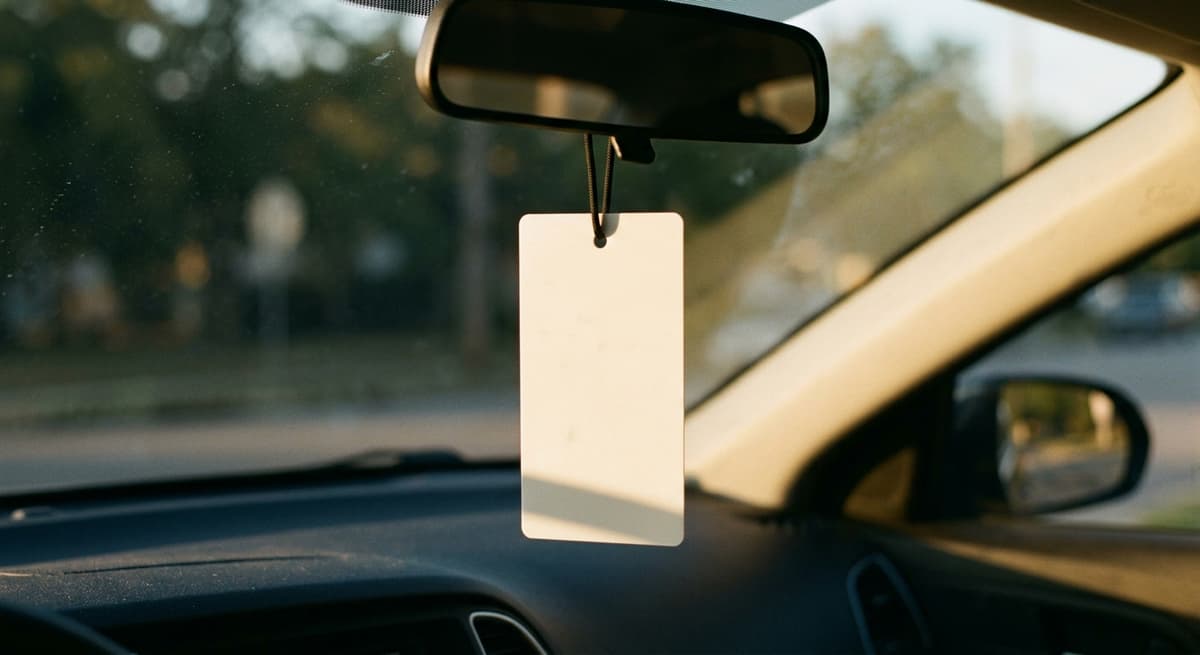
Note the limit in the statutory text: subsection (2) reaches only material that "is upon" one of the covered windows. Oregon has no separate provision covering objects that hang from the rearview mirror.
Which Windows Are Covered
ORS 815.220 applies to three sets of windows:
- The front windshield
- The side-wings (the small triangular windows on older vehicles)
- The side windows on either side forward of or adjacent to the operator's seat
Rear windows and rear side windows behind the driver's seat are not covered by this statute.
Penalty for Windshield Obstruction
Obstruction of vehicle windows under ORS 815.220 is a Class D traffic violation. Under ORS 153.018, the maximum fine for a Class D violation is $250. The presumptive fine (the standard amount a court imposes) is approximately $115.
| Violation | Classification | Maximum Fine |
|---|---|---|
| Windshield obstruction (ORS 815.220) | Class D traffic violation | $250 |
GPS and Phone Mounts on the Windshield
Oregon does not have a specific statute that addresses GPS or phone mounts by name. Instead, these devices fall under the general obstruction standard in ORS 815.220. Because the law prohibits "any material" that impairs visibility through the windshield or front side windows, a GPS unit or phone mounted on the windshield is subject to enforcement.
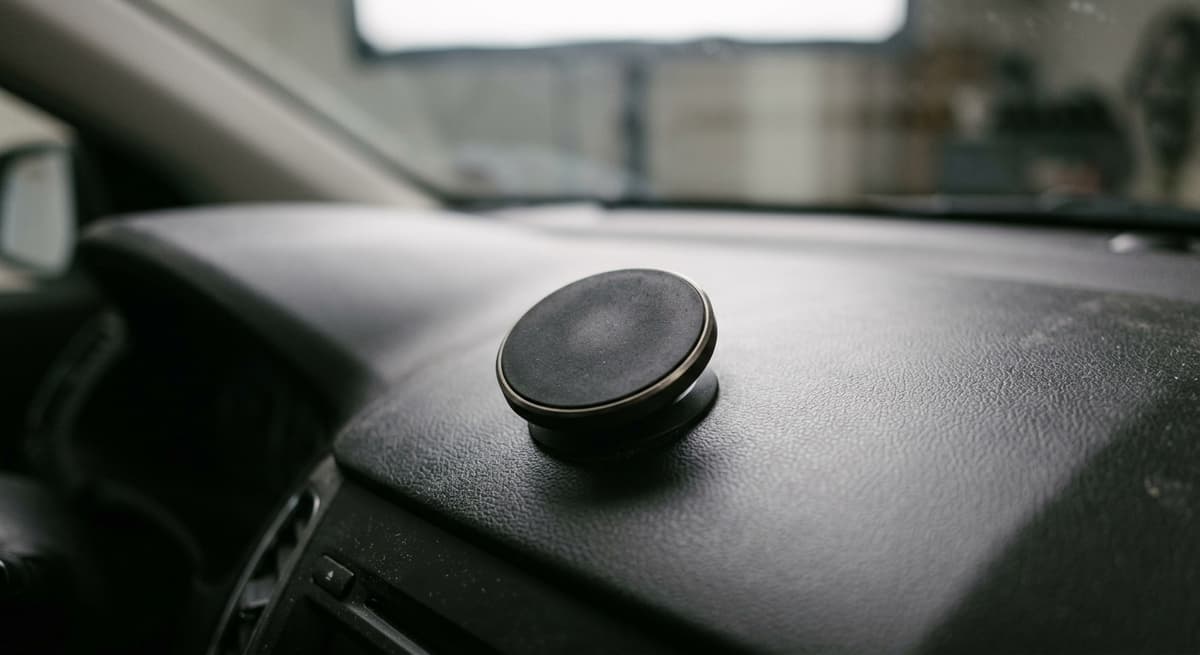
There is no safe zone on the windshield in Oregon. Some states allow devices within a certain number of inches from the bottom or in a corner of the windshield. Oregon has no such provision. Any device placed on the windshield that an officer determines impairs visibility can result in a citation.
Legal Alternatives for Mounting Devices
The safest and most legally defensible options for mounting a GPS or phone in Oregon include:
- Dashboard mounts that attach to the top of the dash using adhesive or friction pads
- Vent clip mounts that attach to the vehicle's air vents
- CD slot mounts that slide into an unused CD player slot
- Cup holder mounts for larger devices
- Magnetic mounts attached to the dashboard surface
These alternatives keep the device within the driver's line of sight without placing any material on the windshield itself.
Dashcam Rules in Oregon
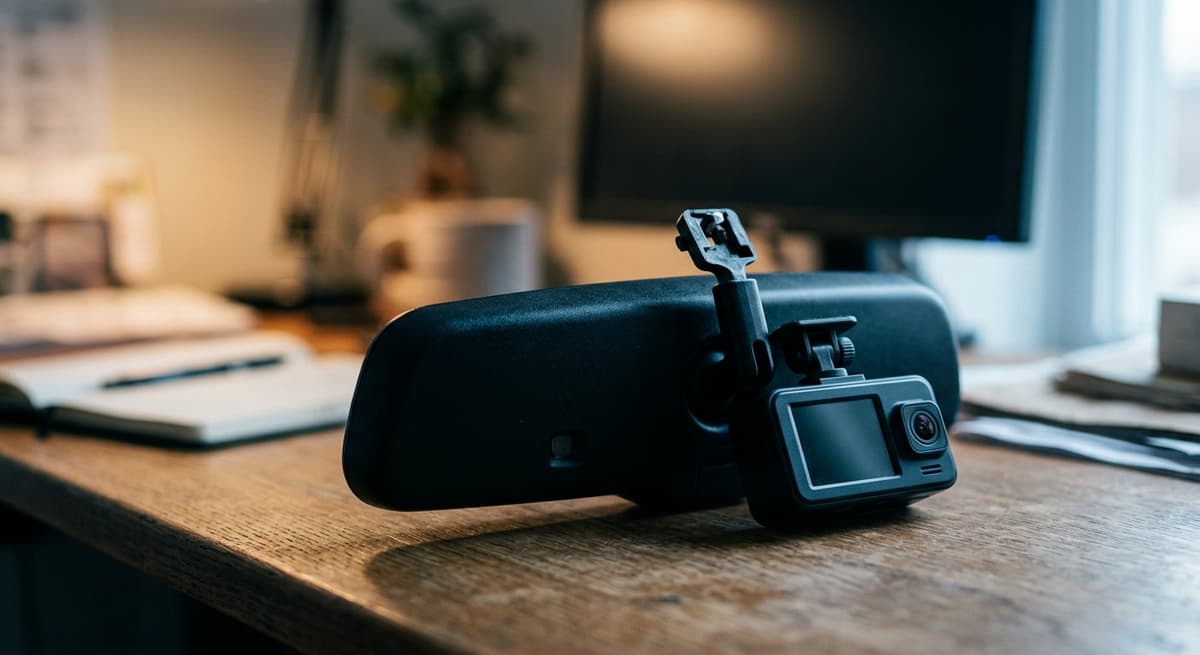
Oregon does not have a specific dashcam statute. A dashcam is treated the same as any other device under the general obstruction law. Mounting a dashcam directly on the windshield creates legal risk under ORS 815.220 because the camera housing is material placed upon the windshield, which the statute prohibits where it prevents or impairs the ability to see into or out of the vehicle.
The most legally secure placement for a dashcam in Oregon is on the dashboard, positioned to record through the windshield without being attached to the glass. Some drivers mount small dashcams behind the rearview mirror to minimize obstruction. Attachment alone is not the test: the device is still material upon the windshield, but ORS 815.220(2) is violated only if it prevents or impairs the ability to see into or out of the vehicle, which is a judgment an officer makes at the roadside and a court reviews.
Navigation Display Exemption (ORS 815.240)
ORS 815.240 addresses the use of image display devices in vehicles. A person commits the offense of unlawful use of an image display device if they drive a vehicle equipped with a device displaying a broadcast television image, DVD image, or video that is visible to the driver.
What Is Exempt
ORS 815.240 specifically exempts image display devices used for navigation purposes. This means a GPS screen or navigation app displaying a map is permitted while driving. The exemption applies to:
- Built-in vehicle navigation systems
- Standalone GPS units displaying maps or directions
- Phone apps showing navigation (Google Maps, Waze, Apple Maps, etc.)
Important Distinction
The navigation exemption in ORS 815.240 allows the display of navigation images. It does not override ORS 815.220, which prohibits placing materials on the windshield. A driver may legally use a navigation display, but the device showing that display still cannot be mounted on the windshield. The device must be mounted on the dashboard, a vent, or another location that does not obstruct the windshield.
The penalty for unlawful use of an image display device is a Class B traffic violation, which carries a maximum fine of $1,000 under ORS 153.018.
Oregon Hands-Free Law (ORS 811.507)
ORS 811.507 is Oregon's hands-free driving law, enacted through House Bill 2597 in 2017 and strengthened by House Bill 4116 in 2018. This law directly affects how drivers interact with mounted devices.
What the Law Prohibits
ORS 811.507 makes it unlawful to operate a motor vehicle while holding or using a mobile electronic device. "Mobile electronic device" includes cell phones, tablets, laptops, GPS devices, and pagers. The law is a primary offense, meaning an officer can pull you over solely for holding a device.
Hands-Free Exception
Drivers 18 years of age or older may use a hands-free accessory. A "hands-free accessory" is defined as an attachment, built-in feature, or addition to a mobile device that allows the driver to keep both hands on the steering wheel. This includes:
- Bluetooth connections
- Voice-activated controls
- Mounted devices operated by voice command
- Built-in vehicle infotainment systems
Drivers under 18 are prohibited from using any mobile electronic device while driving, including hands-free devices.
Other Exceptions
ORS 811.507 includes additional exceptions for:
- A person summoning medical or emergency help when no one else in the vehicle can do so
- A person operating an ambulance or emergency vehicle
- A person acting in the scope of employment as a public safety officer
Penalty Structure
The penalties for violating ORS 811.507 escalate significantly with repeat offenses within a 10-year period:
| Offense | Classification | Fine Range |
|---|---|---|
| First offense | Class B traffic violation | Up to $1,000 (presumptive ~$265) |
| Second offense (within 10 years) | Class A traffic violation | Up to $2,000 |
| Third or subsequent offense (within 10 years) | Class B misdemeanor | Minimum $2,000 (criminal record) |
For a first conviction, the court may suspend the fine if the driver completes an approved distracted driving avoidance course within 120 days of sentencing. The course must be at least 90 minutes long and the participant must score at least 80% to pass. The course can be completed in a classroom or online.
A third or subsequent conviction is a Class B misdemeanor, which is a criminal offense rather than a traffic violation. The court must impose a minimum fine of $2,000 (the Class B misdemeanor ceiling is $2,500 under ORS 161.635), a first offense that contributes to a crash escalates to a Class A violation, and the conviction creates a criminal record.
Window Tinting Laws (ORS 815.221 and ORS 815.222)
Oregon's window tinting laws interact with the windshield mounting rules because both regulate what can be applied to vehicle windows.
Permitted Tinting
Under ORS 815.221, tinting material may be applied to side and rear windows if it meets these standards:
- Light transmittance of 50% or more for the tinting material itself
- Light reflectance of 13% or less
- Total light transmittance through the window (glass plus tint) of 35% or more
For the windshield, tinting is only permitted on the top six inches. No tinting material may be applied to any other portion of the windshield.
Medical Exemption
Oregon allows a medical exemption for darker tinting on the side and rear windows only. Under ORS 815.221(5), a validly licensed physician or optometrist must sign an affidavit, a prescription, or a letter on the practitioner's letterhead stating that the registered owner or another person in that person's household has a physical condition requiring the darker tint. The document must be kept in the vehicle and shown to an officer who asks about the tint.
The medical exemption does not reach the windshield. ORS 815.221(3) caps windshield tinting at the top six inches and bars tinting material on any other portion of the windshield, with no medical override.
Tinting Violations
Under ORS 815.222, illegal window tinting is a Class B traffic violation with a maximum fine of $1,000. The violation applies both to applying non-compliant tinting and to operating a vehicle with illegal tinting.
Exemptions from Windshield Obstruction Rules
ORS 815.220 includes specific exemptions for:
| Exemption | Authority |
|---|---|
| Safety glazing materials conforming to the standards established under ORS 815.040 | ORS 815.220(3) |
| Placement of a permit issued under ORS 803.600, 803.615 or 803.625, which ORS 803.650 directs to the left side of the rear window unless the vehicle has no rear window or its design would hide the permit | ORS 815.220(4), referencing ORS 803.650 |
| Tinting material applied in compliance with ORS 815.221, which for the windshield means the top six inches and no other portion | ORS 815.220(5), referencing ORS 815.221(3) |
That is the whole list. The exemptions do not extend to GPS units, phone mounts, dashcams, or other aftermarket devices, and the medical tinting exemption in ORS 815.221(5) is not among them: it applies to the side and rear windows, not the windshield.
How Oregon Compares to Neighboring States
California is the outlier among Oregon's neighbors, not Oregon. California Vehicle Code 26708(b) expressly allows a portable GPS in a seven-inch square in the lower corner of the windshield farthest from the driver or in a five-inch square in the lower corner nearest the driver, and allows a video event recorder in either of those squares or in a five-inch square at the center uppermost portion of the windshield. Oregon has no comparable designated square.
Washington and Idaho are closer to Oregon than California is. RCW 46.37.410(2) and Idaho Code 49-943 each bar driving with a sign, poster, or other nontransparent material on the windshield that obstructs the driver's clear view, and neither carves out a zone or a size. Oregon's text is worded more broadly than either: ORS 815.220(2) reaches any material that prevents or impairs the ability to see into or out of the vehicle, not only nontransparent material.
Practical Tips for Oregon Drivers
Following these guidelines will help you stay compliant with Oregon windshield laws:
-
Use a dashboard mount for your phone or GPS. Adhesive and friction mounts designed for dashboards are widely available and keep your windshield clear.
-
Choose a low-profile dashcam and mount it on the dashboard rather than the windshield. Several models come with dashboard-specific mounting hardware.
-
Keep the windshield clean and clear of stickers, decals, and other material that is not required by law. ORS 815.220 reaches material upon the glass itself; Oregon has no separate statute on objects hanging from the mirror.
-
Use hands-free features when interacting with any mounted device. Even if your phone is legally mounted on the dashboard, holding it while driving violates ORS 811.507.
-
Drivers under 18 should not interact with any electronic device while driving, even through hands-free systems.
-
Check your window tinting if you have aftermarket tint. The top six inches of the windshield is the only permitted zone, and side windows must allow at least 35% total light transmittance.
More Oregon Laws
Frequently Asked Questions
Can I mount a GPS or phone on my windshield in Oregon?
No. Under ORS 815.220, Oregon prohibits placing any material on the windshield that prevents or impairs the ability to see into or out of the vehicle. There is no designated zone or size exception for GPS or phone mounts. The recommended alternative is a dashboard mount, vent clip mount, or other non-windshield mounting solution.
Is it legal to use a dashcam in Oregon?
Dashcams are legal to use in Oregon, but mounting one on the windshield creates legal risk under ORS 815.220. The safest placement is on the dashboard, positioned to record through the windshield without being attached to the glass. Oregon does not have a specific dashcam statute, so the general obstruction law applies.
What are the penalties for distracted driving in Oregon?
A first offense under ORS 811.507 is a Class B traffic violation with a presumptive fine of approximately $265 and a maximum of $1,000. A second offense within 10 years is a Class A traffic violation with a maximum fine of $2,000. A third or subsequent offense within 10 years is a Class B misdemeanor carrying a minimum fine of $2,000 and a criminal record.
Does Oregon allow medical exemptions for darker windshield tinting?
Oregon allows medical exemptions for darker tinting on side and rear windows under ORS 815.221. A physician or optometrist must provide signed documentation of a qualifying physical condition. The documentation must be carried in the vehicle. However, the windshield itself may only have tinting on the top six inches regardless of medical need.
Can drivers under 18 use hands-free devices in Oregon?
No. Under ORS 811.507, drivers under 18 are prohibited from using any mobile electronic device while driving, including hands-free devices. This is stricter than the rule for adult drivers, who may use hands-free accessories while keeping both hands on the steering wheel.
Updates
Corrected the windshield obstruction rules to match the text of ORS 815.220: the statute requires that a mounted device actually prevent or impair the view rather than simply be attached, it does not reach objects hanging from the mirror, the medical tinting exemption in ORS 815.221 applies to side and rear windows rather than the windshield, the ORS 803.650 permit exemption covers rear-window registration permits rather than inspection stickers, and the neighboring-states comparison now attributes the five and seven inch windshield squares to California alone.
Corrected Oregon's third-offense hands-free penalty: $2,000 is a mandatory minimum fine (ceiling $2,500), not an upper limit.
Independently fact-checked against the cited primary sources
Governing law re-checked for recent changes
Reviewed and approved by an editor
The Law Behind This Article
This article rests on the statutory provisions below, held in our own legal record and retrieved from the official source. Tap a section to read the operative text.
Oregon Revised Statutes, Chapter 815: Vehicle Equipment Generally
§ 815.220Obstruction of vehicle windows; penaltyIn forcecited in 2 of our articles
(1) A person commits the offense of obstruction of vehicle windows if the person drives or moves on any highway or owns and causes or knowingly permits to be driven or moved on any highway any vehicle with windows obstructed in a manner prohibited under this section. (2) The windows of a vehicle are obstructed in a manner prohibited by this section if any material that prevents or impairs the ability to see into or out of the vehicle is upon any vehicle window described in this subsection. This subsection applies to any sign, poster, one-way glass, adhesive film, glaze application or other material if the material prevents or impairs the ability to see into or out of the vehicle. This subsection only applies to the following windows of the vehicle: (a) The front windshield. (b) The side-wings. (c) The side windows on either side forward of or adjacent to the operator’s seat. (3) Nothing in this section prohibits safety glazing materials of a type that conforms to standards established under ORS 815.040.
Official text (excerpt) · last checked 2026-09-08 · Read the full text in our law library · Verify at oregonlegislature.gov
Cited in 10 court opinions in our collectionLatest citing opinion in our collection: 2013
Opinions citing this section in our collection:
- State v. Stookey (Court of Appeals of Oregon 2013, 255 Or. App. 489)“…or impairs the ability to see into or out of the vehicle,” ORS 815.220 (Class D traffic violation). Finally, d…”
- State v. Hovies (Oregon Supreme Court 1994, 320 Or. 414)“…f having “obstructed vehicle windows” in violation of *417 ORS 815.220. Defendant appealed pro se to the Cou…”
- State v. Elmore (Court of Appeals of Oregon 2011, 241 Or. App. 419)“…bable cause to stop him for a traffic violation pursuant to ORS 815.220. As pertinent here, that statute prohib…”
Identified automatically from the court opinions citing this section — not a ranking of which case controls.
Also relied on in: Oregon Dashcam Laws: Mounting, Recording, and Legal Use
§ 815.240Unlawful use of image display device; exemptions; penaltyIn force
(1) As used in this section, “image display device” means equipment capable of displaying to the driver of a motor vehicle: (a) A broadcast television image; or (b) A visual image from a digital video disc or video cassette player. (2) Except as provided in subsection (3) of this section, a person commits the offense of unlawful use of an image display device if the person drives or moves on any highway, or owns and causes or knowingly permits to be driven or moved on any highway, any motor vehicle equipped with any image display device that is displaying a broadcast television image or a visual image from a digital video disc or video cassette player that is visible to the driver while operating the motor vehicle. (3) Subsection (2) of this section does not apply to: (a) Emergency vehicles; or (b) Use of image display devices that are displaying images for navigational purposes. (4) The offense described in this section, unlawful use of an image display device, is a Class B traffic violation. [1983 c.338 §494; 1985 c.69 §4; 2005 c.572 §1] (Clearance)
Official text (excerpt) · last checked 2026-07-29 · Read the full text in our law library · Verify at oregonlegislature.gov
§ 815.221Tinting; authorized and prohibited materials; certificateIn forcecited in 2 of our articles
(1) Notwithstanding any other provision of law, a person may apply tinting material to the windows of a motor vehicle in compliance with this section. (2) Tinting material may be applied to the side and rear windows of a motor vehicle if: (a) The tinting material has a light transmittance of 50 percent or more; (b) The tinting material has a light reflectance of 13 percent or less; and (c) The total light transmittance through the window with the tinting material applied is 35 percent or more. (3) Tinting material that has a lower light transmittance or produces a lower total light transmittance than permitted in subsection (2)(a) and (c) of this section may be applied to the top six inches of a windshield. Tinting material may not be applied to any other portion of the windshield. (4) Tinting material that has a lower light transmittance or produces a lower total light transmittance than permitted in subsection (2)(a) and (c) of this section may be applied to all windows of a multipurpose passenger vehicle that are behind the driver. This subsection applies only to vehicles that are equipped with rearview mirrors on each side of the vehicle.
Official text (excerpt) · last checked 2026-09-01 · Read the full text in our law library · Verify at oregonlegislature.gov
Cited in 3 court opinions in our collectionLatest citing opinion in our collection: 2019
Opinions citing this section in our collection:
- State v. Lawson (Court of Appeals of Oregon 2019, 300 Or. App. 292)“…mounted mirror. Defendant pointed out that another statute, ORS 815.221, specifically refers to side mirrors wi…”
- State v. De La Rosa (Court of Appeals of Oregon 2009, 228 Or. App. 666)“…ith window tinting “not in compliance with or authorized by ORS 815.221,” which specifies the degree of tint pe…”
- State v. BAKER/JAY (Court of Appeals of Oregon 2009, 232 Or. App. 112)“…ng material that is not in compliance with or authorized by ORS 815.221.” Indeed, the certificate that d…”
Identified automatically from the court opinions citing this section — not a ranking of which case controls.
Also relied on in: Oregon Window Tint Laws (2026): Legal VLT Limits
§ 815.222Illegal window tinting; dismissal; penaltyIn forcecited in 2 of our articles
(1) A person commits the offense of illegal window tinting if the person applies window tinting material that does not comply with ORS 815.221 or applies window tinting material to a window of a motor vehicle that is not authorized by ORS 815.221 to be equipped with window tinting material. (2) A person commits the offense of operating a vehicle with illegal window tinting if the person operates a vehicle registered or required to be registered in Oregon that is equipped with window tinting material that is not in compliance with or authorized by ORS 815.221. (3) Each offense described in this section is a Class B traffic violation. (4) A court may dismiss a citation issued for violation of subsection (2) of this section, or reduce the fine that the court would otherwise have imposed for the offense, if the defendant establishes to the satisfaction of the court that after the citation for the offense was issued the windows of the vehicle were modified to comply with the requirements of ORS 815.221.
Official text (excerpt) · last checked 2026-07-29 · Read the full text in our law library · Verify at oregonlegislature.gov
Cited in 2 court opinions in our collectionLatest citing opinion in our collection: 2009
Opinions citing this section in our collection:
- State v. De La Rosa (Court of Appeals of Oregon 2009, 228 Or. App. 666)“…pport it. Ehly, 317 Or at 75 . Furthermore, ORS 815.222 provides that the operation of a vehicl…”
- State v. BAKER/JAY (Court of Appeals of Oregon 2009, 232 Or. App. 112)“…believe that the Caprice was being operated in violation of ORS 815.222(2): “A person commits the offens…”
Identified automatically from the court opinions citing this section — not a ranking of which case controls.
§ 815.040Standards for window and windshield materialIn force
(1) The Department of Transportation shall establish standards for safety glazing material used in vehicle windows and windshields including standards for any glazing material so constructed, treated or combined with other materials as to reduce substantially, in comparison to ordinary sheet or plate glass, the likelihood of injury to persons by broken or cracked glass or by objects from external sources. (2) The standards established under this section shall conform, insofar as practical, to safety standards and specifications for safety glazing material issued by the federal government. (3) Prohibitions and penalties relating to the standards established under this section are provided under ORS 815.090 and 815.210. (4) The standards established under this section may not restrict the installation and use of window tinting material that meets the requirements of ORS 815.221. [1983 c.338 §440; 1989 c.402 §3; 1995 c.263 §5; 2003 c.14 §498; 2003 c.158 §3] 815.045 Rules for use of traction tires, retractable studded tires and chains; signs.
Official text (excerpt) · last checked 2026-07-29 · Read the full text in our law library · Verify at oregonlegislature.gov
Oregon Revised Statutes, Chapter 811: Rules of the Road for Drivers
§ 811.507Operating motor vehicle while using mobile electronic device; exceptions; penaltyIn force
(1) As used in this section: (a)(A) “Driving” means operating a motor vehicle on a highway or premises open to the public, and while temporarily stationary because of traffic, a traffic control device or other momentary delays. (B) “Driving” does not include when the motor vehicle has stopped in a location where it can safely remain stationary and: (i) Is pulled over on the side of, or is pulled off, a roadway; (ii) Is in a designated parking space; or (iii) Is required to park in the roadway to conduct construction or utility maintenance work. (b) “Hands-free accessory” means an attachment or built-in feature for or an addition to a mobile electronic device that gives a person the ability to keep both hands on the steering wheel at all times while using the device or requires only the minimal use of a finger, via a swipe or tap, to activate or deactivate a function of the device. (c) “Livestock” has the meaning given that term in ORS 609.125. (d)(A) “Mobile electronic device” means an electronic device that is not permanently installed in a motor vehicle.
Official text (excerpt) · last checked 2026-07-29 · Read the full text in our law library · Verify at oregonlegislature.gov
Cited in 7 court opinions in our collectionLatest citing opinion in our collection: 2025
Opinions citing this section in our collection:
- State v. Atwood (Court of Appeals of Oregon 2024)“…defendant appeals a judgment finding him to have violated ORS 811.507, which, as relevant here, prohibits hol…”
- State v. Rabanales-Ramos (Court of Appeals of Oregon 2015, 273 Or. App. 228)“…g while using a mobile communication device, a violation of ORS 811.507. During the traffic stop, the trooper d…”
- State v. Nguyen Ngoc Pham (Court of Appeals of Oregon 2018, 295 Or. App. 322)“…n objectively reasonable belief that defendant had violated ORS 811.507 (2013) when the officers stopped defend…”
Identified automatically from the court opinions citing this section — not a ranking of which case controls.
Oregon Revised Statutes, Chapter 153: Violations and Fines
§ 153.018Maximum finesIn force
(1) The penalty for committing a violation is a fine. The law creating a violation may impose other penalties in addition to a fine but may not impose a term of imprisonment. (2) Except as otherwise provided by law, the maximum fine for a violation committed by an individual is: (a) $2,000 for a Class A violation. (b) $1,000 for a Class B violation. (c) $500 for a Class C violation. (d) $250 for a Class D violation. (e) $2,000 for a specific fine violation, or the maximum amount otherwise established by law for the specific fine violation. (3) If a special corporate fine is specified in the law creating the violation, the sentence to pay a fine shall be governed by the law creating the violation. Except as otherwise provided by law, if a special corporate fine is not specified in the law creating the violation, the maximum fine for a violation committed by a corporation is: (a) $4,000 for a Class A violation. (b) $2,000 for a Class B violation. (c) $1,000 for a Class C violation. (d) $500 for a Class D violation.
Official text (excerpt) · last checked 2026-07-29 · Read the full text in our law library · Verify at oregonlegislature.gov
Cited in 19 court opinions in our collectionLatest citing opinion in our collection: 2026
Opinions citing this section in our collection:
- State v. Page (Court of Appeals of Oregon 2005, 200 Or. App. 55)“…rves.” Selness / Miller, 335 Or at 536. ORS 153.018 (2001) provides the penalty schedule fo…”
- In Re Complaint as to the Conduct of Kimmell (Oregon Supreme Court 2001, 332 Or. 480)“…risonment may not be imposed for conviction of a violation, ORS 153.018(1), whereas imprisonment may be imposed…”
- State v. Dahl (Oregon Supreme Court 2004, 336 Or. 481)“…ch 819, § 17 (identifying different classes of violations); ORS 153.018(2) (identifying maximum fines for viola…”
Identified automatically from the court opinions citing this section — not a ranking of which case controls.
Search our full record of US law — 2.1 million sections, every state + federal →
Sources and References
- ORS 815.220 - Obstruction of vehicle windows(oregonlegislature.gov).gov
- ORS 815.220 full text(oregonlaws.org)
- ORS 815.240 - Unlawful use of image display device(oregonlaws.org)
- ORS 811.507 - Operating motor vehicle while using mobile electronic device(oregonlaws.org)
- ORS 153.018 - Maximum fines for violations(oregonlaws.org)
- ORS 815.221 - Tinting authorized and prohibited materials(oregonlaws.org)
- ORS 815.222 - Illegal window tinting penalty(oregonlaws.org)
- Oregon HB 2597 - Mobile electronic device law (2017)(oregonlegislature.gov).gov
- Oregon ODOT Distracted Driving Information(oregon.gov).gov
- ORS 815.040 - Standards for window and windshield material(oregonlaws.org)
- Oregon ODOT Maintaining Field of Vision ORS Reference(oregon.gov).gov
- RCW 46.37.410 - Windshields must be unobstructed (Washington)(app.leg.wa.gov)
- California Vehicle Code 26708 - Material obstructing driver view, subsections (b)(12) and (b)(13)(leginfo.legislature.ca.gov)
- Idaho Code 49-943 - Obstruction to driver view(legislature.idaho.gov)
- ORS 803.650 - Placement of permits in vehicles(oregonlegislature.gov)