
Colorado
Colorado Car Seat Laws: Requirements and Guidelines
Independently fact-checked against primary sources (last audited August 20, 2026). · Reviewed by the RecordingLaw editorial team. · Law checked current as of August 20, 2026. · 7 primary sources cited on this page. How we verify our legal content
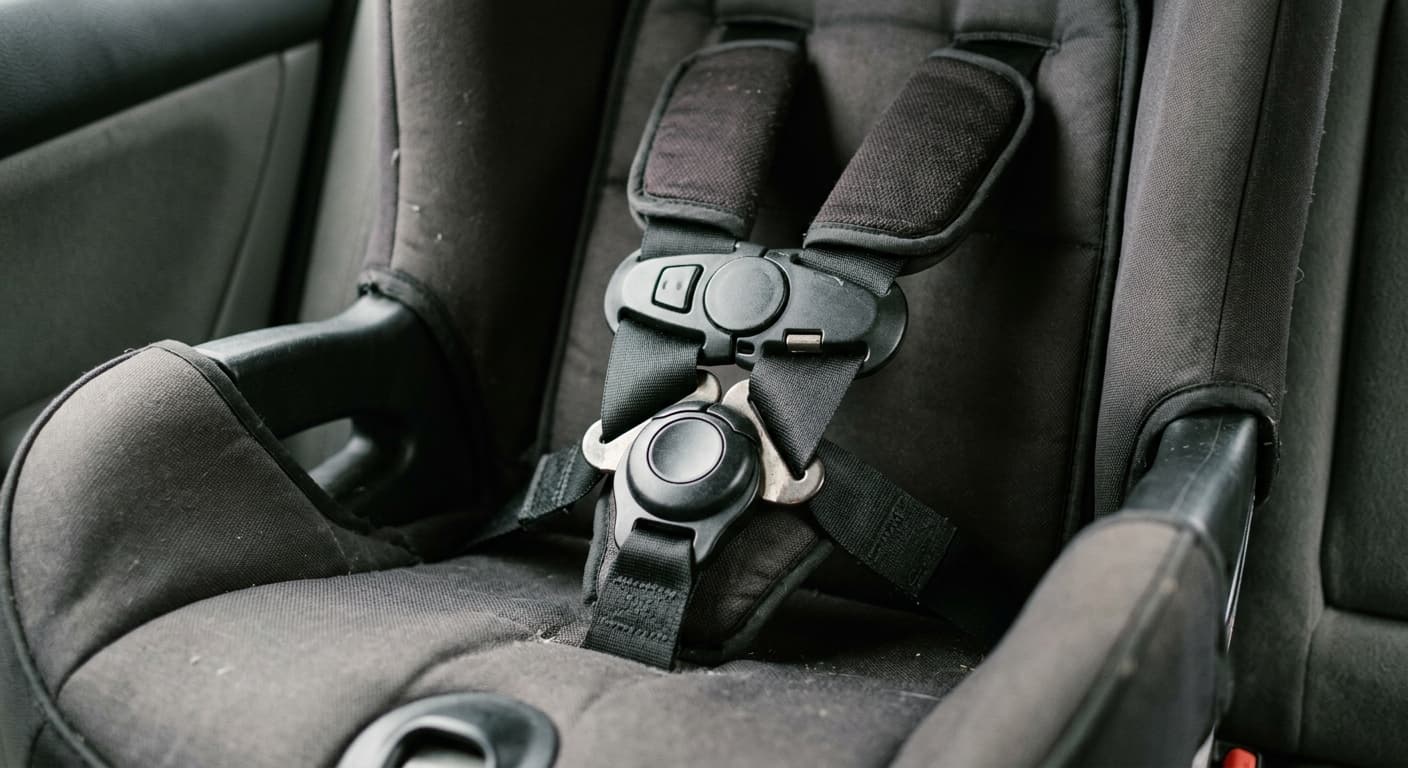
Colorado requires children to ride rear-facing until they reach age 2 or 40 pounds, whichever comes first, then in a forward-facing or booster seat until age 9, under CRS 42-4-236. All passengers under 18 must wear a seat belt. Updated requirements took effect January 1, 2025.
Understanding Colorado Car Seat Laws (Updated January 2025)
Colorado made significant changes to its child passenger safety law in 2025. Governor Jared Polis signed House Bill 24-1055 in June 2024, and the new requirements took effect on January 1, 2025. The law, codified in CRS 42-4-236, brought Colorado's standards much closer to the latest recommendations from the American Academy of Pediatrics (AAP).
The updates affect nearly every stage of child restraint use, from rear-facing seats through seat belt requirements for teenagers. If you are a parent, caregiver, or anyone who transports children in Colorado, understanding these changes is essential.
What Changed Under HB24-1055
The 2025 update represents the most significant overhaul of Colorado's car seat law in years. Here is a comparison of the old and new requirements:
| Requirement | Before January 1, 2025 | After January 1, 2025 |
|---|---|---|
| Rear-facing | Under 1 year and under 20 lbs | Under 2 years and under 40 lbs |
| Car seat/booster required | Until age 8 | Until age 9 |
| Back seat required | Until age 8 | Until age 9 |
| Seat belt required | Until age 16 | Until age 18 |
These changes were based on updated safety research showing that keeping children in rear-facing seats longer and using boosters for an additional year provides measurably better crash protection, according to the Colorado Department of Transportation (CODOT).
Rear-Facing Car Seat Requirements in Colorado
Under the updated law, children must ride in a rear-facing car seat until they are at least 2 years old or weigh at least 40 pounds, whichever comes first. This is a major change from the previous requirement of just 1 year old and 20 pounds.
Rear-Facing Requirements Summary
| Requirement | Detail |
|---|---|
| Age minimum | Under 2 years old |
| Weight minimum | Under 40 pounds |
| Rule type | Reaching either threshold (age 2 or 40 pounds) ends mandatory rear-facing |
| Seat position | Rear seat if available |
| Harness | Must follow manufacturer instructions |
If a child is under 2 but already weighs more than 40 pounds, the child may use either a rear-facing or forward-facing car seat. If the child is 2 or older but under 40 pounds, the law still allows forward-facing use, but the AAP recommends keeping the child rear-facing as long as the seat allows.
Why the Extended Rear-Facing Requirement Matters
The NHTSA has long recommended rear-facing use until at least age 2. Rear-facing seats cradle the child's head, neck, and spine, distributing crash forces across the strongest parts of the body. Young children's vertebrae are not fully ossified (hardened into bone), making their spines particularly vulnerable to injury in frontal impacts.
Many modern convertible car seats support rear-facing use up to 40 or even 50 pounds. The Colorado Department of Public Health and Environment encourages parents to keep children rear-facing until they reach the maximum height or weight limit of their seat, not just the legal minimum.
Installation Tips for Rear-Facing Seats
Always place the rear-facing seat in the back seat, away from any active airbag. The seat should be at the proper recline angle (usually indicated by a built-in level on the seat). Harness straps should sit at or below the child's shoulders and lie flat without twisting. The chest clip should rest at armpit level.
Forward-Facing Car Seat Requirements in Colorado
Once a child meets a requirement to leave the rear-facing seat (at least 2 years old or at least 40 pounds), Colorado law requires the child to remain in a forward-facing car seat with a harness. Children under 40 pounds must be in a harnessed car seat regardless of age (rear-facing or forward-facing).
Forward-Facing Requirements Summary
| Requirement | Detail |
|---|---|
| Age range | 2 years until transitioning to booster |
| Weight | 40 pounds or more to transition from rear-facing |
| Harness | Forward-facing seat with harness per manufacturer instructions |
| Seat position | Rear seat if available |
| Tether | Top tether must be used |
Most forward-facing car seats with harnesses accommodate children up to 65 pounds or more. The Colorado State Patrol recommends keeping children in the harnessed seat until they reach the maximum height or weight limit before transitioning to a booster.
Using the Top Tether
Always connect the top tether strap when using a forward-facing car seat. The tether attaches to an anchor point behind the vehicle seat and significantly reduces the forward movement of the car seat and the child's head during a crash. Failing to use the top tether can increase the distance the child's head travels by several inches during a collision.
Booster Seat Requirements in Colorado
Colorado now requires children to use a booster seat (or remain in a harnessed car seat) until they turn 9 years old. This is an increase from the previous requirement of 8 years old.
Booster Seat Requirements Summary
| Requirement | Detail |
|---|---|
| Age range | Until the child's 9th birthday |
| Seat position | Must ride in the back seat if available |
| Belt type | Lap-and-shoulder belt must be used with booster |
| Federal standards | Seat must meet FMVSS 213 |
The booster seat lifts the child so the vehicle's lap and shoulder belt fits correctly. Without a booster, the belt may cross the child's neck and abdomen instead of the shoulder and upper thighs, which can cause serious injuries during a crash.
Choosing the Right Booster
| Booster Type | Best For | Notes |
|---|---|---|
| High-back booster | Vehicles without headrests | Supports head and neck |
| Backless booster | Vehicles with adjustable headrests | More portable |
| Combination seat | Transitioning from harness to booster | Starts with harness, converts to booster |
The CODOT recommends that children remain in a booster until they are at least 4 feet 9 inches tall and can pass the seat belt fit test.
The Seat Belt Fit Test
Before graduating from the booster, check that:
- The child can sit all the way back against the vehicle seat.
- The knees bend comfortably over the edge of the seat.
- The shoulder belt crosses the middle of the chest and shoulder.
- The lap belt sits low and snug across the upper thighs.
- The child can maintain proper position for the entire ride.
Back Seat Requirements in Colorado
Under the updated law, children under 9 years of age must ride in the back seat if the vehicle has one. This applies to all stages of child restraint use.
If the vehicle does not have a rear seat (such as a pickup truck with a single cab), the child may ride in the front seat with the appropriate restraint, but the front passenger airbag should be turned off if possible. Never place a rear-facing car seat in front of an active airbag.
Seat Belt Requirements for Older Children and Teens
One of the key changes under HB24-1055 is the extension of the mandatory seat belt age. Children and teens ages 9 through 17 must be properly restrained by a seat belt at all times while riding in a motor vehicle. Previously, this requirement only applied to those under 16.
This change means drivers are now responsible for making sure all passengers under 18 are buckled up, whether in the front or rear seat.
Penalties for Violating Colorado Car Seat Laws
A violation of Colorado's child restraint law under CRS 42-4-236 is a Class B traffic infraction.
Penalty Details
| Item | Amount |
|---|---|
| Base fine | $65 |
| Surcharge | $6 |
| Total | $71 |
| Points on license | None |
Colorado enforces its car seat law as a primary offense, meaning law enforcement can stop a vehicle solely because a child appears to be improperly restrained. Officers do not need another reason to initiate a traffic stop.
While the monetary fine is relatively modest, the safety consequences of noncompliance are severe. The NHTSA reports that car seats reduce fatal injury risk by 71% for infants and 54% for toddlers ages 1 to 4.
Exemptions to Colorado Car Seat Laws
Colorado law provides several exemptions to the child restraint requirements:
- Medical emergencies: A child is not required to be in a child restraint system during a medical or other life-threatening emergency when a child restraint system is not available.
- Child care center vehicles: A commercial motor vehicle operated by a licensed child care center is exempt.
- Common carriers, contract carriers, and luxury limousines: A vehicle operated by, or on behalf of, a common carrier, contract carrier, or luxury limousine service is exempt. Colorado regulates ordinary taxicab service as a separate category from common and contract carriers, so this exemption does not clearly extend to a standard taxi.
- Vehicles without rear seats: When no rear seat is available, the child may ride in the front with appropriate restraint.
Rideshare vehicles (such as those used for Uber or Lyft) are not specifically exempt under Colorado law. If you plan to travel with a child in a rideshare, bring an appropriate car seat.
Free Car Seat Resources in Colorado
Colorado offers several programs to help families comply with the law:
- Car seat inspection stations: CODOT maintains a directory of certified car seat inspection locations across the state.
- Low-cost car seat programs: The Colorado Department of Public Health and Environment connects families with programs offering reduced-cost or free car seats for those who qualify.
- Educational resources: CODOT provides multilingual fact sheets explaining the new law in several languages.
Getting a professional installation check is one of the most effective steps you can take. Studies estimate that nearly half of all car seats are installed incorrectly, which can dramatically reduce their effectiveness.
How Colorado's Law Compares
Colorado's updated requirements now align with or exceed many neighboring states:
| Feature | Colorado (2025) | National Best Practice |
|---|---|---|
| Rear-facing until | 2 years / 40 lbs | As long as seat allows |
| Booster until | 9 years | 4 ft 9 in tall |
| Seat belt until | 18 years | All passengers |
| Back seat until | 9 years | 13 years recommended |
The 2025 changes position Colorado as one of the more protective states for child passengers in the region.
More Colorado Laws
Frequently Asked Questions
What changed in Colorado car seat laws in 2025?
HB24-1055, effective January 1, 2025, made four major changes: (1) rear-facing is now required until age 2 or 40 pounds, whichever comes first (previously age 1 or 20 pounds), (2) car seats or boosters are required until age 9 (previously 8), (3) children must ride in the back seat until age 9 (previously 8), and (4) seat belts are required for all passengers under 18 (previously under 16).
What is the fine for a car seat violation in Colorado?
A violation of Colorado's child restraint law is a Class B traffic infraction carrying a $65 fine plus a $6 surcharge, for a total of $71. No points are added to your driving record. Colorado enforces this as a primary offense, meaning officers can stop you solely for an observed child restraint violation.
When can a child sit in the front seat in Colorado?
Under the 2025 law, children under 9 years old must ride in the back seat if the vehicle has one. Children 9 and older may sit in the front seat as long as they are properly restrained with a seat belt. Safety experts recommend keeping children in the back seat until age 13, as front passenger airbags are designed for adult-sized occupants.
Are taxis exempt from Colorado car seat laws?
Not clearly. Colorado's child restraint exemption covers vehicles operated by a common carrier, contract carrier, or luxury limousine service, plus a few narrow categories such as medical emergencies and licensed child care center vehicles. Colorado regulates ordinary taxicab service separately from those carrier categories, so a standard taxi does not clearly fall under this exemption. Rideshare vehicles such as those used for Uber or Lyft are also not specifically exempt. If you plan to travel with a child in a taxi or rideshare vehicle, you should bring and properly install an appropriate car seat or booster seat.
How long should my child stay rear-facing in Colorado?
Colorado law requires children to remain rear-facing until they are at least 2 years old or weigh at least 40 pounds, whichever comes first. However, safety experts recommend keeping children rear-facing as long as the car seat allows. Many modern convertible seats support rear-facing children up to 40 or 50 pounds. Children under 2 who exceed 40 pounds may use either a rear-facing or forward-facing seat.
Updates
Corrected Colorado's exemption list: the child restraint law does not name taxicabs, school buses, or public transit as exempt. Its actual exemptions are medical/life-threatening emergencies, vehicles operated by a licensed child care center, and vehicles operated by a common carrier, contract carrier, or luxury limousine service -- a set of categories that does not clearly cover an ordinary taxi.
Independently fact-checked against the cited primary sources; governing law re-checked for recent changes
Reviewed and approved by an editor
The Law Behind This Article
This article rests on the statutory provisions below, held in our own legal record and retrieved from the official source. Tap a section to read the operative text.
Colorado Revised Statutes, Title 42: Vehicles and Traffic
§ 42-4-236Child restraint systems required - definitions - exemptions - penaltyIn force
(1) As used in this section, unless the context otherwise requires: (a) Child care center means a facility required to be licensed under the Foster Care, Kinship Foster Care, Residential, Day Treatment, and Child Placement Agency Licensing and Certification Act, part 9 of article 6 of title 26, or the Child Care Licensing Act, part 3 of article 5 of title 26.5. (a.3) (Deleted by amendment, L. 2010, (SB 10-110), ch. 294, p. 1365, § 3, effective August 1, 2010.) (a.5) Child restraint system means a specially designed seating system that is designed to protect, hold, or restrain a child in a motor vehicle in such a way as to prevent or minimize injury to the child in the event of a motor vehicle accident that is either permanently affixed to a motor vehicle or is affixed to such vehicle by a safety belt or a universal attachment system, and that meets the federal motor vehicle safety standards set forth in section 49 CFR 571.213, as amended. (a.7) (Deleted by amendment, L. 2010, (SB 10-110), ch. 294, p.
Official text (excerpt) · last checked 2026-09-09 · Read the full text in our law library · Verify at olls.info
Search our full record of US law — 2.1 million sections, every state + federal →
Sources and References
- CODOT - Colorado Child Passenger Safety Law(codot.gov).gov
- Colorado General Assembly - HB24-1055 Child Passenger Safety & Education(leg.colorado.gov).gov
- Colorado General Assembly - Child Restraint Requirements(content.leg.colorado.gov).gov
- Colorado State Patrol - Four Stages for Kids(csp.colorado.gov).gov
- Colorado DPHE - Car Seat Safety(cdphe.colorado.gov).gov
- CODOT - HB24-1055 Fact Sheet(codot.gov).gov
- NHTSA - Car Seats and Booster Seats(nhtsa.gov).gov
- GHSA - Child Passengers State Laws(ghsa.org)