
Alabama
Alabama Car Seat Laws: Requirements and Guidelines
Independently fact-checked against primary sources (last audited August 20, 2026). · Reviewed by the RecordingLaw editorial team. · Law checked current as of August 20, 2026. · 1 primary source cited on this page. How we verify our legal content
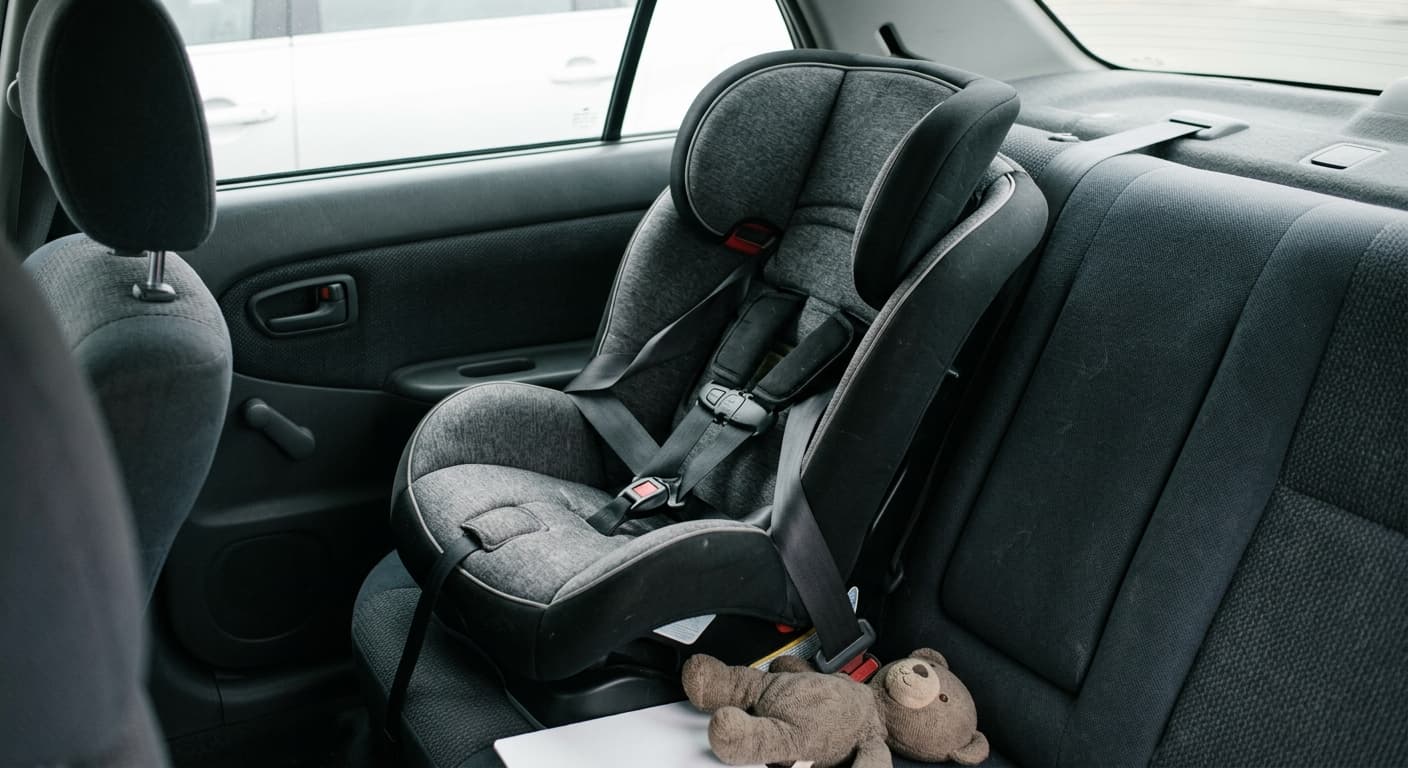
Alabama requires children under age 1 or weighing less than 20 pounds to ride in a rear-facing seat. Children must then use a forward-facing harness seat until they are at least 5 years old or weigh 40 pounds, and use a booster seat until age 6, after which a seat belt satisfies state law.
Infant Car Seat Rules in Alabama
What are the Height and Weight Requirements for Car Seats in Alabama?
Children who are **UNDER **1 year OR weigh LESS than 20 pounds are required to use a rear-facing child safety seat.
Forward-facing car seats must be used once a child outgrows the rear-facing seat, until the child is at least 5 years old or weighs 40 pounds.
The requirement for qualifying for a booster seat is that the child must be at **LEAST **5 years old **OR **weigh 40 pounds. Alabama's booster requirement legally ends at age 6, when a seat belt satisfies state law, though many safety experts recommend continuing booster use until a child is closer to 4'9" tall, typically between ages 8 and 12.
What are the Rear Facing Car Seat Rules in Alabama?
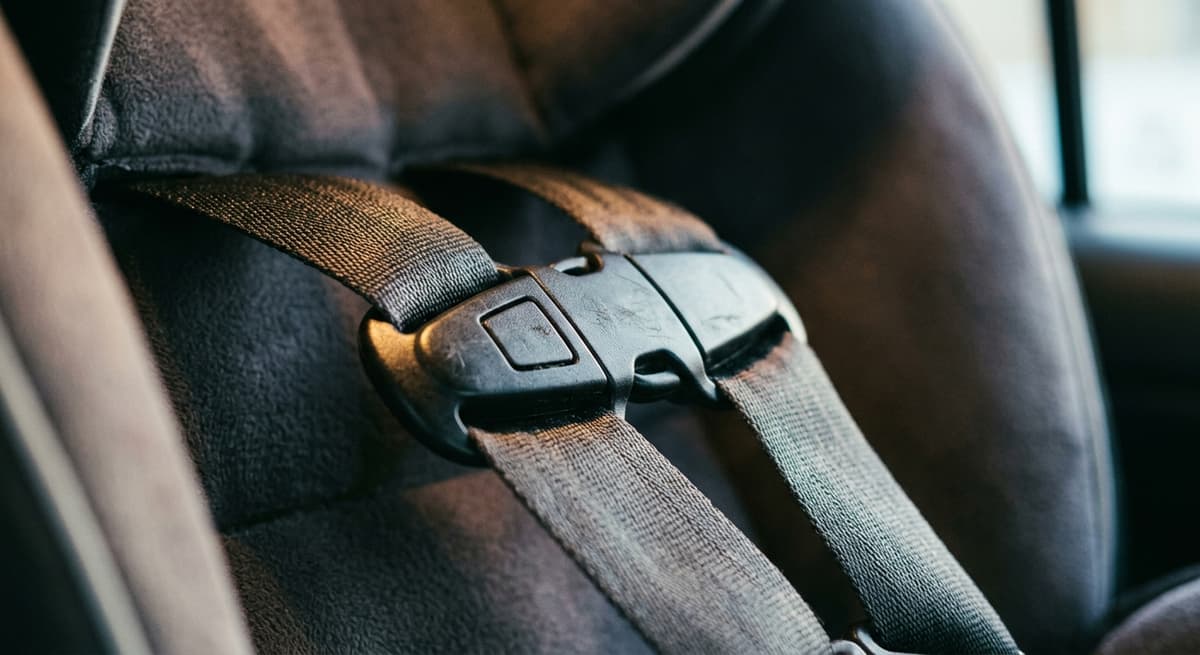
According to Alabama law, infants are required to use rear-facing child-safety seats until they are at least one year old or weigh 20 pounds or more. This means they cannot stop using the rear-facing seat if their weight is below 20 pounds. Parents are also advised to check their car safety-seat manual in order to ensure their child is within the manufacturer's height and weight limits. Rear-facing seats should never be secured in the front seat or in front of an active airbag. In a five-point harness safety seat, the harness clip should be fastened around the center of the chest level with the armpits. A latch-system or vehicle seatbelt can be used to tightly hold the rear-facing seat in place in the back seat of the vehicle.
What are the Forward Facing Car Seat Rules in Alabama?
Once a child has outgrown the rear-facing seat requirement, at least 1 year old and 20 pounds, Alabama law requires them to ride in a forward-facing seat with a harness until they are at least 5 years old or weigh 40 pounds. The manufacturer's weight and height limit can also be used to decide whether a child has qualified for this type of seat.
Are Car Seats Required in Taxis in Alabama?
Taxis and vehicles with a seating capacity of 11 or more passengers are exempted from complying with the state's car seat law. However, for situations involving a ride-share such as Uber or Lyft you will need to provide an appropriate child restraint device.
*Note - While it may be legal to transport your child without the appropriate safety device, it is not recommended.
What are the Booster Seat Laws in Alabama?
By law, children who have exceeded the forward-facing car seat requirements can graduate to a belt-positioning booster seat. This means the child should be at least 5 years old or have a weight of at least 40 pounds. Alabama's booster-seat requirement legally ends at age 6, when a seat belt satisfies state law, though experts recommend continuing booster use beyond that, generally until a height of about 4'9'' and an age in the 6-12 range. Booster seats should be installed in such a way that the seat belt is fastened across the thighs and secured firmly across the chest.
When Can a Child Use the Front Seat in Alabama?
Alabama law does not state a specific age for children to sit in the front seat. Alabama's booster-seat requirement legally ends at age 6, when a seat belt satisfies state law, but many safety experts recommend keeping a child in a booster until their feet touch the floor of the vehicle with knees bent at the edge of the seat and their back uniformly against the seat, and riding in the back seat until at least age 13. Parents should teach their kids how to wear a regular seatbelt and if a child is not comfortable in a seatbelt, he or she should use a booster seat until they learn to wear a seatbelt correctly.
What is the Penalty for a Car Seat Violation in Alabama?
A violation of Alabama's car seat law carries a $25 fine for each offense. A judge may dismiss the charge and waive court costs if the parent or guardian shows proof they have since obtained an appropriate child passenger restraint.
More Alabama Laws
- Alabama Car Seat Laws
- Alabama Child Support Laws
- Alabama Dog Bite Laws: Complete Guide for 2026
- Alabama Hit and Run Laws (2026 Guide)
- Alabama Lemon Law: Complete Guide for 2026
- Alabama Recording Laws
- Alabama Sexting Laws (2026 Guide)
- Alabama Statute of Limitations
- Alabama Whistleblower Laws
- Murder Sentencing Guidelines - Minimum to Maximum for Every State (2026)
Related Alabama Child and Vehicle Safety Laws
More Alabama Laws
Frequently Asked Questions
What are the Height and Weight Requirements for Car Seats in Alabama?
Children who are **UNDER **1 year **OR weigh LESS than 20 pounds are required to use a rear-facing** child safety seat. Forward-facing car seats must be used once a child outgrows the rear-facing seat, until the child is at least 5 years old or weighs 40 pounds. The requirement for qualifying for a booster seat is that the child must be at **LEAST **5 years old **OR **weigh 40 pounds. Alabama's booster requirement legally ends at age 6, when a seat belt satisfies state law.
What are the Rear Facing Car Seat Rules in Alabama?
According to Alabama law, infants are required to use rear-facing child-safety seats until they are at least one year old or weigh 20 pounds or more. This means they cannot stop using the rear-facing seat if their weight is below 20 pounds. Parents are also advised to check their car safety-seat manual in order to ensure their child is within the manufacturer's height and weight limits. Rear-facing seats should never be secured in the front seat or in front of an active airbag.
What are the Forward Facing Car Seat Rules in Alabama?
Once a child has outgrown the rear-facing seat requirement, at least 1 year old and 20 pounds, Alabama law requires them to ride in a forward-facing seat with a harness until they are at least 5 years old or weigh 40 pounds. The manufacturer's weight and height limit can also be used to decide whether a child has qualified for this type of seat.
Are Car Seats Required in Taxis in Alabama?
Taxis and vehicles with a seating capacity of 11 or more passengers are exempted from complying with the state's car seat law. However, for situations involving a ride-share such as Uber or Lyft you will need to provide an appropriate child restraint device. *Note - While it may be legal to transport your child without the appropriate safety device, it is not recommended.
What are the Booster Seat Laws in Alabama?
By law, children who have exceeded the forward-facing car seat requirements can graduate to a belt-positioning booster seat. This means the child should be at least 5 years old or have a weight of at least 40 pounds. Alabama's booster-seat requirement legally ends at age 6, when a seat belt satisfies state law, though experts recommend continuing booster use beyond that, generally until a height of about 4'9'' and an age in the 6-12 range. Booster seats should be installed in such a way that the seat belt is fastened across the thighs and secured firmly across the chest.
When Can a Child Use the Front Seat in Alabama?
Alabama law does not state a specific age for children to sit in the front seat. Alabama's booster-seat requirement legally ends at age 6, when a seat belt satisfies state law, but many safety experts recommend keeping a child in a booster until their feet touch the floor of the vehicle with knees bent at the edge of the seat and their back uniformly against the seat, and riding in the back seat until at least age 13. Parents should teach their kids how to wear a regular seatbelt and if a child is not comfortable in a seatbelt, he or she should use a booster seat until they learn to wear a seatbelt correctly.
Updates
Corrected Alabama's forward-facing car-seat threshold (the statute has no age-2 rule; forward-facing runs from the end of rear-facing, 1 year/20 lb, to 5 years/40 lb), disclosed that the booster requirement legally ends at age 6 (a seat belt satisfies the law from age 6, though experts recommend continuing boosters longer), fixed a garbled duplicated sentence, narrowed the taxi exemption to its actual statutory scope (taxis and vehicles seating 11+ passengers, not commercial vehicles generally), and added the $25 statutory fine that the page's own metadata promised but never delivered.
Independently fact-checked against the cited primary sources; governing law re-checked for recent changes
Reviewed and approved by an editor
The Law Behind This Article
This article rests on the statutory provisions below, held in our own legal record and retrieved from the official source. Tap a section to read the operative text.
Code of Alabama 1975, Title 32: Motor Vehicles and Traffic.
§ 32-5-222Requirements for Child Passenger Restraints.In force
(a) Every person transporting a child in a motor vehicle operated on the roadways, streets, or highways of this state, shall provide for the protection of the child by properly using an aftermarket or integrated child passenger restraint system meeting applicable federal motor vehicle safety standards and the requirements of subsection (b). This section shall not be interpreted to release in part or in whole the responsibility of an automobile manufacturer to insure the safety of children to a level at least equivalent to existing federal safety standards for adults. In no event shall failure to wear a child passenger restraint system be considered as contributory negligence. The term “motor vehicle” as used in this section shall include a passenger car, pickup truck, van (seating capacity of 10 or less), minivan, or sports utility vehicle. (b) The size appropriate restraint system required for a child in subsection (a) must meet the requirements of Section 32-5B-4 and shall include all of the following: (1) Infant only seats and convertible seats used in the rear facing position for infants until at least one year of age or 20 pounds.
Official text (excerpt) · last checked 2026-09-09 · Read the full text in our law library · Verify at alison.legislature.state.al.us
Cited in 1 court opinions in our collectionLatest citing opinion in our collection: 2010
Opinions citing this section in our collection:
- E.H.G. v. E.R.G. (Court of Civil Appeals of Alabama 2010, 73 So. 3d 614)“…when the children are riding as passengers in automobiles. Ala.Code 1975, § 32-5-222. State law authorizes the removal of a…”
Identified automatically from the court opinions citing this section — not a ranking of which case controls.
Search our full record of US law — 2.1 million sections, every state + federal →