
Delaware
Truck Accident Laws in Delaware (2026): Deadlines & Liability
Independently fact-checked against primary sources (last audited September 8, 2026). · Reviewed by the RecordingLaw editorial team. · Law checked current as of August 16, 2026. · 5 primary sources cited on this page. How we verify our legal content
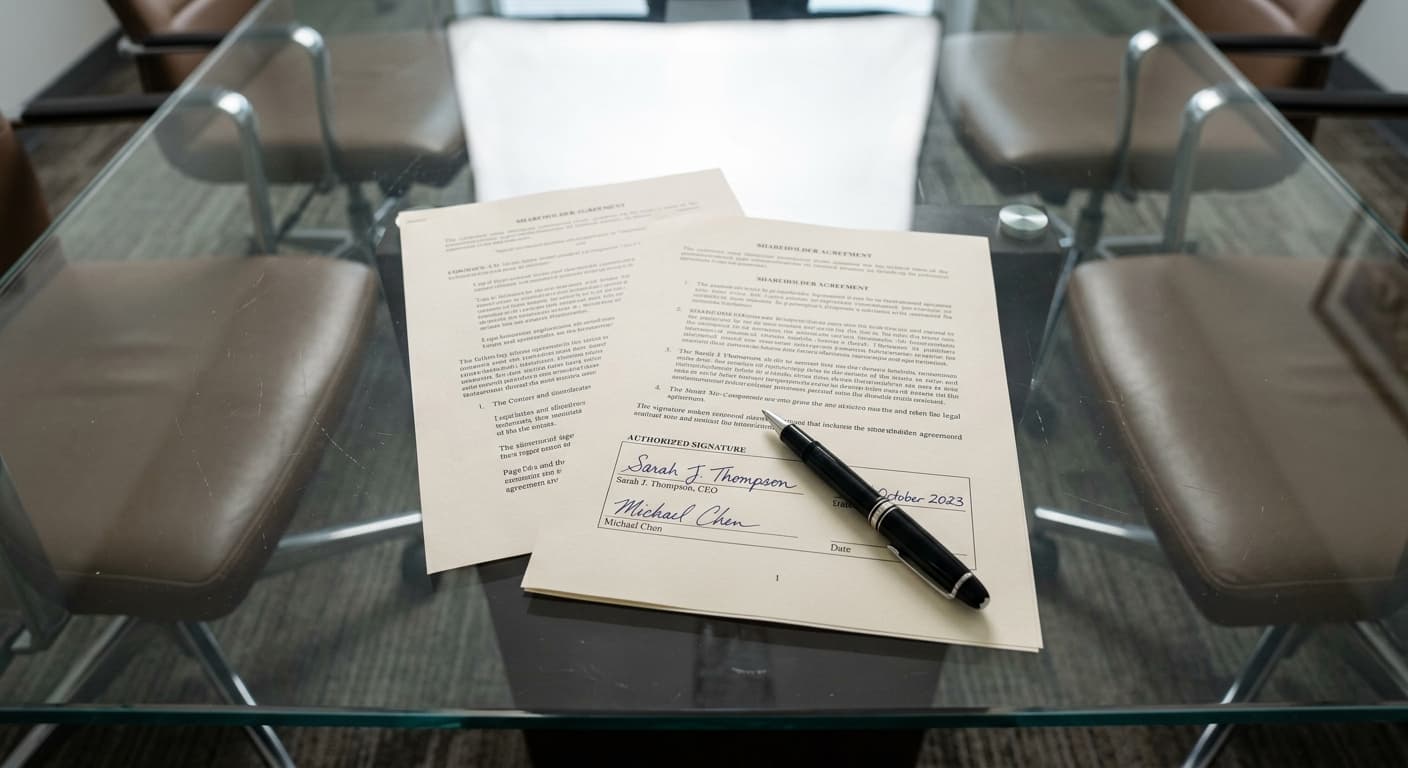
A crash with a tractor-trailer is not just a bigger car accident. A loaded commercial truck can weigh 20 to 30 times more than a passenger car, the injuries tend to be severe, and the case behind it usually involves a trucking company, federal safety rules, and several possible defendants. If a commercial truck hurt you in Delaware, the two things that frame your claim immediately are the filing deadline and how the state apportions fault.
This page covers Delaware's deadlines, negligence rule, and the role its mandatory PIP coverage plays, then explains the federal trucking rules that apply nationwide. It is general legal information, not legal advice, and reading it does not create an attorney-client relationship.
The Deadline to Sue in Delaware
Under Title 10 of the Delaware Code, section 8119, an action for personal injuries must be brought within two years from the date the injuries were sustained. For most truck crashes that runs from the date of the collision.
If the crash caused a death, the claim falls under the two-year limit in 10 Del. C. section 8107, generally measured from the date of death. Delaware's deadlines are firm, and filing late almost always bars the case no matter how serious the injuries are. A few circumstances, such as a claim against a government entity or one involving a minor, can affect the timeline, which is why the exact deadline is worth confirming early.
How Delaware Divides Fault
Delaware follows modified comparative negligence under 10 Del. C. section 8132. Your own negligence does not bar recovery as long as it was not greater than the negligence of the defendant, or the combined negligence of all defendants you are suing. This is a 51% bar: you recover if you are 50% or less at fault, and you recover nothing if your share reaches 51%.
When you recover, the court reduces your damages in proportion to your fault. If your damages are $300,000 and you are found 25% at fault, your recovery drops to $225,000. Because insurers often push to assign more blame to the injured person, both to threaten the 51% bar and to shrink the payout, the way fault is established matters in every truck case.
No-Fault and PIP in Delaware
Delaware is sometimes loosely called a no-fault state because it requires drivers to carry personal injury protection (PIP) under 21 Del. C. section 2118. In practice, Delaware is an at-fault, or tort, state. PIP pays your medical bills and lost wages up to your policy limits regardless of who caused the crash, but unlike a true no-fault state such as Florida, New York, or Michigan, Delaware imposes no serious-injury threshold you must clear before suing.

That means you can sue the at-fault truck driver and motor carrier directly for the full range of damages, including pain and suffering. The main limit is that you generally cannot recover again from the at-fault party for medical bills or lost wages that your PIP coverage already paid or was eligible to pay, which prevents a double recovery for the same loss.
Damage Caps in Delaware
Delaware does not cap compensatory damages in ordinary personal injury or wrongful death cases, so you can seek the full measure of economic and non-economic losses. A notable exception applies to claims against a Delaware county, city, or their employees, where total damages for a single occurrence are generally limited to $300,000 unless the government entity carries higher liability insurance. That cap can matter if a government-owned truck or driver is involved.
Minimum Insurance in Delaware
Delaware requires drivers to carry liability coverage of at least $25,000 per person and $50,000 per accident for bodily injury, plus $10,000 for property damage, and it requires PIP coverage. Those figures apply to ordinary vehicles. Commercial trucks running in interstate commerce face much higher federal minimums, covered below, which is one reason a truck claim can reach insurance that a car claim never would.
Federal FMCSA Rules That Shape Truck Cases
Most commercial trucks are governed by the Federal Motor Carrier Safety Regulations enforced by the Federal Motor Carrier Safety Administration (FMCSA). These rules apply in every state, and a violation is frequently strong evidence of negligence.

- Hours of service (49 CFR Part 395): A property-carrying driver may drive a maximum of 11 hours after 10 consecutive hours off duty, may not drive beyond the 14th hour after coming on duty, must take a 30-minute break after 8 hours of driving, and is capped at 60 hours in 7 days or 70 hours in 8 days. Fatigue and falsified logs are recurring problems.
- Electronic logging devices (ELDs): Most drivers must run an ELD that automatically records driving time, duty status, and location, which makes hours-of-service violations harder to conceal.
- Driver qualification and CDL: Carriers must confirm that drivers hold the proper commercial driver's license and meet medical and qualification standards.
- Drug and alcohol testing: FMCSA requires pre-employment, random, post-accident, and reasonable-suspicion testing for safety-sensitive drivers.
- Vehicle maintenance and inspection (49 CFR Part 396): Carriers must systematically inspect, repair, and maintain their vehicles and keep records. Brake and tire failures often trace back to skipped maintenance.
Who Can Be Liable After a Truck Accident
A car crash usually means one other driver. A truck crash often involves a chain of businesses, and several of them can share responsibility:
- The driver, for negligent or reckless operation.
- The motor carrier (trucking company), both vicariously for its driver acting in the scope of employment and directly for negligent hiring, training, supervision, or retention.
- A broker or shipper, in some circumstances tied to how the load or carrier was arranged.
- A cargo loader, if an improperly secured or overloaded load contributed to the crash.
- A parts or equipment manufacturer, if a defective brake, tire, or other component failed.
Pinning down every responsible party matters because it can open access to multiple insurance policies, a key difference from a typical car-accident case.
Federal Minimum Insurance for Trucks
Under 49 CFR 387.9, for-hire motor carriers operating in interstate commerce and hauling general (non-hazardous) freight in vehicles rated at 10,001 pounds or more must maintain at least $750,000 in liability coverage. Carriers transporting certain hazardous materials must carry $1,000,000 or $5,000,000. These federal floors dwarf a typical passenger-car policy, which is part of why truck cases are valued differently from car cases.
Why Preserving Evidence Early Matters
Much of the strongest evidence in a truck case sits inside the truck and the carrier's files. ELD and logbook data, the engine control module (ECM) or onboard event recorder often called the black box, dash-camera footage, and maintenance and inspection records can be overwritten, recycled, or lost on routine schedules. Sending a spoliation, or evidence preservation, letter to the carrier early can require it to hold this data before it is gone. The police report, photographs of the scene and vehicles, and your medical records are also central and should be secured promptly.

How to Evaluate a Truck Accident Claim
Most personal injury attorneys review truck cases on a contingency-fee basis, meaning the fee comes out of any recovery rather than up front, and many offer a free initial consultation. No lawyer can promise a particular outcome or dollar figure, and every case depends on its own facts and evidence. The practical steps stay the same: get medical care and follow through, keep the police report and your records, document your losses, and confirm the exact deadline for your situation, because Delaware's deadlines are strict and a missed date usually forfeits the claim.
Frequently Asked Questions
What is the deadline to sue for a truck accident in Delaware?
For personal injury, generally 2 years from the date of the crash under 10 Del. C. 8119. For a death, also 2 years, usually from the date of death under 10 Del. C. 8107. Filing late almost always ends the claim, so confirm your exact deadline early.
Who can be sued after a truck accident in Delaware?
Often more than one party: the truck driver, the motor carrier (both for its driver's conduct and for negligent hiring, training, or supervision), and sometimes a broker or shipper, a cargo loader, or the manufacturer of a defective part. Identifying every responsible party can open access to multiple insurance policies.
Does Delaware no-fault PIP stop me from suing the trucker?
No. Delaware requires PIP coverage, but it is still an at-fault state with no injury threshold. PIP pays your medical bills and lost wages regardless of fault, and you can still sue the at-fault driver and carrier directly. You generally just cannot recover again for losses PIP already paid.
How is a truck accident different from a car accident?
Trucks are far heavier, so injuries tend to be more severe. Commercial trucks are also governed by federal FMCSA rules on driving hours, logs, maintenance, and licensing, and interstate freight carriers must carry at least $750,000 in liability coverage. Truck cases also typically involve multiple, often corporate, defendants and time-sensitive electronic evidence.
Injured in Delaware? Get a free case review from a personal-injury attorney
If someone else's negligence caused your injury, you may be owed compensation for medical bills, lost wages, and pain and suffering. Get a free, no-obligation review from a Delaware personal-injury attorney. Most work on contingency, so there is no upfront cost.
Updates
Independently fact-checked against the cited primary sources
Fixed the PIP statute link to the correct subchapter.
Independently fact-checked against the cited primary sources; governing law re-checked for recent changes
Governing law re-checked for recent changes
Reviewed and approved by an editor
The Law Behind This Article
This article rests on the statutory provisions below, held in our own legal record and retrieved from the official source. Tap a section to read the operative text.
Delaware Code, Title 10 (Courts and Judicial Procedure), Chapter 081 (PERSONAL ACTIONS)
§ 8132Comparative negligence.In forcecited in 6 of our articles
In all actions brought to recover damages for negligence which results in death or injury to person or property, the fact that the plaintiff may have been contributorily negligent shall not bar a recovery by the plaintiff or the plaintiff’s legal representative where such negligence was not greater than the negligence of the defendant or the combined negligence of all defendants against whom recovery is sought, but any damages awarded shall be diminished in proportion to the amount of negligence attributed to the plaintiff.
Official text (excerpt) · last checked 2026-09-08 · Read the full text in our law library · Verify at delcode.delaware.gov
Cited in 30 court opinions in our collectionLatest citing opinion in our collection: 2025
Opinions citing this section in our collection:
- Trievel v. Sabo (Supreme Court of Delaware 1998, 714 A.2d 742)“…r whether, under Delaware’s comparative negligence statute, 10 Del.C. § 8132, it was proper for the trial judge to h…”
- Moffitt v. Carroll (Supreme Court of Delaware 1994, 640 A.2d 169)“…in the accident, and that Carroll was 20 percent at fault. 10 Del.C. § 8132. Accordingly, the Superior Court awarde…”
- Patton v. Simone (Superior Court of Delaware 1992, 626 A.2d 844)“…398 (1992). Delaware’s comparative negligence statute is 10 Del.C. § 8132. 5 If Patton knew of the r…”
Identified automatically from the court opinions citing this section — not a ranking of which case controls.
Also relied on in: Delaware Car Accident Laws: Fault, Insurance, and Your Claim, Medical Malpractice Laws in Delaware (2026): Deadlines & Caps, Wrongful Death Laws in Delaware (2026): Deadlines
Code of Federal Regulations Title 49
§ 387.9Financial responsibility, minimum levels.In forcecited in 52 of our articles
The minimum levels of financial responsibility referred to in § 387.7 are hereby prescribed as follows: Table 1 to § 387.9—Schedule of Limits—Public Liability Type of carriage Commodity transported January 1, 1985 (1) For-hire (In interstate or foreign commerce, with a gross vehicle weight rating of 10,001 or more pounds) Property (nonhazardous) $750,000 (2) For-hire and Private (In interstate, foreign, or intrastate commerce, with a gross vehicle weight rating of 10,001 or more pounds) Hazardous substances, as defined in 49 CFR 171.8, transported in bulk in cargo tanks, portable tanks, or hopper-type vehicles; in bulk Division 1.1, 1.2 or 1.3 materials; in bulk Division 2.3, Hazard Zone A material; in bulk Division 6.1, Packing Group I, Hazard Zone A material, in bulk Division 2.1 or 2.2 material; or highway route controlled quantities of a Class 7 material, as defined in 49 CFR 173.403 5,000,000 (3) For-hire and Private (In interstate or foreign commerce, in any quantity; or in intrastate commerce, in bulk only; with a gross vehicle weight rating of 10,001 or more pounds) Oil listed in 49 CFR 172.101; hazardous waste, hazardous materials, or hazardous substances defined in 49…
Official text (excerpt) · last checked 2026-07-28 · Read the full text in our law library · Verify at ecfr.gov
Cited in 45 court opinions in our collectionLatest citing opinion in our collection: 2026
In the courts (editorial summary, independently checked):Carolina Casualty Insurance v. Yeates (2009) held an MCS-90 endorsement applies only where the underlying policy gives no coverage and the carrier's insurance falls below the minimums 49 CFR 387.9 prescribes. GREAT WEST CAS. v. General Cas. Co. of Wisconsin (2010) found that purpose met once other coverage exceeded the 387.9 amount.
Opinions citing this section in our collection:
- GREAT WEST CAS. v. General Cas. Co. of Wisconsin (District Court, D. Minnesota 2010, 734 F. Supp. 2d 718)“…ardous commodities is $750,000. 49 U.S.C. § 31139 (b)(2); 49 C.F.R. § 387.9 . Under the Federal Motor Carrie…”
- Carolina Casualty Insurance v. Yeates (Court of Appeals for the Tenth Circuit 2009, 584 F.3d 868)✓A trucker's own insurer paid the Yeateses the full $750,000 that section 387.9 sets as the minimum for non-hazardous property, and the en banc court held a second insurer's MCS-90 endorsement was therefore never triggered and added no coverage.
- American Inter-Fidelity Exchange v. American Re-Insurance Company (Court of Appeals for the Seventh Circuit 1994, 17 F.3d 1018)✓A truck insurer sought reinsurance for $846,256 in deductibles it paid accident victims but could not collect; the court read the mandatory endorsement to require insurers to cover victims from the first dollar up to section 387.9's minimums, and reversed the dismissal.
Identified automatically from the court opinions citing this section — not a ranking of which case controls.
Also relied on in: Truck Accident Laws in Connecticut (2026): Deadlines & Liability, Truck Accident Laws in Alabama (2026): Deadlines & Liability, Truck Accident Laws in Iowa (2026): Deadlines & Liability
Search our full record of US law — 2.1 million sections, every state + federal →
Sources and References
- 10 Delaware Code Chapter 81: section 8119 (2-year personal injury limit), 8107 (2-year limit including wrongful death), and 8132 (comparative negligence)(delcode.delaware.gov).gov
- 21 Delaware Code 2118, Required insurance coverage (mandatory PIP)(delcode.delaware.gov).gov
- Delaware DMV, Vehicle Insurance Requirements(dmv.de.gov).gov
- FMCSA, Summary of Hours of Service Regulations (49 CFR Part 395)(fmcsa.dot.gov).gov
- 49 CFR 387.9, Financial responsibility, minimum levels (the $750,000 minimum for for-hire freight carriers)(law.cornell.edu)
- 49 CFR 396.3, Inspection, repair, and maintenance of commercial motor vehicles(fmcsa.dot.gov).gov