
Oregon
Oregon Pornography Laws (2026): State v. Henry & No Obscenity Crime
Independently fact-checked against primary sources (last audited August 20, 2026). · 4 primary sources cited on this page. How we verify our legal content
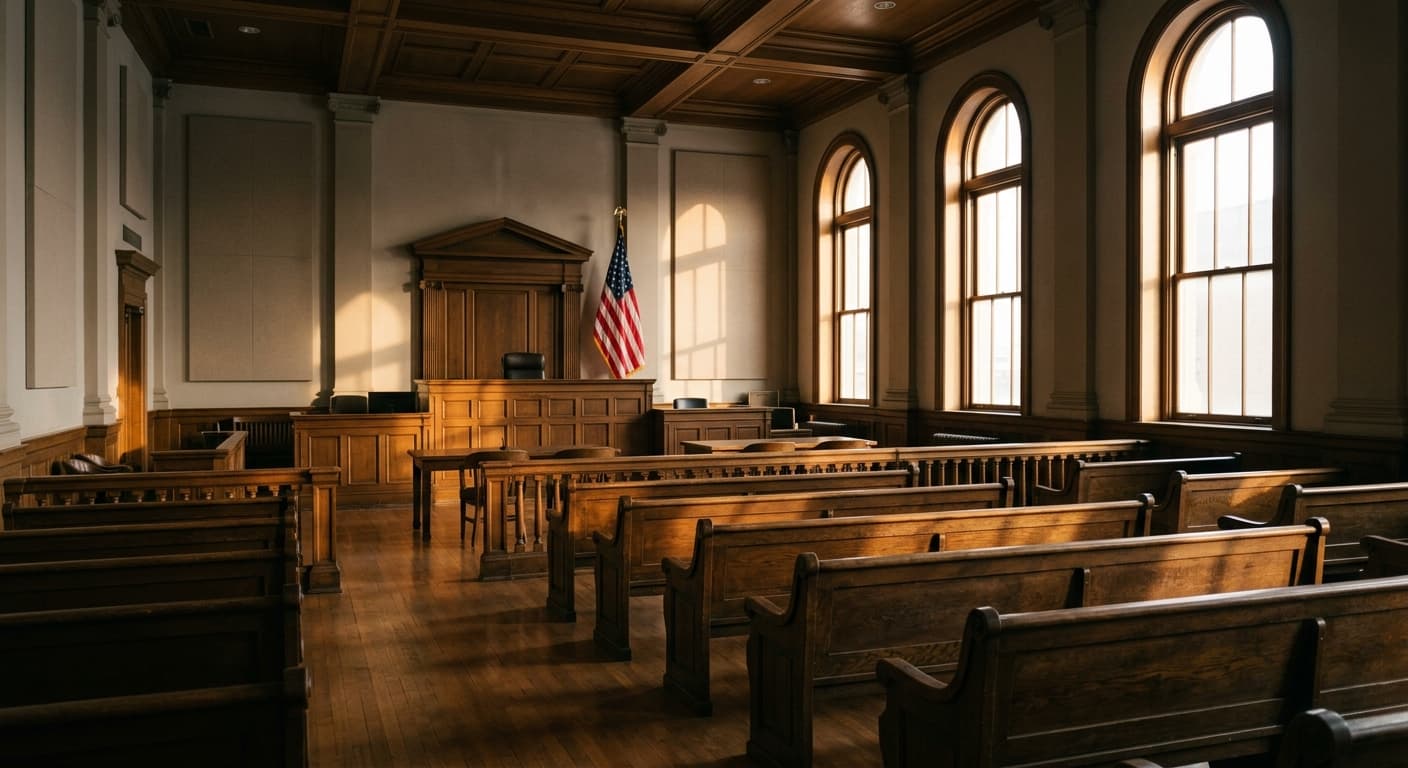
Oregon is the only U.S. state whose highest court has struck down its own general obscenity statute for adults. In State v. Henry (1987), the Oregon Supreme Court held that criminalizing obscenity is unconstitutional under Oregon's own free-expression clause, which the court read more broadly than the First Amendment. Adult pornography is legal to view, possess, sell, and distribute in Oregon in a way that has no real parallel elsewhere in the country. That holding does not touch child sexual abuse material, which remains a serious felony matter, or Oregon's separate public-indecency and nonconsensual-image statutes, covered below.
Is Pornography Legal in Oregon?
Yes, more clearly than in almost any other state. In State v. Henry, 302 Or. 510, 732 P.2d 9 (1987), the Oregon Supreme Court held that Oregon's general obscenity statute (former ORS 167.087) contravened Article I, section 8 of the Oregon Constitution, the state's own free-expression guarantee, which the court read as broader than the First Amendment: it covers "any subject whatever" and, unlike the First Amendment as then understood, contains no express exception for obscene material. The Oregon Court of Appeals had already reversed the underlying convictions on vagueness grounds; the Supreme Court went further, holding that obscenity could not be justified as a historical exception to Article I, section 8 at all.
The practical effect is that Oregon's general obscenity statutes remain nominally on the books but are unenforceable against adults. There is no live crime of "obscenity" in Oregon to possess, sell, or distribute in violation of, for material involving only adults. This makes Oregon's answer to "is pornography legal here" more unqualified than in most states, where the honest answer is "private possession is legal, but distribution or sale can still be prosecuted as obscenity."
This does not mean anything goes. Henry addressed adult obscenity specifically. Child sexual abuse material is categorically unprotected speech under both the federal Constitution (Osborne v. Ohio) and Oregon's own constitutional framework, and Oregon's CSAM statutes are fully intact and actively enforced, discussed below. Federal obscenity law, 18 U.S.C. §§ 1460-1470, also still applies to interstate or online distribution regardless of Oregon's constitutional holding. And private restrictions, such as a workplace's acceptable-use policy or a platform's terms of service, are unaffected by a state constitutional ruling about criminal law.
Age-Verification Law in Oregon
Oregon has not enacted a law requiring adult websites to verify a visitor's age. HB 2032, the 2025 bill that would have created such a requirement, died in the House Judiciary Committee at the end of the 2025 regular session without reaching a floor vote. Readers researching this topic may also encounter references to "SB 257" or "SB 1570" as supposed Oregon age-verification bills; neither is an actual Oregon age-verification measure, and citing either would be a mistake. For the broader multistate picture, see RecordingLaw's age-verification laws by state overview.
Minors: The Harmful-to-Minors Gap and Child Sexual Abuse Material
Harmful-to-minors dissemination. Oregon does not currently have an enforceable general statute criminalizing the dissemination of sexually explicit but non-obscene material to minors, the kind of law most other states have. Oregon enacted two such statutes in 2007, ORS 167.054 (furnishing sexually explicit material to a child) and ORS 167.057 (luring a minor), aimed at hardcore pornography. In Powell's Books, Inc. v. Kroger, decided by the Ninth Circuit on September 20, 2010 (district court decision styled Powell's Books, Inc. v. Myers, 599 F. Supp. 2d 1226 (D. Or. 2008)), the court held the statutes swept in mainstream, non-obscene works, including Judy Blume's Forever, Margaret Atwood's The Handmaid's Tale, and sex-education books, alongside hardcore pornography, making them facially unconstitutionally overbroad under the First Amendment. The Ninth Circuit reversed the district court and invalidated both ORS 167.054 and ORS 167.057 on their face, except for 167.057's "inducing" prong, which was not at issue in the case; this was a facial ruling for both statutes, not an as-applied ruling limited to one of them. This gap is a distinctive fact about Oregon's law and should be read alongside the CSAM protections below, not in isolation.

Child sexual abuse material. Oregon's CSAM statutes were not affected by Henry, which addressed adult obscenity only, and remain fully enforced under a tiered felony and misdemeanor structure:
- Encouraging child sexual abuse, first degree (ORS 163.684): knowingly developing, publishing, disseminating, or selling a visual recording of a child engaged in sexually explicit conduct, with awareness the recording involved child abuse. Class B felony, up to 10 years and/or a $250,000 fine.
- Encouraging child sexual abuse, second degree (ORS 163.686): knowingly possessing, controlling, or paying to view such material for sexual arousal, with awareness the recording involved child abuse. Class C felony, up to 5 years and/or a $125,000 fine.
- Encouraging child sexual abuse, third degree (ORS 163.687): the same possession conduct as second degree, but with a recklessness standard rather than actual knowledge or awareness of the abuse. Class A misdemeanor, up to 364 days and/or a $6,250 fine.
- Possession of child sexual abuse material, first degree (ORS 163.688): knowing possession combined with using the material to induce a child to participate in sexually explicit conduct. Class B felony, up to 10 years and/or a $250,000 fine.
Sexting. Minors who create or share their own sexual images raise separate legal issues covered on RecordingLaw's Oregon sexting laws page; this page does not duplicate that analysis.
Nonconsensual Intimate Images (Revenge Porn)
Oregon criminalizes the nonconsensual dissemination of an intimate image under ORS 163.472. The statute prohibits intentionally disclosing an identifiable person's intimate image, meaning uncovered genitals, pubic area, or female nipple, with intent to harass, humiliate, or injure the person, when the recipient knows or reasonably should know the subject did not consent. The law exempts law enforcement investigations, medical and educational activities, legal proceedings, reporting of unlawful conduct, lawful public-interest disclosures, and images depicting voluntary public exposure or content originally created commercially with consent.
A first offense is a Class A misdemeanor. A subsequent offense, where the person has a prior conviction under the same section, is a Class C felony. RecordingLaw's revenge porn laws by state page covers the federal Take It Down Act takedown process and the state-by-state comparison.
Public Display and Indecency
Oregon's public indecency statute, ORS 163.465, is independent of the Henry obscenity holding and remains fully enforceable. It applies to a person who, while in or in view of a public place, performs an act of sexual intercourse, oral or anal sexual intercourse, masturbation, or exposes the genitals with intent to arouse sexual desire. A first offense is a Class A misdemeanor. It becomes a Class C felony if the person has a prior conviction for public indecency or a related sex offense under ORS 163.355 to 163.445 or ORS 163.665 to 163.693, in Oregon or elsewhere.
Adult-Business Licensing and Zoning
No statewide Oregon statute licensing sexually oriented businesses was located. Given Henry's abolition of adult obscenity as a crime, adult-business regulation in Oregon, where it exists, is more likely to be local, through county or municipal zoning and land-use ordinances, than a single statewide licensing scheme. Oregon courts have also held since the 1980s that the state constitution's speech protections extend to nude dancing and similar expressive conduct, and that a city generally may not zone an adult business more restrictively than other businesses; it may regulate only the business's undesirable secondary effects, such as crime associated with the location. Readers in a specific city or county should check that jurisdiction's own zoning code.
Penalties at a Glance
| Offense | Statute | Penalty |
|---|---|---|
| General adult obscenity | Former ORS 167.087 and related sections | Unenforceable against adults per State v. Henry (1987) |
| Encouraging child sexual abuse, 1st degree | ORS 163.684 | Class B felony: up to 10 years and/or $250,000 fine |
| Possession of CSAM, 1st degree (with inducement of a child) | ORS 163.688 | Class B felony: up to 10 years and/or $250,000 fine |
| Encouraging child sexual abuse, 2nd degree (knowing possession) | ORS 163.686 | Class C felony: up to 5 years and/or $125,000 fine |
| Encouraging child sexual abuse, 3rd degree (reckless possession) | ORS 163.687 | Class A misdemeanor: up to 364 days and/or $6,250 fine |
| Unlawful dissemination of an intimate image, 1st offense | ORS 163.472 | Class A misdemeanor: up to 364 days and/or $6,250 fine |
| Unlawful dissemination of an intimate image, subsequent offense | ORS 163.472 | Class C felony: up to 5 years and/or $125,000 fine |
| Public indecency, 1st offense | ORS 163.465 | Class A misdemeanor: up to 364 days and/or $6,250 fine |
| Public indecency, with a qualifying prior conviction | ORS 163.465 | Class C felony: up to 5 years and/or $125,000 fine |
Practical Risk Beyond the Statute Book
The absence of an adult obscenity crime in Oregon is a real, sourced legal fact, but it is not a blanket statement that "anything goes." Federal obscenity law still applies to material that crosses state lines or moves through interstate commerce or the internet, which covers most online content regardless of what Oregon's constitution permits. Employers, schools, landlords, and internet service providers can also restrict access to adult content on their own devices, networks, or premises through private policy, independent of what the state criminalizes, and a policy violation can lead to discipline or eviction with no criminal charge involved. Federal 18 U.S.C. § 2257 record-keeping requirements apply nationwide to producers, including those based in Oregon, and federal CSAM statutes carry their own mandatory minimums that can exceed Oregon's own. This is general legal information, not legal advice; consult an attorney licensed in Oregon for advice specific to your situation.
More Oregon Laws

Frequently Asked Questions
Is pornography legal in Oregon?
Yes. The Oregon Supreme Court held in State v. Henry (1987) that Oregon's general obscenity statute violates the state's own constitutional free-expression clause, so there is no enforceable crime of adult obscenity in Oregon. This does not extend to child sexual abuse material, which remains a serious felony.
Why is Oregon different from other states on obscenity law?
Oregon is the only U.S. state whose supreme court has struck down its general obscenity statute for adults under the state's own constitution. In State v. Henry (1987), the court held the statute contravened Article I, section 8 of the Oregon Constitution, read as broader than the First Amendment, and could not be justified as a historical exception to that free-expression guarantee.
Does Oregon require age verification for adult websites?
No. Oregon has not enacted an age-verification law for adult content sites. HB 2032 (2025), the bill that would have created one, died in the House Judiciary Committee without a floor vote.
Is it illegal to show sexually explicit material to a minor in Oregon?
Oregon lacks a currently enforceable general "harmful to minors" dissemination statute; the Ninth Circuit held both ORS 167.054 and ORS 167.057 facially unconstitutionally overbroad in Powell's Books, Inc. v. Kroger (2010) after finding the laws swept in mainstream non-obscene works. Distributing child sexual abuse material to a minor, or any conduct that separately qualifies as encouraging child sexual abuse, remains fully illegal.
What is the penalty for possessing child sexual abuse material in Oregon?
Penalties depend on the mental state and conduct involved. Knowing possession (ORS 163.686) is a Class C felony, up to 5 years and/or a $125,000 fine; the same conduct with only a reckless awareness (ORS 163.687) is a Class A misdemeanor. Possession combined with using the material to induce a child (ORS 163.688) is a Class B felony, up to 10 years and/or a $250,000 fine.
Is sharing someone's intimate photos without consent illegal in Oregon?
Yes. Under ORS 163.472, intentionally disclosing an identifiable person's intimate image without consent, with intent to harass, humiliate, or injure, is a Class A misdemeanor for a first offense and a Class C felony for a subsequent offense.
Updates
Independently fact-checked against the cited primary sources
The Law Behind This Article
This article rests on the statutory provisions below, held in our own legal record and retrieved from the official source. Tap a section to read the operative text.
Oregon Revised Statutes, Chapter 163: Offenses Against Persons
§ 163.472Unlawful dissemination of an intimate imageIn forcecited in 3 of our articles
(1) A person commits the crime of unlawful dissemination of an intimate image if: (a) The person, with the intent to harass, humiliate or injure another person, knowingly causes to be disclosed an image of the other person whose intimate parts are visible or who is engaged in sexual conduct; (b) The person knows or reasonably should have known that the other person does not consent to the disclosure; (c) The other person is harassed, humiliated or injured by the disclosure; and (d) A reasonable person would be harassed, humiliated or injured by the disclosure. (2)(a) Except as provided in paragraph (b) of this subsection, unlawful dissemination of an intimate image is a Class A misdemeanor. (b) Unlawful dissemination of an intimate image is a Class C felony if the person has a prior conviction under this section at the time of the offense. (3) As used in this section: (a) “Disclose” includes, but is not limited to, transfer, publish, distribute, exhibit, advertise and offer.
Official text (excerpt) · last checked 2026-08-30 · Read the full text in our law library · Verify at oregonlegislature.gov
Cited in 6 court opinions in our collectionLatest citing opinion in our collection: 2025
In the courts (editorial summary, independently checked):State v. Scott (2025) construed the pre-2019 text, which reached disclosure through an Internet website, to require proof of a World Wide Web page rather than any digital channel, and reversed a conviction where the state showed only that the images went by Facebook Messenger. The 2019 Legislature removed that term.
Opinions citing this section in our collection:
- State v. Scott (Court of Appeals of Oregon 2025, 344 Or. App. 562)✓A man sent intimate images of an ex-girlfriend to her ex-husband through Facebook Messenger; the court construed the 2015 version of ORS 163.472 to reach only disclosures through World Wide Web pages, found the evidence insufficient, and reversed the conviction.
- State v. Davidson (Oregon Supreme Court 2016, 360 Or. 370)“…other, is not a “sex crime” for purposes of ORS 137.719(1). ORS 163.472. Unlawfully being in a location where c…”
- State v. Serrano (A173250) (Court of Appeals of Oregon 2023, 324 Or. App. 453)“…2, attempted unlawful dissemina- tion of an intimate image, ORS 163.472; ORS 161.405. 456…”
Identified automatically from the court opinions citing this section — not a ranking of which case controls.
Also relied on in: Oregon Voyeurism and Hidden Camera Laws: Offenses, Penalties, and Protections, Oregon Deepfake Laws: AI Images, Voice Cloning & Penalties (2026)
Oregon Revised Statutes, Chapter 167: Offenses Against General Welfare and Animals
§ 167.054Repealed
Official text (excerpt) · last checked 2026-07-29 · Read the full text in our law library · Verify at oregonlegislature.gov
Cited in 4 court opinions in our collectionLatest citing opinion in our collection: 2021
Opinions citing this section in our collection:
- Antoine v. Taylor (Oregon Supreme Court 2021, 368 Or. 760)“…of furnishing sexually explicit material to a minor, former ORS 167.054 (2009), repealed by Or Laws 2011, ch 68…”
- State v. Antoine (Court of Appeals of Oregon 2015, 269 Or. App. 66)“…furnishing sexually explicit material to a child, former ORS 167.054 (2007), repealed by Or Laws 2011, ch…”
- Powell's Books, Inc. v. Myers (District Court, D. Oregon 2008, 599 F. Supp. 2d 1226)“…outlaws furnishing sexually explicit materials to children. Or.Rev. Stat. § 167.054. “A person commits the crime of furnish…”
Identified automatically from the court opinions citing this section — not a ranking of which case controls.
United States Code Title 18
§ 2257Record keeping requirementsIn forcecited in 33 of our articles
Whoever produces any book, magazine, periodical, film, videotape, digital image, digitally- or computer-manipulated image of an actual human being, picture, or other matter which— contains one or more visual depictions made after November 1, 1990 of actual sexually explicit conduct; and is produced in whole or in part with materials which have been mailed or shipped in interstate or foreign commerce, or is shipped or transported or is intended for shipment or transportation in interstate or foreign commerce; shall create and maintain individually identifiable records pertaining to every performer portrayed in such a visual depiction.
Official text (excerpt) · last checked 2026-07-28 · Read the full text in our law library · Verify at uscode.house.gov
Cited in 68 court opinions in our collectionLatest citing opinion in our collection: 2025
In the courts (editorial summary, independently checked):Connection Distributing Co. v. The Honorable Janet Reno (1998) affirmed denial of a preliminary injunction against section 2257. Free Speech Coalition, Inc. v. Attorney General of the United States (2012) reviewed it as content neutral under intermediate scrutiny, a standard the Third Circuit later replaced with strict scrutiny.
Opinions citing this section in our collection:
- United States v. X-Citement Video, Inc. (Supreme Court of the United States 1994, 513 U.S. 64)“…rformers with independent penalties for failure to comply. 18 U. S. C. §§ 2257 (a) and (i) (1988 ed. and Supp. V); Am…”
- Connection Distributing Co. v. The Honorable Janet Reno (Court of Appeals for the Sixth Circuit 1998, 154 F.3d 281)✓A swingers magazine that ran readers' sexually explicit ads challenged section 2257's age record and labeling duties; the court treated the statute as content neutral, found no substantial likelihood of First Amendment success, and affirmed denial of a preliminary injunction.
- Free Speech Coalition, Inc. v. Attorney General of the United States (Court of Appeals for the Third Circuit 2012, 677 F.3d 519)✓Adult film producers, photographers and sex educators challenged section 2257's recordkeeping duties; the court held the statutes content neutral and found they advance protecting children, but vacated dismissal of the First and Fourth Amendment claims for record development.
Identified automatically from the court opinions citing this section — not a ranking of which case controls.
Also relied on in: How to File a DMCA Takedown on Xvideos (2026 Guide), West Virginia Voyeurism Laws: Hidden Cameras and Privacy Violations, Illinois Pornography Laws (2026): Legality & No AV Law Yet
Search our full record of US law — 2.1 million sections, every state + federal →
Sources and References
- State v. Henry, 302 Or. 510, 732 P.2d 9 (Or. 1987)(courtlistener.com)
- Powell's Books, Inc. v. Kroger case summary (9th Cir. 2010)(aclu-or.org)
- Powell's Books, Inc. v. Kroger, 622 F.3d 1202 (9th Cir. 2010), full opinion (both ORS 167.054 and ORS 167.057, except the inducing prong, held facially overbroad; REVERSED)(ca9.uscourts.gov).gov
- ORS Chapter 163, Sections 163.465-163.688 (Oregon Legislature, official statute text)(oregonlegislature.gov).gov
- ORS Chapter 161, Sections 161.605-161.635 (Oregon Legislature, felony/misdemeanor maximum sentences and fines)(oregonlegislature.gov).gov
- ORS 163.472 (Unlawful dissemination of an intimate image), full text(oregon.public.law)
- ORS 163.465 (Public indecency), full text(oregon.public.law)
- Oregon Legislature, HB 2032 (2025) measure history(olis.oregonlegislature.gov).gov