
Vermont
Vermont Police Report: How to Get a Crash Report, Incident Report, or Body Camera Video
Independently fact-checked against primary sources (last audited August 11, 2026). · Law checked current as of August 11, 2026. · 4 primary sources cited on this page. How we verify our legal content
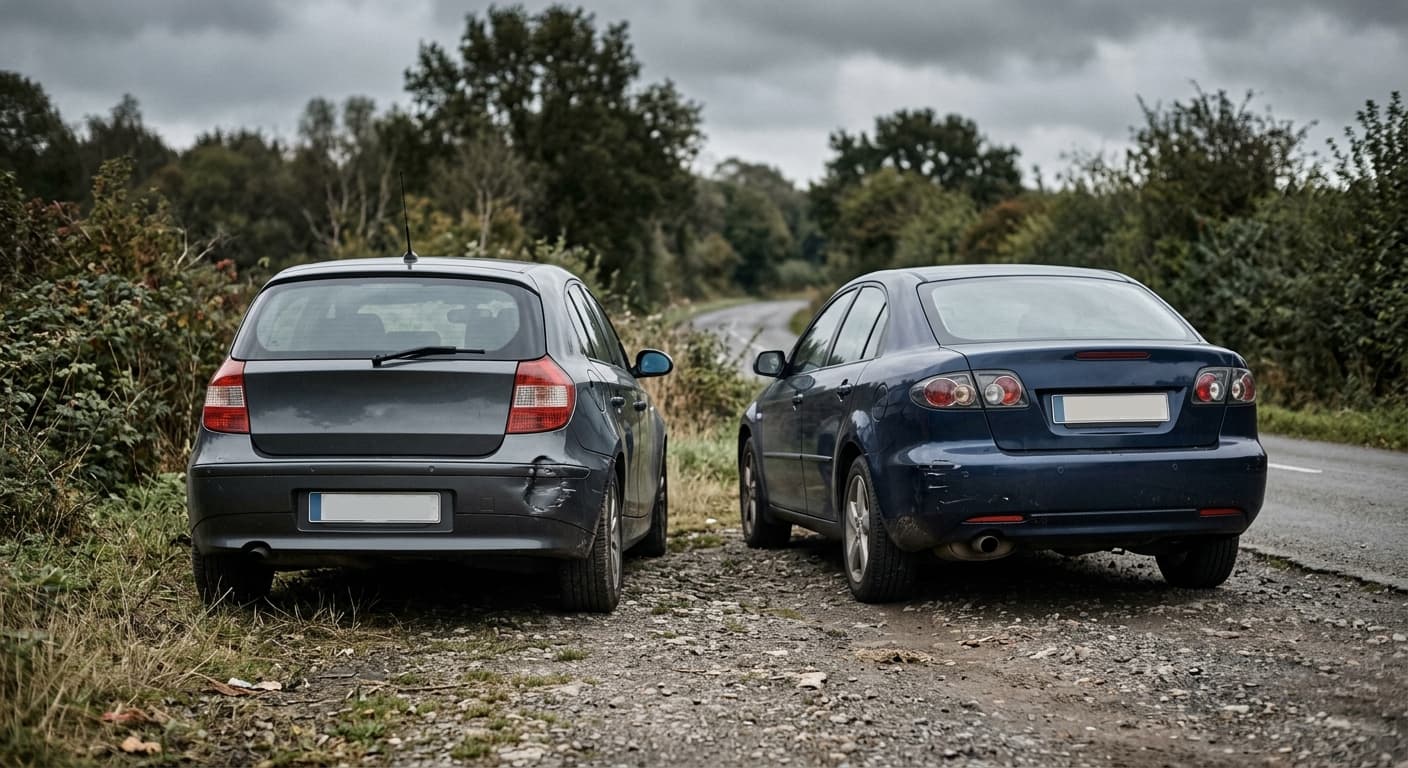
Vermont splits crash-report access three ways, more than most states in this batch. Depending on who investigated, a request goes to Vermont State Police, to DMV Driver Control, or to a local police department, and Vermont's motor vehicle code carries no confidentiality clause pointing all three toward the same rule.
That is not a gap in this guide's research. Vermont routes crash-report and incident-report disclosure through the general exemption in its Public Records Act at 1 V.S.A. 317(c)(5) and, for records the Department of Public Safety holds, through the separate release-and-fee provision at 20 V.S.A. 1815, rather than through a dedicated Title 23 confidentiality clause the way many other states do.
Information last verified on 2026-08-10. This article has not yet been reviewed by a licensed lawyer.
Getting a Copy of a Vermont Crash Report
Which office to contact for a Vermont crash report depends entirely on who investigated it. For a Vermont State Police crash, VSP's own record-request intake is the starting point. For a crash where DMV maintains the record, contact Driver Control at 802-828-2000, by email at DMV.DriverControl@Vermont.gov, or by mail to 120 State Street, Montpelier, VT 05603. For a crash a local city or town police department investigated, that department's own records unit handles the request.
The prices you will see are statutory. 20 V.S.A. 1815(a) sets the fee for a Department of Public Safety report at $20.00, for an accident or fire photo disc at $20.00, for a photographic print at $8.00, and for an audiotape or videotape at $45.00, with subsection (c) adding $0.05 per page beyond 20 pages plus $0.33 per minute of staff time beyond 30 minutes. The Department's public records order form at secure.vermont.gov is the mechanism for placing and paying for that order rather than the source of the price, and it notes that orders are not refunded once shipped. The order form itself does not appear to restrict who may submit a request, listing categories like law firm, insurance company, victim, family member, accused party, and involved party as options rather than eligibility gates, though DMV's own fulfillment practice for DMV-maintained records was not independently confirmed.
Unlike most states in this batch, Vermont's motor vehicle code carries no crash-report confidentiality clause. The filing duty itself is set out at 23 V.S.A. 1129, which requires a driver involved in a crash causing injury or at least $3,000 in total property damage to file a written report with the Commissioner, but that section governs the filing obligation, not who can later obtain a copy. Disclosure of the resulting report runs through Vermont's general Public Records Act exemption and, for files the Department of Public Safety holds, through 20 V.S.A. 1815, both covered below.
Talk to a family-law attorney: free case review
Every case has details a formula cannot capture. Get a free, no-obligation review from a family-law attorney.
Why Vermont's Motor Vehicle Code Has No Crash-Report Confidentiality Clause
Most states in this cluster have a dedicated crash-report confidentiality clause sitting in their motor vehicle code. Vermont does not, which is not the same as saying no crash-report statute exists in Vermont law. Two other provisions do that work instead.
The first is the exemption in Vermont's Public Records Act, 1 V.S.A. 317(c)(5)(A), which exempts "records dealing with the detection and investigation of crime, but only to the extent that the production of such records . . . could reasonably be expected to interfere with enforcement proceedings" or a similar listed harm. That language is explicitly modeled on the federal FOIA law-enforcement exemption.

This is a narrow, fact-specific test, not a blanket rule that all law-enforcement records are secret. Subsection (c)(5)(B) carves back out a category of information that stays public even during an active investigation: initial arrest and charge records. So while the underlying investigative file behind a Vermont crash or incident report can be withheld to the extent disclosure would interfere with the case, the basic fact that an arrest happened and what someone was charged with generally remains available.
The second provision is 20 V.S.A. 1815, and for crash material it points in a more permissive direction. Subsection (a) states that photographic prints taken by the Department of Public Safety, or photostatic copies of investigation reports or other material on file relating to motor vehicle accidents or fires, "may be furnished to any interested person." Investigation reports unrelated to fires or crashes are treated differently. Section 1815(a)(4) makes those available "at the discretion of the Commissioner when the Commissioner determines that the release of the material would not be detrimental to the best interests of the Department." A Vermont State Police crash file therefore sits under an affirmative any-interested-person authorization, a general incident report the Department holds sits under a discretionary standard, and the 317(c)(5) exemption applies on top of both.
Vermont Body Camera Footage
Vermont has no dedicated body camera access statute. 20 V.S.A. 1819 requires the Department to ensure that troopers assigned to the Vermont State Police Field Force Division are equipped with "a body camera or other video recording device," but that provision is an equipment mandate, not a disclosure rule. Requests for the resulting footage run through the general 1 V.S.A. 317(c)(5) exemption covering crash and incident reports above, applied case by case. Where the footage sits in a Department of Public Safety investigation file unrelated to a crash or fire, 20 V.S.A. 1815(a)(4) also places release at the Commissioner's discretion and prices an audiotape or videotape at $45.00.

For the broader access framework and how other states structure bodycam disclosure by statute, see How to Request Body Cam Footage and Vermont Body Camera Laws.
Deadlines, Denials, and Appeals
Vermont's Public Records Act sets both a clock and a remedy. Under 1 V.S.A. 318, an agency must respond promptly to a request, which the section defines as immediately, with little or no delay, and not more than three business days from receipt. In unusual circumstances, such as a search across separate facilities, a voluminous request, or a required consultation with another agency, the agency may extend that to not more than ten business days from receipt.
A denial has to be in writing. It must identify the records withheld, include the asserted statutory basis for the denial along with a brief statement of the reasons and supporting facts, give the names and titles of the people responsible for the decision, and notify you of your appeal rights.
The first appeal goes to the head of the agency, who must issue a written determination within five business days after receiving it. If the denial is upheld, that determination must again state its statutory basis and reasoning and point you toward judicial review under the next section.
From there, 1 V.S.A. 319 lets an aggrieved requester petition the Civil Division of the Superior Court, in the county where you reside or have your business, or where the records are located. The court reviews the matter de novo, may examine the withheld records privately to decide whether an exemption applies, and places the burden of proof on the public agency to sustain its action. These cases take precedence on the docket over other cases, and a complainant who substantially prevails is entitled to an award of attorney's fees and litigation costs against the agency.
Related Resources
Police Reports by State covers the full 50-state picture. See also How to File a Police Report, How to Read a Police Report, Are Police Reports Public?, Vermont Body Camera Laws, Vermont Car Accident Laws, Vermont Public Records Laws, and Vermont Court Records.
Disclaimer
This article provides general information about how to request police crash reports, incident reports, and body camera video in Vermont. It is not legal advice. Fees, portals, and statutes change; confirm current details with Vermont State Police, DMV Driver Control, the responding agency, or a Vermont attorney before relying on anything here for a specific situation.

Last updated: 2026-08-10. Fees and portals reflect their published status as of August 2026.
Frequently Asked Questions
How do I get a copy of a Vermont crash report?
It depends who investigated. Contact Vermont State Police directly for a VSP-investigated crash, Vermont DMV Driver Control for a DMV-maintained record, or the local police department for a crash it handled itself.
How much does a Vermont police report cost?
The fee is set by statute rather than by the order form. 20 V.S.A. 1815(a) prices a Department of Public Safety report at $20.00, an accident or fire photo disc at $20.00, a photographic print at $8.00, and an audiotape or videotape at $45.00. You place and pay for the order through the Department's public records order form, which notes that orders are not refunded once shipped.
Is a Vermont crash report confidential?
Vermont's motor vehicle code has no crash-report confidentiality clause. Access runs through the general Public Records Act law-enforcement exemption at 1 V.S.A. 317(c)(5), a narrow exemption rather than a blanket rule, alongside 20 V.S.A. 1815(a), which allows crash and fire investigation material to be furnished to any interested person.
Does Vermont have a body camera access law?
No dedicated bodycam access statute exists. 20 V.S.A. 1819 requires Vermont State Police Field Force Division troopers to wear a body camera, but that is an equipment mandate, not a public-records disclosure rule.
Can I see the initial arrest information from a Vermont police report?
Generally yes. 1 V.S.A. 317(c)(5)(B) carves initial arrest and charge information back out of the law-enforcement exemption, keeping it public even while an investigation is otherwise open.
How long does Vermont have to respond, and what if my request is denied?
Under 1 V.S.A. 318 an agency must respond within three business days of receiving the request, extendable to ten business days in unusual circumstances. A denial must be in writing and state its statutory basis and reasons. You can appeal to the head of the agency, who has five business days to rule, and then petition the Civil Division of the Superior Court under 1 V.S.A. 319, where the agency bears the burden of proof and a requester who substantially prevails is awarded attorney's fees.
Who do I contact for a crash report Vermont DMV maintains?
Contact DMV Driver Control at 802-828-2000, by email at DMV.DriverControl@Vermont.gov, or by mail to 120 State Street, Montpelier, VT 05603.
Updates
Corrected the fee attribution to 20 V.S.A. § 1815, added the separate release standards that section sets for Department of Public Safety crash and investigation records, narrowed the claim that Vermont has no crash-specific confidentiality statute to its motor vehicle code, and added the response deadlines, denial-notice requirements, and appeal route under 1 V.S.A. §§ 318 and 319.
Independently fact-checked against the cited primary sources; governing law re-checked for recent changes
The Law Behind This Article
This article rests on the statutory provisions below, held in our own legal record and retrieved from the official source. Tap a section to read the operative text.
Vermont Statutes Annotated, Title 1: General Provisions, Chapter 5: Common Law; General Rights, Subchapter: ACCESS TO PUBLIC RECORDS
§ 317Definitions; public agency; public records and documents; exemptionsIn forcecited in 4 of our articles
(a) As used in this subchapter: (1) “Business day” means a day that a public agency is open to provide services. (2) “Public agency” or “agency” means any agency, board, department, commission, committee, branch, instrumentality, or authority of the State or any agency, board, committee, department, branch, instrumentality, commission, or authority of any political subdivision of the State. (b) As used in this subchapter, “public record” or “public document” means any written or recorded information, regardless of physical form or characteristics, which is produced or acquired in the course of public agency business. Individual salaries and benefits of and salary schedules relating to elected or appointed officials and employees of public agencies shall not be exempt from public inspection and copying. (c) The following public records are exempt from public inspection and copying: (1) Records that by law are designated confidential or by a similar term. (2) Records that by law may only be disclosed to specifically designated persons.
Official text (excerpt) · last checked 2026-09-02 · Read the full text in our law library · Verify at legislature.vermont.gov
Cited in 113 court opinions in our collectionLatest citing opinion in our collection: 2026
In the courts (editorial summary, independently checked):Trombley v. Bellows Falls Union High School District No. 27 (1993) limited 1 V.S.A. 317's personal-documents exemption to records revealing intimate details, wherever filed; Wesco, Inc. v. Sorrell (2004) read the litigation exemption to reach records relevant, not just discoverable, in pending litigation.
Opinions citing this section in our collection:
- Wesco, Inc. v. Sorrell (Supreme Court of Vermont 2004, 177 Vt. 287)✓Gas station operators facing state criminal and environmental cases filed records requests for documents denied them in discovery; the court held section 317(c)(14) exempts records relevant to pending litigation, a wider class than discoverable ones, until that litigation ends.
- Trombley v. Bellows Falls Union High School District No. 27 (Supreme Court of Vermont 1993, 160 Vt. 101)✓Town residents sought a teachers' grievance and the school board's decision on it; the court read section 317(b)(7) to shield only genuinely personal documents wherever filed, found the board had not met its burden, and remanded for in camera review.
- Springfield Terminal Railway Co. v. Agency of Transportation (Supreme Court of Vermont 2002, 174 Vt. 341)✓A losing bidder for state rail freight service sought competitors' financial data submitted with their proposals; the court held section 317(c)(9) can exempt internal corporate financial information as a compilation of information, and voluntary submission waives no protection.
Identified automatically from the court opinions citing this section — not a ranking of which case controls.
Also relied on in: Are 911 Calls Public Records? State Access Guide (2026), Vermont Police Body Camera Laws: Mandate & Access, Vermont Public Records Act: How to Request Records (2026)
Vermont Statutes Annotated, Title 23: Motor Vehicles, Chapter 13: Operation of Vehicles, Subchapter: MISCELLANEOUS RULES
§ 1129Crashes; reportsIn forcecited in 2 of our articles
(a) The operator of a motor vehicle involved in a crash in which someone is injured or there is total property damage of $3,000.00 or more shall make a written report concerning the crash to the Commissioner on forms furnished by the Commissioner. The written report shall be mailed to the Commissioner within 72 hours after the crash. The Commissioner may require further facts concerning the crash be provided upon forms he or she furnishes. (b) As used in this section, the word “crash” only refers to incidents and events in which the motor vehicle involved comes into physical contact with an individual or object, including another motor vehicle. It shall not include such contact where a vehicle involved is being used by a law enforcement officer as a barrier to prevent passage of a vehicle being operated by a suspected violator of the law. In such cases, the law enforcement officer shall not be required to make a personal written report of the incident.
Official text (excerpt) · last checked 2026-08-01 · Read the full text in our law library · Verify at legislature.vermont.gov
Also relied on in: Vermont Hit and Run Laws: Penalties and What to Do
Vermont Statutes Annotated, Title 20: Internal Security and Public Safety, Chapter 111: General Provisions
§ 1819Equipment of officers with video recording devicesIn forcecited in 4 of our articles
The Department shall ensure that all members assigned to the Vermont State Police Field Force Division who routinely engage with members of the public related to the enforcement of laws are equipped with a body camera or other video recording device on his or her person. (Added 2019, No. 154 (Adj. Sess.), § E.209.1, eff. Oct. 2, 2020.)
Official text (excerpt) · last checked 2026-08-31 · Read the full text in our law library · Verify at legislature.vermont.gov
Also relied on in: Vermont Laws on Recording Police, Vermont Recording Laws (2026): No Wiretap Statute, One-Party Default
Search our full record of US law — 2.1 million sections, every state + federal →
Sources and References
- 1 V.S.A. § 317, Definitions; public agency; public records and documents; exemptions(legislature.vermont.gov).gov
- 20 V.S.A. § 1819, Equipment of officers with video recording devices(legislature.vermont.gov).gov
- 23 V.S.A. § 1129, Crashes; reports(legislature.vermont.gov).gov
- Vermont Department of Public Safety, public records order form (fees for police reports, photos, and recordings)(secure.vermont.gov).gov
- 20 V.S.A. § 1815, Availability of photographic prints or photostatic copies(legislature.vermont.gov)
- 1 V.S.A. § 318, Procedure (public records request response deadlines, denials, and administrative appeal)(legislature.vermont.gov)
- 1 V.S.A. § 319, Enforcement (Superior Court review, burden of proof, attorney's fees)(legislature.vermont.gov)