
Kentucky
How to Get a Police Report in Kentucky (2026 Guide)
Independently fact-checked against primary sources (last audited August 11, 2026). · Law checked current as of August 11, 2026. · 5 primary sources cited on this page. How we verify our legal content
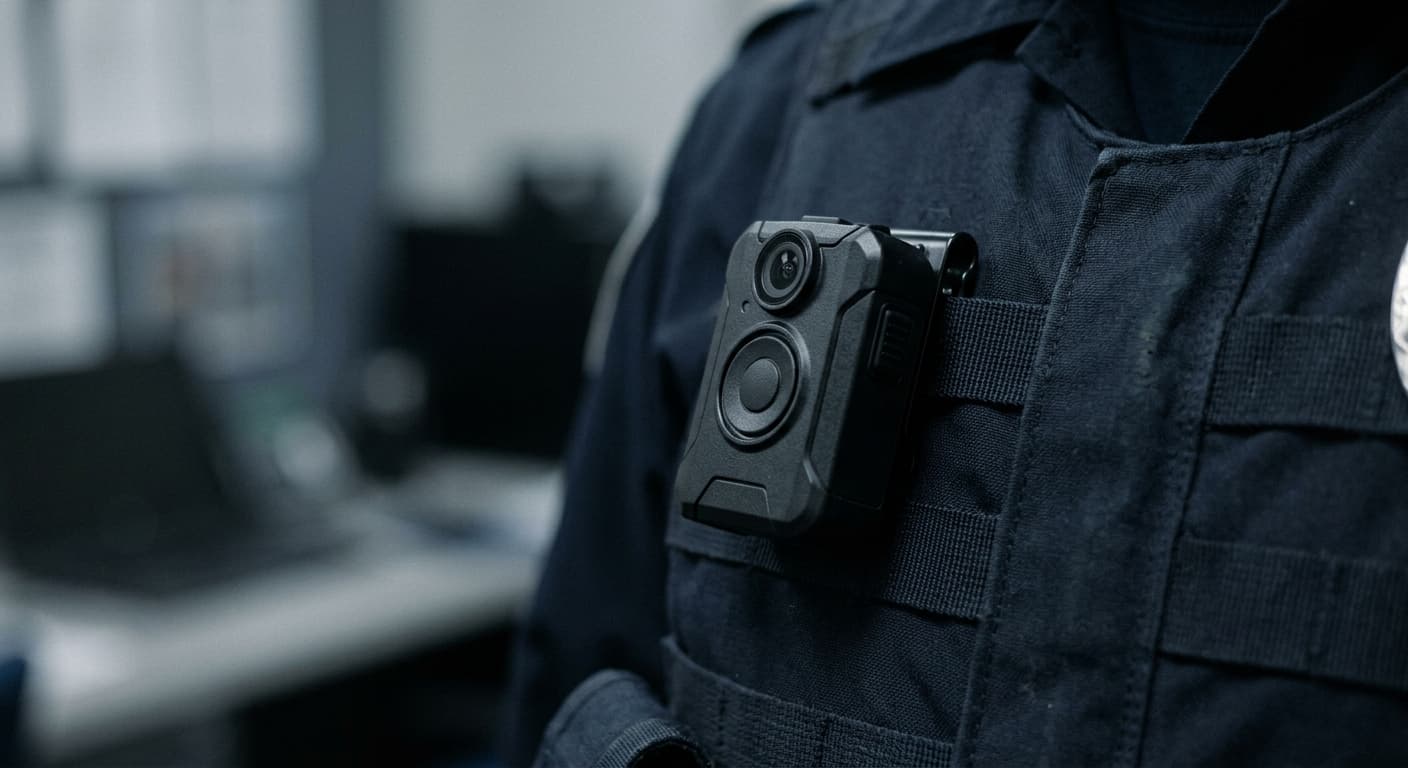
Kentucky handles a police report through two separate channels depending on what happened. A traffic crash report comes from the investigating agency, most often the Kentucky State Police (KSP), and can be requested through a civilian self-report portal, a purchase service, or an open records request. A general incident report, covering everything from a theft to a disturbance call, comes from whichever department responded and is requested under the Kentucky Open Records Act. This page walks through both channels, the state's dedicated body camera statute, and what to do if a report needs a correction.
Information last verified on 2026-08-11. This article has not yet been reviewed by a licensed lawyer.
Getting a Crash Report in Kentucky
How you get a Kentucky crash report depends on who completed it. If you were involved in a minor crash that an officer did not respond to and complete a report for, you can file your own account through KSP's Civilian Collision Reporting portal at kspportal.ky.gov. That self-filed report is a different document from an officer-completed report.
For an officer-completed report, the fastest route is BuyCrash.com, which KSP lists on its own site under Crime and Traffic Data as an authorized purchase channel. You can also request the report directly from KSP through an open records request. Allow about ten days after the crash for an officer-completed report to become available, and note that KSP retains crash reports for up to two years.
Kentucky does not treat crash reports as open to the general public. Under KRS 189.635, accident reports and the information they contain are confidential and exempt from disclosure under the state's Open Records Act, KRS 61.870 to 61.884, except to the specific categories the statute lists. KRS 189.635(6)(c) makes reports available to the parties to the accident, the parents or guardians of a minor who is a party, insurers or their written designee for insurance business purposes, the attorneys of the parties to the accident, any party to litigation who files a request together with a clerk-stamped first page of a District or Circuit Court complaint naming all parties, the Department of Workplace Standards for an occupational safety and health investigation, and law enforcement agencies. Note that the statute entitles the attorneys of the parties; it does not require a lawyer to have entered an appearance as counsel of record. Separately, KRS 189.635(6)(b)1. allows a report to be produced under a properly executed subpoena or court order.
News-gathering organizations obtain reports under KRS 189.635(9), and that is a self-certification process rather than a credential the state issues. The statute defines which outlets qualify, from FCC-licensed broadcasters and qualifying newspapers to online-only publications, and requires the requester to submit a form promulgated by KSP through administrative regulation. That form names the requester and the organization, identifies the specific statutory subdivision the outlet qualifies under, states that the request complies with the section, and carries the requester's declaration as to the accuracy and truthfulness of the information provided. Reports released to a catch-all news organization under subdivision (b)1.f. must have personal information redacted first. KSP's own guidance describes reports as released to an involved party's request, consistent with that statutory framework, and states that it will not release personally identifying information, such as names, addresses, dates of birth, and vehicle identification numbers, except as the statute allows.
KSP's collision-reports page does not itself list a flat purchase fee; check the current fee schedule on BuyCrash.com or with KSP directly before requesting, since that figure was not independently confirmed on a primary KSP page. For a broader look at fault rules, deadlines, and what to do after a crash in the state, see our Kentucky car accident laws page.
Talk to a family-law attorney: free case review
Every case has details a formula cannot capture. Get a free, no-obligation review from a family-law attorney.
Getting an Incident Report in Kentucky
A general incident report, meaning a report of a crime or other call for service that is not a traffic crash, is requested under the Kentucky Open Records Act rather than the crash-report statute. For a KSP-investigated matter, send the request to the Public Records Branch at KSP headquarters, 1266 Louisville Road, Frankfort, by mail, email, fax, hand delivery, or through the online portal at kentuckystatepolice.nextrequest.com. Local departments, such as Louisville Metro Police, handle records requests for incidents within their own jurisdiction through their own records units.
One threshold point matters before you send anything, particularly if you live out of state. Kentucky's open records right runs to residents. KRS 61.872(1) opens public records for inspection by any resident of the Commonwealth, and KRS 61.872(2)(a) lets the custodian require the written application to state how the applicant qualifies as one. The definition in KRS 61.870(10) is broader than it first sounds: it covers individuals living in Kentucky, domestic business entities with a Kentucky location, foreign business entities registered with the Secretary of State, people employed and working at a location in the state, individuals or businesses that own real property there, anyone authorized to act on behalf of one of those, and qualifying news-gathering organizations. A requester who fits none of those categories has no statutory right of inspection, although an agency may still choose to respond.

The applicable exemption is KRS 61.878(1)(h), and it is narrower than a denial letter sometimes suggests. It covers records compiled in the process of detecting and investigating statutory or regulatory violations, and only where disclosure could pose an articulable risk of harm to the agency or its investigation in one of two enumerated ways: by revealing the identity of informants or witnesses not otherwise known, or by premature release of information to be used in a prospective law enforcement action or administrative adjudication. A general concern about disclosure is not enough, and KRS 61.871 directs that the exceptions be strictly construed.
The same provision sets an end point. Unless another part of the Open Records Act applies, records exempted under it shall be open after enforcement action is completed or a decision is made to take no action. That is a mandate rather than a matter of agency habit, and a denial can be appealed to the Attorney General under KRS 61.880. One permanent carve-out is worth knowing about, because it is the denial a reader is most likely to actually receive: records compiled and maintained by county attorneys or Commonwealth's attorneys pertaining to criminal investigations or criminal litigation remain exempt even after enforcement action, including litigation, is complete.
Kentucky's Open Records Act requires an agency to determine within five business days, excluding weekends and holidays, whether it will comply with a request. Standard copying runs ten cents per page, with a separate charge, typically two to three dollars, for photos, CDs, videotapes, or diskettes. For more on Kentucky's broader open records framework beyond police reports, see our Kentucky public records laws page.
Body Camera Footage in Kentucky
Kentucky is one of the states with a dedicated, standalone body camera statute rather than a rule folded into the general records exemption. KRS 61.168 states that, except as the section itself provides, disclosure of body-worn camera recordings is governed by the Kentucky Open Records Act, KRS 61.870 to 61.884. The statute then lays out its own framework on top of that baseline: it sets discretionary categories an agency may withhold, such as footage depicting the interior of a private residence or a victim of certain crimes, and it separately requires disclosure for recordings that document a use of force by an officer, an arrest, or a complaint made against an officer, subject to redaction of some content within those categories.
A companion section, KRS 61.169, gives a criminal defendant's attorney a viewing right that runs alongside the general disclosure rules. Together, the two sections make Kentucky's body camera framework unusually detailed compared with states that handle bodycam footage as a subsection of their general law enforcement exemption.
For the request mechanics, and to see how Kentucky's approach compares with other states, see our Kentucky body camera laws page and the cluster guide on how to request body camera footage.
Corrections, Redactions, and Other Practical Notes
No formal, statewide statutory procedure for correcting a completed Kentucky crash report was located on a primary KSP page. KSP's Traffic Collision Manual does reference supplemental report forms for follow-on additions or corrections, so a driver who spots an error on a completed report should contact the investigating agency's Traffic Collision Reporting section directly rather than assume the report can be edited after the fact.

Kentucky's redaction protections for both crash and incident reports run through KRS 189.635's personally identifying information language rather than a separate juvenile- or victim-specific carve-out. If you are trying to look up a report involving someone other than yourself, treat the information the same way KSP does, as something to be used for your own personal purpose, such as an insurance claim or legal matter, not for employment or tenant screening, which is governed by separate federal law.
For the general steps involved in filing a new report, see how to file a police report; for help interpreting the codes and sections on a completed report, see how to read a police report. If a case tied to the incident proceeds through the courts, related filings are available through Kentucky court records.
Disclaimer
This article provides general legal information about public-records access in the state named above. It is not legal advice, does not create an attorney-client relationship, and should not be relied on as a substitute for advice from a licensed attorney about a specific situation. Fees, forms, and processing times change; confirm current figures with the listed agency before relying on them.

Last updated: 2026-08-11. Fees and portals reflect their published status as of August 2026.
Frequently Asked Questions
How do I get a copy of my Kentucky crash report?
If you filed the report yourself through a minor-crash self-report, you already have your submission. For an officer-completed report, purchase it through BuyCrash.com, which KSP lists as an authorized channel, or request it directly from KSP or the investigating local department under KRS 189.635. Allow about ten days after the crash for the report to become available.
How much does a Kentucky crash report cost?
KSP's collision-reports page does not list a flat purchase fee; the current fee is set by BuyCrash.com's pricing at the time of purchase. Check the fee before you complete an order.
Who can get a copy of a Kentucky police incident report?
A general incident report is requested under the Kentucky Open Records Act, whose right of inspection runs to residents of the Commonwealth as defined in KRS 61.870(10). KRS 61.878(1)(h) lets an agency withhold an investigative record only where disclosure could pose an articulable risk of harm by revealing informants or witnesses not otherwise known or by prematurely releasing information for a prospective enforcement action. Once enforcement action is complete or the agency decides to take no action, the statute says those records shall be open, except for material compiled by county attorneys or Commonwealth's attorneys pertaining to criminal investigations or litigation, which remains exempt.
Who is entitled to a Kentucky crash report?
KRS 189.635(6)(c) lists the parties to the accident, the parents or guardians of a minor party, insurers or their written designee, the attorneys of the parties, any party to litigation who files a clerk-stamped first page of a complaint naming all parties, the Department of Workplace Standards for an occupational safety and health investigation, and law enforcement agencies. A report can also be produced under a properly executed subpoena or court order, and news-gathering organizations may request one under KRS 189.635(9) by submitting the department form that self-certifies their statutory category.
Is body camera footage a public record in Kentucky?
It can be. KRS 61.168 governs disclosure under the general Open Records Act framework but adds its own rules: some categories, such as footage inside a private home, may be withheld at the agency's discretion, while footage documenting a use of force, an arrest, or a complaint against an officer must generally be disclosed subject to redaction.
How long does a Kentucky open records request take?
An agency must determine within five business days, excluding weekends and holidays, whether it will comply with the request.
Can I correct a mistake on my Kentucky crash report?
No single statewide statutory correction procedure was found. Contact the investigating agency's Traffic Collision Reporting section directly; KSP's own Traffic Collision Manual references supplemental report forms for adding or correcting information after a report is completed.
Updates
Corrected the crash-report access rules to match KRS 189.635, which entitles the attorneys of the parties rather than attorneys of record and requires news organizations to self-certify on a state form instead of holding a press credential, and rewrote the incident-report section to state the KRS 61.878(1)(h) withholding test in its two statutory forms, the mandatory release of investigative records once enforcement action ends, the permanent prosecutor carve-out, and the fact that the Open Records Act right runs to residents of the Commonwealth.
Independently fact-checked against the cited primary sources; governing law re-checked for recent changes
The Law Behind This Article
This article rests on the statutory provisions below, held in our own legal record and retrieved from the official source. Tap a section to read the operative text.
Kentucky Revised Statutes, Chapter 189: TRAFFIC REGULATIONS -- VEHICLE EQUIPMENT AND STORAGE
§ 189.635Vehicle accident reports by operators, law enforcement officers, and agencies -- Availability -- News-gathering organizations -- Contracts with outside entities to provide vehicle's accident history and electronic access to reports -- Administrative regulations -- Insurers of train engineersIn forcecited in 3 of our articles
(1) As used in this section: (a) "Department" means the Department of Kentucky State Police; and (b) "Law enforcement agency" means any unit of government listed in KRS 15.380 that employs a certified peace officer. (2) The department shall be responsible for maintaining a reporting system for all vehicle accidents which occur within the Commonwealth. These accident reports shall be utilized for purposes as will improve the traffic safety program in the Commonwealth involving the collection, processing, storing, and dissemination of accident data and the establishment of procedures by administrative regulations to ensure that uniform definitions, classifications, and other federal requirements are in compliance. (3) (a) Any person operating a vehicle on the highways of this state who is involved in an accident resulting in fatal or nonfatal personal injury to any person or damage to the vehicle rendering the vehicle inoperable shall be required to immediately notify a law enforcement officer having jurisdiction.
Official text (excerpt) · last checked 2026-09-02 · Read the full text in our law library · Verify at apps.legislature.ky.gov
Cited in 8 court opinions in our collectionLatest citing opinion in our collection: 2003
In the courts (editorial summary, independently checked):KRS 189.635's access limits drew a First Amendment challenge. Amelkin v. Commissioner (1996) enjoined the 1994 amendments restricting accident-report access, but Amelkin v. McClure (2000) reversed, holding the statute regulates access to records rather than speech and is not open to a facial challenge.
Opinions citing this section in our collection:
- Amelkin v. McClure (Court of Appeals for the Sixth Circuit 2000, 205 F.3d 293)✓Attorneys, chiropractors and a would-be accident newspaper attacked Kentucky's confidentiality rules for crash reports; on remand from the Supreme Court the court held KRS 189.635 is not open to a facial First Amendment challenge and reversed the injunction.
- Amelkin v. Commissioner (District Court, W.D. Kentucky 1996, 936 F. Supp. 428)✓Attorneys and chiropractors denied crash reports under the 1994 amendments to KRS 189.635 won an injunction; the court held the confidentiality scheme unconstitutional because the reports stayed open to media and insurers. The Sixth Circuit later reversed.
- Stephen Amelkin, Broadway Chiropractic Dr. Brian Christopher Fee Stuart Lyon Nicolas Baker David Kaplan James W. Chambers Sidney Hanish Rhoda Daniels Thomas H. Watson Kenneth W. Wall James Bogard, Doing Business as Bogard & Associates, City of Louisville, Division of Police v. Ann McClure Document Custodian Gary Rose, Commissioner of Department of State Police Ben Chandler, Attorney General, Justice Cabinet, Department of State Police, Plaintiff/counter Jefferson County, Kentucky (Court of Appeals for the Sixth Circuit 2000, 205 F.3d 293)“…peal, we affirmed the district court's injunction regarding KRS § 189.635 (restricting access to police accident…”
Identified automatically from the court opinions citing this section — not a ranking of which case controls.
Also relied on in: Kentucky Hit and Run Laws: Penalties and What to Do, Kentucky Public Records Laws: The Open Records Act (KRS 61.870) Explained
Kentucky Revised Statutes, Chapter 61: GENERAL PROVISIONS AS TO OFFICES AND OFFICERS -- SOCIAL SECURITY FOR PUBLIC EMPLOYEES -- EMPLOYEES RETIREMENT SYSTEM
§ 61.878Certain public records exempted from inspection except on order of court -- Restriction of state employees to inspect personnel files prohibitedIn forcecited in 5 of our articles
(1) The following public records are excluded from the application of KRS 61.870 to 61.884 and shall be subject to inspection only upon order of a court of competent jurisdiction, except that no court shall authorize the inspection by any party of any materials pertaining to civil litigation beyond that which is provided by the Rules of Civil Procedure governing pretrial discovery: (a) Public records containing information of a personal nature where the public disclosure thereof would constitute a clearly unwarranted invasion of personal privacy; (b) Records confidentially disclosed to an agency and compiled and maintained for scientific research. This exemption shall not, however, apply to records the disclosure or publication of which is directed by another statute; (c) 1. Records confidentially disclosed to an agency or required by an agency to be disclosed to it, generally recognized as confidential or proprietary, which if openly disclosed would permit an unfair commercial advantage to competitors of the entity that disclosed the records; 2.
Official text (excerpt) · last checked 2026-07-29 · Read the full text in our law library · Verify at apps.legislature.ky.gov
Cited in 74 court opinions in our collectionLatest citing opinion in our collection: 2026
Opinions citing this section in our collection:
- Beckham v. Bd. of Educ. of Jefferson Cty. (Kentucky Supreme Court 1994, 873 S.W.2d 575)“…and that others may be excluded from production pursuant to KRS 61.878. In its final order the trial court gav…”
- Kentucky Board of Examiners of Psychologists v. Courier-Journal & Louisville Times Co. (Kentucky Supreme Court 1992, 826 S.W.2d 324)“…The exception central to the present case is that found in KRS 61.878(l)(a): (1) The following public…”
- Zink v. Commonwealth, Department of Workers' Claims, Labor Cabinet (Court of Appeals of Kentucky 1994, 902 S.W.2d 825)“…early unwarranted invasion of personal privacy, pursuant to KRS 61.878(l)(a); and, (3) that the requested publ…”
Identified automatically from the court opinions citing this section — not a ranking of which case controls.
Also relied on in: Kentucky Laws on Recording Police: Your First Amendment Rights, Kentucky Police Body Camera Laws: KRS 61.168 & Access, Police Reports by State: How to Get a Copy, What They Cost, and What's Public
§ 61.168Body-worn cameras and video and audio recordings -- Disclosure, retention, and availability for viewing governed by KRS 61.870 to 61.884 and 171.410 to 171.740 -- ExceptionsIn forcecited in 11 of our articles
(1) As used in this section: (a) "Body-worn camera" means a video or audio electronic recording device that is carried by or worn on the body of a public safety officer. This definition does not include a dashboard mounted camera or recording device used in the course of clandestine investigations; (b) "Body-worn camera recording" or "recording" means a video or audio recording, or both, that is made by a body-worn camera during the course of a public safety officer's official duties; (c) "Personal representative" means a court-appointed guardian, attorney, or agent possessing written authorization to act on behalf of a person that is involved in an incident contained in a body-worn camera recording, a person holding a power of attorney for a person that is involved in an incident contained in a body-worn camera recording, or the parent or guardian of a minor child depicted in a body-worn camera recording.
Official text (excerpt) · last checked 2026-08-31 · Read the full text in our law library · Verify at apps.legislature.ky.gov
Cited in 2 court opinions in our collectionLatest citing opinion in our collection: 2022
In the courts (editorial summary, independently checked):Nathaniel Parish v. Kaitlynn Patrice Petter (2020) addressed whether KRS 61.168 controls how a civil litigant obtains police body-worn camera video, holding that the open records processes in the body camera statutes do not supplant discovery under the Rules of Civil Procedure.
Opinions citing this section in our collection:
- Courier Journal, Inc. v. Shively Police Department (Court of Appeals of Kentucky 2022)“…9-month-old infant.” The Courier-Journal notes that while KRS 61.168(4)(g) generally gives an agency discre…”
- Nathaniel Parish v. Kaitlynn Patrice Petter (Court of Appeals of Kentucky 2020)✓A man contesting a protective order subpoenaed police body camera video; the court held KRS 61.168's open records process does not supplant civil discovery, so the family court erred by refusing to apply the civil rules, though it found the error harmless.
Identified automatically from the court opinions citing this section — not a ranking of which case controls.
Also relied on in: Kentucky Recording Laws (2026): One-Party Consent Rules, Public Records Laws by State: FOIA Guide for All 50 States (2026), Idaho Public Records Laws: Title 74 and the Resident vs Non-Resident Clock
§ 61.169Attorney representing person or entity involved in body-worn camera recording incident -- Right to view copy of recording -- Limitations -- SanctionsIn forcecited in 2 of our articles
(1) Subject to the provisions of KRS 61.870 to 61.884 and the following requirements, a copy of a recording that may be viewed under KRS 61.168(5)(d) shall, upon request, be made for and provided to an attorney that: (a) Is licensed to practice law in the Commonwealth of Kentucky; (b) Represents the person or entity that is directly involved in the incident contained in the body-worn camera recording; (c) Has not been disqualified under subsection (3) of this section; and (d) Executes an affidavit in support of limited release regarding the attorney's responsibility for the care and custody of the copy of the recording that specifically stipulates that he or she: 1. Will only use the recording for the sole purposes of evaluating or preparing for an existing or potential court case or administrative proceeding or in consulting with insurance companies on matters related to insurance coverage of incidents that are depicted in the recording; 2.
Official text (excerpt) · last checked 2026-07-29 · Read the full text in our law library · Verify at apps.legislature.ky.gov
Cited in 1 court opinions in our collectionLatest citing opinion in our collection: 2020
Opinions citing this section in our collection:
- Nathaniel Parish v. Kaitlynn Patrice Petter (Court of Appeals of Kentucky 2020)“…Parish’s attorney failed to file an affidavit, pursuant to KRS 61.169(1)(d), to obtain the video.…”
Identified automatically from the court opinions citing this section — not a ranking of which case controls.
§ 61.870Definitions for KRS 61.870 to 61.884In forcecited in 5 of our articles
As used in KRS 61.870 to 61.884, unless the context requires otherwise: (1) "Public agency" means: (a) Every state or local government officer; (b) Every state or local government department, division, bureau, board, commission, and authority; (c) Every state or local legislative board, commission, committee, and officer; (d) Every county and city governing body, council, school district board, special district board, and municipal corporation; (e) Every state or local court or judicial agency; (f) Every state or local government agency, including the policy-making board of an institution of education, created by or pursuant to state or local statute, executive order, ordinance, resolution, or other legislative act; (g) Any body created by state or local authority in any branch of government; (h) Any body which, within any fiscal year, derives at least twenty-five percent (25%) of its funds expended by it in the Commonwealth of Kentucky from state or local authority funds.
Official text (excerpt) · last checked 2026-07-29 · Read the full text in our law library · Verify at apps.legislature.ky.gov
Cited in 99 court opinions in our collectionLatest citing opinion in our collection: 2026
Opinions citing this section in our collection:
- Beckham v. Bd. of Educ. of Jefferson Cty. (Kentucky Supreme Court 1994, 873 S.W.2d 575)“…release records pursuant to the Kentucky Open Records Act, KRS 61.870, et seq., has standing to contest the…”
- Kentucky Board of Examiners of Psychologists v. Courier-Journal & Louisville Times Co. (Kentucky Supreme Court 1992, 826 S.W.2d 324)“…below have properly applied the Kentucky Open Records Act, KRS 61.870 through .884, to the essentially undisp…”
- Zink v. Commonwealth, Department of Workers' Claims, Labor Cabinet (Court of Appeals of Kentucky 1994, 902 S.W.2d 825)“…nt) provide him access under the Kentucky Open Records Act (KRS 61.870 et seq.) to certain record…”
Identified automatically from the court opinions citing this section — not a ranking of which case controls.
Search our full record of US law — 2.1 million sections, every state + federal →
Sources and References
- Kentucky Revised Statutes 189.635, Vehicle accident reports by operators, law enforcement officers, and agencies(apps.legislature.ky.gov).gov
- Kentucky Revised Statutes 61.878, Certain public records exempted from inspection except on order of court(apps.legislature.ky.gov).gov
- Kentucky Revised Statutes 61.168, Body-worn cameras and video and audio recordings(apps.legislature.ky.gov).gov
- Kentucky State Police, Civilian Collision Reports(kentuckystatepolice.ky.gov).gov
- Kentucky State Police, Open Records Requests(kentuckystatepolice.ky.gov).gov
- Kentucky Revised Statutes 61.872, Right of Kentucky residents to inspect public records(apps.legislature.ky.gov)
- Kentucky Revised Statutes 61.870, Definitions for KRS 61.870 to 61.884, including resident of the Commonwealth(apps.legislature.ky.gov)
- Kentucky Revised Statutes 61.880, Denial of inspection and role of the Attorney General(apps.legislature.ky.gov)
- Kentucky Revised Statutes 61.871, Strict construction of the KRS 61.878 exceptions(apps.legislature.ky.gov)