
South Carolina
South Carolina Pepper Spray and Stun Gun Laws (2026)
Independently fact-checked against primary sources (last audited September 23, 2026). · 14 primary sources cited on this page. How we verify our legal content
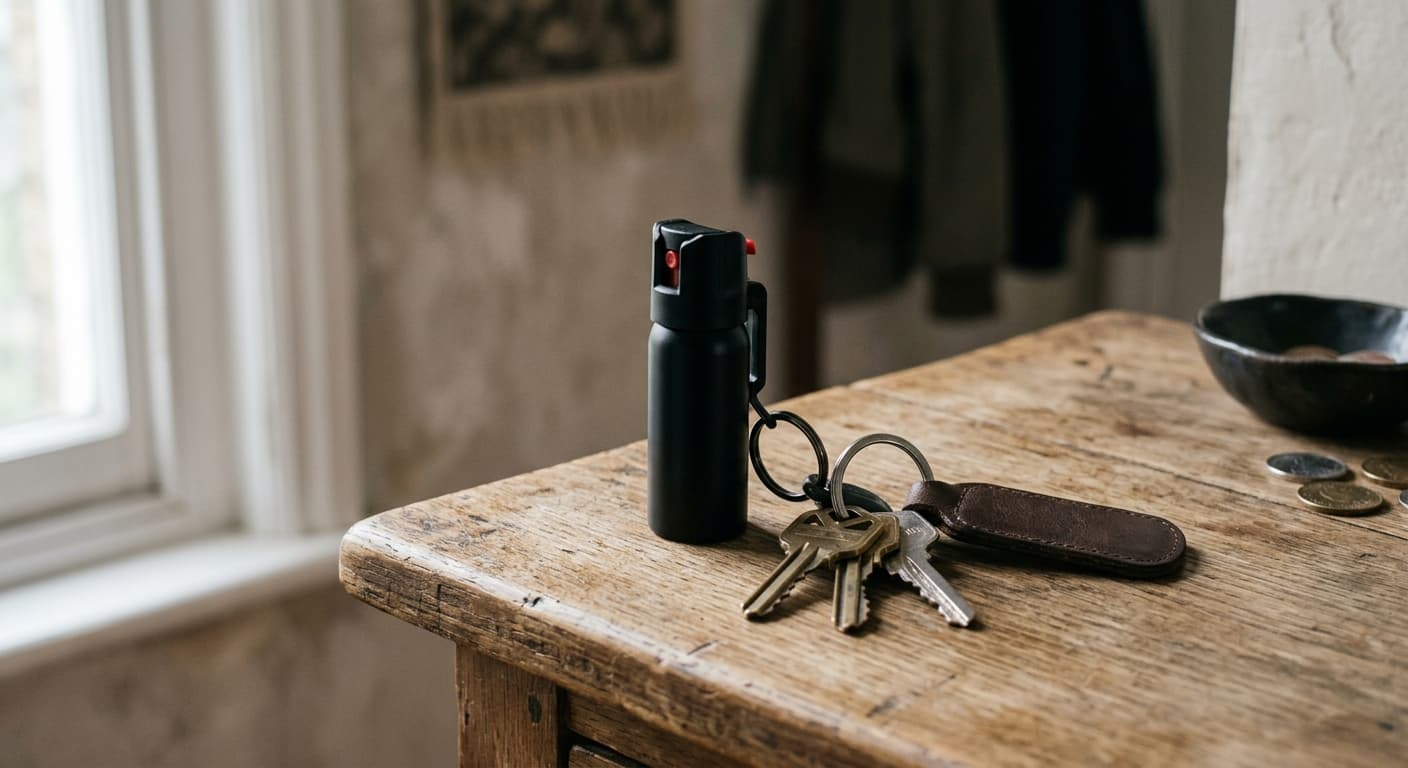
South Carolina writes its pepper spray rule backward from most states: possession is illegal by default, and a self-defense exception with a capacity cap, about 1.69 fluid ounces, makes it lawful. A second statute outside the weapons chapter makes throwing or placing a tear-gas device near a store, theater, or residence a felony. Stun guns get no possession statute at all, only a felony for taking one away from a police or corrections officer, and South Carolina repealed its general concealed-weapons offense in 2024.
Jurisdiction scope: This page covers South Carolina state law only, principally S.C. Code Sections 16-7-160, 16-23-405, 16-23-415, 16-23-430, 16-23-460, 16-23-470, 16-23-495, 23-31-210, 23-31-215, and 23-31-510. It does not cover South Carolina's separate concealable-weapons-permit application and licensing procedures (Title 23, Chapter 31, Article 4) beyond the definitions and no-permit-required provisions discussed below.
Is pepper spray legal to carry in South Carolina?
Yes, but South Carolina frames the rule as an exception to a ban rather than a straightforward legalization, and a separate statute reaches how it is used near people and buildings. S.C. Code Section 16-23-470(A) states: "It is unlawful for anyone except an authorized law enforcement officer to possess, use, transport, sell, or buy a tear-gas machine or gun, or its parts, or any ammunition, shells, or equipment that may be used in a tear-gas gun or machine." The same subsection immediately carves out ordinary self-defense use: "It is lawful for a person for self-defense purposes only to possess, use, transport, sell, or buy a tear-gas machine or gun, or its parts, or ammunition, shells, or equipment for a tear-gas machine or gun, but the capacity of a tear-gas cartridge, shell, or container shall not exceed fifty cubic centimeters nor shall a tear-gas machine or gun have the capability of shooting a cartridge, shell, or container of more than fifty cubic centimeters." Fifty cubic centimeters is 50 milliliters, about 1.69 fluid ounces. That is a real, textual capacity limit, both on the container and on the device itself, not a suggestion: a common 2, 3, or 4 fl. oz. retail canister, and any bear spray (typically 7.9 to 9.0 fl. oz.), exceeds it, while a small keychain canister of roughly 0.5 to 0.75 fl. oz. does not.
Neither Section 16-23-470 nor any other provision in Title 16, Chapter 23 defines "tear-gas machine or gun" or separately names oleoresin capsicum, the active ingredient in most retail pepper spray. South Carolina's statute does not draw the CN/CS-tear-gas-versus-OC-pepper-spray distinction that some other states' statutes spell out explicitly; the self-defense exception's plain words cover a "tear-gas machine or gun" generally, without a separate pepper-spray-specific definition to confirm or exclude an ordinary OC canister. Subsection (C) separately allows tear gas to be purchased, sold, transported, or used for killing insects or rodents, outside a tear-gas-gun-style container, with written county-agent authorization, a narrow agricultural carve-out unrelated to self-defense.
A person who violates Section 16-23-470, by possessing a tear-gas device outside the self-defense exception or exceeding its 50cc cap, commits a misdemeanor punishable by up to three years of imprisonment or a fine of up to $5,000, or both.
South Carolina's Concealable Weapons Permit Act, in Title 23, Chapter 31, separately confirms that carrying pepper spray needs no permit. Section 23-31-215(O)(1) states that "a permit issued pursuant to this article is not required for a person: (a) carrying a self-defense device generally considered to be nonlethal including the substance commonly referred to as 'pepper gas'; or (b) carrying a concealable weapon in a manner not prohibited by law." That is South Carolina's own statutory label for the product this section describes, and it is the direct answer to whether a permit is required: it is not.
A second statute, outside Title 16, Chapter 23 entirely, reaches how a tear-gas or pepper-spray device is used rather than possessed. S.C. Code Section 16-7-160 makes it unlawful for a person other than an on-duty peace officer "to place or throw a stink bomb, tear-gas bomb, smoke bomb, or similar device which contains foul or offensive odors, may inflict injury, or cause fear sufficient to incite a riot or conditions of panic in or in close proximity to a public building, storehouse, theater, stadium, arena, motion picture theater, private residence, boardinghouse, or other building or structure where people lodge, congregate, or reside." "Tear-gas bomb" is named directly, and "or similar device" is an open clause, so an ordinary pepper spray canister deployed inside or near one of those places falls within its plain words. A first violation is a misdemeanor, up to three years or a $3,000 fine, or both; it becomes a felony, up to ten years or a $10,000 fine, or both, if the person causes serious bodily harm or injury. Whether a handheld canister counts as "placed or thrown" in a given encounter is a question of fact this statute's text does not resolve on its own, but the scenario a reader most worries about, spraying an attacker inside a store, theater, or apartment building, is squarely what this section describes.
Are stun guns legal to carry in South Carolina?
Effectively unregulated, in the sense that no South Carolina statute restricts ordinary civilian stun-gun possession, and concealed carry is now part of that answer too. Title 16, Chapter 23, South Carolina's weapons chapter, does not contain a dedicated stun-gun possession statute, and Title 23, Chapter 31's Concealable Weapons Permit Act's own definitions section, Section 23-31-210(5), defines "concealable weapon" as "a firearm having a length of less than twelve inches," a firearm-specific term that has nothing to do with an electronic device. But that same chapter separately names a "self-defense device generally considered to be nonlethal," the category a stun gun falls into: Section 23-31-215(O)(1) states that "a permit issued pursuant to this article is not required for a person: (a) carrying a self-defense device generally considered to be nonlethal including the substance commonly referred to as 'pepper gas'; or (b) carrying a concealable weapon in a manner not prohibited by law." A stun gun would ordinarily be described the same way, as a "self-defense device generally considered to be nonlethal," though the statute names only pepper gas as its example. In substance, nothing turns on that inference: a permit under the article is required only for a "concealable weapon," which Section 23-31-210(5) limits to a firearm, so no permit provision reaches a stun gun in the first place. South Carolina's former general concealed-weapons statute, Section 16-23-460, "Carrying concealed weapons; forfeiture of weapons," was the one provision that plausibly reached concealed carry of a non-firearm weapon such as a stun gun. It was repealed effective March 7, 2024 by 2024 Act No. 111, the South Carolina Constitutional Carry/Second Amendment Preservation Act, and nothing replaced it as a standalone concealed-carry offense. The same act added Section 16-23-495, "Concealable weapon offense," but that section is a consecutive sentencing enhancement, not a carrying offense: it applies only when a person is convicted of a separate crime involving "a concealable weapon, as defined by Section 23-31-210(5)," the same firearm-only definition, charged as its own count alongside that underlying crime, adding up to three years served consecutively. It does not fill the gap for a stun gun, and after the 2024 repeal there is no general concealed-weapon offense in South Carolina at all.

The only place South Carolina law mentions a stun gun by name is S.C. Code Section 16-23-415, and it runs in the opposite direction from a possession restriction. It makes it a felony for "an individual who takes a firearm, stun gun, or taser device from the person of a law enforcement officer or a corrections officer," "guilty of a felony and, upon conviction, must be imprisoned for not more than five years, or fined not more than five thousand dollars, or both," but only "if all of the following circumstances exist at the time the firearm is taken": the individual knows or has reason to believe the person is a law enforcement or corrections officer; the officer is performing official duties, or the taking is directly related to those professional responsibilities; the individual takes the weapon without the officer's consent; the officer is authorized by the employer to carry the weapon in the line of duty; and "the law enforcement officer or corrections officer is authorized by his employer to carry the weapon while off duty and has identified himself as a law enforcement officer." All five conditions must be present. That statute protects officers from having their equipment taken, and says nothing about an ordinary civilian buying, owning, or carrying a stun gun. No South Carolina statute sets an age minimum, a permit requirement, or a prohibited-persons rule specific to civilian stun-gun possession.
Where you can't carry either device
South Carolina's school-property weapons statute, S.C. Code Section 16-23-430(A), makes it unlawful, with exceptions for law enforcement and school-authorized personnel, to carry on elementary or secondary school property "a knife, with a blade over two inches long, a blackjack, a metal pipe or pole, firearms, or any other type of weapon, device, or object which may be used to inflict bodily injury or death." That catchall echoes S.C. Code Section 16-23-405(A), which defines "weapon" for the whole chapter: "Except for the provisions relating to rifles and shotguns in Section 16-23-460, as used in this chapter, 'weapon' means firearm (rifle, shotgun, pistol, or similar device that propels a projectile through the energy of an explosive), a blackjack, a metal pipe or pole, or any other type of device, or object which may be used to inflict bodily injury or death." Section 16-23-460, the rifle-and-shotgun provision this definition still cross-references, was repealed in 2024 (see below), which the statute's own Editor's Note flags without changing the definition's operative text. South Carolina's Court of Appeals has construed this catchall directly. In re Thomas Edward D., 344 S.C. 329, 543 S.E.2d 578 (Ct. App. 2001), explains that unlike a firearm, a knife with a blade over two inches, a blackjack, or a metal pipe or pole, which are per se violations regardless of use, "it is 'any other type of device or object' that must be capable of inflicting bodily injury or death." In the Interest of Dave G., 324 S.C. 347, 477 S.E.2d 470 (Ct. App. 1996), applied that test to a roughly one-inch razor blade the officer described as used "for cutting paper, opening boxes," and affirmed the adjudication. So the operative test is capability, not design or intended use: pepper spray and a stun gun are both capable of inflicting bodily injury, so both fit the catchall's plain text under the standard South Carolina's own courts apply. A violation of Section 16-23-430 is a felony punishable by a fine of up to $1,000 or up to five years of imprisonment, or both, with the weapon subject to confiscation.

Section 16-23-430(B)'s vehicle exception applies "when the weapon remains inside an attended or locked motor vehicle and is secured in a closed glove compartment, closed console, closed trunk, or in a closed container secured by an integral fastener and transported in the luggage compartment of the vehicle." The vehicle itself must be attended or locked; the compartment or container inside it must be closed, not necessarily separately locked. A 2024 amendment, part of the South Carolina Constitutional Carry/Second Amendment Preservation Act, removed a prior reference exempting people licensed to carry a concealed weapon under Title 23, Chapter 31, Article 4 from this subsection; because that permit article is defined around firearms specifically, the change does not affect how Section 16-23-430 treats pepper spray or a stun gun.
The same 2024 act that amended subsection (B), at a different section, repealed the general concealed-weapons offense discussed above under stun guns (Section 16-23-460), so outside a school and the tear-gas-specific rules already covered, no current South Carolina statute makes concealed carry of pepper spray or a stun gun a crime.
Local ordinances and state preemption
S.C. Code Section 23-31-510 states that no county, municipality, or other political subdivision "may enact or promulgate any regulation or ordinance that regulates or attempts to regulate ... the transfer, ownership, possession, carrying, or transportation of firearms, ammunition, components of firearms, or any combination of these things." That preemption is scoped to firearms and ammunition; it does not mention tear gas, pepper spray, or stun guns anywhere in its text. A South Carolina county or municipality is therefore not state-blocked from adopting its own ordinance regulating pepper spray or stun guns, unlike the firearms Section 23-31-510 reserves to the state.
Federal law: what it does and does not reach
No federal statute regulates a civilian's purchase or possession of pepper spray or a stun gun. Federal law matters in three places.
Federal buildings. Under 18 U.S.C. § 930(a), whoever knowingly possesses or causes to be present "a firearm or other dangerous weapon in a Federal facility (other than a Federal court facility)" faces a fine, imprisonment of up to 1 year, or both. Subsection (e) sets up to 2 years for a federal court facility, and subsection (b) up to 5 years where the weapon is intended to be used in a crime. Section 930(g)(2) defines the term:
The term "dangerous weapon" means a weapon, device, instrument, material, or substance, animate or inanimate, that is used for, or is readily capable of, causing death or serious bodily injury, except that such term does not include a pocket knife with a blade of less than 2½ inches in length.
The definition names neither device. Whether a particular spray or stun gun is "readily capable of" causing serious bodily injury is a question of fact the statute does not answer. Subsection (d)(3) exempts "the lawful carrying of firearms or other dangerous weapons in a Federal facility incident to hunting or other lawful purposes," and subsection (h) requires notice of the ban to be posted at each public entrance. A "Federal facility" is "a building or part thereof owned or leased by the Federal Government, where Federal employees are regularly present for the purpose of performing their official duties."
Air travel. The Transportation Security Administration's screening rules, which are agency policy rather than statute, bar both devices from carry-on bags. One 4 fl. oz. (118 ml) container of mace or pepper spray is permitted in checked baggage if it has a safety mechanism to prevent accidental discharge, and sprays containing more than 2 percent by mass of tear gas (CS or CN) are prohibited in checked baggage. Tasers, stun guns and other electro-shock weapons may travel in checked baggage only if transported so the device cannot discharge accidentally. Airlines may set stricter rules.
National parks. National Park Service regulations prohibit possessing, carrying or using a "weapon" in a park area except as the regulations provide (36 CFR 2.4(b)(1)). 36 CFR 1.4 defines "weapon" to include an "irritant gas device" and any "weapon the possession of which is prohibited under the laws of the State in which the park area or portion thereof is located."
Disclaimer: This article provides general legal information about South Carolina's pepper spray and stun gun laws as of September 2026. It is not legal advice. Consult a lawyer licensed in South Carolina for advice about a specific situation.
For a state-by-state comparison, see pepper spray and stun gun laws by state. South Carolina's self-defense statutes are covered separately on the South Carolina self-defense laws page.
Statutes cited reflect their in-force version as of 2026-09-18. Last updated: 2026-09-18.
Frequently Asked Questions
Is it legal to carry pepper spray in South Carolina?
Yes, for self-defense purposes only. S.C. Code Section 16-23-470 bans possessing a 'tear-gas machine or gun' generally, but carves out lawful self-defense possession, subject to a 50 cubic centimeter cap, about 1.69 fluid ounces, on both the container and the device's shooting capability; most 2 to 4 oz. retail canisters and any bear spray exceed that cap. No permit is required: Section 23-31-215(O)(1)(a) confirms that a concealable-weapons permit 'is not required for a person carrying a self-defense device generally considered to be nonlethal including the substance commonly referred to as pepper gas.' Separately, S.C. Code Section 16-7-160 makes it a crime, up to a felony, to place or throw a tear-gas device in or near a store, theater, or residence.
What is the penalty for an illegal tear gas device in South Carolina?
It depends which statute applies. Under S.C. Code Section 16-23-470, possessing a tear-gas device outside the self-defense exception or exceeding its 50cc capacity cap is a misdemeanor punishable by up to three years of imprisonment or a fine of up to $5,000, or both. Under S.C. Code Section 16-7-160, placing or throwing a tear-gas bomb or similar device near a store, theater, or residence is a misdemeanor (up to three years or a $3,000 fine) that becomes a felony (up to ten years or a $10,000 fine) if it causes serious bodily harm.
Is a stun gun legal in South Carolina?
There is no South Carolina statute restricting civilian stun-gun possession or concealed carry. Title 16, Chapter 23 (weapons) has no dedicated stun-gun possession statute, and Title 23, Chapter 31's Concealable Weapons Permit Act defines 'concealable weapon' as a firearm specifically. That same chapter's Section 23-31-215(O)(1)(a) names only pepper gas as an example of a 'self-defense device generally considered to be nonlethal' that needs no permit, a category a stun gun would ordinarily fall into as well, though nothing turns on that: a permit under the article is required only for a firearm-specific 'concealable weapon,' so no permit provision reaches a stun gun regardless. South Carolina's former general concealed-weapons statute, which might have reached a concealed stun gun, was repealed in 2024 and nothing replaced it as a carrying offense; the 2024 act's Section 16-23-495 is a sentencing enhancement that attaches only to a separate firearm-related conviction, not a substitute possession or carry rule. The only statutory mention of a stun gun, Section 16-23-415, criminalizes taking one from a law enforcement or corrections officer, and only when five specific conditions are all met.
Can you bring pepper spray or a stun gun onto South Carolina school property?
South Carolina's school-weapons statute, Section 16-23-430, bans carrying 'any other type of weapon, device, or object which may be used to inflict bodily injury or death' on school property. South Carolina's Court of Appeals has construed that catchall to require only that the object be capable, not designed, of inflicting bodily injury or death, applying it even to a roughly one-inch razor blade used for cutting paper and opening boxes, though the court treats whether a given object meets that test as a question of fact rather than deciding it categorically; on that standard, an ordinary pepper spray canister or stun gun would very likely qualify. A violation is a felony, up to $1,000 and five years, unless the weapon stays inside an attended or locked vehicle in a closed compartment or container.
Can South Carolina cities regulate pepper spray or stun guns locally?
Yes. South Carolina's local-regulation-preemption statute, Section 23-31-510, applies only to firearms, ammunition, and firearm components. It does not mention pepper spray or stun guns, so a county or municipality is not state-blocked from adopting its own ordinance for either device.
Updates
Independently fact-checked against the cited primary sources
The Law Behind This Article
This article rests on the statutory provisions below, held in our own legal record and retrieved from the official source. Tap a section to read the operative text.
South Carolina Code of Laws, Title 16: CRIMES AND OFFENSES
§ 16-23-405Definition of "weapon"; confiscation and disposition of weapons used in commission or in furtherance of crimeIn forcecited in 2 of our articles
(A) Except for the provisions relating to rifles and shotguns in Section 16-23-460, as used in this chapter, "weapon" means firearm (rifle, shotgun, pistol, or similar device that propels a projectile through the energy of an explosive), a blackjack, a metal pipe or pole, or any other type of device, or object which may be used to inflict bodily injury or death. (B) A person convicted of a crime, in addition to a penalty, shall have a weapon used in the commission or in furtherance of the crime confiscated. Each weapon must be delivered to the chief of police of the municipality or to the sheriff of the county if the violation occurred outside the corporate limits of a municipality. The law enforcement agency that receives the confiscated weapon may use it within the agency, transfer it to another law enforcement agency for the lawful use of that agency, trade it with a retail dealer licensed to sell pistols in this State for a pistol or other equipment approved by the agency, or destroy it. A weapon may not be disposed of until the results of all legal proceedings in which it may be involved are finally determined.
Official text (excerpt) · last checked 2026-07-29 · Read the full text in our law library · Verify at scstatehouse.gov
Also relied on in: South Carolina Knife Laws (2026): Carry, Schools, Penalty
§ 16-23-415Taking firearm or other weapon from law enforcement officerIn force
An individual who takes a firearm, stun gun, or taser device from the person of a law enforcement officer or a corrections officer is guilty of a felony and, upon conviction, must be imprisoned for not more than five years, or fined not more than five thousand dollars, or both, if all of the following circumstances exist at the time the firearm is taken: (1) the individual knows or has reason to believe the person from whom the weapon is taken is a law enforcement officer or a corrections officer; (2) the law enforcement officer or corrections officer is performing his duties as a law enforcement officer or a corrections officer, or the individual's taking of the weapon is directly related to the law enforcement officer's or corrections officer's professional responsibilities; (3) the individual takes the weapon without consent of the law enforcement officer or corrections officer; (4) the law enforcement officer is authorized by his employer to carry the weapon in the line of duty; and (5) the law enforcement officer or corrections officer is authorized by his employer to carry the weapon while off duty and has identified himself as a law enforcement officer.
Official text (excerpt) · last checked 2026-07-29 · Read the full text in our law library · Verify at scstatehouse.gov
§ 16-23-430Carrying weapon on school propertyIn forcecited in 2 of our articles
(A) It shall be unlawful for any person, except state, county, or municipal law enforcement officers or personnel authorized by school officials, to carry on his person, while on any elementary or secondary school property, a knife, with a blade over two inches long, a blackjack, a metal pipe or pole, firearms, or any other type of weapon, device, or object which may be used to inflict bodily injury or death. (B) This section does not apply when the weapon remains inside an attended or locked motor vehicle and is secured in a closed glove compartment, closed console, closed trunk, or in a closed container secured by an integral fastener and transported in the luggage compartment of the vehicle. (C) A person who violates the provisions of this section is guilty of a felony and, upon conviction, must be fined not more than one thousand dollars or imprisoned not more than five years, or both. Any weapon or object used in violation of this section may be confiscated by the law enforcement division making the arrest.
Official text (excerpt) · last checked 2026-09-24 · Read the full text in our law library · Verify at scstatehouse.gov
Cited in 1 court opinions in our collectionLatest citing opinion in our collection: 2014
Opinions citing this section in our collection:
- In the Interest of Kevin R. (Supreme Court of South Carolina 2014, 409 S.C. 297)“…indeterminate period of time not to exceed his twenty- 1 S.C. Code Ann. § 16-23-430(A) (Supp. 2013) ("It shall be unlawful…”
Identified automatically from the court opinions citing this section — not a ranking of which case controls.
§ 16-23-460RepealedRepealedcited in 2 of our articles
Official text (excerpt) · last checked 2026-07-29 · Read the full text in our law library · Verify at scstatehouse.gov
Cited in 1 court opinions in our collectionLatest citing opinion in our collection: 2006
Opinions citing this section in our collection:
- State v. Knight (Court of Appeals of South Carolina 2006)“…e infliction of personal injury concealed on his person. S.C. Code Ann. § 16-23-460 (2003). However, the section further…”
Identified automatically from the court opinions citing this section — not a ranking of which case controls.
§ 16-23-470Illegal possession of tear-gas gun or ammunitionIn force
(A) It is unlawful for anyone except an authorized law enforcement officer to possess, use, transport, sell, or buy a tear-gas machine or gun, or its parts, or any ammunition, shells, or equipment that may be used in a tear-gas gun or machine. It is lawful for a person for self-defense purposes only to possess, use, transport, sell, or buy a tear-gas machine or gun, or its parts, or ammunition, shells, or equipment for a tear-gas machine or gun, but the capacity of a tear-gas cartridge, shell, or container shall not exceed fifty cubic centimeters nor shall a tear-gas machine or gun have the capability of shooting a cartridge, shell, or container of more than fifty cubic centimeters. (B) A person who violates the provisions of this section is guilty of a misdemeanor and, upon conviction, must be imprisoned not more than three years or fined not more than five thousand dollars, or both.
Official text (excerpt) · last checked 2026-07-29 · Read the full text in our law library · Verify at scstatehouse.gov
§ 16-23-495Concealable weapon offenseIn force
(A) A person convicted of committing or attempting to commit a crime involving a concealable weapon, as defined by Section 23-31-210(5), in violation of an offense listed in Chapter 23, Title 16, or a violation of Section 10-11-320, must be imprisoned not to exceed three years. A term of imprisonment imposed for violating this section must be served consecutively to any term of imprisonment imposed for the underlying offense, and may not exceed the actual sentence imposed for the underlying offense. (B) This section does not apply to a person with a valid permit to carry a concealable weapon issued pursuant to Article 4, Chapter 31, Title 23, provided that the permit was valid at the time the crime was committed. (C) The additional punishment may not be imposed unless the indictment alleged as a separate count that the person was in possession of a concealable weapon without a valid concealed weapon permit during the commission of the crime and conviction was had upon this count in the indictment. The penalties prescribed in this section may not be imposed unless the person convicted was at the same time indicted and convicted of the underlying crime.
Official text (excerpt) · last checked 2026-07-29 · Read the full text in our law library · Verify at scstatehouse.gov
§ 16-7-160Illegal use of stink bombs or other devices containing foul or offensive odorsIn force
It is unlawful for a person, other than a peace officer engaged in the discharge of his duty, to place or throw a stink bomb, tear-gas bomb, smoke bomb, or similar device which contains foul or offensive odors, may inflict injury, or cause fear sufficient to incite a riot or conditions of panic in or in close proximity to a public building, storehouse, theater, stadium, arena, motion picture theater, private residence, boardinghouse, or other building or structure where people lodge, congregate, or reside. A person who violates the provisions of this section is guilty of a: (1) misdemeanor and, upon conviction, must be imprisoned not more than three years or fined not more than three thousand dollars, or both. (2) felony if he causes serious bodily harm or injury and, upon conviction, must be imprisoned not more than ten years or fined not more than ten thousand dollars, or both. The court may order all or a portion of a fine to be paid to persons injured as a result of the violation to recover necessary medical expenses.
Official text (excerpt) · last checked 2026-07-29 · Read the full text in our law library · Verify at scstatehouse.gov
South Carolina Code of Laws, Title 23: LAW ENFORCEMENT AND PUBLIC SAFETY
§ 23-31-210DefinitionsIn force
As used in this article: (1) "Resident" means an individual who is present in South Carolina with the intention of making a permanent home in South Carolina or military personnel on permanent change of station orders. (2) "Qualified nonresident" means an individual who owns real property in South Carolina, but who resides in another state. (3) "Picture identification" means: (a) a valid driver's license or photographic identification card issued by the state in which the applicant resides; or (b) an official photographic identification card issued by the Department of Revenue, a federal or state law enforcement agency, an agency of the United States Department of Defense, or the United States Department of State. (4) "Proof of training" means an original document or certified copy of the document supplied by an applicant that certifies that he is either: (a) a person who, within three years before filing an application, successfully has completed a basic or advanced handgun education course offered by a state, county, or municipal law enforcement agency or a nationally recognized organization that promotes gun safety.
Official text (excerpt) · last checked 2026-07-29 · Read the full text in our law library · Verify at scstatehouse.gov
§ 23-31-215Issuance of permitsIn force
(A) Notwithstanding any other provision of law, except subject to subsection (B), SLED must issue a permit, which is no larger than three and one-half inches by three inches in size, to carry a concealable weapon to a resident or qualified nonresident who is at least eighteen years of age and who is not prohibited by state law from possessing the weapon upon submission of: (1) a completed application signed by the person; (2) a photocopy of a driver's license or photographic identification card; (3) proof of residence or if the person is a qualified nonresident, proof of ownership of real property in this State; (4) proof of actual or corrected vision rated at within six months of the date of application or, in the case of a person licensed to operate a motor vehicle in this State, presentation of a valid driver's license; (5) proof of training; and (6) a complete set of fingerprints unless, because of a medical condition verified in writing by a licensed medical doctor, a complete set of fingerprints is impossible to submit.
Official text (excerpt) · last checked 2026-07-29 · Read the full text in our law library · Verify at scstatehouse.gov
Cited in 4 court opinions in our collectionLatest citing opinion in our collection: 2018
Opinions citing this section in our collection:
- Bethea v. SLED (Court of Appeals of South Carolina 2018)“…rt is free to decide without any deference to the [ALC]."); S.C. Code Ann. § 23-31-215(A) (2007) ("Notwithstanding any other p…”
- United States v. Shaquille Robinson (Court of Appeals for the Fourth Circuit 2017, 846 F.3d 694)“…13-3112; Ark. Code § 5-73- 315; 430 Ill. Comp. Stat. 66/10; S.C. Code § 23-31-215.…”
- Drake v. Filko (Court of Appeals for the Third Circuit 2013, 724 F.3d 426)“…Rev. Stat. § 166.291; 18 Pa. Cons. Stat. Ann. § 6109(e)(1); S.C. Code Ann. § 23-31-215(A)-(C); S.D. Codified Laws § 23-7-7; Te…”
Identified automatically from the court opinions citing this section — not a ranking of which case controls.
§ 23-31-510Firearm or ammunition, local regulation prohibited; discharge on landowner's own propertyIn forcecited in 2 of our articles
No governing body of any county, municipality, or other political subdivision in the State may enact or promulgate any regulation or ordinance that regulates or attempts to regulate: (1) the transfer, ownership, possession, carrying, or transportation of firearms, ammunition, components of firearms, or any combination of these things; or (2) a landowner discharging a firearm on the landowner's property to protect the landowner's family, employees, the general public, or the landowner's property from animals that the landowner reasonably believes pose a direct threat or danger to the landowner's property, people on the landowner's property, or the general public. For purposes of this item, the landowner's property must be a parcel of land comprised of at least twenty-five contiguous acres. Any ordinance regulating the discharge of firearms that does not specifically provide for an exclusion pursuant to this item is unenforceable as it pertains to an incident described in this item; otherwise, the ordinance is enforceable.
Official text (excerpt) · last checked 2026-07-29 · Read the full text in our law library · Verify at scstatehouse.gov
Code of Federal Regulations Title 36
§ 1.4What terms do I need to know?In forcecited in 53 of our articles
(a) The following definitions shall apply to this chapter, unless modified by the definitions for a specific part or regulation: Abandonment means the voluntary relinquishment of property with no intent to retain possession. Administrative activities means those activities conducted under the authority of the National Park Service for the purpose of safeguarding persons or property, implementing management plans and policies developed in accordance and consistent with the regulations in this chapter, or repairing or maintaining government facilities. Airboat means a vessel that is supported by the buoyancy of its hull and powered by a propeller or fan above the waterline. This definition should not be construed to mean a “hovercraft,” that is supported by a fan-generated air cushion. Aircraft means a device that is used or intended to be used for human flight in the air, including powerless flight. Archeological resource means material remains of past human life or activities that are of archeological interest and are at least 50 years of age.
Official text (excerpt) · last checked 2026-07-28 · Read the full text in our law library · Verify at ecfr.gov
Cited in 34 court opinions in our collectionLatest citing opinion in our collection: 2026
Opinions citing this section in our collection:
- WildEarth Guardians v. National Park Service (Court of Appeals for the Tenth Circuit 2013, 703 F.3d 1178)“…collect, kill, wound, or attempt to do any of the above.” 36 C.F.R. § 1.4(a). WildEarth argues that because NPS…”
- Nature v. United States (District Court, E.D. California 2017, 250 F. Supp. 3d 634)“…ent, historic, parkway, recreational, or other purposes. 36 C.F.R. § 1.4 . Nature argues that the El Portal Admi…”
- United States v. Knauer (District Court, E.D. New York 2010, 707 F. Supp. 2d 379)“…ng or attempting to take wildlife, except trapping. 36 C.F.R. § 1.4 (a) (in relevant part, reordered for cl…”
Identified automatically from the court opinions citing this section — not a ranking of which case controls.
Also relied on in: Knife Laws by State (2026): Carry Rules, Blade Limits, Penalties, Pepper Spray and Stun Gun Laws by State (2026), Alabama Pepper Spray and Stun Gun Laws (2026)
§ 2.4Weapons, traps and nets.In forcecited in 53 of our articles
(a) None of the provisions in this section or any regulation in this chapter may be enforced to prohibit an individual from possessing a firearm, including an assembled or functional firearm, in any National Park System unit if: (1) The individual is not otherwise prohibited by law from possessing the firearm; and (2) The possession of the firearm is in compliance with the law of the State in which the National Park System unit is located. (b)(1) Except as otherwise provided in this section and parts 7 (special regulations) and 13 (Alaska regulations), the following are prohibited: (i) Possessing a weapon, trap or net (ii) Carrying a weapon, trap or net (iii) Using a weapon, trap or net (2) Weapons, traps or nets may be carried, possessed or used: (i) At designated times and locations in park areas where: (A) The taking of wildlife is authorized by law in accordance with § 2.2 of this chapter; (B) The taking of fish is authorized by law in accordance with § 2.3 of this part. (ii) When used for target practice at designated times and at facilities or locations designed and constructed specifically for this purpose and designated pursuant to special regulations.
Official text (excerpt) · last checked 2026-07-28 · Read the full text in our law library · Verify at ecfr.gov
Cited in 26 court opinions in our collectionLatest citing opinion in our collection: 2024
Opinions citing this section in our collection:
- United States v. Masciandaro (Court of Appeals for the Fourth Circuit 2011, 638 F.3d 458)“…motor vehicle within a national park area, in violation of 36 C.F.R. § 2.4(b). He challenges his con- viction on t…”
- Brady Campaign to Prevent Gun Violence v. Salazar (District Court, District of Columbia 2009, 612 F. Supp. 2d 1)“…eady use.” 48 Fed.Reg. 30,252 (June 30, 1983), codified at 36 C.F.R. § 2.4 (a)(2). A similar regulation applied to…”
- United States v. Otis Lofton, United States of America v. Otis Lofton (Court of Appeals for the Fourth Circuit 2000, 233 F.3d 313)“…l Park Service. See 36 C.F.R. § 1.2 (2000); 36 C.F.R. § 2.4 (2000). Lofton’s conviction was affirm…”
Identified automatically from the court opinions citing this section — not a ranking of which case controls.
Also relied on in: Pennsylvania Pepper Spray and Stun Gun Laws (2026), Alaska Pepper Spray and Stun Gun Laws (2026), Arizona Pepper Spray and Stun Gun Laws (2026)
United States Code Title 18
§ 930Possession of firearms and dangerous weapons in Federal facilitiesIn forcecited in 55 of our articles
Except as provided in subsection (d), whoever knowingly possesses or causes to be present a firearm or other dangerous weapon in a Federal facility (other than a Federal court facility), or attempts to do so, shall be fined under this title or imprisoned not more than 1 year, or both. Whoever, with intent that a firearm or other dangerous weapon be used in the commission of a crime, knowingly possesses or causes to be present such firearm or dangerous weapon in a Federal facility, or attempts to do so, shall be fined under this title or imprisoned not more than 5 years, or both. A person who kills any person in the course of a violation of subsection (a) or (b), or in the course of an attack on a Federal facility involving the use of a firearm or other dangerous weapon, or attempts or conspires to do such an act, shall be punished as provided in sections 1111, 1112, 1113, and 1117.
Official text (excerpt) · last checked 2026-07-28 · Read the full text in our law library · Verify at uscode.house.gov
Cited in 90 court opinions in our collectionLatest citing opinion in our collection: 2026
Opinions citing this section in our collection:
- United States v. Odeh (Court of Appeals for the Second Circuit 2008, 552 F.3d 93)“…f an attack on a U.S. facility in Nairobi, in violation of 18 U.S.C. § 930 (c) (Counts 9-221); murder of U.S. offi…”
- Kawaljeet Tagore v. USA (Court of Appeals for the Fifth Circuit 2013, 735 F.3d 324)“…statutory ban on weapons with blades exceeding 2.5 inches. 18 U.S.C. § 930(a), (g)(2).…”
- Heller v. District of Columbia (Court of Appeals for the D.C. Circuit 2015, 801 F.3d 264)“…universally prohibited from possessing firearms. See, e.g., 18 U.S.C. § 930(a), (g)(1) (unlawful to “knowingly poss…”
Identified automatically from the court opinions citing this section — not a ranking of which case controls.
Also relied on in: Idaho Knife Laws (2026): Carry, Blade Length, Preemption, North Dakota Knife Laws (2026): The 6-Inch Rule and Licensing, Arkansas Pepper Spray and Stun Gun Laws (2026)
Search our full record of US law — 2.1 million sections, every state + federal →
Sources and References
- S.C. Code Section 16-23-470 - Illegal possession of tear-gas gun or ammunition(scstatehouse.gov).gov
- S.C. Code Section 16-7-160 - Illegal use of stink bombs or other devices containing foul or offensive odors(scstatehouse.gov).gov
- S.C. Code Section 16-23-460 - Repealed (formerly Carrying concealed weapons; forfeiture of weapons)(scstatehouse.gov).gov
- S.C. Code Section 16-23-495 - Concealable weapon offense(scstatehouse.gov).gov
- S.C. Code Section 16-23-405 - Definition of 'weapon'(scstatehouse.gov).gov
- S.C. Code Section 16-23-415 - Taking firearm or other weapon from law enforcement officer(scstatehouse.gov).gov
- S.C. Code Section 16-23-430 - Carrying weapon on school property(scstatehouse.gov).gov
- S.C. Code Section 23-31-210 - Definitions (Concealable Weapons Permit Act)(scstatehouse.gov).gov
- S.C. Code Section 23-31-215 - Issuance of permits; qualifications; exceptions to permit requirement(scstatehouse.gov).gov
- In re Thomas Edward D., 344 S.C. 329, 543 S.E.2d 578 (Ct. App. 2001)(courtlistener.com)
- In the Interest of Dave G., 324 S.C. 347, 477 S.E.2d 470 (Ct. App. 1996)(courtlistener.com)
- S.C. Code Section 23-31-510 - Firearm or ammunition, local regulation prohibited(scstatehouse.gov).gov
- 18 U.S.C. § 930 - Possession of firearms and dangerous weapons in Federal facilities(law.cornell.edu)
- Transportation Security Administration - What Can I Bring? Pepper Spray(tsa.gov).gov
- Transportation Security Administration - What Can I Bring? Stun Guns/Shocking Devices(tsa.gov).gov
- 36 CFR 1.4 - National Park Service definitions (weapon)(ecfr.gov).gov
- 36 CFR 2.4 - Weapons, traps and nets(ecfr.gov).gov