
District of Columbia
DC Pepper Spray and Stun Gun Laws (2026)
Independently fact-checked against primary sources (last audited September 23, 2026). · 16 primary sources cited on this page. How we verify our legal content
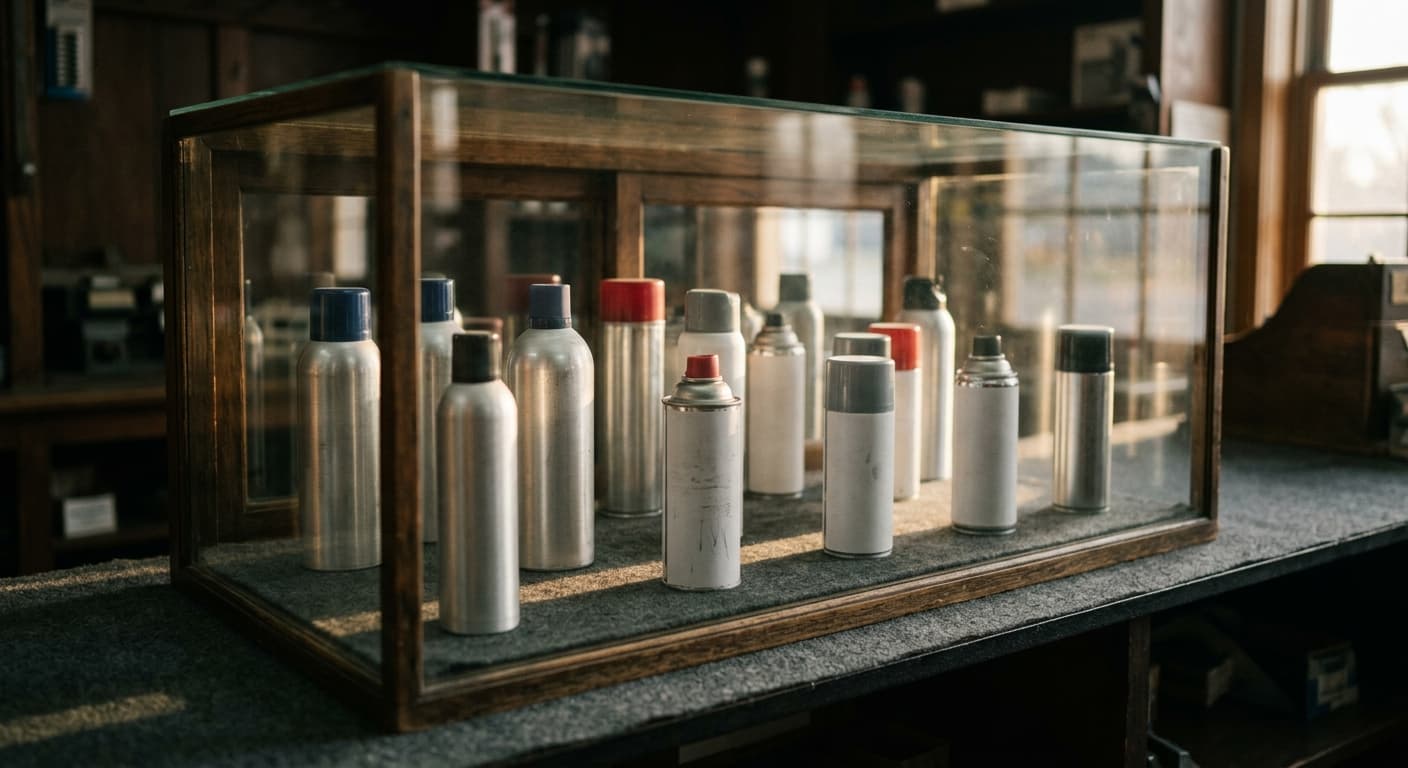
The District of Columbia regulates both pepper spray and stun guns by specific name, and each has its own statutory framework layered on top of the District's general weapons registration law. The District calls pepper spray a "self-defense spray" and defines it by chemical formula rather than by a size or strength limit; it treats a stun gun as a lawful, age-restricted possession item that is deliberately written out of the District's firearm definition, though not out of every enhancement that reaches a firearm.
Jurisdiction scope: This page covers District of Columbia law only, principally D.C. Code Sections 7-2501.01, 7-2502.01, 7-2502.12 through 7-2502.16, 7-2507.06, and 22-4502, 22-4504, 22-4505, and 22-4514. It does not cover the District's firearm-specific registration procedures (application, training, renewal) in detail, only the parts of the registration statute that reach a self-defense spray or a stun gun.
Is pepper spray legal to carry in DC?
Legal, but only in the composition the statute defines, and only because a specific exception was written into the District's general weapons-registration ban. D.C. Code Section 7-2502.01(a) bars any person in the District from receiving, possessing, controlling, transferring, offering for sale, selling, giving, or delivering a "destructive device," except as otherwise provided in that unit of the District's firearms law. Section 7-2501.01(7)(C) defines "destructive device" to include "any device containing tear gas or a chemically similar lacrimator or sternutator by whatever name known," which reaches a self-defense spray unless an exception applies.
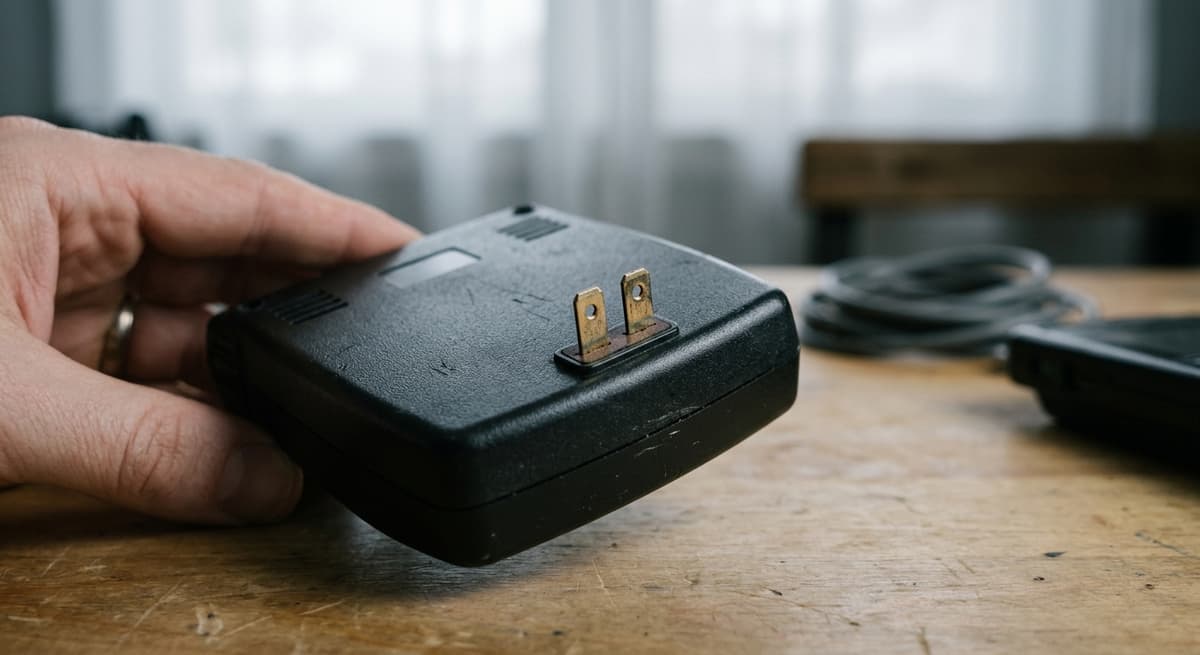
Section 7-2502.12 supplies that exception's definition: "self-defense spray" is "a mixture of a lacrimator including chloroacetophenone, alphacloracetophenone, phenylchloromethylketone, orthochlorobenazalm-alononitrile or oleoresin capsicum," the last of which is pepper spray's active ingredient. Section 7-2502.13(a) then opens "Notwithstanding the provisions of Section 7-2501.01(7)(C)" and permits possession and use "in the exercise of reasonable force in defense of the person or the person's property," but only if the product "is propelled from an aerosol container, labeled with or accompanied by clearly written instructions as to its use, and dated to indicate its anticipated useful life." Section 7-2502.13(b) makes it unlawful to possess a self-defense spray "of a type other than that specified" in Sections 7-2502.12 through 7-2502.14; a spray outside the defined formula or packaging is not covered by the exception and falls back under Section 7-2502.01(a)'s general ban.
Selling or transferring a self-defense spray in the District is lawful under Section 7-2502.13a, added in 2024 by the Secure DC Omnibus Act, which permits a person to "transfer, offer for sale, sell, give, or deliver a self-defense spray to another person in the District" for the purposes set forth in Section 7-2502.13, subject to the same aerosol-container, labeling, and dating conditions as possession. Sections 7-2502.12 through 7-2502.13a set no age minimum for possessing or purchasing a compliant self-defense spray, though a separate cross-chapter provision, Section 7-2507.06(a)(1), makes it a felony to knowingly sell, transfer, or distribute a destructive device, which includes a self-defense spray, to a person under 18.
Are stun guns legal to carry in DC?
Legal for adults, under a dedicated possession statute. D.C. Code Section 7-2502.15(a) provides that "No person under 18 years of age shall possess a stun gun in the District," with an exception for "brief possession for self-defense in response to an immediate threat of harm." Section 7-2502.15(b) limits lawful use to "the exercise of reasonable force in defense of person or property." A stun gun is explicitly written out of the District's "firearm" definition at Section 7-2501.01(9)(E), and it is not a "destructive device" under Section 7-2501.01(7) either, so the registration ban in Section 7-2502.01(a) does not reach it at all; Section 7-2502.15 is the stun-gun rule, and it restricts who may possess one and where.

Selling a stun gun in the District requires the vendor to hold a stun gun endorsement on its basic business license, issued by the Department of Consumer and Regulatory Affairs, unless the vendor sells fewer than 5 stun guns in a 12-month period (Section 7-2502.16). This chapter sets no individual purchaser license or permit requirement.
Where you can't carry a stun gun, and penalties for both devices
Section 7-2502.15(c) bars possessing a stun gun, absent specific permission, in four kinds of locations: a building or office occupied by the District government, its agencies, or instrumentalities; a penal institution, secure juvenile residential facility, or halfway house; a building or portion of one occupied by a children's facility, preschool, or public or private elementary or secondary school; and any building or grounds the owner or occupant has clearly posted to prohibit stun guns. A law enforcement officer, as defined in Section 7-2509.01, is excepted from all four. This chapter sets no equivalent place-based restriction naming self-defense spray.

The District also has a general carry offense that reaches beyond those four places. D.C. Code Section 22-4504(a) makes it unlawful to carry, openly or concealed, "a pistol, without a license issued pursuant to District of Columbia law, or any deadly or dangerous weapon," punishable by up to 5 years for a violation in a place other than the person's dwelling, place of business, or other land the person possesses, rising to up to 10 years for a person previously convicted of a violation of this section or of a felony, in the District or elsewhere. Section 22-4505's exceptions to that offense reach only a pistol, rifle, or shotgun, for licensed dealers, transport between specific locations, and law enforcement and military personnel; it names neither a stun gun nor a self-defense spray. The 2016 Stun Gun Regulation Amendment Act, D.C. Law 21-281, which added "stun gun" to Section 22-4502's sentencing enhancement (discussed below), amended only that section and left Section 22-4504 untouched.
The District's highest court has construed the same words. In Jones v. United States, 67 A.3d 547 (D.C. 2013), the D.C. Court of Appeals reversed a conviction for attempted possession of a prohibited weapon, pepper spray, under D.C. Code Sections 22-4514(b) and 22-1803, because the evidence was insufficient to prove the spray was an "other dangerous weapon"; it held that "dangerous" in these weapons statutes means "likely to produce death or great bodily injury," that an item is dangerous per se only where it is "so clearly dangerous" when used as designed that it merits the label as a matter of law, and it read the legislative history as suggesting that the Council authorized self-defense sprays "precisely because they are not dangerous per se." The court added that it did "not foreclose the possibility that, on a different record, pepper spray might be shown to be dangerous in certain formulations, when used in a particular manner, or when resulting in the requisite degree of injury." Section 22-4514(b) is itself a separate District offense: possessing an imitation pistol, dagger, dirk, razor, stiletto, a knife with a blade longer than 3 inches, or other dangerous weapon with intent to use it unlawfully against another, punishable under Section 22-4515 by a fine or up to a year, or up to 10 years after a prior conviction under that section or any felony.
Section 7-2502.15 is the District's dedicated stun-gun possession and place statute, but nothing in its text says it is the exclusive word on carrying a stun gun. Whether carrying a stun gun outside the four places Section 7-2502.15(c) lists could also be charged as carrying an "other deadly or dangerous weapon" under Section 22-4504 turns on the Jones test rather than on the statute's list of exceptions; Jones itself reversed a pepper-spray conviction, not a stun-gun one, so it leaves open the fact-specific question the test requires for a device not obviously dangerous per se on its own text.
Violating the self-defense spray possession rule (Section 7-2502.13) or the stun gun possession rule (Section 7-2502.15) carries the general penalty set by Section 7-2507.06(a): a fine or imprisonment for not more than one year, or both. Both offenses are also eligible for a non-criminal administrative disposition under Section 7-2507.06(b)(1)(D) and (E), which lets a person resolve the case by paying a fine set by the Superior Court's Board of Judges instead of facing a criminal charge; that option is unavailable to anyone previously convicted of a felony in the District or elsewhere, under Section 7-2507.06(b)(1A).
Separately, committing a crime of violence or a dangerous crime in the District while armed with certain weapons carries an additional sentencing enhancement of up to 30 years under D.C. Code Section 22-4502(a). The enhancement applies to "any pistol or other firearm (or imitation thereof) or other dangerous or deadly weapon," and the statute's parenthetical then lists examples, including a stun gun by name, alongside a sawed-off shotgun, machine gun, rifle, dirk, bowie knife, butcher knife, switchblade knife, razor, blackjack, billy, or metal knuckles. That list is introduced by "including" and is illustrative rather than exhaustive; self-defense spray is not one of the items named in it, but Section 22-4502 does not say that only the named items count as an "other dangerous or deadly weapon," so whether an unnamed item such as a self-defense spray could qualify turns on the Jones test described above rather than on the list itself, and on that test a compliant spray would need case-specific proof of injury the Court of Appeals found absent in Jones.
Federal law: what it does and does not reach
No federal statute regulates a civilian's purchase or possession of pepper spray or a stun gun. Federal law matters in three places.
Federal buildings. Under 18 U.S.C. § 930(a), whoever knowingly possesses or causes to be present "a firearm or other dangerous weapon in a Federal facility (other than a Federal court facility)" faces a fine, imprisonment of up to 1 year, or both. Subsection (e) sets up to 2 years for a federal court facility, and subsection (b) up to 5 years where the weapon is intended to be used in a crime. Section 930(g)(2) defines the term:
The term "dangerous weapon" means a weapon, device, instrument, material, or substance, animate or inanimate, that is used for, or is readily capable of, causing death or serious bodily injury, except that such term does not include a pocket knife with a blade of less than 2½ inches in length.
The definition names neither device. Whether a particular spray or stun gun is "readily capable of" causing serious bodily injury is a question of fact the statute does not answer. Subsection (d)(3) exempts "the lawful carrying of firearms or other dangerous weapons in a Federal facility incident to hunting or other lawful purposes," and subsection (h) requires notice of the ban to be posted at each public entrance. A "Federal facility" is "a building or part thereof owned or leased by the Federal Government, where Federal employees are regularly present for the purpose of performing their official duties."
Air travel. The Transportation Security Administration's screening rules, which are agency policy rather than statute, bar both devices from carry-on bags. One 4 fl. oz. (118 ml) container of mace or pepper spray is permitted in checked baggage if it has a safety mechanism to prevent accidental discharge, and sprays containing more than 2 percent by mass of tear gas (CS or CN) are prohibited in checked baggage. Tasers, stun guns and other electro-shock weapons may travel in checked baggage only if transported so the device cannot discharge accidentally. Airlines may set stricter rules.
National parks. National Park Service regulations prohibit possessing, carrying or using a "weapon" in a park area except as the regulations provide (36 CFR 2.4(b)(1)). 36 CFR 1.4 defines "weapon" to include an "irritant gas device" and any "weapon the possession of which is prohibited under the laws of the State in which the park area or portion thereof is located."
Disclaimer: This article provides general legal information about the District of Columbia's pepper spray and stun gun laws as of September 2026. It is not legal advice. Consult a lawyer licensed in the District of Columbia for advice about a specific situation.
For a state-by-state comparison, see pepper spray and stun gun laws by state. District of Columbia self-defense law is covered separately on the DC self-defense laws page.
Statutes cited reflect their in-force version as of 2026-09-18. Last updated: 2026-09-18.
Frequently Asked Questions
Is pepper spray legal to carry in Washington, DC?
Yes, if it matches the District's defined formula. D.C. Code Section 7-2502.01(a) generally bars possessing a 'destructive device,' a category that includes tear-gas-type sprays, but Section 7-2502.13 carves out a compliant self-defense spray: one matching Section 7-2502.12's formula, propelled from an aerosol container, labeled with instructions, and dated for its useful life. A spray outside that formula or packaging is not covered by the exception and falls under the general destructive-device ban.
Is it legal to carry a stun gun in DC?
Yes, for adults 18 or older, under D.C. Code Section 7-2502.15. A stun gun is not a 'firearm' under D.C. Code Section 7-2501.01(9)(E), so it is not covered by the District's firearm-specific registration procedures, but it may not be carried into DC government buildings, penal or juvenile facilities, children's facilities or schools, or premises posted to prohibit it, absent specific permission. The District also has a general 'deadly or dangerous weapon' carry offense, D.C. Code Section 22-4504(a), whose exceptions in Section 22-4505 name only a pistol, rifle, or shotgun. In Jones v. United States, 67 A.3d 547 (D.C. 2013), the D.C. Court of Appeals held that 'dangerous' in these weapons statutes means likely to produce death or great bodily injury, a case about pepper spray, not a stun gun; whether Section 22-4504 also reaches a stun gun beyond Section 7-2502.15's specific rule turns on that test, which Jones did not apply to a stun gun.
Can you sell pepper spray or stun guns in DC?
Yes. Selling a compliant self-defense spray is lawful under D.C. Code Section 7-2502.13a, added by the 2024 Secure DC Omnibus Act. Selling stun guns requires the vendor to hold a stun gun endorsement on its business license under Section 7-2502.16, unless it sells fewer than 5 in a 12-month period.
What is the penalty for an unlawful self-defense spray or stun gun in DC?
D.C. Code Section 7-2507.06(a) sets a fine or up to a year in jail, or both, for possessing a self-defense spray that does not meet Section 7-2502.13's formula and packaging rules, or a stun gun in violation of Section 7-2502.15. Both offenses can instead be resolved through a non-criminal administrative disposition under Section 7-2507.06(b), unless the person has a prior felony conviction.
Does using a stun gun during a crime carry an extra penalty in DC?
Yes. D.C. Code Section 22-4502(a) adds up to 30 years to the sentence for a crime of violence or dangerous crime committed while armed with 'any pistol or other firearm ... or other dangerous or deadly weapon,' and its illustrative list names a stun gun specifically. Self-defense spray is not one of the items named in that list, but the list is introduced by the word 'including' rather than closed, so whether an unnamed item such as a compliant spray could also qualify turns on the 'dangerous' test the D.C. Court of Appeals set out in Jones v. United States, 67 A.3d 547 (D.C. 2013), which read the legislative history as suggesting the Council authorized self-defense sprays because they are not dangerous per se, and reversed because the record lacked proof of the required injury.
Updates
Independently fact-checked against the cited primary sources
The Law Behind This Article
This article rests on the statutory provisions below, held in our own legal record and retrieved from the official source. Tap a section to read the operative text.
Code of the District of Columbia, Title 22: Criminal Offenses and Penalties. - Chapter 45: Weapons and Possession of Weapons.
§ 22-4502Additional penalty for committing crime when armed.In force
(a) Any person who commits a crime of violence, or a dangerous crime in the District of Columbia when armed with or having readily available any pistol or other firearm (or imitation thereof) or other dangerous or deadly weapon (including a sawed-off shotgun, shotgun, machine gun, rifle, stun gun, dirk, bowie knife, butcher knife, switchblade knife, razor, blackjack, billy, or metallic or other false knuckles): (1) May, if such person is convicted for the first time of having so committed a crime of violence, or a dangerous crime in the District of Columbia, be sentenced, in addition to the penalty provided for such crime, to a period of imprisonment which may be up to, and including, 30 years for all offenses except first degree murder while armed, second degree murder while armed, first degree sexual abuse while armed, and first degree child sexual abuse while armed, and shall, if convicted of such offenses while armed with any pistol or firearm, be imprisoned for a mandatory-minimum term of not less than 5 years; and (2) Shall, if such person is convicted more than once of having so committed a crime of violence, or a dangerous crime in the District of Columbia, or an offense…
Official text (excerpt) · last checked 2026-07-30 · Read the full text in our law library · Verify at github.com
Cited in 19 court opinions in our collectionLatest citing opinion in our collection: 2025
Opinions citing this section in our collection:
- Darius Briscoe v. United States (District of Columbia Court of Appeals 2018, 181 A.3d 651)“…se the five-year mandatory-minimum sentence established by D.C. Code §§ 22-4502 (a)(1) and -4504 (b) (2012 Repl.) for h…”
- Stubblefield v. United States (District of Columbia Court of Appeals 2025)“…ot prove that the tellers actually believed he had a bomb. D.C. Code § 22-4502(a). The government counters that Stubbl…”
- Leon Robinson and Shanika Robinson v. United States (District of Columbia Court of Appeals 2014, 100 A.3d 95)“…subject to the additional punishment that is authorized by D.C. Code § 22-4502 (2012 Repl.) when a violent or dangerou…”
Identified automatically from the court opinions citing this section — not a ranking of which case controls.
§ 22-4504Carrying concealed weapons; possession of weapons during commission of crime of violence; penalty.In forcecited in 2 of our articles
(a) No person shall carry within the District of Columbia either openly or concealed on or about their person, a pistol, without a license issued pursuant to District of Columbia law, or any deadly or dangerous weapon. Whoever violates this section shall be punished as provided in § 22-4515, except that: (1) A person who violates this section by carrying a pistol, without a license issued pursuant to District of Columbia law, or any deadly or dangerous weapon, in a place other than the person’s dwelling place, place of business, or on other land possessed by the person, shall be fined not more than the amount set forth in § 22-3571.01 or imprisoned for not more than 5 years, or both; or (2) If the violation of this section occurs after a person has been convicted in the District of Columbia of a violation of this section or of a felony, either in the District of Columbia or another jurisdiction, the person shall be fined not more than the amount set forth in § 22-3571.01 or imprisoned for not more than 10 years, or both. (a-1) Except as otherwise permitted by law, no person shall carry within the District of Columbia a rifle or shotgun.
Official text (excerpt) · last checked 2026-07-30 · Read the full text in our law library · Verify at github.com
Cited in 154 court opinions in our collectionLatest citing opinion in our collection: 2026
Opinions citing this section in our collection:
- Tony Armstrong & Floyd Joiner v. United States (District of Columbia Court of Appeals 2017, 164 A.3d 102)“…D.C. Code §§ 22-2801, -4502 (2016). 4 D.C. Code § 22-4504 (b) (2016).…”
- MARLON WILLIAMS v. UNITED STATES (District of Columbia Court of Appeals 2016, 130 A.3d 343)“…C. Code §§ 22-2802, -4502, -1801 (2001). 3 D.C. Code § 22-4504 (b) (2001). 4 D.C. Code…”
- Reginald W. Hooks v. United States (District of Columbia Court of Appeals 2018, 191 A.3d 1141)“…arm in his or her possession or under his or her control”); D.C. Code § 22-4504 (a) (2016 Supp.) (CPWL, “no person shal…”
Identified automatically from the court opinions citing this section — not a ranking of which case controls.
Also relied on in: D.C. Knife Laws (2026): Possession and Carry Rules
§ 22-4505Exceptions to § 22-4504.In force
(a) The provisions of § 22-4504(a), as they pertain to a pistol, and (a-1), shall not apply to: (1) A person engaged in the business of manufacturing, repairing, or dealing in firearms, or their agents, employees, and representatives, who possess, carry, or use a pistol in the ordinary course of that business; or (2) A person while carrying a pistol, transported in accordance with § 22-4504.02: (A) From the place of purchase to the person's home or place of business; (B) To a place of repair, or back from that place to the person's home or place of business; (C) While moving goods from one place of abode or business to another; or (D) To or from any lawful recreational firearm-related activity. (b) The provisions of § 22-4504(a) and (a-1) shall not apply to: (1) The concealed carrying of a firearm by a qualified law enforcement officer who is carrying the identification required by 18 U.S.C. § 926B(d); (2) The concealed carrying of a firearm by a qualified retired law enforcement officer who is carrying the identification required by 18 U.S.C.
Official text (excerpt) · last checked 2026-07-30 · Read the full text in our law library · Verify at github.com
Cited in 5 court opinions in our collectionLatest citing opinion in our collection: 2021
Opinions citing this section in our collection:
- IN RE T.M. (District of Columbia Court of Appeals 2017, 155 A.3d 400)“…III. Because it is unclear whether D.C. Code § 22-4505(a) (2012 Repl.) violates appellant’s S…”
- Jones v. United States (District of Columbia Court of Appeals 2021)“…apon (outside home or a place of business), in violation of D.C. Code § 22-4505(a) (2021 Supp.); Second Degree Burglary…”
- Ord v. District of Columbia (District Court, District of Columbia 2011, 810 F. Supp. 2d 261)“…y separate firearms possession statute, the predecessor to D.C. Code § 22-4505. For purposes of that statute, whether…”
Identified automatically from the court opinions citing this section — not a ranking of which case controls.
§ 22-4514Possession of certain dangerous weapons prohibited; exceptions.In forcecited in 2 of our articles
(a) No person shall within the District of Columbia possess any item that is, in fact, a machine gun, sawed-off shotgun, bump stock, ghost gun, knuckles, or any instrument or weapon of the kind commonly known as a blackjack, slungshot, sand club, sandbag, switchblade knife, nor any instrument, attachment, or appliance for causing the firing of any firearm to be silent or intended to lessen or muffle the noise of the firing of any firearms; provided, however, that machine guns, or sawed-off shotgun, bump stock, ghost gun, knuckles, and blackjacks may be possessed by the members of the Army, Navy, Air Force, or Marine Corps of the United States, the National Guard, or Organized Reserves when on duty, the Post Office Department or its employees when on duty, marshals, sheriffs, prison or jail wardens, or their deputies, policemen, or other duly-appointed law enforcement officers, including any designated civilian employee of the Metropolitan Police Department, or officers or employees of the United States duly authorized to carry such weapons, banking institutions, public carriers who are engaged in the business of transporting mail, money, securities, or other valuables, wholesale…
Official text (excerpt) · last checked 2026-09-23 · Read the full text in our law library · Verify at github.com
Cited in 18 court opinions in our collectionLatest citing opinion in our collection: 2025
Opinions citing this section in our collection:
- Adrienne Johnson v. United States (District of Columbia Court of Appeals 2019, 207 A.3d 606)“…2 Repl.), and two counts of attempted PPW, in violation of D.C. Code § 22-4514(b) (2012 Repl.), one set of counts inv…”
- Carrington v. United States (District of Columbia Court of Appeals 2025)“…e § 22-303, and one count of attempted PPW in violation of D.C. Code § 22-4514(b). She pled not guilty to all counts.…”
- LEJUNE C. SMITH v. UNITED STATES (District of Columbia Court of Appeals 2016, 141 A.3d 1095)“…of Possession of Prohibited Weapon (PPW), in violation of D.C. Code § 22-4514 (b). _________________________…”
Identified automatically from the court opinions citing this section — not a ranking of which case controls.
Code of the District of Columbia, Title 7: Human Health Care and Safety. - Chapter 25: Firearms Control. - Subchapter I: Definitions.
§ 7-2501.01Definitions.In force
As used in this unit the term: (1) “Acts of Congress” means: (A) Chapter 45 of Title 22; (B) Omnibus Crime Control and Safe Streets Act of 1968, as amended (title VII, Unlawful Possession or Receipt of Firearms (82 Stat. 1236; 18 U.S.C. Appendix)); and (C) An Act to Amend Title 18, United States Code, To Provide for Better Control of the Interstate Traffic in Firearms Act of 1968 (82 Stat. 1213; 18 U.S.C. § 921 et seq.). (2) “Ammunition” means cartridge cases, shells, projectiles (including shot), primers, bullets (including restricted pistol bullets), propellant powder, or other devices or materials designed, redesigned, or intended for use in a firearm or destructive device.
Official text (excerpt) · last checked 2026-07-30 · Read the full text in our law library · Verify at github.com
Cited in 14 court opinions in our collectionLatest citing opinion in our collection: 2025
Opinions citing this section in our collection:
- James Toler v. United States (District of Columbia Court of Appeals 2018, 198 A.3d 767)“…l not include: (A) Antique firearms . . . . D.C. Code § 7-2501.01(9) (2018 Repl.). And the same section d…”
- Brian K. Gilliam, John A. Daniels, and Ronald L. English v. United States (District of Columbia Court of Appeals 2013, 80 A.3d 192)“…abolished the requirement that the pistol be operable. See D.C. Code §§ 7-2501.01 (9), 7-2501.01 (12), & 22-4501 (6) (201…”
- IN RE D.R. (District of Columbia Court of Appeals 2014, 96 A.3d 45)“…ngle hand or with a barrel less than 12 inches in length.” D.C. Code § 7-2501.01 (2012 Repl.) (cross-referenced in D.C.…”
Identified automatically from the court opinions citing this section — not a ranking of which case controls.
Code of the District of Columbia, Title 7: Human Health Care and Safety. - Chapter 25: Firearms Control. - Subchapter II: Firearms and Destructive Devices.
§ 7-2502.01Registration requirements.In forcecited in 2 of our articles
(a) Except as otherwise provided in this unit, no person or organization in the District of Columbia (“District”) shall receive, possess, control, transfer, offer for sale, sell, give, or deliver any destructive device, and no person or organization in the District shall possess or control any firearm, unless the person or organization holds a valid registration certificate for the firearm. A registration certificate may be issued: (1) To an organization if: (A) The organization employs at least 1 commissioned special police officer or employee licensed to carry a firearm whom the organization arms during the employee’s duty hours; and (B) The registration is issued in the name of the organization and in the name of the president or chief executive officer of the organization; (2) In the discretion of the Chief of Police, to a police officer who has retired from the Metropolitan Police Department; (3) In the discretion of the Chief of Police, to the Fire Marshal and any member of the Fire and Arson Investigation Unit of the Fire Prevention Bureau of the Fire Department of the District of Columbia, who is designated in writing by the Fire Chief, for the purpose of enforcing…
Official text (excerpt) · last checked 2026-07-30 · Read the full text in our law library · Verify at github.com
Cited in 69 court opinions in our collectionLatest citing opinion in our collection: 2026
Opinions citing this section in our collection:
- Chew v. United States (District of Columbia Court of Appeals 2024)“…d because both the District’s firearm registration statute, D.C. Code § 7-2502.01(a), and firearm licensing statute, D.C.…”
- Anthony Hooks v. United States (District of Columbia Court of Appeals 2019, 208 A.3d 741)“…(b)(1) (2013 Supp.); possession of an unauthorized firearm, D.C. Code § 7-2502.01(a) (2015 Supp.); possession of a large…”
- Roosevelt Whitfield v. United States (District of Columbia Court of Appeals 2014, 99 A.3d 650)“…3 See D.C. Code §§ 22-4504 (a), -1803 (2001), D.C. Code § 7-2502.01 (2001), and D.C. Code § 7-2506.01 (a)(3…”
Identified automatically from the court opinions citing this section — not a ranking of which case controls.
Also relied on in: Pepper Spray and Stun Gun Laws by State (2026)
§ 7-2502.12Definition of self-defense sprays.In force
For the purposes of §§ 7-2502.12 through 7-2502.14, the term: “Self-defense spray” means a mixture of a lacrimator including chloroacetophenone, alphacloracetophenone, phenylchloromethylketone, orthochlorobenazalm-alononitrile or oleoresin capsicum.
Official text (excerpt) · last checked 2026-07-30 · Read the full text in our law library · Verify at github.com
§ 7-2502.13Possession of self-defense sprays.In force
(a) Notwithstanding the provisions of § 7-2501.01(7)(C), a person may possess and use a self-defense spray in the exercise of reasonable force in defense of the person or the person’s property only if it is propelled from an aerosol container, labeled with or accompanied by clearly written instructions as to its use, and dated to indicate its anticipated useful life. (b) No person shall possess a self-defense spray which is of a type other than that specified in §§ 7-2502.12 to 7-2502.14.
Official text (excerpt) · last checked 2026-07-30 · Read the full text in our law library · Verify at github.com
Cited in 1 court opinions in our collectionLatest citing opinion in our collection: 2019
Opinions citing this section in our collection:
- Wolfe v. Department of Homeland Security (District Court, District of Columbia 2019)“…s use, and dated to indicate its anticipated useful life.” D.C. Code § 7-2502.13. There is no dispute that possession o…”
Identified automatically from the court opinions citing this section — not a ranking of which case controls.
§ 7-2502.13aSale of self-defense sprays.In force
Notwithstanding any other provision of this subchapter, a person may transfer, offer for sale, sell, give, or deliver a self-defense spray to another person in the District for the purposes set forth in § 7-2502.13; provided, that the self-defense spray is propelled from an aerosol container, labeled with or accompanied by clearly written instructions as to its use, and dated to indicate its anticipated useful life.
Official text (excerpt) · last checked 2026-07-30 · Read the full text in our law library · Verify at github.com
§ 7-2502.15Possession of stun guns.In force
(a) No person under 18 years of age shall possess a stun gun in the District; provided, that brief possession for self-defense in response to an immediate threat of harm shall not be a violation of this subsection. (b) No person who possesses a stun gun shall use that weapon except in the exercise of reasonable force in defense of person or property. (c) Unless permission specific to the individual and occasion is given, no person, except a law enforcement officer as defined in § 7-2509.01, shall possess a stun gun in the following locations: (1) A building or office occupied by the District of Columbia, its agencies, or instrumentalities; (2) A penal institution, secure juvenile residential facility, or halfway house; (3) A building or portion thereof, occupied by a children's facility, preschool, or public or private elementary or secondary school; or (4) Any building or grounds clearly posted by the owner or occupant to prohibit the carrying of a stun gun.
Official text (excerpt) · last checked 2026-07-30 · Read the full text in our law library · Verify at github.com
§ 7-2502.16Sale of stun guns.In force
(a) In order to lawfully sell a stun gun in the District, a vendor shall obtain pursuant to § 47-2851.03 a stun gun endorsement on its basic business license from the Department of Consumer and Regulatory Affairs ("Department") on a form to be provided by the Department. (b) This section shall not apply to a vendor who sells fewer than 5 stun guns in a 12- month period.
Official text (excerpt) · last checked 2026-07-30 · Read the full text in our law library · Verify at github.com
Code of the District of Columbia, Title 7: Human Health Care and Safety. - Chapter 25: Firearms Control. - Subchapter VII: Miscellaneous Provisions.
§ 7-2507.06Penalties.In force
(a) Except as provided in §§ 7-2502.05, 7-2502.08, 7-2507.02, 7-2508.07, subchapter IX of this chapter, and 7-2510.11, any person convicted of a violation of any provision of this unit shall be fined not more than the amount set forth in § 22-3571.01 or imprisoned for not more than 1 year, or both; except that: (1) A person who knowingly or intentionally sells, transfers, or distributes a firearm, destructive device, or ammunition to a person under 18 years of age shall be fined not more than the amount set forth in § 22-3571.01 or imprisoned for not more than 10 years, or both. (A) Except as provided in subparagraph (B) of this paragraph, any person who is convicted a second time for possessing an unregistered firearm shall be fined not more than the amount set forth in § 22-3571.01 or imprisoned not more than 5 years, or both. (B) A person who in the person’s dwelling place, place of business, or on other land possessed by the person, possesses a pistol, or firearm that could otherwise be registered, shall be fined not more than the amount set forth in § 22-3571.01 or imprisoned not more than 1 year, or both.
Official text (excerpt) · last checked 2026-07-30 · Read the full text in our law library · Verify at github.com
Cited in 10 court opinions in our collectionLatest citing opinion in our collection: 2024
Opinions citing this section in our collection:
- Atkins v. United States (District of Columbia Court of Appeals 2023)“…2000). Therefore, we remand for resentencing pursuant to D.C. Code § 7-2507.06(a), which limits the sentence of posses…”
- Evans v. United States (District of Columbia Court of Appeals 2023)“…been a felony punishable by up to ten years’ imprisonment, D.C. Code § 7-2507.06(a)(1).…”
- Simms v. District of Columbia (District Court, District of Columbia 2012, 872 F. Supp. 2d 90)“…ation of District law. D.C. Code § 7-2507.06a(b); § 48- 905.02(d)(3)(A).…”
Identified automatically from the court opinions citing this section — not a ranking of which case controls.
Code of Federal Regulations Title 36
§ 1.4What terms do I need to know?In forcecited in 53 of our articles
(a) The following definitions shall apply to this chapter, unless modified by the definitions for a specific part or regulation: Abandonment means the voluntary relinquishment of property with no intent to retain possession. Administrative activities means those activities conducted under the authority of the National Park Service for the purpose of safeguarding persons or property, implementing management plans and policies developed in accordance and consistent with the regulations in this chapter, or repairing or maintaining government facilities. Airboat means a vessel that is supported by the buoyancy of its hull and powered by a propeller or fan above the waterline. This definition should not be construed to mean a “hovercraft,” that is supported by a fan-generated air cushion. Aircraft means a device that is used or intended to be used for human flight in the air, including powerless flight. Archeological resource means material remains of past human life or activities that are of archeological interest and are at least 50 years of age.
Official text (excerpt) · last checked 2026-07-28 · Read the full text in our law library · Verify at ecfr.gov
Cited in 34 court opinions in our collectionLatest citing opinion in our collection: 2026
Opinions citing this section in our collection:
- WildEarth Guardians v. National Park Service (Court of Appeals for the Tenth Circuit 2013, 703 F.3d 1178)“…collect, kill, wound, or attempt to do any of the above.” 36 C.F.R. § 1.4(a). WildEarth argues that because NPS…”
- Nature v. United States (District Court, E.D. California 2017, 250 F. Supp. 3d 634)“…ent, historic, parkway, recreational, or other purposes. 36 C.F.R. § 1.4 . Nature argues that the El Portal Admi…”
- United States v. Knauer (District Court, E.D. New York 2010, 707 F. Supp. 2d 379)“…ng or attempting to take wildlife, except trapping. 36 C.F.R. § 1.4 (a) (in relevant part, reordered for cl…”
Identified automatically from the court opinions citing this section — not a ranking of which case controls.
Also relied on in: Knife Laws by State (2026): Carry Rules, Blade Limits, Penalties, Alabama Pepper Spray and Stun Gun Laws (2026), Alaska Pepper Spray and Stun Gun Laws (2026)
§ 2.4Weapons, traps and nets.In forcecited in 53 of our articles
(a) None of the provisions in this section or any regulation in this chapter may be enforced to prohibit an individual from possessing a firearm, including an assembled or functional firearm, in any National Park System unit if: (1) The individual is not otherwise prohibited by law from possessing the firearm; and (2) The possession of the firearm is in compliance with the law of the State in which the National Park System unit is located. (b)(1) Except as otherwise provided in this section and parts 7 (special regulations) and 13 (Alaska regulations), the following are prohibited: (i) Possessing a weapon, trap or net (ii) Carrying a weapon, trap or net (iii) Using a weapon, trap or net (2) Weapons, traps or nets may be carried, possessed or used: (i) At designated times and locations in park areas where: (A) The taking of wildlife is authorized by law in accordance with § 2.2 of this chapter; (B) The taking of fish is authorized by law in accordance with § 2.3 of this part. (ii) When used for target practice at designated times and at facilities or locations designed and constructed specifically for this purpose and designated pursuant to special regulations.
Official text (excerpt) · last checked 2026-07-28 · Read the full text in our law library · Verify at ecfr.gov
Cited in 26 court opinions in our collectionLatest citing opinion in our collection: 2024
Opinions citing this section in our collection:
- United States v. Masciandaro (Court of Appeals for the Fourth Circuit 2011, 638 F.3d 458)“…motor vehicle within a national park area, in violation of 36 C.F.R. § 2.4(b). He challenges his con- viction on t…”
- Brady Campaign to Prevent Gun Violence v. Salazar (District Court, District of Columbia 2009, 612 F. Supp. 2d 1)“…eady use.” 48 Fed.Reg. 30,252 (June 30, 1983), codified at 36 C.F.R. § 2.4 (a)(2). A similar regulation applied to…”
- United States v. Otis Lofton, United States of America v. Otis Lofton (Court of Appeals for the Fourth Circuit 2000, 233 F.3d 313)“…l Park Service. See 36 C.F.R. § 1.2 (2000); 36 C.F.R. § 2.4 (2000). Lofton’s conviction was affirm…”
Identified automatically from the court opinions citing this section — not a ranking of which case controls.
Also relied on in: Pennsylvania Pepper Spray and Stun Gun Laws (2026), Arizona Pepper Spray and Stun Gun Laws (2026), Arkansas Pepper Spray and Stun Gun Laws (2026)
United States Code Title 18
§ 930Possession of firearms and dangerous weapons in Federal facilitiesIn forcecited in 55 of our articles
Except as provided in subsection (d), whoever knowingly possesses or causes to be present a firearm or other dangerous weapon in a Federal facility (other than a Federal court facility), or attempts to do so, shall be fined under this title or imprisoned not more than 1 year, or both. Whoever, with intent that a firearm or other dangerous weapon be used in the commission of a crime, knowingly possesses or causes to be present such firearm or dangerous weapon in a Federal facility, or attempts to do so, shall be fined under this title or imprisoned not more than 5 years, or both. A person who kills any person in the course of a violation of subsection (a) or (b), or in the course of an attack on a Federal facility involving the use of a firearm or other dangerous weapon, or attempts or conspires to do such an act, shall be punished as provided in sections 1111, 1112, 1113, and 1117.
Official text (excerpt) · last checked 2026-07-28 · Read the full text in our law library · Verify at uscode.house.gov
Cited in 90 court opinions in our collectionLatest citing opinion in our collection: 2026
Opinions citing this section in our collection:
- United States v. Odeh (Court of Appeals for the Second Circuit 2008, 552 F.3d 93)“…f an attack on a U.S. facility in Nairobi, in violation of 18 U.S.C. § 930 (c) (Counts 9-221); murder of U.S. offi…”
- Kawaljeet Tagore v. USA (Court of Appeals for the Fifth Circuit 2013, 735 F.3d 324)“…statutory ban on weapons with blades exceeding 2.5 inches. 18 U.S.C. § 930(a), (g)(2).…”
- Heller v. District of Columbia (Court of Appeals for the D.C. Circuit 2015, 801 F.3d 264)“…universally prohibited from possessing firearms. See, e.g., 18 U.S.C. § 930(a), (g)(1) (unlawful to “knowingly poss…”
Identified automatically from the court opinions citing this section — not a ranking of which case controls.
Also relied on in: Idaho Knife Laws (2026): Carry, Blade Length, Preemption, North Dakota Knife Laws (2026): The 6-Inch Rule and Licensing, California Pepper Spray and Stun Gun Laws (2026)
Search our full record of US law — 2.1 million sections, every state + federal →
Sources and References
- D.C. Code 7-2502.01 - Registration requirements (general ban on destructive devices absent an exception)(code.dccouncil.gov).gov
- D.C. Code 7-2502.12 - Definition of self-defense sprays(code.dccouncil.gov).gov
- D.C. Code 7-2502.13 - Possession of self-defense sprays (aerosol/labeling/dating conditions; type restriction)(code.dccouncil.gov).gov
- D.C. Code 7-2502.13a - Sale of self-defense sprays(code.dccouncil.gov).gov
- D.C. Code 7-2501.01 - Definitions ('destructive device' incl. tear gas/lacrimator devices; 'firearm' expressly excludes a stun gun)(code.dccouncil.gov).gov
- D.C. Code 7-2502.15 - Possession of stun guns (18+ age floor, use standard, restricted locations)(code.dccouncil.gov).gov
- D.C. Code 7-2502.16 - Sale of stun guns (vendor business-license endorsement, under-5-per-year exception)(code.dccouncil.gov).gov
- D.C. Code 7-2507.06 - Penalties (self-defense spray and stun gun possession violations; administrative disposition)(code.dccouncil.gov).gov
- D.C. Code 22-4502 - Additional penalty for committing crime when armed (stun gun named as an illustrative example; up to 30 years)(code.dccouncil.gov).gov
- D.C. Code 22-4504 - Carrying concealed weapons; carrying a pistol or any deadly or dangerous weapon without a license(code.dccouncil.gov).gov
- D.C. Code 22-4505 - Exceptions to the carrying-weapons offense (pistol, rifle, or shotgun only)(code.dccouncil.gov).gov
- D.C. Code 22-4514 - Possession of certain weapons prohibited; other dangerous weapon held with unlawful intent(code.dccouncil.gov).gov
- Jones v. United States, 67 A.3d 547 (D.C. 2013) - pepper spray as an other dangerous weapon under D.C. Code 22-4514(b)(static.case.law)
- 18 U.S.C. § 930 - Possession of firearms and dangerous weapons in Federal facilities(law.cornell.edu)
- Transportation Security Administration - What Can I Bring? Pepper Spray(tsa.gov).gov
- Transportation Security Administration - What Can I Bring? Stun Guns/Shocking Devices(tsa.gov).gov
- 36 CFR 1.4 - National Park Service definitions (weapon)(ecfr.gov).gov
- 36 CFR 2.4 - Weapons, traps and nets(ecfr.gov).gov