
New Hampshire
New Hampshire Open Container Law (2026): Passengers Too
Independently fact-checked against primary sources (last audited September 24, 2026). · 2 primary sources cited on this page. How we verify our legal content

New Hampshire restricts both the driver and every passenger from carrying unsealed alcohol in a vehicle's passenger area, under N.H. Rev. Stat. Ann. § 265-A:44. That two-sided reach is worth stating plainly, because it runs contrary to a common assumption (repeated on several other sites) that only the driver is regulated.
Jurisdiction scope: This article addresses New Hampshire's state open container law, covering how the driver and passengers may transport alcohol in a vehicle, under N.H. Rev. Stat. Ann. § 265-A:44. It does not address DUI charges or rules for boats. For New Hampshire's separate DUI penalties, see New Hampshire DUI laws.
New Hampshire's Rule Covers Passengers, Not Just the Driver
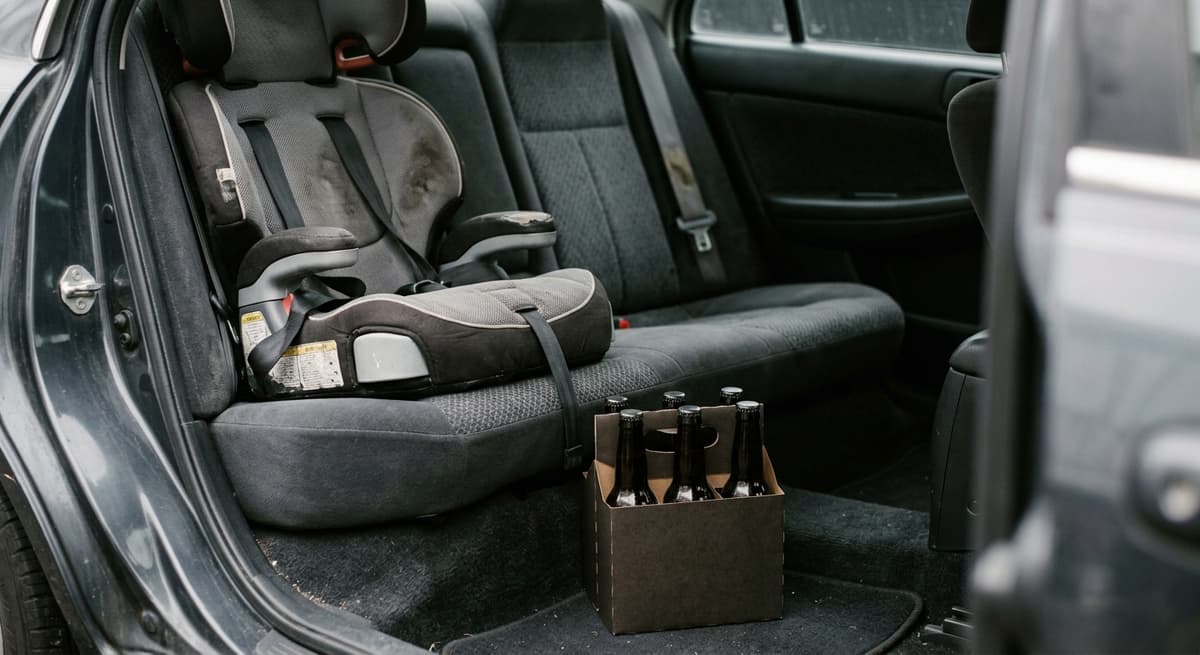
Most 50-state summaries of open container law describe a driver-only restriction and leave passengers out of the picture. New Hampshire's statute does not work that way. RSA 265-A:44 sets separate transport rules for the driver and for passengers, and it covers OHRVs (off-highway recreational vehicles) alongside motor vehicles: a driver's alcohol or marijuana in the passenger area of the vehicle or OHRV must be in its original container with the seal unbroken, or, if it has already been opened and only partly consumed, resealed and carried in the trunk. Only if the vehicle or OHRV has no trunk may the resealed container instead go in the compartment or area least accessible to the driver; the trunk is the first option, not an interchangeable alternative. For marijuana, the statute's separate paragraphs (II-a for the driver, III-a for passengers) additionally permit storing the resealed container in the glove compartment, an option the alcohol provisions do not give. Passengers face a comparable restriction on carrying an unsealed container in the passenger area, but may use the least-accessible compartment without the driver's trunk-first requirement, so the statute applies the stricter version of the rule to the driver. A passenger carrying an already-open container in the passenger area is itself restricted under the passenger provision, independent of the driver's own conduct; whether the driver is also exposed for a passenger's open container is an application question the statute's driver clause does not directly answer, so it should be read as a possible risk rather than an automatic one. The two provisions also differ on where they reach: the driver's rule applies to any way in the state, while the passenger's rule also covers an area principally used for public parking, a scope the driver's rule does not share.
Because RSA 265-A:44 is framed as a transport and storage restriction, its core rule is about where and how the container is carried rather than a standalone "no drinking" clause written as its own separate offense. That framing distinguishes it from states that ban the act of drinking in a vehicle as an independent offense.
What's Exempt
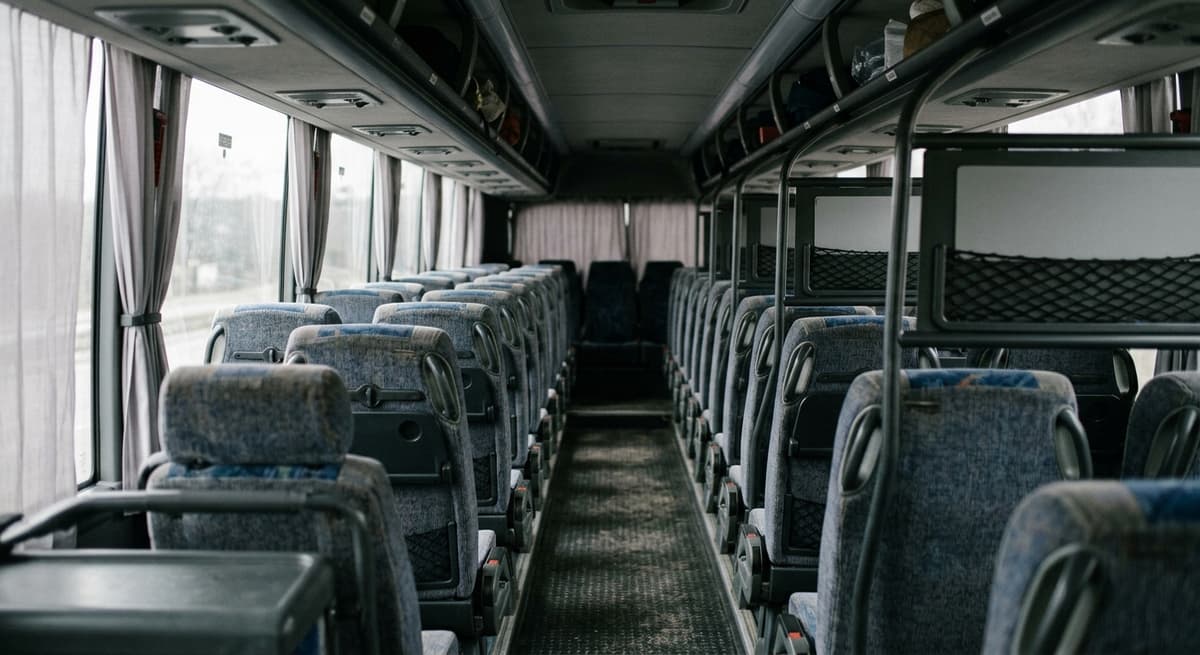
The statute excludes the living quarters section of a vehicle, such as the sleeping and kitchen area of an RV or motor home, from its definition of "passenger area." It also exempts persons riding in a chartered bus, taxi, or hired limousine, though the driver of that for-hire vehicle remains barred from having an open container in the driver's own area.
Penalty
A violation of RSA 265-A:44 carries a $150 fine. For the driver-side transport violations, New Hampshire may also suspend the driver's license: 60 days for a first offense, and up to a year for a second or subsequent offense. The suspension is discretionary, not automatic.
Federal Compliance
Federal law, 23 U.S.C. § 154, conditions a share of a state's highway funding on having an open container law that bans both possession and consumption, covers the whole passenger area, reaches every occupant, and is primarily enforced. A state that falls short has 2.5 percent of certain federal highway apportionments reserved and redirected to highway safety programs, under FHWA's annual apportionment notice. New Hampshire is not on FHWA's list of non-conforming states for fiscal year 2026 (FHWA Notice N4510.905, dated October 1, 2025).
Disclaimer: This article provides general legal information about open container laws in the United States as of September 2026. It is not legal advice. Open container statutes, exemptions, and penalties change; verify the current text of your state's law before relying on it, and consult a lawyer licensed in your state for advice about a specific situation.
For how New Hampshire's rule compares with every other state, see the full rundown of open container laws by state.
Statutes cited reflect their in-force version as of 2026-09-16. Last updated: 2026-09-16.
Frequently Asked Questions
Does New Hampshire's open container law apply to passengers, or only the driver?
It applies to both. RSA 265-A:44 restricts passengers as well as the driver from carrying unsealed alcohol or marijuana in the vehicle's passenger area, though the statute holds the driver to a stricter standard than passengers.
Can a New Hampshire driver carry an already-opened bottle of wine home from a restaurant?
Only if it is resealed and stored in the trunk. If the vehicle has no trunk, it may go in the compartment least accessible to the driver instead, but the trunk comes first. An unsealed container in the passenger area is restricted under RSA 265-A:44.
What is the penalty for an open container violation in New Hampshire?
A $150 fine applies. A driver who violates the transport provisions may also face a license suspension of 60 days for a first offense, or up to a year for a second or subsequent offense; the suspension is discretionary, not automatic.
Are taxi or limousine passengers exempt from New Hampshire's open container law?
Yes, passengers of a chartered bus, taxi, or hired limousine are exempt, though the driver of that vehicle still cannot have an open container in the driver's own area.
Updates
Independently fact-checked against the cited primary sources
Independently fact-checked against the cited primary sources
The Law Behind This Article
This article rests on the statutory provisions below, held in our own legal record and retrieved from the official source. Tap a section to read the operative text.
New Hampshire Revised Statutes Annotated, TITLE XXI MOTOR VEHICLES, CHAPTER 265-A ALCOHOL OR DRUG IMPAIRMENT
§ 265-A:44Transporting Alcoholic Beverages or Marijuana.In force
I. (a) The words "liquor" and "beverage" as used in this section shall have the same meanings as defined in RSA 175:1. (b) The word "marijuana" as used in this section shall have the same meaning as defined in RSA 318-B and shall not include therapeutic cannabis as authorized under RSA 126-X. II. Except as provided in paragraph V, no driver shall transport, carry, possess, or have any liquor or beverage within the passenger area of any motor vehicle or OHRV upon any way in this state except in the original container and with the seal unbroken. Securely capped partially filled containers of liquor or beverages shall be stored and transported in the trunk of the motor vehicle or OHRV. If the motor vehicle or OHRV does not have a trunk, such containers shall be stored and transported in that compartment or area of the vehicle or OHRV which is the least accessible to the driver. II-a. Except as provided in paragraph V, no driver shall transport, carry, possess, or have any marijuana within the passenger area of any motor vehicle or OHRV upon any way in this state except in the original container and with the seal unbroken.
Official text (excerpt) · last checked 2026-09-24 · Read the full text in our law library · Verify at gc.nh.gov
United States Code Title 23
§ 154Open container requirementsIn forcecited in 46 of our articles
In this section, the following definitions apply: The term “alcoholic beverage” has the meaning given the term in section 158(c). The term “motor vehicle” means a vehicle driven or drawn by mechanical power and manufactured primarily for use on public highways, but does not include a vehicle operated exclusively on a rail or rails. The term “open alcoholic beverage container” means any bottle, can, or other receptacle— that contains any amount of alcoholic beverage; and that is open or has a broken seal; or the contents of which are partially removed. The term “passenger area” shall have the meaning given the term by the Secretary by regulation. For the purposes of this section, each State shall have in effect a law that prohibits the possession of any open alcoholic beverage container, or the consumption of any alcoholic beverage, in the passenger area of any motor vehicle (including possession or consumption by the driver of the vehicle) located on a public highway, or the right-of-way of a public highway, in the State.
Official text (excerpt) · last checked 2026-09-23 · Read the full text in our law library · Verify at uscode.house.gov
Cited in 20 court opinions in our collectionLatest citing opinion in our collection: 2004
Opinions citing this section in our collection:
- Foremost Insurance v. Richardson (Supreme Court of the United States 1982, 457 U.S. 668)“…er traffic, just as it has done for some land traffic. See 23 U. S. C. § 154 (55 m.p.h. speed limit). Yet no one su…”
- United States v. Kevin Bishop, United States of America v. Edward Stokes (Court of Appeals for the Third Circuit 1995, 66 F.3d 569)“…nder the Spending Clause, not the Commerce Clause. See 23 U.S.C. § 154 (Supp.1995) (conditioning receipt of f…”
- Mrs. Lizzie Beatrice Easterwood v. Csx Transportation, Inc. (Court of Appeals for the Eleventh Circuit 1991, 933 F.2d 1548)“…ce with the national highway speed limit. See 23 U.S.C.A. § 154 (1990). Easterwood argues that an auto…”
Identified automatically from the court opinions citing this section — not a ranking of which case controls.
Also relied on in: Open Container Laws by State (2026): Passengers, Exemptions, Penalties, Maine Open Container Law (2026): Statute and Exemptions, Alabama Open Container Law (2026): The $25 Fine and No-Points Rule
Search our full record of US law — 2.1 million sections, every state + federal →
Sources and References
- N.H. Rev. Stat. Ann. § 265-A:44 - Transporting Alcoholic Beverages or Marijuana(gc.nh.gov).gov
- 23 U.S.C. § 154(a) - Open container requirements(law.cornell.edu)
- FHWA Notice N4510.905 - FY2026 Apportionment of Federal-Aid Highway Program Funds (open container non-conforming states list)(highways.dot.gov).gov