
Louisiana
Louisiana Open Container Law (2026): Statute, Exemptions, Daiquiris
Independently fact-checked against primary sources (last audited September 17, 2026). · 3 primary sources cited on this page. How we verify our legal content
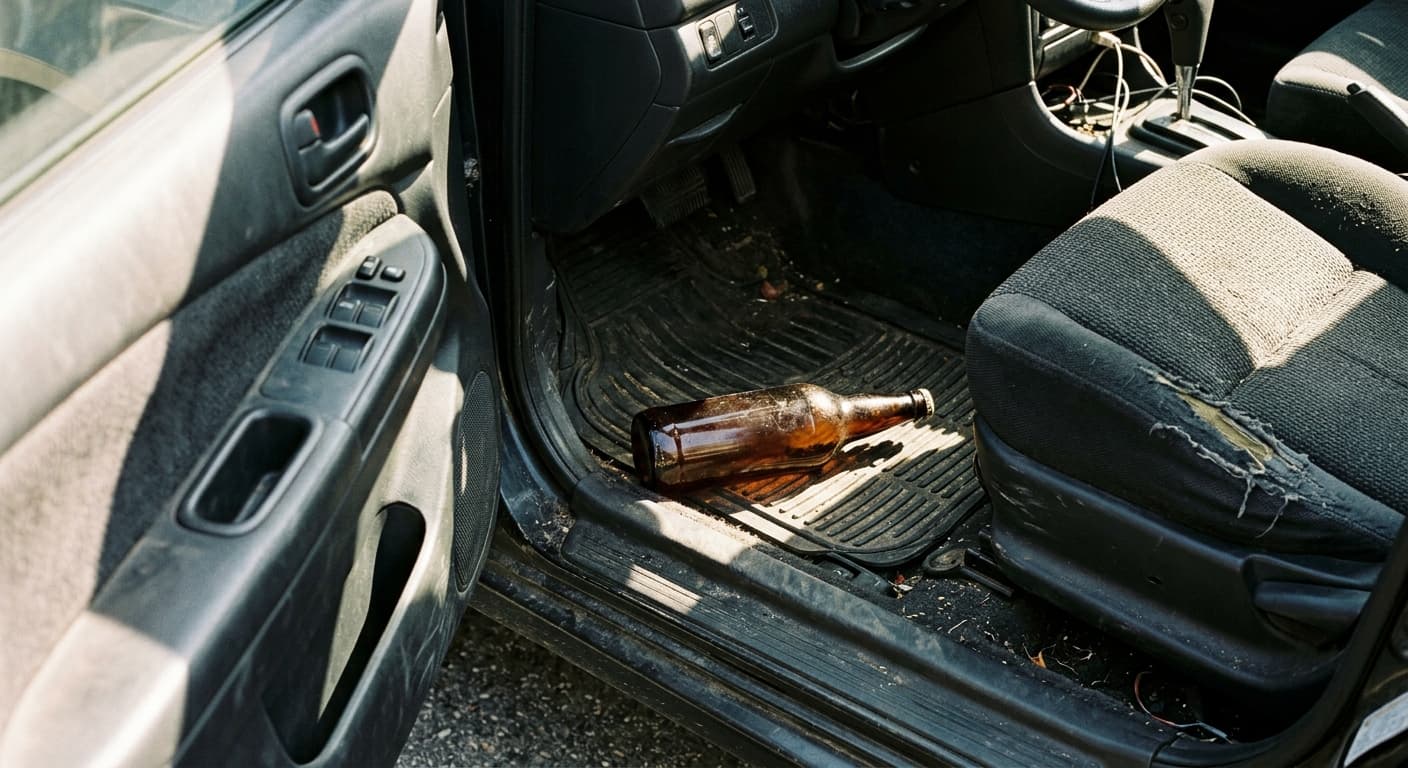
Louisiana bans both possessing and drinking an open alcoholic beverage in a vehicle's passenger area, for the driver and every passenger, under La. R.S. § 32:300. As of September 2026, the statute's preemption clause, exemption list, and penalty were confirmed against the state legislature's official code site.
Jurisdiction scope: This article addresses Louisiana's state open container law, covering how La. R.S. § 32:300 treats the operator and passengers of a vehicle on a public road, and the state's local-ordinance preemption rule. It does not address DUI charges or boating rules. For the full 50-state comparison, see the open container laws hub; for Louisiana's separate DUI penalties, see Louisiana DUI laws.
What Louisiana's Open Container Law Prohibits
La. R.S. § 32:300 bans both possessing an open alcoholic beverage container and drinking an alcoholic beverage in the passenger area of a vehicle. Unlike states that only reach possession, Louisiana's statute names the operator and a passenger separately for both prohibited acts, so the ban on drinking applies to everyone in the vehicle, not just the driver.
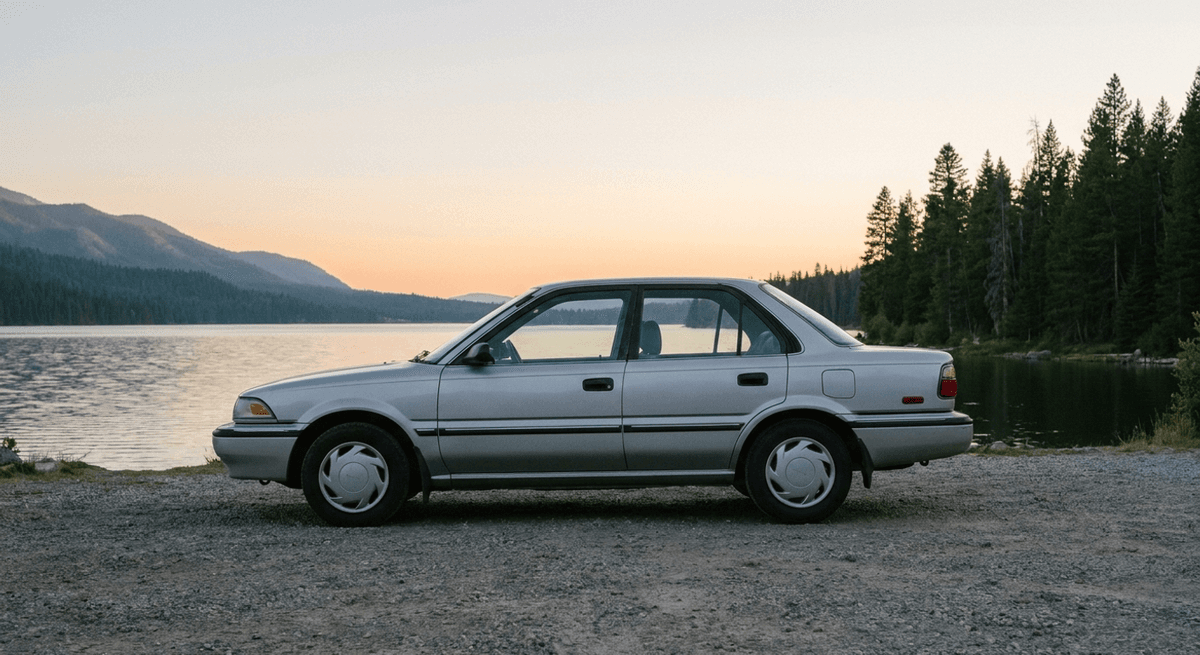
What Counts as the "Passenger Area"
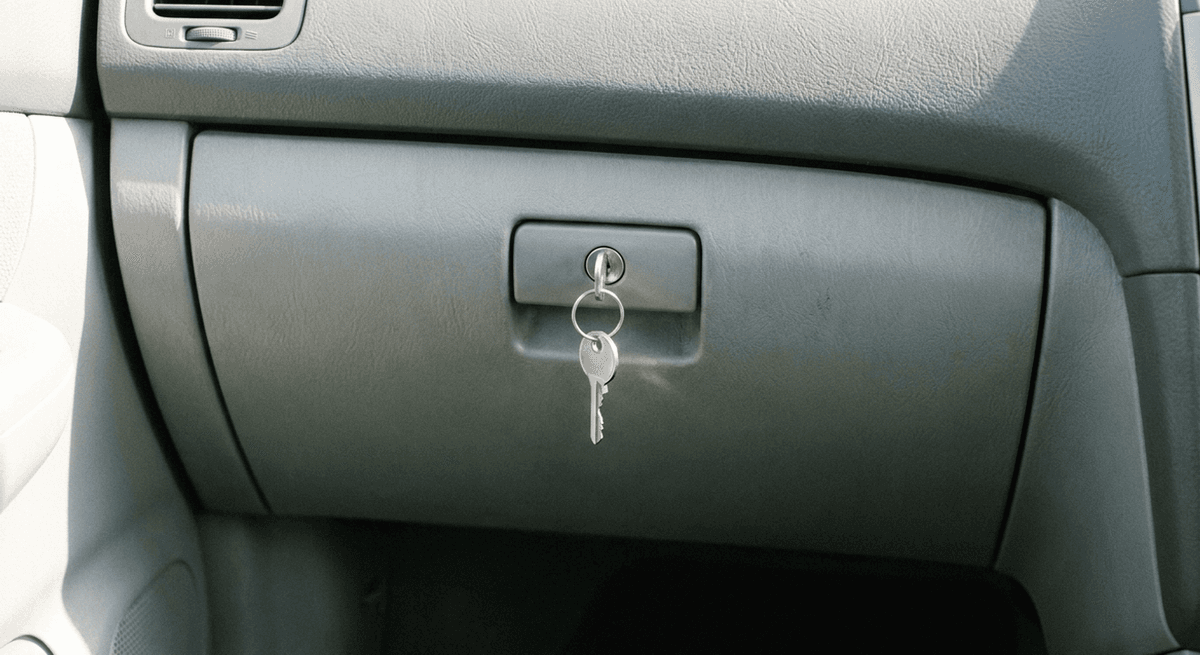
The passenger area includes the glove compartment by default. A locked glove compartment takes a container out of the banned zone; in a vehicle with no trunk, a locked glove or utility compartment, the area behind the last upright seat, or an area not normally occupied by the driver or passengers is also exempt.
Exemptions
Louisiana's statute carries one of the longer exemption lists among the states in this dataset:
- An employee who is required to carry open containers as a condition of the job, as long as the alcohol is not consumed.
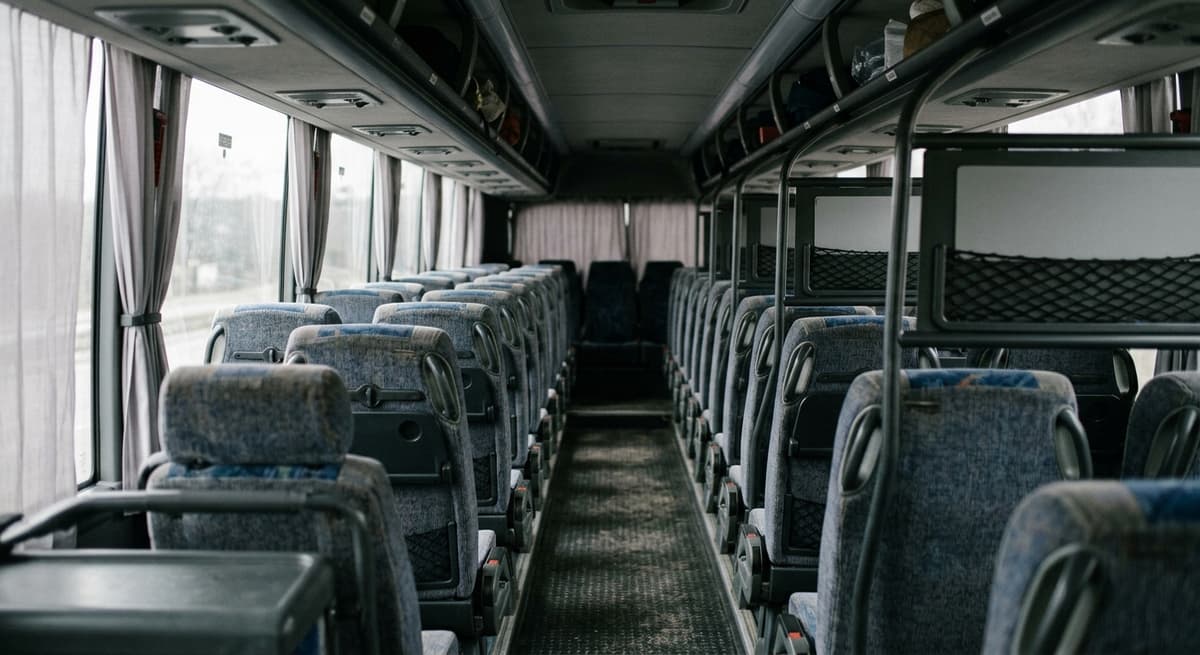
- A paid-fare passenger riding on a common carrier, contract carrier, or public carrier vehicle.
- A courtesy-vehicle passenger.
- A passenger of a self-contained motor home over 21 feet long.
- An open container in the trunk.
- In a vehicle with no trunk, a locked glove or utility compartment, or an area not normally occupied by or readily accessible to the driver and passengers.
- Passengers and krewe members riding on a parade float.
- A passenger in a privately owned limousine, when the vehicle's driver holds a Class D commercial driver's license.
Local Ordinances and the Daiquiri Question
Subsection (E) generally preempts local governments from writing their own open container ordinances, so the statute is meant to apply uniformly statewide. There is one real carve-back: a parish or municipality with a population over 50,000, based on the most recent federal census, may adopt its own ordinance as long as it does not conflict with the state rule, and that local ordinance may set fines or court costs above the state's $100 cap. That population-based exception is the one place in this dataset where a local government can genuinely diverge from the state's open container rule rather than simply mirror it.
Louisiana's drive-through daiquiri shops are a frequent reader question, and the mechanism is a written exception in R.S. 32:300 aimed specifically at frozen drinks. Subsection (B)(3)(b) defines "open alcoholic beverage container" to exclude "any bottle, can, or other receptacle that contains a frozen alcoholic beverage unless the lid is removed, a straw protrudes therefrom, or the contents of the receptacle have been partially removed." So a sealed, lidded daiquiri cup with no straw inserted is not an open container under the statute at all, and it can leave the shop and travel in the vehicle without violating the transport rule, until the lid comes off, a straw goes in, or the contents are partially removed. This is a definitional exclusion limited to frozen alcoholic beverages; it is not the general "unbroken seal" possession exemption, and it does not extend to a non-frozen drink in a similar cup.
Penalty
A violation is punishable by a fine of not more than $100, plus court costs. A person cited under the statute is not taken into custody for the violation, and the violation does not count toward the person's driving record.
Federal Compliance
Federal law, 23 U.S.C. § 154, conditions a share of a state's highway funding on having an open container law that bans both possession and consumption, covers the whole passenger area, reaches every occupant, and is primarily enforced. A state that falls short has 2.5 percent of certain federal highway apportionments reserved and redirected to highway safety programs, under FHWA's annual apportionment notice. Louisiana is on FHWA's list of non-conforming states for fiscal year 2026 (FHWA Notice N4510.905, dated October 1, 2025). Louisiana's statute departs from the federal standard on its face in several ways. The federal definition of an open container has no exclusion for frozen drinks, unlike R.S. 32:300(B)(3)(b). The federal law's only vehicle allowance covers vehicles used primarily to carry passengers for compensation and the living quarters of a house coach or house trailer, while Louisiana also exempts employees required to carry open containers for work, courtesy-vehicle passengers, and parade-float riders. FHWA's notice lists the non-conforming states; this article does not state a specific reason FHWA gave for Louisiana's listing.
Disclaimer: This article provides general legal information about open container laws in the United States as of September 2026. It is not legal advice. Open container statutes, exemptions, and penalties change; verify the current text of your state's law before relying on it, and consult a lawyer licensed in your state for advice about a specific situation.
Related articles:
Statutes cited reflect their in-force version as of 2026-09-16. Last updated: 2026-09-16.
Frequently Asked Questions
How is it legal to drive with a daiquiri in Louisiana?
La. R.S. § 32:300(B)(3)(b) defines a frozen alcoholic beverage separately: a bottle, can, or other receptacle containing a frozen alcoholic beverage is not an "open alcoholic beverage container" unless the lid is removed, a straw protrudes from it, or the contents have been partially removed. A sealed daiquiri cup with the lid on and no straw is not an open container under that definition, so it can be carried in the vehicle; removing the lid, inserting a straw, or drinking from it makes it one.
Can a Louisiana parish have a different open container rule than the state?
Louisiana generally preempts local open container ordinances for one statewide rule. A parish or municipality with a population over 50,000 is the exception; it may adopt its own non-conflicting ordinance, including a fine above the state's $100 cap.
Does Louisiana's open container law apply to passengers, not just the driver?
Yes. La. R.S. § 32:300 names the operator and a passenger separately, and it bans both possession and drinking an alcoholic beverage in the passenger area for everyone in the vehicle.
What is the penalty for an open container violation in Louisiana?
A fine of not more than $100, plus court costs. The person is not taken into custody, and the violation does not count against the driving record.
Why is Louisiana on the federal non-conforming open container list?
Louisiana appears on FHWA's FY2026 list of non-conforming states (Notice N4510.905). Its statute differs from the federal standard in 23 U.S.C. § 154 in several ways: the federal definition has no frozen-drink exclusion, and Louisiana's exemptions for employees, courtesy-vehicle passengers, and parade-float riders go beyond the narrow federal allowance for vehicles carrying passengers for compensation and for house coach or trailer living quarters. This article does not state a specific reason FHWA gave for the listing.
Updates
Corrected the federal compliance discussion to explain how Louisiana's open container statute differs from the federal standard, and restated the parade float exemption in the statute's own words.
Independently fact-checked against the cited primary sources
The Law Behind This Article
This article rests on the statutory provisions below, held in our own legal record and retrieved from the official source. Tap a section to read the operative text.
Louisiana Revised Statutes
§ 32:300Possession of alcoholic beverages in motor vehiclesIn forcecited in 2 of our articles
A. It shall be unlawful for the operator of a motor vehicle or the passenger in or on a motor vehicle, while the motor vehicle is operated on a public highway or right-of-way, to possess an open alcoholic beverage container, or to consume an alcoholic beverage, in the passenger area of a motor vehicle. B. For purposes of this Section, the following words have the following meanings ascribed to them: (1) "Alcoholic beverage" means any of the following: (a) Beer, ale, porter, stout, and other similar fermented beverages, including sake or similar products, of any name or description containing one-half of one percent or more of alcohol by volume, brewed or produced from malt, wholly or in part, or from any substitute therefor. (b) Wine of not less than one-half of one percent of alcohol by volume. (c) Distilled spirits which is that substance known as ethyl alcohol, ethanol, or spirits of wine in any form, including all dilutions and mixtures thereof from whatever source or by whatever process produced.
Official text (excerpt) · last checked 2026-09-23 · Read the full text in our law library · Verify at legis.la.gov
Cited in 12 court opinions in our collectionLatest citing opinion in our collection: 2023
Opinions citing this section in our collection:
- State v. McGraw (Louisiana Court of Appeal 2008, 1 So. 3d 645)“…40:966), possession of an open container (in violation of La. R.S. 32:300), and making an improper turn (in viola…”
- State v. Bellow (Louisiana Court of Appeal 2008, 982 So. 2d 826)“…an open container of alcohol in a vehicle, in violation of La. R.S. 32:300, was unlawful because the statute prohi…”
- State v. James (Louisiana Court of Appeal 2009, 9 La.App. 3 Cir. 606)“…in possession of an open alcoholic beverage, a violation of La. R.S. 32:300. On December 3, 2008, Defendant…”
Identified automatically from the court opinions citing this section — not a ranking of which case controls.
Also relied on in: Open Container Laws by State (2026): Passengers, Exemptions, Penalties
United States Code Title 23
§ 154Open container requirementsIn forcecited in 46 of our articles
In this section, the following definitions apply: The term “alcoholic beverage” has the meaning given the term in section 158(c). The term “motor vehicle” means a vehicle driven or drawn by mechanical power and manufactured primarily for use on public highways, but does not include a vehicle operated exclusively on a rail or rails. The term “open alcoholic beverage container” means any bottle, can, or other receptacle— that contains any amount of alcoholic beverage; and that is open or has a broken seal; or the contents of which are partially removed. The term “passenger area” shall have the meaning given the term by the Secretary by regulation. For the purposes of this section, each State shall have in effect a law that prohibits the possession of any open alcoholic beverage container, or the consumption of any alcoholic beverage, in the passenger area of any motor vehicle (including possession or consumption by the driver of the vehicle) located on a public highway, or the right-of-way of a public highway, in the State.
Official text (excerpt) · last checked 2026-09-23 · Read the full text in our law library · Verify at uscode.house.gov
Cited in 20 court opinions in our collectionLatest citing opinion in our collection: 2004
Opinions citing this section in our collection:
- Foremost Insurance v. Richardson (Supreme Court of the United States 1982, 457 U.S. 668)“…er traffic, just as it has done for some land traffic. See 23 U. S. C. § 154 (55 m.p.h. speed limit). Yet no one su…”
- United States v. Kevin Bishop, United States of America v. Edward Stokes (Court of Appeals for the Third Circuit 1995, 66 F.3d 569)“…nder the Spending Clause, not the Commerce Clause. See 23 U.S.C. § 154 (Supp.1995) (conditioning receipt of f…”
- Mrs. Lizzie Beatrice Easterwood v. Csx Transportation, Inc. (Court of Appeals for the Eleventh Circuit 1991, 933 F.2d 1548)“…ce with the national highway speed limit. See 23 U.S.C.A. § 154 (1990). Easterwood argues that an auto…”
Identified automatically from the court opinions citing this section — not a ranking of which case controls.
Also relied on in: Maine Open Container Law (2026): Statute and Exemptions, Alabama Open Container Law (2026): The $25 Fine and No-Points Rule, Arkansas Open Container Law (2026): Rules, Exemptions, and Penalty
Search our full record of US law — 2.1 million sections, every state + federal →
Sources and References
- La. R.S. § 32:300 - Possession of open alcoholic beverage containers in motor vehicles(legis.la.gov).gov
- La. R.S. § 32:300(B)(3)(b) - Frozen alcoholic beverage exclusion from the "open alcoholic beverage container" definition(legis.la.gov).gov
- 23 U.S.C. § 154(a) - Open container requirements(law.cornell.edu)
- FHWA Notice N4510.905 - FY2026 Apportionment of Federal-Aid Highway Program Funds (open container non-conforming states list)(highways.dot.gov).gov